
lovethailand home >Northeastern Travel Attractions >Maha Sarakham Travel Attractions >Na Dun >Ku San Trat > Ku Santarat
TL;DR: Ku Santarat is located at Ku Santarat Subdistrict, Na Dun District, Maha Sarakham Province, open Daily, hours 08.00 – 17.15.
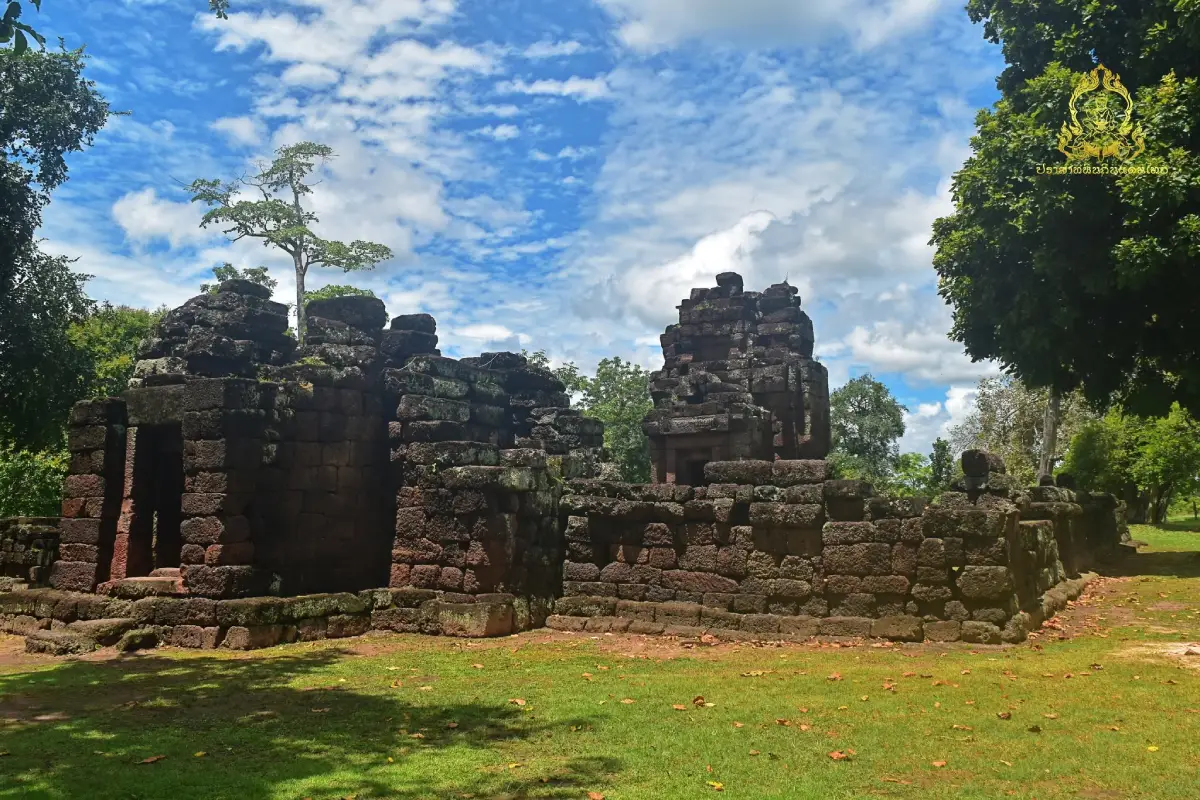
Ku Santarat
Open Days: Daily
Opening Hours: 08.00 – 17.15
Ku Santarat in Maha Sarakham Province is an important Bayon-style Khmer archaeological site located in Ku Santarat Subdistrict, Na Dun District. Built mainly of laterite during the reign of King Jayavarman VII, around 1157–1207 CE or approximately 1700–1750 BE, the site functioned as an arokayasala, an ancient hospital chapel connected with Mahayana Buddhist belief. Although compact in scale, Ku Santarat preserves a meaningful layout with a main sanctuary, a library building, an eastern gopura, a laterite enclosure wall, and a rectangular pond outside the sacred precinct. It is one of the most valuable historical stops for travelers exploring the cultural landscape of ancient Nakhon Champa Si and Na Dun District.
Ku Santarat stands about 4 km east of Na Dun District Office and can be reached conveniently from the Wapi Pathum–Na Dun route. The monument is built of laterite blocks, with sandstone used for important architectural elements such as doorframes, lintels, and decorative door pillars. For foreign travelers, this site is especially useful for understanding how Khmer architecture, Mahayana Buddhism, ancient healthcare, and local community traditions came together in northeastern Thailand. The monument is small enough to explore within a short visit, yet its historical meaning is deep and closely connected with the reign of King Jayavarman VII.
The significance of Ku Santarat comes from its identity as an arokayasala. In the Khmer world, an arokayasala was not simply a hospital in the modern sense. It was a sacred healing center where religious belief, ritual practice, and healthcare were integrated. These sites were often built with a standard religious layout, including a main shrine, a supporting building, a water source, and a sacred enclosure. Ku Santarat preserves these components clearly, making it an excellent place to understand the relationship between healing and faith in the ancient Khmer cultural sphere.
The main sanctuary is the central structure of Ku Santarat. It is made of laterite and has a square, indented plan facing east. The front section projects outward as a porch, while the northern and southern walls contain window-like openings. The other three sides are solid walls with false doors. This design reflects the architectural logic of Khmer sanctuaries, where the east was usually the main ritual direction. The false doors helped maintain the symmetrical form of the tower while emphasizing the sacred central chamber inside.
The front porch of the main sanctuary has a curved, barrel-vaulted roof form. Sandstone was used for the doorframe, lintel, and decorative door pillars because it was better suited for carving than laterite. At Ku Santarat, some sandstone elements remain plain or only partly worked. This is an important feature of the site because it shows the construction process of a Khmer monument. Visitors can see not only the finished architectural layout but also evidence of work that was left incomplete. This makes Ku Santarat especially interesting for those who want to understand ancient building techniques.
The library building, or bannalai, stands at the southeastern corner of the main sanctuary. It is made of laterite and has a rectangular plan, facing west toward the main shrine. Its front section forms a short porch. In Khmer religious architecture, a bannalai is usually interpreted as a supporting ritual building, possibly connected with sacred texts, ritual objects, or specific ceremonies. Its position at Ku Santarat follows a pattern also seen in other Khmer hospital chapels, helping visitors understand that this was a carefully organized religious compound rather than an isolated tower.
The eastern gopura, or entrance pavilion, is located at the center of the eastern enclosure wall. It is made of laterite and has projecting sections on three sides: north, west, and south. Stairs are found on the eastern and western sides, and the roof also follows a curved vaulted form. The gopura served as the formal entrance into the sacred precinct. Walking through this entrance allows visitors to experience the intended movement from the outer landscape into the protected religious space where the main sanctuary stands.
The laterite enclosure wall surrounds the main sanctuary and the library building. It extends from the eastern gopura and forms the boundary of the sacred area. The upper part of the wall still shows traces of cutting or preparation for placing wall capstones. This detail shows that the builders planned the site in an orderly way and paid attention to both structure and symbolism. The enclosure wall separated the sacred ritual space from the ordinary world outside, giving the interior of the monument a distinct spiritual identity.
Outside the enclosure wall on the northeastern side is a rectangular pond, about 10 meters wide and 12 meters long, with a depth of around 2 meters. The edges of the pond are lined with laterite blocks descending in steps to the bottom. Water was an important part of Khmer sacred landscapes. It was used practically, but it also carried meanings of purification, healing, fertility, and ritual order. Because Ku Santarat was an arokayasala, the pond is especially meaningful. It connects the site with the idea of healing and the sacred use of water in religious practice.
Historically, Ku Santarat was built during the reign of King Jayavarman VII, one of the most influential rulers of the Khmer Empire. His reign is strongly associated with Mahayana Buddhism and the construction of many religious and public welfare projects, including roads, rest houses, and hospital chapels. Ku Santarat belongs to this broader network. Its Bayon-style features, laterite construction, and religious layout reflect the artistic and spiritual atmosphere of the late 12th to early 13th century.
Ku Santarat is also closely connected with the historical landscape of Na Dun and ancient Nakhon Champa Si. Na Dun District is one of Maha Sarakham’s most important cultural areas, especially because of Phra That Na Dun and the archaeological memory of Nakhon Champa Si. Visiting Ku Santarat together with Phra That Na Dun helps travelers understand the layered history of the region, from ancient Khmer influence to later Buddhist devotion and modern local identity.
The site also holds significance in modern Thai history. King Bhumibol Adulyadej and Queen Sirikit visited Ku Santarat on 27 October 1971 while meeting local residents. This royal visit remains an important memory for the community and adds another layer of meaning to the monument. Ku Santarat is therefore not only an ancient archaeological site but also a place connected with modern local history and collective memory.
Today, Ku Santarat is open to visitors every day and is cared for by the Ku Santarat Subdistrict Administrative Organization in cooperation with the Fine Arts Department. The site remains a quiet and accessible historical attraction. A good walking route begins at the eastern gopura, continues to the main sanctuary, then moves to the southeastern library building, the enclosure wall, and finally the pond outside the northeastern side. This sequence helps visitors understand the layout of the arokayasala in a clear and meaningful way.
For travelers interested in Khmer art, the use of laterite and sandstone at Ku Santarat is worth observing. Laterite was used for the main structures because it was strong and available in the region. Sandstone was used for architectural elements that required finer workmanship, such as lintels and door pillars. The plain and partly worked sandstone elements at the entrance suggest an unfinished stage of construction, allowing visitors to see how different materials were selected and used in ancient Khmer architecture.
The quiet atmosphere of Ku Santarat is one of its strengths. The monument is not crowded like larger heritage attractions. Instead, it offers a calm local setting where visitors can walk slowly, observe the laterite textures, and understand the relationship between the main sanctuary, enclosure wall, library building, and pond. Morning and late afternoon are the best times for photography because the softer light brings out the dark surface of the laterite blocks and the form of the shrine.
Ku Santarat remains part of living community tradition. The Song Ku Santarat tradition is held at the ancient monument and continues the cultural memory of Nakhon Champa Si. The ceremony includes ritual worship, water-pouring, community gathering, and acts of respect toward the sacred site. This tradition keeps the monument connected with present-day local faith, showing that archaeological heritage in Thailand often continues to function as a living spiritual space.
The meaning of Song Ku Santarat is strongly connected with respect, blessing, healing, and community continuity. Since Ku Santarat was once an ancient hospital chapel, the modern ritual of paying respect and pouring water over the shrine gives the site a powerful sense of continuity. It links ancient healing belief with present-day hopes for well-being, protection, and harmony among local people.
Ku Santarat is best understood as part of a wider Na Dun cultural route. Nearby attractions include Phra That Na Dun, the Nakhon Champa Si Historical Study Center, Ku Ban Daeng, Phra That Huam Haeng, and the sandstone pagoda at Wat Pa Kung. Travelers can visit Ku Santarat in about 30 minutes to 1 hour, then continue to other historical and religious sites in the same area. This makes it ideal for a half-day or full-day cultural trip in Maha Sarakham.
Visitors should treat Ku Santarat with respect. Do not climb on the sanctuary, enclosure wall, or pond edge. Do not move stones or fragments, write on the laterite blocks, or leave trash in the area. The site is an ancient monument and a sacred community space, so respectful behavior is part of preserving it for future generations. Families traveling with children and elderly visitors should walk carefully because some surfaces are uneven.
Getting There is straightforward by private car, motorcycle, or local hired vehicle. From Maha Sarakham city, take Route 2040 through Kae Dam District and Wapi Pathum District, then turn right onto Route 2045 toward Na Dun District. After about 1 km, Ku Santarat will be on the right-hand side. From Na Dun District Office, travel east for about 4 km. This route is convenient for travelers who want to combine Ku Santarat with Phra That Na Dun and other cultural attractions in the Na Dun area.
Food and accommodation options are mostly found around Na Dun and nearby districts. Travelers can have meals near Phra That Na Dun or in Na Dun town before continuing to Ku Santarat. Local options include Thai food, Isan food, noodle shops, cafés, and small restaurants. Accommodation options include local resorts, pool villas, and small hotels in and around Na Dun. Staying overnight is suitable for visitors who want to explore the Na Dun cultural route at a slower pace.
Ku Santarat may be small in physical scale, but it contains a rich historical narrative. It tells the story of Khmer influence in Maha Sarakham, Bayon-style architecture, Mahayana Buddhist healing belief, ancient water symbolism, local ritual, royal memory, and community conservation. For foreign travelers seeking a meaningful heritage destination beyond the major tourist routes, Ku Santarat offers a quiet and authentic encounter with the deeper history of northeastern Thailand.
| Name | Ku Santarat |
| Other Names | Prasat Ku Santarat, Ku Non Mueang |
| Location | Ku Santarat Subdistrict, Na Dun District, Maha Sarakham Province |
| Address | Ku Santarat Subdistrict, Na Dun District, Maha Sarakham 44180, Thailand |
| Coordinates | 15.70661 N, 103.26813 E |
| Highlights | Bayon-style laterite Khmer sanctuary built during the reign of King Jayavarman VII as an arokayasala or ancient hospital chapel |
| History | Around 1157–1207 CE or 1700–1750 BE, linked with King Jayavarman VII, Bayon-style Khmer art, Mahayana Buddhism, and the arokayasala network |
| Name Origin | “Ku” is a local Isan term for an ancient sacred monument, while Santarat refers to the local subdistrict where the site is located |
| Distinctive Features | Square laterite main sanctuary facing east, projecting front porch, library building, eastern gopura, laterite enclosure wall, and rectangular pond outside the northeastern side |
| Key Evidence | Main sanctuary, library building, gopura, enclosure wall, laterite pond, sandstone doorframe, lintel, and door pillars showing Khmer construction techniques |
| Main Areas / Zones | 1. Main Sanctuary 2. Front Porch Of The Main Sanctuary 3. Southeastern Library Building 4. Eastern Gopura 5. Laterite Enclosure Wall 6. Northeastern Pond 7. Song Ku Santarat Ceremony Area |
| Local Tradition | Song Ku Santarat tradition, held at the ancient monument to continue the cultural memory of Nakhon Champa Si through ritual worship and water-pouring |
| Travel Information | Take Route 2040 through Kae Dam and Wapi Pathum, then turn right onto Route 2045 toward Na Dun District. After about 1 km, Ku Santarat is on the right. From Na Dun District Office, it is about 4 km east. |
| Current Status | Open to visitors as a historical attraction and archaeological site of Na Dun District |
| Open Days | Daily |
| Opening Hours | 08.00 – 17.15 |
| Fees | No admission fee |
| Facilities | Walking area around the ancient monument, worship area, ceremony ground, and local road access from Na Dun District |
| Caretaker | Ku Santarat Subdistrict Administrative Organization in cooperation with the Fine Arts Department |
| Main Contact Number | Ku Santarat Subdistrict Administrative Organization, Tel. 043-706-510 |
| Nearby Tourist Attractions | 1. Phra That Na Dun, about 5 km 2. Nakhon Champa Si Historical Study Center, about 5 km 3. Ku Ban Daeng, about 18 km 4. Phra That Huam Haeng Or Phra That Wapi Pathum, about 22 km 5. Sandstone Pagoda At Wat Pa Kung, about 32 km |
| Nearby Restaurants | 1. Krua Na Dun, about 5 km, Tel. 093-4757855 2. Herb Cafe Na Dun, about 5 km, Tel. 065-4617995 3. Golden Elephant Kingdom Coffee, about 5 km 4. Kuay Tiew Ruea Chao Wang, about 6 km 5. Khrua Captain Kai Yang Khao Suan Kwang, about 20 km, Tel. 063-2325461 |
| Nearby Accommodations | 1. Lookkaew Resort Na Dun Branch, about 5 km, Tel. 043-020442 2. Inaka Resort, about 16 km, Tel. 089-5187526 3. INAKA Pool Villa, about 16 km, Tel. 083-3690694, 082-9354598 4. Lakkhana Resort Na Dun, about 6 km, Tel. 089-2787479 5. Baan Charnchol Resort, about 50 km |
Frequently Asked Questions (FAQ)
Q: Where is Ku Santarat located?
A: Ku Santarat is located in Ku Santarat Subdistrict, Na Dun District, Maha Sarakham Province, about 4 km east of Na Dun District Office.
Q: Why is Ku Santarat important?
A: Ku Santarat is a Bayon-style Khmer archaeological site built during the reign of King Jayavarman VII and served as an arokayasala, or ancient hospital chapel, connected with Mahayana Buddhist healing belief.
Q: What are the opening days and hours of Ku Santarat?
A: The site is open daily from 08.00 to 17.15.
Q: Is there an admission fee for Ku Santarat?
A: No. Visitors can enter Ku Santarat without an admission fee.
Q: What should visitors see at Ku Santarat?
A: Key features include the main laterite sanctuary, the library building, the eastern gopura, the enclosure wall, the northeastern pond, and sandstone architectural elements at the entrance.
Q: How can travelers get to Ku Santarat?
A: Take Route 2040 through Kae Dam and Wapi Pathum, then turn right onto Route 2045 toward Na Dun. After about 1 km, Ku Santarat is on the right-hand side.
Q: What local tradition is connected with Ku Santarat?
A: Ku Santarat is connected with the Song Ku Santarat tradition, a local ceremony involving ritual worship, water-pouring, and the cultural memory of ancient Nakhon Champa Si.
Q: What nearby attractions can be included in the same trip?
A: Travelers can combine Ku Santarat with Phra That Na Dun, the Nakhon Champa Si Historical Study Center, Ku Ban Daeng, Phra That Huam Haeng, and the sandstone pagoda at Wat Pa Kung.
 Category: ●Art, Culture and Heritage
 Group: ●Historical Sites and Monuments
Last Update : 2 MonthAgo
 Last Update : 2 MonthAgo
 Click to Access the Navigation Map GPS
 Historical Sites and Monuments(4)
 Art, Craft Centres, Tradition(5)
 Museums(3)
 Places of Worship
 Temple(17)
 Other Sacred Sites(7)
 Research and Development
 Royal Project(2)
 Suburban Living
 Village, Community(5)
 Nature and Wildlife
 National Parks and Marine Reserves(3)
 Dam, Reservoir, Lake(10)
 River, Canal(2)
 Bays and Beaches(2)
 Other natural attractions(2)
 Entertainment and Agricultural
 Farms, Parks and Ecotourism(3)
 Travel Articles, Recipes
 Food Menu, Northeastern Recipes(1)


