
lovethailand home >Northeastern Travel Attractions >Maha Sarakham Travel Attractions >Muang Maha Sarakham >Talat > Bun Sam Ha
TL;DR: Bun Sam Ha, open Bun Sam Ha is not a fixed-site attraction with regular opening days. The ritual, hours There are no permanent opening hours. In many communities, the ritual includes.
Bun Sam Ha
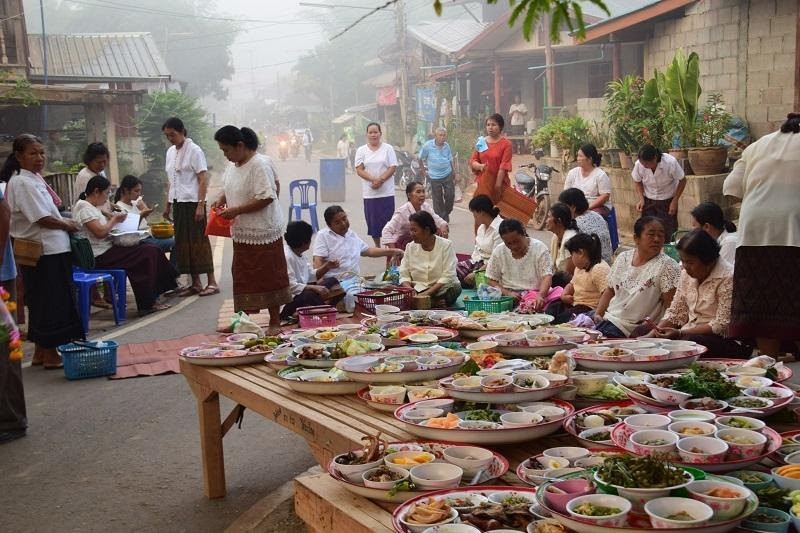
Open Days: Bun Sam Ha is not a fixed-site attraction with regular opening days. The ritual is usually held according to each community’s schedule, often around the 6th or 7th lunar month in the Isan traditional calendar.
Opening Hours: There are no permanent opening hours. In many communities, the ritual includes an evening chanting ceremony and a morning merit-making ceremony, depending on the local host’s schedule.
Bun Sam Ha, also known as Bun Chamra or Bun Boek Ban, is one of the meaningful traditional merit-making ceremonies of Isan, the northeastern region of Thailand. The ceremony reflects the close relationship between Buddhism, ancestral spirits, guardian deities, village shrines, and the everyday life of rural communities. At its heart, Bun Sam Ha is a communal purification ritual. People gather to cleanse away misfortune, remove inauspicious influences, strengthen morale, and bring blessings to homes, families, livestock, rice fields, and the wider community. For this reason, Bun Sam Ha is not only a religious event. It is also a cultural system that helps villagers renew their sense of unity, protection, and shared responsibility.
In simple terms, Bun Sam Ha can be understood as a village-wide merit-making ceremony for cleansing the home, the community, and the mind. The ritual is often performed before or around the rice-growing season, when people seek protection, good health, rainfall, peace, and prosperity for the year ahead. Villagers gather at a central place such as a village pavilion, a community shrine, a temple, a sacred village post, or another ceremonial area chosen by the local community. Monks are invited to chant Buddhist prayers, receive offerings, give blessings, and sprinkle holy water. Villagers then take holy water, sacred threads, gravel, stones, or sand back to their homes to bless family members, houses, animals, and fields. The ritual therefore connects public ceremony with private household life.
The word “Sam Ha” is closely associated with the Thai and Lao word “chamra,” meaning to cleanse, purify, or remove impurities. When combined with the word “bun,” meaning merit, the phrase refers to a merit-making ceremony for purification. This purification has both inner and outer meanings. The inner meaning refers to the cleansing of the mind: fear, anxiety, conflict, sorrow, and emotional unease are symbolically released. The outer meaning refers to the cleansing of homes, village boundaries, livestock areas, rice fields, and public spaces. Through this broad meaning, Bun Sam Ha becomes a ritual of spiritual renewal, social order, and cultural continuity.
Within the traditional Isan calendar, Bun Sam Ha is part of the broader system known as Heet Sip Song, the twelve monthly customs that structure ritual life in northeastern Thai and Lao cultural communities. The word “heet” means custom or inherited practice, while “khong” means a proper way or social code. Together, Heet Sip Song and Khong Sip Si form an important cultural framework that guides religious, agricultural, and community life throughout the year. Bun Sam Ha is usually associated with the 7th lunar month, although some areas observe it in the 6th lunar month according to local tradition. This flexibility shows that the ceremony belongs to living communities rather than to a rigid calendar rule.
The origin of Bun Sam Ha is linked to Buddhist narratives of purification and the removal of calamity. A well-known story tells of the ancient city of Vesali, where famine, disease, and hardship caused great suffering. When the Buddha came to the city, Buddhist chanting, holy water, and spiritual cleansing helped remove the crisis and restore well-being. This idea was later blended with local Lao and Isan beliefs about guardian spirits, village protectors, sacred posts, and ancestral forces. As a result, Bun Sam Ha became a ritual through which villagers asked for protection from disease, misfortune, drought, conflict, and unseen dangers.
One distinctive feature of Bun Sam Ha is its integration of Buddhism and local spiritual beliefs. In many Isan villages, people believe that guardian spirits, ancestral spirits, village deities, and sacred places such as Don Pu Ta or the village shrine protect the community. During Bun Sam Ha, these local powers may be respectfully invited or acknowledged alongside Buddhist rituals led by monks. This blending of religious systems is not treated as a contradiction by local communities. Instead, it represents a practical cultural worldview in which Buddhism provides merit, morality, chanting, and blessings, while ancestral and guardian beliefs provide a sense of place, protection, and continuity with the past.
Preparation begins before the formal ritual. Villagers clean their homes, sweep courtyards, prepare ceremonial items, arrange the central ritual space, and coordinate offerings for the monks. This physical cleaning is part of the deeper symbolism of purification. A clean home represents readiness to receive blessings. A clean village center represents the community’s collective intention to remove negativity and begin again. The ceremony therefore starts not only when monks chant, but also when villagers work together to restore order to their homes and public spaces.
Common ritual items include flowers, incense, candles, bowls of holy water, white sacred thread, small stones, gravel, sand, fragrant water, food for monks, and offerings for local shrines. Each item carries symbolic meaning. Flowers, incense, and candles represent respect toward the Triple Gem and sacred beings. Holy water represents purification and blessing. White thread represents protection, unity, and the calling of khwan, or vital spirit. Gravel, stones, and sand are often used to symbolically drive away misfortune and create a protective boundary around houses, fields, and the village. Food offerings express generosity and merit-making, while local shrine offerings acknowledge the guardian powers of the community.
The evening ceremony usually begins with monks chanting Buddhist prayers or victory chants. Villagers sit together in the ritual area, with bowls of holy water, sacred threads, gravel, stones, sand, and offerings placed nearby. The sound of chanting marks the beginning of the sacred period. It calms the atmosphere, focuses the minds of participants, and allows the community to share a collective intention: to remove misfortune and invite peace. This evening phase is important because it brings people together before the main morning merit-making activities.
The following morning is usually devoted to offering food to monks, giving alms, receiving precepts, listening to sermons, and receiving blessings. After chanting and blessing the ceremonial items, monks sprinkle holy water on participants and objects prepared by the villagers. This act is central to the ritual because it symbolically transfers Buddhist blessing into the lives of the people and the spaces they inhabit. The ceremony is both public and personal: everyone gathers as a community, yet each household later carries the blessing back home.
After the central ceremony, villagers take holy water, sacred thread, gravel, stones, or sand back to their homes. They sprinkle holy water on family members, houses, storage areas, cattle, buffaloes, and farming spaces. Some households scatter sand or small stones around the home or fields to symbolically drive away inauspicious influences. This stage shows that Bun Sam Ha does not end at the temple or village pavilion. It extends into each household, making every family part of the community’s shared purification.
In some communities, white thread is tied around the wrists of children, elders, and family members after the ceremony. This practice is related to the Isan belief in khwan, the vital spirit or life essence of a person. Tying a white thread around the wrist symbolizes the calling, binding, and protection of the khwan. It helps restore emotional strength, confidence, and a sense of safety. For visitors, the small white thread may look simple, but within local culture it represents blessing, affection, protection, and communal care.
Another important aspect of Bun Sam Ha is the act of driving away misfortune, sometimes described as removing rang khwan or inauspicious disturbances. Villagers may use holy water, sand, gravel, stones, or symbolic offerings while moving around important points in the village. In larger civic ceremonies, the ritual may be connected to symbolic directions or city boundaries. The purpose is to protect the community from illness, conflict, disaster, and bad luck. This does not only represent belief in unseen forces. It also expresses the community’s collective decision to reject disorder and renew harmony.
Bun Sam Ha is closely connected to the agricultural cycle. Isan communities have long depended on rice farming, rainfall, soil, animals, and seasonal rhythms. Before entering the demanding period of fieldwork, villagers perform rituals to seek protection for people, animals, and farmland. The ceremony therefore prepares both the body and the mind for the year ahead. By cleansing away misfortune, people symbolically open the way for rainfall, fertility, stability, and hope.
The ceremony involves many roles. Monks lead the Buddhist part of the ritual by chanting, giving blessings, and sprinkling holy water. Village elders, ritual specialists, or local spiritual leaders may guide the parts related to guardian spirits and ancestral beliefs. Community leaders and village committees arrange the space, coordinate households, and prepare offerings. Ordinary villagers participate by bringing ritual items, joining the merit-making, and carrying blessings back to their homes. Because everyone has a role, Bun Sam Ha becomes a truly communal ritual rather than an event controlled by a single group.
Socially, Bun Sam Ha strengthens community unity. It brings elders, adults, youth, children, monks, local leaders, and returning family members into the same ceremonial space. Elders transmit knowledge through practice rather than formal lessons. Young people see how ritual items are prepared, how monks are invited, how sacred spaces are respected, and how the community organizes itself. Families that live apart may return to join the ceremony. This shared participation creates a sense of belonging that is difficult to preserve through ordinary daily life alone.
Emotionally, Bun Sam Ha gives people a meaningful way to release anxiety and begin again. Rural life has always involved uncertainty: illness, drought, economic pressure, family problems, and seasonal risks. Through chanting, merit-making, holy water, wrist-tying, and communal blessing, people feel that fear and misfortune have been ritually removed. The ceremony creates psychological strength, which is one reason it continues to matter even in modern society.
Culturally, Bun Sam Ha is a strong example of Isan wisdom. It does not separate religion, environment, family, economy, and society into isolated categories. Instead, it treats them as connected parts of life. A household is not separate from a village. A rice field is not separate from the spirits of the land. Buddhist merit is not separate from local guardianship. Community harmony is not separate from spiritual well-being. This holistic worldview is one of the reasons Bun Sam Ha remains an important heritage practice.
Today, Bun Sam Ha is still observed in many northeastern communities. Some villages continue to perform it in a simple local style, while some municipalities and provinces organize larger cultural events with processions, traditional performances, public ceremonies, and heritage activities. These modern forms help younger generations and visitors understand the tradition more easily. However, the core meaning remains the same: cleansing misfortune, making merit, strengthening unity, and asking for protection and peace.
A clear modern example can be seen in Maha Sarakham Province, where Bun Sam Ha activities have been organized around Ho Phra Prathan Kantharawichai in Mueang Maha Sarakham District. The ceremony includes Buddhist chanting, blessing rituals, the use of holy water, symbolic purification, and community participation. This shows how Bun Sam Ha can move from the village context into a civic space while still preserving its role as a symbol of local identity, cultural continuity, and collective blessing.
For foreign travelers, it is important to understand that Bun Sam Ha is not a tourist show with a fixed venue and daily schedule. It is a living ritual hosted by real communities. Dates, times, and ceremonial details vary from village to village and from province to province. Travelers who wish to observe the ceremony should check announcements from local temples, municipalities, provincial cultural offices, or official provincial public relations channels. During the event, visitors should dress modestly, behave respectfully, avoid touching ritual items without permission, and observe quietly during chanting and blessing rituals.
Getting There depends on the host community. If Maha Sarakham is used as a cultural learning point, travelers can reach Mueang Maha Sarakham by private car, interprovincial bus, or van from nearby provinces such as Khon Kaen, Roi Et, Kalasin, and Nakhon Ratchasima. From the city center, visitors can continue to the announced ceremonial site by local transport, taxi, songthaew, or private car. When attending a public ceremony, it is best to allow extra time for traffic, parking, evening chanting, and morning merit-making activities.
What makes Bun Sam Ha different from many other festivals is its broad idea of cleanliness. It is not only about sweeping the house or cleaning a ritual space. It is about cleansing the mind, restoring the community, honoring ancestors, respecting sacred places, and renewing the relationship between people and their environment. The ceremony teaches that a peaceful community is created not only through buildings and roads, but also through shared values, mutual care, spiritual responsibility, and collective action.
Although Isan society has changed through education, migration, urbanization, and modern technology, Bun Sam Ha continues to connect people with their roots. Younger generations may not know every ritual detail, but joining the ceremony allows them to see elders preparing offerings, hear monks chanting, watch families gather, and feel the emotional power of community blessing. Preserving Bun Sam Ha is therefore not about freezing the past. It is about keeping the core values of faith, unity, protection, and responsibility alive in a changing world.
Bun Sam Ha is more than a monthly merit-making custom. It is a cultural expression of how Isan communities understand life, risk, protection, and renewal. It carries memories of ancestors, Buddhist teachings, local spirit beliefs, agricultural rhythms, and communal solidarity. Visitors who take time to understand the ceremony will discover that Isan culture is not only colorful and festive, but also deeply thoughtful. Bun Sam Ha reveals the heart of northeastern Thai heritage: a way of life that seeks harmony between people, sacred forces, nature, and community.
| Name | Bun Sam Ha Tradition |
| Alternative Names | Bun Chamra, Bun Boek Ban |
| Region | Northeastern Thailand, also known as Isan |
| Festival Period | Generally associated with the 6th or 7th lunar month in the Isan traditional calendar, depending on each community’s custom |
| Main Characteristics | A communal purification merit-making ceremony to remove misfortune, invite blessings, and protect households, villages, livestock, and fields |
| Cultural Importance | Part of the Heet Sip Song tradition, reflecting the relationship between Buddhism, guardian spirits, village shrines, and community unity in Isan culture |
| Name Origin | The word “Sam Ha” relates to “chamra,” meaning to cleanse or purify; the tradition therefore refers to merit-making for the purification of homes, villages, and minds |
| Main Rituals | Buddhist chanting, almsgiving, food offerings to monks, sermons, holy water sprinkling, wrist-tying, symbolic scattering of gravel or sand, and local purification rites |
| Ritual Items | Flowers, incense, candles, bowls of holy water, white thread, gravel, stones, sand, food offerings, monk offerings, and local shrine offerings |
| Main Areas / Zones | Village center or community pavilion, sacred village post, temple chanting area, guardian spirit shrine, village boundary areas, and symbolic purification points |
| Caretakers / Related Hosts | Monks, village leaders, ritual elders, local spiritual specialists, village committees, temples, municipalities, and local host organizations |
| Current Status | Still practiced in many Isan communities at village, temple, municipal, and provincial levels |
| Modern Example Venue | Ho Phra Prathan Kantharawichai, Talat Subdistrict, Mueang Maha Sarakham District, Maha Sarakham Province |
| Example Venue Address | Ho Phra Prathan Kantharawichai area, in front of Mueang Maha Sarakham District Office, Nakhon Sawan Road, Talat Subdistrict, Mueang Maha Sarakham District, Maha Sarakham 44000 |
| Travel Information | Travel to Mueang Maha Sarakham by private car, interprovincial bus, or van from nearby provinces, then continue by local transport or private vehicle to the ceremonial site announced by the host community |
| Main Contact Number For The Example Venue | Maha Sarakham Town Municipality, Tel. 043-725573-6 |
| Official Website / Official Page | Maha Sarakham Town Municipality |
| Nearby Tourist Attractions | 1. Maha Sarakham Clock Tower, about 0.5 km 2. Maha Sarakham City Pillar Shrine, about 0.7 km 3. Maha Sarakham Night Market, about 0.8 km 4. Khlong Somthawin, about 1 km 5. Maha Sarakham City Museum, about 2 km 6. Queen Sirikit Health Park, about 2 km |
| Nearby Restaurants | 1. Maha Sarakham Night Market, about 0.8 km 2. Yaowarat Maha Sarakham, about 1 km 3. Toh R Haan Bistro & Restaurant, about 2 km 4. Tam Kratoei Maha Sarakham, about 2 km 5. Jaew Hon Tha Khon Yang, about 12 km, Tel. 095-6636969, 098-6632826, 085-1175511 |
| Nearby Accommodations | 1. Wichaya Place, about 2 km, Tel. 043-712355, 093-4250808 2. P Loft Hostel, about 3 km, Tel. 082-5522955, 064-5522445 3. Landmark Mahasarakham, about 3 km, Tel. 084-5174358 4. Baan Charnchol Resort, about 5 km, Tel. 083-4004040, 081-9545999 5. The Boss Green Hotel, about 13 km, Tel. 096-1642886 |
Frequently Asked Questions (FAQ)
Q: What is Bun Sam Ha?
A: Bun Sam Ha is an Isan merit-making and purification ceremony held to remove misfortune, invite blessings, protect homes and communities, and strengthen local unity.
Q: When is Bun Sam Ha usually held?
A: It is generally associated with the 7th lunar month in the Isan traditional calendar, although some communities hold it in the 6th lunar month according to local custom.
Q: Why is Bun Sam Ha also called Bun Boek Ban?
A: It is called Bun Boek Ban because the ritual symbolically opens and purifies the village, removes inauspicious influences, and prepares the community for a more blessed period ahead.
Q: What happens during the Bun Sam Ha ceremony?
A: The ceremony usually includes Buddhist chanting, almsgiving, food offerings to monks, sermons, holy water sprinkling, wrist-tying, and symbolic purification using gravel, stones, sand, or holy water.
Q: How is Bun Sam Ha connected to guardian spirits?
A: Many Isan communities believe that ancestral and guardian spirits protect the village. Bun Sam Ha often combines Buddhist rituals with respect for these local sacred powers.
Q: Can foreign travelers attend Bun Sam Ha?
A: Yes, travelers may attend public ceremonies when local communities open the event to visitors. They should dress modestly, observe respectfully, and avoid touching ritual objects without permission.
Q: Why is Bun Sam Ha important to Isan communities?
A: It helps preserve faith, strengthen social unity, transmit local wisdom, protect the community symbolically, and connect younger generations with ancestral traditions.
Q: How should travelers prepare before visiting a Bun Sam Ha event?
A: Travelers should check the official local schedule, confirm the venue, dress politely, arrive early for evening or morning rituals, and observe the ceremony with respect.
 Category: ●Art, Culture and Heritage
 Group: ●Art, Craft Centres, Tradition
Last Update : 2 MonthAgo
 Last Update : 2 MonthAgo

 Historical Sites and Monuments(4)
Art, Craft Centres, Tradition(5)
Historical Sites and Monuments(4)
Art, Craft Centres, Tradition(5)
 Museums(3)
 Places of Worship
 Temple(17)
 Other Sacred Sites(7)
 Research and Development
 Royal Project(2)
 Suburban Living
 Village, Community(5)
 Nature and Wildlife
 National Parks and Marine Reserves(3)
 Dam, Reservoir, Lake(10)
 River, Canal(2)
 Bays and Beaches(2)
 Other natural attractions(2)
 Entertainment and Agricultural
 Farms, Parks and Ecotourism(3)
 Travel Articles, Recipes
 Food Menu, Northeastern Recipes(1)


