
lovethailand home >Northeastern Travel Attractions >Loei Travel Attractions >Pha Khao >Ban Phoem > Wat Tham Pha Sawan
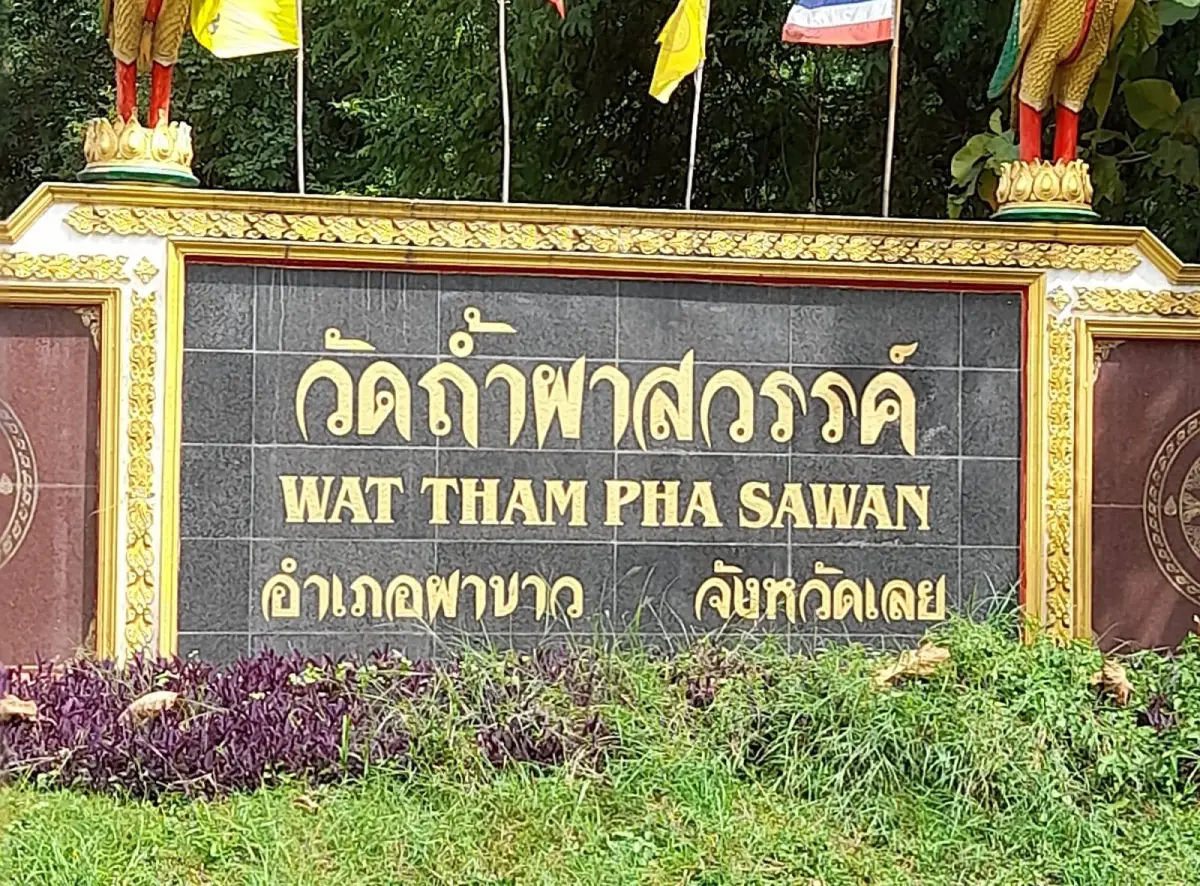
TL;DR: Wat Tham Pha Sawan is located at Ban Pha Sawan, Ban Phoem Subdistrict, Pha Khao District, Loei Province, open Daily, hours 08.00 – 17.00.
Wat Tham Pha Sawan
Open Days: Daily
Opening Hours: 08.00 – 17.00
Wat Tham Pha Sawan in Loei Province is a mountain cave temple located in Ban Phoem Subdistrict, Pha Khao District. It is one of the most attractive natural and Buddhist sites in the Ban Pha Sawan community, known for its limestone cave, tunnel-like passages, stalactites, stalagmites, naturally tiered walking routes, forested surroundings, a hilltop viewpoint, and a peaceful atmosphere suitable for worship, relaxation, photography, and eco-conscious travel. Visitors can walk up toward the higher area of the temple to pay respect to Buddha images, explore the cave environment, and enjoy wide views over village roads, farmland, rubber plantations, rice fields, and sweet tamarind orchards around the community.
Wat Tham Pha Sawan is set in Ban Pha Sawan, Ban Phoem Subdistrict, Pha Khao District, Loei Province. The village lies in a highland area surrounded by mountains and natural streams. The name Ban Pha Sawan is closely connected with the nearby cliff. During March and April, trees on the cliff change color as they shed their leaves, creating a beautiful landscape that local people compared to a heavenly scene. In 1979, the community changed its name from Ban Kok Kok to Ban Pha Sawan, preserving this image of a beautiful cliff that looked like a celestial place.
The landscape of Ban Pha Sawan gives the temple a distinctive identity. This is not a flatland temple in a busy town center. It is part of a mountain, cave, forest, and farming environment. The community around the temple depends on agriculture and natural resources, including rice fields, rubber plantations, sweet tamarind orchards, fruit gardens, vegetable plots, and small-scale livestock. For travelers, a visit to Wat Tham Pha Sawan is therefore not only about seeing a cave. It is also a way to understand how Buddhist faith, village life, mountain scenery, forest, and water sources are connected in rural Loei.
The main attraction of the temple is Pha Sawan Cave. In the past, the cave was called Tham Pha Chang Noi because one rock inside the cave resembles a small elephant lying down. Local people have also called it a miraculous cave because of its impressive setting and natural features. The area outside the cave includes a broad flat space, while the inside contains rock chambers, tunnel-like passages, limestone formations, and naturally tiered routes. These elements make the cave an important natural and cultural landmark for the Ban Pha Sawan community.
The cave formations inside Wat Tham Pha Sawan were created slowly through natural processes. Water passing through limestone carried minerals that accumulated little by little over a long period of time. Some formations hang from the cave ceiling as stalactites, while others rise from the floor as stalagmites. Some surfaces appear like rock curtains, textured walls, or natural stone pillars. These formations are fragile, and visitors should never touch, break, write on, or remove anything from the cave. Responsible behavior helps preserve the beauty of the cave for future visitors.
The tunnel-like passages are another memorable feature of the cave. Some sections feel open and spacious, while others are narrower, darker, or more winding. Natural light entering from openings creates a changing play of light and shadow on the cave walls. Walking through the cave slowly allows visitors to observe the forms of the rock, the temperature changes, the texture of the limestone, and the quiet atmosphere that makes cave temples so different from ordinary temples. This is a place to explore with care, not a place to rush through.
The route up to the hilltop area is an important part of the Wat Tham Pha Sawan experience. Visitors walk about 300 meters upward to reach the viewpoint area, where a pavilion and principal Buddha image can be found. From this higher point, the view opens across village roads, nearby homes, agricultural land, rubber plantations, rice fields, and sweet tamarind orchards. The view helps travelers understand the relationship between the temple, the cliff, the forest, and the everyday life of the Ban Pha Sawan community.
The path leading upward follows the natural levels of the terrain. Some parts are stairways or walking paths shaped by the slope of the hill and the rock surface. Visitors should wear comfortable non-slip shoes and walk carefully. Elderly visitors or travelers with knee or ankle problems should assess their physical condition before continuing to higher areas. Those taking photographs should stop in safe places rather than walking and photographing at the same time. The cave and mountain environment is beautiful but requires attention and caution.
In religious terms, Wat Tham Pha Sawan is a local Buddhist temple and a spiritual center for people in Ban Phoem and Pha Khao District. The current abbot is Phra Khru Satjayanaprasut. Monks reside at the temple, and the community continues to hold Buddhist activities such as merit-making, Kathin ceremonies, and religious gatherings. Visitors should therefore remember that the site is not only a tourist attraction. It is an active temple used by local people for worship, community merit-making, and Buddhist practice.
The principal Buddha image and worship areas are important stops for visitors before or after exploring the cave. The mountain and cave setting gives the act of worship a quiet and reflective atmosphere. Many travelers come to make merit, pray, rest the mind, and spend time away from busier destinations. The temple does not rely on grandeur or heavy commercial development. Its strength lies in the calm atmosphere created by rock, forest, cave chambers, and the simple rhythm of a community temple.
The forest around Wat Tham Pha Sawan adds to the temple’s appeal. The shade, vegetation, and surrounding mountain slopes make the area suitable for relaxation and eco-conscious travel. The forest also connects with the livelihood of the community, including local food plants, farming areas, and water sources. Visitors who understand this relationship will see that the value of the temple is not limited to the cave. It includes the entire landscape of mountain, forest, water, agriculture, and Buddhist faith.
Ban Pha Sawan also has several natural water resources connected with local life, such as Fai Luang, Wang Duean Ha, Ang Nong Pham, Huai Hin Ngon, and Huai Hin. These water sources support agriculture and daily living in the community. Fai Luang is a small watercourse that flows throughout the year and has been developed as a water-retention weir for agriculture. Wang Duean Ha is a natural pool that holds water even during the driest period of the year. These features show how closely the village depends on mountain water and local ecological balance.
The community of Ban Pha Sawan is a Thai Isan community made up of people from different backgrounds and dialect areas, yet they live together through shared agricultural life and Buddhist cultural traditions. Local people continue to observe Isan customs such as the twelve-month merit-making cycle and community festivals. Important traditions include merit-making for Buddhist Lent, harvest-related ceremonies, Bun Khao Chi, Bun Maha Chat, Songkran, Bun Bang Fai, Bun Samha, Bun Khao Sak, Ok Phansa, Kathin, and Loy Krathong. This cultural background gives the temple a deeper meaning as part of a living community.
For travelers, Wat Tham Pha Sawan is ideal for those who prefer quiet, less crowded, and nature-based destinations. Cave-temple visitors can experience cool air, limestone chambers, and the silent mood of a sacred natural space. Photographers can capture Buddha images, rock formations, cliff scenery, forested slopes, and the hilltop view. Travelers interested in conservation can see how a village uses its natural landscape as a cultural and economic resource without turning the area into a fully commercial tourist complex.
The best times to visit are morning and late afternoon. Morning offers cooler air, softer light, and a calm atmosphere for worship. Late afternoon is good for photography from the viewpoint, especially when the farmland and village scenery appear warm under the slanting light. During the rainy season, the forest becomes greener and fresher, but the paths and rock surfaces can be slippery. During the cool season, the weather in Loei is comfortable for walking, cave exploration, and sightseeing.
Travel to Wat Tham Pha Sawan is most convenient by private car or rental car. From Pha Khao District town, continue toward Ban Phoem Subdistrict and Ban Pha Sawan. The community is about 9 km northeast of the district office. Travelers from Loei town can drive through Wang Saphung and continue toward Pha Khao District before entering Ban Phoem Subdistrict. The final part of the route uses local roads, so drivers should be careful, especially during rain or in the evening.
Getting There can be done by searching online maps for “Wat Tham Pha Sawan, Ban Phoem Subdistrict, Pha Khao District, Loei Province” or by using the location code 4WCM+95J / 4WCM+F7P in Ban Phoem Subdistrict. After arriving at the temple, visitors should park in a suitable area and begin from the lower temple ground before walking toward the cave, viewpoint, and principal Buddha image. A visit of at least 1–2 hours is recommended for worship, cave viewing, photography, and resting at the viewpoint.
Visitors should prepare appropriate shoes, drinking water, a hat or umbrella, and a small flashlight if they want to observe darker cave details. High heels or slippery sandals are not suitable because parts of the route follow rock levels and may be damp. Clothing should be modest because the site is an active Buddhist temple, but it should also be comfortable enough for walking up the hill and entering the cave area.
Temple and cave etiquette should be respected at all times. Visitors should speak quietly, avoid loud music, keep the area clean, avoid writing on cave walls, avoid touching stalactites and stalagmites, stay on safe paths, and never remove stones or natural objects from the cave. Buddha images and worship areas should be approached with respect. Responsible travel protects both the sacred atmosphere and the natural heritage of the cave.
For photography, recommended subjects include the temple entrance, the limestone cliff behind the temple, the cave entrance, tunnel passages, stalactites, stalagmites, the viewpoint pavilion, the principal Buddha image, and the wide view over Ban Pha Sawan. Photographs should be taken without disturbing worshippers, monks, or other visitors. Flash photography inside the cave should be used carefully, and no photo should require touching sacred objects or natural formations.
Wat Tham Pha Sawan can be combined with several nearby attractions in Pha Khao District and surrounding areas. Travelers can visit Wat Tham Chai Si, Wat Phoem Phon Samakkhi, Wat Mai Khok Yai, Mai Nam Goat Farm, and the local water resources of Ban Pha Sawan. With more time, the route can extend to Erawan Cave, Suan Hin Pha Ngam, and other natural attractions in the western part of Loei Province. This makes the temple a useful starting point for a nature and community route.
A half-day trip can focus on Wat Tham Pha Sawan in the morning, including worship, the cave, the viewpoint, and a local café or restaurant in Pha Khao District. A full-day itinerary can add Wat Tham Chai Si, Mai Nam Goat Farm, or community water sites. Travelers who prefer a slower pace can stay overnight in Pha Khao District or Ban Phoem Subdistrict, allowing time to enjoy the village atmosphere in the morning and evening.
From an eco-tourism perspective, Wat Tham Pha Sawan is valuable because it shows how a community can use natural heritage as a source of learning and relaxation. The cave, forest, rock formations, water sources, and village landscape must be protected carefully. Visitors can help by leaving no rubbish, avoiding damage to cave formations, respecting temple rules, and supporting local shops or homestays when appropriate. Good tourism is not only about reaching a destination but also about leaving it in good condition for future visitors.
Wat Tham Pha Sawan is therefore one of the most distinctive cave-temple destinations in Pha Khao District, Loei Province. It combines cave tunnels, stalactites, stalagmites, forest, hillside paths, a viewpoint, Buddha images, and the cultural memory of Ban Pha Sawan in one place. Visitors who come with respect for the temple, the cave, the forest, and the local community will find that this destination offers more than scenic beauty. It offers a quiet encounter with Buddhist faith, mountain nature, and the rural life of Loei.
| Name | Wat Tham Pha Sawan |
| Location | Ban Pha Sawan, Ban Phoem Subdistrict, Pha Khao District, Loei Province |
| Address | 4WCM+95J / 4WCM+F7P, Ban Phoem Subdistrict, Pha Khao District, Loei Province 42240, Thailand |
| Highlights | Mountain cave temple with cave tunnels, stalactites, stalagmites, naturally tiered walking routes, viewpoint pavilion, principal Buddha image, and shaded forest suitable for eco-conscious travel |
| Distinctive Features | Pha Sawan Cave was formerly called Tham Pha Chang Noi because a rock inside the cave resembles a small elephant lying down. Local people also call it a miraculous cave. |
| Name Origin | Ban Pha Sawan is named after the beautiful cliff near the village, especially during the season when trees on the cliff change color and create a heavenly-looking landscape |
| Community Context | Ban Pha Sawan is a Thai Isan community surrounded by mountains, with agricultural livelihoods, rice fields, rubber plantations, sweet tamarind orchards, and Buddhist cultural traditions |
| Travel Information | From Pha Khao District town, travel toward Ban Phoem Subdistrict and Ban Pha Sawan. The community is about 9 km from the district office. Private car or rental car is recommended. |
| Current Status | Active local Buddhist temple and community natural attraction for worship, cave viewing, viewpoint visits, and eco-conscious relaxation |
| Open Days | Daily |
| Opening Hours | 08.00 – 17.00 |
| Facilities | Parking, public toilets, worship areas, temple courtyard, cave route, viewpoint, rest pavilion, and natural forest surroundings |
| Main Areas / Zones | Lower temple ground, natural rock stairway, cave entrance, cave tunnel, stalactite and stalagmite zone, limestone pool inside the cave, Buddha image worship area, viewpoint pavilion, principal Buddha image area, and surrounding forest |
| Abbot / Caretaker | Phra Khru Satjayanaprasut |
| Main Contact Number | 063-494-6302 |
| Local Administrative Office | Ban Phoem Subdistrict Administrative Organization, Tel. 042-810-766 |
| Nearby Tourist Attractions | 1. Fai Luang, Ban Pha Sawan, about 2 km 2. Wang Duean Ha, Ban Pha Sawan, about 3 km 3. Mai Nam Goat Farm, Ban Phoem Subdistrict, about 4 km, Tel. 087-087-0030 4. Wat Tham Chai Si, Ban Phoem Subdistrict, about 5 km 5. Wat Phoem Phon Samakkhi, Ban Phoem Subdistrict, about 6 km 6. Wat Mai Khok Yai, Ban Phoem Subdistrict, about 8 km 7. Erawan Cave, Loei Province, about 40 km 8. Suan Hin Pha Ngam / Kunming of Loei, about 45 km |
| Nearby Restaurants | 1. Panyaratsami Coffee, Ban Phoem, about 3 km 2. Boon Si Thai Restaurant, Ban Phoem, about 4 km 3. Local Made-to-Order Restaurant, Pha Khao District, about 12 km 4. Hakna Cafe Pha Khao, about 14 km, Tel. 095-932-6635 5. Jaew Hon Yonyuk Pha Khao, about 15 km, Tel. 093-451-3269 6. Alatar Cafe’, Pha Khao District, about 16 km, Tel. 098-889-3949, 080-898-8949 |
| Nearby Accommodations | 1. Wat Tham Pha Sawan Homestay, about 1 km, Tel. 063-494-6302 2. Ban Mo Din Daeng Homestay, Ban Phoem Subdistrict, about 6 km 3. Baan Suan Homestay Pha Khao, about 15 km, Tel. 093-223-0756 4. Asia Resort, Pha Khao District, about 16 km, Tel. 081-016-4688 5. Nattharika Resort, Pha Khao District, about 16 km, Tel. 081-964-9268, 083-358-7979 6. Flash Home Pha Khao, about 17 km |
Frequently Asked Questions (FAQ)
Q: Where is Wat Tham Pha Sawan located?
A: Wat Tham Pha Sawan is located in Ban Phoem Subdistrict, Pha Khao District, Loei Province, within the Ban Pha Sawan community surrounded by mountains and natural cave scenery.
Q: What are the opening hours of Wat Tham Pha Sawan?
A: The temple is open daily from 08.00 to 17.00. Morning and late afternoon are the most suitable times for worship, cave viewing, and viewpoint photography.
Q: What can visitors see at Wat Tham Pha Sawan?
A: Visitors can see a natural cave, tunnel-like passages, stalactites, stalagmites, naturally tiered routes, a viewpoint pavilion, a principal Buddha image, a limestone pool inside the cave, and wide views over the village and farmland.
Q: What was the original name of Pha Sawan Cave?
A: Pha Sawan Cave was formerly called Tham Pha Chang Noi because a rock inside the cave resembles a small elephant lying down. Local people also call it a miraculous cave.
Q: Who is the abbot of Wat Tham Pha Sawan?
A: The abbot of Wat Tham Pha Sawan is Phra Khru Satjayanaprasut.
Q: How can travelers get to Wat Tham Pha Sawan?
A: From Pha Khao District town, travel toward Ban Phoem Subdistrict and Ban Pha Sawan, about 9 km from the district office. Private car or rental car is the most convenient option.
Q: What should visitors prepare before visiting Wat Tham Pha Sawan?
A: Visitors should dress modestly, wear comfortable non-slip shoes, bring drinking water, a hat or umbrella, and a small flashlight for darker cave corners. Avoid entering the cave or climbing higher areas during heavy rain.
Q: What nearby attractions can be visited with Wat Tham Pha Sawan?
A: Nearby attractions include Fai Luang, Wang Duean Ha, Mai Nam Goat Farm, Wat Tham Chai Si, Wat Phoem Phon Samakkhi, Wat Mai Khok Yai, Erawan Cave, and Suan Hin Pha Ngam.
 Category: ●Places of Worship
 Group: ●Temple
Last Update : 2 MonthAgo
 Last Update : 2 MonthAgo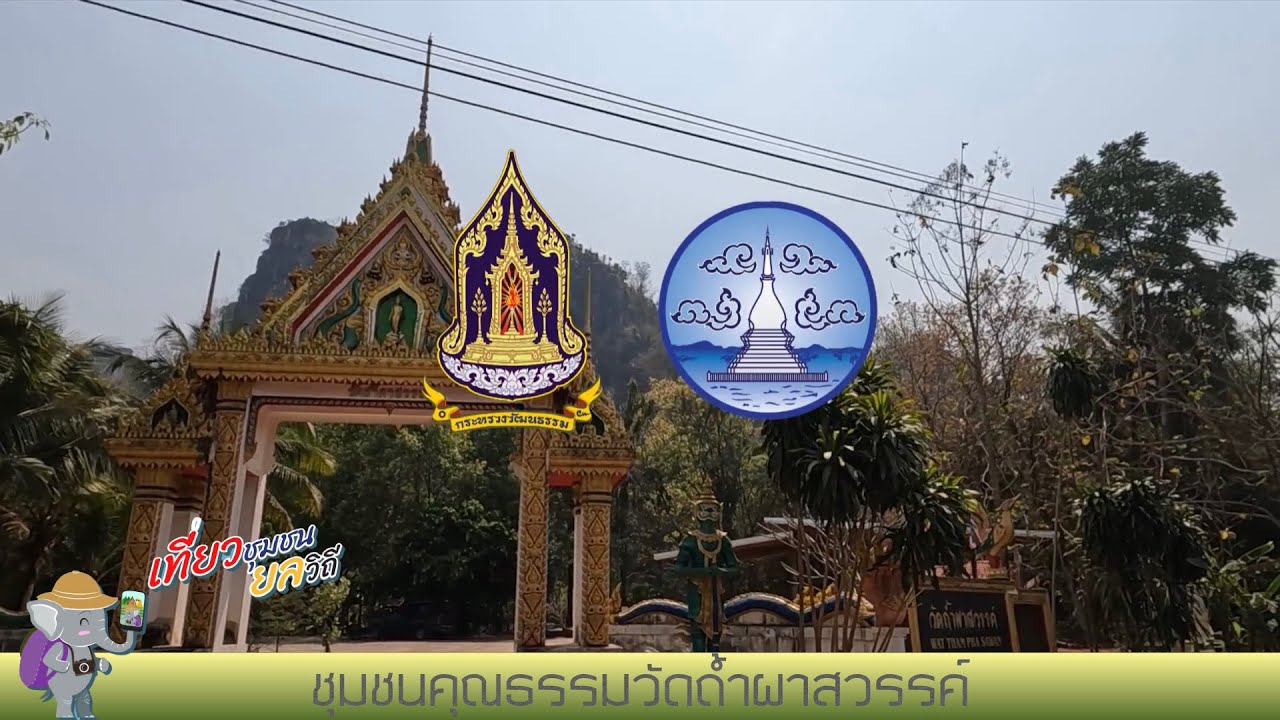
 Click to Access the Navigation Map GPS
Wat Tham Pha Sawan Map
Recommend

 Art, Culture and Heritage
 Historical Sites and Monuments(2)
 Landmarks and Memorials(3)
 Art, Craft Centres, Tradition(2)
 Museums(4)
 Art Gallery(1)
 Educational Places
 Educational Gardens, Farm(2)
Temple(16)
Educational Gardens, Farm(2)
Temple(16)
 Other Sacred Sites(8)
 Research and Development
 Royal Project(3)
 Suburban Living
 Village, Community(3)
 Local Market(1)
 Nature and Wildlife
 National Parks and Marine Reserves(5)
 Mountain (Doi)(10)
 Dam, Reservoir, Lake(7)
 Waterfalls(21)
 Caves(3)
 River, Canal(5)
 Bays and Beaches(1)
 Other natural attractions(1)
 Entertainment and Agricultural
 Farms, Parks and Ecotourism(8)
 Waterpark(1)
 Outdoor and Adventure Activities(2)


