
lovethailand home >Northeastern Travel Attractions >Loei Travel Attractions >Phu Kra Dueng >Phu Kra Dueng > Phu Hin Thaen Dinosaur Site
TL;DR: Phu Hin Thaen Dinosaur Site is located at Phu Kho-Phu Kratae Forest, Moo 9, Ban Nong Sano, Phu Kradueng Subdistrict, Phu Kradueng District, Loei Province, Thailand, open Daily, hours 08.00 – 17.00.

Phu Hin Thaen Dinosaur Site
Open Days: Daily
Opening Hours: 08.00 – 17.00
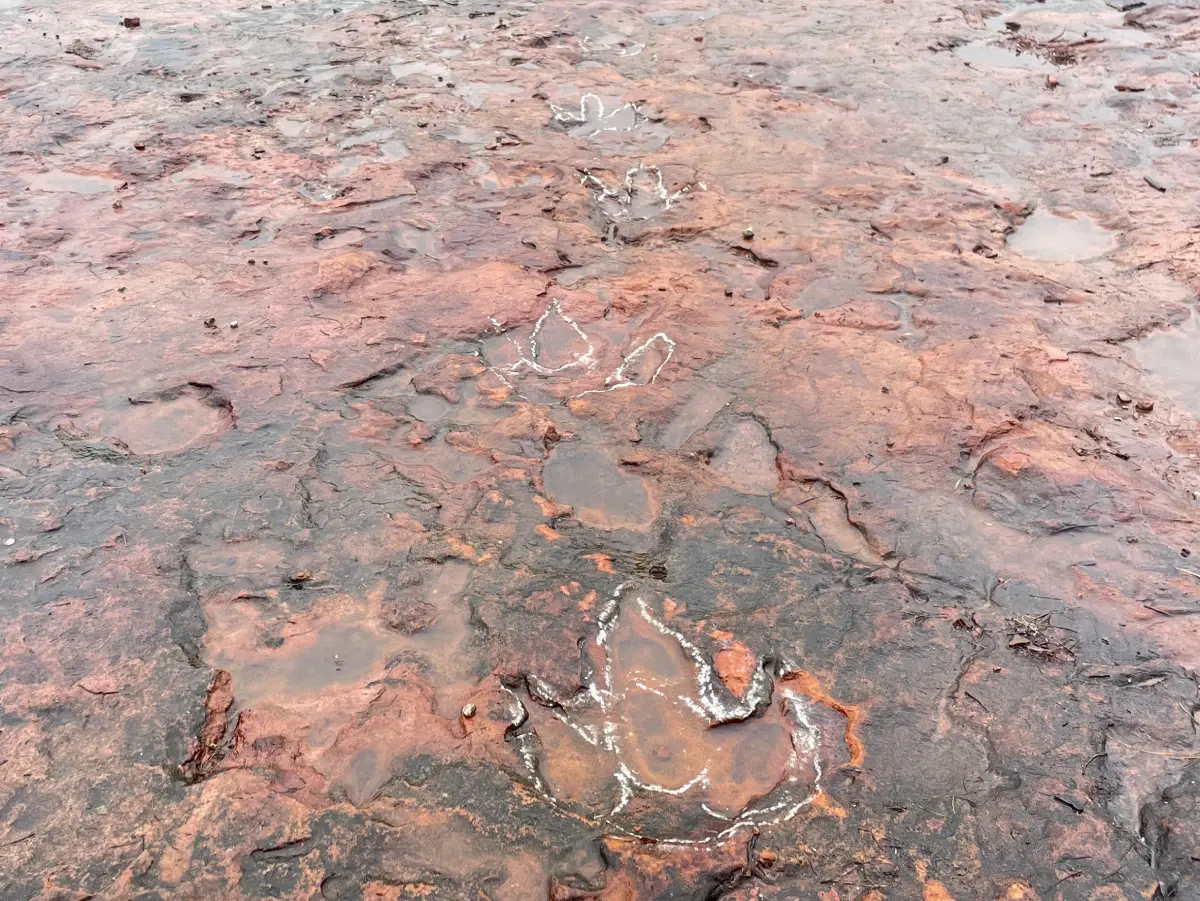
Phu Hin Thaen Dinosaur Site is an important fossil locality in the Phu Kho-Phu Kratae forest area, Moo 9, Ban Nong Sano, Phu Kradueng Subdistrict, Phu Kradueng District, Loei Province, northeastern Thailand. Although it is sometimes mentioned in connection with dinosaur routes in Isan or confused with Khon Kaen, the actual excavation site is in Loei Province. The site became significant after the discovery of herbivorous dinosaur bones on 7 December 2006 by Phra Achan Joi Akhathammo. The most important reported find was a left upper hind-leg bone of a plant-eating dinosaur, with features similar to Isanosaurus attavipachii, a sauropod dinosaur known from Chaiyaphum Province. Because the fossil is associated with the reddish sandstone of the Nam Phong Formation and the Late Triassic period, it is estimated to be around 210 million years old.
The importance of Phu Hin Thaen is not limited to a single fossil bone. It represents a rare natural archive of life from a very ancient period of Earth history. The Nam Phong Formation is one of the key rock units for understanding early dinosaur evidence in Thailand. Fossils found in this formation are connected with the Late Triassic, a time when dinosaurs were becoming increasingly important in terrestrial ecosystems. For this reason, Phu Hin Thaen is valuable not only as a local discovery site, but also as part of Thailand’s wider paleontological record.
The name Phu Hin Thaen reflects a landscape of hills, sandstone, forest, and rocky ground. This is not a roadside tourist park or a modern indoor museum. It is a fossil locality in a natural forest setting. Visitors should understand from the beginning that a visit here requires more preparation than visiting a conventional attraction. According to geological access information, travelers can start from Phu Kradueng District Office, drive north for about 4 km, pass Wat Nong Sano, and then continue on foot for about 3 km to reach the fossil site. This makes the place more suitable for travelers with a serious interest in geology, paleontology, and field-based learning.
The discovery made on 7 December 2006 brought attention to this forested area. After the fossil remains were reported, dinosaur specialists and related authorities examined the site. Early reports described several bone fragments, including neck bones, vertebrae, ribs, a left hind-leg bone, and a shin bone. This means Phu Hin Thaen was not merely an isolated accidental find, but a locality with potential for understanding dinosaur remains in their geological context.
The dinosaur material from Phu Hin Thaen has been compared with Isanosaurus attavipachii, a herbivorous sauropod dinosaur from northeastern Thailand. Isanosaurus is important because it belongs to an early stage in sauropod evolution. The comparison helps place the Phu Hin Thaen fossil within a broader scientific discussion about early long-necked dinosaurs in Thailand and Southeast Asia. Even if the material requires careful scientific interpretation, the site clearly has value because it expands the known fossil landscape beyond the better-known dinosaur areas of Khon Kaen, Kalasin, and Chaiyaphum.
The Late Triassic period, about 210 million years ago, was a very different world from the present. Land environments were changing, dinosaur groups were diversifying, and the ancestors of later giant sauropods were beginning to establish their place in terrestrial ecosystems. Finding a dinosaur fossil from this time in Thailand gives visitors a new perspective on the deep history of Isan. The region is often known for Buddhist temples, mountains, forests, and local culture, but beneath these modern landscapes lie records of animals that lived long before humans existed.
The reddish sandstone of the Nam Phong Formation is central to understanding the site. Red sandstone often indicates ancient continental environments where sediments accumulated on land. The discovery of dinosaur bones in such rock suggests that the area once supported terrestrial animals in ancient river, floodplain, or dry-land environments. When visitors walk through the present-day forest and hills, they are moving across a landscape that holds evidence of ecosystems from hundreds of millions of years ago.
For general travelers, it is important to understand that Phu Hin Thaen is not like Phu Wiang Dinosaur Museum or Sirindhorn Museum. There are no large indoor exhibitions, polished displays, or reconstructed skeletons at the site itself. Its value lies in being a real fossil locality in a real geological setting. Visitors should therefore approach the place with patience, respect, and proper preparation. The experience is less about entertainment and more about seeing where scientific discovery begins.
Phu Hin Thaen offers a different kind of travel experience. Instead of looking at dinosaur models or museum labels, visitors encounter the landscape connected with the fossil discovery. The route passes through local communities, forested land, and sandstone terrain. This makes the site meaningful because it shows how fossils are part of the natural environment and local geography. It also reminds travelers that paleontological discoveries often begin with careful observation by local people, monks, villagers, or those who spend time in the landscape.
The role of Phra Achan Joi Akhathammo in the discovery is especially meaningful. Many important fossil discoveries do not begin in laboratories. They often begin when someone in the local area notices an unusual bone or rock and reports it to specialists. Phu Hin Thaen is a clear example of local observation leading to scientific importance. The site therefore links local knowledge, Buddhist monastic presence, geology, and paleontology in one story.
From a learning perspective, Phu Hin Thaen is suitable for students, teachers, geology enthusiasts, paleontology learners, and travelers who want to understand natural history beyond museum displays. The site can help explain how fossils are found, how bone fragments are compared with known dinosaur species, how rock formations provide age context, and why preserving the original location of a fossil is scientifically important. These concepts are easier to understand when connected to a real site.
Phu Kradueng District is already famous for Phu Kradueng National Park, one of Thailand’s most iconic sandstone table mountains. Phu Hin Thaen adds another dimension to the district. It shows that the area is not only important for present-day scenery, waterfalls, cliffs, and trekking routes, but also for deep geological time. A traveler who visits both the fossil locality and Phu Kradueng National Park can appreciate the relationship between ancient rock layers and modern landscapes more clearly.
Getting There requires careful planning. From Phu Kradueng District Office, travel north by car for about 4 km, passing Wat Nong Sano. From that area, visitors continue on foot for about 3 km to reach the Phu Hin Thaen dinosaur fossil locality. Travelers from Loei city should first travel toward Phu Kradueng District. Travelers from Khon Kaen can drive toward Loei Province and continue to Phu Kradueng. A private car is the most practical option because the fossil site is not located directly beside a major tourist road.
Visitors should contact local authorities before going to the site. Phu Kradueng Subdistrict Administrative Organization, Phu Kradueng Municipality, or geological authorities may provide updated information on access, local conditions, and safety. This is especially important during the rainy season, when forest paths can become muddy, slippery, or difficult to follow. Because the site is in a natural area rather than a managed city attraction, current local guidance is more important than relying only on map applications.
The best season to visit is generally the cool season to early dry season, when walking conditions are more comfortable and the path is less affected by rain. Visitors should start early in the day to allow enough time to enter and leave the area before evening. Recommended items include drinking water, a hat, sun protection, insect repellent, suitable walking shoes, and basic field clothing. Visitors should avoid entering the forested area alone without updated route information.
The most important rule at a fossil site is to preserve everything in place. Visitors must not dig, hammer, scratch, move stones, collect fragments, or remove anything from the area. Fossils are scientific evidence. Even a small piece of rock may have value when studied in its original geological position. Removing material without permission destroys context and can permanently reduce the scientific value of the site. Photography, observation, and respectful learning are the proper ways to experience Phu Hin Thaen.
The main areas of interest can be understood as Ban Nong Sano community, Wat Nong Sano, the walking route into the Phu Kho-Phu Kratae forest, the Phu Hin Thaen fossil locality, and the surrounding sandstone landscape of the Nam Phong Formation. This helps visitors see that the fossil site is connected to community, forest, geology, and local access routes. It is not an isolated point on a map, but part of a wider cultural and natural landscape.
Travelers interested in dinosaurs can combine Phu Hin Thaen with other nature and geology destinations in the area. Phu Kradueng National Park is the strongest nearby destination because it allows visitors to experience sandstone cliffs, waterfalls, forest trails, and highland landscapes. Seeing both a fossil locality and a sandstone mountain environment helps make the geological story of the district more complete.
A practical one-day plan from Phu Kradueng town should begin early. Contact local authorities or a local guide first, then travel to Ban Nong Sano and Wat Nong Sano. Continue on foot to the Phu Hin Thaen fossil locality, spend time learning and photographing respectfully, then return to Phu Kradueng town for lunch or rest. Travelers who also want to climb Phu Kradueng National Park should plan it as a separate day because the national park route requires time, energy, and a very different level of preparation.
Families with children can visit Phu Hin Thaen, but parents should assess the children’s readiness before the trip. The site involves walking and natural terrain, so it is not the same as visiting a dinosaur park with paved paths. For children who love dinosaurs, however, the experience can be powerful. They can learn that fossils are not only found in museums, but also in real rocks, forests, and local landscapes. Parents should make sure children do not pick up stones, go near unsafe edges, or leave the walking route.
For international travelers, Phu Hin Thaen provides a rare view of Thailand’s paleontological heritage beyond the famous tourist routes. Many foreign visitors know Thailand for temples, beaches, food, and markets, but northeastern Thailand also has important dinosaur fossils and geological sites. Explaining Phu Hin Thaen as a Late Triassic herbivorous dinosaur locality connected with the Nam Phong Formation helps foreign readers understand why this modest forest site has real scientific value.
Facilities near the fossil locality itself are limited. Most restaurants, accommodation, and services are in Phu Kradueng town or near the route to Phu Kradueng National Park. Visitors should plan food, water, transport, toilets, and timing in advance. This is especially important for families, elderly travelers, and foreign visitors who may not be familiar with rural or forest travel conditions in Thailand.
Food options in Phu Kradueng include local restaurants, Isan food shops, simple made-to-order restaurants, cafés, and places used by hikers heading to Phu Kradueng National Park. Some restaurants may operate seasonally or according to tourist traffic, so checking ahead is recommended. After visiting Phu Hin Thaen, eating in Phu Kradueng town is usually more practical than trying to find food near the forest access area.
Accommodation is also concentrated in and around Phu Kradueng District. Resorts, homestays, and guesthouses near the national park route are useful for travelers who want to explore the area without rushing. Staying overnight gives visitors more time to contact local authorities, prepare for the walk to Phu Hin Thaen, and potentially add Phu Kradueng National Park or nearby attractions to the trip.
Visitors should also respect the local community and natural environment. Do not litter, damage plants, disturb residents of Ban Nong Sano, make unnecessary noise, or enter private or restricted areas. A fossil site has value only when both the evidence and its surroundings are protected. Responsible behavior allows local people, researchers, students, and future travelers to continue learning from the site.
Overall, Phu Hin Thaen Dinosaur Site is a small destination in terms of tourism infrastructure but a large destination in terms of scientific meaning. It connects a local discovery by a monk, Late Triassic dinosaur evidence, the Nam Phong Formation, the forested landscape of Phu Kradueng, and the broader dinosaur story of northeastern Thailand. For travelers who want something deeper than a standard photo stop, it offers a direct connection to Earth history.
In conclusion, Phu Hin Thaen Dinosaur Site in Loei Province is a valuable paleontological destination for visitors interested in Thai dinosaurs, geology, and natural history. The site is known for herbivorous dinosaur fossils found in the Phu Kho-Phu Kratae forest near Ban Nong Sano, with an estimated age of around 210 million years. Its fossil material is comparable to Isanosaurus attavipachii and is associated with the Late Triassic Nam Phong Formation. The site requires preparation and respect, but for serious cultural, educational, and nature travelers, it offers a rare opportunity to encounter the deep prehistoric story of northeastern Thailand in its real landscape.
| Name | Phu Hin Thaen Dinosaur Site / Phu Hin Thaen Dinosaur Excavation Site |
| Location | Phu Kho-Phu Kratae Forest, Moo 9, Ban Nong Sano, Phu Kradueng Subdistrict, Phu Kradueng District, Loei Province, Thailand |
| Province Note | The actual fossil site is in Loei Province, not Khon Kaen Province |
| Highlights | A Late Triassic herbivorous dinosaur fossil locality in reddish sandstone of the Nam Phong Formation, estimated to be around 210 million years old |
| Discovery | First discovered on 7 December 2006 by Phra Achan Joi Akhathammo, with a key reported fossil being a left upper hind-leg bone of a herbivorous dinosaur |
| Scientific Significance | The fossil material is similar to Isanosaurus attavipachii from Chaiyaphum Province and is associated with the Nam Phong Formation |
| Estimated Age | Approximately 210 million years |
| Geological Period | Late Triassic |
| Distinctive Features | A natural forest fossil locality, suitable for field-based geology and paleontology learning rather than conventional museum-style tourism |
| Travel Information | From Phu Kradueng District Office, drive north for about 4 km, pass Wat Nong Sano, then continue on foot for about 3 km to reach the Phu Hin Thaen dinosaur fossil locality |
| Current Status | A fossil locality and geological learning site in the Phu Kho-Phu Kratae forest area, Phu Kradueng District, Loei Province |
| Open Days | Daily |
| Opening Hours | 08.00 – 17.00 |
| Facilities | Natural forest setting; visitors should prepare drinking water, sun protection, suitable walking shoes, and contact local authorities before entering the area |
| Main Areas / Zones | Ban Nong Sano community zone, Wat Nong Sano access zone, Phu Kho-Phu Kratae forest walking zone, Phu Hin Thaen fossil locality zone, and Nam Phong Formation sandstone learning zone |
| Caretaker / Local Authority | The Phu Kho-Phu Kratae forest area is state land, with fossil-site records indicating Forest Department land ownership. Local access information should be requested from Phu Kradueng Subdistrict Administrative Organization, Phu Kradueng Municipality, or geological authorities |
| Main Contact Number | Phu Kradueng Subdistrict Administrative Organization Tel. 042-039-209 / Phu Kradueng Municipality Tel. 042-871-015, 042-871-080 |
| Official Website / Official Page | www.phukradungsao.go.th / www.phukradueng-loei.go.th / Department of Mineral Resources www.dmr.go.th |
| Nearby Tourist Attractions | 1. Wat Nong Sano, about 3 km 2. Phu Kradueng District Town, about 7 km 3. Phu Kradueng National Park, about 12 km 4. Pha Nok Aen inside Phu Kradueng National Park, about 18 km 5. Wang Kwang Waterfall inside Phu Kradueng National Park, about 19 km 6. Suan Hin Pha Ngam, Nong Hin District, about 45 km |
| Nearby Restaurants | 1. Baan Phuean Restaurant Phu Kradueng, about 7 km, Tel. 084-851-5561 2. Bai Fern Pee Jo Chawang Phu Kradueng, about 12 km, Tel. 087-213-9273, 080-668-4229 3. Rai Style Sit Phu Kradueng, about 12 km, Tel. 082-462-4197 4. Chao Pa Cafe & Camping, about 18 km, Tel. 095-198-6485 5. Dek Phu Cafe Phu Kradueng, about 18 km, Tel. 096-118-6977 6. Tor Borikan Restaurant Phu Kradueng, about 8 km |
| Nearby Accommodations | 1. Ban Thip Suwan Resort Phu Kradueng, about 12 km, Tel. 086-850-1109, 081-964-8419, 061-043-4991 2. Phu Nam Fah Resort Phu Kradueng, about 13 km, Tel. 081-799-7379 3. Baan Sri Sunon Homestay Phu Kradueng, about 12 km, Tel. 082-116-2334, 087-947-3789 4. Uab Im Resort Phu Kradueng, about 10 km, Tel. 095-146-0145 5. Phu Kradueng National Park Accommodation, about 12 km, Tel. 042-810-834 6. Baan Suan Resort Nong Hin, about 35 km, Tel. 080-462-0775 |
Frequently Asked Questions (FAQ)
Q: Is Phu Hin Thaen Dinosaur Site in Khon Kaen or Loei?
A: The actual Phu Hin Thaen Dinosaur Site is in the Phu Kho-Phu Kratae forest area, Ban Nong Sano, Phu Kradueng District, Loei Province, not Khon Kaen Province.
Q: When was Phu Hin Thaen Dinosaur Site first discovered?
A: It was first discovered on 7 December 2006 by Phra Achan Joi Akhathammo.
Q: What kind of dinosaur was found at Phu Hin Thaen?
A: The fossil belongs to a herbivorous dinosaur and is similar to Isanosaurus attavipachii, an early sauropod dinosaur associated with the Nam Phong Formation.
Q: How old is the Phu Hin Thaen dinosaur fossil?
A: The fossil is estimated to be about 210 million years old and belongs to the Late Triassic period.
Q: How can visitors get to Phu Hin Thaen Dinosaur Site?
A: From Phu Kradueng District Office, drive north for about 4 km, pass Wat Nong Sano, then continue on foot for about 3 km to reach the fossil locality.
Q: What are the opening hours?
A: The site is listed as open daily from 08.00 to 17.00, but visitors should contact local authorities before traveling because the site is in a natural forest area and requires walking access.
Q: What should visitors prepare before going?
A: Visitors should prepare suitable walking shoes, drinking water, sun protection, insect repellent, and updated local route information. Entering the area without current guidance is not recommended.
Q: What nearby places can be visited with Phu Hin Thaen Dinosaur Site?
A: Nearby places include Wat Nong Sano, Phu Kradueng National Park, Pha Nok Aen, Wang Kwang Waterfall, and other nature attractions in Phu Kradueng District.
 Category: ●Art, Culture and Heritage
 Group: ●Historical Sites and Monuments
Last Update : 1 MonthAgo
 Last Update : 1 MonthAgo
 Click to Access the Navigation Map GPS
Phu Hin Thaen Dinosaur Site Map
Recommend
 Historical Sites and Monuments(2)
 Landmarks and Memorials(3)
 Art, Craft Centres, Tradition(2)
 Museums(4)
 Art Gallery(1)
 Educational Places
 Educational Gardens, Farm(2)
 Places of Worship
 Temple(16)
 Other Sacred Sites(8)
 Research and Development
 Royal Project(3)
 Suburban Living
 Village, Community(3)
 Local Market(1)
 Nature and Wildlife
 National Parks and Marine Reserves(5)
 Mountain (Doi)(10)
 Dam, Reservoir, Lake(7)
 Waterfalls(21)
 Caves(3)
 River, Canal(5)
 Bays and Beaches(1)
 Other natural attractions(1)
 Entertainment and Agricultural
 Farms, Parks and Ecotourism(8)
 Waterpark(1)
 Outdoor and Adventure Activities(2)


