
lovethailand home >Northeastern Travel Attractions >Loei Travel Attractions >Wang Saphung >Khao Luang > Pha Bao Pha Saow Project
TL;DR: Pha Bao Pha Saow Project is located at Ban Na Sam Saeng, Village No. 5, Khao Luang Subdistrict, Wang Saphung District, Loei Province, open Daily, hours 08.00 – 17.00.
Pha Bao Pha Saow Project
Open Days: Daily
Opening Hours: 08.00 – 17.00
Phabao-Phasao Royal Initiative Project in Loei Province is a peaceful nature-based attraction, occupational learning center, and community development area in Khao Luang Subdistrict, Wang Saphung District, Loei Province. The site is best known for 2 distinctive hills locally called “Pha Bao” and “Pha Sao”. Surrounded by forested slopes, cool air, rocky resting areas, and mountain views, it is suitable for travelers who want to experience a quieter side of Loei while learning about community livelihoods and royal development work in northeastern Thailand.
The project is located at Ban Na Sam Saeng, Village No. 5, Khao Luang Subdistrict, Wang Saphung District. It is more than a scenic viewpoint. The area carries significance in local history, natural resource restoration, and occupational development. The land was once associated with degraded forest and livelihood pressure in rural communities. It was later developed as a project area to support local people who lacked farmland, promote practical occupations, improve household income, and restore the surrounding forest environment.
The name Phabao-Phasao comes from the 2 hills standing close to each other in the same area. One hill is called Pha Bao, while the other is called Pha Sao. These names reflect the relationship between the landscape and local imagination, turning the 2 hills into a memorable symbol of the community. When visitors arrive, they see a simple but meaningful landscape of hills, trees, open spaces, and village surroundings. The atmosphere is calm and uncommercial, making it different from many mainstream tourist destinations.
The importance of Phabao-Phasao is closely connected with the royal initiative of Her Majesty Queen Sirikit The Queen Mother, who expressed deep concern for people in northeastern Thailand, particularly rural residents facing poverty, lack of farmland, and pressure on forest resources. The royal initiative led to the development of this area as a project to support local livelihoods, create occupations, and rehabilitate degraded forest. Its long-term value lies in the balance between people, forests, and sustainable community development.
The project covers 275 rai, 2 ngan, and 29 square wah. It has been developed as a living space where royal craft work, agriculture, forest conservation, and educational tourism are connected. Local occupations promoted in the area include mulberry cultivation, silkworm raising, silk weaving, silk yarn production, dyeing, and other community-based skills. These activities help local residents generate income and preserve Thai craft knowledge. For visitors, the site offers a chance to understand how occupational development can work alongside environmental restoration.
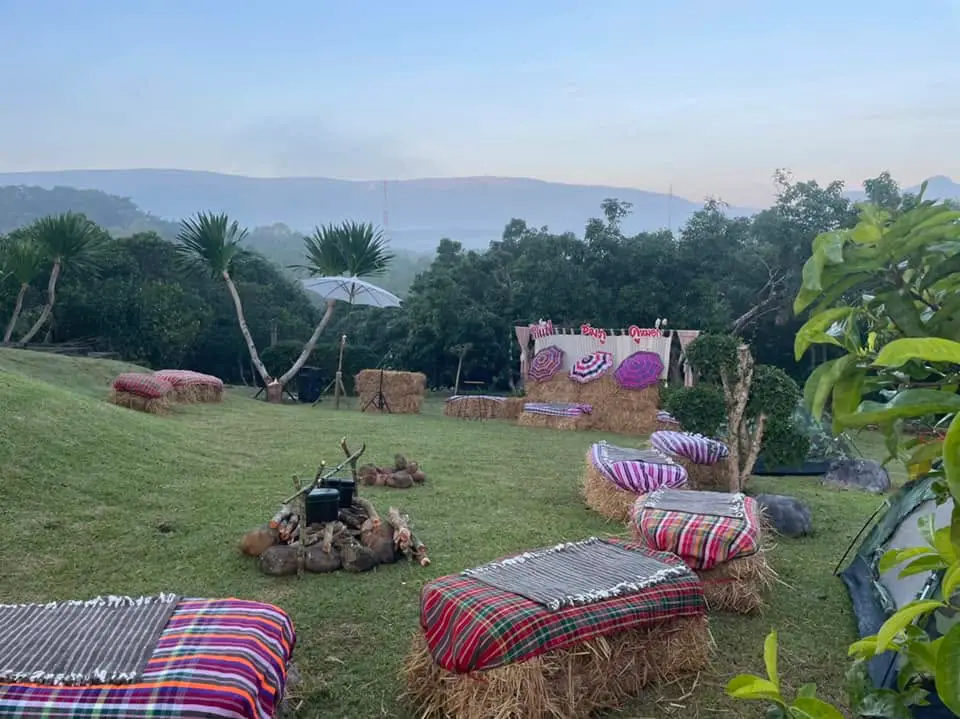
For travelers, the first impression is the quiet mountain atmosphere. Pha Bao and Pha Sao stand as natural landmarks, with trees covering the slopes and green spaces surrounding the area. At the foot of the hills, rocky resting spots and open areas allow visitors to sit, relax, enjoy the cool air, and observe the scenery. Loei Province is well known for its mountainous geography and cooler climate compared with many other parts of northeastern Thailand. During the cool season and early morning hours, the atmosphere can be especially pleasant.
The charm of Phabao-Phasao lies in its simplicity. It is not a heavily commercialized attraction. Visitors can walk around, enjoy the view, rest near the base of the hills, and learn about local occupational groups. The site is suitable for students, study groups, cultural travelers, visitors interested in agricultural lifestyles, and anyone who wants to see how a royal development project can connect forest restoration with real livelihood support.
The occupational learning areas are what make Phabao-Phasao different from an ordinary viewpoint. Mulberry cultivation and silk-related activities reflect Thai craft wisdom and community self-reliance. The process of growing mulberry, raising silkworms, producing silk yarn, dyeing, and weaving requires patience, skill, and attention to detail. A visit here therefore gives travelers a deeper understanding of the relationship between nature, work, and local culture in Loei Province.
The project also has strong environmental value. Restoring degraded forest and replanting trees helps strengthen the landscape over time. Healthy forest areas reduce soil erosion, create shade, improve local ecology, and support the long-term balance of the community environment. Visitors should view this site as an educational landscape rather than only a photo stop. Its story is about the transformation of land through care, work, and community participation.
The base area of the hills is suitable for quiet relaxation. Rocky spots, open spaces, trees, and mountain views create a simple natural setting. Morning and late afternoon are especially comfortable times to visit. Travelers who enjoy photography can capture the hills, soft sunlight, local greenery, and rural scenery without the crowds often found at more famous destinations. During the cool season and the transition from rainy season to winter, the air in Loei can be especially refreshing.
Phabao-Phasao is best experienced slowly. Visitors should spend at least 1–2 hours walking around, reading about the project, observing the natural surroundings, and learning from the occupational areas when available. This type of travel creates a more meaningful connection with the place and can also help support local communities. It is a suitable destination for travelers who value learning, cultural context, and authentic rural landscapes.
For families, the project is a good place to introduce children and young travelers to nature, royal development work, and community occupations. The story is easy to understand because it can be seen directly through the landscape, the restored green areas, and local livelihood activities. Children can learn how forests, hills, agriculture, and craft work are connected, while adults can enjoy a calm and meaningful travel experience.
For visitors from outside Loei, Phabao-Phasao adds another dimension to the province. Loei is often associated with Phu Kradueng, Phu Ruea, and Chiang Khan, but this project shows a quieter and more community-based side of the province. It highlights how mountains, forests, silk craft, and village livelihoods can become part of a meaningful travel route. The site works well as part of a Wang Saphung itinerary or as a cultural stop before continuing to Loei city.
Visitors can enter the project daily from 08.00 to 17.00, and there is no admission fee. Morning visits are recommended for cooler air and softer light, while late afternoon is suitable for relaxed photography and quiet rest near the hill base. Travelers who want to learn more about local occupations should allow more time than a quick viewpoint visit, as the value of the place lies in both the landscape and its development story.
Getting There is most convenient by private car, rental car, or motorcycle. The project is located at Ban Na Sam Saeng, Khao Luang Subdistrict, Wang Saphung District, around 26 km from Loei city. Travelers can start from Loei city or Wang Saphung town, then continue toward Khao Luang Subdistrict and Ban Na Sam Saeng. Using a navigation map is helpful, and asking local residents for directions can also be useful because some sections pass through community and rural roads.
From Loei city, drive toward Wang Saphung District and continue to Khao Luang Subdistrict. The route passes through rural scenery, agricultural areas, communities, and mountain views. Traveling in the morning gives visitors more time at the site and reduces the need to drive on unfamiliar rural roads after dark. From Wang Saphung town, the trip is shorter and can easily be combined with nearby attractions, restaurants, and accommodations in the district.
Useful items to bring include comfortable walking shoes, a hat, drinking water, a camera, and a light jacket during the cool season. Although the main visitor areas are not difficult trekking routes, travelers should dress respectfully, keep the area clean, avoid littering, and refrain from climbing risky rocky or hillside areas. Visitors should also respect community activities and occupational groups working inside the project.
A trip to Phabao-Phasao can be combined with nearby places in Wang Saphung and Loei Province, such as the sandstone boundary stones at Ban Pak Baeng and Ban Na Lak, Sirindhorn Art Center, Wang Saphung town, Loei city, and other mountain routes in the province. For travelers with more time, the project can be included in a broader itinerary that connects community learning, local food, and natural scenery.
Phabao-Phasao should be visited with respect for its purpose. Its value is not only in the beauty of 2 hills but also in the story of royal initiative, livelihood support, forest restoration, and local resilience. When seen with this understanding, the hills become more than natural landmarks. They represent a relationship between people and forest, work and dignity, and community development rooted in care for the land.
In summary, Phabao-Phasao Royal Initiative Project in Loei Province is ideal for travelers seeking a quiet natural setting, mountain views, occupational learning, and a deeper understanding of royal development work in Thailand. Open daily with no admission fee, it is suitable for families, study groups, cultural travelers, and visitors interested in rural life, silk craft, forest restoration, and community-based tourism in Loei.
| Name | Phabao-Phasao Royal Initiative Project |
| Location | Ban Na Sam Saeng, Village No. 5, Khao Luang Subdistrict, Wang Saphung District, Loei Province |
| Address | Village No. 5, Ban Na Sam Saeng, Khao Luang Subdistrict, Wang Saphung District, Loei 42130, Thailand |
| Highlights | Two hills called Pha Bao and Pha Sao, mountain scenery, forested slopes, cool atmosphere, community occupational areas, and a royal initiative learning site |
| History | Established as a royal initiative project to support people lacking farmland, promote occupations, improve quality of life, and restore degraded forest. The project covers 275 rai, 2 ngan, and 29 square wah. |
| Name Origin | The name comes from 2 hills standing close together in the area: one is called Pha Bao and the other Pha Sao. |
| Distinctive Features | A nature viewpoint, agricultural learning area, and occupational development project featuring activities such as mulberry cultivation, silkworm raising, silk weaving, and community craft work. |
| Travel Information | Best reached by private car, rental car, or motorcycle. From Loei city, drive toward Wang Saphung District, then continue to Khao Luang Subdistrict and Ban Na Sam Saeng. The site is about 26 km from Loei city. |
| Current Status | Open as a tourist attraction, learning site, and community occupational development area. |
| Open Days | Daily |
| Opening Hours | 08.00 – 17.00 |
| Fees | No admission fee |
| Facilities | Rest areas, viewpoint areas, community occupational zones, learning areas, and parking spaces in designated areas. |
| Main Areas / Zones | Pha Bao hill area, Pha Sao hill area, lower hill rest area, royal craft occupational area, mulberry and silk learning area, and natural viewpoint area. |
| Caretaker / Responsible Agencies | A royal initiative project with related government agencies and local authorities involved in project care and public information. |
| Official Website / Official Page | Facebook: โครงการเทิดพระเกียรติฯผาบ่าว-ผาสาว |
| Nearby Tourist Attractions | 1. Sandstone Boundary Stones at Ban Pak Baeng and Ban Na Lak, about 18 km 2. Sirindhorn Art Center, Wang Saphung, about 18 km 3. Bueng Khla Health Park, Wang Saphung, about 20 km 4. Loei City and Loei Walking Street, about 32 km 5. Phu Luang Wildlife Sanctuary, about 55 km |
| Nearby Restaurants | 1. Pranee Me Bar, about 18 km, Tel. 084-4042994 2. Hongtae Korean BBQ, about 19 km, Tel. 083-9922499 3. Kham Wan Home Cafe, about 19 km, Tel. 083-4282323 4. Tam Loei Na Pa Pao, about 20 km 5. Krua Kan Eng Wang Saphung, about 18 km |
| Nearby Accommodations | 1. Wang Saphung In View Hotel, about 18 km, Tel. 081-5051569 2. The Cozy Hotel Wang Saphung, about 19 km, Tel. 095-6548965 3. Rim Loei Homestay Wang Saphung, about 19 km, Tel. 098-9239808, 081-2349859 4. Suan Lamyai Resort, about 20 km, Tel. 081-8375458 5. Sakol Plang Resort, about 21 km, Tel. 042-841483, 099-0719937 6. Smile Resort Wang Saphung, about 21 km, Tel. 081-9656853 |
Frequently Asked Questions (FAQ)
Q: Where is Phabao-Phasao Royal Initiative Project located?
A: It is located at Ban Na Sam Saeng, Village No. 5, Khao Luang Subdistrict, Wang Saphung District, Loei Province.
Q: What makes Phabao-Phasao special?
A: The site is known for 2 hills called Pha Bao and Pha Sao, forested surroundings, cool air, peaceful rest areas, and occupational learning zones linked to a royal initiative project.
Q: How is this project related to a royal initiative?
A: It was developed under the royal initiative of Her Majesty Queen Sirikit The Queen Mother to support local livelihoods, promote occupations, and restore forest resources.
Q: What are the opening days and hours?
A: The project is open daily from 08.00 to 17.00.
Q: Is there an admission fee?
A: No. There is no admission fee.
Q: How can travelers get to Phabao-Phasao?
A: The most convenient way is by private car, rental car, or motorcycle. From Loei city, drive toward Wang Saphung District and continue to Khao Luang Subdistrict and Ban Na Sam Saeng. The site is about 26 km from Loei city.
Q: Who is this place suitable for?
A: It is suitable for families, students, study groups, cultural travelers, nature lovers, and visitors interested in agriculture, silk craft, forest restoration, and community-based learning.
Q: When is the best time to visit?
A: Morning and late afternoon are the best times because the weather is more comfortable and the light is good for photography. The cool season and the transition from rainy season to winter are especially pleasant in Loei.
 Category: ●Research and Development
 Group: ●Royal Project
Last Update : 1 MonthAgo
 Last Update : 1 MonthAgo
 Click to Access the Navigation Map GPS
Pha Bao Pha Saow Project Map
Recommend

 Art, Culture and Heritage
 Historical Sites and Monuments(2)
 Landmarks and Memorials(3)
 Art, Craft Centres, Tradition(2)
 Museums(4)
 Art Gallery(1)
 Educational Places
 Educational Gardens, Farm(2)
 Places of Worship
 Temple(16)
 Other Sacred Sites(8)
Royal Project(3)
Other Sacred Sites(8)
Royal Project(3)
 Suburban Living
 Village, Community(3)
 Local Market(1)
 Nature and Wildlife
 National Parks and Marine Reserves(5)
 Mountain (Doi)(10)
 Dam, Reservoir, Lake(7)
 Waterfalls(21)
 Caves(3)
 River, Canal(5)
 Bays and Beaches(1)
 Other natural attractions(1)
 Entertainment and Agricultural
 Farms, Parks and Ecotourism(8)
 Waterpark(1)
 Outdoor and Adventure Activities(2)


