
lovethailand home >Northeastern Travel Attractions >Loei Travel Attractions >Tha Li >Tha Li > Makha Yak (Giant Makha)
TL;DR: Makha Yak (Giant Makha), Loei attractions : Nature and Wildlife, Other natural attractions.
Makha Yak (Giant Makha)
Open Days: Open by advance booking through the local community tourism program
Opening Hours: Day-trip access is scheduled from 05.00 – 13.00, with descent completed by 18.00; overnight visitors must arrive at the preparation point before 14.00
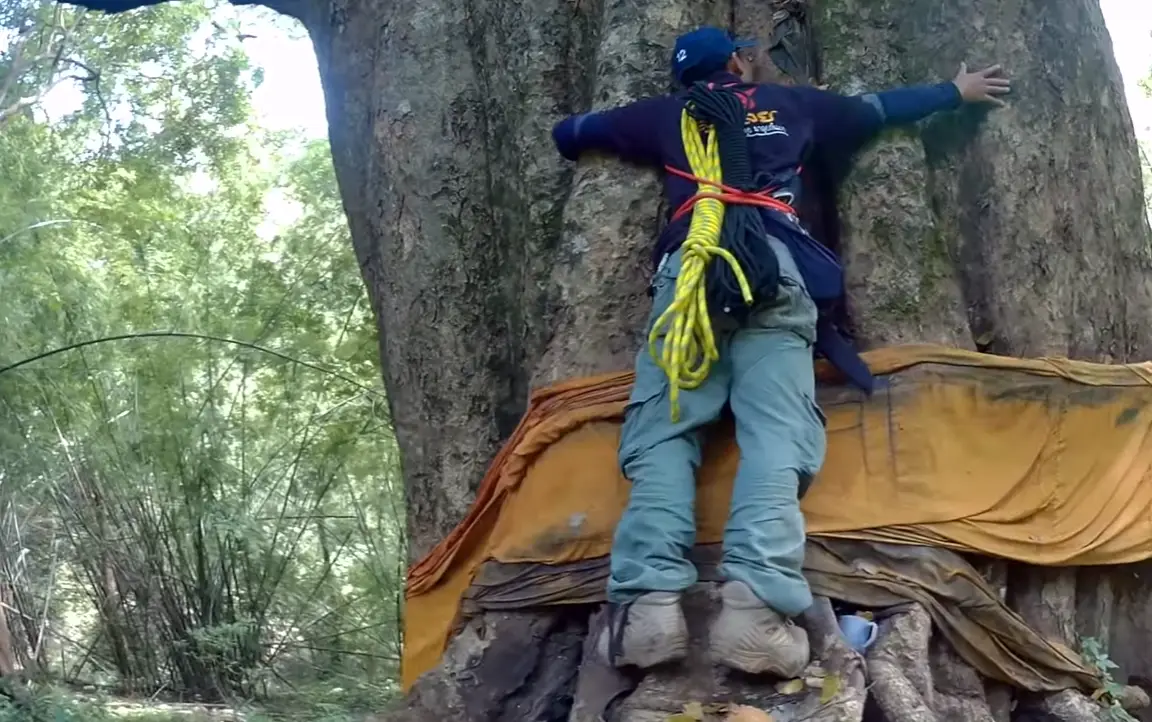
The Giant Makha Tree at Phu Pha Ngaem is one of the most distinctive nature-based community attractions in Tha Li District, Loei Province. Located in the Phu Pha Ngaem forest area of Ban Yang, Moo 5, Tha Li Subdistrict, this remarkable Makha tree has a trunk circumference of 978 centimeters at its base. It stands about 12 kilometers south of Tha Li District, and the route leading up to the tree becomes especially beautiful in the cool season, when wildflowers bloom along the forest trail. For travelers seeking a quiet, natural, and community-led experience in Loei, this is one of Tha Li’s most meaningful hidden destinations.
Phu Pha Ngaem is not simply a place to see a large tree. It is a community tourism route that connects forest, mountain scenery, local knowledge, and the way of life of Ban Yang village. Visitors experience a part of Loei that is different from the province’s more familiar destinations such as Chiang Khan or Phu Ruea. Here, the journey is slower, greener, and more rooted in local care. The Giant Makha Tree is the highlight, but the wider experience includes community hospitality, forest travel, viewpoints, camping areas, and the cultural landscape of Tha Li, a peaceful border district connected to Laos by the Hueang River.
The Giant Makha Tree is valuable because it represents the strength and maturity of the local forest. A tree with a base circumference of 978 centimeters cannot be replaced within a short period of time. It is a living landmark that reflects the long natural development of the area. Standing beside the trunk allows visitors to understand why the tree has become a symbol of Phu Pha Ngaem. Its size is impressive, but its deeper significance lies in what it tells us about conservation, community pride, and the importance of protecting old-growth trees in local forest areas.
The atmosphere around the tree is calm and natural. Unlike city attractions or heavily developed tourist sites, Phu Pha Ngaem still feels like a real forest route. Visitors move through a landscape of trees, mountain air, local trails, and quiet viewpoints. The experience is not designed for a quick photo stop. It is best appreciated slowly, with time to observe the forest, listen to the guide, and understand how local people manage tourism while protecting their natural resources.
Ban Yang, where the Giant Makha Tree is located, is a rural community with strong agricultural roots and local cultural identity. The village is associated with traditional livelihoods, bamboo craft knowledge, and important religious sites such as Wat Phra That Umong and Wat Umong Mangkhlaram. Local stories link the name Ban Yang to the Yang ethnic group or Karen-related settlement memory, while another explanation connects the name to Huai Yang, a local stream that joins the Khan River. These layers of history make the journey to the Giant Makha Tree more than a nature trip; it is also an introduction to the identity of Ban Yang community.
The Phu Pha Ngaem tourism route is managed by the local community, especially the Phu Pha Ngaem-Makha Yak Tourism Club in cooperation with Ban Yang and Ban Kok Kan Lueang. Visitors should book in advance because the trip requires local transportation, route guidance, food, drinking water, and safety arrangements. This community-based system helps prevent visitors from entering the forest without guidance, reduces environmental impact, and ensures that tourism income supports the people who help protect the area.
The route is suitable for travelers who enjoy active nature experiences. It is not a site where visitors can drive directly to the final point in a private car. Under the community program, travelers usually continue by local vehicle for about 40 minutes and then walk for around 45 minutes to reach the Giant Makha Tree and the Phu Pha Ngaem viewpoint area. The journey is manageable for visitors with a reasonable level of fitness, but it requires preparation. Proper walking shoes, comfortable clothing, drinking water, and a willingness to follow local safety instructions are essential.
The best season to visit is the cool season. During this period, the weather is more comfortable for walking, the forest atmosphere is fresh, and wildflowers along the route create a beautiful natural setting. Morning travel is recommended because the light is soft, the air is cooler, and the schedule leaves enough time for the ascent and descent. For day trips, visitors must follow the scheduled access window from 05.00 to 13.00 and descend before 18.00. For overnight trips, arrival at the preparation point before 14.00 is required for safety and logistics.
The preparation point for the Phu Pha Ngaem route is Wat Phra That Umong, a significant local religious site in Ban Yang. Starting the trip here gives visitors a chance to see the connection between the natural and spiritual landscape of the community. Before heading up the mountain, travelers can receive route instructions, check equipment, confirm services, and prepare for the forest section. This structure also reinforces the role of the community in caring for both cultural heritage and natural resources.
The main areas of the route include Wat Phra That Umong as the meeting point, the local vehicle section, the walking trail, the Giant Makha Tree area, the Phu Pha Ngaem viewpoint, and the camping zone. This sequence helps visitors understand the journey as a complete experience rather than a single destination. The transition from village to forest, from vehicle route to walking trail, and from tree to viewpoint creates a strong sense of place. It shows how local people and the forest remain closely connected.
Visitors should treat the Giant Makha Tree with respect. Do not climb the tree, carve the bark, step on exposed roots, or leave any trash in the forest. Old trees are vulnerable to repeated physical disturbance, and the surrounding soil and root systems must be protected. Responsible travel is especially important here because the value of the attraction depends on the continued health of the tree and forest. The best way to enjoy the site is to observe, photograph carefully, listen to local guidance, and leave the environment as untouched as possible.
The cool-season wildflowers are one of the route’s most memorable features. Along the way to the Giant Makha Tree, natural blooms add color to the forest trail and make the walk more rewarding. Photographers should avoid stepping into fragile vegetation or picking flowers. The natural beauty of Phu Pha Ngaem belongs to the whole community, and every visitor helps determine whether the trail remains attractive for future travelers.
For travelers interested in local history, the Giant Makha Tree can be combined with Ban Yang’s cultural sites. Wat Phra That Umong is regarded as an important sacred site of the village, while Wat Umong Mangkhlaram reflects the continuing role of Buddhism in local life. Starting the mountain route from a temple area gives the trip a meaningful cultural frame. Visitors can see how faith, forest, and community identity are woven together in Tha Li.
Travelers should prepare for the route as they would for a light trekking trip. Recommended items include suitable walking shoes, a hat, cool-season clothing, personal medication, drinking water, and a small bag for carrying personal waste back down. Those joining an overnight program should prepare personal necessities and follow the camping rules set by the local team. This is a natural area, not a fully urbanized attraction, so personal preparation directly affects comfort and safety.
Families with children or elderly travelers should contact the local caretaker before booking. Although the walking section is around 45 minutes, trail conditions, weather, and individual fitness levels can make the route more demanding. Local guidance is useful for assessing whether the trip is suitable for all members of the group. Traveling with the community team also ensures better timing, safer route management, and support in case adjustments are needed.
Within Loei Province, the Giant Makha Tree at Phu Pha Ngaem adds a different dimension to the travel map. Loei is widely known for mountains, cool weather, culture, and scenic towns, but Tha Li offers a quieter borderland experience. It is less crowded and more community-oriented. The Giant Makha Tree is therefore ideal for travelers who want to explore beyond mainstream routes and discover a natural landmark that belongs deeply to the local landscape.
The trip can be combined with nearby attractions in Tha Li District. Wat Phra That Satcha at Wat Lat Pu Songtham is one of the district’s major sacred sites. Kaeng Ton offers a relaxing natural water area with rocks and stream scenery. The Thai-Lao Nam Hueang Friendship Bridge reflects Tha Li’s role as a border district. Huai Khai Waterfall adds another nature stop, while Phu Ruea National Park can be included in a wider Loei itinerary. Together, these sites create a travel route that blends forest, faith, water, border culture, and mountain scenery.
Wat Phra That Satcha is especially meaningful for visitors who want to understand Tha Li’s spiritual identity. The stupa was built in connection with the faith surrounding Phra That Phanom after the collapse of the original Phra That Phanom in 1975. It has become an important place of worship in Tha Li and is associated with an annual worship tradition. Combining Wat Phra That Satcha with the Giant Makha Tree allows travelers to see both the sacred and natural sides of the district.
Kaeng Ton is a good stop for a more relaxed part of the trip. Its stream and rock scenery make it suitable for resting and enjoying local nature, especially when water conditions are safe. Visitors should avoid entering the water during strong currents or after heavy rain. For those descending from Phu Pha Ngaem, Kaeng Ton can provide a slower, refreshing stop before returning to town or continuing toward other attractions.
The Thai-Lao Nam Hueang Friendship Bridge is another recommended stop for travelers interested in geography and border life. The bridge links the Thai side of Tha Li with Laos across the Hueang River. It represents the district’s role in cross-border movement, trade, and cultural contact. A visit to the bridge gives the itinerary a broader sense of place and helps foreign travelers understand why Tha Li is more than a mountain district; it is also a border community with regional connections.
Food planning is important for this trip because the Phu Pha Ngaem route requires energy and time. Around Tha Li, travelers can find local restaurants, coffee shops, and simple dining options such as Kafae Por Dee Bakery Por Jai, Yai Chuea Restaurant, Naya Coffee Cottage, PunThai Coffee on Road 2115, and Je O Tom Yum Noodle Tha Li. Visitors joining the community program should check whether meals and drinking water are included in their selected package before preparing additional food.
Accommodation options are available in Tha Li and nearby areas. Travelers who want to stay close to the district can consider Le Bar Tarry Hotel, Por Pieang accommodation, Hero & Hug Loft Hotel, Baan Suan Rim Tharn Resort, or local homestays in Ban Yang. Those continuing toward Phu Ruea may choose Phurua Bussaba Resort & Spa. Staying near Tha Li the night before the trip is convenient because the day-trip schedule can begin early in the morning.
The most rewarding way to experience the Giant Makha Tree is to slow down. Listen to local stories, observe the forest, and understand why one tree can matter so much to a village. The attraction is not built around luxury facilities; it is built around a living natural landmark and the people who protect it. This makes it a valuable destination for travelers interested in responsible travel, local culture, and conservation.
In summary, the Giant Makha Tree at Phu Pha Ngaem is a strong choice for nature lovers, tree enthusiasts, soft-adventure travelers, and visitors looking for a meaningful community-based experience in Loei Province. Its key strengths are the 978-centimeter trunk circumference, the forest route, the wildflowers in the cool season, the viewpoint, and the community-managed travel program. With proper preparation and advance contact, this destination offers a deep and memorable view of Tha Li’s natural and cultural landscape.
| Name | Giant Makha Tree at Phu Pha Ngaem |
| Location | Ban Yang, Moo 5, Tha Li Subdistrict, Tha Li District, Loei Province |
| Address | Phu Pha Ngaem Forest Area, Ban Yang, Moo 5, Tha Li Subdistrict, Tha Li District, Loei 42140, Thailand |
| Coordinates | Ban Yang Community Coordinates: 17.5704341758811, 101.4177087104484 |
| Highlights | A giant Makha tree in the Phu Pha Ngaem forest with a base circumference of 978 centimeters |
| History / Significance | A community-based nature attraction developed by Ban Yang and Ban Kok Kan Lueang as the Phu Pha Ngaem-Makha Yak tourism route, officially introduced as a Tha Li attraction on 16 December 2019 |
| Name Origin | The name comes from the very large Makha tree in the Phu Pha Ngaem forest; Ban Yang’s name is linked to local stories about the Yang ethnic group and Huai Yang stream |
| Distinctive Features | Forest trail, giant tree, mountain viewpoint, camping area, and wildflowers blooming along the route during the cool season |
| Travel Information | Reach Tha Li District by private car via Loei-Tha Li, Chiang Khan-Tha Li, or Phu Ruea-Tha Li routes. From the preparation point at Wat Phra That Umong, continue by local vehicle for about 40 minutes and walk for about 45 minutes |
| Current Status | Community-managed nature attraction requiring advance contact with local caretakers |
| Open Days | Open by advance booking through the local community tourism program |
| Opening Hours | Day-trip access is scheduled from 05.00 – 13.00, with descent completed by 18.00; overnight visitors must arrive at the preparation point before 14.00 |
| Community Tourism Fees | Day trip: 350 THB/person; overnight program: 690 THB/person for 2 or more travelers, or 890 THB for 1 traveler |
| Facilities | Local transfer service, meals, drinking water, tent, sleeping bag, sleeping mat, lighting equipment, accident insurance, and camping area depending on the selected program |
| Main Areas / Zones | Wat Phra That Umong preparation point, local vehicle route, forest walking trail, Giant Makha Tree area, Phu Pha Ngaem viewpoint, camping area |
| Caretaker | Phu Pha Ngaem-Makha Yak Tourism Club, Ban Yang-Ban Kok Kan Lueang community, and Tha Li Subdistrict Administrative Organization |
| Main Contact Number | 098-210-4626, 063-732-3245, 093-521-1664 |
| Nearby Tourist Attractions | 1. Wat Phra That Umong, Ban Yang, about 2 km 2. Phra That Satcha at Wat Lat Pu Songtham, about 12 km 3. Kaeng Ton, Ban Pak Huai, about 15 km 4. Thai-Lao Nam Hueang Friendship Bridge, about 22 km 5. Huai Khai Waterfall, about 28 km 6. Phu Ruea National Park, about 45 km |
| Nearby Restaurants | 1. Kafae Por Dee Bakery Por Jai, about 13 km, Tel. 090-985-7022 2. Yai Chuea Restaurant, about 13 km, Tel. 093-496-0022 3. Naya Coffee Cottage, about 13 km, Tel. 085-927-3769 4. PunThai Coffee Road 2115 Tha Li, about 13 km, Tel. 093-325-4416 5. Je O Tom Yum Noodle Tha Li, about 14 km, Tel. 093-459-8505 6. Tha Li Grandview Restaurant, about 15 km, Tel. 095-665-4695 |
| Nearby Accommodations | 1. Baan Jae O Homestay, Ban Yang, about 2 km 2. Le Bar Tarry Hotel, about 14 km, Tel. 042-889-442, 095-754-6268 3. Por Pieang Accommodation, Tha Li, about 13 km, Tel. 090-985-7022, 065-962-9900 4. Hero & Hug Loft Hotel, about 13 km, Tel. 090-961-6542, 061-934-8788 5. Baan Suan Rim Tharn Resort, Tha Li, about 22 km, Tel. 089-570-1963 6. Phurua Bussaba Resort & Spa, about 40 km, Tel. 042-899-299, 042-899-330, 082-394-2619 |
Frequently Asked Questions (FAQ)
Q: Where is the Giant Makha Tree at Phu Pha Ngaem located?
A: It is located in the Phu Pha Ngaem forest area of Ban Yang, Moo 5, Tha Li Subdistrict, Tha Li District, Loei Province, about 12 kilometers south of Tha Li town.
Q: How large is the Giant Makha Tree?
A: The tree has a base circumference of 978 centimeters, making it the main natural landmark of the Phu Pha Ngaem community tourism route.
Q: Do visitors need to contact the local caretaker before visiting?
A: Yes. Visitors should contact the Phu Pha Ngaem-Makha Yak Tourism Club at least 1 day in advance because the route requires local transport, guidance, and safety arrangements.
Q: When is the best time to visit the Giant Makha Tree?
A: The cool season is the best time to visit because the weather is comfortable and wildflowers bloom beautifully along the route to the tree.
Q: Is there an admission fee?
A: The community tourism program has service fees. The day-trip program costs 350 THB per person, while the overnight program costs 690 THB per person for 2 or more travelers, or 890 THB for 1 traveler.
Q: Is the route difficult?
A: The route is suitable for active travelers. It includes about 40 minutes by local vehicle and around 45 minutes on foot, so proper walking shoes and basic fitness are recommended.
Q: Can visitors stay overnight at Phu Pha Ngaem?
A: Yes. The overnight program is available through the local community, and visitors must arrive at the preparation point before 14.00 for safety and logistics.
Q: What attractions can be visited nearby?
A: Nearby attractions include Wat Phra That Umong, Phra That Satcha, Kaeng Ton, the Thai-Lao Nam Hueang Friendship Bridge, Huai Khai Waterfall, and Phu Ruea National Park.
 Category: ●Nature and Wildlife
 Group: ●Other natural attractions
Last Update : 1 MonthAgo
 Last Update : 1 MonthAgo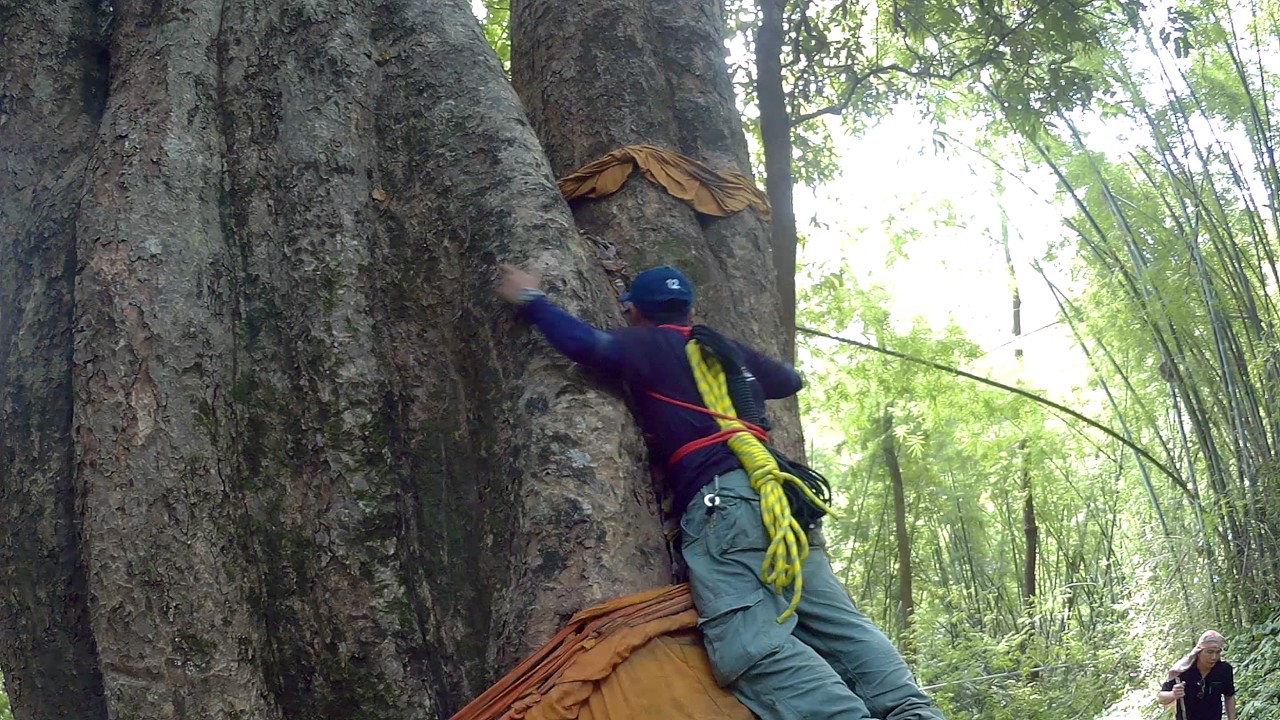
 Click to Access the Navigation Map GPS
Makha Yak (Giant Makha) Map
Recommend

 Art, Culture and Heritage
 Historical Sites and Monuments(2)
 Landmarks and Memorials(3)
 Art, Craft Centres, Tradition(2)
 Museums(4)
 Art Gallery(1)
 Educational Places
 Educational Gardens, Farm(2)
 Places of Worship
 Temple(16)
 Other Sacred Sites(8)
 Research and Development
 Royal Project(3)
 Suburban Living
 Village, Community(3)
 Local Market(1)
 National Parks and Marine Reserves(5)
 Mountain (Doi)(10)
 Dam, Reservoir, Lake(7)
 Waterfalls(21)
 Caves(3)
 River, Canal(5)
 Bays and Beaches(1)
Other natural attractions(1)
Bays and Beaches(1)
Other natural attractions(1)
 Entertainment and Agricultural
 Farms, Parks and Ecotourism(8)
 Waterpark(1)
 Outdoor and Adventure Activities(2)


