
lovethailand home >Northeastern Travel Attractions >Loei Travel Attractions >Pak Chom >Huai Phichai > Hat Sawan
TL;DR: Hat Sawan is located at Moo 8, Ban Non Sawan, Huai Phichai Subdistrict, Pak Chom District, Loei Province, open Daily, hours 24 Hours / Daytime Visit Recommended.
Hat Sawan
Open Days: Daily
Opening Hours: 24 Hours / Daytime Visit Recommended
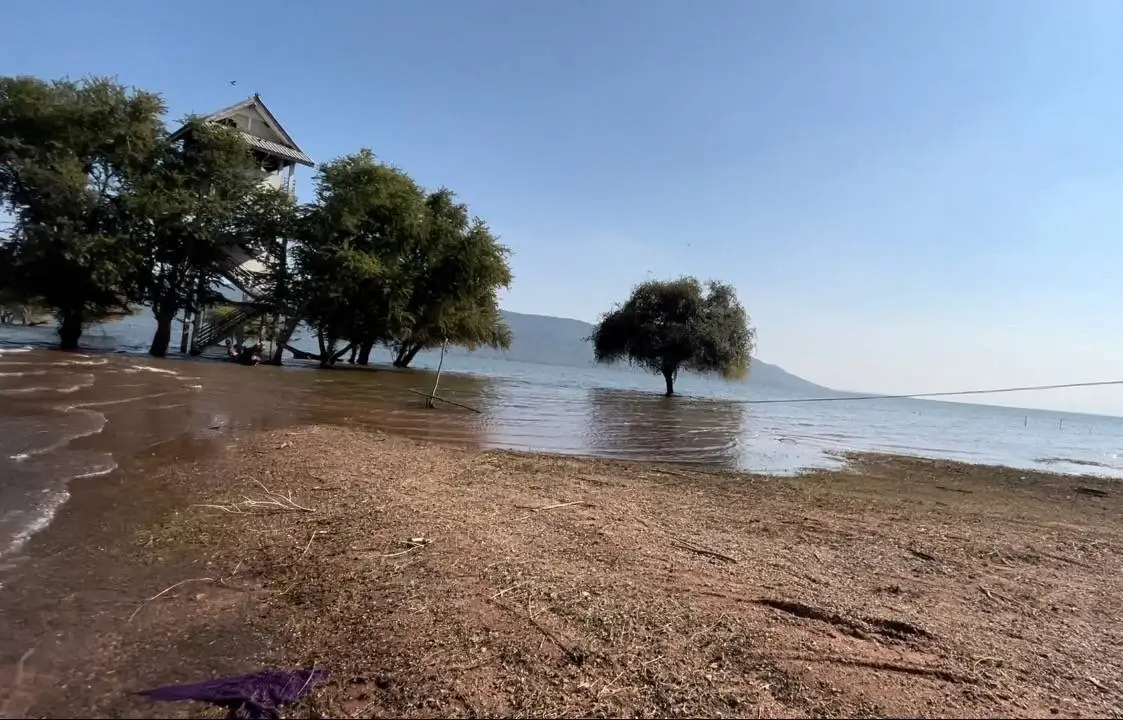
Hat Sawan in Loei Province is a seasonal Mekong River sand beach located at Moo 8, Ban Non Sawan, Huai Phichai Subdistrict, Pak Chom District. The area is known for clean white sand, attractive river rocks, and a quiet Thai – Lao border-river atmosphere. The best time to visit is from January to May, especially during the cool and hot seasons when the Mekong water level is lower and the beach becomes clearly visible. During Songkran, the community holds annual celebrations and beach sports, making Hat Sawan a local riverside destination for families, photographers, and travelers who want to experience a quieter side of the Mekong in Loei.
Hat Sawan is a local Mekong River beach in Ban Non Sawan, Moo 8, Huai Phichai Subdistrict, Pak Chom District, Loei Province. It is not a sea beach, but a freshwater sand beach that appears beautifully along the Mekong River when the water level drops. The site is known for clean pale sand, natural rock formations, and a peaceful riverside atmosphere. For foreign travelers, it offers a very different image of Loei: not mountains, fog, or old wooden houses, but a seasonal beach shaped by the great Mekong River and the life of a border community.
The landscape around Ban Non Sawan is closely connected with the Mekong. The village area includes highland terrain, sloping land, agricultural areas, public land, hills, and riverside spaces. On the western side, the village landscape connects with the Mekong River and the Lao side beyond it. Hat Sawan is part of this local geography. It is a place where sand, stone, water, village life, and seasonal river change come together in a simple but memorable setting.
The name “Hat Sawan” means “heavenly beach,” while Ban Non Sawan means a heavenly highland or raised place. The name gives the site a poetic local identity. When the Mekong water recedes and the white sand appears, the name feels appropriate. The beach becomes a bright open space between the village and the river, with rock formations, sky, water, and distant landforms creating a calm riverside view.
The best period to visit Hat Sawan is from January to May. This is when the Mekong water level is usually lower and the sand beach is more visible. January and February offer cooler air and a more relaxed atmosphere. March to May are hotter, but this is also when the beach is more suitable for community activities, water play in safe shallow areas, and Songkran celebrations. Visitors who want to see the beach clearly should avoid planning around the rainy or high-water season, when much of the beach may be covered by the river.
The beach itself is simple and natural. Its main features are the clean white sand, river rocks, open Mekong scenery, and views toward the opposite side of the river. The rocks add texture to the landscape, making the beach more photogenic. Some sections are suitable for walking and photography, while others are better for sitting and enjoying the river breeze. Because it is a natural river beach, conditions can change according to water level, rainfall, and local use.
Hat Sawan is especially lively during Songkran. Every year, the community holds Songkran activities at the beach, and beach sports competitions are also organized. During this time, the area becomes a local gathering place where families, young people, visitors, and residents come together. The atmosphere is more festive than usual, with water play, community activities, food, and shared celebration. This annual event gives the beach cultural value beyond its natural scenery.
Ban Non Sawan is also connected with other riverside traditions. The community is associated with the traditional Mekong long-boat race during the end of Buddhist Lent, held around the pier area at Wat In Plaeng. This shows that the Mekong is not just scenery for the village; it is a cultural space used for festivals, ceremonies, sports, and community identity. Travelers who visit Hat Sawan should therefore see it as part of the wider cultural life of Ban Non Sawan and Huai Phichai Subdistrict.
For nature lovers, Hat Sawan provides a chance to observe the seasonal behavior of a large river. The Mekong does not look the same throughout the year. In the dry months, sandbars and beach areas appear. In the wet season, water rises and changes the shape of the riverbank. This seasonal rhythm creates the beach and gives it a temporary beauty. The experience is different from visiting a fixed attraction because the landscape is shaped directly by the river.
Recommended activities include walking on the sand, taking photos of the rocks and river, relaxing by the Mekong, observing local life, joining seasonal Songkran activities, and using the beach as a quiet stop on a Pak Chom riverside route. Families can visit, but children should always be supervised near the water. The Mekong is a powerful river, and even when the water looks calm, depth and current can change quickly.
Visitors should swim or play in water only in safe shallow areas. They should avoid deep sections, strong current, slippery rocks, and any area where the riverbed cannot be clearly seen. Children should not be allowed to enter the water alone. Elderly visitors should stay on stable sand or dry ground. Because Hat Sawan is a natural river beach rather than a managed water park, safety depends on careful behavior and local judgment.
Photography at Hat Sawan is rewarding during the cool and dry months. The best subjects include the white sand, natural rocks, Mekong water, village atmosphere, Songkran activities, and the wide sky over the river. Morning light is soft and calm, while late afternoon can give the beach warm colors. Photographers should be careful when walking on wet rocks and should not move too close to the water while looking through a camera.
The beach is open daily and listed as accessible 24 hours. Even so, daytime visits are strongly recommended, especially from early morning to late afternoon. Daylight makes it easier to see sand, stones, water level, and safe walking areas. Night visits are not suitable for water play or walking near the river, especially for travelers who are not familiar with the local area.
Getting There is easiest by private car or motorbike. From Pak Chom town, follow the Pak Chom – Si Chiang Mai road or local Mekong-side routes toward Huai Phichai Subdistrict and Ban Non Sawan. The village is about 10 km from Pak Chom town. The route passes community roads, agricultural areas, and riverside settlements, so drivers should keep a moderate speed and be careful during festivals, when traffic may be heavier.
Travelers coming from Chiang Khan can follow the Mekong-side route through Pak Chom and continue toward Huai Phichai and Ban Non Sawan. This route is suitable for visitors who want a slower riverside journey beyond Chiang Khan. Those without a private vehicle can first reach Pak Chom town and then arrange a local vehicle to Ban Non Sawan. It is best to agree on the fare, waiting time, and return pick-up point before departure.
Hat Sawan can be combined with several nearby places. Wat In Plaeng pier in Ban Non Sawan, Ban Sangao, Huai Ang Reservoir, Wat Pa Phra That Thep Chaiya, Pak Chom town, Phaya Anantanakharat, Phu Lamduan, and Hat Nang Kwak can all be included in a local route. This combination gives travelers a broader view of Pak Chom: beach, river, village, temple, reservoir, viewpoint, and riverside landmark.
Wat In Plaeng pier is especially important because it is connected with the community’s traditional boat-racing activities. Visiting the pier helps travelers understand that the Mekong is a living cultural space for local people. Even outside festival periods, the pier and temple area give a sense of how riverside communities organize their religious and social life around the river.
Ban Sangao is another nearby community closely linked with Ban Non Sawan. The route between the 2 villages offers a look at rural roads, riverside life, local houses, agricultural land, and the border-river atmosphere. Traveling slowly through the area gives a fuller impression of Huai Phichai Subdistrict than simply stopping at the beach and leaving quickly.
Phaya Anantanakharat and the riverside area of Pak Chom town make a good additional stop. This landmark is a well-known place in the district, combining faith, sculpture, and Mekong scenery. Visitors can spend time at Hat Sawan during the day, then continue to Pak Chom town for food, riverside views, and local sightseeing.
Phu Lamduan is suitable for travelers who want to add a high viewpoint to the beach route. It allows visitors to see the Mekong landscape from above, while Hat Sawan gives a close riverbank experience at ground level. A well-planned trip can include a morning viewpoint visit and an afternoon beach stop.
Food options are available both in Huai Phichai Subdistrict and Pak Chom town. Near the beach and nearby villages, visitors can find local restaurants and simple food places. In Pak Chom town, there are more options such as riverside restaurants, cafes, bakeries, and Thai food restaurants. During Songkran, temporary local food stalls may also appear around the event area, depending on the year and community organization.
Accommodation choices are available in Huai Phichai and Pak Chom. Travelers who want to stay close to the beach area may consider nearby properties in Huai Phichai, while those who prefer more services can stay in Pak Chom town. Advance booking is recommended during Songkran, long weekends, and high travel periods because Pak Chom is a small district with limited accommodation capacity compared with major tourist towns.
Useful items to bring include a hat, sunscreen, drinking water, sandals or shoes suitable for sand and rocks, a waterproof phone bag, cash, and a personal trash bag. For Songkran visits, travelers should prepare clothing suitable for outdoor water activities and expect more people than usual. Families should also prepare simple safety items for children if they plan to stay near the water for a long time.
Responsible travel is important at Hat Sawan. Visitors should not leave trash on the sand, throw waste into the Mekong, use soap or shampoo in the river, damage rocks or riverside plants, or drive vehicles onto the beach unless it is clearly allowed by the community. The Mekong is an important river system shared by many communities, and keeping the beach clean protects both the local environment and the experience of future visitors.
Overall, Hat Sawan is a seasonal Mekong beach with a strong local identity. It offers white sand, river rocks, a peaceful border-river atmosphere, Songkran celebrations, beach sports, and easy connection to Pak Chom’s other attractions. For foreign travelers, it is a valuable place to see how a riverside community uses a natural beach not only for leisure but also for festivals, sports, and shared village life. With careful timing, respectful behavior, and attention to river safety, Hat Sawan can become one of the most memorable local stops in Loei Province.
| Name | Hat Sawan |
| Location | Moo 8, Ban Non Sawan, Huai Phichai Subdistrict, Pak Chom District, Loei Province |
| Address | Ban Non Sawan, Moo 8, Huai Phichai Subdistrict, Pak Chom District, Loei 42150, Thailand |
| Highlights | Clean white Mekong River sand beach, natural rocks, Thai – Lao border-river scenery, annual Songkran celebration, and beach sports activities |
| Distinctive Features | Seasonal freshwater beach along the Mekong River, clearly visible during the low-water period, suitable for walking, photography, riverside relaxation, and safe shallow-water activities |
| Best Visiting Period | January – May, especially during the cool and hot seasons when the Mekong water level is lower and the sand beach becomes clear |
| Traditions / Key Activities | 1. Annual Songkran Celebration At Hat Sawan 2. Beach Sports During Songkran 3. Traditional Mekong Boat Race During The End Of Buddhist Lent At Wat In Plaeng Pier, Ban Non Sawan 4. Seasonal Riverside Leisure And Water Activities In The Hot Season |
| Travel Information | From Pak Chom town, take the Pak Chom – Si Chiang Mai road or a local Mekong-side route toward Huai Phichai Subdistrict and Ban Non Sawan. The distance is about 10 km and can be traveled by private car, motorbike, or local vehicle |
| Current Status | Open as a Mekong riverside natural attraction and community activity area of Ban Non Sawan, Huai Phichai Subdistrict, Pak Chom District |
| Open Days | Daily |
| Opening Hours | 24 Hours / Daytime Visit Recommended, especially 06.00 – 18.00 |
| Fees | Free Admission To The Beach Area |
| Facilities | Sand beach, natural river rocks, community access route, local resting areas, nearby restaurants and shops, and services in Pak Chom town |
| Main Areas / Zones | 1. Mekong River Sand Beach Zone 2. Natural Rock Formation Zone 3. Safe Shallow-Water Area During Low-Water Period 4. Mekong And Lao-Side Viewpoint Zone 5. Beach And Rock Photography Area 6. Songkran And Beach Sports Activity Zone 7. Ban Non Sawan – Ban Sangao Connection Route 8. Connection Area Toward Wat In Plaeng Pier |
| Caretaker | Huai Phichai Subdistrict Administrative Organization and Ban Non Sawan Moo 8 local community |
| Main Contact Number | Huai Phichai Subdistrict Administrative Organization, Tel. 042-810977 |
| Visitor Guidelines | Use only safe shallow-water areas, avoid strong current, avoid slippery wet rocks, supervise children closely, do not throw trash on the beach or into the Mekong, and respect the local community |
| Nearby Tourist Attractions | 1. Wat In Plaeng Pier, Ban Non Sawan, about 1 km 2. Ban Sangao, Huai Phichai Subdistrict, about 2 km 3. Huai Ang Reservoir, Ban Non Sawan, about 5 km 4. Wat Pa Phra That Thep Chaiya, Huai Phichai Subdistrict, about 7 km 5. Pak Chom Town / Pak Chom Market, about 10 km 6. Phaya Anantanakharat, Pak Chom, about 12 km 7. Phu Lamduan, Pak Chom District, about 18 km 8. Hat Nang Kwak, Pak Chom District, about 20 km |
| Nearby Restaurants | 1. Yingnuch Restaurant, Ban Non Sawan, about 1 km, Tel. 087-094-4009 2. Tam Saep Nua Khrua K. Kluay, Huai Phichai Subdistrict, about 5 km, Tel. 082-001-6308 3. Khrua Him Phu, Pak Chom District, about 10 km, Tel. 090-335-2068 4. Khrua Boeng Khong, Pak Chom District, about 11 km, Tel. 093-190-1165 5. Baan Yai Indy, Pak Chom District, about 11 km, Tel. 089-709-5904 6. Pak Chom Homemade Bakery, about 11 km, Tel. 093-289-9265 7. Moreverest Mekong View Cafe Pak Chom, about 18 km, Tel. 093-065-0661, 080-231-4788 |
| Nearby Accommodations | 1. Agalin Villas, Huai Phichai Subdistrict, about 1 km, Tel. 081-959-6214 2. Deepung Resort, Huai Phichai Subdistrict, about 5 km, Tel. 092-538-6062 3. Rim Nam Kong Homestay, Pak Chom District, about 10 km, Tel. 099-125-0461 4. Baanta Hotel Pakchom, about 10 km, Tel. 089-994-4660 5. Pak Chom Resort, about 11 km, Tel. 042-881033 6. Phu Khong Resort, Pak Chom District, about 11 km, Tel. 093-058-5556 7. Pak Chom Park View Resort, about 12 km, Tel. 091-867-3009 |
Frequently Asked Questions (FAQ)
Q: Where is Hat Sawan located?
A: Hat Sawan is located at Moo 8, Ban Non Sawan, Huai Phichai Subdistrict, Pak Chom District, Loei Province. It is a local sand beach along the Mekong River.
Q: What makes Hat Sawan special?
A: Hat Sawan is known for its clean white Mekong sand beach, natural river rocks, quiet border-river scenery, annual Songkran celebration, and beach sports activities.
Q: When is the best time to visit Hat Sawan?
A: January to May is the best period because the Mekong water level is lower and the sand beach and rock formations are clearly visible.
Q: What are the opening hours of Hat Sawan?
A: Hat Sawan is open daily for 24 hours, but daytime visits from 06.00 to 18.00 are recommended for safety along the riverbank.
Q: Is there an entrance fee for Hat Sawan?
A: No. The beach area has free admission, but visitors should bring cash for food, drinks, local transport, or festival-related expenses.
Q: Is Hat Sawan suitable for children and families?
A: Yes, it is suitable for a family riverside visit, but children should be supervised closely because the site is a natural river beach with rocks and changing water levels.
Q: What should visitors bring to Hat Sawan?
A: Visitors should bring a hat or umbrella, sunscreen, drinking water, shoes suitable for sand and rocks, a waterproof phone bag, cash, and a personal trash bag.
Q: What nearby attractions can be visited with Hat Sawan?
A: Nearby places include Wat In Plaeng Pier, Ban Sangao, Huai Ang Reservoir, Wat Pa Phra That Thep Chaiya, Phaya Anantanakharat, Phu Lamduan, and Hat Nang Kwak.
 Category: ●Nature and Wildlife
 Group: ●Bays and Beaches
Last Update : 1 MonthAgo
 Last Update : 1 MonthAgo
 Click to Access the Navigation Map GPS
 Art, Culture and Heritage
 Historical Sites and Monuments(2)
 Landmarks and Memorials(3)
 Art, Craft Centres, Tradition(2)
 Museums(4)
 Art Gallery(1)
 Educational Places
 Educational Gardens, Farm(2)
 Places of Worship
 Temple(16)
 Other Sacred Sites(8)
 Research and Development
 Royal Project(3)
 Suburban Living
 Village, Community(3)
 Local Market(1)
 National Parks and Marine Reserves(5)
 Mountain (Doi)(10)
 Dam, Reservoir, Lake(7)
 Waterfalls(21)
 Caves(3)
 River, Canal(5)
Bays and Beaches(1)
River, Canal(5)
Bays and Beaches(1)
 Other natural attractions(1)
 Entertainment and Agricultural
 Farms, Parks and Ecotourism(8)
 Waterpark(1)
 Outdoor and Adventure Activities(2)


