
lovethailand home >Northeastern Travel Attractions >Loei Travel Attractions >Pak Chom >Huai Bo Suen > Phu Khok
TL;DR: Phu Khok is located at Ban Huai Bo Suen, Huai Bo Suen Subdistrict, Pak Chom District, Loei Province, open Daily, hours 06.00 – 18.00.
Phu Khok
Open Days: Daily
Opening Hours: 06.00 – 18.00
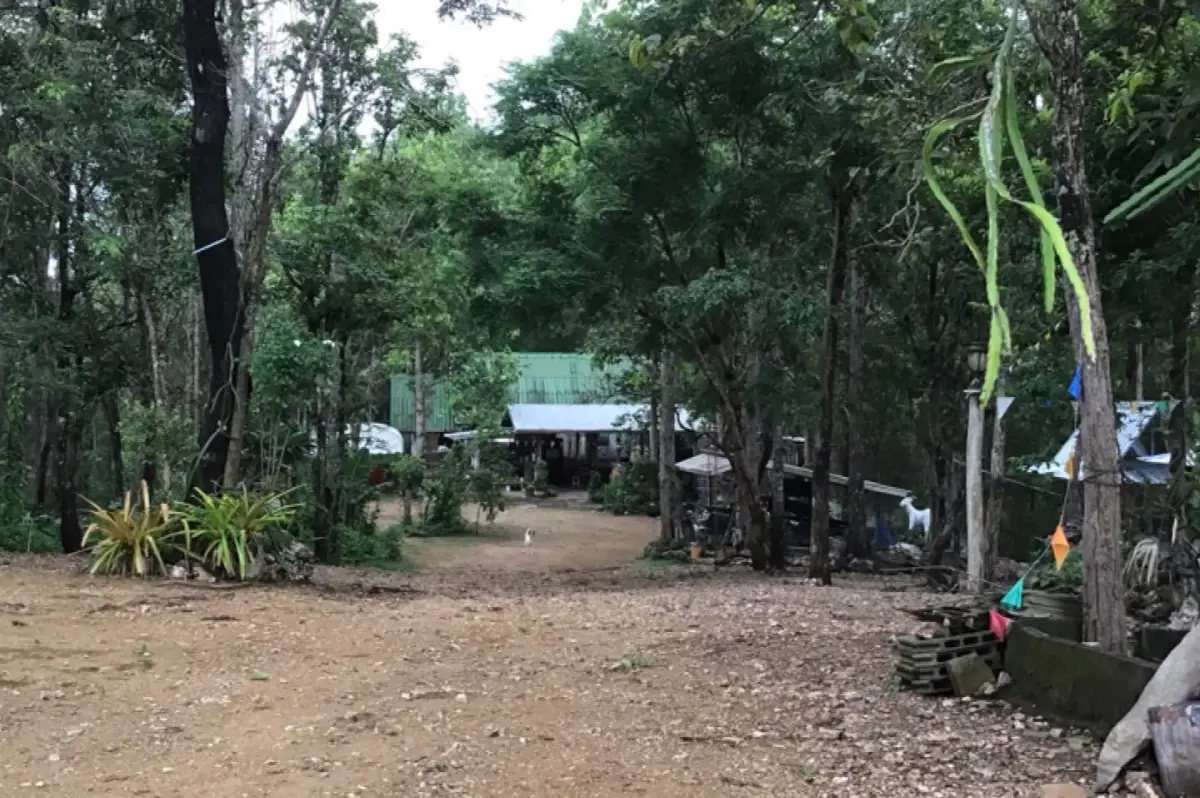
Phu Khok, Loei Province is a mountain and community forest area in Ban Huai Bo Suen, Huai Bo Suen Subdistrict, Pak Chom District, Loei Province. It is known for its natural mountain setting, fertile forest, quiet local atmosphere, and role as a community food forest. Unlike heavily developed tourist attractions, Phu Khok is meaningful because it shows how a rural community lives with the forest, protects local resources, and uses nature as a source of food, herbs, learning, and cultural identity.
Phu Khok is located in Ban Huai Bo Suen, a village in the mountain landscape of Pak Chom District. The area is associated with community forest, cave temples, natural caves, local forest foods, and village-based conservation. Local information also refers to the area as Phu Wot. Important sites connected with the village include Wat Tham Khao, Phu Khok Community Forest, and cave areas on the mountain. This makes Phu Khok both a natural site and a cultural landscape shaped by local people.
The name Phu Khok reflects the physical character of the area. In Thai and northeastern local usage, phu refers to a mountain, while khok can refer to raised ground or a natural mound. Together, the name suggests a mountain rising from its surrounding landscape. The name is simple, but it captures the identity of the place clearly: a local mountain connected with forest, village life, and community use.
The most important value of Phu Khok is its role as a community forest and food forest. For local people, the forest is not only a scenic area. It is a living source of seasonal food, medicinal plants, wild vegetables, mushrooms, bamboo shoots, edible insects, fruits, and other forest products. The forest supports everyday life and helps preserve traditional knowledge about when to collect, what to leave, and how to use the forest without destroying it.
Phu Khok can be understood as a natural pantry for the community. Seasonal forest foods are part of the local diet and are closely connected with the food culture of Loei and the Mekong region. Mushrooms, bamboo shoots, wild vegetables, herbs, and other forest ingredients give local dishes their identity. Protecting Phu Khok therefore means protecting both biodiversity and the food memory of the community.
Ecologically, the forest helps maintain soil, moisture, shade, and biodiversity around Ban Huai Bo Suen. A healthy community forest reduces soil erosion, supports small wildlife, provides habitat for birds and insects, and helps the surrounding village environment remain balanced. The value of Phu Khok is therefore wider than tourism. It is part of the environmental foundation of the community.
Phu Khok is best suited to travelers who appreciate simple nature, local culture, and quiet forest landscapes. It is not a place filled with large tourism structures or commercial attractions. Visitors come here to experience a local mountain, learn about community forest, understand forest food culture, and see how rural communities in Loei continue to live with nature. The experience is slower and more intimate than visiting a famous national park.
Another interesting dimension of Phu Khok is its connection with cave temples and religious retreat areas. The mountain area is associated with Wat Tham Khao, Wat Tham Pak Kwang, and Tham Phra That Kaeo monastic area, which local people connect with the Phu Khok landscape. These sites add spiritual depth to the mountain. Phu Khok is therefore not only a forest and food source, but also a quiet place for faith, meditation, and local Buddhist practice.
The cave areas around Phu Khok add geological interest to the destination. Natural caves, rock formations, and quiet forest surroundings make the mountain suitable for visitors interested in nature and local spiritual sites. Cave areas should be visited carefully. Travelers should not enter caves alone, should use a flashlight, and should ask local people or knowledgeable guides for assistance because some cave paths may be dark, slippery, or complex.
Phu Khok is suitable for nature learning rather than hurried sightseeing. Visitors may walk through community forest areas, observe plants, learn about forest food, visit nearby cave temples, and speak with local residents about village life. During the rainy season and early cool season, the forest is green and fresh. During the cool season, the weather is more comfortable for walking and for combining the trip with nearby Mekong River attractions in Pak Chom District.
Because Phu Khok is a community-based natural area, travelers should respect local rules. This is not an unrestricted forest for visitors to collect products freely. The forest belongs to the community system of care and use. Visitors should contact local people or Huai Bo Suen Subdistrict Administrative Organization before entering forest or cave areas, especially when traveling in groups or planning a learning activity.
Responsible behavior is essential. Visitors should not collect plants, dig up herbs, pick orchids, disturb wildlife, make fires, leave trash, or walk into sensitive forest zones without guidance. If travelers want to learn about forest foods or herbs, local knowledge should guide the experience. Community forests often have traditional rules about what can be harvested, when it can be harvested, and what must be left for regeneration.
Huai Bo Suen Subdistrict is part of Pak Chom District, a quiet district of Loei Province known for mountains, the Mekong River landscape, and borderland scenery. Although Phu Khok itself is not directly on the Mekong River, it can be combined with other Pak Chom attractions such as the Anantanaga statue area, Phu Lamduan, Mekong riverside viewpoints, Hat Nang Kwak, and local riverside restaurants. This makes it a good stop for travelers who want both forest and river scenery in one trip.
Phu Khok also shows a different side of Loei Province. Many travelers know Loei for Phu Kradueng, Phu Ruea, Chiang Khan, Phu Luang, and Phu Lom Lo, but Phu Khok represents a smaller community-based landscape. Its charm lies in the forest, the village, the food culture, the cave temples, and the local way of caring for nature. Travelers who prefer quiet and less crowded places will find this destination meaningful.
Getting There is most convenient by private car, rental car, or local vehicle. From Loei city, travel toward Pak Chom District and continue to Huai Bo Suen Subdistrict, then proceed to Ban Huai Bo Suen Moo 6. The road passes local communities and rural mountain areas. Daytime travel is recommended because some rural roads may be less familiar to visitors and because forest or cave areas should be visited with good visibility.
Travelers coming from Chiang Khan can connect to Pak Chom and then continue to Huai Bo Suen. This route can be combined with Mekong-side attractions, making it possible to travel through Chiang Khan, Kaeng Khut Khu, Pak Chom, and Phu Khok in one extended trip. Visitors coming from Loei city can plan Phu Khok as a day trip focused on nature, community forest, and local culture.
The best time to visit is during the daytime, especially from morning to afternoon. This allows enough light for forest walking, photography, and safe return. The rainy season and early cool season make the forest fresh and green, while the cool season is comfortable for walking and for combining the visit with Pak Chom’s riverside attractions. Visitors should avoid entering forest or cave areas after dark.
Travelers interested in community forest foods should treat Phu Khok as a learning area, not as a place for independent collection. Some plants and forest products are seasonal, some require local knowledge, and some should not be touched at all. Learning from local people is the most respectful way to understand the forest. This approach helps protect both the ecosystem and the community’s traditional knowledge.
For photography, Phu Khok offers natural forest scenes, village paths, plants, quiet temple areas, cave entrances, and rural mountain atmosphere. Visitors should avoid stepping into fragile areas, disturbing meditation sites, or photographing local people without permission. Respect for privacy and local life is especially important in a small community-based destination.
For international travelers, Phu Khok is a valuable example of Thailand’s community forest concept. It is different from commercial viewpoints or national parks because it shows how villagers protect and use forest resources as part of daily life. The destination offers insight into local food, herbs, forest knowledge, cave temples, and the close relationship between people and nature in rural Loei.
A practical itinerary can be planned as a half-day or full-day trip. Visitors may contact local authorities or community members first, walk around the community forest area in the morning, visit nearby cave temple areas, then continue to Pak Chom town for Mekong River views and local food in the afternoon. With more time, travelers can stay overnight in Pak Chom and visit Phu Lamduan the next morning for mist and river views.
Visitors should prepare for a simple nature visit. Recommended items include closed-toe shoes, drinking water, hat, insect repellent, personal medicine, flashlight for cave areas, and a bag for carrying trash out. Since Phu Khok is not a large commercial attraction, travelers should not expect extensive facilities. The beauty of the place lies in its simplicity and community character.
In summary, Phu Khok in Loei Province is a mountain and community forest area with strong local value. It combines scenic natural forest, community food forest, village knowledge, cave temple areas, and the quiet rural character of Ban Huai Bo Suen in Pak Chom District. It is most suitable for travelers who want to see a deeper, more local side of Loei and learn how a community preserves its forest as a source of food, medicine, identity, and ecological balance.
| Name | Phu Khok, Loei Province |
| Location | Ban Huai Bo Suen, Huai Bo Suen Subdistrict, Pak Chom District, Loei Province |
| Address | Phu Khok Community Forest Area, Ban Huai Bo Suen Moo 6, Huai Bo Suen Subdistrict, Pak Chom District, Loei 42150, Thailand |
| Highlights | Beautiful mountain landscape, fertile community forest, community food forest, Wat Tham Khao, Phu Khok or Phu Wot, cave areas, and nature learning routes of Ban Huai Bo Suen. |
| History | Phu Khok is an important local site of Ban Huai Bo Suen, with a community forest area of about 900 rai. It is cared for as a community food forest and local natural resource area. |
| Name Origin | The name Phu Khok refers to a mountain or highland area connected with the local word khok, meaning raised ground or mound. Local information also refers to the area as Phu Wot. |
| Distinctive Features | A mountain and community forest that serves as a source of local food, herbs, forest plants, nature learning, and quiet cave temple areas connected with the community. |
| Travel Information | From Loei city, travel toward Pak Chom District, then continue to Huai Bo Suen Subdistrict and Ban Huai Bo Suen Moo 6. Private car, rental car, or a local vehicle familiar with the route is recommended. |
| Current Status | A mountain, community forest, and nature learning area of Ban Huai Bo Suen, cared for by the community and local authorities. |
| Open Days | Daily |
| Opening Hours | 06.00 – 18.00 |
| Fees | No admission fee. |
| Main Areas / Zones | Phu Khok Community Forest Zone Community Food Forest Zone Wat Tham Khao Zone Phu Khok Or Phu Wot Zone Cave And Natural Rock Zone Local Food Plants And Herbal Plant Zone Ban Huai Bo Suen Nature Learning Route Zone |
| Caretaker / Responsible Agency | Ban Huai Bo Suen community, together with Huai Bo Suen Subdistrict Administrative Organization, Pak Chom District, Loei Province. |
| Main Contact Number | Huai Bo Suen Subdistrict Administrative Organization, Tel. 042-075586 |
| Official Website / Official Page | Huai Bo Suen Subdistrict Administrative Organization website and Facebook page. |
| Nearby Tourist Attractions | 1. Wat Tham Khao And Phu Khok Community Forest, about 0 km 2. Wat Tham Pak Kwang, Ban Wang Pha, about 8 km 3. Phu Pha Phueng, Ban Huai Bo Suen, about 12 km 4. Anantanaga Statue, Pak Chom, about 35 km 5. Phu Lamduan, Pak Chom District, about 38 km 6. Hat Nang Kwak, Pak Chom District, about 36 km 7. Kaeng Khut Khu, Chiang Khan, about 65 km |
| Nearby Restaurants | 1. Chom Ploen At Pak Chom, about 35 km, Tel. 095-8689033 2. Moreverest Mekong View Cafe Pak Chom, about 40 km, Tel. 093-0650661, 080-2314788 3. Sayan Lap Koi, Pak Chom, about 35 km, Tel. 042-881048 4. Som Tam Je Phuk, Pak Chom, about 35 km, Tel. 042-881405 5. Krua Suk Kamon And Suk Kamon Cafe, about 45 km, Tel. 082-8829914, 083-2653829 |
| Nearby Accommodations | 1. Pak Chom Resort Hotel, about 35 km, Tel. 042-881033 2. Pak Chom Park View Resort, about 35 km, Tel. 091-8673009 3. Baanta Hotel Pakchom, about 35 km, Tel. 080-3556669 4. Bualuang Nakara Resort, about 35 km, Tel. 086-2272500, 061-0506731 5. Chomdao Resort Pakchom, about 38 km, Tel. 088-3332970, 081-6952764 |
Frequently Asked Questions (FAQ)
Q: Where is Phu Khok in Loei Province located?
A: Phu Khok is located at Ban Huai Bo Suen Moo 6, Huai Bo Suen Subdistrict, Pak Chom District, Loei Province. It is an important mountain and community forest area of the village.
Q: What is Phu Khok known for?
A: Phu Khok is known for its mountain scenery, fertile community forest, community food forest, cave temple areas, natural caves, and local nature learning value.
Q: What is a community food forest?
A: A community food forest is a forest cared for by local people as a source of seasonal food, herbs, wild vegetables, mushrooms, bamboo shoots, and other natural resources used with community rules.
Q: What are the opening hours of Phu Khok?
A: Phu Khok is open daily from 06.00 to 18.00. Daytime visits are recommended for safe forest walking and travel.
Q: Is there an entrance fee?
A: There is no admission fee. Visitors should respect community rules, avoid collecting forest products, take all trash out, and avoid entering forest or cave areas without local guidance.
Q: Who should visit Phu Khok?
A: Phu Khok is suitable for travelers interested in nature, community forest, local food knowledge, herbs, cave temples, and quiet rural landscapes in Pak Chom District.
Q: What should visitors prepare before going?
A: Visitors should prepare closed-toe shoes, drinking water, hat, insect repellent, personal medicine, flashlight for cave areas, and a bag for carrying trash out.
Q: What nearby places can be visited after Phu Khok?
A: Travelers can continue to Wat Tham Pak Kwang, Phu Pha Phueng, the Anantanaga statue area, Phu Lamduan, Hat Nang Kwak, or the Mekong River route in Pak Chom District.
 Category: ●Nature and Wildlife
 Group: ●Mountain (Doi)
Last Update : 1 MonthAgo
 Last Update : 1 MonthAgo
 Click to Access the Navigation Map GPS
 Art, Culture and Heritage
 Historical Sites and Monuments(2)
 Landmarks and Memorials(3)
 Art, Craft Centres, Tradition(2)
 Museums(4)
 Art Gallery(1)
 Educational Places
 Educational Gardens, Farm(2)
 Places of Worship
 Temple(16)
 Other Sacred Sites(8)
 Research and Development
 Royal Project(3)
 Suburban Living
 Village, Community(3)
 Local Market(1)
 National Parks and Marine Reserves(5)
Mountain (Doi)(10)
National Parks and Marine Reserves(5)
Mountain (Doi)(10)
 Dam, Reservoir, Lake(7)
 Waterfalls(21)
 Caves(3)
 River, Canal(5)
 Bays and Beaches(1)
 Other natural attractions(1)
 Entertainment and Agricultural
 Farms, Parks and Ecotourism(8)
 Waterpark(1)
 Outdoor and Adventure Activities(2)


