
lovethailand home >Northeastern Travel Attractions >Loei Travel Attractions >Chiang Khan >Pak Tom > Royal Tribute Project Center
TL;DR: Royal Tribute Project Center is located at Ban Khok Ngio, Moo 5, Pak Tom Subdistrict, Chiang Khan District, Loei Province, open Monday – Friday, hours 08.30 – 16.30.
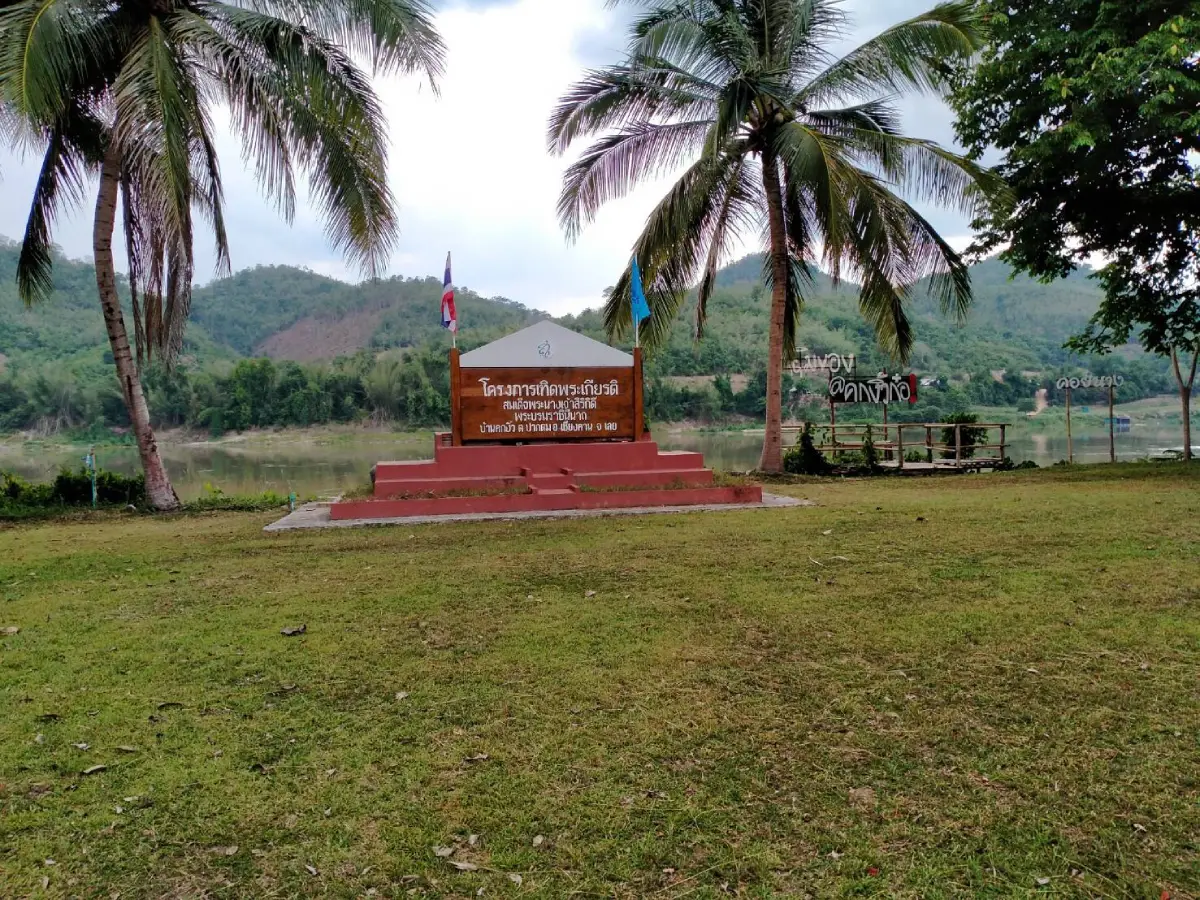
Royal Tribute Project Center
Open Days: Monday – Friday
Opening Hours: 08.30 – 16.30
The Royal Tribute Project Center in Loei Province, commonly associated with the Khok Ngio Royal Tribute Area Development Project, is located at Ban Khok Ngio, Moo 5, Pak Tom Subdistrict, Chiang Khan District, Loei Province. It is a community learning center dedicated to occupational development, agricultural training, food production, and quality-of-life improvement for local residents in the Mekong border area. The project was established under the royal initiative of Her Majesty Queen Sirikit The Queen Mother, with the purpose of supporting people in northeastern Thailand who faced poverty, limited livelihood opportunities, and a lack of sufficient farmland. Today, the center serves as a practical learning space where visitors can see how agriculture, animal husbandry, mulberry cultivation, sericulture, community food production, and natural resource conservation are brought together in one development model.
This center is different from most tourist attractions in Loei. It is not designed only for scenic views or photo stops. Its value lies in showing how rural development works on the ground. Visitors can learn about fish cage farming, frog raising, cattle and goat raising, mulberry cultivation, silkworm raising, occupational training, community food resources, and green-area conservation. These activities are directly connected with the everyday life of rural households. They show how knowledge, practical training, and local resources can be used to create more stable income and better living conditions for community members.
Ban Khok Ngio is located in Pak Tom Subdistrict, a borderland area of Chiang Khan District not far from the Mekong River and key attractions such as Chiang Khan Skywalk, Phra Yai Phu Khok Ngio, Ban Tha Di Mi, Kaeng Khut Khu, and Chiang Khan town. The landscape of Pak Tom combines mountains, agricultural land, local settlements, and the Mekong border environment. Because of this, the Royal Tribute Project Center helps visitors understand another side of Chiang Khan beyond its famous wooden houses, walking street, and riverside cafés. It reveals the district as a place of community development, livelihood building, and rural learning.
The history of the project began with royal concern for people in northeastern Thailand, many of whom struggled with poverty and limited access to agricultural land. The Support Foundation under Her Majesty Queen Sirikit acquired land in the Ban Khok Ngio area and developed it as a project site from 1990 onward. The land was turned into a center for occupational promotion, food production, job creation, and agricultural learning. The project also supported the conservation of forested areas through the planting of perennial trees and the restoration of green spaces so that the area could continue to serve as a source of water, shade, and ecological balance.
The core value of the center is practical livelihood development. The activities here are not theoretical demonstrations separated from community life. They are based on occupations that local people can apply in real households. Fish cage farming can be adapted to areas near water sources. Frog raising can be done in limited spaces and can provide additional income. Cattle and goat raising can support rural household economies. Mulberry cultivation and sericulture connect local agriculture with craft-based income and traditional textile knowledge. Each activity shows how a family or community can create more than one source of livelihood.
Mulberry cultivation and silkworm raising are especially meaningful because they are connected with the wider work of the royal craft-support movement. Sericulture is not only about producing silk thread. It involves caring for mulberry trees, selecting leaves, raising silkworms, reeling silk, dyeing thread, and developing textile products. The process requires patience, skill, and consistency. When visitors see this activity in a learning center, they understand that silk is not simply a beautiful fabric. It is the result of nature, labor, knowledge, and community craftsmanship.
Fish cage farming helps visitors understand local food production in a clear and practical way. In areas close to rivers or water resources, fish cages can become a source of food and household income. The activity requires knowledge about fish species, feeding, water quality, cage maintenance, disease prevention, and market planning. When this knowledge is transferred through a center like Khok Ngio, villagers can apply it according to their own local conditions. For foreign visitors, this is a useful example of how food security and small-scale aquaculture are supported in rural Thailand.
Frog raising, cattle raising, and goat raising also demonstrate the idea of diversified livelihoods. Relying on only one source of income can be risky for farming households. Small animal raising can provide additional income and help families use available land and time more effectively. Cattle and goats are part of rural livestock systems, while frogs can be raised in smaller spaces. These activities also teach responsibility, animal care, feed management, sanitation, and planning. The center therefore functions not only as a demonstration farm but also as a practical classroom for household-level income development.
The center’s work connects livelihood development with environmental care. By promoting occupations that can be practiced within proper land-use systems, the project reduces pressure on nearby natural resources and forests. It also encourages tree planting and green-area restoration. This reflects a broader understanding of rural development: people need income and food security, but the landscape must also remain healthy. When community members have more stable occupations, they have stronger reasons to protect local water sources, trees, and soil.
The Royal Tribute Project Center at Ban Khok Ngio is also a space for continuing the royal development approach in a practical way. It is not merely a commemorative site. It is an active learning area where government units, local authorities, soldiers, community members, students, and visitors can participate in activities, training, and field observation. The center shows that development requires cooperation among many sectors. Knowledge must be transferred, local people must be involved, and the project must be maintained over time for real benefits to occur.
For educational travel, the center is suitable for school groups, university students, farmer groups, local administrative organizations, community leaders, and visitors interested in sustainable rural development. Group visits should be arranged in advance so that the center can prepare the route, provide explanations, and organize learning points properly. A guided visit is much more meaningful than simply walking around, because the story of the project lies in the relationship between the activities, the community, and the royal development concept behind them.
Important zones inside the center include the royal tribute sign and reception area, agricultural demonstration plots, mulberry and sericulture learning zone, fish cage farming zone, frog raising zone, cattle and goat area, community food production zone, green conservation area, occupational demonstration areas, and activity spaces used by local agencies and villagers. These zones make the center a broad learning landscape rather than a single-purpose agricultural site. Visitors can observe how different activities support one another in a rural development system.
Travelers visiting Chiang Khan Skywalk or Phra Yai Phu Khok Ngio can include the center as a meaningful additional stop. After enjoying the scenic view of the Hueang River meeting the Mekong River, visitors can come to Ban Khok Ngio to learn about the people and livelihoods behind the landscape. This gives a more complete understanding of Pak Tom Subdistrict. The area is not only a viewpoint destination; it is also a place where local communities work, learn, raise animals, grow crops, and develop skills for long-term living.
Getting There from Chiang Khan town, drive toward Pak Tom Subdistrict on the route used for Chiang Khan Skywalk and Phra Yai Phu Khok Ngio. Continue toward Ban Khok Ngio, Moo 5, and follow local signs for the Khok Ngio Royal Tribute Area Development Project. Online maps can be searched using the Thai name of the project. Private cars, motorcycles, and group vans are the most convenient forms of transport. Visitors without private transport can hire a local vehicle from Chiang Khan and should agree on the return time before departure.
The best time to visit is during weekday working hours, especially in the morning. Morning visits are more comfortable for walking around agricultural plots and livestock areas. Afternoon visits can also be suitable for group learning and discussion. Visitors should wear comfortable walking shoes, bring drinking water, and dress appropriately for an agricultural learning area. During the rainy season, outdoor paths may be wet, so extra care is recommended.
Visitors should respect the center as both a working area and a community learning space. Do not enter livestock areas or agricultural plots without permission. Do not feed animals unless guided by staff. Do not pick mulberry leaves, collect produce, disturb equipment, or leave waste in the project area. Group visitors should stay with the appointed guide and follow the learning route. This helps protect the facilities and ensures that local staff can manage the visit properly.
For families with children, the center is a useful outdoor classroom. Children can see fish cages, frogs, cattle, goats, mulberry plants, and other agricultural activities in real settings. Parents can explain where food comes from, why animals must be cared for responsibly, and how farming families build livelihoods. However, children should be supervised closely near ponds, cages, livestock, and working areas. The visit should be calm, safe, and educational.
The center is also valuable for travelers interested in agricultural tourism and community development. It is not a commercial farm built only for visitors. It is a development project that demonstrates how local people can be supported through training, land use, occupational knowledge, and cooperation with agencies. It shows that sustainable rural development is a long-term process involving knowledge transfer, practice, monitoring, adaptation, and community participation.
A one-day route can begin with the Royal Tribute Project Center at Ban Khok Ngio in the morning, continue to Chiang Khan Skywalk and Phra Yai Phu Khok Ngio, then stop at Ban Tha Di Mi or local restaurants in Pak Tom before returning to Chiang Khan town for the evening walking street. This route gives visitors a balanced experience of community development, agriculture, border scenery, Buddhist landmarks, and Mekong riverside culture.
For visitors especially interested in sericulture, the mulberry and silkworm learning area is one of the most important parts of the center. The process of silk production begins long before weaving. It starts with the cultivation of healthy mulberry plants and continues through silkworm raising, cocoon care, silk reeling, dyeing, and product development. Seeing these steps helps visitors understand the human effort behind Thai silk and the connection between agriculture and traditional craft income.
For international visitors, the Khok Ngio Royal Tribute Project Center offers a direct introduction to Thailand’s rural development approach. It shows how a royal initiative can become a practical community learning area. It also shows that tourism in Chiang Khan is not limited to old wooden houses and Mekong views. Behind the famous travel image of Chiang Khan are communities working to improve livelihoods, produce food, preserve skills, and care for local landscapes.
The lasting impression of the center comes from its quiet practicality. A mulberry plot, a fish cage, a frog pond, a livestock area, a community activity space, and a green conservation zone may look simple, but together they represent a development philosophy focused on people, skills, income, food, and environmental balance. Visiting the center allows travelers to see how knowledge can be turned into livelihood and how small rural activities can support long-term community resilience.
The Royal Tribute Project Center in Loei Province, or the Khok Ngio Royal Tribute Area Development Project, is therefore a worthwhile stop for travelers exploring Pak Tom and Chiang Khan. It offers occupational learning, agricultural demonstrations, community development stories, sericulture knowledge, food-production activities, and a meaningful connection with the royal development approach. Visitors who arrange their visit respectfully and take time to learn from the site will gain a deeper understanding of Loei beyond scenery alone.
| Name | Royal Tribute Project Center, Loei Province / Khok Ngio Royal Tribute Area Development Project |
| Location | Ban Khok Ngio, Moo 5, Pak Tom Subdistrict, Chiang Khan District, Loei Province |
| Address | Khok Ngio Royal Tribute Area Development Project, Pak Tom Subdistrict, Chiang Khan District, Loei Province 42110, Thailand |
| Type Of Place | Community learning center for occupational development, agriculture, food production, quality-of-life improvement, and green-area conservation under the royal development approach |
| Background | Established under the royal initiative of Her Majesty Queen Sirikit The Queen Mother to support rural people in northeastern Thailand, promote occupations, improve quality of life, and conserve forested areas. The project has been operated in Ban Khok Ngio since 1990. |
| Project Area | Approximately 79 rai of project land in Ban Khok Ngio, Pak Tom Subdistrict, Chiang Khan District, Loei Province |
| Main Learning Activities | Fish cage farming, frog raising, cattle raising, goat raising, mulberry cultivation, silkworm raising, community food production, occupational training, and green-area conservation |
| Suitable For | Students, farmer groups, study-visit groups, local organizations, community groups, agricultural travelers, and visitors interested in Thailand’s royal development approach |
| Travel Information | From Chiang Khan town, travel toward Pak Tom Subdistrict on the route to Chiang Khan Skywalk and Phra Yai Phu Khok Ngio. Continue to Ban Khok Ngio and follow local signs or online map guidance to the project area. |
| Current Status | Open as a learning area, occupational promotion center, and community activity space in Pak Tom Subdistrict |
| Open Days | Monday – Friday |
| Opening Hours | 08.30 – 16.30 |
| Facilities | Learning areas, agricultural demonstration plots, livestock learning areas, sericulture learning area, parking area, reception point, community activity area, and green spaces within the project |
| Main Areas / Zones | Royal tribute sign and reception area, agricultural demonstration zone, mulberry and sericulture zone, fish cage farming zone, frog raising zone, cattle and goat zone, community food production area, perennial-tree zone, and conservation area |
| Caretaker / Related Agencies | Khok Ngio Project By 1st Infantry Battalion, 8th Infantry Regiment, together with local agencies in Pak Tom Subdistrict and royal development project-related organizations |
| Main Contact Number | Khok Ngio Project, Tel. 080-009-7264 / Pak Tom Subdistrict Administrative Organization, Tel. 042-870-026 |
| Nearby Tourist Attractions | 1. Ban Khok Ngio And Pak Tom Community, about 500 m 2. Duang Jai Farm, Ban Khok Ngio, about 1 km 3. Wat Pa Tai / Wat Si Chan Phatthanaram, Pak Tom Subdistrict, about 3 km 4. Chiang Khan Skywalk / Phra Yai Phu Khok Ngio, about 6 km, Tel. 065-619-9192 5. Ban Tha Di Mi, Pak Tom Subdistrict, about 6 km 6. Kaeng Khut Khu, about 18 km 7. Phra Phutthabat Phu Kwai Ngoen, about 20 km 8. Chiang Khan Walking Street, about 24 km |
| Nearby Restaurants | 1. Krua Ta Chu-Yai Thin / Blue Restaurant, Ban Tha Di Mi, about 5 km 2. Krua Phuttharaksa, Pak Tom Subdistrict, about 5 km 3. Mae Tiw Kung Ten Restaurant, Chiang Khan Skywalk Route, about 6 km, Tel. 095-223-6846 4. Nang Khoi Beach, Pak Tom Subdistrict, about 7 km 5. Baan Tid Din Chiang Khan, about 16 km, Tel. 088-022-2999 6. Bcamp Chiangkhan, about 17 km, Tel. 086-857-6633 7. Krua Nucha, Chiang Khan Hill Resort, about 18 km, Tel. 081-860-8810 |
| Nearby Accommodations | 1. Tonkla Homestay, Pak Tom Subdistrict, about 4 km, Tel. 086-381-9555 2. Ban Tha Di Mi Homestay, Pak Tom Subdistrict, about 6 km, Tel. 081-260-1293 3. Baan Tid Din Chiang Khan, about 16 km, Tel. 088-022-2999 4. The Camp Chiangkhan, about 17 km, Tel. 095-727-4555, 080-343-1111 5. Chiang Khan Hill Resort, about 18 km, Tel. 094-591-5251, 081-860-8810 6. Chiangkhan River Mountain Resort, about 20 km, Tel. 042-822-191, 083-616-4961 7. With A View Hotel @ Chiangkhan, about 24 km, Tel. 091-058-0185, 042-810-696 |
Frequently Asked Questions (FAQ)
Q: Where is the Royal Tribute Project Center in Loei located?
A: It is located at Ban Khok Ngio, Moo 5, Pak Tom Subdistrict, Chiang Khan District, Loei Province, on the route near Chiang Khan Skywalk and Phra Yai Phu Khok Ngio.
Q: What are the opening hours of the center?
A: The center is open Monday to Friday from 08.30 to 16.30. Group visitors should contact the center in advance before making a study visit.
Q: Why is this center important?
A: It is a learning center established to support rural people, promote occupations, improve quality of life, create community food resources, and conserve green areas under the royal development approach.
Q: What can visitors learn inside the center?
A: Visitors can learn about fish cage farming, frog raising, cattle raising, goat raising, mulberry cultivation, silkworm raising, agricultural demonstration plots, and green-area conservation.
Q: Who should visit the Khok Ngio Royal Tribute Project Center?
A: It is suitable for students, farmer groups, local organizations, study-visit groups, community groups, agricultural travelers, and visitors interested in community development.
Q: How can travelers get to the center?
A: From Chiang Khan town, drive toward Pak Tom Subdistrict on the route to Chiang Khan Skywalk and Phra Yai Phu Khok Ngio, then continue to Ban Khok Ngio and follow local signs or online map directions.
Q: Should visitors contact the center before visiting?
A: Yes. Advance contact is recommended, especially for group visits, so the staff can prepare the learning route and explain the activities inside the center properly.
Q: What nearby attractions can be visited with the center?
A: Nearby places include Chiang Khan Skywalk, Phra Yai Phu Khok Ngio, Ban Tha Di Mi, Kaeng Khut Khu, Phra Phutthabat Phu Kwai Ngoen, and Chiang Khan Walking Street.
 Category: ●Research and Development
 Group: ●Royal Project
Last Update : 2 MonthAgo
 Last Update : 2 MonthAgo
 Click to Access the Navigation Map GPS
Royal Tribute Project Center Map
Recommend

 Art, Culture and Heritage
 Historical Sites and Monuments(2)
 Landmarks and Memorials(3)
 Art, Craft Centres, Tradition(2)
 Museums(4)
 Art Gallery(1)
 Educational Places
 Educational Gardens, Farm(2)
 Places of Worship
 Temple(16)
 Other Sacred Sites(8)
Royal Project(3)
Other Sacred Sites(8)
Royal Project(3)
 Suburban Living
 Village, Community(3)
 Local Market(1)
 Nature and Wildlife
 National Parks and Marine Reserves(5)
 Mountain (Doi)(10)
 Dam, Reservoir, Lake(7)
 Waterfalls(21)
 Caves(3)
 River, Canal(5)
 Bays and Beaches(1)
 Other natural attractions(1)
 Entertainment and Agricultural
 Farms, Parks and Ecotourism(8)
 Waterpark(1)
 Outdoor and Adventure Activities(2)


