
lovethailand home >Northeastern Travel Attractions >Loei Travel Attractions >Chiang Khan >Khao Kaeo > Tai Dam Cultural Village
TL;DR: Tai Dam Cultural Village is located at Ban Na Pa Nat, Khao Kaeo Subdistrict, Chiang Khan District, Loei Province, open Daily, hours 08.00 – 17.00.

Tai Dam Cultural Village
Open Days: Daily
Opening Hours: 08.00 – 17.00
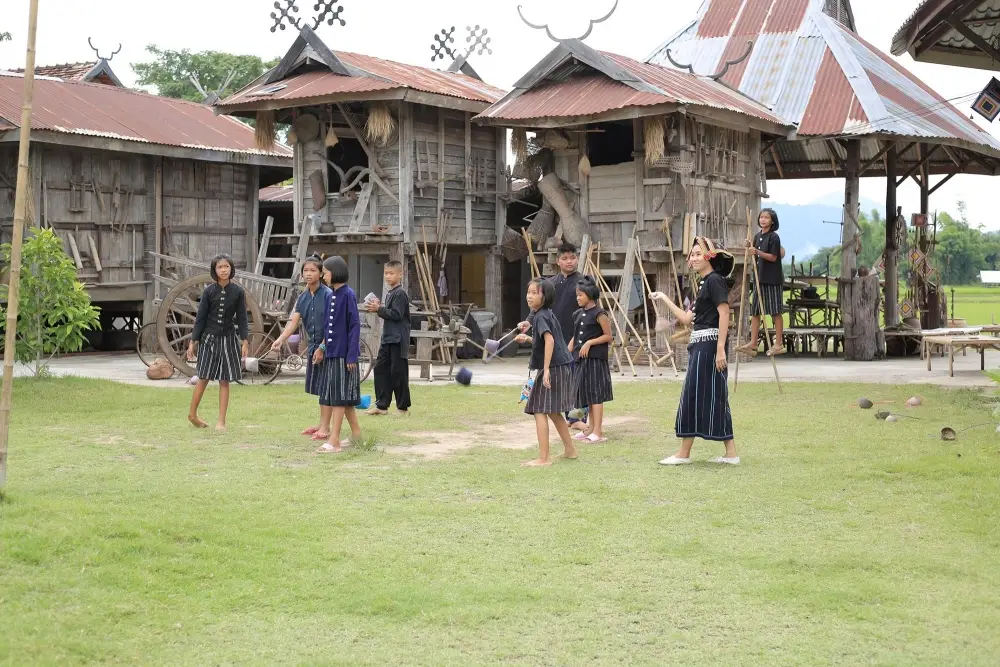
Tai Dam Cultural Village at Ban Na Pa Nat, Loei Province is one of the most meaningful cultural destinations in Chiang Khan District. Located in Ban Na Pa Nat, Khao Kaeo Subdistrict, Loei Province, the village preserves the living heritage of the Tai Dam people through traditional houses, language, clothing, ancestral beliefs, weaving, daily tools, handicrafts, community products, and homestay experiences. It is suitable for travelers who want to understand Loei beyond its mountain scenery and riverside town atmosphere, especially those interested in ethnic culture, community-based tourism, handwoven textiles, and traditional ways of life.
The Tai Dam people of Ban Na Pa Nat migrated from Xiangkhouang in the Lao People’s Democratic Republic in 1905 and settled in this village in Khao Kaeo Subdistrict, Chiang Khan District. More than a century later, the community still maintains a strong sense of identity. The Tai Dam language, black clothing, traditional household objects, weaving skills, rituals, and respect for ancestors remain important parts of daily life. A visit to Ban Na Pa Nat is therefore not only a sightseeing stop, but a chance to learn from a community that has carried its memory across generations.
The Tai Dam Cultural Village was established in 1996 by Ajarn Phet Tabong, Director of the Non-Formal Education Center in Chiang Khan District, in cooperation with the residents of Ban Na Pa Nat. The aim was to create a place where Tai Dam history, culture, lifestyle, and community identity could be shared with visitors. This development transformed knowledge that once lived mainly within homes and families into a community learning space where students, travelers, researchers, and cultural visitors can understand the Tai Dam way of life more clearly.
What makes Ban Na Pa Nat different from many tourist attractions is that it remains a real community. Culture here is not presented only as a performance. It is still connected to daily life, family memory, local work, and community relationships. The black clothing of the Tai Dam people is one of the most recognizable cultural markers. Men traditionally wear black long-sleeved shirts, while women wear black garments with distinctive decorative details. Black clothing is not simply a costume; it reflects identity, heritage, and pride in belonging to the Tai Dam community.
Inside the village, visitors can see traditional Tai Dam houses built in a style that reflects the community’s older way of life. These houses are usually raised from the ground, built with wood, and arranged to suit family living, work, and ritual practice. Inside the cultural house and display areas are everyday tools, weaving equipment, household objects, and items connected with livelihood and belief. These objects help visitors imagine how Tai Dam families lived, worked, organized their homes, and maintained relationships with ancestors and community members.
Weaving is one of the most important highlights of Ban Na Pa Nat. Local villagers have organized weaving groups to preserve traditional skills and create household income. Visitors can watch weaving demonstrations and observe the process of preparing threads, setting up the loom, arranging patterns, and producing handwoven cloth. Tai Dam weaving requires patience, concentration, and deep knowledge of rhythm, texture, and pattern. A woven textile from this village is more than a product; it is the result of time, skill, and cultural memory.
Community textile products include fabric lengths, traditional cloth, scarves, bags, textile accessories, and locally made souvenirs. Buying directly from the community supports local weavers and helps keep Tai Dam textile heritage alive. Visitors can also ask about patterns, colors, materials, and care instructions directly from the makers. This direct connection with artisans is one of the most valuable parts of visiting a real weaving community rather than buying products from a general souvenir shop.
Another distinctive cultural activity is making tum nok tum noo, small handmade hanging charms associated with good fortune and Tai Dam belief. These colorful craft objects are popular with visitors because they are beautiful, lightweight, and easy to take home as souvenirs. The activity also shows that culture is not limited to grand ceremonies; it can also live in small handmade objects, decorations, and everyday crafts that carry symbolic meaning.
Belief in ancestors remains central to Tai Dam life. The relationship between living family members and ancestral spirits influences home organization, rituals, and community values. Respect for ancestors is a way of linking the present generation with its roots. Visitors should therefore explore the village with sensitivity and respect, as some objects, spaces, and practices may hold deep emotional and spiritual meaning for local residents.
The village also hosts cultural activities on certain occasions, including Tai Dam performances, folk games, blessing ceremonies, and activities prepared for study groups. These activities communicate culture through music, movement, language, dress, and participation. If visitors travel as a group or want to experience specific demonstrations or performances, advance contact is recommended so that the community can prepare properly.
Local food is another way to understand Tai Dam culture. Traditional dishes reflect local ingredients, seasonal resources, fermentation methods, and the habit of sharing food within families and community gatherings. For travelers who choose a homestay experience, meals with local hosts can become one of the most memorable parts of the trip. Food allows visitors to understand culture through taste, hospitality, and conversation.
The Tai Dam homestay experience at Ban Na Pa Nat is suitable for travelers who want deeper contact with local life. Staying overnight allows visitors to see the village in the evening and early morning, talk with residents, observe daily routines, enjoy local food, and experience a slower rhythm of travel. Homestays are best suited for travelers who value cultural exchange and community experience more than hotel-style convenience. Advance booking is recommended so the community can arrange suitable accommodation and activities.
For educational travel, Tai Dam Cultural Village is appropriate for students, researchers, cultural groups, families, and general visitors. The village connects many learning themes: migration history, ethnic identity, local language, traditional architecture, weaving, handicrafts, ancestral beliefs, community tourism, and cultural preservation. Learning in the actual community helps visitors understand that culture is not frozen in a museum; it continues through real people and everyday practices.
A basic visit should allow at least 1–2 hours for walking through the village, seeing traditional houses, observing weaving, browsing community products, and listening to local stories. Those who want to join workshops, try tum nok tum noo making, learn about weaving in more detail, enjoy local food, or stay overnight should plan for at least half a day or a 2-day, 1-night community trip. Spending more time helps visitors understand the village beyond a quick photo stop.
Good visitor manners are important. Travelers should ask permission before photographing people, homes, or ritual-related objects. They should not touch tools, household items, or displays without approval. Respectful clothing, polite conversation, and quiet behavior are recommended. When buying community products, visitors should appreciate the time and skill behind handwoven textiles and handmade crafts. Respectful travel creates a better experience for both guests and hosts.
The best time to visit is from morning to afternoon, when it is comfortable to walk around, see weaving demonstrations, buy products, and talk with community members. During the cool season, Chiang Khan and Loei Province have pleasant weather, making it easy to combine the village with nearby attractions such as Kaeng Khut Khu, Phu Thok Viewpoint, and Chiang Khan Walking Street. Weekends and group activity days tend to feel livelier than ordinary weekdays.
Getting There from Loei city is straightforward by private car, rental car, or motorcycle. Take the Loei-Chiang Khan route. When you reach Ban That intersection, turn right for about 500 meters, then follow the road toward Ban Na Pa Nat. Travelers starting from Chiang Khan can hire local transport or a skylab vehicle to reach the village. Using a navigation map and asking local residents for directions near the destination will make the trip easier.
The village can be conveniently combined with other attractions in Chiang Khan. Visitors may start with the Tai Dam Cultural Village in the morning, continue to Wat Phra Phutthabat Phu Khwai Ngoen or Kaeng Khut Khu, visit Wat Tha Khaek or Phu Thok Viewpoint, and finish the day at Chiang Khan Walking Street. This route offers a strong combination of ethnic culture, Mekong riverside scenery, local food, temples, and small-town charm.
For international travelers, Ban Na Pa Nat is an excellent place to understand Thailand’s cultural diversity. Thailand is not only temples, beaches, and markets; it is also home to ethnic communities with their own languages, clothing, beliefs, crafts, and histories. Visiting the Tai Dam community helps foreign travelers see a deeper side of Loei Province and adds cultural meaning to a Chiang Khan itinerary.
In summary, Tai Dam Cultural Village at Ban Na Pa Nat is a valuable cultural destination in Loei Province. It preserves Tai Dam migration history, traditional houses, daily tools, weaving, crafts, language, clothing, ancestral beliefs, and community-based tourism. Visitors can learn from a living community, buy handmade products, join cultural activities, and stay in a homestay for a deeper experience. It is one of the best places to explore the cultural depth of Chiang Khan and Loei beyond the usual scenic route.
| Name | Tai Dam Cultural Village, Ban Na Pa Nat |
| Location | Ban Na Pa Nat, Khao Kaeo Subdistrict, Chiang Khan District, Loei Province |
| Address | Village No. 4, Na Bon-Song Pueai Road, Ban Na Pa Nat, Khao Kaeo Subdistrict, Chiang Khan District, Loei 42110, Thailand |
| Coordinates | Approximately 17.79991, 101.73420 |
| Highlights | Traditional Tai Dam houses, old household objects, weaving demonstrations, tum nok tum noo handicraft, community products, homestay experience, and Tai Dam cultural activities. |
| History | The Tai Dam people migrated from Xiangkhouang, Laos, in 1905 and settled at Ban Na Pa Nat. The cultural village was established in 1996 by Ajarn Phet Tabong and local residents to share Tai Dam history, culture, and way of life. |
| Name Origin | The name reflects Ban Na Pa Nat as a Tai Dam community and a cultural learning space where visitors can understand Tai Dam heritage. |
| Distinctive Features | A living cultural village preserving Tai Dam language, black clothing, traditional houses, daily tools, weaving, handicrafts, ancestral beliefs, and community-based tourism. |
| Travel Information | From Loei city, take the Loei-Chiang Khan route. At Ban That intersection, turn right for about 500 meters, then follow the road to Ban Na Pa Nat. From Chiang Khan, local transport or skylab vehicles can be hired to reach the village. |
| Current Status | Open as a Tai Dam cultural learning site, community-based tourism destination, textile product center, and homestay community. |
| Open Days | Daily |
| Opening Hours | 08.00 – 17.00 |
| Fees | No admission fee |
| Facilities | Cultural house, display areas, weaving demonstration area, community product area, activity courtyard, homestay services, and community tourism coordinators. |
| Main Areas / Zones | Traditional Tai Dam House Zone Old Household Objects and Lifestyle Display Zone Weaving Demonstration Zone Textile and Community Product Zone Tum Nok Tum Noo and Handicraft Activity Zone Cultural Performance and Activity Courtyard Community Homestay Zone |
| Caretaker / Coordinators | Dr. Phet Tabong Phaisoont and Khun Phatraphon Phaisoont, community-based tourism and homestay coordinators, together with Ban Na Pa Nat community. |
| Main Contact Number | 084-925-0771, 083-332-2828, 086-035-4738 |
| Official Website / Official Page | Facebook: หมู่บ้านวัฒนธรรมไทดำ บ้านนาป่าหนาด |
| Nearby Tourist Attractions | 1. Wat Phra Phutthabat Phu Khwai Ngoen, about 9 km 2. Kaeng Khut Khu, about 12 km 3. Wat Tha Khaek, about 13 km 4. Chiang Khan Walking Street, about 16 km 5. Phu Thok Viewpoint, Chiang Khan, about 20 km 6. Chiang Khan Skywalk, about 38 km |
| Nearby Restaurants | 1. Khrua Nucha at Chiang Khan Hill Resort, about 12 km, Tel. 091-8633228, 042-810359 2. Smile at Chiangkhan, about 16 km, Tel. 088-5636377 3. Jum Nua Yai Pat, about 16 km, Tel. 042-822079 4. Huen Luang Prabang, about 16 km, Tel. 089-0094345 5. Krua Baan Chef Chiang Khan, about 16 km, Tel. 084-2098551 |
| Nearby Accommodations | 1. Tai Dam Homestay, Ban Na Pa Nat, about 0 km, Tel. 084-9250771, 083-3322828 2. Chiang Khan Hill Resort, about 12 km, Tel. 094-5915251 3. Chiang Khan River Mountain Resort, about 15 km, Tel. 042-822191, 083-6164961 4. Bansuanphuhong Resort, about 15 km, Tel. 093-4764166 5. Ban Na Pa Nat Homestay House, about 0 km, Tel. 042-070629 6. Accommodations around Chiang Khan Walking Street, about 16 km |
Frequently Asked Questions (FAQ)
Q: Where is Tai Dam Cultural Village at Ban Na Pa Nat located?
A: It is located at Ban Na Pa Nat, Khao Kaeo Subdistrict, Chiang Khan District, Loei Province 42110, Thailand.
Q: Why is Tai Dam Cultural Village important?
A: It preserves the history, lifestyle, language, black clothing, traditional houses, ancestral beliefs, weaving, and cultural identity of the Tai Dam people who settled in Ban Na Pa Nat in 1905.
Q: What are the opening days and hours?
A: The village is open daily from 08.00 to 17.00.
Q: Is there an admission fee?
A: No. There is no admission fee, but visitors can support the community by buying local products or joining community activities.
Q: What can visitors do inside the village?
A: Visitors can see traditional Tai Dam houses, old household objects, weaving demonstrations, tum nok tum noo handicrafts, community products, cultural activities, and homestay experiences.
Q: Can travelers stay in a Tai Dam homestay?
A: Yes. Homestay stays are available through community coordinators. Advance contact is recommended at 084-925-0771 or 083-332-2828.
Q: How can travelers get to Ban Na Pa Nat?
A: From Loei city, take the Loei-Chiang Khan route. At Ban That intersection, turn right for about 500 meters, then follow the road to Ban Na Pa Nat. From Chiang Khan, local transport or skylab vehicles can be hired.
Q: What nearby places can be visited after Tai Dam Cultural Village?
A: Nearby places include Wat Phra Phutthabat Phu Khwai Ngoen, Kaeng Khut Khu, Wat Tha Khaek, Chiang Khan Walking Street, Phu Thok Viewpoint, and Chiang Khan Skywalk.
 Category: ●Suburban Living
 Group: ●Village, Community
Last Update : 3 MonthAgo
 Last Update : 3 MonthAgo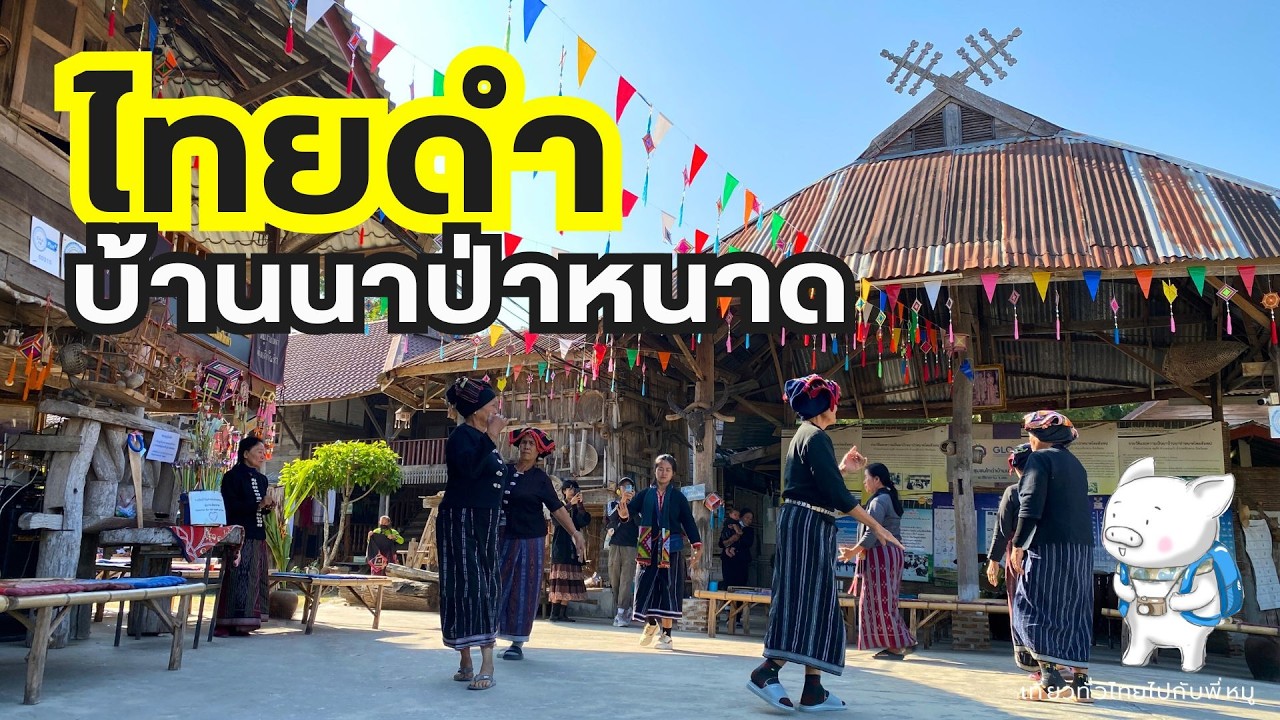
 Click to Access the Navigation Map GPS
Tai Dam Cultural Village Map
Recommend

 Art, Culture and Heritage
 Historical Sites and Monuments(2)
 Landmarks and Memorials(3)
 Art, Craft Centres, Tradition(2)
 Museums(4)
 Art Gallery(1)
 Educational Places
 Educational Gardens, Farm(2)
 Places of Worship
 Temple(16)
 Other Sacred Sites(8)
 Research and Development
 Royal Project(3)
Village, Community(3)
Royal Project(3)
Village, Community(3)
 Local Market(1)
 Nature and Wildlife
 National Parks and Marine Reserves(5)
 Mountain (Doi)(10)
 Dam, Reservoir, Lake(7)
 Waterfalls(21)
 Caves(3)
 River, Canal(5)
 Bays and Beaches(1)
 Other natural attractions(1)
 Entertainment and Agricultural
 Farms, Parks and Ecotourism(8)
 Waterpark(1)
 Outdoor and Adventure Activities(2)
 Travel Articles, Recipes
 Travel Review, Food Review(1)


