
lovethailand home >Northeastern Travel Attractions >Loei Travel Attractions >Wang Saphung >Si Songkhram > Princess Maha Chakri Sirindhorn Art Center
TL;DR: Princess Maha Chakri Sirindhorn Art Center is located at Inside Srisongkram Wittaya School, Loei–Nong Bua Lamphu Road, Si Songkhram Subdistrict, Wang Saphung District, Loei Province, Thailand, open Monday – Friday, hours 08.00 – 16.00.
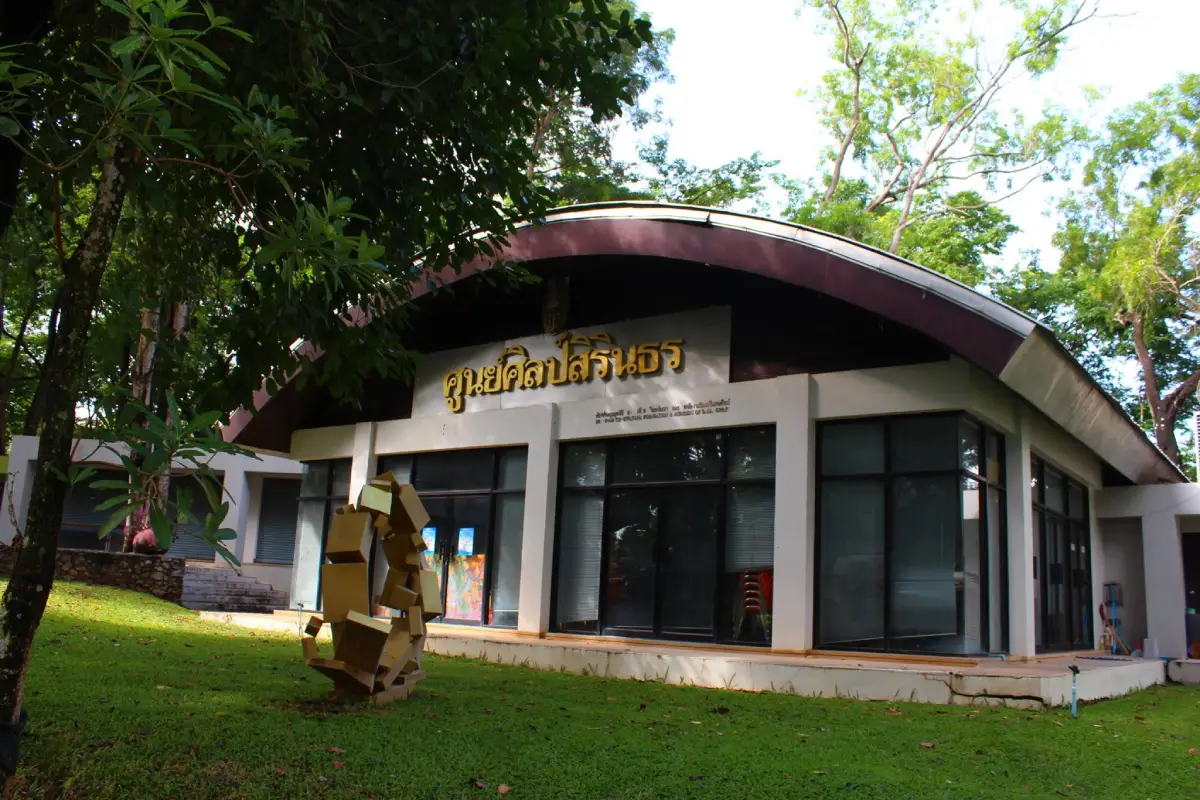
Princess Maha Chakri Sirindhorn Art Center
Open Days: Monday – Friday
Opening Hours: 08.00 – 16.00
Princess Maha Chakri Sirindhorn Art Center in Loei Province, commonly known in Thai as Sirindhorn Art Center, is located inside Srisongkram Wittaya School on the Loei–Nong Bua Lamphu Road in Si Songkhram Subdistrict, Wang Saphung District, Loei Province. It is one of the most meaningful educational and cultural art centers in northeastern Thailand. The center displays beautiful paintings and artworks created by students, many of which have brought recognition to the school, the province, and Thailand both nationally and internationally. For travelers who want to see a different side of Loei beyond mountains, temples, and local festivals, this art center offers a quiet but powerful encounter with youth creativity, art education, and the belief that children from a provincial school can create work of remarkable artistic quality.
The center is more than a gallery. It is a long-term educational achievement built on the idea that art can develop children in many dimensions. Through drawing, painting, observing, experimenting, and exhibiting their work, young students learn concentration, imagination, emotional expression, patience, confidence, and problem-solving. The artworks displayed here show how students respond to nature, community life, dreams, memory, family, rural surroundings, and personal imagination. Visitors can see that children’s art is not simply practice work. It is a language through which young people interpret the world with sincerity and originality.
The origin of Sirindhorn Art Center is closely connected with Sangkhom Thongmee, an art teacher at Srisongkram Wittaya School. He recognized that children in provincial areas often had artistic talent but lacked access to proper learning spaces, exhibition opportunities, and sustained encouragement. His vision was to create a center where children and young people could learn art seriously, see inspiring works, display their own creations, and develop their potential beyond the limits of a normal classroom. This idea grew gradually through teaching, training, competitions, and public recognition of student artwork.
Before the art center became a permanent institution, the school’s art program had already built a strong reputation. Students from Srisongkram Wittaya School produced paintings and creative works that won awards and gained attention in Thailand and abroad. This long process proved that youth art from a provincial school could be powerful, original, and socially meaningful. The art center is therefore not simply a building project. It is the result of many years of teaching, persistence, student effort, and belief in the creative potential of young people.
Sirindhorn Art Center was founded in 1993 within the grounds of Srisongkram Wittaya School. It later received the royal name “Sirindhorn Art Center” from Her Royal Highness Princess Maha Chakri Sirindhorn. The royal name is deeply meaningful because Princess Sirindhorn is widely respected for her lifelong support of education, culture, youth development, and the arts. The name gives the center a special identity as a place where art, learning, and social development come together. For students in Loei, it also affirms that their work and their creative growth matter beyond their own school.
The center occupies about 6 rai of land within Srisongkram Wittaya School. The surrounding area is green, calm, and designed to harmonize with nature. Instead of feeling like a formal urban museum, the center feels like an art garden inside a school. Visitors walk between buildings through a landscape of trees, paths, open space, and simple modern architecture. This environment makes the viewing experience gentle and reflective. Art is not isolated from everyday life here; it is connected to nature, school life, and the atmosphere of learning.
Architecturally, the center consists of 4 main buildings. Each building has a clear function, but all are connected by a walkway that forms the main circulation route through the site. The design is simple, restrained, and integrated with the surrounding landscape. The buildings are not meant to overwhelm visitors. Instead, they quietly support the experience of learning and looking. Their forms resemble sculptural objects placed within a wooded garden, reminding visitors that architecture, light, shade, and movement can also become part of the artistic experience.
The first building is the Children and Youth Art Museum. It houses the permanent exhibition and preserves student artworks from the early period of the school’s art development. Many works were selected from thousands of student creations that once brought recognition to the school. This building functions as a historical archive of youth art. Visitors can see how children and young people use line, color, composition, imagination, and storytelling to express their worlds. Some paintings reflect rural life, some are inspired by nature, some reveal dreams, and others show surprisingly complex visual thinking.
The second building is the rotating exhibition hall. This space allows the center to remain active and responsive. Instead of showing only permanent works, it can present new exhibitions by students, alumni, artists, or invited groups. Rotating exhibitions are important because they expose learners and visitors to changing artistic ideas. They may include painting, printmaking, sculpture, mixed media, contemporary art, or works that address society, nature, identity, and imagination. For repeat visitors, this hall makes each visit different.
The third building serves as a meeting, seminar, lecture, discussion, and training space. It is used for art education, talks, teacher training, and knowledge-sharing activities. This building demonstrates that the center is not only an exhibition venue. It is also a place where art education can be discussed, expanded, and transferred to teachers and learners. A strong art-learning ecosystem requires not only talented students but also teachers, mentors, parents, and institutions that understand the value of creative education.
The fourth building is used for workshops and hands-on art activities. This is essential because art cannot be learned only by looking. Learners need to experiment, sketch, mix colors, arrange forms, make mistakes, revise, and discover their own visual language. The workshop building turns visitors and students from viewers into makers. It reflects the center’s belief that art should be accessible, practical, and capable of growing through direct experience.
Beyond the 4 buildings, the landscape itself is an important part of the center. The green spaces, paths, and outdoor environment allow visitors to pause between exhibitions. This rhythm of looking, walking, resting, and returning to art is especially suitable for young learners. It prevents the museum experience from becoming rigid and gives the imagination room to breathe. The relationship between art and nature is one of the quiet strengths of the center.
What makes Sirindhorn Art Center different from many other galleries is that children and young people are at the center of the story. Their works are not treated as minor exercises but as meaningful artistic expressions. Many visitors are surprised by the emotional depth, visual courage, and compositional strength found in student artworks. The paintings show that children can interpret the world with complexity, directness, and power. In this sense, the center is also a place where adults can learn from children.
In cultural terms, many artworks reflect the environment of Loei and northeastern Thailand. Mountains, villages, rice fields, local festivals, family relationships, animals, temples, dreams, and rural landscapes appear through the eyes of young artists. These works become a form of cultural documentation. They may not record history in the formal sense, but they preserve feelings, memories, and experiences of children growing up in a particular place. For travelers interested in local culture, this makes the center highly valuable.
The center also offers an important lesson for education. It shows that art can be a serious tool for developing children’s abilities and confidence. Creating an artwork requires observation, patience, decision-making, revision, and emotional awareness. These are life skills, not only artistic skills. A child who learns to build a painting also learns to manage time, solve problems, accept mistakes, and continue working until an idea becomes visible. This is why the center matters not only to future artists but also to all learners.
For art lovers, the atmosphere here is very different from large urban art museums. It is quieter, simpler, and more intimate. Visitors do not need advanced knowledge of art history to enjoy the exhibitions. The works communicate directly through color, mood, image, and imagination. Some pieces feel joyful, some dreamlike, some thoughtful, and some surprisingly mature. A slow visit allows viewers to notice how different young artists see the world in different ways.
For families, the center can inspire meaningful conversations. Children visiting the center can see works created by other children and students. This helps them believe that art is not distant or reserved only for professionals. Parents can use the visit to talk about color, feeling, storytelling, practice, and effort. A family visit to the center is therefore not only educational but also emotionally rich. It encourages respect for creativity and for the work of young people.
For teachers and educators, Sirindhorn Art Center is a valuable case study in how a school can support creative learning. The center demonstrates the importance of a teacher with vision, a supportive environment, and real opportunities for students to show their work. When students know that their artworks may be preserved and exhibited, their learning becomes more meaningful. They are not only completing classroom assignments; they are participating in a living culture of creativity.
The center also contributes to the cultural identity of Wang Saphung District. Many travelers think of Wang Saphung mainly as a town on the route between Loei city and other destinations. Sirindhorn Art Center gives the district an important cultural landmark. It shows that a local school can become a place of national artistic significance. This makes Wang Saphung not merely a transit point but a destination for cultural and educational travel.
For foreign travelers, the center offers a clear introduction to Thai youth art and local art education. Even if some written information is in Thai, the artworks communicate across language barriers. Color, form, subject matter, and emotion can be understood visually. International visitors interested in education, youth creativity, Thai contemporary art, or community-based learning will find the center especially meaningful. It shows how art education in a provincial Thai school can produce work with broad cultural value.
Getting There is convenient by private car, rental car, or local transport. From Mueang Loei, visitors can take the Loei–Nong Bua Lamphu road toward Wang Saphung District and continue to Srisongkram Wittaya School. The distance from Loei city is about 22 to 25 kilometers, and the trip usually takes about 30 to 40 minutes depending on traffic. Because the center is located inside a school, visitors should contact the school or center in advance, drive carefully within the school compound, and avoid disturbing students during school hours.
The center is open on school working days: Monday to Friday from 08.00 to 16.00. It is closed on Saturdays, Sundays, and public holidays. Advance contact is recommended, especially for group visits, educational tours, or visitors who would like a guided explanation. Because the center operates within an educational institution, checking ahead helps ensure that the visit is smooth and respectful of school activities.
There is no admission fee, making the center accessible to students, families, educators, and general travelers. The absence of commercial pressure helps preserve the center’s educational character. Visitors should behave respectfully, avoid touching artworks unless permitted, follow staff guidance, and take photographs only where allowed. The aim is to protect the artworks and maintain a calm learning atmosphere.
A meaningful visit should include both the permanent exhibition and the rotating exhibition. The permanent section reveals the long development of student art at Srisongkram Wittaya School, while the rotating exhibition shows current or changing creative activity. Visitors should also take time to observe the architecture and landscape. The quiet design of the center is part of its identity and reinforces the connection between art, learning, and environment.
After visiting the art center, travelers can continue to nearby attractions in Wang Saphung and surrounding districts. Possible stops include Wat Tham Pha Bing, the Luang Pu Louis Chantasaro Chedi Museum, Wat Pa Sammanusorn, Wat Pa Weluwanaram or Wat Non Kok Chan, Phu Bo Bit Forest Park, and Suan Hin Pha Ngam in Nong Hin District. This makes it easy to combine art, Buddhism, nature, and local culture in one itinerary.
Compared with Loei’s better-known natural attractions, Sirindhorn Art Center offers a different kind of inspiration. It is not a mountain viewpoint or a festival site, but a place that shows the power of sustained education. It tells the story of how children in a provincial school, guided by committed teachers, can develop artistic skills and create works recognized far beyond their hometown. This human story is one of the center’s deepest strengths.
In summary, Princess Maha Chakri Sirindhorn Art Center in Loei Province is a worthwhile cultural and educational destination for anyone visiting Wang Saphung District. It preserves and displays student artworks of outstanding quality, includes permanent and rotating exhibitions, offers seminar and workshop spaces, and stands within a calm landscape designed to support artistic learning. The center is free to enter during school working days and is suitable for families, students, teachers, artists, art lovers, and international travelers interested in Thai youth art. For those who want to discover Loei beyond natural scenery, this center reveals the creative spirit of the province in a quiet and memorable way.
| Name | Princess Maha Chakri Sirindhorn Art Center / Sirindhorn Art Center |
| Location | Inside Srisongkram Wittaya School, Loei–Nong Bua Lamphu Road, Si Songkhram Subdistrict, Wang Saphung District, Loei Province, Thailand |
| Address | Srisongkram Wittaya School, Loei–Nong Bua Lamphu Road, Si Songkhram Subdistrict, Wang Saphung District, Loei Province 42130, Thailand |
| Highlights | A youth art learning center displaying student artworks that have gained national and international recognition, with permanent exhibitions, rotating exhibitions, seminar areas, and art workshop spaces |
| History | Founded in 1993 from the vision of Sangkhom Thongmee, an art teacher at Srisongkram Wittaya School. The center received the royal name “Sirindhorn Art Center” and became a major learning space for children’s and youth art in Loei Province. |
| Distinctive Features | A group of 4 art buildings on about 6 rai of land, designed to harmonize with nature and connected by walkways within the school grounds |
| Key Exhibits | Student paintings, youth artworks, award-winning works, permanent exhibition pieces, rotating exhibitions, and art-learning activities |
| Main Areas / Zones | 1. Children and Youth Art Museum / Permanent Exhibition Building 2. Rotating Exhibition Building 3. Seminar, Lecture, Discussion, and Art Teacher Training Building 4. Workshop and Hands-On Art Activity Building 5. Landscape, Walkways, and Outdoor Art-Garden Area |
| Caretaker | Srisongkram Wittaya School / Educational Institution |
| Travel Information | From Mueang Loei, take the Loei–Nong Bua Lamphu road toward Wang Saphung District and continue to Srisongkram Wittaya School. The center is about 22 to 25 km from Loei city and can be reached by private car, rental car, or local transport. |
| Current Status | Open |
| Open Days | Monday – Friday; closed on Saturdays, Sundays, and public holidays |
| Opening Hours | 08.00 – 16.00 |
| Fees | Free admission |
| Facilities | Permanent exhibition building, rotating exhibition building, seminar room, workshop space, landscaped area, walkways, and school compound facilities |
| Main Contact Number | 08 9862 5806, 093-617-9527 |
| Official Website / Official Page | Srisongkram Wittaya School and the Museum Database of Thailand |
| Nearby Tourist Attractions | 1. Wat Tham Pha Bing, about 6 km 2. Luang Pu Louis Chantasaro Chedi Museum, about 7 km 3. Wat Pa Sammanusorn, about 16 km 4. Wat Pa Weluwanaram or Wat Non Kok Chan, about 18 km 5. Phu Bo Bit Forest Park, about 25 km 6. Suan Hin Pha Ngam, Nong Hin District, about 45 km |
| Nearby Restaurants | 1. A Little House Café, about 1 km, Tel. 096-945-4348, 091-879-2190 2. Por Pla Pen, about 3 km, Tel. 081-051-6325 3. Melody Coffee Wang Saphung, about 4 km, Tel. 042-810-567 4. BALANCE SPECIALTY COFFEE Wangsaphung, about 5 km, Tel. 063-592-5197 5. Zaploei Wang Saphung, about 5 km, Tel. 080-684-8959 6. TimTim Cafe, about 6 km, Tel. 065-391-7265 |
| Nearby Accommodations | 1. The Cozy Hotel, about 1 km, Tel. 042-870-565, 095-656-4614 2. Sakul Plang Resort, about 1 km 3. Tonsak Loei Resort, about 2 km, Tel. 093-546-3633 4. Srithong Resort Wang Saphung, about 2 km, Tel. 083-332-1819 5. Plus Hotel Wang Saphung, about 6 km, Tel. 062-639-0382 6. Wang Saphung In View Hotel, about 8 km, Tel. 081-505-1569 7. Rim Loei Homestay Wang Saphung, about 8 km, Tel. 098-923-9808, 081-234-9859 |
Frequently Asked Questions (FAQ)
Q: Where is Princess Maha Chakri Sirindhorn Art Center located?
A: The center is located inside Srisongkram Wittaya School on the Loei–Nong Bua Lamphu Road in Si Songkhram Subdistrict, Wang Saphung District, Loei Province.
Q: What are the opening days and hours of Sirindhorn Art Center?
A: The center is open Monday to Friday from 08.00 to 16.00 and is closed on Saturdays, Sundays, and public holidays.
Q: Is there an admission fee for Sirindhorn Art Center?
A: No. Admission is free.
Q: What can visitors see inside Sirindhorn Art Center?
A: Visitors can see permanent exhibitions of children’s and youth artworks, rotating exhibitions, seminar spaces, workshop areas, and architecture designed to harmonize with the natural surroundings.
Q: Who is Sirindhorn Art Center suitable for?
A: It is suitable for students, teachers, families, art lovers, cultural travelers, and international visitors interested in Thai youth art and creative education.
Q: How is Sangkhom Thongmee connected to the center?
A: Sangkhom Thongmee was an art teacher at Srisongkram Wittaya School who initiated and developed the idea of creating an art center for children and youth.
Q: How long should visitors spend at Sirindhorn Art Center?
A: Visitors should allow about 1 to 2 hours to see the permanent exhibition, rotating exhibition, and surrounding art-center environment comfortably.
Q: What nearby places can be visited after Sirindhorn Art Center?
A: Nearby places include Wat Tham Pha Bing, Luang Pu Louis Chantasaro Chedi Museum, Wat Pa Sammanusorn, Wat Pa Weluwanaram, Phu Bo Bit Forest Park, and Suan Hin Pha Ngam.
 Category: ●Art, Culture and Heritage
 Group: ●Art Gallery
Last Update : 1 MonthAgo
 Last Update : 1 MonthAgo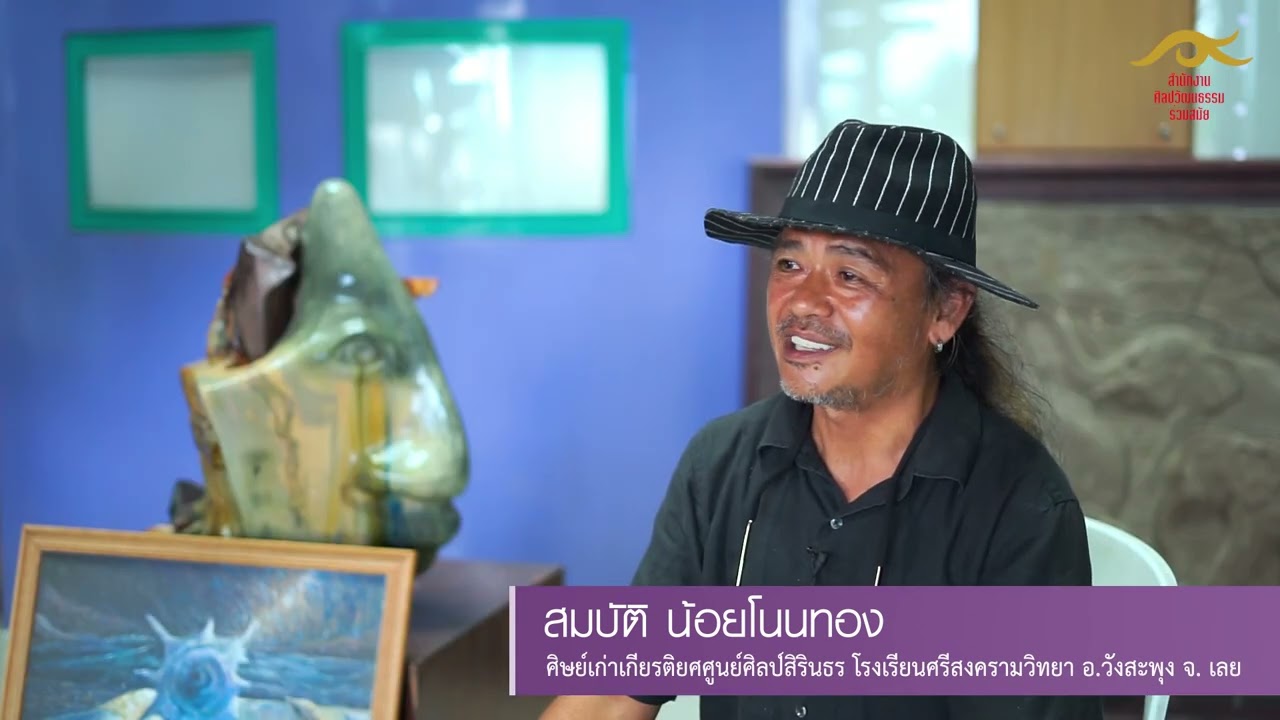
 Click to Access the Navigation Map GPS
Princess Maha Chakri Sirindhorn Art Center Map
Recommend

 Historical Sites and Monuments(2)
 Landmarks and Memorials(3)
 Art, Craft Centres, Tradition(2)
 Museums(4)
Art Gallery(1)
Museums(4)
Art Gallery(1)
 Educational Places
 Educational Gardens, Farm(2)
 Places of Worship
 Temple(16)
 Other Sacred Sites(8)
 Research and Development
 Royal Project(3)
 Suburban Living
 Village, Community(3)
 Local Market(1)
 Nature and Wildlife
 National Parks and Marine Reserves(5)
 Mountain (Doi)(10)
 Dam, Reservoir, Lake(7)
 Waterfalls(21)
 Caves(3)
 River, Canal(5)
 Bays and Beaches(1)
 Other natural attractions(1)
 Entertainment and Agricultural
 Farms, Parks and Ecotourism(8)
 Waterpark(1)
 Outdoor and Adventure Activities(2)


