
lovethailand home >Northeastern Travel Attractions >Loei Travel Attractions >Dan Sai >Dan Sai > Phi Ta Khon Museum
TL;DR: Phi Ta Khon Museum is located at Inside Wat Phon Chai, Kaeo Asa Road, Dan Sai Subdistrict, Dan Sai District, Loei Province 42120, Thailand, open Daily, hours 08.00 – 17.00.

Phi Ta Khon Museum
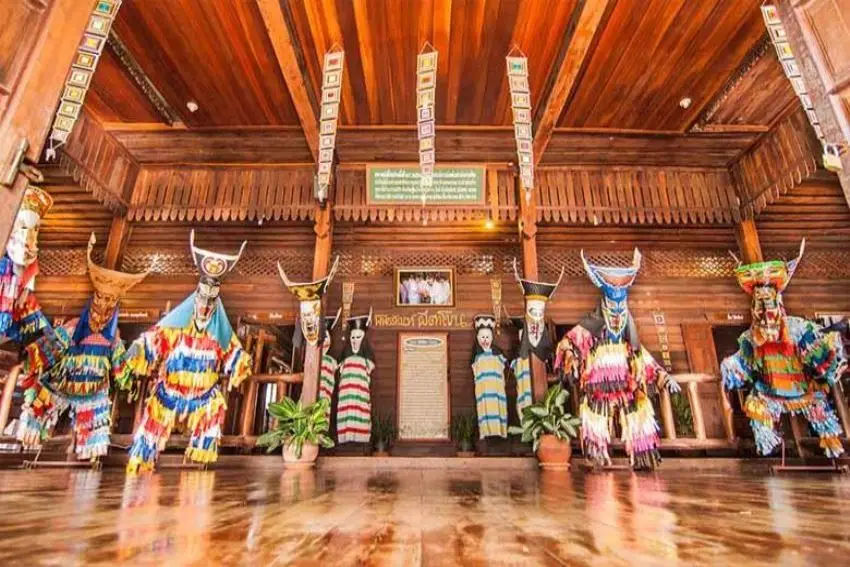
Open Days: Daily
Opening Hours: 08.00 – 17.00
Phi Ta Khon Museum in Dan Sai, Loei Province, also known as Dan Sai Local Museum (Phi Ta Khon), is located inside Wat Phon Chai on Kaeo Asa Road, Dan Sai Subdistrict, Dan Sai District, Loei Province. It is one of the most important cultural learning centers for anyone who wants to understand the Bun Luang festival and the Phi Ta Khon masked procession beyond its colorful appearance. The museum is not merely a place to display bright masks and festival costumes. It explains the history of Dan Sai, the role of Wat Phon Chai, the relationship between Buddhism and local spirit beliefs, the Bun Phawet merit-making tradition, the Bun Bang Fai rocket tradition, mask-making wisdom, local craftsmanship, and the continuing identity of the Dan Sai community.
For many travelers, Phi Ta Khon is remembered as one of Thailand’s most visually striking festivals. The long-nosed masks, tall horn-like decorations, vivid painted faces, colorful fabric strips, music, dancing, and playful movements make the festival unforgettable. Yet the museum helps visitors understand that Phi Ta Khon is not only a festive performance. It is part of Bun Luang, the great annual merit-making event of Dan Sai. Bun Luang combines Bun Phawet, the merit-making tradition centered on listening to the Vessantara Jataka, with Bun Bang Fai, the rocket-related rite connected to rain, fertility, guardian spirits, and agricultural life. Phi Ta Khon appears within this ritual world as a lively bridge between sacred belief, community participation, humor, performance, and seasonal hope.
The museum is situated about 82 kilometers from Mueang Loei District and lies in the cultural heart of Dan Sai. The district sits among mountains and valleys, with the Man River flowing through the town. Historically, Dan Sai has been linked to the Lan Xang cultural world, Ayutthaya, and borderland communities of the Phetchabun mountain range. When visitors come to Dan Sai, they usually think of Phra That Si Song Rak and Phi Ta Khon. The museum shows why these two symbols are closely connected. Phra That Si Song Rak represents historic faith and vows of friendship, while Phi Ta Khon represents the living energy of local ritual and community creativity.
The museum building itself is part of the experience. It is a wooden house adapted from the former kuti, or monastic residence, of the abbot of Wat Phon Chai. The building was originally constructed in 1935 and reflects local wooden architecture. Its timber floor, walls, veranda, and intimate scale create the feeling of entering a house of community memory rather than a modern exhibition hall. This choice of building is meaningful because the museum is not separated from local life. It stands inside the temple compound, close to the ritual space where Bun Luang and Phi Ta Khon are rooted.
Wat Phon Chai is the central temple of Dan Sai and one of the most important places connected with the Phi Ta Khon tradition. The Bun Luang festival must traditionally begin at Wat Phon Chai before surrounding villages hold their own events. The temple therefore acts as a ritual center where monks, community leaders, spirit mediums, local participants, Phi Ta Khon performers, and visitors gather. Inside the temple grounds are the old ordination hall, the revered Buddha image known as Phra Chao Yai or Luang Pho Yai, a replica of Phra That Si Song Rak, and ritual areas used during important community merit-making events. Visiting the museum together with the temple helps travelers see Phi Ta Khon as a living tradition rather than a staged tourist performance.
The development of the museum began from the need to explain local tradition clearly to outsiders. Before becoming a permanent museum, the Phi Ta Khon exhibition existed in Dan Sai Public Library from 1979. As tourism interest grew and more people came to ask about Phi Ta Khon, the exhibition was later developed with support from local education officers, Wat Phon Chai, the community, the Tourism Authority of Thailand, and provincial agencies. The museum was established in 2005 and continues to operate as a local learning space. Its purpose is to preserve and interpret the cultural meaning of Dan Sai, not simply to display masks.
Inside the museum, the exhibitions are organized into 6 main sections. The first section presents Dan Sai town and Phra That Si Song Rak. It introduces the history of Dan Sai over several centuries and explains the significance of Phra That Si Song Rak as one of the most important sacred monuments of the district. This section provides essential historical context before visitors enter the world of Phi Ta Khon. It shows that the masked tradition is part of a deeper landscape of faith, history, and community memory.
The second section is the Phi Ta Khon room, the heart of the museum. It explains the Heet Sip Song Khong Sip Si cultural framework, the Bun Luang festival, the Phi Ta Khon procession, the history of the masked tradition, the different mask styles, and the beliefs that both performers and spectators should understand. The room displays Phi Ta Khon figures, masks, and costumes in many forms. Some masks look playful, some appear fierce, and others are highly decorative. Each mask reflects the maker’s creativity, skill, and connection to local tradition.
One of the most important lessons in this room is the distinction between Phi Ta Khon Yai and Phi Ta Khon Lek. Phi Ta Khon Yai refers to the large male and female ritual figures. They are not newly made every year and are created according to specific traditional rules. Phi Ta Khon Lek refers to the smaller masks and costumes commonly seen in the annual procession. These are more numerous and visually diverse. Understanding this distinction helps visitors see that Phi Ta Khon is not just casual costume play. It has ritual order, cultural meaning, and community rules.
The third section is the video room. It presents audiovisual content about Dan Sai, the Bun Luang festival, Phi Ta Khon, local attractions, local food, and important people of the district. This section is especially helpful for visitors who come outside the festival season. Through moving images and sound, travelers can imagine the atmosphere of the procession, the rhythm of the event, and the communal excitement that fills the town during Bun Luang. It also helps those who have already seen the festival understand what they experienced in greater depth.
The fourth section presents the local pride of Dan Sai. It introduces knowledge that local people value, such as folk herbs, local tourism resources, community information, and traditional wisdom. This section expands the museum beyond Phi Ta Khon alone and reminds visitors that the festival is part of a wider cultural ecosystem. Dan Sai includes food, healing knowledge, landscapes, sacred places, stories, crafts, and community practices that together shape local identity.
The fifth section demonstrates Phi Ta Khon mask-making. This is one of the most valuable parts of the museum because it shows how ordinary local materials become a powerful cultural symbol. The head of the mask is made from a sticky-rice steamer basket folded into a hat-like form. The face is made from the base of a coconut leaf stalk, carved and joined to the head, with eye openings cut into it. The nose is carved from soft wood and is now often made long like an elephant trunk. The horns are made from dried coconut spathes. In the past, natural pigments such as lime, red lime, ash, turmeric, and soot were used. Today, oil paint is often used because it is convenient and colorful. Fabric scraps are then sewn to the mask so that they cover the shoulders and complete the Phi Ta Khon costume.
This mask-making demonstration helps visitors understand the intelligence of local craftsmanship. A Phi Ta Khon mask is not a factory-made souvenir. It is created from everyday rural materials, local imagination, hand skills, and cultural knowledge. Sticky-rice steamers, coconut leaf stalks, dried coconut spathes, wood, paint, and fabric are transformed into masks with personality. Every mask is different, and this difference is part of the charm of Phi Ta Khon. The process reveals how a community turns ordinary objects into ritual art.
The sixth section is the resting and souvenir area. Visitors can find small Phi Ta Khon masks, ceramic Phi Ta Khon figures, and other local products. The souvenir corner helps support the museum and allows local creativity to continue beyond the festival period. For travelers, these objects are not only souvenirs but also reminders of the meaning behind the tradition. Buying a well-made local souvenir helps connect visitors with the community and supports the preservation of local craftsmanship.
Outside the museum building, Wat Phon Chai itself deserves attention. The ordination hall is a work of local craftsmanship with architectural elements related to the Lan Xang cultural world. Inside is Phra Chao Yai or Luang Pho Yai, a revered Buddha image of the community. The temple also contains a replica of Phra That Si Song Rak, connecting the temple with the sacred monument that defines Dan Sai’s historical identity. The museum and temple should therefore be visited together. The museum explains the tradition, while the temple shows the ritual ground where the tradition continues to live.
The Bun Luang festival is central to understanding the museum. The festival is usually held around the middle of the year according to the local ritual calendar, with exact dates determined each year by the community. It combines Bun Phawet and Bun Bang Fai. Bun Phawet involves listening to the 13 chapters of the Vessantara Jataka and making merit with strong hope for future spiritual benefit. Bun Bang Fai is related to rain, guardian spirits, and agricultural fertility. By bringing these together, Bun Luang becomes both a Buddhist merit-making event and a community rite for seasonal well-being.
Phi Ta Khon enters this festival as the most visible and energetic expression of the event. The masked performers dance, tease, move through the town, and create joy in the procession. Yet their role is not merely entertainment. They represent a ritual presence that blends humor, fear, playfulness, and sacred tradition. This is why the museum is important. Without explanation, visitors may see only the colorful surface. With the museum’s context, they can understand the symbolic depth behind the masks.
For travelers who cannot visit during the Bun Luang festival, the museum is the best year-round place to learn about Phi Ta Khon. It is open every day and allows visitors to see masks, costumes, videos, local history, mask-making techniques, and community knowledge in a calmer setting. Those who visit during the festival can use the museum as a starting point before watching the procession. Those who visit outside the festival can still experience the core meaning of the tradition without waiting for the annual event.
A good visit usually takes about 45 minutes to 1.5 hours. Visitors may begin with the Dan Sai history and Phra That Si Song Rak section, continue to the Phi Ta Khon room, watch the video section, explore the local-pride exhibits, observe the mask-making area, and end at the souvenir corner. After that, visitors should walk around Wat Phon Chai to see the ordination hall, Phra Chao Yai, and the replica of Phra That Si Song Rak. This route gives a complete understanding of how town, temple, festival, mask, and community are connected.
Getting There is convenient from Dan Sai District Office. Follow Highway 2114 past Dan Sai Police Station and Dan Sai Market. After crossing the bridge over the Man River, Wat Phon Chai will be on the left, and the museum is located inside the temple compound. From Mueang Loei, the distance is about 82 kilometers, and the drive usually takes around 1.5 to 2 hours depending on road and traffic conditions. A private car or rental car is the most convenient option, although local transport can also be arranged within the district.
Because the museum is located inside a temple, visitors should dress politely and behave respectfully. They should avoid loud noise, avoid touching exhibits without permission, and be mindful when taking photographs near sacred or fragile objects. During the Bun Luang festival period, Dan Sai becomes crowded, so visitors should allow extra time for traffic, parking, and walking around the town. Visiting in the morning is often more comfortable for those who want to read the displays carefully and take photographs in a calmer atmosphere.
The museum does not charge an admission fee. This makes it accessible for students, families, cultural travelers, local residents, and international visitors. Visitors who wish to support the museum can buy local souvenirs or make merit according to their faith. Supporting local craft objects helps keep the Phi Ta Khon tradition active beyond the festival season and encourages younger generations to continue learning mask-making skills.
For families and students, Phi Ta Khon Museum is an excellent cultural classroom. Children can see how masks are made from sticky-rice steamers, coconut leaf stalks, dried coconut spathes, wood, paint, and cloth. They can also learn how a festival combines religion, local belief, farming life, music, costume, and community cooperation. This kind of learning is more vivid than reading from a textbook because the objects and setting are real.
For international visitors, the museum helps explain one of Thailand’s most distinctive local festivals in a direct and visual way. Phi Ta Khon should not be misunderstood as a Thai version of Halloween. It belongs to the Bun Luang festival and blends Buddhism, spirit belief, rain-related ritual, and rural community life. The masks may look playful, but they carry deep cultural meaning. The museum is therefore highly useful for foreign travelers who want to understand the festival respectfully.
Phi Ta Khon Museum can easily be included in a Dan Sai cultural route. Visitors can start at Wat Phon Chai and the museum, then continue to Phra That Si Song Rak, Wat Neramit Wipatsana, local cafés, restaurants, and nearby viewpoints. With more time, travelers can extend the trip to Phu Phra, Phu I Loet, Phu Lom Lo, or Phu Ruea depending on the season. This makes Dan Sai suitable for a cultural day trip or a 2-day itinerary combining temples, local food, mountain scenery, and community heritage.
There are 2 good ways to plan a visit. For a quiet museum experience, visit on a weekday or in the morning when there are fewer visitors. For the full festival atmosphere, check the annual Bun Luang schedule in advance because the festival dates change each year according to local tradition. Advance planning is important during the festival season because accommodations in Dan Sai can fill quickly and traffic in the district becomes heavier than usual.
In summary, Phi Ta Khon Museum in Dan Sai, Loei Province is much more than a place for taking photographs with colorful masks. It is a cultural gateway to Dan Sai’s history, Wat Phon Chai, Phra That Si Song Rak, Bun Luang, mask-making wisdom, local belief, and community identity. The museum is open daily, free to enter, and easy to combine with nearby attractions. For anyone who wants to understand Phi Ta Khon beyond the surface of the festival, this museum is the best place to begin.
| Name | Phi Ta Khon Museum, Dan Sai / Dan Sai Local Museum (Phi Ta Khon) |
| Location | Inside Wat Phon Chai, Kaeo Asa Road, Dan Sai Subdistrict, Dan Sai District, Loei Province 42120, Thailand |
| Address | Wat Phon Chai, Kaeo Asa Road, Dan Sai Subdistrict, Dan Sai District, Loei Province 42120, Thailand |
| Highlights | A wooden local museum inside Wat Phon Chai, presenting Dan Sai history, the Bun Luang festival, Phi Ta Khon masks, mask-making demonstrations, and Phi Ta Khon souvenirs |
| History | The exhibition began as a Phi Ta Khon display in Dan Sai Public Library in 1979 and later developed into a permanent museum inside the former wooden kuti of the abbot of Wat Phon Chai. The museum was established in 2005. |
| Distinctive Features | A wooden building adapted from an old monastic residence, reflecting local architecture and the community atmosphere of Dan Sai |
| Key Exhibits | Phi Ta Khon masks in many forms, Phi Ta Khon figures, costumes, Dan Sai history displays, Bun Luang festival information, Heet Sip Song Khong Sip Si traditions, video media, mask-making demonstrations, and local souvenirs |
| Main Areas / Zones | 1. Dan Sai Town and Phra That Si Song Rak Room 2. Phi Ta Khon, Bun Luang, and Heet Sip Song Khong Sip Si Room 3. Video Room on Dan Sai, traditions, attractions, local food, and important local people 4. Dan Sai Local Pride Room, including folk herbs, attractions, and community knowledge 5. Phi Ta Khon Mask-Making Demonstration Area 6. Resting and Phi Ta Khon Souvenir Corner 7. Wat Phon Chai temple area, ordination hall, Phra Chao Yai, and replica of Phra That Si Song Rak |
| Abbot / Caretaker | Managed by Wat Phon Chai; the abbot of Wat Phon Chai is Phra Sirirattanamethi (Bunpeng Rattanamethi, Pali Grade 6) |
| Travel Information | From Dan Sai District Office, follow Highway 2114 past Dan Sai Police Station and Dan Sai Market. After crossing the bridge over the Man River, Wat Phon Chai is on the left. The museum is inside the temple. From Mueang Loei, the distance is about 82 km. |
| Current Status | Open |
| Open Days | Daily |
| Opening Hours | 08.00 – 17.00 |
| Fees | Free admission |
| Facilities | Exhibition building, Wat Phon Chai temple grounds, resting area, souvenir corner, temple courtyard, worship area, and parking area inside or near the temple depending on available space |
| Main Contact Number | 0 4289 1094, 063-2492231, 083-3307465 |
| Official Website / Official Page | Phi Ta Khon Museum Wat Phon Chai Facebook page and the Museum Database of Thailand |
| Nearby Tourist Attractions | 1. Wat Phon Chai and Phra Chao Yai, same compound 2. Phra That Si Song Rak, about 2 km 3. Wat Neramit Wipatsana, about 4 km 4. Phu Phra, about 12 km 5. Phu I Loet, about 35 km 6. Phu Lom Lo, about 45 km |
| Nearby Restaurants | 1. Baandoen Cake & Coffee, about 1 km, Tel. 097-140-2263, 097-040-2263 2. NANA CAFE’ Dan Sai, about 2 km, Tel. 098-316-1420 3. Woori Cafe, about 3 km, Tel. 083-345-4585 4. Hug Na Sabai Dee, about 3 km 5. The Enlighten Coffee and Community, about 13 km |
| Nearby Accommodations | 1. Dan Sai Resort, about 1 km, Tel. 0-4289-2281, 080-177-6283 2. PhuNaCome Resort, about 3 km, Tel. 042-892-005, 095-155-8835, 063-851-2555 3. Baan Rak Loei Resort, about 5 km, Tel. 085-758-8875 4. Kingboon Resort, about 6 km, Tel. 089-277-1251 5. Hug Jang Loei Garden & Resort, about 15 km 6. Ing Phu Resort, about 16 km |
Frequently Asked Questions (FAQ)
Q: Where is Phi Ta Khon Museum in Dan Sai located?
A: Phi Ta Khon Museum is located inside Wat Phon Chai on Kaeo Asa Road, Dan Sai Subdistrict, Dan Sai District, Loei Province 42120, Thailand.
Q: What are the opening days and hours of Phi Ta Khon Museum?
A: The museum is open daily from 08.00 to 17.00.
Q: Is there an admission fee for Phi Ta Khon Museum?
A: No. Admission to the museum is free.
Q: What can visitors see inside Phi Ta Khon Museum?
A: Visitors can see exhibitions on Dan Sai history, Phra That Si Song Rak, Bun Luang, Phi Ta Khon masks, costumes, video media, mask-making demonstrations, and Phi Ta Khon souvenirs.
Q: How is Phi Ta Khon connected to the Bun Luang festival?
A: Phi Ta Khon is part of the Bun Luang festival, a major local merit-making event that combines Bun Phawet and Bun Bang Fai. The masked procession brings color, humor, and community energy into the ritual.
Q: What materials are used to make a Phi Ta Khon mask?
A: The head is made from a sticky-rice steamer, the face from a coconut leaf stalk, the nose from soft wood, the horns from dried coconut spathes, and the costume from fabric attached to the mask.
Q: Who is the current abbot of Wat Phon Chai?
A: The abbot of Wat Phon Chai is Phra Sirirattanamethi (Bunpeng Rattanamethi, Pali Grade 6).
Q: What nearby places can be visited after Phi Ta Khon Museum?
A: Nearby places include Phra That Si Song Rak, Wat Neramit Wipatsana, Phu Phra, Phu I Loet, Phu Lom Lo, and local cafés or restaurants in Dan Sai.
Tel : 042891094
 Tel : 042891094
 Category: ●Art, Culture and Heritage
 Group: ●Museums
Last Update : 3 MonthAgo
 Last Update : 3 MonthAgo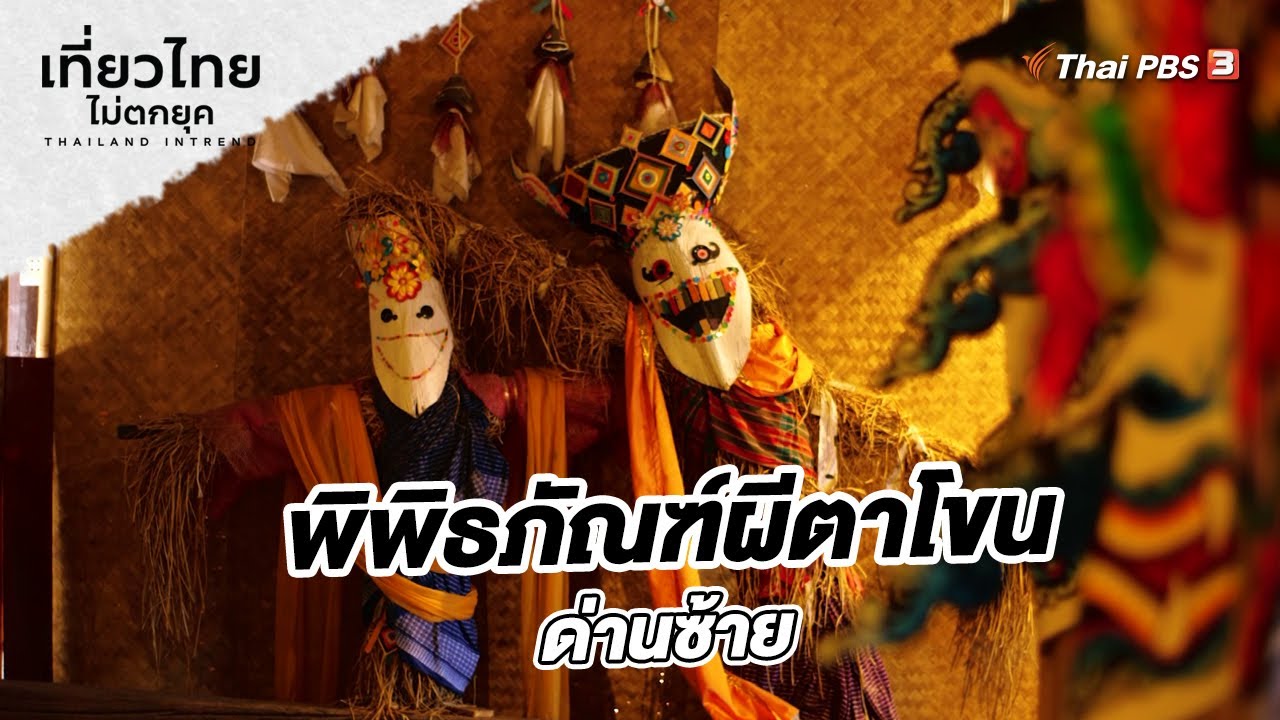
 Click to Access the Navigation Map GPS
Phi Ta Khon Museum Map
Recommend

 Historical Sites and Monuments(2)
 Landmarks and Memorials(3)
 Art, Craft Centres, Tradition(2)
Museums(4)
Art, Craft Centres, Tradition(2)
Museums(4)
 Art Gallery(1)
 Educational Places
 Educational Gardens, Farm(2)
 Places of Worship
 Temple(16)
 Other Sacred Sites(8)
 Research and Development
 Royal Project(3)
 Suburban Living
 Village, Community(3)
 Local Market(1)
 Nature and Wildlife
 National Parks and Marine Reserves(5)
 Mountain (Doi)(10)
 Dam, Reservoir, Lake(7)
 Waterfalls(21)
 Caves(3)
 River, Canal(5)
 Bays and Beaches(1)
 Other natural attractions(1)
 Entertainment and Agricultural
 Farms, Parks and Ecotourism(8)
 Waterpark(1)
 Outdoor and Adventure Activities(2)
 Travel Articles, Recipes
 Travel Review, Food Review(1)


