
lovethailand home >Northeastern Travel Attractions >Loei Travel Attractions >Wang Saphung >Pha Bing > Phra Phutthabat Tham Pha Bing
TL;DR: Phra Phutthabat Tham Pha Bing is located at Moo 2, Ban Na Kae, Pha Bing Subdistrict, Wang Saphung District, Loei Province, open Daily, hours 08.00 – 17.00.

Phra Phutthabat Tham Pha Bing
Open Days: Daily
Opening Hours: 08.00 – 17.00
Phra Phutthabat Tham Pha Bing in Loei Province is located inside Wat Tham Pha Bing, Moo 2, Ban Na Kae, Pha Bing Subdistrict, Wang Saphung District. It is one of the most distinctive Buddhist footprint sites in Loei because the footprint is not found on the floor or on a stone slab at eye level. Instead, it appears on the ceiling of a limestone cave above visitors’ heads. When travelers walk into the cave and look upward, they can see a large natural depression in the rock that is revered as a Buddha footprint. The patterns and toes are not clearly visible, but the general form resembles a human foot. This unusual position has made the cave a respected sacred site for local people in Wang Saphung and Buddhist visitors from many areas.
The Buddha footprint at Tham Pha Bing was registered as a national ancient monument in the Royal Gazette on 8 March 1935. This status confirms the importance of the site in terms of religion, history, and archaeology. Wat Tham Pha Bing also contains the Chedi Museum of Luang Pu Lui Chanthasaro, built to commemorate Venerable Luang Pu Lui Chanthasaro, an important forest meditation monk in the lineage of Luang Pu Man Phurithatto. The temple is therefore meaningful not only as a cave shrine but also as a place connected with the Thai forest meditation tradition.
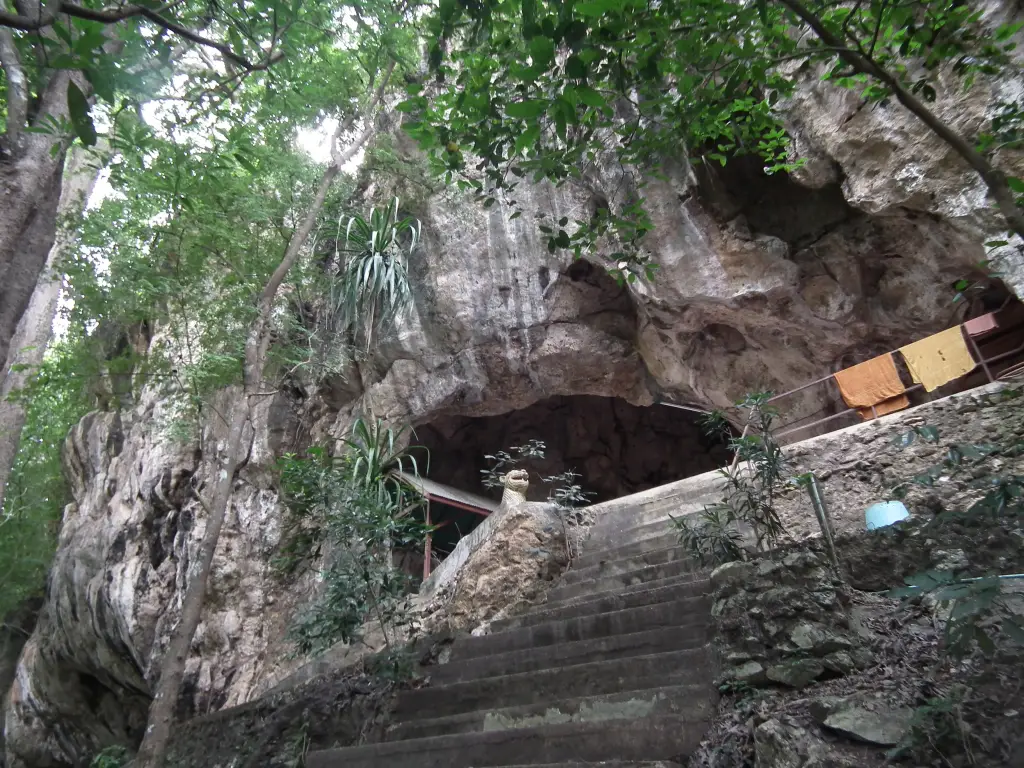
Wat Tham Pha Bing is set on a small limestone hill in Pha Bing Subdistrict. The surrounding atmosphere is shady, peaceful, and strongly connected with the character of a forest meditation temple. The cave is about 15 meters above the lower temple grounds, with a concrete stairway leading up to the rock shelter and cave entrance. The cave is not very deep, and its entrance is relatively wide, allowing natural light to reach the interior. This makes the site easier to visit than deeper and darker cave systems, while still preserving a sacred cave atmosphere.
The physical form of the footprint is central to the site’s significance. It is a natural depression in the cave ceiling, about 3 centimeters deep, about 50 centimeters wide, and about 1 meter long. The shape is similar to a foot pressed into stone, with the front and heel narrowing in a way that suggests a footprint. Although the sacred patterns and toe details are not distinct, the form has long been interpreted and worshipped as a Buddha footprint. For Thai Buddhist visitors, this links the cave with the broader tradition of venerating footprints as symbolic traces of the Buddha’s presence.
The location of the footprint on the ceiling creates a memorable experience. Visitors must enter the cave, approach the Buddha images, and then look upward to find the footprint. It is not immediately visible from outside. This means that seeing the footprint requires attention and intention. The act of looking up also changes the emotional quality of the visit, turning a simple cave stop into a moment of discovery and reverence.
Wat Tham Pha Bing is closely associated with the forest meditation lineage of Luang Pu Man Phurithatto. According to the temple’s history, Luang Pu Man once practiced meditation in this area when it was still a quiet forest retreat. Later, the site developed into a temple and meditation place. Luang Pu Lui Chanthasaro, one of the important disciples in the forest meditation tradition and a native of Loei Province, restored and developed Wat Tham Pha Bing between 1967 and 1972, making it a lasting place for monastics and laypeople to practice Dhamma.
The Chedi Museum of Luang Pu Lui Chanthasaro is another important feature inside the temple grounds. It was built to enshrine his relics and personal monastic items, allowing visitors to learn about his life and the forest meditation tradition. For those interested in Thai Buddhist practice, this museum gives the visit additional depth. It shows that Wat Tham Pha Bing is not only an archaeological site but also a living spiritual place shaped by meditation, simplicity, and devotion.
When visitors walk up to the cave area, they encounter a limestone rock shelter with Buddhist images placed along the natural rock face. Inside the cave are several Buddha images and disciple figures. The main sacred area is toward the inner part of the cave, while the Buddha footprint appears above on the ceiling. The cave’s wide entrance allows a moderate amount of natural light, creating a calm atmosphere that feels open rather than enclosed.
Phra Phutthabat Tham Pha Bing is best visited slowly. Travelers should first pay respect to the Buddha images, then look carefully for the footprint on the ceiling, and then continue to the Chedi Museum of Luang Pu Lui Chanthasaro. This sequence gives a fuller understanding of the site: a registered ancient monument, a cave temple, a forest meditation place, and a memorial to an important teacher in the Thai Buddhist tradition.
Every year on Makha Bucha Day, the full moon day of the third lunar month, Wat Tham Pha Bing and the local community hold an annual celebration for the Buddha footprint. This event reflects the ongoing devotion of Wang Saphung residents toward the sacred footprint. Makha Bucha is one of the most important Buddhist days in Thailand, so the annual ceremony gives the site both religious and community significance.
From a geological perspective, Tham Pha Bing is part of a small limestone hill within the Saraburi Group, a limestone formation associated with warm shallow marine environments in the Permian period. The cave, rock shelter, and natural depressions in the stone are part of this limestone landscape. The site is a strong example of how natural geological forms can become sacred through local belief and Buddhist interpretation.
Visitors should dress modestly, speak softly, and walk carefully when entering the temple and cave area. The stairway and rock shelter may be damp during some seasons, so non-slip footwear is recommended. Inside the cave, visitors should not touch or scratch the rock, write on the cave wall, move offerings, or create smoke inside the enclosed area. The footprint and cave environment are both sacred and historically important, so careful behavior helps protect the site for future visitors.
Getting There from Wang Saphung town is straightforward by private car, motorcycle, or local hired transport. Take Highway 201 toward Nong Hin District. Around kilometer marker 180, turn right onto Highway 2250 and continue for about 7 kilometers. The entrance to Wat Tham Pha Bing will be on the right. The hill and cave are located within the temple grounds. Travelers without a private vehicle can hire local transport from Wang Saphung town or the local market and should agree on the round-trip arrangement in advance.
From Loei city, visitors can travel toward Wang Saphung on Highway 201 and then continue toward Highway 2250. The journey is suitable for a half-day trip, especially for travelers staying in Loei city or Wang Saphung. The temple can be combined with nearby sites such as the Chedi Museum of Luang Pu Lui Chanthasaro, Wat Pa Weluwanaram, Wat Pa Sammanusorn, the Princess Maha Chakri Sirindhorn Art Center, and other cultural sites in Wang Saphung.
The best time to visit is from morning to afternoon, when there is enough light for walking up the stairway and viewing the cave. Morning is suitable for quiet worship, while late afternoon offers softer light for photography around the cave and temple grounds. During the rainy season, visitors should be careful of slippery surfaces. During the cool season, the weather is more comfortable for walking and visiting cave temples in Loei.
For travelers interested in the Thai forest meditation tradition, Wat Tham Pha Bing is particularly meaningful. The site is associated with Luang Pu Man Phurithatto and Luang Pu Lui Chanthasaro, making it part of a larger spiritual geography of meditation caves and forest temples in northeastern Thailand. A visit here is not only about seeing an unusual Buddha footprint but also about understanding how quiet caves and forests became places of spiritual training.
From a cultural tourism perspective, Tham Pha Bing connects nature, archaeology, and Buddhism in a compact and accessible site. The ceiling footprint encourages visitors to observe carefully, while the Chedi Museum connects the temple with the memory of a revered meditation monk. This makes the temple suitable for pilgrims, cultural travelers, nature lovers, and foreign visitors who want to understand Buddhist sacred landscapes beyond famous city temples.
Families can visit the site, but children should be supervised closely near stairways, rock shelters, and the cave interior. Elderly visitors can enjoy the lower temple area and museum, while the climb to the cave should be taken slowly. The temple is peaceful and suitable for a calm visit, but the cave and stairway still require basic caution.
Good photography spots include the stairway to the cave, the limestone rock shelter, the Buddha images inside the cave, the upward view toward the footprint on the ceiling, the Chedi Museum of Luang Pu Lui Chanthasaro, and the surrounding forested temple grounds. Photography should be done respectfully, without blocking worshippers, climbing on rocks, or touching the cave wall.
Phra Phutthabat Tham Pha Bing is therefore a worthwhile destination for travelers visiting Wang Saphung and Loei Province. It offers a rare ceiling Buddha footprint, a registered ancient monument, a peaceful cave temple atmosphere, a connection to the Thai forest meditation lineage, and an important memorial to Luang Pu Lui Chanthasaro. Visitors who come with respect, patience, and an interest in both nature and Buddhist culture will find this cave temple one of the most meaningful sacred places in Wang Saphung.
| Name | Phra Phutthabat Tham Pha Bing / Wat Tham Pha Bing |
| Location | Moo 2, Ban Na Kae, Pha Bing Subdistrict, Wang Saphung District, Loei Province |
| Address | Wat Tham Pha Bing, Pha Bing Subdistrict, Wang Saphung District, Loei Province 42130, Thailand |
| Coordinates | 17.23355, 101.73811 / Plus Code 6PMP+JXW, Pha Bing Subdistrict, Wang Saphung District, Loei Province |
| Highlights | Natural Buddha footprint on the cave ceiling, limestone rock shelter, forest meditation temple atmosphere, and the Chedi Museum of Luang Pu Lui Chanthasaro |
| Ancient Monument Status | Registered as a national ancient monument in the Royal Gazette, Volume 52, Page 3698, on 8 March 1935 |
| Footprint Features | Natural rock depression about 3 cm deep, about 50 cm wide, and about 1 meter long, located on the cave ceiling; patterns and toe details are not clearly visible |
| Cave Features | Limestone cave and rock shelter about 15 meters above the temple grounds, with a relatively wide entrance, shallow interior, Buddha images, and Buddhist devotional objects |
| Forest Meditation Connection | Associated with Luang Pu Man Phurithatto and Luang Pu Lui Chanthasaro, who restored and developed Wat Tham Pha Bing as a meditation place between 1967 and 1972 |
| Annual Tradition | Annual celebration of the Buddha footprint on Makha Bucha Day, the full moon day of the third lunar month |
| Travel Information | From Wang Saphung District, take Highway 201 toward Nong Hin. Around kilometer marker 180, turn right onto Highway 2250 and continue about 7 km. The temple entrance is on the right. |
| Current Status | Open as a Buddhist temple, ancient monument, Buddha footprint shrine, and meditation place in Wang Saphung District |
| Open Days | Daily |
| Opening Hours | 08.00 – 17.00 |
| Fees | No Admission Fee |
| Facilities | Temple courtyard, parking area, stairway to the cave, worship area, Buddha images inside the cave, Chedi Museum of Luang Pu Lui Chanthasaro, meditation areas, and toilets within the temple grounds |
| Main Areas / Zones | Temple courtyard, stairway to the cave, limestone rock shelter, cave entrance, Buddha images, ceiling footprint viewpoint, Chedi Museum of Luang Pu Lui Chanthasaro, and meditation area |
| Abbot / Caretaker | Phra Sawai Wangsawaro / Wat Tham Pha Bing |
| Tourism Contact | Tourism Authority of Thailand, Loei Office, Tel. 042-812-812 |
| Local Administrative Office | Pha Bing Subdistrict Administrative Organization, Tel. 042-870-717 |
| Nearby Tourist Attractions | 1. Chedi Museum of Luang Pu Lui Chanthasaro, inside Wat Tham Pha Bing, about 100 m 2. Wat Tham Pha Bing And Limestone Rock Shelter, about 100 m 3. Wat Pa Na Kae Phatthanaram, Pha Bing Subdistrict, about 2 km 4. Phu Chong Khap Viewpoint, Pha Bing Subdistrict, about 5 km 5. Wat Pa Weluwanaram, Pha Bing Subdistrict, about 7 km 6. Wat Pa Sammanusorn, about 15 km 7. Princess Maha Chakri Sirindhorn Art Center, Wang Saphung District, about 20 km 8. Hin Pha Ngam Park, Nong Hin District, about 35 km |
| Nearby Restaurants | 1. Tam Tem Tum Pla Phao @ Pha Bing, Ban Na Kae, Pha Bing Subdistrict, about 1 km 2. PY Coffee, Pha Bing Subdistrict, about 2 km 3. Cha Doi Tao Coffee, Highway 2250, Pha Bing Subdistrict, about 3 km 4. Rongna Cafe The Cottage Coffee & Farm Wang Saphung, about 20 km, Tel. 061-265-6229 5. TimTim Café Wang Saphung, about 22 km, Tel. 065-391-7265 6. A Tee Shabu Wang Saphung, about 22 km, Tel. 097-320-2878, 092-249-7588 7. Kai Yang Wang Saphung, about 24 km, Tel. 042-850-387 |
| Nearby Accommodations | 1. The Cozy Hotel Wang Saphung, about 22 km, Tel. 095-654-8965 2. Wang Saphung In View Hotel, about 22 km, Tel. 081-505-1569 3. Wang Saphung In View Hotel, about 22 km, Tel. 094-164-5628, 082-859-431 4. Sakul Plang Resort Wang Saphung, about 25 km, Tel. 084-604-5892 5. Tonsak Loei Resort, about 28 km 6. Accommodations In Loei City, about 35 km |
Frequently Asked Questions (FAQ)
Q: Where is Phra Phutthabat Tham Pha Bing located?
A: It is located inside Wat Tham Pha Bing, Moo 2, Ban Na Kae, Pha Bing Subdistrict, Wang Saphung District, Loei Province.
Q: What are the opening hours of Phra Phutthabat Tham Pha Bing?
A: The site is open daily from 08.00 to 17.00. Morning to afternoon is suitable for visiting the cave, worshipping the footprint, and exploring the Chedi Museum of Luang Pu Lui Chanthasaro.
Q: What makes the Buddha footprint at Tham Pha Bing unusual?
A: The footprint appears on the cave ceiling above visitors’ heads, rather than on the ground like most Buddha footprints. It is a natural rock depression with unclear pattern and toe details.
Q: When was Phra Phutthabat Tham Pha Bing registered as an ancient monument?
A: It was registered as a national ancient monument in the Royal Gazette on 8 March 1935.
Q: How is Wat Tham Pha Bing connected with Luang Pu Lui Chanthasaro?
A: Luang Pu Lui Chanthasaro restored and developed Wat Tham Pha Bing between 1967 and 1972 as a meditation place. A Chedi Museum was later built at the temple to enshrine his relics and personal monastic items.
Q: How can travelers get to Phra Phutthabat Tham Pha Bing?
A: From Wang Saphung District, take Highway 201 toward Nong Hin. Around kilometer marker 180, turn right onto Highway 2250 and continue about 7 km. The temple entrance is on the right.
Q: Is there an annual ceremony at Tham Pha Bing?
A: Yes. The annual celebration of the Buddha footprint is held on Makha Bucha Day, the full moon day of the third lunar month.
Q: What nearby attractions can be visited with Phra Phutthabat Tham Pha Bing?
A: Nearby places include the Chedi Museum of Luang Pu Lui Chanthasaro, Wat Pa Weluwanaram, Wat Pa Sammanusorn, the Princess Maha Chakri Sirindhorn Art Center, Phu Chong Khap Viewpoint, and Hin Pha Ngam Park.
 Category: ●Places of Worship
 Group: ●Other Sacred Sites
Last Update : 1 MonthAgo
 Last Update : 1 MonthAgo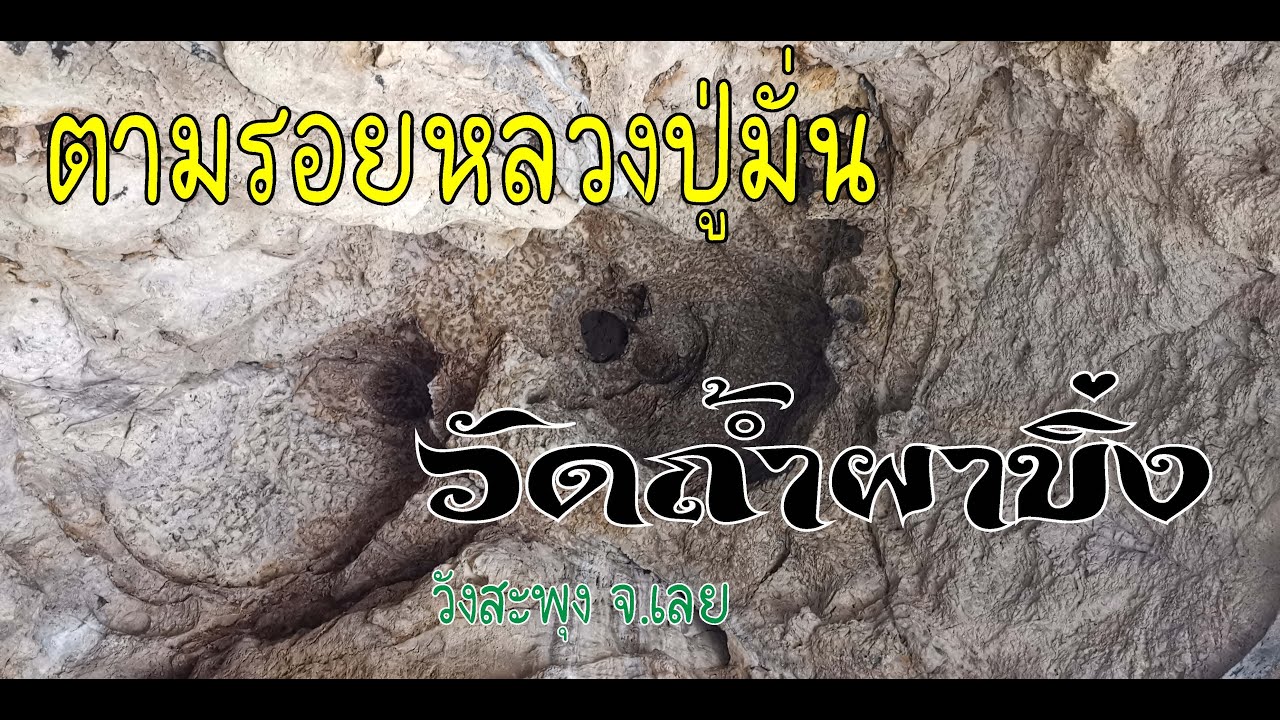
 Click to Access the Navigation Map GPS
Phra Phutthabat Tham Pha Bing Map
Recommend

 Art, Culture and Heritage
 Historical Sites and Monuments(2)
 Landmarks and Memorials(3)
 Art, Craft Centres, Tradition(2)
 Museums(4)
 Art Gallery(1)
 Educational Places
 Educational Gardens, Farm(2)
 Temple(16)
Other Sacred Sites(8)
Temple(16)
Other Sacred Sites(8)
 Research and Development
 Royal Project(3)
 Suburban Living
 Village, Community(3)
 Local Market(1)
 Nature and Wildlife
 National Parks and Marine Reserves(5)
 Mountain (Doi)(10)
 Dam, Reservoir, Lake(7)
 Waterfalls(21)
 Caves(3)
 River, Canal(5)
 Bays and Beaches(1)
 Other natural attractions(1)
 Entertainment and Agricultural
 Farms, Parks and Ecotourism(8)
 Waterpark(1)
 Outdoor and Adventure Activities(2)


