
lovethailand home >Northeastern Travel Attractions >Loei Travel Attractions >Tha Li >Tha Li > Phra That Sajja
TL;DR: Phra That Sajja is located at Wat Lat Pu Songtham, Ban Tha Li, Tha Li Subdistrict, Tha Li District, Loei Province, open Daily, hours 08.30 – 17.00.
Phra That Sajja
Open Days: Daily
Opening Hours: 08.30 – 17.00
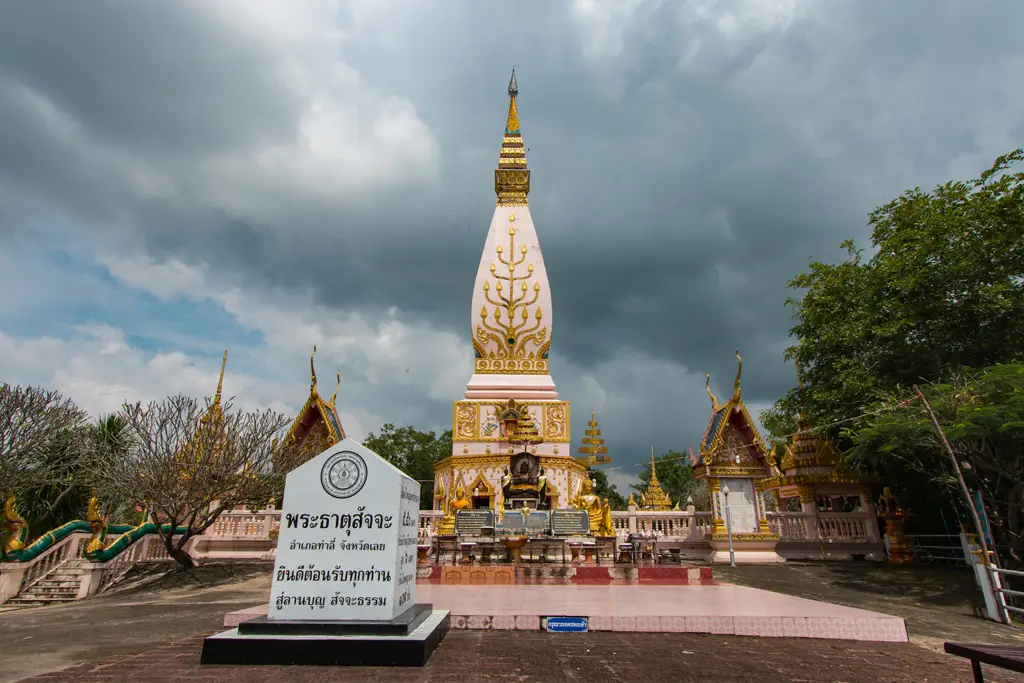
Phra That Sajja in Loei Province is located within Wat Lat Pu Songtham at Ban Tha Li, Tha Li Subdistrict, Tha Li District. It is one of the most meaningful sacred landmarks of Tha Li and a major Buddhist site connected with the spiritual memory of Phra That Phanom in Nakhon Phanom Province. Phra That Sajja was built to symbolically continue the life and sacred presence of Phra That Phanom after the original monument collapsed on 11 August 1975. The stupa enshrines relics of the Buddha, relics of arahants, and sacred earth from Phra That Phanom, known in Thai as Phra Pathawi That Phanom. For foreign travelers, this is not only a local temple attraction. It is a place where faith, remembrance, Buddhist relic worship, community devotion, and borderland culture meet in a quiet district of Loei.
Wat Lat Pu Songtham, often called Wat Lat Pu by local people, was established in 1939. The temple belongs to the Maha Nikaya order and has long served as a religious center for the people of Tha Li. Its grounds include an ordination hall, sermon hall, monks’ residences, multi-purpose halls, a pavilion, a hall for the replica Buddha footprint, and Phra That Sajja as the most important sacred monument. The temple is not a large urban temple, but it has a strong local identity. It is a place for merit-making, annual ceremonies, family worship, and community gatherings.
Construction of Phra That Sajja began on 13 May 1976 and was completed on 20 May 1979. The project was led by Phra Khru Thongsuk Suthammo, Nai Sawai Bunphithak, and local devotees. The purpose was to create a sacred stupa that would symbolically support and continue the life of Phra That Phanom after the 1975 collapse. For many Buddhists in northeastern Thailand, the collapse of Phra That Phanom was deeply emotional because Phra That Phanom is one of the most revered stupas in the Mekong cultural region. Phra That Sajja therefore became a tangible response to loss, faith, and the wish to preserve sacred continuity.
The name Sajja means truth, sincerity, and faithfulness to one’s vow. This meaning gives the monument a special character. It is not only a stupa for worship but also a reminder of truthfulness, commitment, and moral steadiness. Many Thai visitors come to pray for stability in life, success in work, protection during travel, family harmony, and the strength to keep good intentions. The name itself encourages visitors to think about honesty, responsibility, and spiritual discipline.
The architectural form of Phra That Sajja resembles Phra That Phanom. The stupa is about 33 meters high and stands on an octagonal base. Around the monument are lotus-bloom elements arranged in three layers, each about one meter high. At the top is a seven-tiered white royal umbrella, or sawet chat, which gives the stupa a dignified and auspicious appearance. Its resemblance to Phra That Phanom is not merely decorative. It is a visual expression of devotion and memory, connecting Tha Li in Loei with the sacred landscape of Nakhon Phanom.
Inside Phra That Sajja are enshrined relics of the Buddha, relics of arahants, and sacred earth from Phra That Phanom. This gives the stupa deep religious importance. Visitors usually begin by calming the mind, paying respect, making a wish, and walking around the stupa area with quiet attention. The atmosphere of the temple is peaceful and relatively uncrowded compared with famous tourist sites, making it suitable for travelers who want a calm and meaningful Buddhist experience.
The approach to the stupa is one of the most memorable parts of the visit. A naga stairway leads upward toward the sacred platform. The colorful seven-headed naga figures on both sides of the stairs create a dramatic entrance and a strong photographic composition. As visitors climb the stairway, the white stupa gradually appears ahead. This slow approach helps create the feeling of moving from an ordinary space into a sacred zone.
Another distinctive feature of the temple is the large gong. Many visitors strike the gong before going up to worship the stupa, believing that its sound announces their presence to sacred guardians and brings good fortune. The deep resonance of the gong adds an experiential quality to the visit. It reminds travelers that Thai Buddhist temples often combine worship, sound, movement, architecture, and local belief into a single living practice.
Wat Lat Pu Songtham also contains a pavilion for the replica Buddha footprint, Buddha images, wooden images, a viharn, and other religious structures. These features show that the temple is not only the setting of Phra That Sajja but also a long-standing community temple. Visitors who take time to walk around will see how the temple has developed over generations and how local Buddhist life is expressed through halls, images, offerings, and seasonal ceremonies.
Phra That Sajja has an annual worship festival, generally held around mid-February each year. The event includes ceremonies honoring the stupa, the procession of cloth to wrap the stupa, worship of sacred relics, merit-making activities, ritual blessing, local product stalls, and community events. This annual festival is an important moment for Tha Li residents because it brings together the temple, local people, visitors, and the continuing faith surrounding the stupa.
Culturally, Phra That Sajja helps explain the identity of Tha Li District. Tha Li is a border district connected with Laos by the Hueang River and the Thai-Lao Friendship Bridge over the Hueang River. It is a quiet area shaped by cross-border relationships, rural landscapes, Buddhism, trade, and local family ties. Phra That Sajja stands within this cultural geography. A visit to the stupa gives travelers a deeper understanding of Tha Li as more than a stop on the way to Chiang Khan or Phu Ruea.
Travel to Phra That Sajja is straightforward. From Tha Li town, the temple is about 2 kilometers away. The route follows Highway 201 and turns left onto Highway 2115, the Tha Li–A Hi route. Online maps can be searched using the names “Phra That Sajja” or “Wat Lat Pu Songtham.” The commonly used map code is JCV4+PJ7, Tha Li Subdistrict, Tha Li District, Loei Province. The site is suitable for private cars, motorcycles, and local transport from Tha Li town.
Getting There from Loei city is most convenient by private car. Take Highway 201 toward Tha Li District, then turn onto Highway 2115 toward A Hi. The temple is about 2 kilometers from the Tha Li District Office. After visiting the stupa, travelers can continue to the Thai-Lao Friendship Bridge over the Hueang River, Wat Phra That Umong, Kaeng Ton, local Tha Li restaurants, or the road toward Chiang Khan. The route makes a good one-day cultural and borderland itinerary.
The best time to visit is from morning to late afternoon. Morning is suitable for quiet worship, merit-making, and photography in soft light. Late afternoon can also be pleasant, especially for photographing the naga stairway, white stupa, and temple courtyard. During the annual festival, visitors should allow extra time for parking, crowds, ceremonies, and community activities. On normal days, the atmosphere is quieter and well suited to slow travel.
Visitors should dress modestly and behave respectfully. Speak quietly, avoid climbing on the naga figures or sacred structures, do not touch religious objects without permission, keep the temple clean, and avoid disturbing people who are praying. If visitors wish to offer robes, make merit, donate to the temple, or join special ceremonies, they should ask temple caretakers or monks for guidance. This helps ensure that worship is done correctly and respectfully.
For photography, recommended angles include the naga stairway, the white stupa, the seven-tiered umbrella at the top, the large gong, the bell, the temple courtyard, the pavilion, and the hall connected with the replica Buddha footprint. Good photographs of Phra That Sajja should communicate calm, dignity, and devotion. Visitors should not block the stairway or worship area for photographs, especially during festival periods or when local people are praying.
Phra That Sajja is suitable as the first stop on a Tha Li travel route. A short half-day visit can include the stupa, local food in Tha Li town, and the Thai-Lao Friendship Bridge over the Hueang River. A longer day route can add Wat Phra That Umong, Wat Ngio Ngam, Kaeng Ton, A Hi village, and the riverside road that eventually connects toward Chiang Khan. This gives travelers a balanced view of Tha Li: Buddhist faith, border culture, local food, rural landscapes, and the Hueang River.
From a religious history perspective, the value of Phra That Sajja lies in its link with Phra That Phanom. The presence of sacred earth from Phra That Phanom and the stupa’s similar architectural form create a spiritual bridge between two sacred places in the Mekong region. Visitors do not see only a beautiful stupa; they see a monument built from memory, grief, faith, and the desire to preserve Buddhist continuity after a major loss.
Families can visit the temple comfortably because the site is accessible, peaceful, and close to Tha Li town. Children can learn about Buddhist relics, stupas, temple etiquette, the sound of the large gong, and the story of Phra That Phanom through direct experience. Elderly visitors can worship and rest in the temple area without a long journey from the district center. The stairway should be walked carefully, especially during rain or hot weather.
For international travelers, Phra That Sajja is a strong introduction to northeastern Thai Buddhist culture. The site shows how stupas can carry memory, how relics are honored, how local temples preserve regional history, and how border communities maintain faith through annual ceremonies. It also shows that not all important religious sites are located in major cities. Some of the most meaningful places are in quiet towns where local devotion has remained steady for decades.
What makes Phra That Sajja memorable is the combination of several layers of meaning: the collapse of Phra That Phanom in 1975, the construction of a new stupa in 1976–1979, the enshrinement of sacred relics and earth, the Phra That Phanom-inspired form, the lotus elements, the seven-tiered umbrella, the naga stairway, the large gong, and the annual worship festival. These elements make the site more than a photo stop. It is a place of truth, continuity, and devotion.
Phra That Sajja in Loei Province is therefore a worthwhile destination for travelers visiting Tha Li. It offers Buddhist worship, local history, quiet temple scenery, a strong connection to Phra That Phanom, and easy access to nearby border attractions. Visitors who arrive with respect, take time to observe the site calmly, and continue to nearby community attractions will understand why this stupa remains an important spiritual landmark of Tha Li and one of the meaningful sacred places of Loei Province.
| Name | Phra That Sajja / Wat Lat Pu Songtham |
| Location | Wat Lat Pu Songtham, Ban Tha Li, Tha Li Subdistrict, Tha Li District, Loei Province |
| Address | 255 Moo 2, Tha Li–A Hi Road, Tha Li Subdistrict, Tha Li District, Loei Province 42140, Thailand |
| Coordinates | JCV4+PJ7, Tha Li Subdistrict, Tha Li District, Loei Province / GPS 17.644081, 101.407039 |
| Highlights | A sacred stupa built to symbolically continue the life of Phra That Phanom, enshrining relics of the Buddha, relics of arahants, and sacred earth from Phra That Phanom |
| History / Period | Construction began on 13 May 1976 and was completed on 20 May 1979 after the collapse of Phra That Phanom on 11 August 1975 |
| Stupa Features | The stupa is about 33 meters high, resembles Phra That Phanom, has three-layer lotus-bloom elements around it, and is crowned with a seven-tiered white royal umbrella |
| Key Features Inside | Phra That Sajja, naga stairway, large gong, large bell, replica Buddha footprint pavilion, viharn, ordination hall, sermon hall, monks’ residences, and merit-making areas |
| Annual Tradition | Annual Phra That Sajja worship festival around mid-February, with stupa-honoring rites, cloth procession, relic worship, blessing rituals, community products, and local activities |
| Travel Information | Take Highway 201, then turn left onto Highway 2115 on the Tha Li–A Hi route. The temple is about 2 km from Tha Li District Office. |
| Approximate Distance | About 2 km from Tha Li District Office and about 47 km from Loei city |
| Current Status | Open as an active Buddhist temple and sacred landmark of Tha Li for worship, merit-making, stupa visits, and cultural travel connected with the Thai-Lao border area |
| Open Days | Daily |
| Opening Hours | 08.30 – 17.00 |
| Facilities | Parking area, temple courtyard, stairway, worship area, halls, viharn, ordination hall, rest areas, toilets, and merit-making points |
| Main Areas / Zones | Lower parking area, naga stairway, stupa courtyard, Phra That Sajja, large gong, large bell, replica Buddha footprint pavilion, viharn, ordination hall, and merit-making area |
| Abbot / Caretaker | Phra Khru Sutham Thitiyan / Wat Lat Pu Songtham Phra That Sajja |
| Main Contact Number | 042-889-808, 089-937-3305, 084-722-3344 |
| Local Administrative Office | Tha Li Subdistrict Municipality, Tel. 042-870-521 / Tha Li Subdistrict Administrative Organization, Tel. 042-870-759 |
| Nearby Tourist Attractions | 1. Tha Li Town And Tha Li Market, about 2 km 2. Wat Phra That Umong, Ban Yang, Tha Li Subdistrict, about 5 km, Tel. 091-053-0765, 080-015-9353 3. Wat Ngio Ngam, Nong Phue Subdistrict, about 6 km 4. Thai-Lao Friendship Bridge Over The Hueang River, about 9 km 5. Tha Li Permanent Border Checkpoint, about 9 km 6. Kaeng Ton And Hueang River Route, about 10 km 7. Ban A Hi And Tha Li–A Hi Route, about 12 km 8. Chiang Khan District, about 40 km |
| Nearby Restaurants | 1. Ran Kap Khao Mae Nong Om, Tha Li District, about 1 km 2. Kuai Tiao Mu Nam Tok By Nam Phueng, Tha Li Subdistrict, about 1 km 3. Pang Nuea Chao Kao, Lap Khom And Tom Saep, about 1 km 4. Khao Kaeng Pak Tai 2099, Tha Li Subdistrict, about 1 km 5. River Khan, about 3 km, Tel. 065-320-1095 6. KM.0 Tha Li Branch, about 3 km, Tel. 085-009-4630 7. Ya Kha Restaurant, Tha Li–A Hi Road, about 4 km, Tel. 042-889-356 |
| Nearby Accommodations | 1. Phu Tawan Chom Dao, about 2.3 km 2. Le Bar Tarry Hotel, about 2.6 km, Tel. 042-889-442, 095-754-6268 3. Ban Suan Rim Than Resort, Tha Li District, about 8 km, Tel. 089-570-1963 4. Ban Jae O Homestay, Ban Yang, about 7 km 5. Chiangkhan River Mountain Resort, about 37 km, Tel. 042-822-191, 083-616-4961 6. The Vienna Place Hotel, about 37 km 7. Chic Chiang Khan, about 39 km |
Frequently Asked Questions (FAQ)
Q: Where is Phra That Sajja located?
A: Phra That Sajja is located within Wat Lat Pu Songtham at Ban Tha Li, Tha Li Subdistrict, Tha Li District, Loei Province, about 2 km from Tha Li District Office.
Q: What are the opening hours of Phra That Sajja?
A: The site is open daily from 08.30 to 17.00. Morning to late afternoon is suitable for worship, merit-making, and photography.
Q: Why was Phra That Sajja built?
A: It was built to symbolically continue the life of Phra That Phanom after its collapse on 11 August 1975. It enshrines relics of the Buddha, relics of arahants, and sacred earth from Phra That Phanom.
Q: When was Phra That Sajja built?
A: Construction began on 13 May 1976 and was completed on 20 May 1979.
Q: What are the main architectural features of Phra That Sajja?
A: The stupa is about 33 meters high, resembles Phra That Phanom, has three-layer lotus-bloom elements around it, and is crowned with a seven-tiered white royal umbrella.
Q: How can travelers get to Phra That Sajja?
A: Take Highway 201, then turn left onto Highway 2115 on the Tha Li–A Hi route. The temple is about 2 km from Tha Li District Office.
Q: Is there an annual festival at Phra That Sajja?
A: Yes. The annual Phra That Sajja worship festival is held around mid-February, featuring stupa-honoring rites, cloth procession, relic worship, blessing rituals, and community activities.
Q: What nearby attractions can be visited with Phra That Sajja?
A: Nearby attractions include Wat Phra That Umong, the Thai-Lao Friendship Bridge over the Hueang River, Tha Li Permanent Border Checkpoint, Kaeng Ton, Wat Ngio Ngam, Ban A Hi, and the route toward Chiang Khan.
 Category: ●Places of Worship
 Group: ●Other Sacred Sites
Last Update : 1 MonthAgo
 Last Update : 1 MonthAgo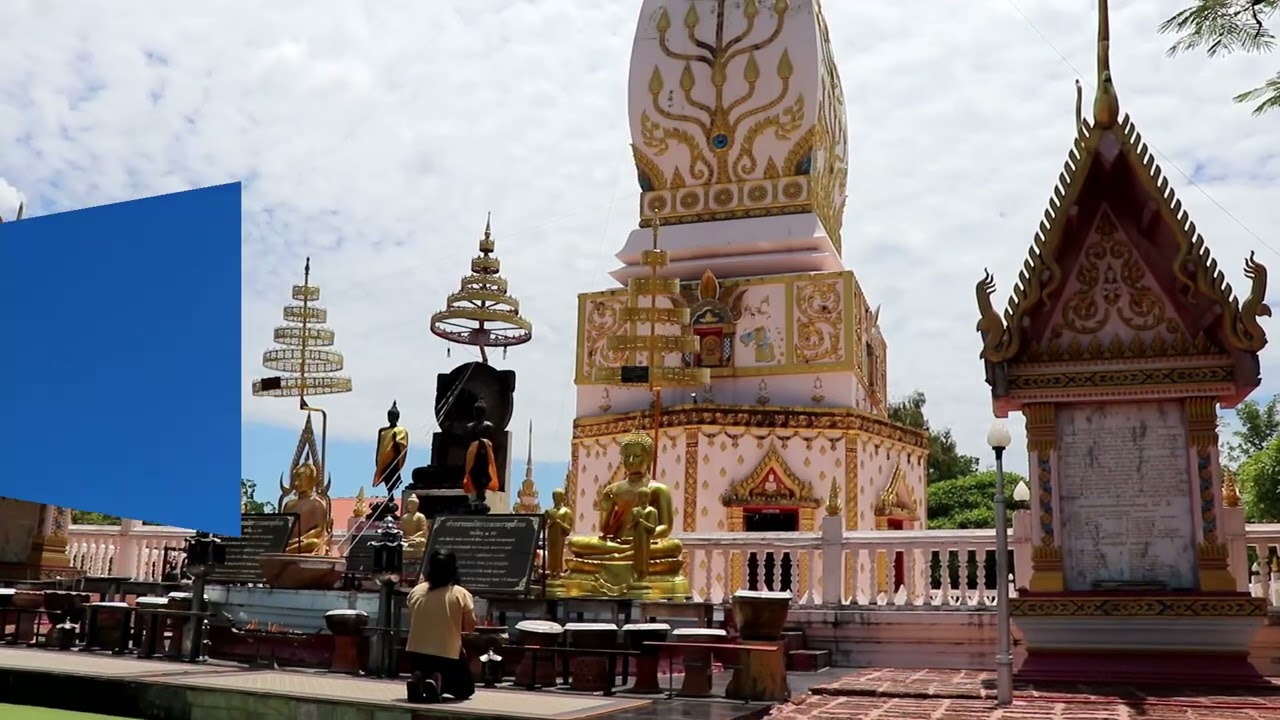
 Click to Access the Navigation Map GPS
Phra That Sajja Map
Recommend

 Art, Culture and Heritage
 Historical Sites and Monuments(2)
 Landmarks and Memorials(3)
 Art, Craft Centres, Tradition(2)
 Museums(4)
 Art Gallery(1)
 Educational Places
 Educational Gardens, Farm(2)
 Temple(16)
Other Sacred Sites(8)
Temple(16)
Other Sacred Sites(8)
 Research and Development
 Royal Project(3)
 Suburban Living
 Village, Community(3)
 Local Market(1)
 Nature and Wildlife
 National Parks and Marine Reserves(5)
 Mountain (Doi)(10)
 Dam, Reservoir, Lake(7)
 Waterfalls(21)
 Caves(3)
 River, Canal(5)
 Bays and Beaches(1)
 Other natural attractions(1)
 Entertainment and Agricultural
 Farms, Parks and Ecotourism(8)
 Waterpark(1)
 Outdoor and Adventure Activities(2)


