
lovethailand home >Northeastern Travel Attractions >Loei Travel Attractions >Dan Sai >Dan Sai > Phra That Si Song Rak
TL;DR: Phra That Si Song Rak is located at On the bank of the Man River, Ban Hua Na Yung, Dan Sai Subdistrict, Dan Sai District, Loei Province, open Daily, hours 06.00 – 17.00.
Phra That Si Song Rak
Open Days: Daily
Opening Hours: 06.00 – 17.00
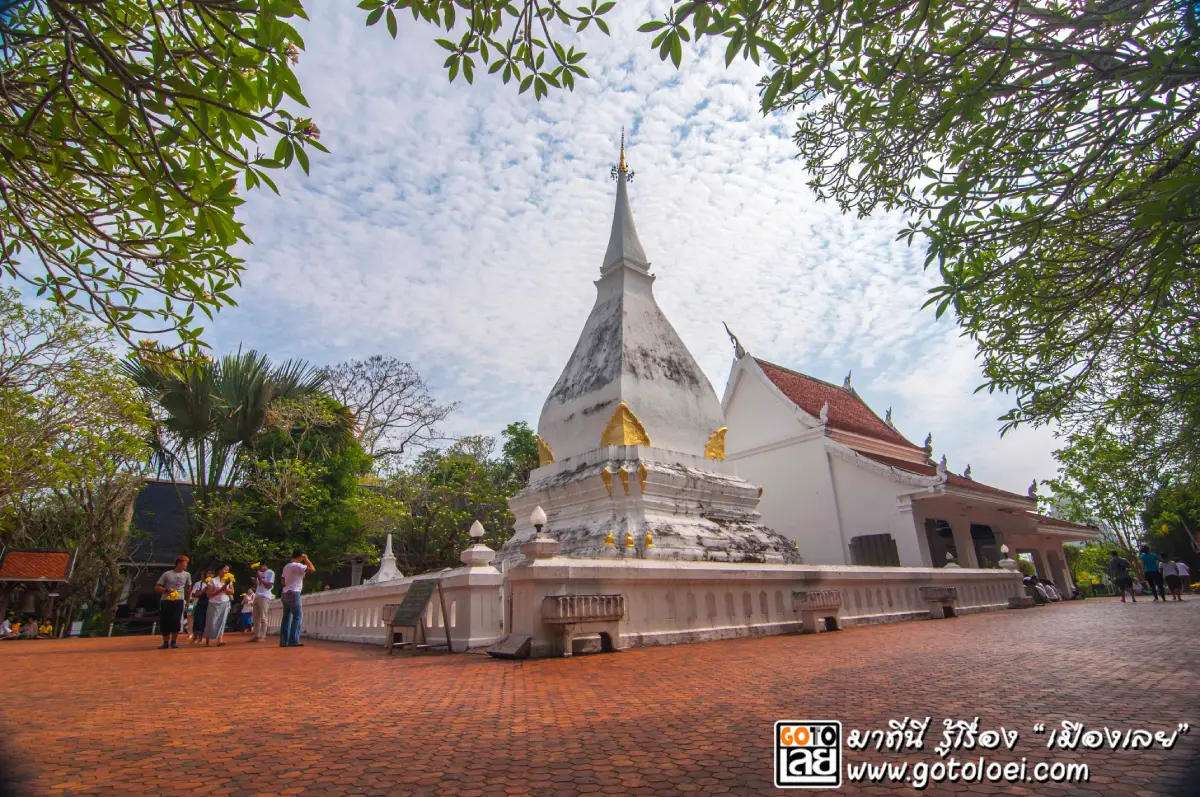
Phra That Si Song Rak in Loei Province is one of the most revered sacred monuments in Dan Sai District. It stands on the bank of the Man River at Ban Hua Na Yung, Dan Sai Subdistrict, Dan Sai District, about 1 km from Dan Sai town and about 83 km from Loei city. The white stupa is deeply respected by local people and is widely known as a monument of friendship between the Ayutthaya Kingdom and the Lan Xang Kingdom, historically known as Krung Si Sattanakhanahut. For international travelers, this is not only a temple-style attraction or a beautiful stupa. It is a place where history, Buddhist faith, local spirit belief, borderland culture, and community ritual meet in one sacred landscape.
Phra That Si Song Rak was built in 1560 and completed in 1563. It was created during a period when the region faced political pressure and military threats. King Maha Chakkraphat of Ayutthaya and King Setthathirath of Lan Xang made an oath not to invade each other’s territory and built the stupa as a witness to mutual trust, friendship, and cooperation. This historical background gives the monument a special meaning. Unlike many stupas built mainly to enshrine relics or commemorate victory, Phra That Si Song Rak represents peace, truthfulness, and the relationship between two kingdoms.
The name Si Song Rak can be understood as a reference to two bonds of affection, loyalty, and friendship. In local interpretation, it is connected not only with romantic love but also with sincerity, harmony, and the keeping of promises. This is why many Thai visitors come to pray for love, family unity, reconciliation, and stable relationships. The monument’s meaning is therefore both historical and personal. It speaks of royal diplomacy in the past while remaining a place where ordinary people bring hopes, vows, and gratitude.
The stupa reflects Lan Xang artistic influence. It is made of brick and plaster, with a square base, indented corners, and a lotus-like bell shape. The structure is about 19.19 meters high, with a base measuring about 10.89 meters on each side. Its clean white surface, simple massing, and balanced proportions give the monument a calm and dignified appearance. The architectural language is closely related to sacred stupa traditions in the Mekong cultural region, including forms associated with Phra That Phanom and important Lao stupas.
Visitors approach the stupa by walking up the naga stairway and passing through the entrance area. The gradual climb is part of the experience. It marks the movement from the lower public area into a sacred space. As the stupa slowly comes into view behind the gateway, visitors begin to feel the solemn atmosphere of the site. The upper courtyard is quiet and orderly, and visitors should move respectfully, speak softly, and allow space for local worshippers.
One of the most important customs at Phra That Si Song Rak is the prohibition against wearing red or bringing red items into the stupa area. Red is symbolically associated with blood and war, which conflicts with the monument’s meaning as a witness of peace and friendship. Visitors should therefore avoid red clothing, red bags, red flowers, or red offerings when entering the sacred zone. Modest clothing in calm or light colors is more appropriate and shows respect for local tradition.
Several important features stand within the sacred compound, including the main stupa, a pavilion, a Naga-protected Buddha image, smaller surrounding structures, inscriptions, and ritual areas. The stone inscription is especially important for visitors interested in history because it helps preserve the memory of the stupa’s origin. These elements show that a visit to Phra That Si Song Rak is more than a brief photo stop. It is an opportunity to observe historical evidence, Buddhist devotion, and local ritual practice in a single place.
Phra That Si Song Rak is closely connected with both Buddhism and local spirit belief. In Dan Sai, the stupa is linked with the roles of Chao Pho Kuan, Chao Mae Nang Thiam, Pho Saen, Nang Taeng, and the community known as luk phueng luk thian. These ritual roles are important in local ceremonies and show how Buddhist practice and community spirit belief coexist in Dan Sai culture. This makes the site very different from many ordinary temples. It is a spiritual center shaped by religion, ancestry, memory, and local identity.
Every year on the full moon day of the sixth lunar month, local people hold the annual celebration of Phra That Si Song Rak. One of the most important offerings is the ton phueng, or wax-flower tree. These offerings are traditionally made using bamboo frames and small wax flower decorations, then presented to the stupa according to local custom. The ceremony is one of the most sacred annual traditions of Dan Sai and shows the living devotion that local people continue to maintain toward the stupa.
The annual celebration is also related to the wider cultural world of Dan Sai, including Bun Luang and the Phi Ta Khon tradition. Dan Sai is well known for a strong ritual system in which Buddhism, local spirits, and community ceremonies are interwoven. Visitors who come during the festival season may see processions, offerings, local clothing, ritual roles, and a powerful sense of community participation. During ceremonies, visitors should be especially careful not to block processions, interrupt ritual space, or photograph in a way that disturbs participants.
Local legends add further depth to the site. Stories speak of Nai Man and Nai Khong, who dedicated themselves to guarding the stupa, and of Chao Pho Kuan and Chao Mae Nang Thiam, figures connected with love, fate, and the spiritual guardianship of the stupa. These legends help explain why Phra That Si Song Rak remains so important to local people. It is not treated as a normal historical monument. It is approached as a sacred presence protected by ritual, memory, and inherited belief.
Worship at Phra That Si Song Rak is usually simple and quiet. Visitors may pay respect, make merit, offer prayers, or make vows according to personal faith. However, any special ceremony connected directly with the stupa should be discussed with the site staff first. The stupa has specific rules and ritual customs that local people take seriously. Following staff guidance helps visitors worship properly and respectfully.
The location beside the Man River adds to the peaceful feeling of the site. The river has long been part of the Dan Sai landscape and community life. The stupa’s position on a riverbank gives the place a softer and more contemplative atmosphere. The white stupa, the sloping ground, the trees, and the nearby water together create a sacred landscape that feels closely connected with the town rather than separated from it.
Travel to Phra That Si Song Rak is convenient from both Loei city and Dan Sai town. From Loei city, take Highway 203, then turn right around kilometer marker 66 onto Highway 2013. Continue about 15 km to Dan Sai District, then turn right onto Route 2113 for about 1 km to reach the stupa area. From Dan Sai town, the site is only about 1 km away, making it very easy to include in a short visit or a half-day Dan Sai cultural route.
Getting There by private car is straightforward. Search online maps for “Phra That Si Song Rak” or “Wat Phra That Si Song Rak, Dan Sai, Loei.” From Loei city, use Highway 203, continue to Highway 2013 toward Dan Sai, and then follow Route 2113 to the stupa. Visitors using public transport can reach Dan Sai town first and then continue by local transport. Parking is available around the lower area, and visitors walk up to the stupa courtyard from there.
The best time to visit is in the morning. The temperature is more comfortable, the atmosphere is quieter, and the white stupa looks especially beautiful in soft light. Late afternoon can also be pleasant for photography and for combining the visit with nearby attractions. During weekends, holidays, and festival periods, visitors should allow extra time for parking and crowd movement. During the annual celebration, the site becomes especially active and deeply ceremonial.
Proper etiquette is essential. Visitors should dress modestly, avoid red clothing and red items, speak quietly, refrain from touching the stupa improperly, and avoid performing private rituals without consulting staff. Small children should be supervised closely. Visitors should not climb on sacred structures, block worshippers, or use inappropriate poses for photographs. A respectful visit protects the sacred atmosphere and shows consideration for the local community.
For photography, recommended angles include the naga stairway, the entrance arch, the white stupa, the pavilion, the Naga-protected Buddha image, the stupa courtyard, and the surrounding trees. Good photographs should preserve the dignity of the place. Visitors should avoid standing in front of people who are praying or taking photos during sensitive ritual moments. The most meaningful images of Phra That Si Song Rak are those that reflect calm, reverence, and the stupa’s historical role.
Phra That Si Song Rak is an ideal starting point for exploring Dan Sai. A half-day route can begin at the stupa, continue to Wat Neramit Wipatsana, then visit Wat Phon Chai and the Dan Sai Local Museum, also known as the Phi Ta Khon Museum. This route gives visitors a strong introduction to the district’s sacred architecture, ritual life, and famous mask culture. Dan Sai is not only a gateway to mountain destinations but also a rich cultural district with its own identity.
Travelers with a full day can add local restaurants, cafés, Ban Hua Na Yung, and nearby viewpoints or continue toward Phu Ruea and Phu Hin Rong Kla. The area is best explored slowly because its value lies in atmosphere and cultural detail rather than only in quick sightseeing. Dan Sai rewards visitors who take time to observe how people worship, prepare offerings, tell stories, and keep annual traditions alive.
For international travelers, Phra That Si Song Rak is a valuable introduction to the history of the upper northeastern region of Thailand. It shows how Thai, Lao, Buddhist, and local spiritual traditions overlap in the Mekong cultural world. The stupa also demonstrates how a monument can serve as a diplomatic symbol, a sacred place, a community ritual center, and a living cultural landmark at the same time.
The most memorable quality of Phra That Si Song Rak is the density of meaning held within a compact sacred space. It contains the history of Ayutthaya and Lan Xang, Lan Xang architecture, the Man River landscape, the annual wax-tree ceremony, the no-red custom, local guardian legends, and the continuing devotion of Dan Sai people. Few places in Loei express the relationship between faith, history, and community as clearly as this stupa.
Phra That Si Song Rak is therefore an essential destination for travelers visiting Dan Sai and Loei Province. It is a place for worship, reflection, historical learning, and cultural understanding. Visitors who dress respectfully, avoid red, follow local guidance, and take time to observe the stupa calmly will experience one of the most meaningful sacred monuments in northeastern Thailand.
| Name | Phra That Si Song Rak / Wat Phra That Si Song Rak |
| Location | On the bank of the Man River, Ban Hua Na Yung, Dan Sai Subdistrict, Dan Sai District, Loei Province |
| Address | No. 86, Ban Hua Na Yung, Mu 14, Dan Sai Subdistrict, Dan Sai District, Loei Province 42120, Thailand |
| Highlights | A sacred monument of Dan Sai built as a witness to friendship between the Ayutthaya Kingdom and the Lan Xang Kingdom, with a white Lan Xang-style stupa on the bank of the Man River |
| History / Period | Built in 1560 and completed in 1563 during the reigns of King Maha Chakkraphat of Ayutthaya and King Setthathirath of Lan Xang |
| Stupa Features | Lan Xang-style brick-and-plaster stupa with a square indented base and lotus-like bell form, about 19.19 meters high with a base about 10.89 meters wide on each side |
| Annual Tradition | Annual Phra That Si Song Rak celebration on the full moon day of the sixth lunar month, when local people offer wax-flower trees known as ton phueng or ton dok phueng |
| Important Etiquette | Avoid wearing red clothing or bringing red items into the stupa area. Dress modestly, speak quietly, and consult site staff before performing any special ritual related to the stupa. |
| Travel Information | From Loei city, take Highway 203, turn right around kilometer marker 66 onto Highway 2013 for about 15 km to Dan Sai, then turn right onto Route 2113 for about 1 km to reach the stupa |
| Current Status | Open as a sacred monument and cultural attraction of Dan Sai District for worship, merit-making, historical learning, and cultural travel |
| Open Days | Daily |
| Opening Hours | 06.00 – 17.00 |
| Fees | No Admission Fee |
| Facilities | Parking area, lower courtyard, stairway, stupa courtyard, pavilion, surrounding halls, rest areas, community shops during visitor periods, and local tourism information services in Dan Sai |
| Main Areas / Zones | Lower courtyard, naga stairway, entrance arch, Phra That Si Song Rak stupa, Naga-protected Buddha image pavilion, inscription area, surrounding halls, wax-tree offering area, and local ritual space |
| Caretaker | Site staff of Phra That Si Song Rak, the Phra That Si Song Rak preservation community, and local authorities in Dan Sai District |
| Tourism Contact | Tourism Authority of Thailand, Loei Office, Tel. 042-812-812 |
| Local Administrative Office | Dan Sai Subdistrict Municipality, Tel. 042-891-231 / Si Song Rak Subdistrict Municipality, Tel. 042-036-959, 042-036-499 |
| Nearby Tourist Attractions | 1. Man River And Ban Hua Na Yung Community, about 200 m 2. Wat Neramit Wipatsana, about 1.5 km, Tel. 084-310-6090 3. Wat Phon Chai Dan Sai, about 2 km 4. Dan Sai Local Museum / Phi Ta Khon Museum, about 2 km, Tel. 042-891-094, 063-249-2231, 083-330-7465 5. Phi Ta Khon Mask Museum, Ban Na Wiang Yai, about 6 km, Tel. 062-513-5192 6. Wat Pa Neramit Wipatsana And Dan Sai Town View Route, about 2 km 7. Phu Hin Rong Kla National Park, about 45 km 8. Phu Ruea District / Phu Ruea Route, about 34 km |
| Nearby Restaurants | 1. Krua Dan Nam Jai, about 300 m 2. Thit Daeng Khanom Chin, about 500 m, Tel. 042-891-906, 088-738-6394 3. Krua Mae Kham Phan Pho Mano, about 600 m 4. Krua Khun Nai, about 900 m 5. Som Tam Chao Chom, about 900 m 6. Baandoen Cake & Coffee, about 1 km, Tel. 064-092-7899 7. Som Tam Pa Wan, about 1.4 km, Tel. 090-353-0810, 084-361-6853 |
| Nearby Accommodations | 1. Baan Chanbhu, about 300 m 2. Loei Panmiles Resort, about 800 m, Tel. 042-891-918 3. Kingboon Resort Dan Sai, about 3 km, Tel. 093-392-1443 4. Pupiang Po Da Arte Resort, about 5 km, Tel. 081-917-5806, 086-224-2236, 082-222-5016 5. Phu Na Come Resort, about 7 km, Tel. 042-892-005, 095-155-8835, 063-851-2555 6. Ban Paja Resort, about 8 km, Tel. 085-319-9879 |
Frequently Asked Questions (FAQ)
Q: Where is Phra That Si Song Rak located?
A: Phra That Si Song Rak is located on the bank of the Man River at Ban Hua Na Yung, Dan Sai Subdistrict, Dan Sai District, Loei Province, about 1 km from Dan Sai town.
Q: What are the opening hours of Phra That Si Song Rak?
A: The site is open daily from 06.00 to 17.00. Morning is the most suitable time for worship and a quiet visit.
Q: When was Phra That Si Song Rak built?
A: Phra That Si Song Rak was built in 1560 and completed in 1563 as a witness of friendship between the Ayutthaya Kingdom and the Lan Xang Kingdom.
Q: Why should visitors avoid wearing red at Phra That Si Song Rak?
A: Red is associated symbolically with blood and war, which conflicts with the stupa’s meaning as a monument of peace and friendship. Visitors should avoid red clothing and red items in the stupa area.
Q: When is the annual Phra That Si Song Rak ceremony held?
A: The annual ceremony is held on the full moon day of the sixth lunar month. Local people offer wax-flower trees known as ton phueng or ton dok phueng.
Q: How can travelers get to Phra That Si Song Rak?
A: From Loei city, take Highway 203, turn onto Highway 2013 toward Dan Sai, then continue on Route 2113 for about 1 km to reach the stupa area.
Q: Is there an admission fee?
A: There is no admission fee. Visitors may pay respect and make merit according to their faith while observing the site’s etiquette.
Q: What nearby attractions can be visited with Phra That Si Song Rak?
A: Nearby attractions include Wat Neramit Wipatsana, Wat Phon Chai, Dan Sai Local Museum / Phi Ta Khon Museum, the Phi Ta Khon Mask Museum, Phu Ruea route, and Phu Hin Rong Kla National Park.
 Category: ●Places of Worship
 Group: ●Other Sacred Sites
Last Update : 3 MonthAgo
 Last Update : 3 MonthAgo
 Click to Access the Navigation Map GPS
Phra That Si Song Rak Map
Recommend

 Art, Culture and Heritage
 Historical Sites and Monuments(2)
 Landmarks and Memorials(3)
 Art, Craft Centres, Tradition(2)
 Museums(4)
 Art Gallery(1)
 Educational Places
 Educational Gardens, Farm(2)
 Temple(16)
Other Sacred Sites(8)
Temple(16)
Other Sacred Sites(8)
 Research and Development
 Royal Project(3)
 Suburban Living
 Village, Community(3)
 Local Market(1)
 Nature and Wildlife
 National Parks and Marine Reserves(5)
 Mountain (Doi)(10)
 Dam, Reservoir, Lake(7)
 Waterfalls(21)
 Caves(3)
 River, Canal(5)
 Bays and Beaches(1)
 Other natural attractions(1)
 Entertainment and Agricultural
 Farms, Parks and Ecotourism(8)
 Waterpark(1)
 Outdoor and Adventure Activities(2)
 Travel Articles, Recipes
 Travel Review, Food Review(1)


