
lovethailand home >Northeastern Travel Attractions >Loei Travel Attractions >Muang Loei >Kut Pong > Isan Silk and Mor Lam Cultural Tradition
TL;DR: Isan Silk and Mor Lam Cultural Tradition is located at Loei Provincial Hall Area / Field In Front Of Loei Provincial Hall, Kut Pong Subdistrict, Mueang Loei District, Loei Province.
Isan Silk and Mor Lam Cultural Tradition
Event Dates: 1 – 10 February 2026
Event Hours: Daytime – Evening, According To The Daily Programme
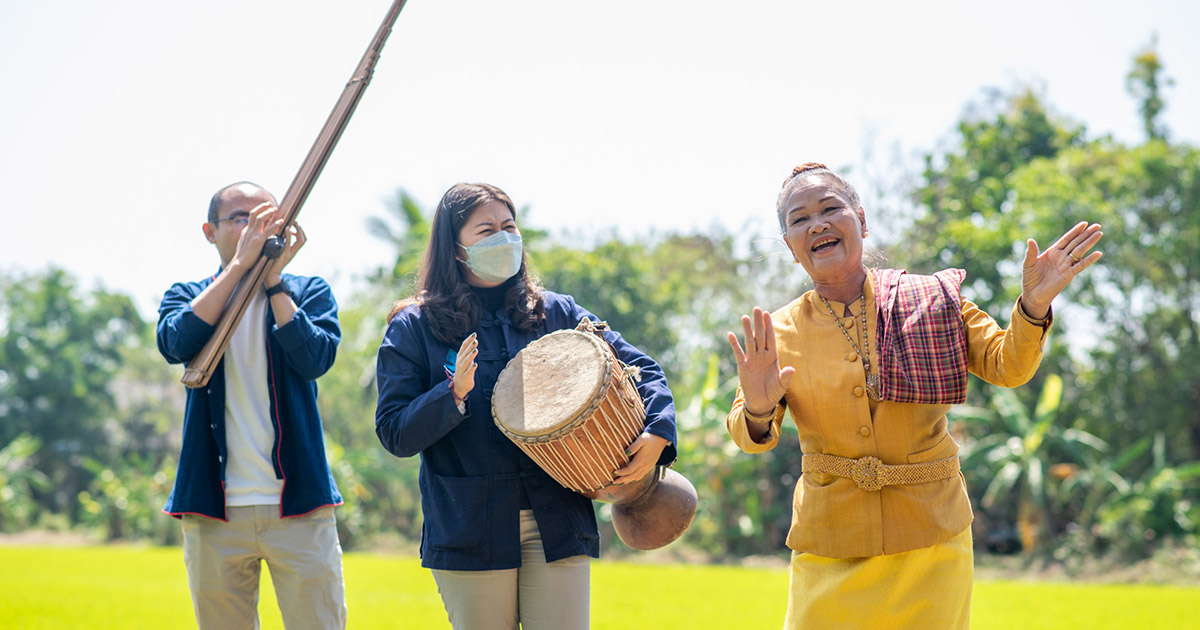
The Isan Silk and Mor Lam Cultural Tradition in Loei Province represents the living relationship between handwoven textiles, folk performance, local identity, and community celebration in northeastern Thailand. In Loei Province, the annual cultural event that best reflects this spirit is the Dok Fai Ban: Suebsan Watthanatham Thai Loei Festival, or the Cotton Blossom and Thai Loei Cultural Festival. Although the broader phrase “silk and Mor Lam” evokes the wider cultural image of Isan, Loei expresses this identity through Thai textiles, Loei cotton, handwoven local cloth, OTOP products, cultural parades, folk performances, local food, and public celebrations that bring together communities from across the province.
The importance of this tradition lies in the way it brings two major cultural treasures together: woven cloth and folk performance. Handwoven textiles represent patience, skill, household wisdom, women’s labor, community identity, and local design. Mor Lam represents storytelling, rhythm, poetry, local language, humor, belief, and public joy. When these two elements appear in the same festival, visitors can experience Isan culture through both sight and sound: the colors and patterns of the cloth, and the emotional energy of song, dance, music, and performance.
Loei Province has a distinctive cultural identity shaped by mountains, river communities, border connections with Laos, local ethnic groups, and the Thai Loei way of life. Its textile culture is not limited to formal silk alone. Loei is strongly associated with cotton, local woven cloth, Thai Loei patterns, naturally dyed textiles, old-style khit designs, Tai Dam weaving, and contemporary products developed from traditional techniques. These textiles are not merely souvenirs. They are cultural documents made by hand, carrying stories of place, memory, belief, and local taste.
In the past, weaving was closely connected with household life and the agricultural calendar. Women learned to prepare fibers, dye threads, set up looms, and weave patterns from older generations. Cloth was used for daily wear, religious ceremonies, community events, weddings, and important family occasions. A woven piece could show skill, care, identity, and the values of a household. For this reason, the textile element of the festival is not simply about buying fabric. It is about recognizing the work, knowledge, and cultural memory contained in every piece of cloth.
Mor Lam is equally important as a form of cultural expression in Isan. It developed from oral storytelling, poetic verse, moral tales, Buddhist narratives, local entertainment, and call-and-response performance traditions. With instruments such as the khaen, drum, cymbals, phin, and other folk instruments, Mor Lam creates a shared emotional space for the community. In Loei, Mor Lam Tai Loei and Mor Lam Maeng Tap Tao are especially meaningful because they reflect local dialect, old stories, ritual respect for teachers, and performance traditions that are specific to this cultural area.
The Dok Fai Ban: Suebsan Watthanatham Thai Loei Festival gives visitors a strong introduction to these cultural layers. The event includes government and private-sector booths, OTOP products, local textiles, cultural performances, agricultural contests, Thai cloth fashion activities, cultural parades, community food, creative activities, and stage performances. It is not only a marketplace. It is a provincial cultural platform where each district can present its identity and where local people can participate in preserving their heritage.
The textile zones are among the most valuable parts of the festival. Visitors can see Thai cloth, Loei cotton, handwoven products, scarves, traditional skirts, contemporary clothing, and local crafts. Many of these products are made by community groups and local artisans. Buying a textile at the festival supports not only the seller, but also the weaver, the household, the community group, the raw material supply chain, and the wider local economy. A single piece of cloth can represent many hours of work and many generations of accumulated knowledge.
Folk performance adds movement and sound to the textile culture. Cloth becomes more meaningful when worn by dancers, singers, parade participants, and local performers. During cultural parades and stage performances, visitors can see how local textiles live on the body. The patterns move with the performers, the colors respond to stage light, and the woven cloth becomes part of the visual language of Loei. This is why textile festivals and folk performances work so well together: one provides the visual identity, while the other brings rhythm, emotion, and communal energy.
The festival is suitable for many types of visitors. Textile lovers can explore local weaving, cloth design, and OTOP products. Cultural travelers can watch performances, parades, and stage events. Families can enjoy food, shopping, exhibitions, and evening entertainment. Researchers and students can observe how local heritage is presented in a public festival. International visitors can experience a provincial Thai cultural fair that combines textiles, performance, food, local economy, and community pride in one accessible setting.
The cultural parade is one of the most striking elements. It brings together symbolic costumes, local stories, district identities, music, dance, and visual design. Instead of seeing Loei only as a mountain province or a gateway to Chiang Khan, Phu Ruea, Phu Kradueng, or Dan Sai, visitors can see the province as a network of cultural communities. Each district contributes its own style, and the parade turns the whole province into a moving exhibition of local identity.
Mor Lam and other folk performances are not simply evening entertainment. They help create a shared public experience. Older generations hear familiar sounds and dialects. Working adults enjoy a moment of relaxation. Younger visitors see how traditional performance can still work on a modern stage with lighting, sound systems, and contemporary presentation. This is one of the most important ways to keep folk art alive: not by preserving it only in archives, but by making it visible, audible, and enjoyable in public life.
The festival also plays an economic role. Community weavers, OTOP producers, food sellers, local entrepreneurs, hotels, transport providers, and tourism services all benefit from visitor movement during the event. Cultural festivals can turn local knowledge into real income without removing it from its community roots. When done well, the event allows traditional skills to survive because they remain useful, visible, and economically meaningful.
Socially, the event is a gathering space. People from different districts of Loei meet in one place. Government agencies meet the public. Young people take part in contests and performances. Elders see their knowledge respected. Visitors learn through direct experience. This makes the festival more than a seasonal fair. It becomes a public cultural space where local identity is reaffirmed and shared.
Getting There is easy because the festival is held in central Loei, around Loei Provincial Hall and the field in front of the provincial hall in Kut Pong Subdistrict, Mueang Loei District. Travelers can use Maliwan Road and other main city roads to reach the area. Those staying near Kut Pong Public Park, Charoenrat Road, or downtown Loei can reach the event by a short ride. During the evening, visitors should allow extra time for traffic and parking because this is one of the province’s major annual events.
Visitors from Chiang Khan, Phu Ruea, Wang Saphung, Dan Sai, or Phu Kradueng can plan a half-day or evening trip into Loei city. A practical plan is to arrive in the afternoon, walk through the textile and OTOP zones, have local food in the event area, and stay for evening performances. Visitors who want a more comfortable experience should stay overnight in Loei city because hotels, restaurants, and transport options are more convenient near the event area.
The main zones of the event include the central stage, cultural parade area, textile and OTOP zone, local food zone, government exhibition zone, district activity zone, Red Cross and charity activity zone, photo spots, and public resting areas. Since the event area can become crowded in the evening, visitors should plan walking routes carefully, keep personal belongings secure, and choose meeting points if traveling with family or groups.
Food is an essential part of the experience. Visitors can enjoy Isan food, Loei-style dishes, local snacks, grilled chicken, sticky rice, som tam, spicy salads, bamboo shoot dishes, sweets, and other community products. Food helps make the cultural experience complete because it allows visitors to understand local life through taste as well as through textiles and music.
Visitors who want to understand the festival deeply should spend time in the textile and community product zones. Talking with sellers and weavers can reveal how a textile is made: selecting fibers, dyeing threads, preparing the loom, weaving the pattern, finishing the cloth, and turning it into a contemporary product. This knowledge helps visitors appreciate why handwoven textiles are different from mass-produced fabric.
For international travelers, this festival is an excellent introduction to Isan culture beyond the usual images of food and rural landscapes. It brings together textile culture, folk performance, local food, public celebration, and provincial identity. It also helps visitors understand that Thai culture is not uniform. Each region and province has its own sound, color, clothing, dialect, and rhythm.
Visitors should dress comfortably and respectfully. Wearing Thai cloth, cotton, or local-style clothing is suitable and adds to the festival atmosphere. Comfortable walking shoes are recommended because the event covers a large area. Visitors should bring some cash, a reusable bag, and check the daily programme before attending, as performance schedules and activities may vary by day.
Good manners are important in a cultural festival. Visitors should not handle delicate woven products with dirty hands, photograph performers or sellers too closely without permission, block the view of others during performances, or leave trash in the event area. A respectful visitor helps preserve the dignity of the culture being presented.
In conclusion, the Isan Silk and Mor Lam Cultural Tradition in Loei Province, expressed most clearly through the Dok Fai Ban: Suebsan Watthanatham Thai Loei Festival, is a living celebration of textiles, music, community, and local identity. It combines the beauty of handwoven cloth, the expressive power of folk performance, the warmth of local food, and the economic energy of community products. For visitors who want to understand Loei beyond scenery alone, this festival offers a rich and memorable cultural experience.
| Event Name | Isan Silk and Mor Lam Cultural Tradition in Loei / Dok Fai Ban: Suebsan Watthanatham Thai Loei Festival |
| Location | Loei Provincial Hall Area / Field In Front Of Loei Provincial Hall, Kut Pong Subdistrict, Mueang Loei District, Loei Province |
| Address | Maliwan Road, Kut Pong Subdistrict, Mueang Loei District, Loei 42000, Thailand |
| Highlights | Thai textiles, Loei cotton, Thai Loei handwoven cloth, OTOP products, cultural parades, folk performances, Mor Lam, local music, local food, central stage activities, and district cultural presentations |
| History / Background | A major annual provincial festival held to preserve Thai Loei culture, promote local tourism, support community products, and provide public recreation after the harvest season |
| Cultural Significance | A platform for preserving textile wisdom, Thai Loei dress, Isan folk performance, Mor Lam traditions, local identity, and community-based economic activity |
| Latest Event Dates | 1 – 10 February 2026 |
| Event Hours | Daytime – Evening, According To The Daily Programme |
| Admission Fee | General access to the event area is available; spending depends on food, products, souvenirs, or specific activities at the event |
| Main Activities | Cultural parades, folk performances, OTOP product sales, Thai cloth and Loei cotton fashion activities, agricultural product contests, singing contests, central stage shows, Red Cross activities, and provincial creative activities |
| Facilities | Central event area, main stage, food stalls, product booths, rest areas, temporary toilets under event arrangements, surrounding parking areas, and nearby hotels/restaurants in Loei city |
| Main Areas / Zones | Central Stage Zone Cultural Parade Zone Thai Textile, Cotton, Handwoven Cloth And OTOP Zone Local Food And Community Product Zone Government Exhibition Zone District Activity Zone Red Cross And Charity Activity Zone Photo Spot And Rest Area Zone |
| Caretaker / Organizers | Loei Province, Loei Red Cross Chapter, government agencies, private sector, local administrative organizations, and related cultural/community development agencies |
| Main Contact Number | Loei Provincial Office Tel. 042-833-209 Ext. 46743 / Loei Public Relations Office Tel. 042-811-258 / TAT Loei Office Tel. 042-812-812 |
| Official Website / Official Page | Loei Province Website / Loei Public Relations Office / TAT Loei Office / Tourism Thailand |
| Nearby Tourist Attractions | 1. Loei Provincial Hall, about 0 km 2. Kut Pong Public Park, about 1 km 3. Chao Pho Kut Pong Shrine And Loei City Pillar Shrine, about 1 km 4. Loei City Museum / TAT Loei Office, about 1 km 5. Loei Walking Street, about 2 km 6. Phu Bo Bit, about 6 km |
| Nearby Restaurants | 1. Noi Tam Sua Loei Branch Near Kut Pong Public Park, about 1 km, Tel. 081-471-5904 2. PunThai Coffee Charoenrat Road, about 1 km, Tel. 093-321-5923 3. Loei Danang Downtown Branch, about 2 km, Tel. 042-830-413 4. Krua Maduea, about 3 km, Tel. 042-861-114 5. Kut Ngong Pla Phao, about 3 km, Tel. 092-974-2446, 042-861-167 6. Phiromphon Restaurant, about 5 km, Tel. 042-845-603 |
| Nearby Accommodations | 1. Loei Palace Hotel, about 1 km, Tel. 042-815-668, 062-196-3896 2. Loei Village Hotel, about 2 km, Tel. 042-811-599, 084-785-2337 3. Indiego Space, about 2 km, Tel. 090-974-2926, 098-823-6541 4. Fortune D Hotel Loei, about 2 km, Tel. 042-036-630, 064-226-2726 5. Baiboon Grand Hotel, about 3 km, Tel. 095-696-1426 6. AU Place Hotel Loei, about 7 km, Tel. 065-237-7115, 042-813-441 |
Frequently Asked Questions (FAQ)
Q: Where is the Isan Silk and Mor Lam Cultural Tradition in Loei celebrated?
A: The event most clearly connected with textiles and folk performance in Loei is the Dok Fai Ban: Suebsan Watthanatham Thai Loei Festival, held around Loei Provincial Hall and the field in front of the provincial hall in Mueang Loei District.
Q: When was the 2026 festival held?
A: The 2026 festival was held from 1 to 10 February 2026.
Q: What can visitors see at the festival?
A: Visitors can enjoy cultural parades, folk performances, central stage shows, Thai textiles, Loei cotton, handwoven cloth, OTOP products, local food, exhibitions, Red Cross activities, and district cultural presentations.
Q: How is the festival related to silk and woven textiles?
A: The festival presents the textile culture of Isan and Loei through Thai cloth, Loei cotton, local woven patterns, handwoven community products, and contemporary uses of traditional textiles.
Q: Why is Mor Lam important in Isan culture?
A: Mor Lam is a folk performance tradition that uses poetic singing, local dialect, music, rhythm, storytelling, and humor to preserve community memory and create shared public enjoyment.
Q: Is there an admission fee?
A: General access to the event area is available. Visitors usually spend money on food, textiles, OTOP products, souvenirs, or specific activities at the event.
Q: What is the best time to visit?
A: Afternoon to evening is ideal because visitors can shop for textiles and food in the afternoon, then enjoy stage performances and the festival atmosphere in the evening.
Q: Where should visitors stay during the festival?
A: Staying in central Loei or near Kut Pong Public Park is convenient because hotels, restaurants, and transport options are close to the event area.
 Category: ●Art, Culture and Heritage
 Group: ●Art, Craft Centres, Tradition
Last Update : 1 MonthAgo
 Last Update : 1 MonthAgo
Recommend

 Historical Sites and Monuments(2)
 Landmarks and Memorials(3)
Art, Craft Centres, Tradition(2)
Landmarks and Memorials(3)
Art, Craft Centres, Tradition(2)
 Museums(4)
 Art Gallery(1)
 Educational Places
 Educational Gardens, Farm(2)
 Places of Worship
 Temple(16)
 Other Sacred Sites(8)
 Research and Development
 Royal Project(3)
 Suburban Living
 Village, Community(3)
 Local Market(1)
 Nature and Wildlife
 National Parks and Marine Reserves(5)
 Mountain (Doi)(10)
 Dam, Reservoir, Lake(7)
 Waterfalls(21)
 Caves(3)
 River, Canal(5)
 Bays and Beaches(1)
 Other natural attractions(1)
 Entertainment and Agricultural
 Farms, Parks and Ecotourism(8)
 Waterpark(1)
 Outdoor and Adventure Activities(2)


