
lovethailand home >Northeastern Travel Attractions >Chaiyaphum Travel Attractions >Nong Bua Daeng >Khu Muang > Chi River
TL;DR: Chi River is located at Riverside areas of the Chi River in Chaiyaphum Province, especially around Nong Bua Daeng District and riverside communities, open Daily, hours 24 Hours.
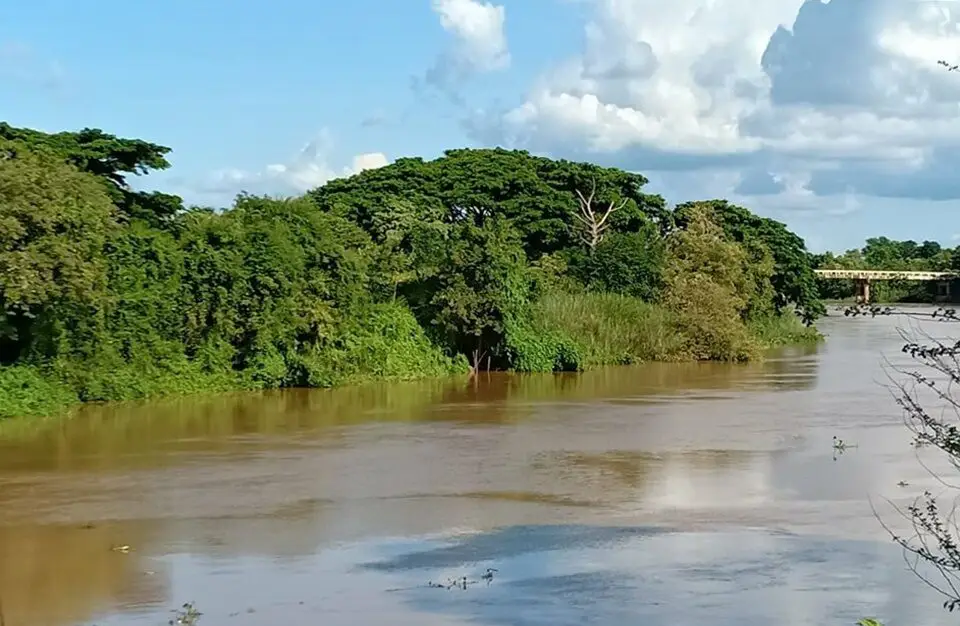
Chi River
Open Days: Daily
Opening Hours: 24 Hours
The Chi River in Chaiyaphum Province is one of the most meaningful waterways in northeastern Thailand. It is closely connected with local life, agriculture, community settlements, riverside recreation, and seasonal traditions. In Chaiyaphum, especially around Nong Bua Daeng District where the river has its source area, the Chi River is not only a natural river but also a cultural landscape. During Songkran, local communities gather along the riverbanks for the traditional rod nam dam hua ceremony, in which younger people respectfully pour water over the hands of elders to ask for blessings, while young people and families also enjoy water play along the riverside.
The importance of the Chi River begins with its role as a life-giving waterway. It nourishes local communities, fields, forests, and riverside settlements. For people in Chaiyaphum, the river is not an abstract geographical feature. It is part of daily life and local identity. It provides water, shapes village landscapes, supports agriculture, and becomes a gathering place during important festivals. When the hot season arrives, the river becomes especially meaningful because it offers a place to cool down, relax, and reconnect with family and neighbors.
Songkran along the Chi River combines respect, joy, and community life in a natural way. The rod nam dam hua ceremony is an important part of the Thai New Year tradition. Younger family members pour scented or clean water over the hands of parents, grandparents, respected elders, and community leaders, asking for blessings and expressing gratitude. When this ceremony takes place beside the Chi River, the symbolic meaning of water becomes even stronger. Water is not only used for play; it represents purity, renewal, respect, and the continuity of family bonds.
After the respectful ceremonies, the riverside atmosphere becomes more lively. Young people, children, and families often enjoy water play in safe areas along the riverbank. Some families sit under trees, some bring local food to share, and others meet friends who have returned home during the festival. The charm of Songkran along the Chi River lies in this simple local atmosphere. It is not about a large commercial event, but about returning home, greeting elders, playing in the water, and spending time in a familiar riverside landscape.
The Chi River is one of the most important rivers of Isan, or northeastern Thailand. In Chaiyaphum, the river is closely linked with mountains, forests, source areas, villages, and agricultural land. To speak of the Chi River in Chaiyaphum is not to refer to a single viewpoint or one recreation spot only. It refers to a wider landscape of water, people, fields, rocks, riverside communities, and local traditions that have grown along the river over time.
During Songkran, the Chi River becomes especially vibrant. The April heat in northeastern Thailand can be intense, and riverside recreation offers simple relief. Along the riverbanks, older people receive water blessings, children play, teenagers and young adults gather, and families prepare food and drinks. This is a form of Songkran that shows the balance between traditional respect and joyful celebration. The ceremony and the water play are different in mood, but they belong to the same cultural moment.
Water play along the Chi River is different from playing in a swimming pool or a city water festival. The river has natural banks, rocks, sand, grass, and changing water levels. The sound of water, laughter, conversations, and local activity creates a real community atmosphere. Visitors can see how local people enjoy Songkran in a way that is close to nature and close to home. The experience is simple, but that simplicity is part of its value.
Safety is essential when visiting a natural river. The Chi River may have shallow areas, but some sections can also have deeper water, slippery surfaces, underwater holes, or stronger currents. Children should always be supervised closely. Visitors should avoid swimming in unfamiliar deep sections, avoid playing during heavy rain or flood conditions, and never enter the water after drinking alcohol. A natural river is not controlled like a pool, so careful judgment is necessary.
A proper Songkran celebration along the Chi River should respect both tradition and nature. The rod nam dam hua area should be calm, clean, and safe for elders. Water play should take place in suitable zones and should not disturb people who do not wish to participate. Visitors should not throw water violently at elders, small children, riders, or people carrying valuables. Songkran is joyful, but it should remain respectful and safe for everyone.
From a cultural point of view, the riverside Songkran tradition reflects the deep relationship between Thai people and water. Water is used for blessing, cleansing, cooling, and connecting generations. For elders, receiving water from younger family members is an act of respect. For younger people, pouring water over elders’ hands is a way of learning humility, gratitude, and the deeper meaning of Thai New Year. The riverside setting makes this meaning more visible.
For people who return home during Songkran, the Chi River often carries emotional memory. Many people grew up playing near the river or seeing it as part of their village landscape. Coming back to the river during the festival can feel like returning to childhood, family, and local identity. A riverside that may seem ordinary on a normal day becomes a meaningful gathering place during the Thai New Year.
The Chi River also supports community-based tourism. Riverside areas can connect with local food, seasonal vendors, family activities, cultural events, and nearby natural attractions. Visitors who come during Songkran may not only play in the water but also support local vendors and experience the hospitality of rural Chaiyaphum. This makes the river valuable not only as nature but also as part of the local economy and community life.
In Nong Bua Daeng District, riverside areas and nearby attractions can be combined into a broader travel route. Visitors may connect the Chi River with Kaeng Yai Ban Huai Phai Tai, Ban Saphung Nuea, the Chi River source area, Wat Chaiyaphum Phithak at Pha Koeng, Phu Lan Kha National Park, Mo Hin Khao, and Pha Hua Nak Viewpoint. This route allows travelers to experience water, villages, temples, mountains, and viewpoints in one district-centered journey.
Getting There from Nong Bua Daeng District can be done by private car or motorcycle. Travelers can head toward riverside communities along the Chi River, such as Ban Huai Phai Tai in Nong Waeng Subdistrict, where some riverside recreation areas are around 19 km from the district area. Daytime travel is recommended, especially during Songkran when more people may gather along the river. Visitors should park only in appropriate areas arranged by the local community.
Before visiting the Chi River during Songkran, travelers should prepare suitable clothing for water play, non-slip footwear, towels, waterproof bags for phones, drinking water, sun protection, and a personal trash bag. Families with children may consider bringing flotation aids or life jackets for young children. In crowded festival conditions, it is also wise to set a meeting point in case family members become separated.
Good manners matter during Songkran. Visitors should avoid aggressive splashing, avoid using dirty water or unsafe powder, and respect those who do not want to play. The ceremony area for elders should be treated with care. The best Songkran atmosphere is one where everyone can enjoy the festival safely, respectfully, and comfortably.
Cleanliness is especially important along the river. Plastic bottles, food containers, foam boxes, cups, and food waste can easily end up in the water if visitors are careless. All trash should be collected and disposed of properly. Keeping the Chi River clean protects the environment, local people, aquatic life, and the beauty of the festival itself.
For families, the Chi River during Songkran can be enjoyable and educational. Children can learn that natural rivers are different from swimming pools. They can observe currents, riverbanks, stones, plants, and local activities. Parents should explain that children must not run on wet rocks, swim alone, or throw trash into the water. This helps turn a fun day into a lesson in safety and environmental respect.
For elderly visitors, the rod nam dam hua ceremony is the heart of the event. A suitable area for elders should be shaded, comfortable, and safe from slippery ground. If the community separates ceremony areas, relaxation areas, and water-play areas clearly, people of all ages can share the riverside space more comfortably. This balance is important in preserving the dignity of the tradition.
For photography, Songkran along the Chi River offers many meaningful images: elders receiving water blessings, families gathering by the river, young people playing in the water, local food stalls, summer skies, and the river landscape itself. Photographers should ask permission before taking close-up portraits of elders, children, or ceremony participants. Respectful photography helps preserve the dignity of the event.
The Chi River is also a living natural classroom. Visitors can observe water levels, currents, riverbank plants, and how local communities use the riverside. This helps people understand that water resources are not only scenic but essential. A river has a source, a flow, a community, and a responsibility attached to it. Songkran is therefore a good time to appreciate water both culturally and environmentally.
A half-day itinerary can begin in the morning at a riverside Songkran activity area. Visitors can observe or join the rod nam dam hua ceremony, relax by the river, enjoy safe water play, and then return to Nong Bua Daeng District for lunch or a café stop. This is suitable for families who want a simple and local Songkran experience without a long travel schedule.
A full-day itinerary can begin with the Chi River and continue to Kaeng Yai Ban Huai Phai Tai, Ban Saphung Nuea, the Chi River source area, or Wat Chaiyaphum Phithak at Pha Koeng. This allows travelers to see both the riverside culture and the mountain landscape of Chaiyaphum. The journey can start with water and tradition, then continue toward temples, viewpoints, and nature.
For foreign travelers, Songkran on the Chi River is a valuable experience because it shows a more local and family-based side of the festival. In major cities, Songkran is often seen as a large water fight. Along the Chi River, visitors can see the deeper meaning: respect for elders, family reunion, community gathering, water blessing, and rural riverside leisure. Understanding this context makes the festival more meaningful.
Foreign visitors should understand that this is a local Songkran celebration, not only a place for water play. Dress modestly, ask before photographing elders, avoid throwing water at people who do not wish to join, and follow community guidance. Small acts of respect will make the experience better for both visitors and local residents.
Restaurants, cafés, and accommodations around Nong Bua Daeng District can support a visit to the Chi River during Songkran. It is wise to plan meals and accommodation in advance during holiday periods because many people return home and travel within the district. Staying nearby makes it easier to visit the riverside in the morning and avoid long-distance driving after a full day of water activities.
The charm of the Chi River in Chaiyaphum lies in the way it connects nature and culture. On an ordinary day, the river may flow quietly through rural landscapes. During Songkran, the riverbanks become places of blessing, laughter, family reunion, and community life. Elders receiving blessings, young people playing water, children laughing near the river, and families resting under shade all show how one river can become both a natural resource and an emotional space for the community.
In conclusion, the Chi River in Chaiyaphum Province is much more than a major river of northeastern Thailand. It is a living cultural landscape where Songkran traditions, rod nam dam hua, family reunion, riverside recreation, and local identity come together. For travelers who want to understand Thai New Year beyond city water fights, the Chi River offers a warm, local, and meaningful experience. With safe water behavior, respect for elders, care for the environment, and proper travel preparation, a Songkran visit to the Chi River can become one of the most memorable cultural experiences in Chaiyaphum.
| Name | Chi River, Chaiyaphum Province |
| Location | Riverside areas of the Chi River in Chaiyaphum Province, especially around Nong Bua Daeng District and riverside communities |
| Type | River, natural riverside area, and local Songkran cultural space |
| Highlights | Major Isan river with its source area in Chaiyaphum, riverside Songkran celebration, rod nam dam hua ceremony, local water play, and community recreation |
| Importance | A waterway connected with local life, agriculture, communities, Thai New Year traditions, and riverside recreation in Chaiyaphum |
| Main Activities | Songkran celebration, water blessing for elders, safe riverside water play, family gathering, photography, and support for local vendors |
| Main Areas / Zones | 1. Riverside rest area 2. Rod nam dam hua ceremony area 3. Safe seasonal water-play area 4. Seasonal local food and vendor area 5. River and Songkran photo area 6. Parking and community access area 7. Connection zone to nearby attractions in Nong Bua Daeng District |
| Caretaker | Local administrative organizations and riverside communities along the Chi River, including Nong Waeng Subdistrict Administrative Organization and Ban Huai Phai Tai community in Nong Bua Daeng District |
| Main Contact | Nong Waeng SAO, Tel. 044-056299 Ban Huai Phai Tai Village Headman, Mr. Soraphong Manthin, Tel. 093-1469924 |
| Travel Information | From Nong Bua Daeng District, travel by private car or motorcycle to riverside communities such as Ban Huai Phai Tai in Nong Waeng Subdistrict. Some riverside recreation areas are about 19 km from the district area |
| Open Days | Daily |
| Opening Hours | 24 Hours |
| Best Time To Visit | Songkran festival, 13–15 April, and daytime visits during local riverside community activities |
| Facilities | Riverside rest areas, seasonal water-play areas, local vendor services during events, and parking areas arranged by the community |
| Visitor Cautions | Play only in safe areas, watch for currents, slippery banks, deep water, and flood conditions, supervise children closely, avoid alcohol before entering the water, and keep the river clean |
| Nearby Tourist Attractions | 1. Kaeng Yai Ban Huai Phai Tai, about 19 km 2. Ban Saphung Nuea / Chi River Source Area, about 25 km 3. Wat Chaiyaphum Phithak / Pha Koeng, about 30 km 4. Phu Lan Kha National Park, about 55 km 5. Mo Hin Khao, about 60 km 6. Pha Hua Nak Viewpoint, about 65 km |
| Nearby Restaurants | 1. Mum Aroi Cafe, about 19 km, Tel. 082-206-3978 2. Chic Café Nong Bua Daeng, about 19 km, Tel. 091-742-8026 3. Daddy’s Rabbit Cake and Coffee, about 19 km, Tel. 084-824-6650 4. Tam Zab Restaurant Nong Bua Daeng, about 19 km, Tel. 099-038-7789 5. Tumzab Bua Daeng, about 19 km, Tel. 093-364-0326 6. GOT HOME Cafe, about 40 km, Tel. 080-248-1191 |
| Nearby Accommodations | 1. First Inn Resort, about 19 km, Tel. 098-584-7787 2. Rak Khao Resort Nong Bua Daeng, about 20 km, Tel. 095-668-6232 3. Lee Resort Farm Stay Nong Bua Daeng, about 20 km, Tel. 093-725-6720 4. GOT HOME Homestay, about 40 km, Tel. 080-248-1191 |
Frequently Asked Questions (FAQ)
Q: Why is the Chi River important in Chaiyaphum?
A: The Chi River has its source area in Chaiyaphum and is closely connected with local life, agriculture, communities, riverside recreation, and Songkran traditions.
Q: What Songkran activities take place along the Chi River?
A: Activities include rod nam dam hua water blessing for elders, riverside water play, family gatherings, local food, photography, and community celebration during Thai New Year.
Q: What does rod nam dam hua mean?
A: It is a Thai New Year ceremony in which younger people pour water over the hands of elders to show respect, ask for blessings, and express gratitude.
Q: Is it safe to play in the Chi River during Songkran?
A: It can be safe in suitable areas, but visitors must watch for currents, deep water, slippery banks, and flood conditions. Children should be supervised at all times.
Q: What are the opening hours of the Chi River attraction area?
A: The river is a natural area open daily for 24 hours, but Songkran activities and water play should be enjoyed during daytime and according to local community guidance.
Q: How can travelers reach the Chi River area in Nong Bua Daeng?
A: Travelers can drive or ride a motorcycle from Nong Bua Daeng District to riverside communities such as Ban Huai Phai Tai in Nong Waeng Subdistrict. Some riverside recreation areas are about 19 km from the district.
Q: Is the Chi River Songkran experience suitable for foreign visitors?
A: Yes. It is suitable for foreign visitors who want to understand local Thai New Year traditions, respect for elders, community life, and the cultural meaning of water in Thailand.
Q: What nearby attractions can be combined with a Chi River visit?
A: Travelers can combine the visit with Kaeng Yai Ban Huai Phai Tai, Ban Saphung Nuea, the Chi River source area, Wat Chaiyaphum Phithak, Pha Koeng, Phu Lan Kha National Park, Mo Hin Khao, and Pha Hua Nak Viewpoint.
 Category: ●Nature and Wildlife
 Group: ●River, Canal
Last Update : 3 MonthAgo
 Last Update : 3 MonthAgo
 Click to Access the Navigation Map GPS
 Art, Culture and Heritage
 Historical Sites and Monuments(1)
 Landmarks and Memorials(3)
 Royal Palace(1)
 Art, Craft Centres, Tradition(3)
 Educational Places
 Educational Gardens, Farm(1)
 Places of Worship
 Temple(141)
 Other Sacred Sites(7)
 Suburban Living
 Village, Community(4)
 National Parks and Marine Reserves(7)
 Mountain (Doi)(5)
 Dam, Reservoir, Lake(10)
 Waterfalls(15)
 Caves(5)
River, Canal(4)
Caves(5)
River, Canal(4)
 Other natural attractions(1)
 Entertainment and Agricultural
 Farms, Parks and Ecotourism(2)


