
lovethailand home >Northeastern Travel Attractions >Chaiyaphum Travel Attractions >Kaset Sombun >Ban Yang > Wat Phra That Kut Chok
TL;DR: Wat Phra That Kut Chok is located at Ban Yang Noi Village, Moo 2, Ban Yang Subdistrict, Kaset Sombun District, Chaiyaphum Province, open Daily, hours 08.00 – 17.00.
Wat Phra That Kut Chok

Open Days: Daily
Opening Hours: 08.00 – 17.00
Wat Phra That Kut Chok is an ancient Buddhist stupa site located in Ban Yang Noi Village, Moo 2, Ban Yang Subdistrict, Kaset Sombun District, Chaiyaphum Province. The site is one of the most important cultural and religious landmarks in the district. Its main feature is a large ancient brick stupa believed to be approximately 1,200 years old. For international travelers interested in Buddhist heritage, old stupas, local legends, and lesser-known cultural routes in northeastern Thailand, Phra That Kut Chok offers a quiet but deeply meaningful experience.
The stupa stands to the south of Ban Yang Noi Village, surrounded by a rural Isan landscape that reflects the close relationship between temple, community, waterway, and local belief. Wat Phra That Kut Chok is not a large commercial attraction; its value lies in its age, sacred atmosphere, old brick architecture, local legends, and the continuing devotion of the people who live around it. Visitors come here to pay respect, observe the ancient structure, and understand how a local Buddhist monument can remain spiritually important for centuries.
Phra That Kut Chok is associated with the cultural history of Kaset Sombun District and the wider Buddhist landscape of Chaiyaphum Province. Local accounts connect the stupa with the expansion of Lan Xang cultural influence into northeastern Thailand. In the past, Buddhist culture from the Mekong region spread into many parts of Isan, leaving behind stupas, temples, rituals, and local legends. Phra That Kut Chok is one of the surviving monuments that helps explain this historical connection between local communities and the broader Buddhist world of the Mekong basin.
The main structure consists of ancient brick stupas. One stupa has a hollow chamber, and inside it are important Buddha images, including a large limestone Buddha image and a sandstone Buddha image in the subduing Mara posture. Another stupa is a solid brick structure. The larger stupa was once about 15 meters high and had the appearance of a sacred reliquary monument. Its upper part was decorated with 8 Naga heads facing the 8 directions. Today, parts of the upper structure have collapsed, but the remaining brickwork still shows the dignity and craftsmanship of the original construction.
At the entrance of the stupa, there is a carved wooden Buddha image about 2 meters high. This image adds another layer of artistic and devotional value to the site. It reflects local craftsmanship, the use of traditional materials, and the continuing faith of the community. Visitors should take time to observe not only the stupa from a distance, but also the relationship between the brick structure, the sacred images, the surrounding temple space, and the way local people continue to use the site for worship.
From a heritage perspective, Phra That Kut Chok is valuable because it is both an archaeological site and a living sacred place. The stupa is not isolated from the community. It remains a place where people come to worship, make merit, and participate in local traditions. The structure, old bricks, Buddha images, annual ceremonies, and local legends all work together to make this place more than a historical ruin. It is a living cultural landscape.
One of the most important traditions associated with Phra That Kut Chok is the annual stupa bathing ceremony, held on the full moon day of the 5th lunar month. Local people from Ban Yang Noi and nearby villages gather to pay respect, bathe the stupa, make merit, clean the temple area, and preserve a long-standing community tradition. This ceremony expresses gratitude, devotion, and the wish for auspiciousness. It also brings the community together across generations.
In some years, the annual celebration lasts several days and includes merit-making, local performances, community activities, and worship. During this period, Phra That Kut Chok becomes the spiritual center of the area. Families, relatives, elders, young people, monks, and visitors gather around the stupa. The event shows that the monument is not only a physical structure, but also a focus of social memory and local identity.
The name “Kut Chok” is connected with a nearby waterway called Lam Huai Kut Chok, located to the north of the stupa. Local stories say that this waterway was once deep and inhabited by a fierce white crocodile and its followers. Such stories give the site a legendary dimension and help explain why the stupa is regarded as highly sacred. The relationship between water, animals, sacred power, and Buddhist monuments is a common feature in many local legends in northeastern Thailand.
Phra That Kut Chok is also connected with local legends about Ngu Suang or Ngu Suang, a mythical serpent-like being associated with several stupas in Kaset Sombun District. According to local belief, Phra That Kut Chok represents the head of the serpent, while other nearby stupas represent other parts. These stories link the sacred geography of Ban Yang and nearby communities into one cultural landscape. For visitors, this makes the site even more meaningful because the stupa is part of a wider network of belief rather than a single isolated monument.
Other ancient stupas are found around the district, including Phra That Chao Mup, Phra That Phi Phuai, Phra That Tha Ling, and Phra That Tha Khro. Together, these monuments show that Kaset Sombun District has a rich concentration of old Buddhist sites. Each stupa has its own condition, local story, and community context, but all of them reflect the importance of stupa worship in the religious imagination of local people. A visit to Phra That Kut Chok can therefore be expanded into a wider cultural route through ancient stupas in Chaiyaphum.
Architecturally, Phra That Kut Chok is notable for its brick construction and careful proportions. The layered brick base, chambered stupa body, sacred interior space, and remaining decorative elements reveal a high level of craftsmanship. The hollow chamber inside one stupa creates a sacred interior for Buddha images, while the solid stupa beside it emphasizes stability and symbolic presence. Even though parts of the structure are damaged, the remaining form still communicates the original importance of the site.
The site is especially useful for understanding local history in Chaiyaphum because it connects archaeology, oral tradition, and present-day Buddhist practice. Visitors can study the brickwork, observe the stupa layout, consider its relationship with Lan Xang and Lao cultural influence, learn about local legends, and see how villagers continue to worship the monument. This layered experience makes Phra That Kut Chok valuable for cultural travelers, historians, photographers, and writers interested in Thai Buddhist heritage.
Today, there are monks residing in the area around the stupa and helping maintain the sacred site. Visitors should behave as they would in any active Buddhist temple. Dress modestly, speak quietly, avoid touching fragile parts of the stupa, do not climb on the structure, and respect areas used for worship. Since the monument is both a heritage site and a sacred object, careful behavior helps protect it for the local community and future visitors.
For photography, the best approach is to choose respectful angles that do not disturb worshippers or sacred objects. The stupa offers many interesting visual details, including old brick surfaces, the remaining base, the chambered structure, the Buddha images, and the surrounding temple atmosphere. Early morning or late afternoon light is especially suitable for capturing the texture of the brickwork and the quiet mood of the site.
Travelers who want a deeper cultural experience can combine Wat Phra That Kut Chok with nearby ancient stupa sites. Recommended places include Phra That Phi Phuai or That Non Kok in Sa Phon Thong Subdistrict, Phra That Ngu Suang or Tha Loeng in Ban Mueang Kao, Wat Phra That Ban Pao in Ban Pao Subdistrict, and Phra That Nong Sam Muen in Phu Khiao District. Together, these places form an excellent route for exploring Buddhist heritage and local legends in Chaiyaphum Province.
Getting to Wat Phra That Kut Chok is most convenient by private car or rental car. Travelers can drive to Kaset Sombun District and continue to Ban Yang Subdistrict and Ban Yang Noi Village, Moo 2. Local travel information places the stupa about 3 km from Kaset Sombun District town, about 1 km from Ban Yang Noi Village, and about 78 km from Chaiyaphum town. Private transport gives visitors the flexibility to combine the stupa with nearby cafes, restaurants, accommodations, and other heritage sites.
Getting There from Chaiyaphum town is best done as a half-day or full-day trip. Drive toward Kaset Sombun District, then continue to Ban Yang Subdistrict and Ban Yang Noi Village. Digital maps are useful for confirming the final route. Daytime travel is recommended because rural routes are easier to follow in daylight. Once at the temple area, park respectfully and avoid blocking local access routes.
A practical one-day route begins with Phra That Kut Chok in the morning, followed by a cafe or restaurant stop in Kaset Sombun District. Travelers can then continue to Phra That Phi Phuai, Phra That Ngu Suang, or Wat Phra That Ban Pao depending on available time. This route is suitable for travelers who want to explore ancient stupas slowly and understand how each site has its own story, architecture, and community significance.
There are several cafes and restaurants around Kaset Sombun District that can be used as rest stops. Tiwpha Cafe is a well-known local cafe with a publicly listed phone number. Noo Nu Cafe and Na Hao Cafe are also useful stops for drinks, snacks, and casual meals. Travelers should check the current opening hours of each restaurant before visiting, especially during weekdays or late afternoon.
Accommodation in Kaset Sombun District includes local resorts and small hotels suitable for temple trips and cultural routes. Options include KS Resort in Ban Yang Subdistrict, Ban Khao Rao Suk Resort, Namfon Resort, Ban Pao Garden Home Resort, and local homestays. Travelers who prefer more choices can stay in Chaiyaphum town and visit the site as a day trip. Those who want to explore several stupas in detail may benefit from staying closer to Kaset Sombun.
Phra That Kut Chok is suitable for many types of visitors: Buddhist pilgrims, cultural travelers, local history enthusiasts, photographers, travel writers, and those looking for quiet destinations beyond mainstream routes. The attraction of this site is not grand tourism infrastructure. Its appeal lies in the age of the stupa, the dignity of the brickwork, the carved wooden Buddha image, the local legends, and the devotion preserved by the surrounding community.
The most important way to appreciate this place is to view it as local heritage. The stupa has stood for many generations and remains meaningful because people continue to respect and care for it. Visiting with humility, avoiding damage, and supporting local culture responsibly are ways that travelers can help preserve this sacred place.
Overall, Wat Phra That Kut Chok is one of the most meaningful ancient stupa sites in Kaset Sombun District, Chaiyaphum Province. Its approximately 1,200-year history, refined brick construction, carved wooden Buddha image, Buddha images inside the stupa, legends of Kut Chok waterway, annual stupa bathing ceremony, and connection with nearby ancient stupas make it an essential cultural stop for travelers who want to understand Chaiyaphum beyond surface-level tourism.
A visit to Wat Phra That Kut Chok should be slow, respectful, and observant. Visitors will not only worship an ancient sacred monument, but also encounter the deeper cultural memory of Chaiyaphum. The stupa connects people with the past, with Buddhist faith, and with the cultural roots of Ban Yang Noi. This is what makes Phra That Kut Chok a quiet but powerful destination in northeastern Thailand.
| Name | Wat Phra That Kut Chok / Phra That Kut Chok |
| Location | Ban Yang Noi Village, Moo 2, Ban Yang Subdistrict, Kaset Sombun District, Chaiyaphum Province |
| Address | Ban Yang Noi Village, Moo 2, Ban Yang Subdistrict, Kaset Sombun District, Chaiyaphum Province 36120, Thailand |
| Coordinates | 16.2718254356, 101.941724689 |
| Place Type | Buddhist temple, ancient stupa site, heritage monument, and sacred center of Ban Yang Noi community |
| Highlights | An approximately 1,200-year-old ancient brick stupa site with Buddha images inside the stupa, a 2-meter carved wooden Buddha image, and an annual stupa bathing ceremony |
| History | Associated with Lan Xang cultural influence and the wider network of ancient stupas in Kaset Sombun District; regarded as an important local heritage site of Chaiyaphum |
| Key Evidence | 2 ancient brick stupas, hollow stupa chamber, limestone Buddha image, sandstone Buddha image in the subduing Mara posture, carved wooden Buddha image, and old stupa bases |
| Name Origin | The name Kut Chok is connected with Lam Huai Kut Chok, a local waterway located north of the stupa, and with the sacred memory of Ban Yang Noi community |
| Distinctive Features | Ancient refined brick construction, hollow stupa chamber, local legends related to Kut Chok waterway and Ngu Suang, and strong community devotion |
| Main Areas / Zones | Ancient stupa area, stupa chamber, Buddha image area, stupa entrance, worship area, temple courtyard, and annual ceremony grounds |
| Important Tradition | Annual Phra That Kut Chok stupa bathing ceremony held on the full moon day of the 5th lunar month, preserved by Ban Yang Noi villagers and nearby communities |
| Current Status | Open as a community sacred site and ancient stupa monument for worship, cultural learning, and local ceremonies |
| Open Days | Daily |
| Opening Hours | 08.00 – 17.00 |
| Travel Information | Best reached by private car or rental car via Kaset Sombun District, then onward to Ban Yang Subdistrict and Ban Yang Noi Village, Moo 2. The site is about 3 km from Kaset Sombun District town and about 78 km from Chaiyaphum town. |
| Nearby Tourist Attractions | 1. Phra That Ngu Suang / Phra That Tha Loeng, Ban Mueang Kao, Ban Yang Subdistrict, about 4 km 2. Tiwpha Cafe And Ban Tao Route, Kaset Sombun District, about 12 km 3. Phra That Phi Phuai / That Non Kok, Sa Phon Thong Subdistrict, about 13 km 4. Wat Phra That Ban Pao, Ban Pao Subdistrict, about 18 km 5. Phra That Nong Sam Muen / Phra That Ban Kaeng, Phu Khiao District, about 30 km |
| Nearby Restaurants | 1. Tiwpha Cafe, about 12 km, Tel. 099-2929898 2. Noo Nu Cafe Kaset Sombun, about 8 km, Tel. 086-5432422, 095-6651723 3. Na Hao Cafe, about 14 km, Tel. 096-4187365 4. Jungle Cafe Ban Pao Branch, Chaiyaphum, about 18 km, Tel. 091-8658456 5. Saeb Ver Ban Pao, about 18 km, Tel. 098-4121194 |
| Nearby Accommodations | 1. KS Resort Kaset Sombun, Ban Yang Subdistrict, about 5 km, Tel. 080-8285361 2. Ban Khao Rao Suk Resort, about 12 km, Tel. 089-7791867 3. Namfon Resort, Kut Lo Subdistrict, about 10 km 4. Ban Pao Garden Home Resort, about 18 km, Tel. 082-8826535 5. Homestay Yai Nan, Kaset Sombun, about 14 km |
Frequently Asked Questions (FAQ)
Q: Where is Wat Phra That Kut Chok located?
A: Wat Phra That Kut Chok is located in Ban Yang Noi Village, Moo 2, Ban Yang Subdistrict, Kaset Sombun District, Chaiyaphum Province 36120, Thailand.
Q: How old is Phra That Kut Chok?
A: Phra That Kut Chok is believed to be approximately 1,200 years old and is one of the important ancient stupa sites in Kaset Sombun District.
Q: What makes Phra That Kut Chok special?
A: The site features ancient brick stupas, one with a hollow chamber containing a large limestone Buddha image and a sandstone Buddha image in the subduing Mara posture, as well as a carved wooden Buddha image about 2 meters high at the stupa entrance.
Q: What annual tradition is associated with Phra That Kut Chok?
A: The annual stupa bathing ceremony is held on the full moon day of the 5th lunar month. It is an important merit-making tradition preserved by Ban Yang Noi villagers and nearby communities.
Q: What is the origin of the name Kut Chok?
A: The name is connected with Lam Huai Kut Chok, a local waterway located north of the stupa, and with local legends about sacred water, a white crocodile, and the spiritual power of the area.
Q: What nearby places can be visited with Phra That Kut Chok?
A: Nearby places include Phra That Ngu Suang or Phra That Tha Loeng, Phra That Phi Phuai, Wat Phra That Ban Pao, Phra That Nong Sam Muen, and cafes in Kaset Sombun District.
Q: What is the best way to travel to Phra That Kut Chok?
A: The most convenient way is by private car or rental car. Drive toward Kaset Sombun District, then continue to Ban Yang Subdistrict and Ban Yang Noi Village, Moo 2. Daytime travel is recommended.
Q: How should visitors behave at Phra That Kut Chok?
A: Visitors should dress respectfully, behave calmly, avoid climbing on or touching the stupa unnecessarily, keep the sacred area quiet, and respect the temple and the local community.
 Category: ●Places of Worship
 Group: ●Temple
Last Update : 2 DayAgo
 Last Update : 2 DayAgo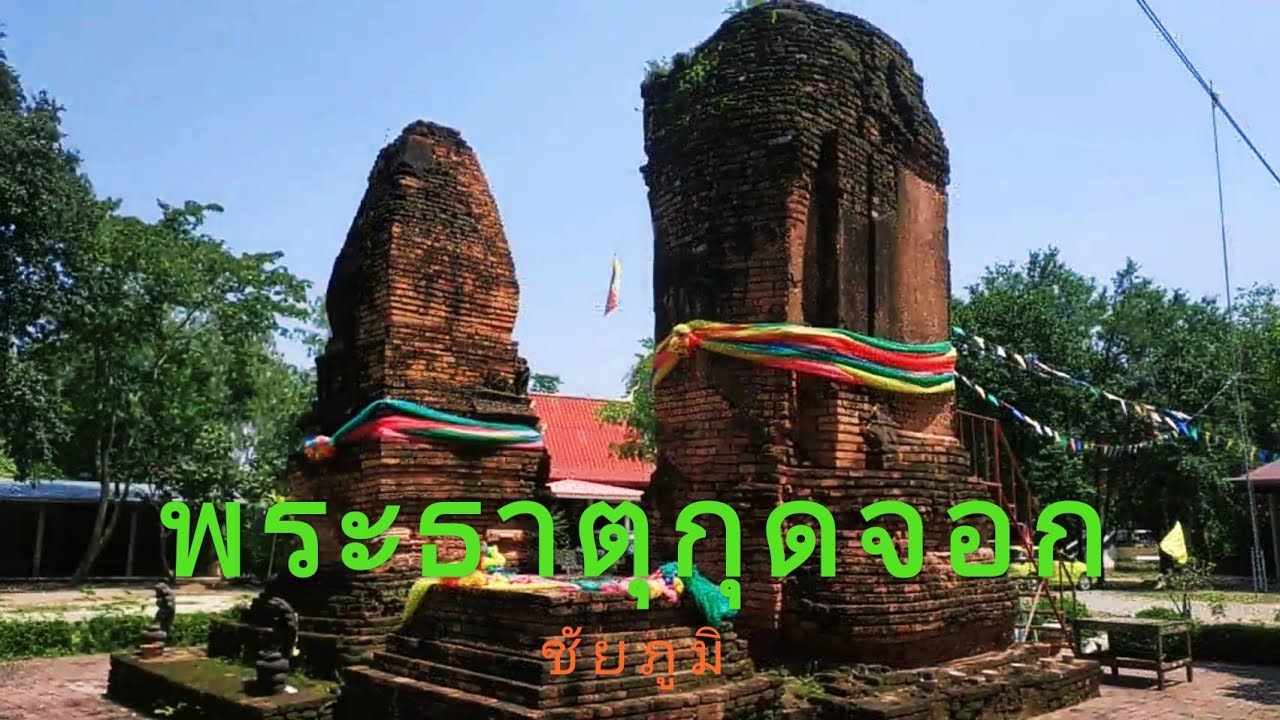
 Click to Access the Navigation Map GPS
Wat Phra That Kut Chok Map
Recommend

 Art, Culture and Heritage
 Historical Sites and Monuments(1)
 Landmarks and Memorials(3)
 Royal Palace(1)
 Art, Craft Centres, Tradition(3)
 Educational Places
 Educational Gardens, Farm(1)
Temple(141)
Educational Gardens, Farm(1)
Temple(141)
 Other Sacred Sites(7)
 Suburban Living
 Village, Community(4)
 Nature and Wildlife
 National Parks and Marine Reserves(7)
 Mountain (Doi)(5)
 Dam, Reservoir, Lake(10)
 Waterfalls(15)
 Caves(5)
 River, Canal(4)
 Other natural attractions(1)
 Entertainment and Agricultural
 Farms, Parks and Ecotourism(2)


