
lovethailand home >Northeastern Travel Attractions >Chaiyaphum Travel Attractions >Phakdi Chum Phon >Laem Thong > Tham Phra
TL;DR: Tham Phra is located at Ban Sap Charoen, Village No. 3, Laem Thong Subdistrict, Phakdi Chumphon District, Chaiyaphum Province 36260, Thailand, open Daily, hours Daytime Visit Recommended.
Tham Phra
Open Days: Daily
Opening Hours: Daytime Visit Recommended
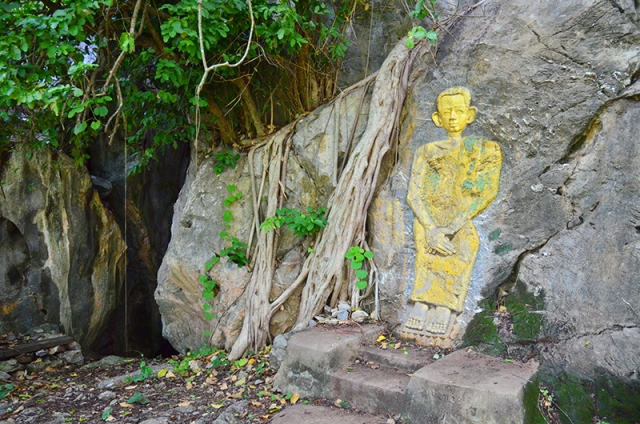
Tham Phra in Chaiyaphum Province is a large Buddhist cave on the Khao Wua Daeng mountain range within Wat Tham Phra, Ban Sap Charoen, Laem Thong Subdistrict, Phakdi Chumphon District. The cave is known for its large interior, many hidden corners, a pavilion built inside the cave, the history of forest monks who once practiced meditation there, and its former name, Tham Pha Chan Daeng, linked with red sandalwood trees near the cliff in front of the cave. It is suitable for travelers interested in Buddhist cave temples, local history, quiet nature, and meaningful cultural travel in rural Thailand.
Tham Phra in Chaiyaphum Province is a large cave located on the Khao Wua Daeng mountain range within Wat Tham Phra in Ban Sap Charoen, Laem Thong Subdistrict, Phakdi Chumphon District. It is one of the cave sites in western Chaiyaphum where nature, Buddhist practice, and local memory come together. The cave is large, has many interesting corners, and contains a pavilion built inside the cave. In the past, forest monks stayed and practiced meditation here, and one monk passed away in the cave area. Today, the site remains connected with Buddhist practice and is respected by local communities.
Tham Phra is not merely a natural cave attraction. It is a sacred cave temple where visitors can observe the relationship between mountain landscapes and Thai Buddhism. As travelers approach the cave, the atmosphere gradually changes from the outside world of roads and villages to the stillness of the mountain. Inside, the cave opens into a large interior space with corners, stone surfaces, shaded areas, and a pavilion that gives the cave a living religious character. The experience is both visual and spiritual.
The cave was originally called Tham Pha Chan Daeng by local villagers. The name came from the red sandalwood trees that once grew in large numbers near the cliff in front of the cave. This older name reflects the natural identity of the place before it became widely known as Tham Phra. It also shows how local people named places according to the landscape, plants, cliffs, and memorable features around them. The story of the name gives the cave a strong connection with the forested mountain environment.
Later, the cave became known as Tham Phra, or “Monk Cave” / “Buddha Cave,” because of the presence of forest monks and the religious stories associated with the cave. Around 1967, villagers from Ban Chiang moved into the area and formed a settlement that later became Ban Laem Thong. During that period, forest monks traveling through mountains and forests came to stay and practice meditation inside Tham Pha Chan Daeng. From that time onward, monks continued to reside and observe the rains retreat at the cave.
A significant local story connected with the cave took place around 1976. A young monk practicing meditation inside the cave reportedly saw a vision of a bright crystal-like light descending from the cave ceiling. The vision then appeared as an elderly monk. After the meditation experience, the young monk discussed it with Luang Pu Khamphan, his teacher at the time. Villagers then built a scaffold to examine the cave ceiling area and discovered a hidden chamber containing a human skeleton that had turned to stone, along with ancient-looking objects such as an earthen pot, black stones, a small axe-shaped stone, and a long shell-like object. This story became central to the name Tham Phra.
For local people, the discovery deepened the sacred meaning of the cave. The remains were treated with reverence, and merit-making ceremonies were held according to local tradition. Whether visitors approach the story from faith, local history, or cultural curiosity, it gives Tham Phra a meaning that goes beyond physical scenery. The cave is understood as a place of meditation, memory, and respect.
The area in front of Tham Phra was once part of an old travel and trade route connecting Chaiyaphum with Phetchabun and northern towns. This gives the cave another historical layer. Mountain passes, forest routes, cliffs, and caves were important in earlier forms of travel, especially before modern roads. Caves could serve as landmarks, shelters, resting places, or spiritual points along the route. Tham Phra therefore belongs not only to a religious landscape but also to an older geography of movement and connection.
The pavilion built inside the cave is one of its most distinctive features. A pavilion in a natural cave creates a very different feeling from a pavilion in an ordinary temple courtyard. Here, the structure is surrounded by stone, shade, cool air, and the stillness of the mountain. It serves as a place for resting, worship, quiet reflection, and meditation. The presence of the pavilion also shows that the cave has been actively used by monks and local communities rather than merely observed as a natural object.
Inside Tham Phra, visitors will find many corners and spaces worth observing. These should be explored slowly and respectfully. Cave interiors may have uneven ground, damp surfaces, dim areas, and natural rock edges. Visitors should stay on appropriate paths, avoid entering unknown side passages alone, and never climb or touch fragile surfaces. The cave should be experienced through careful observation rather than intrusive exploration.
The atmosphere of Tham Phra is calm and deeply suited to reflection. The coolness of the cave, the filtered light, the quiet pavilion, and the memory of forest monks make the site feel different from an ordinary tourist cave. Visitors should speak softly, silence their phones, avoid music, and respect monks, meditation practitioners, and other worshippers. This is a living religious site, not only a scenic attraction.
Tham Phra is a good example of the role caves play in Thai Buddhist culture. Across Thailand, caves have often been used as places for meditation because they are quiet, secluded, and separated from everyday distractions. For forest monks, a cave can serve as a place of discipline, solitude, and deep practice. Tham Phra continues this tradition through its association with monks who stayed and practiced there over time.
The cave is located about 20 km from the Phakdi Chumphon District Office, making private transportation the most practical way to visit. Travelers should drive toward Laem Thong Subdistrict and Ban Sap Charoen, then continue to Wat Tham Phra. Visiting during daylight hours is strongly recommended because the site is located in a mountain setting and cave areas are safer when there is enough light for arrival and return.
Getting There from Phakdi Chumphon District is best done by private car or rental car. Travel toward Laem Thong Subdistrict and Ban Sap Charoen, about 20 km from the district office, then continue to Wat Tham Phra on the Khao Wua Daeng mountain range. After arriving at the temple area, park in an appropriate place and follow the designated route into the cave area. Morning or early afternoon is the best time to visit.
A half-day visit can begin with Tham Phra in the morning, allowing time to worship, explore the cave, and sit quietly inside. After that, travelers can continue to nearby Tham Kaeo or return to Phakdi Chumphon for lunch before heading to Khao Phang Hoei Viewpoint in the late afternoon. This combination offers both the inward experience of a cave and the wide mountain scenery of Chaiyaphum.
Travelers with more time can combine Tham Phra with Sai Thong National Park. The national park is known for waterfalls, cliff viewpoints, and seasonal Siam tulip fields. A route combining Tham Phra, Tham Kaeo, Khao Phang Hoei, and Sai Thong National Park gives visitors a deeper view of western Chaiyaphum, including caves, temples, mountain viewpoints, forest paths, and seasonal wildflowers.
Visitors should dress respectfully because Tham Phra is located within a Buddhist site. Clothing should be modest and also suitable for walking in a natural cave environment. Proper shoes are important because cave floors can be uneven or damp. A small flashlight, drinking water, personal medicine, and a charged phone are practical items to bring. Food should not be eaten inside the cave, and all trash should be carried back out.
Photography is possible, but it should be done with care. Good subjects include the cave entrance, filtered light, the pavilion inside the cave, natural rock surfaces, and the peaceful atmosphere of the religious site. Visitors should not block walkways, disturb monks or practitioners, use intrusive flash near worship areas, or move objects for photographs. The best images of Tham Phra are those that preserve its silence and dignity.
From a natural perspective, Tham Phra helps visitors understand how caves form inside mountain landscapes. Rock surfaces, chambers, cracks, moisture, and shade are the results of long natural processes. This makes the cave not only a place of faith but also a natural classroom. Visitors should avoid touching or damaging the cave surfaces because such formations take a very long time to develop and cannot be easily restored.
For families, Tham Phra can be an educational destination. Children can learn about caves, mountains, forest monks, local history, and respectful behavior in Buddhist sites. Parents should supervise children closely, especially inside the cave. Children should be reminded not to run, shout, climb on rocks, touch cave walls, or disturb worship areas.
Elderly travelers or visitors with health concerns should assess the route before entering. Cave and mountain environments may include steps, slopes, damp ground, and uneven surfaces. Travelers with knee problems, heart conditions, or limited mobility should proceed carefully and may wish to ask local caretakers about the route before entering deeper areas of the cave.
For foreign travelers, Tham Phra is a meaningful example of a Thai Buddhist cave temple. It shows that temples in Thailand are not always limited to buildings, ordination halls, and pagodas. Some sacred places are caves, cliffs, forest shelters, or mountain retreats where monks practice in solitude. Understanding this helps foreign visitors appreciate the deeper cultural meaning of Tham Phra.
Tham Phra differs from Tham Kaeo, another cave in the same district. Tham Kaeo is known for its hall-like interior, electric lighting, and sparkling stalactites, while Tham Phra is known for its large mountain cave, pavilion inside the cave, forest monk history, and spiritual memory. Visiting both sites helps travelers understand the diversity of cave temples in Phakdi Chumphon District.
Tham Phra also differs from Tham Prathun and Tham Wua Daeng. Tham Prathun is remembered for its canopy-like cave form and stories related to ancient military shelter and mineral panning. Tham Wua Daeng is associated with a wider cave group and forest monastery environment. Tham Phra stands out through its former name Tham Pha Chan Daeng, its history of meditation monks, and the story of discoveries inside the cave.
Travelers who plan to stay overnight should consider accommodations in Phakdi Chumphon District or near the route toward Sai Thong National Park. Staying nearby makes it easier to visit Tham Phra in the morning, continue to nearby caves or viewpoints, and avoid rushing back after dark. Local restaurants and cafes in the district can be used before or after the cave visit, while the cave itself should remain quiet and clean.
The best way to experience Tham Phra is to slow down. Walk carefully, notice the stone, listen to the silence, observe the pavilion inside the cave, and remember that this place has been used for meditation and worship over time. The cave is not only a place to see; it is a place to understand through stillness. That is what makes Tham Phra different from a simple sightseeing stop.
In conclusion, Tham Phra in Chaiyaphum Province is a large cave on the Khao Wua Daeng mountain range with strong natural, religious, and local-historical value. Its large cave interior, many corners, pavilion inside the cave, history of forest monks, former name Tham Pha Chan Daeng, and connection with an old route between Chaiyaphum and Phetchabun make it one of the most meaningful cave destinations in Phakdi Chumphon District. With proper preparation, respectful behavior, and enough time, Tham Phra offers travelers a quiet journey into the mountain, faith, and local memory of Chaiyaphum.
| Name | Tham Phra / Wat Tham Phra |
| Location | Ban Sap Charoen, Village No. 3, Laem Thong Subdistrict, Phakdi Chumphon District, Chaiyaphum Province 36260, Thailand |
| Highlights | Large cave on the Khao Wua Daeng mountain range with many interesting corners, a pavilion inside the cave, forest monk history, and a quiet Buddhist cave-temple atmosphere |
| History / Importance | Formerly called Tham Pha Chan Daeng because red sandalwood trees grew near the cliff in front of the cave. The cave was once part of an old route between Chaiyaphum and Phetchabun and later became a meditation place for forest monks |
| Name Origin | The name Tham Phra is associated with stories of ancient monk remains and the use of the cave as a meditation site by forest monks. Its former name, Tham Pha Chan Daeng, came from red sandalwood trees near the cliff |
| Main Areas / Zones | 1. Wat Tham Phra temple area 2. Cave entrance and cliff-front area 3. Large cave chamber 4. Pavilion inside the cave 5. Worship and meditation area 6. Cave corners and natural rock areas 7. Walking route around the cave and Khao Wua Daeng landscape |
| Caretaker | Wat Tham Phra / Tham Phra Monastic Residence and the Ban Sap Charoen local community in Laem Thong Subdistrict |
| Travel Information | From Phakdi Chumphon District Office, travel toward Laem Thong Subdistrict and Ban Sap Charoen, about 20 km away. Private car or rental car is recommended, and a daytime visit is best |
| Current Status | A natural cave and Buddhist religious site within Wat Tham Phra, open for worship, meditation, and nature-based visits |
| Open Days | Daily |
| Recommended Visit Time | Morning to early afternoon, so visitors have enough daylight for cave access and return travel |
| Facilities | Temple area, pavilion inside the cave, worship area, and basic natural-site conditions. Visitors should bring drinking water, a small flashlight, and shoes suitable for cave surfaces |
| Visitor Cautions | Dress modestly, stay on appropriate paths, speak quietly, do not write on cave walls, do not touch or move objects inside the cave, and respect the Buddhist and meditation environment |
| Nearby Tourist Attractions | 1. Tham Kaeo / Wat Tham Kaeo, about 5 km 2. Khao Phang Hoei Viewpoint, about 25 km 3. Sai Thong National Park, about 35 km 4. Siam Tulip Field at Sai Thong National Park, about 38 km 5. Pha Ham Hot, Sai Thong National Park, about 40 km 6. Pha Chom Dao, Sai Thong National Park, about 40 km |
| Nearby Restaurants | 1. Pordeekum Cafe & Bistro, about 20 km, Tel. 099-342-4941 2. U Cafe, about 20 km, Tel. 083-038-5678 3. Krua Naphat Restaurant, about 20 km, Tel. 083-375-7941 4. Baan Chef Damri, about 20 km, Tel. 081-869-7091 5. Pla Too Mae Kham Bu Restaurant, about 20 km, Tel. 083-079-8823 6. Ch. Chokchai Kung Phao, about 20 km, Tel. 081-185-5963 |
| Nearby Accommodations | 1. Ban Rai Thaiyaphume, about 20 km, Tel. 063-848-8558 2. Jarunee Resort, about 20 km, Tel. 088-374-1485 3. Baan Ton Tan Resort and Rong Nang, about 20 km, Tel. 098-245-9394 |
Frequently Asked Questions (FAQ)
Q: Where is Tham Phra located?
A: Tham Phra is located within Wat Tham Phra in Ban Sap Charoen, Village No. 3, Laem Thong Subdistrict, Phakdi Chumphon District, Chaiyaphum Province, on the Khao Wua Daeng mountain range about 20 km from the district office.
Q: What makes Tham Phra special?
A: It is a large cave with many interesting corners, a pavilion inside the cave, a history of forest monks practicing there, and a quiet Buddhist cave-temple atmosphere.
Q: What was Tham Phra formerly called?
A: It was formerly called Tham Pha Chan Daeng because red sandalwood trees once grew in large numbers near the cliff in front of the cave.
Q: What should visitors prepare before visiting Tham Phra?
A: Visitors should dress modestly, wear proper shoes, bring drinking water, a small flashlight, personal medicine, and behave respectfully because the cave is a Buddhist religious site.
Q: Who is Tham Phra suitable for?
A: It is suitable for travelers interested in Buddhist cave temples, meditation sites, nature, local history, and quiet cultural travel in rural Thailand.
Q: What nearby attractions can be combined with Tham Phra?
A: Travelers can combine it with Tham Kaeo, Khao Phang Hoei Viewpoint, Sai Thong National Park, the Siam tulip field, Pha Ham Hot, and Pha Chom Dao.
Q: Is there a pavilion inside Tham Phra?
A: Yes. A pavilion has been built inside the cave, supporting the cave’s role as a place for worship, rest, and quiet reflection.
Q: Is Tham Phra suitable for foreign travelers?
A: Yes. It is suitable for foreign travelers who want to understand Thai Buddhist cave temples, forest monk traditions, local stories, and the connection between religion and natural landscapes in Thailand.
 Category: ●Nature and Wildlife
 Group: ●Caves
Last Update : 4 MonthAgo
 Last Update : 4 MonthAgo
 Click to Access the Navigation Map GPS
 Art, Culture and Heritage
 Historical Sites and Monuments(1)
 Landmarks and Memorials(3)
 Royal Palace(1)
 Art, Craft Centres, Tradition(3)
 Educational Places
 Educational Gardens, Farm(1)
 University
 Rajabhat University(1)
 Places of Worship
 Temple(141)
 Other Sacred Sites(8)
 Suburban Living
 Village, Community(4)
 National Parks and Marine Reserves(7)
 Mountain (Doi)(5)
 Dam, Reservoir, Lake(10)
 Waterfalls(15)
Caves(5)
Waterfalls(15)
Caves(5)
 River, Canal(4)
 Other natural attractions(1)
 Entertainment and Agricultural
 Farms, Parks and Ecotourism(2)
 Waterpark(2)
 Travel Articles, Recipes
 Travel Review, Food Review(1)


