
lovethailand home >Northeastern Travel Attractions >Chaiyaphum Travel Attractions >Phakdi Chum Phon >Ban Chiang > Tham Prathun
TL;DR: Tham Prathun is located at On Khao Wua Daeng, within the Wat Tham Wua Daeng area, Ban Chiang Subdistrict, Phakdi Chumphon District, Chaiyaphum Province, Thailand, open Daily, hours 08.00 – 18.00.

Tham Prathun
Open Days: Daily
Opening Hours: 08.00 – 18.00
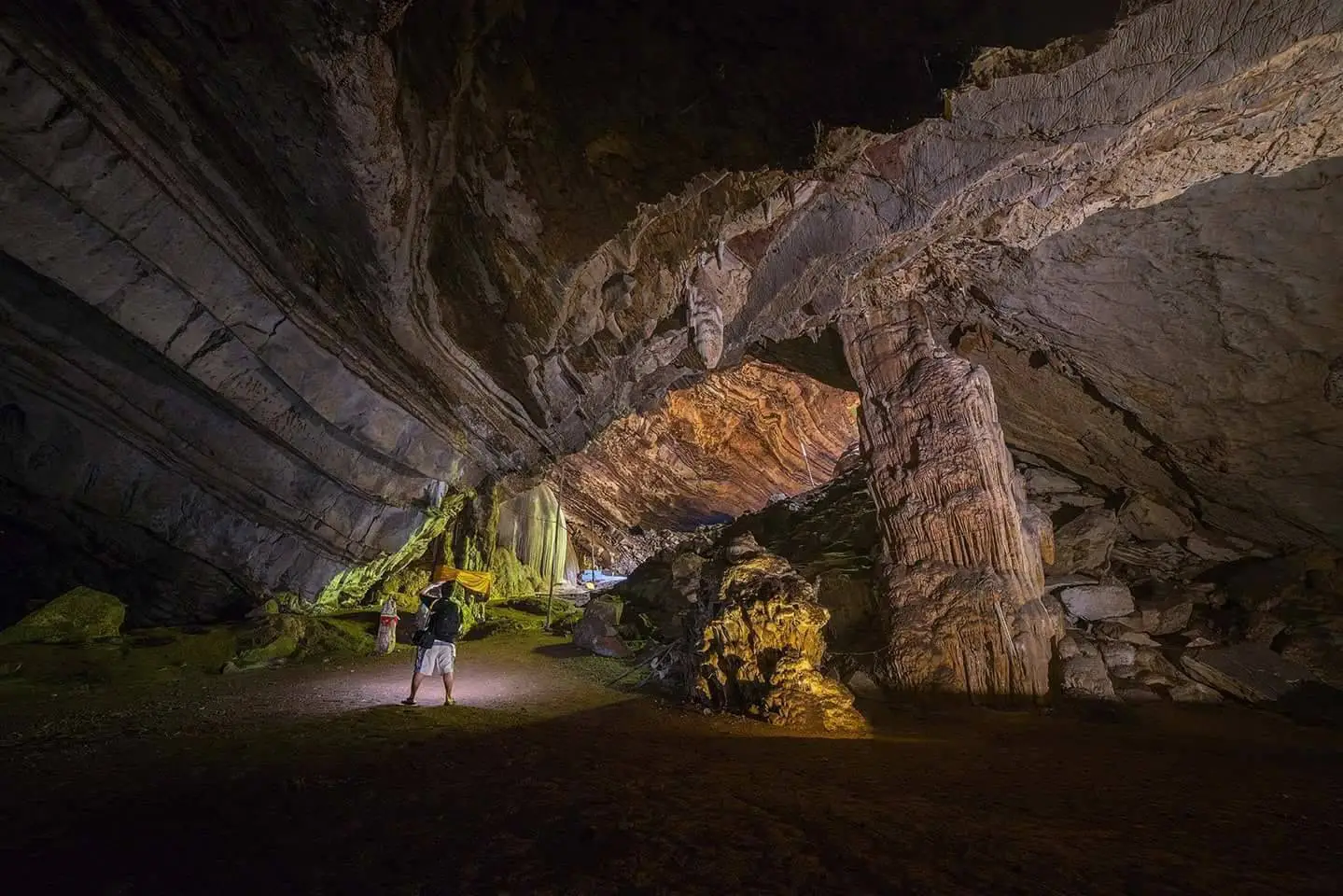
Tham Prathun in Chaiyaphum Province is a medium-sized cave on the summit area of Khao Wua Daeng, within the Wat Tham Wua Daeng area in Ban Chiang Subdistrict, Phakdi Chumphon District. It is known for a cave ceiling resembling the canopy of an old ox cart, local stories of ancient military use, traces of gold-bearing minerals, and old mineral-panning pits near the cave entrance. The site is suitable for travelers interested in forest walking, cave exploration, Buddhist sites, and local history.
Tham Prathun in Chaiyaphum Province is one of the most distinctive caves on Khao Wua Daeng, a mountain area associated with Wat Tham Wua Daeng in Ban Chiang Subdistrict, Phakdi Chumphon District. The cave is medium-sized, but its cultural and natural significance is much larger than its physical scale. It is remembered for its roof-like interior, which resembles the canopy of a traditional cart, and for local stories that connect the cave with ancient military encampments, gold-bearing minerals, and mineral-panning pits found near the cave entrance.
Visiting Tham Prathun is not a simple roadside sightseeing stop. It is a journey into a mountain landscape where visitors need time, physical readiness, and respect for the sacred environment. The route to the cave follows the hillside and requires walking upward through a natural setting. Along the way, travelers can experience forest shade, bamboo, rock surfaces, and the quiet atmosphere of Khao Wua Daeng. The walk itself is part of the experience, making the arrival at the cave feel more meaningful.
The word “Prathun” refers to a covered canopy, especially the type of roof once used on traditional carts. The name fits the cave because the ceiling and interior shape resemble a natural canopy. This makes Tham Prathun easy to remember and visually distinctive. Unlike cave names that come from animals, minerals, or sacred objects, this name comes from the shape of the cave itself. For foreign travelers, this detail helps explain why the cave has such a strong local identity.
Tham Prathun should be understood as part of the broader Wat Tham Wua Daeng cave landscape. The area includes Buddhist worship sites, forest monastery surroundings, and nearby caves such as Tham Wua Daeng, Tham Yai Chi, and Tham Bo Thong. This means the cave is not an isolated natural feature. It belongs to a sacred mountain environment where caves, forest, Buddhist practice, and local memory are closely connected.
The story that Tham Prathun was once used as a military resting place by ancient commanders gives the cave a historical dimension. Its location on a mountain, its covered interior, and its position within a natural landscape make it easy to imagine how travelers or groups in the past might have used the cave as shelter. In earlier times, forests, mountains, and caves often played practical roles in travel, rest, defense, and movement across rural terrain. Tham Prathun therefore invites visitors to think about Chaiyaphum not only as a scenic province but also as a landscape shaped by movement and memory.
The cave is also associated with gold-bearing minerals and old mineral-panning pits near the entrance. These traces add another layer of meaning to the site. Mineral panning reflects a relationship between people and the mountain environment, where soil, water, stone, and local knowledge were used to search for valuable natural resources. Visitors should observe these traces with care and should not dig, disturb, or remove anything from the area. What may look like small pits or natural marks can be part of the cultural landscape of the site.
Because Tham Prathun is connected with the Wat Tham Wua Daeng area, visitors should behave respectfully. This is both a natural cave and a Buddhist-related site. Modest clothing is recommended, and travelers should avoid loud behavior, littering, writing on cave walls, touching sacred objects unnecessarily, or entering areas not intended for visitors. Respectful travel is especially important in a place where nature, faith, and local history overlap.
The walking route to Tham Prathun requires preparation. Proper shoes are essential because the route involves slopes, steps, natural surfaces, and forest conditions. Flip-flops are not suitable. Visitors should bring drinking water, a small flashlight, personal medicine, and a phone with enough battery. The cave and mountain area should be visited during daylight hours, and travelers should plan to return before evening.
The atmosphere of the cave is calm and shaded. After the physical effort of walking up the mountain, the cave interior provides a feeling of rest and enclosure. This is part of the reason why the cave is associated with shelter and spiritual stillness. The natural roof-like shape, the cool air, and the silence of the mountain make the site suitable for quiet observation, prayer, and reflection.
For travelers interested in geology, Tham Prathun offers a chance to see how natural forces shape space inside a mountain. Cave ceilings, chambers, rock surfaces, and openings are formed slowly through water, weathering, mineral movement, and time. The canopy-like form of the cave is not merely a visual curiosity; it is a natural structure created over a long period. This makes the cave valuable as both a scenic and educational site.
For cultural travelers, the cave is especially interesting because it connects several themes in one place: ancient military stories, mineral history, Buddhist practice, and forest travel. Many Thai cave sites are not only geological formations but also living cultural landscapes. Tham Prathun is a good example of this, because it carries meaning for local people beyond its physical appearance.
The best time to visit Tham Prathun is in the morning or early afternoon. This allows enough daylight for the journey up and down the mountain. During the rainy season, the trail can become slippery, and visitors should be especially careful. During the hot season, more drinking water is needed. The cool season is generally more comfortable for walking, but the terrain still requires proper footwear and attention.
Tham Prathun is suitable for visitors who enjoy nature-based travel, forest walking, cave exploration, and quiet Buddhist sites. It is not ideal for travelers who require full urban-style facilities or easy access without physical effort. Families with young children, elderly visitors, or people with health concerns should assess the walking conditions before making the trip.
Photography can be rewarding at Tham Prathun, but it should be done carefully and respectfully. Good subjects include the forest trail, the cave entrance, the canopy-like interior roof, the surrounding mountain atmosphere, and the quiet religious setting of Wat Tham Wua Daeng. Visitors should not climb on risky rocks, move objects, disturb practitioners, or use the cave as a noisy photo backdrop.
Tham Prathun can be combined with nearby attractions in the Phakdi Chumphon area. Travelers can visit Wat Tham Wua Daeng, Tham Kaeo, Sai Thong National Park, Pha Ham Hot, Sai Thong Waterfall, and Khao Phang Hoei Viewpoint. Because the cave requires walking, it is best to allocate at least half a day for the cave and mountain section, then visit easier viewpoints or restaurants later in the day.
Compared with Tham Kaeo, which is more accessible and known for its sparkling stalactites and electric lighting, Tham Prathun feels more rugged and historical. Compared with the wider Tham Wua Daeng area, Tham Prathun is memorable for its canopy-like cave roof and stories of ancient commanders and mineral panning. Understanding these differences helps travelers appreciate that the caves around Khao Wua Daeng each have their own character.
Getting There is most convenient by private car or rental car. Travelers should head toward Phakdi Chumphon District, continue to Ban Chiang Subdistrict and the Wat Tham Wua Daeng area, and then prepare for the walking route up Khao Wua Daeng to reach Tham Prathun. Daytime travel is strongly recommended. Visitors should allow at least half a day for driving, walking, resting, worship, and the return journey.
Before entering the mountain area, travelers should check their vehicle, prepare enough fuel, carry drinking water, and make sure their phone is charged. In rural mountain areas, online maps may not always be enough, so asking local people for guidance can be helpful. Visitors should avoid starting the ascent late in the day because returning after dark can be unsafe.
Tham Prathun is also a meaningful place for educational travel. It can teach visitors that a mountain may contain many layers of meaning: a natural cave, a place of shelter, a site connected with mineral traces, a Buddhist environment, and a living memory for local communities. For children and young learners, the cave can become a lesson in nature, history, and respect for sacred spaces.
For foreign travelers, Tham Prathun is a useful example of how Thai cave destinations often combine landscape and belief. A cave is not only a geological feature. It can also be a place of worship, meditation, local legend, and historical imagination. To understand Tham Prathun properly, visitors should see it as part of the larger Khao Wua Daeng and Wat Tham Wua Daeng cultural landscape.
The cave’s charm comes from its quiet and demanding nature. It asks visitors to walk, slow down, observe, and respect. The effort required to reach the site makes the experience more personal. When visitors stand beneath the natural canopy-like roof of the cave and look back toward the forested route, they can feel that the journey is not only about reaching a destination but also about entering a deeper relationship with the mountain.
In conclusion, Tham Prathun in Chaiyaphum Province is a medium-sized cave on Khao Wua Daeng with a strong identity. Its canopy-like ceiling, ancient military story, gold-mineral association, mineral-panning traces, and connection with Wat Tham Wua Daeng make it a rich destination for travelers who want more than a simple sightseeing stop. With proper preparation, respectful behavior, and enough time, Tham Prathun offers a memorable blend of nature, faith, local history, and mountain adventure.
| Name | Tham Prathun |
| Location | On Khao Wua Daeng, within the Wat Tham Wua Daeng area, Ban Chiang Subdistrict, Phakdi Chumphon District, Chaiyaphum Province, Thailand |
| Highlights | Medium-sized cave on Khao Wua Daeng with a canopy-like ceiling, ancient military shelter story, gold-mineral traces, and old mineral-panning pits near the cave entrance |
| History / Importance | Known in local travel information as a cave once used as a resting place by ancient commanders, with gold-bearing minerals and mineral-panning pits near the entrance |
| Name Origin | The name refers to the cave ceiling that resembles the covered canopy of a traditional ox cart |
| Distinctive Features | A mountain cave requiring an uphill walk, surrounded by forest scenery and connected with Buddhist practice, local legend, and mineral history |
| Main Areas / Zones | 1. Wat Tham Wua Daeng area and mountain access point 2. Walking route up Khao Wua Daeng 3. Tham Prathun cave entrance 4. Canopy-like cave chamber 5. Mineral-panning trace area near the entrance 6. Worship and quiet reflection area within the cave group 7. Forest and natural viewpoint surroundings |
| Caretaker | Wat Tham Wua Daeng / Tham Wua Daeng Monastery and the local Ban Chiang community |
| Main Contact Number | Phra Ajarn Kulap, Tel. 089-578-1848 Mae Chi On, Tel. 095-972-6423 |
| Travel Information | Private car is recommended. Travel to Ban Chiang Subdistrict, Phakdi Chumphon District, and the Wat Tham Wua Daeng area, then walk up Khao Wua Daeng to reach Tham Prathun. Daytime travel and at least a half-day schedule are recommended |
| Current Status | A natural cave and sacred mountain site within the Wat Tham Wua Daeng cave landscape, open for nature-based, faith-based, and local-history visits |
| Open Days | Daily |
| Opening Hours | 08.00 – 18.00 |
| Facilities | Monastery area, worship space, mountain walking route, rest points according to natural-site conditions, and basic access through the Wat Tham Wua Daeng area. Visitors should bring drinking water, proper shoes, and a small flashlight |
| Visitor Cautions | The uphill route requires physical effort. Stay on the trail, do not write on cave walls, do not dig or disturb mineral-panning traces, and do not leave trash in the area |
| Nearby Tourist Attractions | 1. Tham Wua Daeng / Wat Tham Wua Daeng, about 1 km 2. Tham Kaeo, Chaiyaphum, about 7 km 3. Pha Ham Hot, Sai Thong National Park, about 12 km 4. Sai Thong Waterfall, about 15 km 5. Sai Thong National Park, about 15 km 6. Khao Phang Hoei Viewpoint, about 25 km |
| Nearby Restaurants | 1. Pordeekum Cafe & Bistro, about 25 km, Tel. 099-342-4941 2. U Cafe, about 25 km, Tel. 083-038-5678 3. Krua Naphat Restaurant, about 25 km, Tel. 083-375-7941 4. Baan Chef Damri, about 25 km, Tel. 081-869-7091 5. Pla Too Mae Kham Bu Restaurant, about 25 km, Tel. 083-079-8823 6. Ch. Chokchai Kung Phao, about 25 km, Tel. 081-185-5963 |
| Nearby Accommodations | 1. Ban Rai Thaiyaphume, about 25 km, Tel. 063-848-8558 2. Jarunee Resort, about 25 km, Tel. 088-374-1485 3. Baan Ton Tan Resort and Rong Nang, about 25 km, Tel. 098-245-9394 4. Ban Phu Tawan Resort Phakdi Chumphon, about 25 km, Tel. 084-246-9555 |
Frequently Asked Questions (FAQ)
Q: Where is Tham Prathun located?
A: Tham Prathun is located on Khao Wua Daeng within the Wat Tham Wua Daeng area in Ban Chiang Subdistrict, Phakdi Chumphon District, Chaiyaphum Province, Thailand.
Q: What is special about Tham Prathun?
A: It is a medium-sized mountain cave with a ceiling resembling a traditional cart canopy. It is also connected with local stories of ancient military use, gold-bearing minerals, and mineral-panning pits near the entrance.
Q: Why is it called Tham Prathun?
A: The name comes from the cave’s roof-like interior, which resembles the covered canopy of a traditional ox cart.
Q: Who is Tham Prathun suitable for?
A: It is suitable for travelers who enjoy hiking, cave exploration, Buddhist sites, nature, and local history connected with ancient commanders, gold minerals, and traditional mineral panning.
Q: What should visitors prepare before visiting?
A: Visitors should wear proper walking shoes, bring drinking water, a small flashlight, personal medicine, and dress modestly because the cave is both a natural and sacred site.
Q: What are the opening hours?
A: Tham Prathun is open daily from 08.00 to 18.00. Morning or early afternoon is recommended so visitors can walk up and return before dark.
Q: What nearby attractions can be combined with Tham Prathun?
A: Travelers can combine the trip with Wat Tham Wua Daeng, Tham Kaeo, Sai Thong National Park, Pha Ham Hot, Sai Thong Waterfall, and Khao Phang Hoei Viewpoint.
Q: Are there mineral-panning traces near the cave?
A: Yes. The area near the cave entrance is associated with old mineral-panning pits, which form part of the local story of gold-bearing minerals on Khao Wua Daeng.
 Category: ●Nature and Wildlife
 Group: ●Caves
Last Update : 2 MonthAgo
 Last Update : 2 MonthAgo
 Click to Access the Navigation Map GPS
 Art, Culture and Heritage
 Historical Sites and Monuments(1)
 Landmarks and Memorials(3)
 Royal Palace(1)
 Art, Craft Centres, Tradition(3)
 Educational Places
 Educational Gardens, Farm(1)
 Places of Worship
 Temple(141)
 Other Sacred Sites(7)
 Suburban Living
 Village, Community(4)
 National Parks and Marine Reserves(7)
 Mountain (Doi)(5)
 Dam, Reservoir, Lake(10)
 Waterfalls(15)
Caves(5)
Waterfalls(15)
Caves(5)
 River, Canal(4)
 Other natural attractions(1)
 Entertainment and Agricultural
 Farms, Parks and Ecotourism(2)


