
lovethailand home >Northeastern Travel Attractions >Chaiyaphum Travel Attractions >Phu Khieo >Nong Tum > Ban Non Salao Khit Textile Village
TL;DR: Ban Non Salao Khit Textile Village is located at Ban Non Salao, Moo 6, Nong Tum Subdistrict, Phu Khieo District, Chaiyaphum Province, open Daily, hours 08.30 – 16.30 (Recommended Visiting Hours For Community Visits, Product.

Ban Non Salao Khit Textile Village
Open Days: Daily
Opening Hours: 08.30 – 16.30 (Recommended Visiting Hours For Community Visits, Product Shopping, And Contacting Weaving Groups)
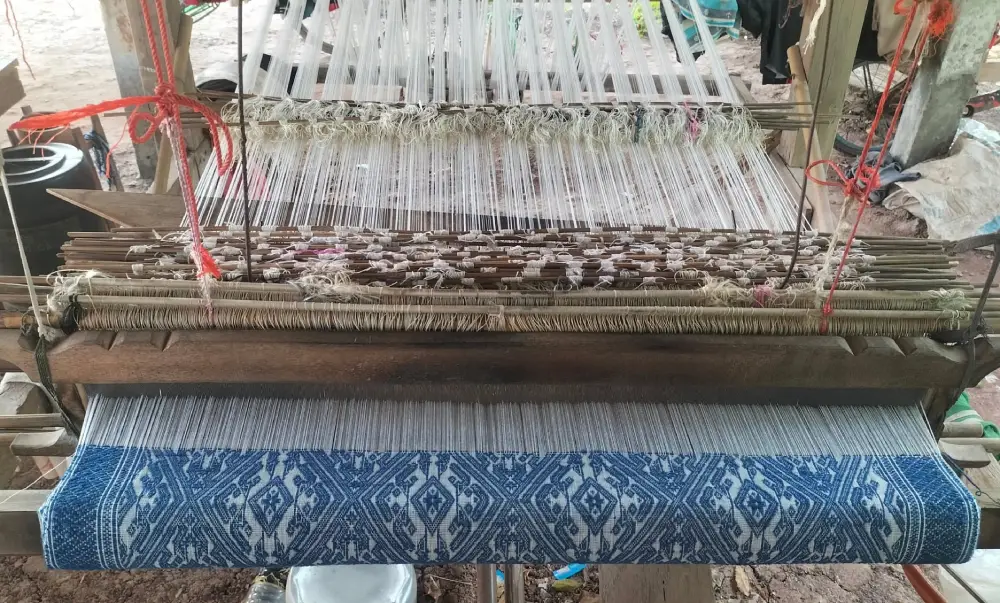
Ban Non Salao Khit Textile Village is located in Moo 6, Nong Tum Subdistrict, Phu Khieo District, Chaiyaphum Province. It is one of the most important traditional weaving communities in Chaiyaphum and is widely known as a major center for khit textile weaving. The villagers have inherited their weaving knowledge from grandparents and ancestors, originally weaving cloth for household use in almost every home before developing into organized craft groups and community-based production. Today, Ban Non Salao produces cotton mudmee textiles, silk khit cloth, shawls, tablecloths, fabric bags, khit pillows, clothing, home products, and many other woven products based on local patterns and community wisdom.
Khit cloth from Ban Non Salao is more than a local souvenir. It is a living craft that reflects skill, patience, memory, and the role of women in the community. Khit weaving is different from plain weaving because it uses a raised-pattern technique to create decorative motifs on the fabric. The result is a cloth with texture, rhythm, and visual depth. In northeastern Thai culture, khit textiles have long been used in homes, merit-making events, ceremonies, and special occasions. Ban Non Salao has preserved this textile heritage strongly enough to become one of Chaiyaphum’s key cultural destinations.
The name Ban Non Salao is connected with an earlier local name, “Non Kalao,” referring to a highland area where kalao trees grew near Huai Chot. Over time, the name changed in local speech and became Ban Non Salao. The village is surrounded by agricultural land, rice fields, home gardens, and natural water sources. This environment shaped the daily life of the community and gave the weaving tradition a practical household foundation before it became a recognized local product.
Weaving in Ban Non Salao began as a household activity. Girls and women learned from mothers, grandmothers, and older relatives. They began with simple thread preparation and basic weaving before learning more complex khit patterns. The knowledge was passed through practice, observation, memory, and correction at the loom. This is why the craft remains deeply connected to family life and community continuity. The loom is not only a tool; it is a place where cultural knowledge is transferred from one generation to the next.
In 1978, the village established a women’s weaving group. This was an important turning point because it allowed the community to organize production more systematically. The group developed patterns, colors, product types, and sales channels to better match market demand. Instead of weaving only for household use, local women began producing a wider range of textile products for sale. This helped Ban Non Salao become known as an OTOP craft community and an important textile destination in Chaiyaphum.
The identity of Ban Non Salao khit cloth lies in its detailed motifs, refined weaving, and patterns connected with local culture. Some pieces use traditional geometric motifs arranged in repeated rhythms. Some preserve old community patterns. Some use contemporary colors to suit modern clothing and home use. Others are inspired by local stories, especially the famous Hae Nak Hot ordination procession, which is one of the most distinctive traditions of Ban Non Salao.
The Hae Nak Hot tradition is an important part of the village’s cultural identity. It is connected with group ordination and the procession of candidates for monkhood around the village. Young men carry the novice-to-be on a bamboo platform and shake or toss him as part of the energetic procession. The tradition is understood locally as a test of determination and commitment before ordination. The community has transformed the memory of this tradition into textile patterns, making the cloth a medium for preserving local stories, faith, and solidarity.
Khit weaving begins with the preparation of cotton or silk thread. The thread must be strong, even, and suitable for the intended textile. For cotton mudmee, artisans prepare the cotton, tie the pattern, dye the thread, and arrange it carefully. For silk khit cloth, the silk must be smooth and suitable for raised-pattern weaving. Good thread preparation is essential because uneven thread can affect the clarity and texture of the final cloth.
The weaving process requires a loom and pattern-lifting techniques. The weaver controls warp and weft threads while raising selected threads to form the motif. This requires memory, precision, and rhythm. A mistake in one section can disturb the pattern, so skilled weavers must remain focused throughout the process. The beauty of Ban Non Salao khit cloth comes from both the visible motif and the discipline behind its creation.
A good khit textile has clear patterns, balanced colors, firm fabric, and neat finishing. Some Ban Non Salao textiles emphasize traditional elegance, while others are adapted for contemporary use. Visitors can choose shawls for gifts, tablecloths for home decoration, khit pillows for living spaces, fabric bags for everyday use, or larger pieces for tailoring. Each product carries the knowledge of the community and the handwork of local artisans.
A visit to Ban Non Salao gives travelers a closer look at the relationship between people and textiles. Unlike buying fabric in an ordinary shop, visiting the village allows travelers to see homes, looms, thread, finished products, and community life. At certain times, visitors may see villagers weaving, preparing thread, arranging patterns, or organizing products for sale. These scenes help explain that one piece of cloth is built from time, labor, and community knowledge.
Ban Non Salao is suitable for learning-based travel. Visitors interested in Thai textiles can study weaving methods, khit motifs, colors, product development, and community organization. Student groups, cultural travelers, textile designers, and study groups should contact the weaving groups or Nong Tum Subdistrict Administrative Organization in advance. Weaving is part of daily life, not a permanent staged performance, so advance coordination helps visitors see the most relevant activities.
When buying khit textiles, visitors should consider fabric type, pattern, color, size, intended use, and craftsmanship. Shawls, bags, and pillows are suitable as gifts. Larger textile pieces are better for tailoring or home decoration. Collectors may prefer old-style patterns, unique motifs, or pieces connected with the Hae Nak Hot tradition. Buyers should also ask about fabric care because handmade textiles should be washed and stored gently.
The eleven-color khit pha khao ma is one example of product development in Ban Non Salao. It adapts a familiar Thai multipurpose cloth into a more decorative textile with khit technique and multiple colors. This product is easy to use, practical, and accessible to younger buyers. It shows how the village can preserve old weaving knowledge while adapting it to contemporary lifestyles.
Khit pillows are also important products. They represent Isan domestic culture and are commonly associated with hospitality, home decoration, ceremonies, and everyday comfort. When khit motifs are used on pillows, ordinary household objects become pieces of textile art. Fabric bags, shawls, tablecloths, and clothing show the same adaptation of traditional motifs into modern use.
The weaving group has also strengthened the local economy. Women in the village can earn income from skills preserved in their families. Work is shared among thread preparers, weavers, finishers, sellers, and coordinators. When visitors buy products directly from the village, income circulates within the community and helps support the continuation of weaving knowledge.
Socially, khit weaving keeps several generations connected. Elders pass down knowledge of patterns and techniques. Working adults help with production and product development. Younger people can support photography, online sales, packaging, and new design ideas. In this way, the craft can continue without being frozen in the past. It remains rooted in tradition while adapting to current markets.
Ban Non Salao is especially meaningful because textile heritage and local ritual are closely linked. The Hae Nak Hot tradition is held in early May and attracts many visitors interested in local culture. During the festival, travelers can see the power of community participation, Buddhist faith, and village unity. On ordinary days, the tradition remains visible through stories, local memory, and textile motifs inspired by the event.
Wat Ta Khaek and Wat Bun Thanom Phatthanaram are important religious places connected with the Hae Nak Hot tradition. They are associated with the preparation of candidates for ordination and local Buddhist ceremonies. This connection between temples, festival, and khit cloth makes Ban Non Salao a complete cultural community. Visitors do not encounter only woven fabric; they also encounter the faith and social relationships that give meaning to the textiles.
Getting There from Phu Khieo District is straightforward. Take Highway 2037 toward Kaset Sombun for about 8 kilometers, then turn right and continue for about 3 kilometers to Ban Non Salao. Travelers using navigation may use coordinates 16.361034914293388, 102.1501825404212 as a reference point for the community.
The recommended visiting hours are 08.30 to 16.30. This period is suitable for contacting weaving groups, buying products, and observing community life. Organized groups should coordinate in advance because each household or group may have different working schedules. Some periods may focus on weaving, while others may involve thread preparation, product finishing, or community events.
Ban Non Salao can be combined with several nearby attractions in Phu Khieo District. Nearby places include Wat Ta Khaek, Phak Pang Municipal Public Park, Ban Khae Topiary And Ornamental Plant Center, Phra That Nong Sam Muen, Sok Nam Sai Health Park, Non Mueang Ancient Town, and Pha Hua Nak Viewpoint in Phu Laen Kha National Park. This allows visitors to combine textile heritage, temples, local products, ancient monuments, and nature in one route.
Phra That Nong Sam Muen is an important cultural site that pairs well with Ban Non Salao. It is a large ancient stupa in Phu Khieo District, with sema stones, inscriptions, and a local museum. Travelers can visit Ban Non Salao for khit textiles and continue to the stupa for worship and historical learning. This creates a route that connects living craft with ancient heritage.
Ban Khae Topiary And Ornamental Plant Center is another nearby stop. Located along Highway 201, it is known for topiary trees, ornamental plants, and dug-up landscape trees. A route combining Ban Non Salao, Ban Khae, and Phra That Nong Sam Muen gives travelers a broader view of Phu Khieo: textile craft, plant craft, and sacred heritage.
Restaurants near Ban Non Salao can be found in Phu Khieo town and nearby highway areas. Options include Saeng Arun Phochanakan, Kuai Tiao Kai Mara Buffet Phu Khieo, Rabiang Na Cafe’@Phukhieo, Jungle Cafe Phu Khieo, Chachak40 Phu Khieo, Winter Farm Village, and Phor Boonrod in Ban Kaeng. Travelers can plan meals before or after visiting the weaving village.
Accommodation near Ban Non Salao is available in Phu Khieo town and nearby areas. Options include Bander Hotel, Ban Suan Amara Resort, Phusuay Namsai Resort, Muang Thong Resort Phu Khiao, Jamsai Resort, and other local lodgings in Phu Khieo. Staying in Phu Khieo is convenient for visitors attending the Hae Nak Hot festival or study groups visiting the weaving community.
Ban Non Salao is suitable for many types of travelers: people looking for quality handwoven textiles, Thai textile enthusiasts, cultural tourists, students, designers, researchers, and visitors who want to understand Chaiyaphum through community life. The village offers an experience based on people, skill, memory, and cultural pride rather than scenic views alone.
Overall, Ban Non Salao is a strong example of living heritage. Khit textiles are still woven, used, sold, worn, and developed in everyday life. Patterns are connected to traditions, beliefs, and community memory. Products meet both traditional and modern needs. A visit to Ban Non Salao is therefore not only about buying textiles, but about supporting a community that continues to preserve and develop its craft.
For travelers who want to understand Chaiyaphum through textile culture, Ban Non Salao Khit Textile Village should not be overlooked. It combines a long weaving tradition, organized community craft groups since 1978, diverse products, the remarkable Hae Nak Hot tradition, and a living village environment where handwoven cloth still belongs to daily life. Visiting the village means experiencing Chaiyaphum through fabric, faith, and community wisdom.
| Name | Ban Non Salao Khit Textile Village / Ban Non Salao Handwoven Khit Community |
| Location | Ban Non Salao, Moo 6, Nong Tum Subdistrict, Phu Khieo District, Chaiyaphum Province |
| Address | Moo 6, Ban Non Salao, Nong Tum Subdistrict, Phu Khieo District, Chaiyaphum 36110, Thailand |
| Coordinates | 16.361034914293388, 102.1501825404212 |
| Highlights | A major khit textile weaving village in Chaiyaphum, known for cotton mudmee, silk khit cloth, shawls, tablecloths, fabric bags, khit pillows, and patterns connected with the Hae Nak Hot tradition |
| History / Background | Villagers inherited khit weaving from their ancestors and originally wove cloth for household use. A women’s weaving group was established in 1978 to develop patterns, colors, products, and sales |
| Khit Textile Characteristics | A raised-pattern textile woven with pattern-lifting techniques on a loom, creating textured motifs that reflect Isan weaving wisdom and community craftsmanship |
| Main Products | Cotton mudmee, silk khit cloth, shawls, tablecloths, fabric bags, khit pillows, clothing, tissue boxes, eleven-color khit pha khao ma, and contemporary woven products |
| Important Patterns | Traditional khit motifs, geometric patterns, contemporary designs, Hae Nak Hot pattern, eleven-color khit pha khao ma, and motifs developed from local community wisdom |
| Name Origin | The name Ban Non Salao developed from “Non Kalao,” referring to a highland area with kalao trees near Huai Chot, later becoming the present village name |
| Main Areas / Zones | Khit weaving group zone, artisan household zone, loom zone, thread preparation zone, product display and sales zone, Wat Ta Khaek zone, Wat Bun Thanom Phatthanaram zone, and Hae Nak Hot procession route around the village |
| Facilities | Textile shopping points, artisan homes, weaving group contact points, community temples, village road access, restaurants in Phu Khieo, and nearby accommodation in Phu Khieo town |
| Traditions / Main Activities | Observing khit weaving, buying community textiles, study visits to women’s weaving groups, learning about the Hae Nak Hot motif, and the annual Hae Nak Hot group ordination procession in early May |
| Caretaker / Main Organizations | Ban Non Salao khit weaving groups, Phu Khita group, traditional khit weaving group, Ban Non Salao community, Nong Tum Subdistrict Administrative Organization, and Moo 6 local representatives |
| Contact Numbers | Nong Tum SAO, Tel. 044-100-171 ext. 3 / Moo 6 Representative, Tel. 099-073-7096 / Phu Khita Group, Tel. 066-121-3998 / Traditional Khit Weaving Group, Tel. 095-792-0355 |
| Open Days | Daily |
| Opening Hours | 08.30 – 16.30 (Recommended Visiting Hours For Community Visits, Product Shopping, And Contacting Weaving Groups) |
| Entrance Fee | No entrance fee; textile product prices vary depending on fabric type, motif, size, color, material, and craftsmanship |
| Travel Information | From Phu Khieo District, take Highway 2037 toward Kaset Sombun for about 8 km, then turn right and continue about 3 km to Ban Non Salao. Use coordinates 16.361034914293388, 102.1501825404212 |
| Current Status | A living khit weaving community and cultural tourism destination in Phu Khieo District, with ongoing textile production, product sales, and the continuation of the Hae Nak Hot tradition |
| Local Administrative Contact | Nong Tum Subdistrict Administrative Organization, Phu Khieo District, Chaiyaphum Province, Tel. 044-100-171 ext. 3 |
| Nearby Tourist Attractions | 1. Wat Ta Khaek, Ban Non Salao, about 0.5 km 2. Wat Bun Thanom Phatthanaram, Ban Non Salao, about 1 km 3. Hae Nak Hot Procession Route Around Ban Non Salao, about 1 km 4. Phak Pang Municipal Public Park, about 10 km 5. Ban Khae Topiary And Ornamental Plant Center, about 12 km 6. Phra That Nong Sam Muen, Ban Kaeng, about 16 km, Tel. 095-838-0517, 087-248-7049 7. Non Mueang Ancient Town, Chum Phae District, about 24 km 8. Pha Hua Nak Viewpoint, Phu Laen Kha National Park, about 48 km, Tel. 093-0939193 |
| Nearby Restaurants | 1. Saeng Arun Phochanakan (Ko Tee), Phu Khieo, about 10 km, Tel. 044-861-015 2. Kuai Tiao Kai Mara Buffet Phu Khieo, about 10 km, Tel. 095-180-0281 3. Rabiang Na Cafe’@Phukhieo, about 11 km, Tel. 084-227-2252 4. Jungle Cafe Phu Khieo-Chaiyaphum Branch, about 11 km, Tel. 093-071-7544 5. Chachak40 Phu Khieo, about 11 km, Tel. 092-270-6040 6. Winter Farm Village Phu Khieo, about 14 km, Tel. 081-876-6372 7. Phor Boonrod, Ban Kaeng, about 16 km, Tel. 094-361-3350 |
| Nearby Accommodations | 1. Bander Hotel, Phu Khieo, about 10 km, Tel. 044-862-332, 081-068-3563 2. Ban Suan Amara Resort, Phu Khieo District, about 11 km, Tel. 081-546-9909, 082-755-3908 3. Phusuay Namsai Resort, about 12 km, Tel. 061-562-4222 4. Muang Thong Resort Phu Khiao, about 13 km, Tel. 081-967-4810 5. Jamsai Resort, Ban Kaeng, about 16 km 6. Local Hotels And Resorts In Phu Khieo Town, about 10-15 km |
Frequently Asked Questions (FAQ)
Q: Where is Ban Non Salao Khit Textile Village located?
A: It is located in Ban Non Salao, Moo 6, Nong Tum Subdistrict, Phu Khieo District, Chaiyaphum Province. It is an important community for traditional khit textile weaving.
Q: What is Ban Non Salao famous for?
A: Ban Non Salao is famous for handwoven khit textiles, including cotton mudmee, silk khit cloth, shawls, tablecloths, fabric bags, khit pillows, and motifs connected with the Hae Nak Hot tradition.
Q: When was the weaving group established?
A: The village established a women’s weaving group in 1978 to develop patterns, colors, products, and sales based on inherited weaving wisdom.
Q: Can visitors observe weaving in the village?
A: Yes, visitors may observe weaving in some areas and at certain times. Organized groups should contact local weaving groups or Nong Tum SAO in advance to arrange a suitable visit.
Q: Is there an entrance fee?
A: There is no entrance fee for visiting the community. Product prices depend on textile type, motif, size, color, material, and craftsmanship.
Q: How is the Hae Nak Hot tradition connected with Ban Non Salao textiles?
A: Hae Nak Hot is a unique ordination procession of Ban Non Salao. The community has used this tradition as inspiration for textile motifs, especially the Hae Nak Hot pattern.
Q: How can travelers get to Ban Non Salao?
A: From Phu Khieo District, take Highway 2037 toward Kaset Sombun for about 8 km, then turn right and continue about 3 km to the village. Travelers may use coordinates 16.361034914293388, 102.1501825404212.
Q: What nearby attractions can be combined with a visit?
A: Nearby places include Wat Ta Khaek, Wat Bun Thanom Phatthanaram, the Hae Nak Hot procession route, Ban Khae Topiary Center, Phra That Nong Sam Muen, Non Mueang Ancient Town, and Pha Hua Nak Viewpoint in Phu Laen Kha National Park.
 Category: ●Suburban Living
 Group: ●Village, Community
Last Update : 3 MonthAgo
 Last Update : 3 MonthAgo
 Click to Access the Navigation Map GPS
Ban Non Salao Khit Textile Village Map
Recommend

 Art, Culture and Heritage
 Historical Sites and Monuments(1)
 Landmarks and Memorials(3)
 Royal Palace(1)
 Art, Craft Centres, Tradition(3)
 Educational Places
 Educational Gardens, Farm(1)
 Places of Worship
 Temple(141)
 Other Sacred Sites(7)
Village, Community(4)
Other Sacred Sites(7)
Village, Community(4)
 Nature and Wildlife
 National Parks and Marine Reserves(7)
 Mountain (Doi)(5)
 Dam, Reservoir, Lake(10)
 Waterfalls(15)
 Caves(5)
 River, Canal(4)
 Other natural attractions(1)
 Entertainment and Agricultural
 Farms, Parks and Ecotourism(2)


