
lovethailand home >Northeastern Travel Attractions >Chaiyaphum Travel Attractions >Thep Sathit >Ban Rai > Wat Khao Pratu Chumphon
TL;DR: Wat Khao Pratu Chumphon is located at Ban Sap Salete, Moo 2, Ban Rai Subdistrict, Thep Sathit District, Chaiyaphum Province, open Daily, hours Daytime.
Wat Khao Pratu Chumphon
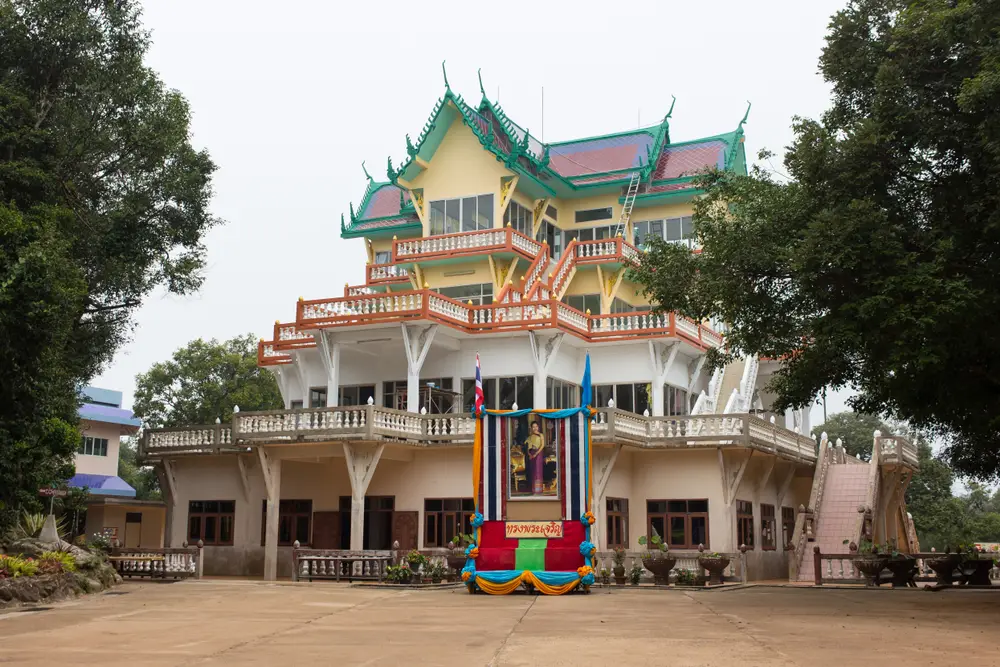
Open Days: Daily
Opening Hours: Daytime
Wat Khao Pratu Chumphon is located around Ban Sap Salete, Moo 2, Ban Rai Subdistrict, Thep Sathit District, Chaiyaphum Province. It is a local Mahanikaya Buddhist temple with a peaceful forest-temple atmosphere, situated close to the route leading to Pa Hin Ngam National Park, the well-known destination for Siam tulip fields, unusual rock formations, and misty mountain scenery. For foreign travelers visiting Pa Hin Ngam, this temple is a meaningful stop for quiet merit-making, meditation, nature walks, and a deeper experience of local Buddhist culture in Chaiyaphum.
The temple is not a commercial tourist attraction in the usual sense. Its appeal comes from the way Buddhist practice and natural landscape exist together. Inside the temple grounds are a meditation pavilion, a distinctive tall bell tower, the natural stone arch known as Pratu Chumphon, a rock field filled with sandstone formations, and a forested atmosphere that remains calm and refreshing. Visitors come here to pay respect, walk through the symbolic stone gate, rest the mind, and breathe clean mountain air before or after exploring Pa Hin Ngam National Park.
Wat Khao Pratu Chumphon was established in 1992. Its name is connected with the natural stone formations found within the temple grounds. The word “Pratu” means gate or doorway, while “Chumphon” refers to the name by which the local stone arch is known. The name therefore describes both a sacred landmark and a geological feature. Sandstone formations in the area have been shaped over time into openings, cracks, passages, and natural arches, creating the impression of several stone gates arranged in the landscape.
The temple is located at No. 44, Ban Sap Salete, Moo 2, Ban Rai Subdistrict, Thep Sathit District, Chaiyaphum Province. The temple land covers about 14 rai. To the north, it borders the Pa Hin Ngam area. To the south, it borders a stream. To the east, it borders the white-stone forest area, and to the west, it borders another stream. The temple also has monastic land of 238 rai, 1 ngan, and 13 square wah. These boundaries show how closely the temple is connected with the surrounding forest, sandstone, watercourses, and mountain terrain.
Wat Khao Pratu Chumphon differs from many village temples because it is set among trees and natural rocks. Its quiet setting makes it suitable for meditation and serious spiritual practice. The temple has a meditation pavilion, accommodation buildings, and a kitchen that can support people who come to practice Dhamma. Monks and nuns also reside within the grounds, with separate areas arranged for monastic and nun residences. This organization helps maintain the calm, disciplined atmosphere expected in a meditation-oriented temple.
The meditation pavilion is one of the most important areas of the temple. It supports chanting, Dhamma listening, sitting meditation, and Buddhist activities. Many visitors do not come only to take photos; they come to pause, reflect, and rest the mind. The pavilion offers a quiet space where travelers can slow down after the busy experience of visiting Pa Hin Ngam National Park. In this temple, stillness is part of the experience, and the surrounding forest helps deepen that sense of calm.
The bell tower is another memorable feature of Wat Khao Pratu Chumphon. It stands tall and has a distinctive style. Several travel sources mention that the Thai actor Sorapong Chatree helped arrange its construction as an offering to the temple. In a Thai Buddhist temple, a bell tower is more than an architectural feature. The sound of a bell can mark time, call people to practice, and remind listeners of mindfulness. In the forested setting of this temple, the bell tower adds both visual identity and spiritual atmosphere.
The Pratu Chumphon stone arch is the spiritual heart of the visit. Many visitors first pay respect to the Buddha, make a wish, and then walk through the natural stone arch for good fortune. This simple act gives the stone formation cultural meaning. It becomes not just a natural opening in sandstone, but a symbolic gateway associated with merit, auspiciousness, and a fresh start. For many Thai visitors, passing under the arch is a meaningful gesture that connects personal hopes with Buddhist faith.
The rock field around the temple deserves slow exploration. Various sandstone outcrops appear across the grounds, some covered by roots and small plants, others showing marks of erosion. Walking through this area feels like entering a small natural stone garden. The rocks, trees, and silence create an atmosphere that is very different from a typical urban temple. For travelers interested in nature, geology, and forest temples, this part of the temple is especially rewarding.
Geologically, Wat Khao Pratu Chumphon lies on the Khao Phang Hoei range, a landscape associated with the edge of the northeastern plateau. The sandstone in this area was formed from ancient sediment and later shaped by uplift, cracking, erosion, and weathering. Over a very long period, water and wind followed weaknesses in the rock and gradually created grooves, hollows, natural bridges, and arch-like forms. These natural processes explain why the temple grounds contain so many unusual stone features.
Pratu Chumphon can therefore be understood in two ways. From the perspective of faith, it is an auspicious gate through which visitors walk after prayer. From the perspective of nature, it is a sandstone arch formed by erosion and weathering. Softer parts of the rock were gradually worn away, while more resistant parts remained and formed a doorway-like shape. The result is a natural form that Thai visitors have interpreted through spiritual meaning.
The atmosphere of the temple is clearly that of a forest temple. The area is shaded by mixed forest, quieter than most tourist sites, and home to animals cared for by the monks and nuns. Visitors should therefore behave with calmness and respect. Loud conversations, careless movement, and disturbing animals or practitioners are not appropriate here. This is both a temple and a meditation place, so the best way to visit is to walk slowly, observe quietly, and keep the mind peaceful.
The beauty of Wat Khao Pratu Chumphon is not based on luxury or grand decoration. Its value comes from simplicity, natural surroundings, and real spiritual use. Some buildings are practical structures designed for meditation, accommodation, kitchen service, and religious activities. The temple still functions as a place where people come to practice. This makes it different from attractions that are designed mainly for sightseeing. Visitors who understand this will appreciate the temple more deeply.
The sermon hall measures about 30 meters wide and 50 meters long. It was built in 1987 as a reinforced concrete structure and supports Buddhist activities and meditation gatherings. The temple also has 10 wooden monks’ residences and around 20 Buddha images as sacred objects. These facilities show that the temple was developed to support monks, practitioners, and visitors who come for religious purposes, not only for casual tourism.
One tall building within the temple can be used as a viewpoint. From the upper level, visitors can see the Khao Phang Hoei landscape, surrounding forests, and wind turbines in the Thep Sathit area. The mountains in this region have a distinctive shape, with plateau-like surfaces and steep edges. The view helps travelers understand the larger landscape around the temple and how the forest, sandstone, and mountain ridge are connected.
During the rainy season, the forest and rock field become greener and more refreshing. Small plants and seasonal flowers appear in cracks, sandy soil, and moist rock surfaces. This is also the season when many visitors come to Pa Hin Ngam National Park to see the Siam tulip fields. Combining the national park with Wat Khao Pratu Chumphon gives travelers two different experiences in one route: the national park offers open scenery and seasonal flowers, while the temple offers calmness, stone formations, and Buddhist reflection.
Wat Khao Pratu Chumphon is especially suitable for visitors seeking meditation, peace, and emotional rest. The temple is quiet, not crowded, and closely connected to nature. Visitors should speak softly, respect monks and nuns, and follow appropriate paths when walking through the rock field. Climbing rocks carelessly can be dangerous and may damage the natural environment. A respectful visit allows the temple to remain both a sacred place and a preserved natural space.
For travelers heading to Pa Hin Ngam National Park, Wat Khao Pratu Chumphon is a convenient and meaningful stop. The side road to the temple is located shortly before the national park entrance. A practical itinerary is to visit the Siam tulip fields, Lan Hin Ngam rock field, and Pha Sut Phaen Din viewpoint in the morning, then stop at Wat Khao Pratu Chumphon to pay respect, walk through the stone arch, and rest in the quiet forest-temple atmosphere.
During the Siam tulip season, Pa Hin Ngam National Park can be busy with travelers, photographers, and tour groups. The temple provides a contrasting experience. After the lively atmosphere of the national park, visitors can enter a quieter place where the pace is slower. This contrast makes the route more balanced. It is suitable for travelers who want both nature and spiritual calm in the same journey.
In cultural terms, Wat Khao Pratu Chumphon is a clear example of a Thai forest temple shaped by its environment. The temple does not separate Buddhist space from nature. Instead, trees, rocks, wind, silence, and elevation become part of the spiritual setting. Visitors do not need elaborate decoration to feel the sacred atmosphere. The natural landscape itself supports contemplation and Dhamma practice.
The Pratu Chumphon stone arch also shows how Thai culture gives meaning to natural forms. A rock is not seen only as geology; it can become a symbolic gate, a place of blessing, and a point of personal reflection. Walking through the arch is a small act, but it allows visitors to feel that they are crossing into a more auspicious state of mind. This is why the place remains memorable even though the ritual is simple.
The temple is also suitable for families who want to introduce children to Thai Buddhist manners and natural learning. Children can observe rocks, trees, animals, and the quiet life of a forest temple. Adults should guide them to dress modestly, speak softly, avoid disturbing monks and nuns, and keep the area clean. A visit here can teach both cultural respect and environmental awareness.
Older travelers and those who prefer slow travel can also enjoy the temple, especially in the morning or late afternoon when the weather is milder. Some parts of the ground are natural rock paths, so comfortable walking shoes are recommended. Visitors should walk carefully around uneven surfaces, especially near the stone arch and rock field. With simple preparation, the temple can be visited safely and comfortably.
For photography, Wat Khao Pratu Chumphon offers several interesting angles: the tall bell tower, meditation pavilion, stone arch, sandstone formations, tree roots over rocks, and views from the high building. However, photography should be done respectfully. Visitors should avoid disturbing practitioners, avoid loud posing, and refrain from inappropriate photos in sacred areas. The best images here are those that preserve the quiet dignity of the place.
One of the temple’s strongest qualities is that it remains natural and calm even though it is close to a major tourist attraction. Pa Hin Ngam National Park draws large numbers of visitors in the rainy season, but Wat Khao Pratu Chumphon still keeps a meditative character. Travelers who want to rest after photographing flowers and rock fields should include this temple in their route. It offers a different kind of beauty, one based on silence and reflection.
Getting There is straightforward if traveling by private car or rental car. Use the same route as the one leading to Pa Hin Ngam National Park. Shortly before reaching the national park entrance, there is a side road on the left leading to Wat Khao Pratu Chumphon. Drivers should proceed carefully because parts of the local road may be narrow, sloped, or affected by rain during the wet season.
A recommended route is to visit Pa Hin Ngam National Park in the morning, especially during the Siam tulip season, then continue to Wat Khao Pratu Chumphon for merit-making and quiet reflection. Alternatively, travelers may stop at the temple first to begin the day with a peaceful prayer before entering the national park. Either direction works well because the two places are very close to each other.
Nearby places that can be combined with Wat Khao Pratu Chumphon include Pa Hin Ngam National Park, Lan Hin Ngam, Pha Sut Phaen Din, the Siam tulip fields, Thep Phana Waterfall, and local flower gardens around Ban Rai. Together, these places make Thep Sathit District a strong destination for nature lovers, Buddhist travelers, photographers, and people seeking mountain air and quiet landscapes.
Food and accommodation are available around the national park area. Local restaurants, welfare shops, cafés, resorts, and homestays serve travelers during the main season. During weekends and the Siam tulip blooming season, advance planning is recommended because accommodation near Pa Hin Ngam National Park can fill quickly. Travelers who want a relaxed trip should book early and check opening hours before arrival.
Visitors should bring drinking water, wear suitable walking shoes, and keep the temple quiet. Wat Khao Pratu Chumphon is a Buddhist temple and meditation site, not an entertainment venue. Those who visit with the right attitude will gain more than photographs. They will experience a rare combination of forest silence, Buddhist faith, natural sandstone formations, and the calm atmosphere of Chaiyaphum’s mountain landscape.
Overall, Wat Khao Pratu Chumphon is one of the most worthwhile stops in Thep Sathit District. It combines a forest temple, meditation space, natural stone arch, sandstone rock field, distinctive bell tower, and a convenient location near Pa Hin Ngam National Park. Travelers visiting the Siam tulip fields should not overlook this temple, because it completes the journey with both nature and spiritual meaning.
| Name | Wat Khao Pratu Chumphon |
| Location | Ban Sap Salete, Moo 2, Ban Rai Subdistrict, Thep Sathit District, Chaiyaphum Province |
| Address | No. 44, Ban Sap Salete, Moo 2, Ban Rai Subdistrict, Thep Sathit District, Chaiyaphum 36230, Thailand |
| Highlights | Natural Pratu Chumphon stone arch, sandstone rock field, meditation pavilion, tall bell tower, and forest-temple atmosphere near Pa Hin Ngam National Park |
| History | Established in 1992 as a Mahanikaya local Buddhist temple; the name comes from natural rocks shaped like a series of gates |
| Name Origin | The name refers to the natural stone arch and gate-like sandstone formations within the temple grounds |
| Distinctive Features | A peaceful forest temple surrounded by mixed woodland and sandstone formations, suitable for meditation, quiet walks, and fresh mountain air |
| Sacred Objects / Important Features | Around 20 Buddha images and the worship area near the Pratu Chumphon stone arch |
| Travel Information | Use the route toward Pa Hin Ngam National Park; shortly before the national park entrance, take the side road on the left to Wat Khao Pratu Chumphon |
| Current Status | An active local Buddhist temple and meditation site in Ban Rai Subdistrict, Thep Sathit District, Chaiyaphum Province |
| Open Days | Daily |
| Opening Hours | Daytime |
| Facilities | Meditation pavilion, sermon hall, accommodation buildings, kitchen, monks’ residences, bell tower, walking path through the rock field, and quiet rest areas |
| Main Areas / Zones | 1. Meditation Pavilion 2. Tall Bell Tower 3. Pratu Chumphon Stone Arch 4. Natural Sandstone Rock Field 5. Accommodation And Kitchen Area For Practitioners 6. Monks’ And Nuns’ Residential Areas 7. Viewpoint From The Tall Building |
| Abbot According To Published Temple History | Phra Khru Phaisan Prachanukul |
| Nearby Tourist Attractions | 1. Pa Hin Ngam National Park, about 1 km 2. Lan Hin Ngam Rock Field, about 2 km 3. Pha Sut Phaen Din Viewpoint, about 3 km 4. Siam Tulip Field / Dok Krachiao Field, about 3 km 5. Thep Phana Waterfall, about 5 km 6. Suan Lung Boem At Siam Tulip Field, about 7 km |
| Nearby Restaurants | 1. Khrua Ja Jang Pa Hin Ngam Thep Sathit, about 1 km, Tel. 089-284-8874 2. Pa Hin Ngam Welfare Shop, about 1 km 3. Avoka Cafe’, about 2 km, Tel. 097-535-9956 4. Khrua Pa Thong, about 2 km 5. Ton Faek, about 5 km 6. Baan Suan Cafe & Camp Thep Sathit, about 9 km, Tel. 099-303-2989 |
| Nearby Accommodations | 1. Rai Phu Ngern Pa Hin Ngam, about 2 km, Tel. 081-855-5583, 064-596-7454 2. Baan Rai Ing Doi, about 2 km, Tel. 089-123-3223, 087-868-3223 3. Pa Din Hin Ngam Resort, about 2 km, Tel. 087-021-7000, 087-107-2000 4. Rai Aeifoon Resort, about 2 km, Tel. 081-936-4279 5. Rai Phu Saeng, about 3 km, Tel. 086-256-1421 |
Frequently Asked Questions (FAQ)
Q: Where is Wat Khao Pratu Chumphon located?
A: Wat Khao Pratu Chumphon is located at Ban Sap Salete, Moo 2, Ban Rai Subdistrict, Thep Sathit District, Chaiyaphum Province, near the route to Pa Hin Ngam National Park.
Q: What is the main highlight of Wat Khao Pratu Chumphon?
A: The main highlights are the Pratu Chumphon natural stone arch, sandstone rock field, meditation pavilion, tall bell tower, and peaceful forest-temple atmosphere.
Q: Why do visitors walk through the Pratu Chumphon stone arch?
A: Visitors usually pay respect, make a wish, and walk through the stone arch for good fortune and auspiciousness.
Q: Is Wat Khao Pratu Chumphon suitable for meditation?
A: Yes. The temple has a quiet forest setting, a meditation pavilion, accommodation buildings, a kitchen, and areas suitable for spiritual practice and peaceful reflection.
Q: How is Wat Khao Pratu Chumphon connected with Pa Hin Ngam National Park?
A: The temple is located close to the national park entrance, making it convenient to visit together with the Siam tulip fields, Lan Hin Ngam, and Pha Sut Phaen Din.
Q: What should visitors wear when visiting the temple?
A: Visitors should dress modestly, covering shoulders and knees, and wear comfortable shoes suitable for walking on natural rock paths.
Q: Are there nearby attractions around Wat Khao Pratu Chumphon?
A: Yes. Nearby attractions include Pa Hin Ngam National Park, Lan Hin Ngam, Pha Sut Phaen Din, the Siam tulip fields, Thep Phana Waterfall, and Suan Lung Boem.
Q: When is the best time to visit Wat Khao Pratu Chumphon?
A: Morning to afternoon is suitable for a temple visit. Travelers who want to combine it with the Siam tulip fields should visit during the rainy season, while those seeking quiet should choose an ordinary weekday.
 Category: ●Places of Worship
 Group: ●Temple
Last Update : 3 MonthAgo
 Last Update : 3 MonthAgo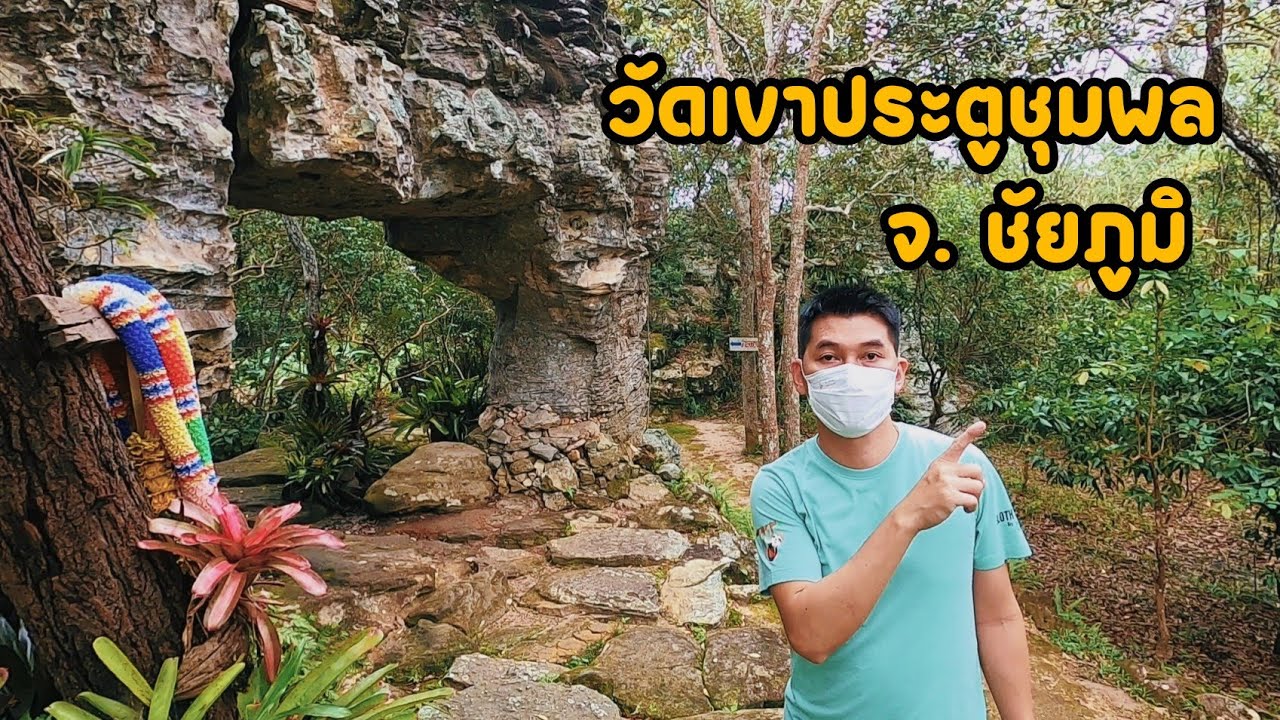
 Click to Access the Navigation Map GPS
Wat Khao Pratu Chumphon Map
Recommend

 Art, Culture and Heritage
 Historical Sites and Monuments(1)
 Landmarks and Memorials(3)
 Royal Palace(1)
 Art, Craft Centres, Tradition(3)
 Educational Places
 Educational Gardens, Farm(1)
Temple(141)
Educational Gardens, Farm(1)
Temple(141)
 Other Sacred Sites(7)
 Suburban Living
 Village, Community(4)
 Nature and Wildlife
 National Parks and Marine Reserves(7)
 Mountain (Doi)(5)
 Dam, Reservoir, Lake(10)
 Waterfalls(15)
 Caves(5)
 River, Canal(4)
 Other natural attractions(1)
 Entertainment and Agricultural
 Farms, Parks and Ecotourism(2)


