
lovethailand home >Northeastern Travel Attractions >Chaiyaphum Travel Attractions >Muang Chaiyaphum >Na Sieow > Wat Sila At Phu Phra
TL;DR: Wat Sila At Phu Phra is located at Ban Na Kai Sao, Na Siao Subdistrict, Mueang Chaiyaphum District, Chaiyaphum Province, open Daily, hours 08.30 – 16.30.

Wat Sila At Phu Phra
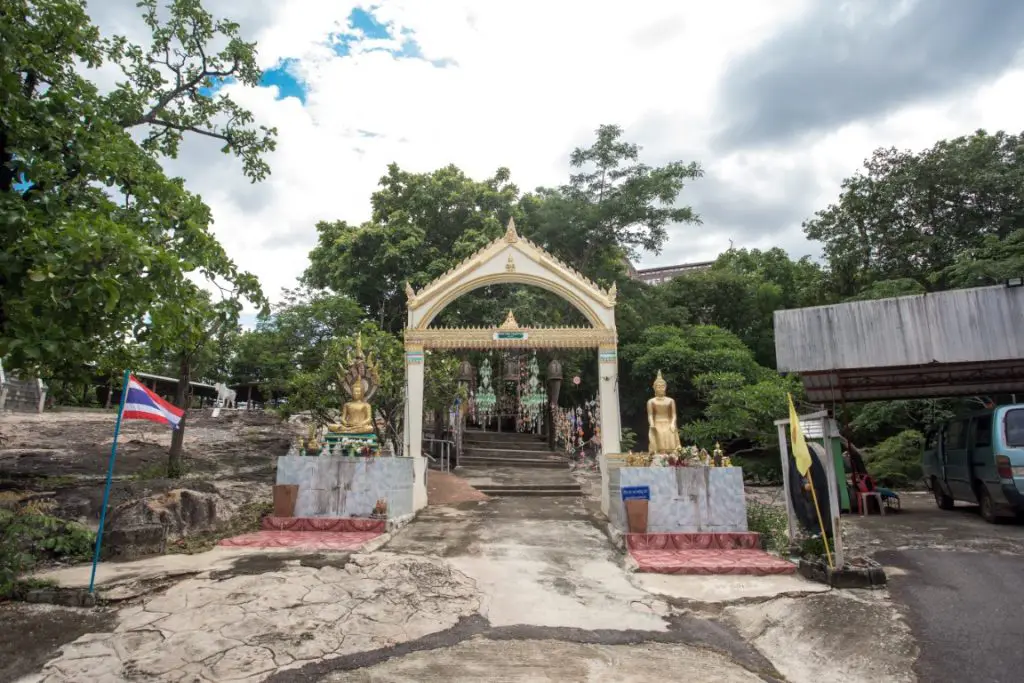
Open Days: Daily
Opening Hours: 08.30 – 16.30
Wat Sila At Phu Phra in Chaiyaphum Province is an important Buddhist temple and archaeological site located at Ban Na Kai Sao, Na Siao Subdistrict, Mueang Chaiyaphum District. The temple is known for its sandstone rock shelter where a group of Buddha images has been carved directly into the stone. This sacred rock shelter is the origin of the name “Phu Phra,” meaning the hill or rocky place of Buddha images. The site has long been revered by local people, and today the carved Buddha images are protected by a roof structure to help preserve them from weathering.
The most important image at the site is the large seated Buddha known locally as Phra Chao Ong Tue. It is carved in sandstone and sits in the diamond-lotus posture. The image is about 5 feet wide at the lap and about 7 feet high. Its hand position is especially distinctive: the right hand rests on the lap, while the left hand lies across the shin, a reversed arrangement when compared with the familiar gesture of subduing Mara. In front of the large image is a smaller sandstone Buddha image about 7 inches high, and nearby are 7 additional Buddha images carved around a sandstone pillar.
For foreign travelers, Wat Sila At Phu Phra is one of the most meaningful cultural sites in Chaiyaphum because it combines Buddhist faith, local devotion, ancient sandstone art, and a natural rock landscape in one place. It is not a temple built only for modern sightseeing. Its value comes from the way the Buddha images, rock shelter, hill, and community faith have remained connected over many generations.
The group of Buddha images at Phu Phra reflects important historical and artistic value. The images are associated with U Thong-style Buddhist art and date to around the 18th – 19th Buddhist centuries, corresponding broadly with the early Ayutthaya period. The Fine Arts Department also describes the style as a mixture of local artistic elements, Dvaravati-related features, and Khmer-influenced forms that spread through the region before and during that period. This makes the site important not only as a place of worship but also as a field example of Buddhist art history in northeastern Thailand.
The name Phu Phra comes from the hill and rock shelter where the Buddha images are carved. The term “Sila At” refers to stone or a stone seat, which suits the character of the site very well. Instead of standing in an urban setting, the sacred images belong directly to the sandstone landscape. The rock shelter is not merely a background. It is part of the religious and artistic composition of the place.
Phra Chao Ong Tue is the spiritual center of the temple. Local people have worshipped this image for a long time, and many visitors come to pray for blessings, success, protection, and peace of mind. The image is visually powerful because of its size, unusual gesture, and position within the natural stone shelter. It is also meaningful because local belief and historical art meet in the same object.
The smaller sandstone image in front of Phra Chao Ong Tue and the 7 Buddha images carved around the sandstone pillar add depth to the site. Five of these images are seated in meditation posture, while 2 share the same distinctive posture as Phra Chao Ong Tue. Together, the images form a sacred group rather than a single isolated object. Visitors should take time to observe the arrangement, proportions, and relationship between the images and the stone surface.
Every year, the community holds worship events for the Buddha images at Phu Phra twice a year. Each event lasts 3 days. The first takes place around the 1st waxing-moon day of the 3rd lunar month, and the second around the 13th waxing-moon day of the 5th lunar month. These annual events show that the site is still part of living local faith. The Buddha images are not only archaeological remains; they continue to function as sacred objects for the community.
During the worship periods, local residents and visitors come to make merit, pray, and pay respect to Phra Chao Ong Tue. The events help pass down local memory from elders to younger generations. They also allow visitors to see how ancient Buddhist images remain active in present-day village culture. This is one of the reasons Wat Sila At Phu Phra is culturally valuable: it preserves both ancient art and living devotion.
The current roof over the rock shelter plays an important role in conservation. It protects the sandstone carvings from rain and direct sun while making the worship area easier to access. Visitors should remember that the area is both a sacred site and an archaeological heritage area. Do not touch, scratch, climb, lean on, or damage the carved images or stone surfaces. Respectful behavior is essential here.
The atmosphere of Wat Sila At Phu Phra is peaceful and rural. It is not as crowded as many famous tourist temples, which makes it suitable for travelers who want a slower and more reflective experience. A meaningful visit should take about 1 – 2 hours. This gives enough time to worship, observe the carved images, study the rock shelter, and understand the relationship between the temple and the surrounding landscape.
Art and history lovers should pay attention to the details of Phra Chao Ong Tue, including the square-shaped face, brows, eyes, nose, ears, hairline, lotus-bud-like ushnisha, robe, and distinctive hand position. These details help explain why the site is important for Buddhist art history. They also show how local, Dvaravati-related, Khmer-influenced, and early Thai artistic ideas met in this region.
Wat Sila At Phu Phra also helps travelers understand Chaiyaphum as a province with more than natural scenery and local festivals. It contains archaeological and religious evidence that reflects earlier cultural networks in northeastern Thailand. Visiting this temple adds historical depth to a Chaiyaphum trip and gives travelers a clearer view of the province’s Buddhist heritage.
Getting There from Chaiyaphum city is straightforward by private car. Take Highway 201 on the Chaiyaphum – Kaeng Khro route for about 15 km, then turn left onto the Na Siao – Huai Chan road for about 5 km, and turn left again into the temple road for about 1 km. Private car or hired local transport is the most convenient option because the temple is located in a semi-rural area where public transport is limited.
A practical half-day route is to leave Chaiyaphum city in the morning, visit Wat Sila At Phu Phra first, continue to Wat Phra Phutthabat Phu Faet, and then return to the city for lunch or further sightseeing. This route links two important faith-based attractions in Na Siao Subdistrict and gives visitors a deeper understanding of local Buddhist landscapes in Chaiyaphum.
Travelers with a full day can continue to Phraya Phakdi Chumphon Monument, Tamnak Khiao, Prang Ku Chaiyaphum, Chao Pho Phaya Lae Shrine at Nong Pla Thao, or Tat Ton National Park. This makes it possible to combine ancient Buddhist art, local faith, city history, and nature in one balanced Chaiyaphum itinerary.
Visitors should dress respectfully because this is an active Buddhist temple and a sacred heritage site. Wear modest clothing, speak quietly, remove shoes where required, avoid climbing on rocks or sacred structures, and follow any instructions from temple caretakers. If making offerings or applying gold leaf, use only designated areas.
Families traveling with children should explain that the sandstone Buddha images are old, sacred, and fragile. Children should not touch the images, run in the worship area, or climb on the stone surfaces. Teaching these simple rules helps preserve the site and gives young visitors a better understanding of cultural heritage.
Photographers will find several interesting subjects: the sandstone rock shelter, Phra Chao Ong Tue, the row of smaller Buddha images, the roof over the archaeological area, and the quiet rural atmosphere of Na Siao. However, photography should be respectful. Do not block people who are praying, do not use disruptive flash close to the images, and avoid inappropriate poses in front of sacred objects.
In summary, Wat Sila At Phu Phra is one of the most important cultural and religious sites in Chaiyaphum Province. Its sandstone Buddha images, especially Phra Chao Ong Tue, represent ancient Buddhist art, local devotion, and a living tradition of worship. The site is suitable for travelers interested in temples, archaeology, Buddhist art, local faith, and quiet cultural experiences beyond the usual tourist route.
Travelers who take time to observe the details of the stone carvings, understand the annual worship tradition, and connect the temple with nearby sites such as Wat Phra Phutthabat Phu Faet will gain a richer understanding of Chaiyaphum. Wat Sila At Phu Phra is not just a place to stop briefly; it is a place where stone, faith, history, and community memory remain deeply connected.
| Name | Wat Sila At Phu Phra, Chaiyaphum Province |
| Location | Ban Na Kai Sao, Na Siao Subdistrict, Mueang Chaiyaphum District, Chaiyaphum Province |
| Address | Wat Sila At Phu Phra, Ban Na Kai Sao, Na Siao Subdistrict, Mueang Chaiyaphum District, Chaiyaphum 36000, Thailand |
| Coordinates | 15.9183158, 102.1088737 |
| Highlights | A sandstone rock shelter with carved Buddha images, Phra Chao Ong Tue, a small sandstone Buddha image, and 7 additional Buddha images carved around a sandstone pillar |
| History | The Buddha images are associated with U Thong-style Buddhist art and date to around the 18th – 19th Buddhist centuries, broadly corresponding with the early Ayutthaya period. The temple was established in 1940 |
| Name Origin | The name Phu Phra comes from the hill or rocky place where Buddha images are carved, while Sila At refers to a stone seat or stone base |
| Distinctive Features | A rural Buddhist temple and archaeological site on a sandstone hill, centered on high-relief carved Buddha images revered by the local community |
| Main Buddha Image | Phra Chao Ong Tue, about 5 feet wide at the lap and about 7 feet high, seated in diamond-lotus posture with a distinctive reversed hand arrangement |
| Annual Worship Events | Worship events are held twice a year, each lasting 3 days, around the 1st waxing-moon day of the 3rd lunar month and the 13th waxing-moon day of the 5th lunar month |
| Travel Information | From Chaiyaphum city, take Highway 201 for about 15 km, turn left onto the Na Siao – Huai Chan road for about 5 km, then turn left into the temple road for about 1 km |
| Current Status | Open as a Buddhist temple, sacred worship site, and cultural heritage attraction with a roof protecting the carved sandstone Buddha images |
| Open Days | Daily |
| Opening Hours | 08.30 – 16.30 |
| Fees | No admission fee |
| Facilities | Parking area, worship area, roofed archaeological shelter, pavilions, merit-making areas, and temple grounds |
| Main Areas / Zones | 1. Sandstone Rock Shelter With Carved Buddha Images 2. Phra Chao Ong Tue 3. Small Sandstone Buddha Image In Front 4. Group Of 7 Buddha Images Around The Sandstone Pillar 5. Roofed Heritage Protection Area 6. Worship And Gold-Leaf Offering Area 7. Temple Grounds And Pavilions 8. Phu Phra Walking Area |
| Abbot / Caretaker | Wat Sila At, the monastic community, Ban Na Kai Sao local community, and Na Siao local authorities |
| Local Information Contact | Na Siao Subdistrict Administrative Organization, Tel. 044-884-111 |
| Official Website / Official Page | Tourism and heritage information is available through the Tourism Authority of Thailand, Fine Arts Department, Chaiyaphum Provincial Administrative Organization, and Na Siao Subdistrict Administrative Organization |
| Nearby Tourist Attractions | 1. Wat Phra Phutthabat Phu Faet, about 8 km 2. Phraya Phakdi Chumphon (Lae) Monument, about 21 km 3. Tamnak Khiao, Chaiyaphum, about 21 km 4. Chaiyaphum Night Bazaar / City Area, about 21 km 5. Prang Ku Chaiyaphum, about 23 km 6. Chao Pho Phaya Lae Shrine at Nong Pla Thao, about 25 km 7. Tat Ton National Park / Tat Ton Waterfall, about 28 km |
| Nearby Restaurants | 1. Le Pain, about 21 km, Tel. 085-763-2959 2. Duang Thai Food, about 21 km, Tel. 044-811-840, 083-721-1101 3. Roti Riski Chaiyaphum, about 21 km, Tel. 061-053-5509 4. SAYA Cafe & Restaurant, about 23 km, Tel. 081-918-4640 5. Lakeside Coffee & Cuisine, about 25 km, Tel. 084-589-1616 6. Banmali Cafe And Restaurant, Kaeng Khro, about 28 km, Tel. 065-416-3929, 062-592-2987 7. 234 Cafe’ Cake And Coffee, Kaeng Khro, about 30 km, Tel. 099-416-0666 |
| Nearby Accommodations | 1. Lertnimit Hotel Chaiyaphum, about 21 km, Tel. 044-811-522, 080-165-9494 2. Siam River Resort, about 22 km, Tel. 044-811-999 3. Dee Prom Hotel Chaiyaphum, about 22 km, Tel. 044-822-222, 088-591-0210 4. Tonkhoon Hotel, about 22 km, Tel. 044-816-881 5. Green Village Resort, Kaeng Khro, about 28 km, Tel. 093-532-0764, 086-230-8268 6. Banmali Hill Residence, Kaeng Khro, about 28 km, Tel. 062-592-2987, 065-416-3929 |
Frequently Asked Questions (FAQ)
Q: Where is Wat Sila At Phu Phra located?
A: Wat Sila At Phu Phra is located at Ban Na Kai Sao, Na Siao Subdistrict, Mueang Chaiyaphum District, Chaiyaphum Province.
Q: What is Wat Sila At Phu Phra known for?
A: It is known for a sandstone rock shelter with carved Buddha images, especially Phra Chao Ong Tue and 7 additional Buddha images around a sandstone pillar.
Q: What is Phra Chao Ong Tue?
A: Phra Chao Ong Tue is the large sandstone Buddha image at Phu Phra, about 5 feet wide and 7 feet high, seated in a diamond-lotus posture with a distinctive reversed hand arrangement.
Q: How old are the Buddha images at Phu Phra?
A: The Buddha images are associated with U Thong-style Buddhist art and date to around the 18th – 19th Buddhist centuries, broadly corresponding with the early Ayutthaya period.
Q: When are the annual worship events held?
A: The temple holds worship events twice a year, each lasting 3 days, around the 1st waxing-moon day of the 3rd lunar month and the 13th waxing-moon day of the 5th lunar month.
Q: How can travelers get to Wat Sila At Phu Phra?
A: From Chaiyaphum city, take Highway 201 for about 15 km, turn left onto the Na Siao – Huai Chan road for about 5 km, then turn left into the temple road for about 1 km.
Q: How should visitors behave at the temple?
A: Visitors should dress modestly, speak quietly, avoid touching or climbing on the sandstone images and rock surfaces, and follow local caretaker instructions.
Q: What nearby attractions can be combined with this visit?
A: Travelers can combine the temple with Wat Phra Phutthabat Phu Faet, Phraya Phakdi Chumphon Monument, Tamnak Khiao, Prang Ku Chaiyaphum, Chao Pho Phaya Lae Shrine at Nong Pla Thao, and Tat Ton National Park.
 Category: ●Places of Worship
 Group: ●Temple
Last Update : 3 MonthAgo
 Last Update : 3 MonthAgo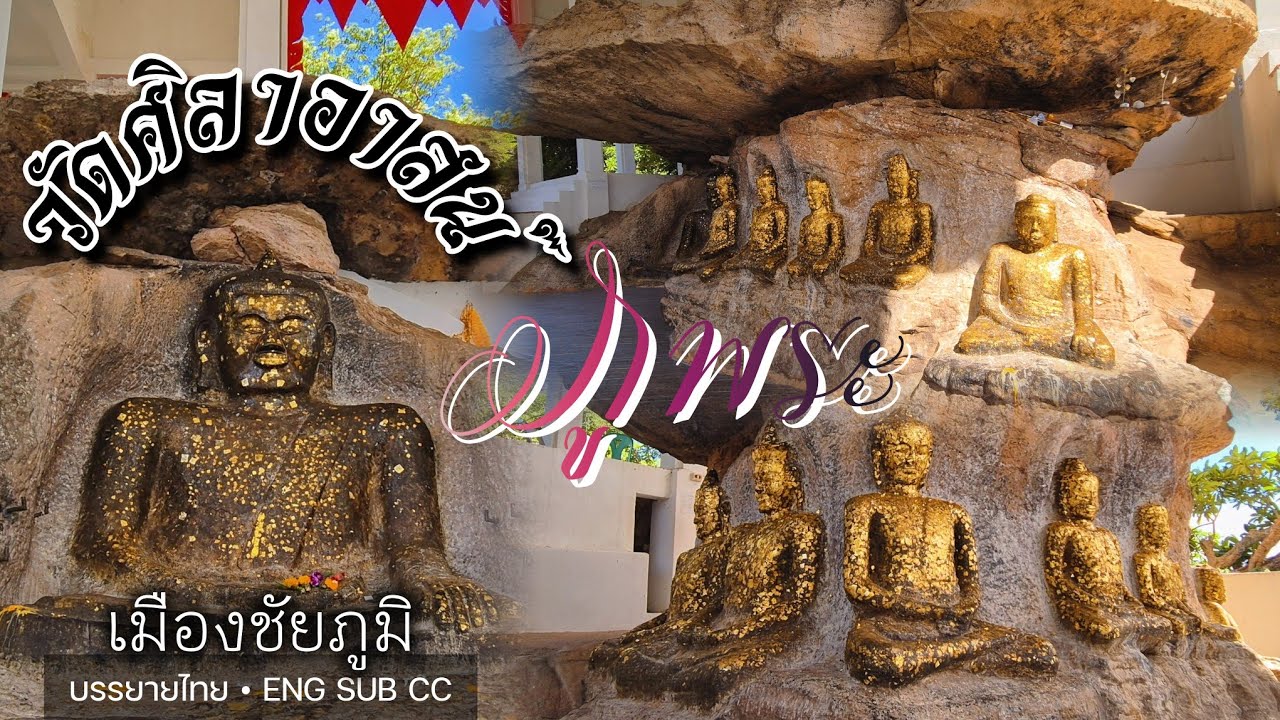
 Click to Access the Navigation Map GPS
Wat Sila At Phu Phra Map
Recommend

 Art, Culture and Heritage
 Historical Sites and Monuments(1)
 Landmarks and Memorials(3)
 Royal Palace(1)
 Art, Craft Centres, Tradition(3)
 Educational Places
 Educational Gardens, Farm(1)
Temple(141)
Educational Gardens, Farm(1)
Temple(141)
 Other Sacred Sites(7)
 Suburban Living
 Village, Community(4)
 Nature and Wildlife
 National Parks and Marine Reserves(7)
 Mountain (Doi)(5)
 Dam, Reservoir, Lake(10)
 Waterfalls(15)
 Caves(5)
 River, Canal(4)
 Other natural attractions(1)
 Entertainment and Agricultural
 Farms, Parks and Ecotourism(2)


