
lovethailand home >Northeastern Travel Attractions >Chaiyaphum Travel Attractions >Kaset Sombun >Non Thong > Phu Khing
TL;DR: Phu Khing is located at Ban Non Nong Hai, Non Thong Subdistrict, Kaset Sombun District, Chaiyaphum Province, Thailand, open By Prior Permission, hours Contact Local Authorities Or A Local Guide Before Traveling.
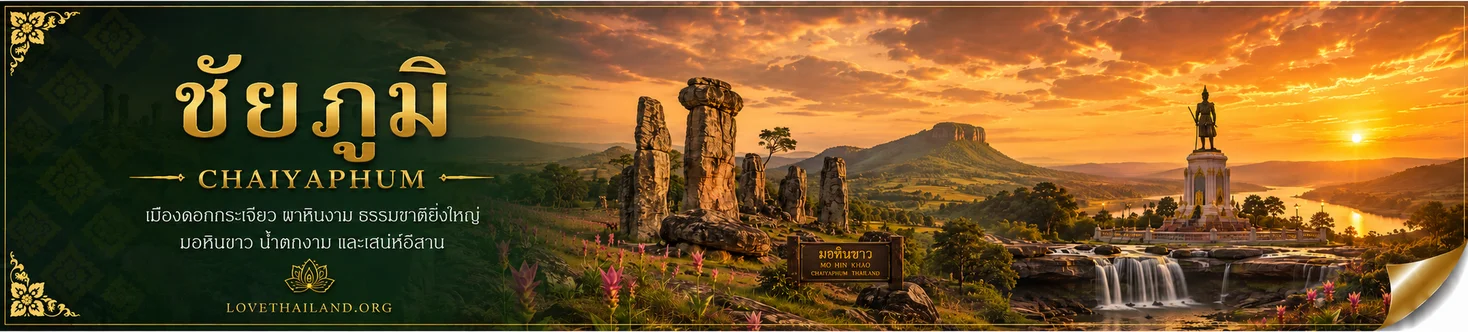
Phu Khing
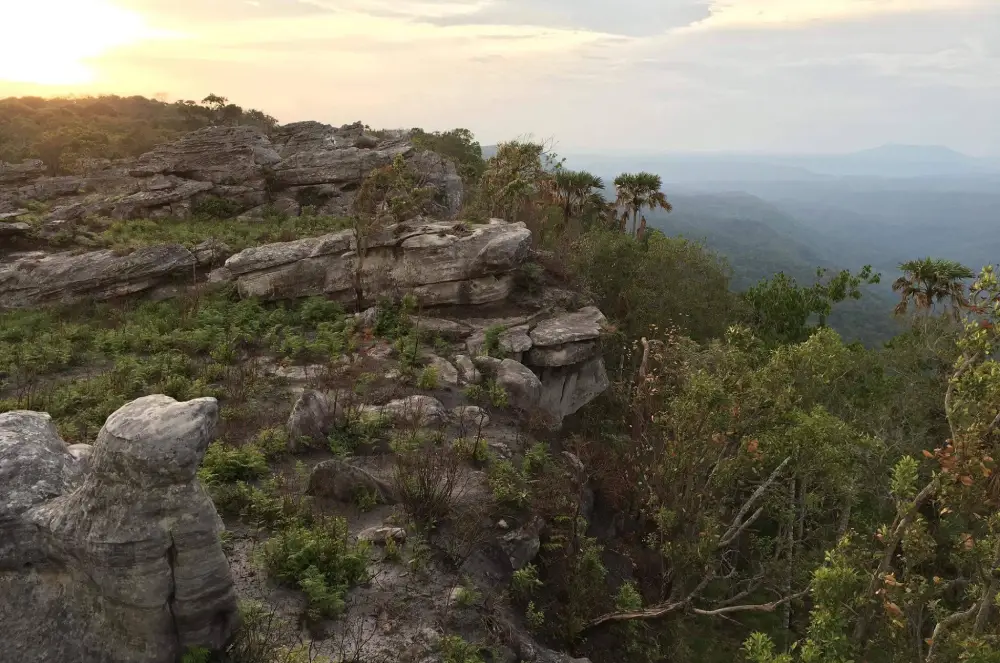
Open Days: By Prior Permission
Opening Hours: Contact Local Authorities Or A Local Guide Before Traveling
Phu Khing in Chaiyaphum Province is one of the most remarkable highland nature destinations in Kaset Sombun District. Located near Ban Non Nong Hai, Non Thong Subdistrict, within Phu Khieo Wildlife Sanctuary, the mountain rises to about 1,167 meters above sea level and is among the notable high peaks of northeastern Thailand. Phu Khing is known for its cool climate, highland grassland, steep cliffs, wild orchids, seasonal wildflowers, unusual rock formations, forest streams, and sweeping views of Phu Kradueng, Phu Laen Kha, Huai Kum Dam, and the Lam Nam Phrom basin. It is a destination for serious nature travelers, trekkers, plant enthusiasts, photographers, and visitors who want to experience the wilder side of Chaiyaphum.
Phu Khing is not a casual viewpoint that visitors can simply drive up to. It lies within a wildlife sanctuary, so access requires preparation, permission, and local guidance. The trailhead is at Ban Non Nong Hai in Non Thong Subdistrict, a foothill community closely connected with the mountain. Travelers planning to visit should contact local authorities, sanctuary staff, or a local guide before entering the area. This is essential because Phu Khing is not only a tourist route, but also a protected forest, a watershed area, a wildlife habitat, and a fragile highland ecosystem.
The landscape of Phu Khing is defined by elevation, steep slopes, and changing forest conditions. The lower area is connected with the agricultural communities of Non Thong Subdistrict. As the trail climbs higher, the environment gradually shifts from mixed deciduous forest and dry evergreen forest to more humid highland vegetation. Along the route, visitors may find ferns, mosses, wild orchids, small seasonal flowers, and insectivorous plants growing in specific microhabitats. This makes Phu Khing especially rewarding for travelers who enjoy detailed observation rather than quick sightseeing.
The summit area is characterized by open grassland on a high ridge, surrounded by forest edges and steep cliffs. The northern side forms a dramatic viewpoint overlooking layers of mountains and valleys. On a clear day, visitors can see Phu Kradueng, Phu Laen Kha, Huai Kum Dam, and the Lam Nam Phrom landscape. In the early morning, mist often moves through the valleys and forest ridges, creating a peaceful highland atmosphere. The summit feels cool, open, and distinctly different from the warmer lowland communities below.
The beauty of Phu Khing comes from its raw natural condition. The trail is steep and physically demanding in places, with dirt paths, rocky sections, ridge walking, and slippery ground during wet weather. Visitors should be physically prepared and should bring proper trekking shoes, drinking water, light food, warm clothing, rain protection, a flashlight, personal medicine, and basic outdoor gear. This route is suitable for travelers who truly intend to study nature and respect conservation rules, not for visitors expecting a fully serviced tourist attraction.
One of the important natural attractions on Phu Khing is Lae Hin Ngoep, located about 2 kilometers west of the summit. It is a large rock formation where massive stones overlap in a way that resembles a natural rock shelter. The formation was shaped by long-term weathering, erosion, and natural geological processes. Around this area, visitors may find moisture-loving plants and pitcher plants, which reflect the special ecological conditions of the highland rock field. Lae Hin Ngoep is a popular rest and photography point for trekkers.
Visitors should move carefully around Lae Hin Ngoep, especially during rainy or misty conditions when rock surfaces may become slippery. Climbing onto unstable rocks or stepping on small plants should be avoided. Many highland plants grow slowly and are easily damaged. Responsible travelers should observe, photograph, and appreciate the site without disturbing the rock field or its plant communities.
About 3 kilometers farther west from Lae Hin Ngoep is Lae Hin Chong, one of the most striking rock features of Phu Khing. It consists of a huge rock mass that appears to rest on a very small supporting stone. This unusual balance makes Lae Hin Chong one of the symbolic natural landmarks of the mountain. It is a strong example of how erosion and time can create landscapes that look almost impossible, yet are entirely natural.
Lae Hin Chong should be viewed from a safe distance. Visitors should not touch, push, climb, or stand on the rock formation. Although it may appear stable, the surrounding highland terrain is sensitive and potentially dangerous. The best way to experience this site is to observe its shape, geological setting, and surrounding landscape while keeping the area undisturbed. It is also a useful point for explaining erosion, weathering, and long-term landform development.
Another important site is Huai Yai Waterfall, located about 2 kilometers from the summit. This natural stream flows across rock formations and forms a waterfall system about 500 meters long. The area is shaded and connected with the highland water system of the mountain. Water flowing through the upper forest feeds plants, wildlife, and lower stream systems. Visitors should follow local guide instructions when walking to the waterfall because trail conditions can change with rainfall and season.
Huai Yai Waterfall is not a heavily developed recreation waterfall. It is a forest waterfall within a nature-study route. Visitors should avoid leaving trash, using soap or shampoo in the water, damaging streamside vegetation, or making loud noise. The streams and waterfalls of Phu Khing are part of the mountain ecosystem and the wider watershed, so keeping them clean is a responsibility shared by everyone who enters the area.
Phu Khing is also known as a home of wild orchids and seasonal wildflowers. From the rainy season to the early cool season, moisture brings the highland vegetation back to life. Small flowers appear along rock fields, tree bases, and open grassland. Wild orchids may grow on trees or rocky surfaces, while pitcher plants are found in suitable wet and nutrient-poor areas. Visitors should admire these plants without picking, touching, or removing them from the mountain. Many highland plants are delicate and recover slowly after disturbance.
Wildlife is another important part of Phu Khing’s value. Because the mountain lies within Phu Khieo Wildlife Sanctuary, the surrounding forest supports many species of birds, small mammals, reptiles, insects, and larger wildlife deeper inside the sanctuary. Travelers may see animal tracks, hear bird calls, or encounter signs of wildlife along the trail. Wildlife should always be observed quietly and from a distance. Feeding, chasing, calling, or approaching animals is inappropriate and unsafe.
A local guide is strongly recommended for every visit to Phu Khing. The guide does more than show the way. A knowledgeable guide helps assess weather, water points, resting spots, safe routes, timing, and conservation rules. Using local guiding services also supports Ban Non Nong Hai and Non Thong communities. Travelers can ask for information about guides, homestays, and travel arrangements through Kaset Sombun District Office, Non Thong Municipality, or local conservation and community tourism groups.
The best time to visit Phu Khing is from the late rainy season to the cool season. During this period, the forest is green, the weather is cool, and there is a good chance of seeing mist and wildflowers. The full rainy season offers lush scenery but also brings slippery trails, leeches, and sudden rainfall. The cool season is more comfortable for trekking, sunrise views, and overnight nature study. In the dry season, the grassland and deciduous forest show a different seasonal character, but visitors must be especially careful about fire risk and follow all official instructions.
Travelers planning to stay overnight should request permission in advance and prepare proper trekking and camping equipment. Phu Khing is not a commercial camping ground. Responsible trekking principles are essential: limit waste, carry all trash out, avoid making unnecessary fires, do not cut wood, do not disturb wildlife, and camp only where permitted by officials or local guides. Travelers who prefer more comfort can stay in community homestays or small resorts around Kaset Sombun District and arrange a guided trek separately.
Getting There starts from Kaset Sombun District. Follow the Kaset Sombun – Non Thong route for about 20 kilometers to Ban Non Nong Hai in Non Thong Subdistrict, where the mountain access route begins. Travelers coming from Chaiyaphum city can travel via Phu Khiao and Kaset Sombun before continuing to Non Thong. Travelers coming from Khon Kaen or Chum Phae can also pass through Phu Khiao toward Kaset Sombun. The final section uses local roads, so it is advisable to check road conditions and contact local people before the trip.
Phu Khing can be combined with Ban Bung Sib Si, a riverside community in Non Thong Subdistrict known for rafting, rowing activities, views of Phu Khing, and local red pomelo associated with the mountain. Travelers with 1 or 2 days can include Ban Bung Sib Si as a cultural and agricultural stop before or after trekking. This creates a richer travel experience combining mountains, river life, local fruit, and community hospitality.
The Phu Khing route also connects with other attractions in northern Chaiyaphum, such as Phu Kum Khao, Phra That Kut Chok, Huai Kum Dam, Chulabhorn Dam, Phu Khieo Wildlife Sanctuary and Thung Kamang, and Nam Phut Thap Lao. With careful planning, Phu Khing can become the core of a nature and community route that links high mountains, forest, local agriculture, rivers, and protected landscapes.
Important rules for visiting Phu Khing include staying on the trail, avoiding loud noise, not collecting plants, not catching animals, not leaving trash, not flying drones without permission, not making fires without authorization, and not entering without a guide. Highland ecosystems are fragile. Even small disturbances can affect soil, plants, rock fields, and wildlife. The best way to visit is to enter quietly, learn respectfully, and leave the forest exactly as it was found.
In summary, Phu Khing is one of the most valuable nature-study routes in Kaset Sombun District and Chaiyaphum Province. It combines high elevation, cool climate, grassland, cliffs, unusual rock formations, a forest waterfall, wild orchids, seasonal flowers, and community connections in one route. Travelers who reach Phu Khing experience more than a viewpoint. They encounter a living highland ecosystem within Phu Khieo Wildlife Sanctuary and gain a deeper understanding of how forest, water, wildlife, and local communities are connected.
| Name | Phu Khing |
| Location | Ban Non Nong Hai, Non Thong Subdistrict, Kaset Sombun District, Chaiyaphum Province, Thailand |
| Address | Ban Non Nong Hai, Non Thong Subdistrict, Kaset Sombun District, Chaiyaphum 36120, Thailand |
| Highlights | 1,167-meter high mountain, cool climate, highland grassland, cliff viewpoints, Lae Hin Ngoep, Lae Hin Chong, Huai Yai Waterfall, wild orchids, wildflowers, and views of Phu Kradueng, Phu Laen Kha, Huai Kum Dam, and Lam Nam Phrom |
| History | A major high peak in the Phu Khieo mountain range within Phu Khieo Wildlife Sanctuary, used for nature study, trekking, plant observation, and community-based guiding from Ban Non Nong Hai and Non Thong Subdistrict. |
| Name Origin | Phu Khing is the local name of this high peak on the Phu Khieo mountain range, associated with the steep highland landscape and nearby foothill communities. |
| Distinctive Features | High mountain within a wildlife sanctuary, with grassland, rock fields, cliffs, streams, waterfall, pitcher plants, wild orchids, and seasonal wildflowers. |
| Travel Information | From Kaset Sombun District, take the Kaset Sombun – Non Thong route for about 20 km. The access point is at Ban Non Nong Hai. Travelers should contact a local guide or local authority before traveling. |
| Current Status | A nature-study and trekking route within Phu Khieo Wildlife Sanctuary. Permission and local guidance are recommended before entering. |
| Open Days | By Prior Permission |
| Opening Hours | Contact local authorities or a local guide before traveling. |
| Fees | Phu Khieo Wildlife Sanctuary fee: Thai adults 20 baht, Thai children/students 10 baht, foreigners 200 baht, car 30 baht, bicycle 10 baht, motorcycle 20 baht, 6-wheel vehicle 100 baht. |
| Facilities | Local guides, community homestay coordination, Ban Non Nong Hai trailhead, and local authority support for travel arrangements. |
| Main Areas / Zones | Ban Non Nong Hai trailhead, trekking route, Phu Khing summit, cliff viewpoint, Lae Hin Ngoep, Lae Hin Chong, Huai Yai Waterfall, highland grassland, wild orchid and wildflower areas. |
| Caretaker | Phu Khieo Wildlife Sanctuary, Department of National Parks, Wildlife and Plant Conservation / Non Thong Municipality / Ban Non Nong Hai Community for local guiding coordination. |
| Contact | Kaset Sombun District Office Tel. 0-4486-9115 / Non Thong Municipality Tel. 0-4410-9715 / Phu Khing Conservation Group Tel. 08-1222-0513 |
| Nearby Tourist Attractions | 1. Ban Bung Sib Si Rafting And Lam Nam Phrom Community Route, about 12 km 2. Ban Bung Sib Si Agricultural Tourism Area, about 12 km 3. Phu Kum Khao, Kut Lo Subdistrict, about 28 km 4. Phra That Kut Chok, Ban Yang Noi, about 32 km 5. Huai Kum Dam, about 40 km 6. Phu Khieo Wildlife Sanctuary – Thung Kamang, about 55 km 7. Chulabhorn Dam, Khon San District, about 65 km |
| Nearby Restaurants | 1. Ban Bung Sib Si Community Food Service, about 12 km, Tel. 099-783-2597 2. Mueang Mai Made-To-Order Food @ Kaset Sombun, about 20 km 3. No Nu Cafe Kaset Sombun, about 22 km, Tel. 086-543-2422, 095-665-1723 4. Na Hao Cafe, about 24 km 5. Ban Hao Coffee, Ban Yang, about 32 km, Tel. 063-512-6032 |
| Nearby Accommodations | 1. Ban Non Nong Hai Community Homestay, about 0 km, contact Kaset Sombun District Office Tel. 0-4486-9115 or Non Thong Municipality Tel. 0-4410-9715 2. Ban Pao Garden Home Resort, about 18 km, Tel. 082-882-6535 3. Zeya & C Resort, about 22 km, Tel. 061-462-4904 4. Nam Fon Resort, Kut Lo Subdistrict, about 28 km, Tel. 085-752-6636 5. Ban Khao Rao Suk Resort, about 35 km, Tel. 089-779-1867 |
Frequently Asked Questions (FAQ)
Q: Where is Phu Khing located?
A: Phu Khing is located at Ban Non Nong Hai, Non Thong Subdistrict, Kaset Sombun District, Chaiyaphum Province, within Phu Khieo Wildlife Sanctuary.
Q: How high is Phu Khing?
A: Phu Khing rises to about 1,167 meters above sea level and is one of the notable high peaks of northeastern Thailand.
Q: What are the main highlights of Phu Khing?
A: The highlights include cool weather, highland grassland, cliff viewpoints, Lae Hin Ngoep, Lae Hin Chong, Huai Yai Waterfall, wild orchids, seasonal wildflowers, and views of Phu Kradueng, Phu Laen Kha, Huai Kum Dam, and Lam Nam Phrom.
Q: Is a local guide required?
A: A local guide is strongly recommended because Phu Khing is inside a wildlife sanctuary, the trail is steep, and access should be arranged with permission and local coordination.
Q: What type of travelers is Phu Khing suitable for?
A: It is suitable for trekkers, nature photographers, plant enthusiasts, mist-viewing travelers, and visitors who want to study a protected forest ecosystem seriously.
Q: When is the best time to visit Phu Khing?
A: The late rainy season to the cool season is the best time because the forest is green, the weather is cool, mist is common, and wildflowers and orchids can be seen along the route.
Q: Is there an entrance fee?
A: Phu Khing is within Phu Khieo Wildlife Sanctuary. The sanctuary fee is 20 baht for Thai adults, 10 baht for Thai children or students, 200 baht for foreigners, plus vehicle fees by type.
Q: Can visitors stay overnight near Phu Khing?
A: Yes. Visitors can stay in community homestays or accommodations in Kaset Sombun District. Overnight access in natural areas should be arranged in advance with officials or local guides.
 Category: ●Nature and Wildlife
 Group: ●Mountain (Doi)
Last Update : 4 MonthAgo
 Last Update : 4 MonthAgo
 Click to Access the Navigation Map GPS
 Art, Culture and Heritage
 Historical Sites and Monuments(1)
 Landmarks and Memorials(3)
 Royal Palace(1)
 Art, Craft Centres, Tradition(3)
 Educational Places
 Educational Gardens, Farm(1)
 Places of Worship
 Temple(141)
 Other Sacred Sites(8)
 Suburban Living
 Village, Community(4)
 National Parks and Marine Reserves(7)
Mountain (Doi)(5)
National Parks and Marine Reserves(7)
Mountain (Doi)(5)
 Dam, Reservoir, Lake(10)
 Waterfalls(15)
 Caves(5)
 River, Canal(4)
 Other natural attractions(1)
 Entertainment and Agricultural
 Farms, Parks and Ecotourism(2)
 Waterpark(2)
 Travel Articles, Recipes
 Travel Review, Food Review(1)


