
lovethailand home >Northeastern Travel Attractions >Chaiyaphum Travel Attractions >Kaset Sombun >Kut Lo > Phu Kum Khao
TL;DR: Phu Kum Khao is located at Ban Non Makha or Ban Non Makhang, Moo 5, Kut Lo Subdistrict, Kaset Sombun District, Chaiyaphum Province, Thailand, open Daily, hours Open.
Phu Kum Khao
Open Days: Daily
Opening Hours: Open
Phu Kum Khao, also known as the 100-Year Phu Kum Khao Arboretum, is a meaningful nature and cultural landmark in Kut Lo Subdistrict, Kaset Sombun District, Chaiyaphum Province. Located at Ban Non Makha or Ban Non Makhang, Moo 5, within a permanent forest area, this small hill is famous for its shape that resembles a large mound of rice. This distinctive form gives the place its name, “Phu Kum Khao.” On the hilltop, visitors will find a wooden relic pillar and Buddha images that local people deeply respect. Phu Kum Khao is therefore not only a viewpoint or forested hill, but also a spiritual center for the people of Kut Lo and Kaset Sombun. Every year on the waning moon of the 8th day of the 5th lunar month, villagers gather for a traditional merit-making event known as “Ao Bun Phu Kum Khao,” a community tradition passed down from the past to the present.
The landscape of Phu Kum Khao is visually memorable. The hill stands out from the surrounding community and forest area, with a rounded form that resembles a pile of harvested rice. From some angles, it also looks like a small volcano because of the hollow-like depression and rocky area near the summit. On top of the hill are sacred objects, including a wooden relic pillar and Buddha images. Local people visit the summit to pay respect, make wishes, and take in the surrounding view. From the top, visitors can see Kut Lo community, farmland, rice fields, and the broader landscape of Kaset Sombun District.
The name “Phu Kum Khao” is closely connected to the agricultural way of life in this part of northeastern Thailand. “Phu” means hill or mountain, while “kum khao” refers to the image of rice gathered into a mound. The hill’s rice-mound shape naturally became its local name. This name is more than a geographical description. It reflects the deep relationship between the community and rice, farming, rainfall, fertility, and seasonal life. Phu Kum Khao is therefore a symbol of landscape, belief, and agriculture all at once.
Phu Kum Khao is part of the 100-Year Royal Forest Department Arboretum, created to conserve mixed deciduous forest and local plant species in Kaset Sombun District. The surrounding area includes dry mixed forest, open woodland, and a small hill ecosystem. Local edible and useful plants found in the area include phak wan, phak sap, makham pom, samo thai, and other native species. For local people, the forest is not just scenery. It is a source of food, herbs, memory, belief, and community knowledge. This makes the arboretum a valuable outdoor learning space where natural conservation and local wisdom meet.
The cultural importance of Phu Kum Khao is especially strong. For generations, it has served as a ritual site and a spiritual gathering place for Kut Lo and nearby communities. Local people believe the hill is a sacred place watched over by protective spirits. Each year, villagers climb the hill to ask forgiveness, pay respect, and make merit together. In the past, people did not need formal reminders because everyone knew the important lunar date and the role of the hill in community life. Families brought offerings, food, flowers, candles, incense, and sincere faith, turning the hill into a living center of unity.
The annual tradition called Ao Bun Phu Kum Khao is more than an ordinary merit-making ceremony. In the Isan language, “ao bun” means to take part in merit or to receive merit together. Villagers gather to make offerings, ask forgiveness from Phu Kum Khao, worship sacred objects, and perform activities connected with rice, elders, and the coming agricultural season. Important elements include Buddhist merit-making, respectful water-pouring for elders, rice spirit blessing, ceremonial dance, and the lighting of talai rockets to symbolically read the signs of rain and seasonal abundance.
The water-pouring ceremony for elders reflects the Isan value of gratitude. Elders are the keepers of memory, ritual knowledge, local stories, and village wisdom. When younger generations come to pour water and ask for blessings, they are renewing the connection between past and present. The rice spirit blessing also shows how the community sees rice as more than food. Rice is treated as something with life, spirit, and value. Blessed rice may be shared as symbolic protection for rice barns and as encouragement for farming families.
The lighting of talai rockets during the tradition represents the connection between sky, rain, rice, and community survival. The way the rockets rise, their direction, and their movement are traditionally interpreted as signs of the coming rainy season. Even though modern life has changed, this practice preserves an older worldview in which people, weather, crops, and sacred forces are closely connected. For visitors, witnessing this tradition offers a rare insight into the agricultural imagination of rural northeastern Thailand.
At the summit of Phu Kum Khao, the wooden relic pillar and Buddha images form the heart of local faith. The wooden relic pillar stands at the highest point of the hill and is treated as a sacred object. Visitors commonly pay respect, make wishes, and spend a quiet moment at the summit. Climbing the hill is not only a physical movement from the village below to the top above; it is also a symbolic movement from ordinary space into sacred space. Travelers should dress modestly, behave respectfully, avoid loud noise, and treat the sacred area with care.
Phu Kum Khao is also valuable for its natural atmosphere. The hill forest provides shade in some areas, especially during the rainy season and early cool season when the trees are greener and the air is clearer. In the dry season, the mixed deciduous forest shows the open and seasonal character of Isan woodland. Nature-minded visitors can observe local plants, rocky ground, hill form, forest conditions, and the relationship between a community and its forest. The place is modest in scale, but its cultural and ecological meaning is deep.
Visitors should allow enough time to experience Phu Kum Khao slowly. The beauty of the site lies in details along the way: local trees, the route up the hill, rocky areas, sacred objects, and views of the surrounding countryside. Comfortable walking shoes, drinking water, and sun protection are useful. If visiting during the annual festival, arriving early is recommended because the area becomes active with villagers, ceremonies, and local gatherings. Those who prefer a quiet atmosphere may visit on ordinary weekdays outside the festival period.
Phu Kum Khao is best suited for travelers interested in local culture rather than mass tourism. It does not have large exhibition buildings, commercial activities, or extensive facilities. Instead, it offers authenticity: a sacred hill, a living tradition, community memory, local forest, and a viewpoint connected with rural life. Visitors should understand the place as a cultural learning site and community sacred space, not merely as a hill for taking photographs.
For travelers interested in local history, Phu Kum Khao helps explain the identity of Kut Lo Subdistrict. The community motto refers to rice, the Nam Phrom River, silk, culture, and the Bun Songkran Phu Kum Khao tradition. These elements show that Phu Kum Khao is part of the local identity. The annual ritual functions like a yearly anchor that brings villagers, families, elders, and people who have moved away back into a shared space of memory and merit.
A visit to Phu Kum Khao can be combined with other cultural and natural sites in Kaset Sombun District. Phra That Kut Chok at Ban Yang Noi is another important spiritual site in the district and is associated with local faith and ancient heritage. Ban Bung Sib Si offers an agricultural and riverside experience connected with the Nam Phrom River. Travelers with more time can continue toward Khon San District, Chulabhorn Dam, Nam Phut Thap Lao, or other nature destinations in northern Chaiyaphum. This makes Phu Kum Khao a good starting point for a deeper cultural route in upper Chaiyaphum.
During the Ao Bun Phu Kum Khao tradition, the atmosphere is very different from an ordinary day. Villagers from Kut Lo and nearby communities gather for merit-making, elder-honoring activities, ritual dance, agricultural blessings, and community ceremonies. It is a valuable time for travelers who want to understand local culture, but visitors should be discreet when taking photos. Close-up photos of people should be taken with permission, and all photography should avoid disturbing the rituals.
Food around Phu Kum Khao can be found in Kaset Sombun District and nearby communities. Local restaurants, Isan food shops, cafés, and simple made-to-order restaurants are available within driving distance. During the annual festival, community food and local atmosphere may be more visible. On ordinary days, travelers should prepare drinking water and plan meal stops before or after visiting the hill.
Accommodation near Phu Kum Khao includes small resorts in Kaset Sombun, local guesthouses, and hotels in nearby districts. Travelers who want to stay close should look for accommodation in Kaset Sombun or Phu Khiao. Those who prefer more facilities can stay in Chum Phae or Chaiyaphum city and visit as a day trip. Advance booking is recommended during public holidays and festival periods because small local accommodations may be limited.
Getting There is most convenient by private car. Travel to Kaset Sombun District in Chaiyaphum Province, then continue to Kut Lo Subdistrict and Ban Non Makhang. Phu Kum Khao is located within the 100-Year Phu Kum Khao Arboretum area. From Chaiyaphum city, travelers can head toward Phu Khiao and Kaset Sombun before continuing to Kut Lo. From Khon Kaen or Chum Phae, travel via Phu Khiao and continue to Kaset Sombun. The final section uses local roads, so visitors should drive carefully and ask local residents for directions when approaching Ban Non Makhang.
Travelers without a private vehicle can take public transport toward Phu Khiao or Kaset Sombun, then continue by local transport to Kut Lo. Because local transport may be limited, arranging transport in advance is recommended. Contacting local accommodation or Kut Lo Subdistrict Administration Organization before traveling can make the journey easier, especially during festival days or when traveling in a group.
Visitors should prepare comfortable walking shoes, modest clothing for worship, drinking water, a hat, personal medicine, and a bag for carrying trash back down. Littering, scratching rocks, damaging plants, loud behavior, and climbing risky areas should be avoided. Phu Kum Khao is a natural site, a sacred place, and a community space at the same time. Respectful travel is therefore the most important rule.
In summary, Phu Kum Khao is a small but meaningful hill that combines nature, culture, faith, and local history. Its rice-mound shape symbolizes the agricultural identity of Kut Lo. Its wooden relic pillar and Buddha images make it a sacred place. Its annual Ao Bun Phu Kum Khao tradition preserves community unity, rice culture, elder respect, and local belief. Travelers who visit with respect will find more than a viewpoint; they will encounter a living cultural landscape that reveals the heart of rural Chaiyaphum.
| Name | Phu Kum Khao / 100-Year Phu Kum Khao Arboretum |
| Location | Ban Non Makha or Ban Non Makhang, Moo 5, Kut Lo Subdistrict, Kaset Sombun District, Chaiyaphum Province, Thailand |
| Address | 222 Moo 5, Ban Non Makhang, Kut Lo Subdistrict, Kaset Sombun District, Chaiyaphum 36120, Thailand |
| Highlights | Rice-mound-shaped hill, small volcano-like landscape, wooden relic pillar, Buddha images on the summit, local viewpoint, and the Ao Bun Phu Kum Khao tradition |
| History | Phu Kum Khao has long been a sacred community site. In 1996, the Royal Forest Department allowed the establishment of the 100-Year Royal Forest Department Arboretum at Phu Kum Khao to conserve mixed deciduous forest and support education and sustainable tourism. |
| Name Origin | The name comes from the hill’s shape, which resembles a large mound of rice, reflecting the community’s agricultural identity and rice-based way of life. |
| Distinctive Features | A small forested hill with rocky summit, a hollow-like depression similar to a small volcanic crater, wooden relic pillar, Buddha images, and native plants such as phak wan, phak sap, makham pom, and samo thai. |
| Travel Information | Travel by private car to Kaset Sombun District, then continue to Kut Lo Subdistrict and Ban Non Makhang. The site is about 7 km from Kaset Sombun town via local roads. |
| Current Status | Open as a local nature and cultural attraction and used as the annual venue for the Ao Bun Phu Kum Khao community tradition. |
| Open Days | Daily |
| Opening Hours | Open |
| Facilities | Sacred summit area, ritual ground, walking route up the hill, arboretum area, viewpoint, and community festival area. |
| Main Areas / Zones | Hill walking route, summit area, wooden relic pillar zone, Buddha image zone, rocky summit and depression zone, arboretum zone, and Ao Bun Phu Kum Khao festival area. |
| Caretaker | Phu Kum Khao Arboretum / Protected Area Regional Office 7 Nakhon Ratchasima / Kut Lo Subdistrict Administration Organization for local tradition coordination |
| Local Contact | Kut Lo Subdistrict Administration Organization, Tel. 044-051, Mayor Hotline 09-0660-9119 |
| Important Tradition | Ao Bun Phu Kum Khao, held every year on the waning moon of the 8th day of the 5th lunar month, with merit-making, apology ritual to the hill, elder-honoring ceremony, rice spirit blessing, talai rocket lighting, and ceremonial dance. |
| Nearby Tourist Attractions | 1. 100-Year Phu Kum Khao Arboretum, about 0 km 2. Phra That Kut Chok, Ban Yang Noi, about 18 km 3. Ban Bung Sib Si Agricultural Tourism Area, about 20 km 4. Pha Hua Nak Viewpoint, Phu Laen Kha National Park, about 45 km 5. Nam Phut Thap Lao, Khon San District, about 60 km 6. Chulabhorn Dam, Khon San District, about 70 km |
| Nearby Restaurants | 1. No Nu Cafe Kaset Sombun, about 8 km, Tel. 086-543-2422 2. Na Hao Cafe, about 12 km, Tel. 096-418-7365 3. Tiwpha Cafe @ Sao Ban Tao, about 20 km 4. Saep Sumalee, about 18 km 5. Ban Hao Coffee, about 15 km 6. Mueang Mai Made-To-Order Food @ Kaset Sombun, about 10 km |
| Nearby Accommodations | 1. Zeya & C Resort, about 15 km, Tel. 061-462-4904 2. Ban Khao Rao Suk Resort, about 25 km, Tel. 089-779-1867 3. Bander Hotel, Phu Khiao District, about 35 km 4. Phu Suay Park View Hotel, about 40 km 5. Major Grand Hotel, Chum Phae District, about 55 km 6. The Cheewin Hotel And Convention, Chum Phae District, about 55 km |
Frequently Asked Questions (FAQ)
Q: Where is Phu Kum Khao located?
A: Phu Kum Khao is located at Ban Non Makha or Ban Non Makhang, Moo 5, Kut Lo Subdistrict, Kaset Sombun District, Chaiyaphum Province, within the 100-Year Phu Kum Khao Arboretum area.
Q: Why is Phu Kum Khao important?
A: It is a natural viewpoint, a sacred hill with a wooden relic pillar and Buddha images, and a spiritual center for Kut Lo community through the annual Ao Bun Phu Kum Khao tradition.
Q: When is the Ao Bun Phu Kum Khao tradition held?
A: It is held every year on the waning moon of the 8th day of the 5th lunar month, with merit-making, rice spirit blessing, elder-honoring activities, talai rocket lighting, and ceremonial dance.
Q: What can visitors see on the summit?
A: Visitors can see the wooden relic pillar, Buddha images, rocky summit, a hollow-like depression resembling a small volcanic crater, and views over Kaset Sombun District.
Q: What type of travelers is Phu Kum Khao suitable for?
A: It is suitable for travelers interested in Isan culture, local traditions, sacred sites, mixed deciduous forest, viewpoints, and community-based travel.
Q: How should visitors dress when visiting Phu Kum Khao?
A: Visitors should dress modestly, wear comfortable walking shoes, bring drinking water, and show respect to the wooden relic pillar, Buddha images, and ritual areas.
Q: Is there an entrance fee?
A: Phu Kum Khao is a community attraction and arboretum area. No official entrance fee information is listed by official sources.
Q: What nearby places can be combined with Phu Kum Khao?
A: Travelers can combine the trip with Phra That Kut Chok, Ban Bung Sib Si Agricultural Tourism Area, Pha Hua Nak Viewpoint, Nam Phut Thap Lao, and Chulabhorn Dam.
 Category: ●Nature and Wildlife
 Group: ●Mountain (Doi)
Last Update : 3 MonthAgo
 Last Update : 3 MonthAgo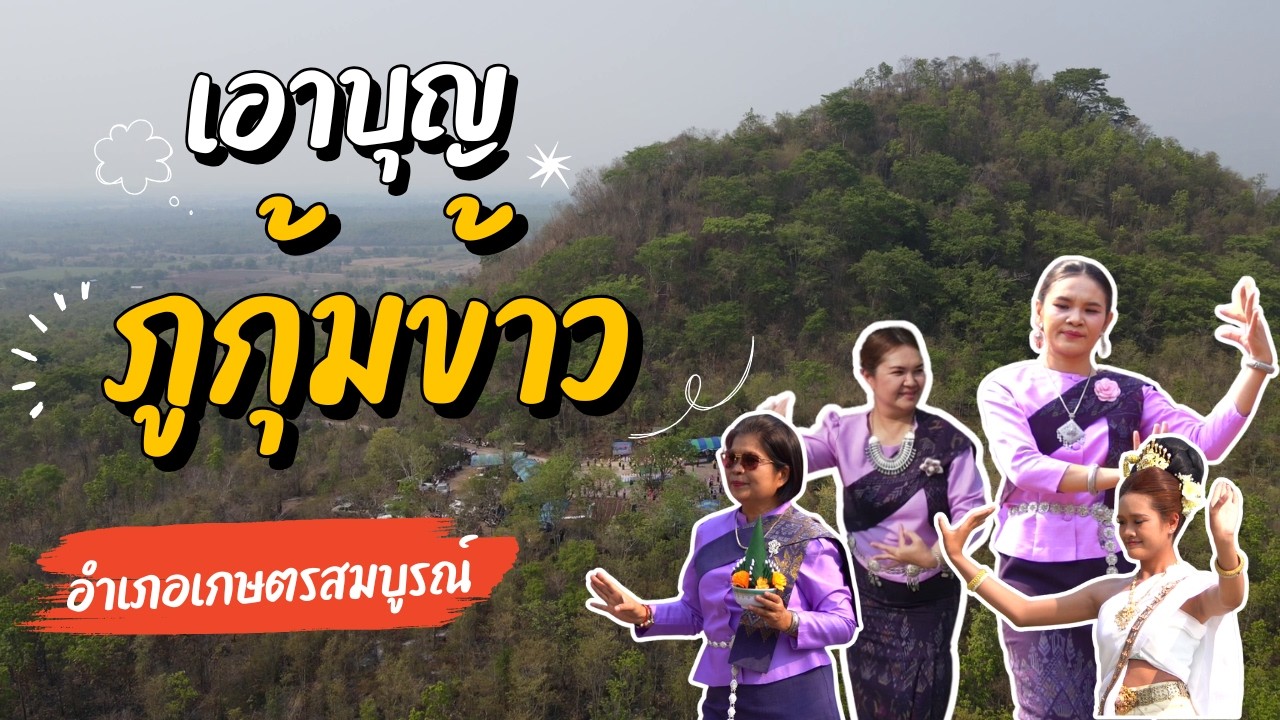
 Click to Access the Navigation Map GPS
Phu Kum Khao Map
Recommend

 Art, Culture and Heritage
 Historical Sites and Monuments(1)
 Landmarks and Memorials(3)
 Royal Palace(1)
 Art, Craft Centres, Tradition(3)
 Educational Places
 Educational Gardens, Farm(1)
 Places of Worship
 Temple(141)
 Other Sacred Sites(7)
 Suburban Living
 Village, Community(4)
 National Parks and Marine Reserves(7)
Mountain (Doi)(5)
National Parks and Marine Reserves(7)
Mountain (Doi)(5)
 Dam, Reservoir, Lake(10)
 Waterfalls(15)
 Caves(5)
 River, Canal(4)
 Other natural attractions(1)
 Entertainment and Agricultural
 Farms, Parks and Ecotourism(2)


