
lovethailand home >Northeastern Travel Attractions >Chaiyaphum Travel Attractions >Ban Klwao >Non Daeng > Ban Khwao Silk Village
TL;DR: Ban Khwao Silk Village, Chaiyaphum attractions : Suburban Living, Village, Community.

Ban Khwao Silk Village
Open Days: Silk shops in the community open according to each shop’s schedule; Ban Khwao Silk Promotion Center opens Monday–Friday
Opening Hours: Ban Khwao Silk Promotion Center 08.30 – 16.30; advance contact is recommended for weaving demonstrations
Ban Khwao Silk Village in Chaiyaphum Province is one of the most important silk-producing communities in northeastern Thailand. The silk community covers Ban Khwao, Non Daeng, Talat Raeng, and Lum Lam Chi subdistricts in Ban Khwao District. It is known for mulberry cultivation, silkworm raising, silk reeling, dyeing, mudmee tying, weaving, painting, ironing, and selling fine silk products. Visitors can explore local silk shops, learn about the production process, and choose from mudmee silk, plain silk, scarves, shawls, ready-to-wear clothing, bags, souvenirs, and other silk-based products made by skilled local artisans.
Ban Khwao silk is not only a local product; it is a living cultural heritage. The tradition began as household weaving for daily use, family ceremonies, weddings, ordinations, merit-making events, and local festivals. Over time, it developed into one of Chaiyaphum’s most respected handicrafts. The beauty of Ban Khwao silk lies not only in the finished textile, but also in the families, artisans, weaving knowledge, and community life behind each piece of cloth.
The weaving tradition of Ban Khwao has a history of almost 200 years. Local stories connect the craft with early settlement in the Chaiyaphum region and the transmission of weaving knowledge from older generations. This knowledge was not preserved mainly in written manuals. It was passed from mother to daughter, from grandmother to grandchild, and from skilled weavers to younger members of the community. The true archive of Ban Khwao silk lives in hands, memory, patterns, and the rhythm of the loom.
Ban Khwao silk became widely known after 1980, when local silk was introduced to important craft and royal project networks. Its fine quality, distinctive patterns, and careful weaving attracted attention from silk collectors, designers, and people who value Thai textiles. In the following years, the reputation of Ban Khwao silk grew through competitions, exhibitions, and the continuing work of local artisans who maintained high standards of production.
A major turning point came in 2002, when Ban Khwao silk was selected as a five-star OTOP product of Chaiyaphum Province. It also won national recognition in the OTOP product competition organized by the Community Development Department under the Ministry of Interior. This success reflected not only the beauty of the silk, but also the strength of the production network: weavers, dyers, pattern makers, shop owners, local authorities, and community groups working together to transform local wisdom into a nationally recognized cultural product.
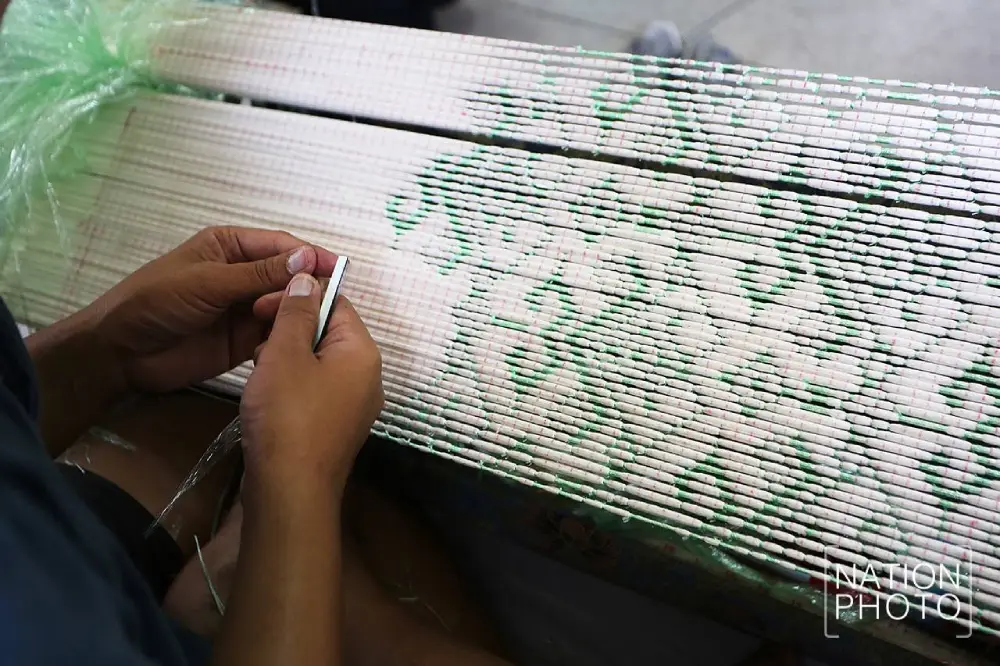
The most distinctive product of Ban Khwao is mudmee silk, a resist-dyed silk weaving technique that requires great precision. The process begins with pattern design, followed by tying selected sections of silk thread before dyeing. After the tied sections are dyed and untied, the threads are carefully arranged on the loom so that the pattern appears correctly during weaving. A small mistake in arranging the threads can distort the entire design, which is why mudmee weaving requires patience, experience, and refined craftsmanship.
The patterns of Ban Khwao silk reflect the environment, beliefs, daily life, and imagination of the community. Some designs are inspired by flowers, plants, animals, geometric forms, local symbols, and traditional motifs. Others are adapted for contemporary fashion and modern lifestyles. This ability to preserve tradition while developing new designs is one of the reasons Ban Khwao silk continues to remain relevant to both Thai and international customers.
The silk production process begins with mulberry cultivation and silkworm raising. Mulberry leaves are the food of silkworms. When the silkworms produce cocoons, the cocoons are boiled and reeled into silk thread. Silk reeling requires careful control of heat, water, and hand movement to create smooth and consistent thread. The silk is then prepared for washing, dyeing, tying, and weaving. Each stage demands skill, patience, and accumulated knowledge.
When visitors enter Ban Khwao or the local silk market area, they may see different parts of the production process. Some groups may be reeling silk, some dyeing thread, some tying mudmee patterns, some weaving at the loom, and others ironing finished silk or preparing products for sale. These scenes are part of everyday life in the community. They help visitors understand that a single piece of silk passes through many hands before it becomes a finished product.
One of the most interesting developments in Ban Khwao today is the participation of younger people. Teenagers and young adults increasingly take part in the silk economy in roles such as painting silk, ironing finished cloth, arranging products, photographing textiles, managing shop displays, and selling through online channels. This younger generation helps connect traditional silk production with modern markets without separating the craft from its roots.
Ban Khwao Silk Promotion Center is an important learning point for visitors. Located in Ban Khwao Municipality, it was established to promote local silk heritage and provide information about weaving, textile production, and local lifestyle. The center opens Monday to Friday from 08.30 to 16.30 and does not charge an entrance fee. Visitors who want to see weaving demonstrations should contact the center in advance so that the community can prepare suitable arrangements.
The center helps make the silk tourism experience more structured. Visitors can start by learning the general history and production process of Ban Khwao silk, then continue to local shops, weaving groups, or community areas. This approach makes buying silk more meaningful because travelers understand the origin of the fabric, the labor involved, and the cultural value of the craft before choosing a product.
The Ban Khwao market area and local silk shops are central to the visitor experience. Many shops sell silk fabric, mudmee silk, scarves, shawls, ready-to-wear garments, bags, and souvenirs. Products range from small affordable items to high-quality silk pieces costing thousands or even tens of thousands of baht, depending on pattern complexity, silk quality, weaving technique, and artisan skill. Visitors can compare textures, colors, and patterns directly with shop owners.
Choosing Ban Khwao silk should be done thoughtfully. Important points include fabric texture, tightness of weave, consistency of silk thread, sharpness of the pattern, balance of color, and intended use. Some pieces are suitable for formal Thai dresses or ceremonial clothing. Others are ideal for scarves, shawls, home decoration, gifts, or textile collections. Visitors should ask sellers about the thread, weaving method, mudmee pattern, and care instructions before buying.
Every handmade silk piece has its own character. Even when two pieces share the same pattern and color, the tension of the thread, the hand of the weaver, the movement of the shuttle, and the arrangement of the dyed yarn can create subtle differences. This is the beauty of handwoven silk. It is not identical like factory-made fabric. Each piece carries the time, handwork, and personality of the artisan.
The tying stage of mudmee is one of the best demonstrations of Ban Khwao artisanship. The artisan must plan the pattern first, then tie selected parts of the silk thread to resist dye. After dyeing, untying, and arranging the threads, the pattern begins to appear on the loom. Weaving a mudmee pattern accurately requires eye control, memory, and careful hand movement. This is why mudmee silk is highly valued among textile lovers.
Dyeing gives Ban Khwao silk much of its character. Some pieces use deep and formal colors suitable for ceremonial wear. Others use bright colors for a stronger visual impact. Some use softer tones for everyday wear. The development of color and pattern gives artisans room for creativity while preserving the core of mudmee weaving. Ban Khwao silk can therefore serve both traditional and contemporary fashion needs.
The weaving process brings all stages together. The loom controls warp and weft threads, and the weaver controls rhythm, tension, and pattern alignment. A skilled weaver can create cloth that is even, smooth, balanced, and visually precise. Watching a weaver at work helps visitors understand the value of silk far more deeply than looking only at finished products in a shop.
Women have played a central role in Ban Khwao silk culture. Mulberry growing, silkworm care, silk reeling, tying, dyeing, and weaving are often connected with knowledge passed through women in families. The craft gives women economic participation, community status, and cultural authority as guardians of local wisdom. Ban Khwao silk is therefore also a story of women’s labor, creativity, and intergenerational knowledge.
The silk economy connects many people in the district. It includes mulberry growers, silkworm raisers, silk reelers, dyers, mudmee makers, weavers, tailors, shop owners, transport workers, and sellers. Buying silk in Ban Khwao supports more than one shop. It helps circulate income through a local craft economy and encourages the continued survival of the entire production network.
Ban Khwao Silk Village is suitable for learning-based travel. Visitors can spend time at the silk promotion center, silk shops, and weaving communities to understand the journey from raw silk to finished cloth. Student groups, cultural travelers, designers, textile collectors, and study groups should contact the center or local community in advance, especially if they want demonstrations or organized visits.
Getting There is convenient from Chaiyaphum city. Travel toward Ban Khwao District, about 13-15 kilometers from the city, then enter Ban Khwao Municipality and the local silk market area. Travelers may search for “Ban Khwao Silk Promotion Center” or use the community coordinates 15.7715196133, 101.908577463 as a reference point. From there, visitors can continue to nearby silk shops, weaving groups, or the promotion center.
A trip to Ban Khwao can be combined with nearby cultural and natural attractions. Ku Daeng at Wat Kut Yang is a Khmer-period archaeological site in Talat Raeng Subdistrict, while Tat Roi Ru Waterfall is a seasonal natural attraction near Ban Tat Phatthana. Visitors can also add local temples such as Wat Maha Khongkha and Wat Pa Rerai. This makes Ban Khwao suitable not only for shopping, but also for a cultural route in Chaiyaphum.
Ku Daeng adds historical depth to a Ban Khwao silk trip. It is an ancient Khmer-period site with laterite remains and architectural traces. Visiting both the silk village and Ku Daeng shows that Ban Khwao District has more than textile heritage. It also preserves archaeological evidence linked to the broader cultural history of the Chi River basin.
Tat Roi Ru Waterfall adds a nature-based element to the route, especially during the rainy season when the waterfall has more water. Since seasonal waterfalls in northeastern Thailand depend on rainfall, visitors should check local conditions before planning. Combining silk, ancient remains, local temples, and seasonal nature gives travelers a richer view of Ban Khwao District.
Restaurants around Ban Khwao include local Thai restaurants, Isan food, cafés, and family dining places. Nearby options include Ban Mulan Cafe, Jungle Cafe Ban Khwao Branch, De Nua Ban Khwao, Ban Rak Na, Suan Ahan Ban Inter, and other local food shops. These restaurants allow visitors to combine silk shopping, cultural learning, and meals in one half-day or full-day route.
Accommodation near Ban Khwao Silk Village includes local resorts in Ban Khwao District and hotels in Chaiyaphum city. Options in the district include Ban Khwao Resort, Ban Suan Bua Resort, Chanikarn Resort, Phumisap Resort, and Co-Op Inn Resort. Visitors who prefer more hotel choices can stay in Chaiyaphum city and visit Ban Khwao as an easy day trip.
Ban Khwao Silk Village is suitable for many types of travelers: textile collectors, cultural tourists, designers, students, craft lovers, people looking for high-quality silk, and visitors who want meaningful local souvenirs. Unlike scenic attractions where the main value is the view, Ban Khwao’s value lies in people, skills, process, and cultural memory.
Overall, Ban Khwao Silk Village clearly represents the identity of Chaiyaphum. It combines inherited wisdom, high-quality craftsmanship, national recognition, community economy, younger-generation participation, and a living silk market. Visitors can see silk reeling, dyeing, tying, weaving, painting, ironing, and selling in one district. A visit here is not simply about buying cloth; it is about experiencing a full cultural system built from silk thread, skill, and community life.
For travelers who want to understand Chaiyaphum through craftsmanship, Ban Khwao Silk Village should not be missed. It offers a rare chance to see silk production in real community life, meet the cultural economy behind each textile, and support local artisans directly. Buying or learning about Ban Khwao silk is a way to help preserve Thai silk heritage while appreciating the creativity and labor that make every handmade piece valuable.
| Name | Ban Khwao Silk Village / Ban Khwao Silk Promotion Center |
| Location | Ban Khwao, Non Daeng, Talat Raeng, and Lum Lam Chi Subdistricts, Ban Khwao District, Chaiyaphum Province |
| Silk Promotion Center Address | Ban Khwao Municipality, Ban Khwao Subdistrict, Ban Khwao District, Chaiyaphum 36170, Thailand |
| Ban Khwao Community Coordinates | 15.7715196133, 101.908577463 |
| Highlights | A nationally recognized silk community known for mulberry cultivation, silkworm raising, silk reeling, dyeing, mudmee tying, weaving, silk painting, ironing, and local silk shops |
| History | The silk-weaving tradition of Ban Khwao has been passed down for almost 200 years and became widely known after 1980 through promotion, competitions, and growing recognition of its craftsmanship |
| Awards / Recognition | In 2002, Ban Khwao silk was selected as a five-star OTOP product of Chaiyaphum Province and won national recognition in the OTOP product competition organized by the Community Development Department |
| Main Products | Mudmee silk, plain silk, scarves, shawls, ready-to-wear silk clothing, bags, souvenirs, and contemporary silk products |
| Processes Visitors May See | Mulberry cultivation, silkworm raising, silk reeling, dyeing, mudmee tying, weaving, silk painting, ironing, product preparation, and local silk sales |
| Name Origin | Named after Ban Khwao District and its silk-producing community, widely known for mudmee silk and a large number of silk shops in the area |
| Main Areas / Zones | Silk promotion center zone, Ban Khwao market silk shop zone, weaving group zone, silk reeling demonstration zone, dyeing zone, mudmee tying zone, weaving zone, silk painting and ironing zone, and product shopping zone |
| Facilities | Silk learning center, local silk shops, product shopping areas, study-visit contact point, nearby restaurants, accommodation in Ban Khwao District, and local administrative offices for visitor information |
| Main Activities | Learning about silk production, watching weaving demonstrations, shopping for mudmee silk, studying mulberry-silk culture, visiting silk shops, and buying local textile souvenirs |
| Caretaker / Main Organizations | Ban Khwao Municipality, Ban Khwao Silk Promotion Center, local silk producer groups, silk shops, and communities in Ban Khwao District |
| Contact Number | Ban Khwao Silk Promotion Center / Ban Khwao Municipality, Tel. 044-891097, Fax 044-891143 |
| Open Days | Ban Khwao Silk Promotion Center opens Monday–Friday; local silk shops open according to each shop’s schedule |
| Opening Hours | Ban Khwao Silk Promotion Center 08.30 – 16.30; advance contact is recommended for weaving demonstrations |
| Entrance Fee | No entrance fee for the Ban Khwao Silk Promotion Center; silk product prices vary depending on product type, pattern, fabric quality, and craftsmanship |
| Travel Information | From Chaiyaphum city, travel toward Ban Khwao District, about 13-15 km, then enter Ban Khwao Municipality and the local silk market area. Use community coordinates 15.7715196133, 101.908577463 for navigation |
| Current Status | A major silk handicraft community of Chaiyaphum with an active silk promotion center, local silk shops, and ongoing silk production groups |
| Additional Local Contacts | Non Daeng SAO, Tel. 063-6299500; Talat Raeng Municipality, Tel. 044-056091; Lum Lam Chi Municipality, Tel. 044-056585 |
| Nearby Tourist Attractions | 1. Ban Khwao Silk Promotion Center, about 0.5 km, Tel. 044-891097 2. Ban Khwao Market And Local Silk Shops, about 0.5 km 3. Old Ban Khwao Community, about 1 km 4. Ku Daeng At Wat Kut Yang, Talat Raeng Subdistrict, about 12 km 5. Tat Roi Ru Waterfall, Ban Tat Phatthana, Talat Raeng Subdistrict, about 15 km 6. Wat Maha Khongkha, Ban Kut Huling, about 16 km 7. Wat Pa Rerai, Talat Raeng Subdistrict, about 18 km 8. Phraya Phakdi Chumphon Monument, Chaiyaphum City, about 16 km |
| Nearby Restaurants | 1. Ban Mulan Cafe, about 1 km, Tel. 090-924-5525 2. Jungle Cafe Ban Khwao Branch, about 2 km, Tel. 097-048-7999 3. De Nua Ban Khwao, about 2 km, Tel. 093-451-7009 4. Ban Rak Na Restaurant, Ban Khwao, about 3 km, Tel. 087-879-7694, 089-424-8003 5. Suan Ahan Ban Inter, Non Daeng Subdistrict, about 6 km, Tel. 092-154-2023 6. Khrua Rim Thang, Non Daeng Subdistrict, about 7 km 7. VIVA COFFEE Ban Khwao, about 2 km |
| Nearby Accommodations | 1. Ban Khwao Resort, about 2 km, Tel. 087-201-4009 2. Co-Op Inn Resort, about 2 km, Tel. 044-839113, 084-833-3700 3. Phumisap Resort, about 2 km, Tel. 081-790-7747, 085-308-8355 4. Chanikarn Resort, about 3 km, Tel. 093-390-2828 5. Ban Suan Bua Resort, Non Daeng Subdistrict, about 6 km, Tel. 085-017-0638 6. Hotels In Chaiyaphum City, about 16-20 km |
Frequently Asked Questions (FAQ)
Q: Where is Ban Khwao Silk Village located?
A: Ban Khwao Silk Village is located in Ban Khwao District, Chaiyaphum Province, covering Ban Khwao, Non Daeng, Talat Raeng, and Lum Lam Chi subdistricts, with the Ban Khwao Silk Promotion Center located in Ban Khwao Municipality.
Q: What is Ban Khwao silk famous for?
A: Ban Khwao silk is famous for fine mudmee silk, careful weaving, distinctive patterns, beautiful colors, and its recognition as a five-star OTOP product of Chaiyaphum Province.
Q: Can visitors see silk production in Ban Khwao?
A: Yes. Visitors may see silk reeling, dyeing, mudmee tying, weaving, silk painting, and ironing in some areas and at certain times. Advance contact with the silk promotion center is recommended for organized demonstrations.
Q: What are the opening hours of Ban Khwao Silk Promotion Center?
A: Ban Khwao Silk Promotion Center opens Monday to Friday from 08.30 to 16.30 and closes on weekends and public holidays.
Q: Is there an entrance fee?
A: There is no entrance fee for the Ban Khwao Silk Promotion Center. Silk product prices vary depending on the product type, pattern, silk quality, and craftsmanship.
Q: What kind of Ban Khwao silk should travelers buy?
A: Travelers can choose according to use: mudmee silk for formal clothing, scarves or shawls for gifts, ready-to-wear garments for practical use, and smaller silk products for souvenirs.
Q: How can travelers get to Ban Khwao Silk Village?
A: From Chaiyaphum city, travel toward Ban Khwao District for about 13-15 km, then enter Ban Khwao Municipality and the local silk market area. Travelers may use coordinates 15.7715196133, 101.908577463 for navigation.
Q: What nearby attractions can be combined with a visit?
A: Nearby places include Ban Khwao Silk Promotion Center, Ban Khwao Market, Ku Daeng at Wat Kut Yang, Tat Roi Ru Waterfall, Wat Maha Khongkha, Wat Pa Rerai, and Phraya Phakdi Chumphon Monument in Chaiyaphum city.
 Category: ●Suburban Living
 Group: ●Village, Community
Last Update : 3 MonthAgo
 Last Update : 3 MonthAgo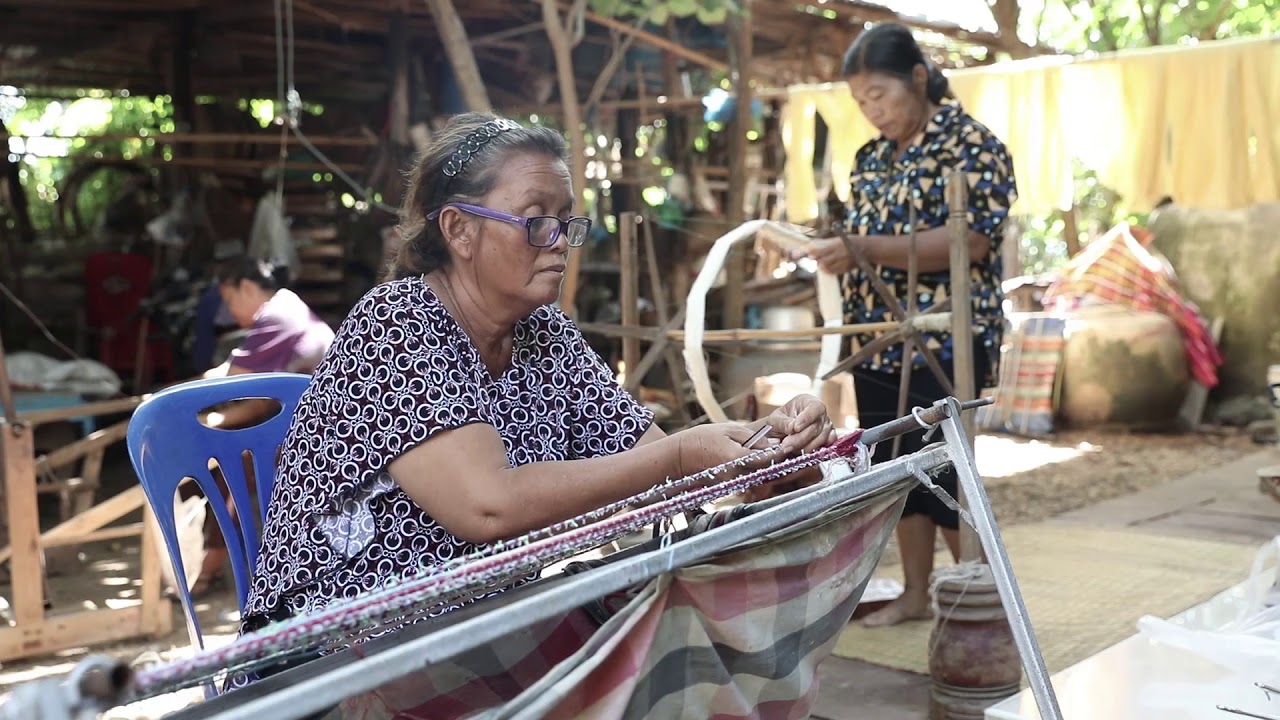
 Click to Access the Navigation Map GPS
Ban Khwao Silk Village Map
Recommend

 Art, Culture and Heritage
 Historical Sites and Monuments(1)
 Landmarks and Memorials(3)
 Royal Palace(1)
 Art, Craft Centres, Tradition(3)
 Educational Places
 Educational Gardens, Farm(1)
 Places of Worship
 Temple(141)
 Other Sacred Sites(7)
Village, Community(4)
Other Sacred Sites(7)
Village, Community(4)
 Nature and Wildlife
 National Parks and Marine Reserves(7)
 Mountain (Doi)(5)
 Dam, Reservoir, Lake(10)
 Waterfalls(15)
 Caves(5)
 River, Canal(4)
 Other natural attractions(1)
 Entertainment and Agricultural
 Farms, Parks and Ecotourism(2)


