
lovethailand home >Northeastern Travel Attractions >Chaiyaphum Travel Attractions >Muang Chaiyaphum >Nai Muang > Tamnak Khiao
TL;DR: Tamnak Khiao is located at Inside the Governor’s Residence compound on Burapha Road, Nai Mueang Subdistrict, Mueang Chaiyaphum District, Chaiyaphum Province, open Monday – Friday, hours 08.30 – 16.30, Closed on Saturdays, Sundays and Public Holidays; Advance.

Tamnak Khiao
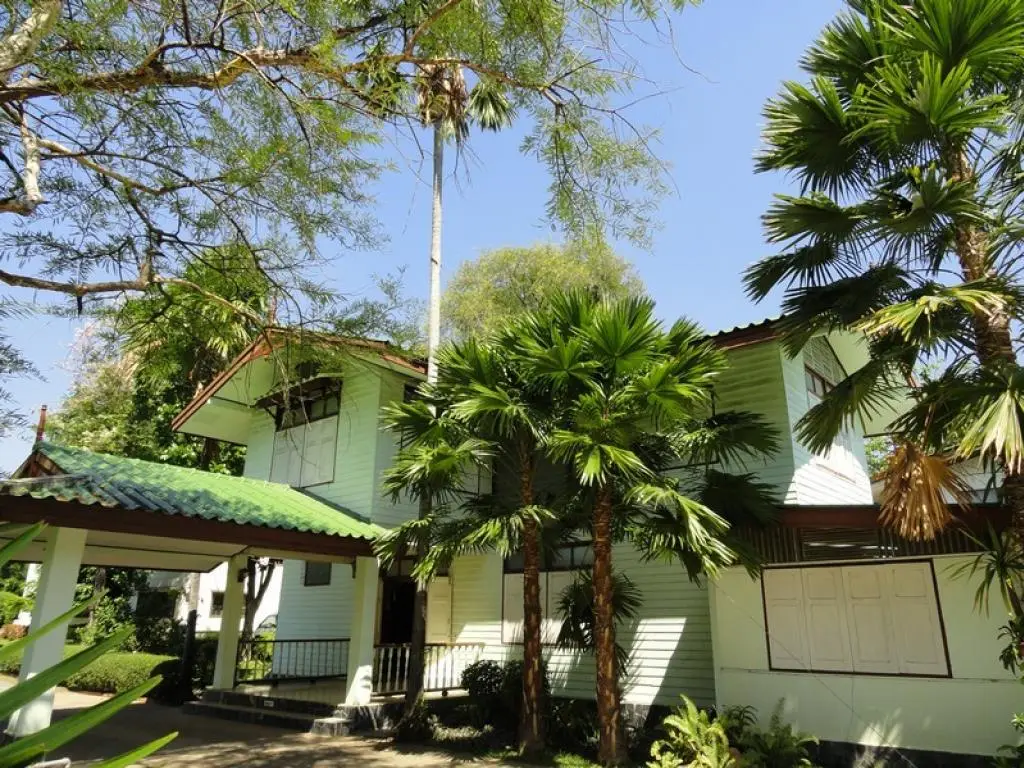
Open Days: Monday – Friday
Opening Hours: 08.30 – 16.30, Closed on Saturdays, Sundays and Public Holidays; Advance Written Notice Recommended
Tamnak Khiao, or the Green Residence of Chaiyaphum, is a historically significant green wooden residence located inside the Governor’s Residence compound on Burapha Road, Nai Mueang Subdistrict, Mueang Chaiyaphum District, Chaiyaphum Province. This elegant and meaningful building is one of the most important cultural learning sites in the city because it connects the history of provincial administration, the royal visit of King Rama IX and Queen Sirikit, the Queen Mother, and the local textile heritage of Chaiyaphum in one place.
For travelers who want to understand Chaiyaphum beyond waterfalls, national parks, rock formations, and city landmarks, Tamnak Khiao is an essential cultural stop. It is not simply an old official residence painted green. It is a historical house that preserves the memory of a royal visit, local administration, provincial identity, and traditional mudmee silk weaving. A visit here allows travelers to see how national history and local culture meet within a modest but deeply meaningful wooden building.
Tamnak Khiao was built in 1950 and originally served as the residence of the Governor of Chaiyaphum Province. Architecturally, it is a wooden residence with a calm and dignified appearance, reflecting the character of provincial government residences in the mid-20th century. From the outside, the building may appear simple, but its historical value is considerable. It stands as a rare surviving space where the administrative history of Chaiyaphum and the memory of a royal visit remain closely connected.
In 1955, the building was prepared and used as a royal residence when King Bhumibol Adulyadej, King Rama IX, and Queen Sirikit, the Queen Mother, visited the people of northeastern Thailand. On Friday, November 4, 1955, Their Majesties arrived in Chaiyaphum as part of a wider royal journey through the northeastern region. Tamnak Khiao, then the Governor’s residence, was arranged as the place where Their Majesties stayed and took a royal meal. This event made the building one of the most cherished historical places in Chaiyaphum.
The significance of Tamnak Khiao lies not only in the fact that it was once used as a royal residence, but also in the way it preserves the atmosphere of that historic moment. Inside the building, visitors can learn through historical photographs, ceremonial rooms, display objects, tea and coffee sets, and interpretive arrangements that recreate the memory of the royal visit. Walking through the residence is therefore like reading a chapter of Chaiyaphum history through rooms, objects, and images.
In 2006, the building was restored and developed as a historical learning center and local museum. This restoration was important because it allowed a valuable old wooden residence to continue serving the public. Instead of remaining only as a former official residence, Tamnak Khiao became a place where students, researchers, travelers, and local people could learn about Chaiyaphum’s history, royal memory, textile culture, and architectural conservation.
The exhibition area is divided into two main levels. The ground floor presents mudmee textiles, one of the most important local crafts of Chaiyaphum. Many pieces are old and historically valuable, showing the skill of local weavers and the beauty of traditional silk patterns. These textiles are not displayed merely as decorative objects. They represent local knowledge, patience, creativity, and the cultural identity of communities in Chaiyaphum.
Mudmee weaving is a sophisticated technique in which silk threads are tied and dyed before being woven into patterned cloth. The process requires careful planning and precise craftsmanship. By displaying mudmee textiles inside Tamnak Khiao, the museum connects the history of a royal residence with the everyday artistry of local people. Visitors can see how a provincial heritage site can hold both official history and community-based cultural knowledge.
The upper floor is the part most closely associated with the royal visit. It contains rooms arranged to reflect the atmosphere of the time when the building was used as a royal residence. Important rooms include the Sutharot Room, the Royal Travel Room, the Chao Mueang Room, the Working Room, and the Kitchen Room. Each room tells a different part of the story, from royal hospitality and historical photographs to local leaders and royal duties.
The Sutharot Room is associated with the setting for royal refreshment. It helps visitors imagine the atmosphere of reception and hospitality during the royal visit. The room is important because it makes history feel immediate and human. Visitors are not only reading about an event in a textbook; they are standing inside the real building where that moment took place.
The Royal Travel Room displays materials related to the royal journey through northeastern Thailand. Photographs and historical documents help visitors understand the broader context of the visit. They reveal the route, the people, the reception atmosphere, and the provincial landscape of Chaiyaphum in the mid-1950s. For foreign travelers, this room provides a valuable introduction to the relationship between the Thai monarchy and regional communities.
The Chao Mueang Room connects the history of Tamnak Khiao with the deeper local history of Chaiyaphum, especially the memory of Phraya Phakdi Chumphon, also known as Chao Pho Phaya Lae, the first ruler of Chaiyaphum. This room helps visitors understand that Chaiyaphum has several layers of history: the founding of the town, provincial administration, the royal visit of King Rama IX, and the continuing cultural identity of local people.
The Working Room reflects the royal duties and public role of King Rama IX. It helps explain that royal visits to regional provinces were not symbolic events alone. They were part of a broader relationship with the people and the land. Through photographs and displays, visitors can understand how the royal visit to Chaiyaphum forms part of a larger history of engagement with rural communities and regional development.
The Kitchen Room and related display objects add human detail to the historical narrative. Objects such as utensils, tea sets, coffee sets, and household arrangements help visitors understand the practical atmosphere of the residence. These small objects make the story more tangible. They show how formal history can be understood through everyday details preserved inside a real historical building.
One of the most memorable qualities of Tamnak Khiao is its modest beauty. It is not a grand palace. It is a wooden provincial residence that became historically important because of the event it witnessed. This modest scale gives the site a special emotional quality. Visitors can sense that history here is close, local, and personal. The rooms, wooden floors, staircases, walls, and photographs all work together to preserve the memory of one important moment in Chaiyaphum’s past.
Tamnak Khiao is also an excellent learning site for students and cultural travelers. It covers several themes at once: provincial administration, royal history, architectural conservation, local textile heritage, and community identity. This makes the visit richer than a simple museum stop. It allows visitors to understand how a single building can represent many aspects of a province’s cultural life.
For general travelers, the site is convenient because it is located in central Chaiyaphum, inside the Governor’s Residence compound, near Chaiyaphum Hospital, government offices, restaurants, and hotels. It can be combined easily with other nearby attractions such as Phraya Phakdi Chumphon Monument, Prang Ku Chaiyaphum, Chaiyaphum Night Bazaar, Chao Pho Phaya Lae Shrine at Nong Pla Thao, and Tat Ton National Park.
Visitors should plan their visit carefully because Tamnak Khiao is located inside an official government compound. The current visiting information indicates that the site opens from Monday to Friday, from 08.30 to 16.30, and is closed on Saturdays, Sundays, and public holidays. Advance written notice is recommended. This is especially important for groups, schools, researchers, or organized visitors who wish to study the exhibits in detail.
Because the site is connected with royal history and official provincial space, visitors should behave respectfully. Dress modestly, speak softly, avoid touching display objects, follow staff instructions, and do not photograph restricted areas. These simple practices help protect the building, preserve the exhibition, and maintain the dignity of the place.
The atmosphere around Tamnak Khiao is calm and formal because it is located within the Governor’s Residence compound rather than in a commercial tourist area. This makes the site especially suitable for thoughtful cultural visits. It is not a place for quick entertainment, but a place for learning, reflection, and respect.
The building also has architectural conservation value. Old wooden buildings require continuous care, including maintenance of the structure, paint, floors, walls, roof, stairs, and interior environment. The fact that Tamnak Khiao has been restored and opened as a learning site shows the importance of preserving provincial heritage buildings for public education.
Culturally, Tamnak Khiao connects royal history with local craft. The upper floor tells the story of King Rama IX’s visit and the historical rooms, while the lower floor presents mudmee textiles and local weaving wisdom. This combination allows visitors to see that Chaiyaphum’s identity is formed by several layers: monarchy, province, administration, local artistry, and community memory.
Travelers interested in Thai textiles will find the ground-floor display especially meaningful. Mudmee silk reflects a long tradition of local craftsmanship. Each piece requires design, tying, dyeing, and weaving skills passed through generations. Seeing these textiles in a historical residence helps visitors appreciate both the beauty of the cloth and the cultural knowledge behind it.
Travelers interested in the history of King Rama IX will find Tamnak Khiao valuable because it presents the royal visit from a local perspective. It shows that royal journeys were not limited to major cities. They reached regional communities and became part of local memory. For Chaiyaphum, the visit on November 4, 1955 remains a major historical event, and Tamnak Khiao is one of the clearest physical reminders of that moment.
The historical photographs displayed inside the residence are important educational materials. They help visitors see people, clothing, places, reception scenes, and the atmosphere of Chaiyaphum during that period. Photographs often communicate details that written descriptions alone cannot provide. For this reason, visitors should take time to observe the images carefully.
Foreign visitors can benefit greatly from visiting Tamnak Khiao, especially if they are interested in Thai history, monarchy, local museums, and traditional textiles. The site offers a compact but meaningful introduction to how national history appears in a provincial setting. It also helps explain why historical buildings, local crafts, and royal memory remain important in Thai cultural life.
Photography should follow the rules of the caretakers. Exterior views of the green wooden residence, architectural details, and permitted display areas are suitable for photographs. Visitors should avoid using flash near delicate objects and should not take photographs in restricted areas. A respectful approach is essential because the site preserves both historical and ceremonial memory.
A suggested half-day cultural route in Chaiyaphum can begin at Tamnak Khiao, continue to Phraya Phakdi Chumphon Monument, visit Prang Ku Chaiyaphum, stop for lunch in the city, and end at Chaiyaphum Night Bazaar in the evening. This route gives travelers a well-rounded introduction to the city through history, archaeology, food, and local urban life.
Travelers staying overnight in Chaiyaphum city will find many accommodation options close to Tamnak Khiao, including Siam River Resort, Lertnimit Hotel, Dee Prom Hotel, Tonkhoon Hotel, and HOP INN Chaiyaphum. Staying in the city makes it easy to visit the residence and continue to other attractions such as Tat Ton National Park or Mor Hin Khao on the following day.
Tamnak Khiao is not a large tourist attraction, but its historical meaning is strong. Visitors should not expect entertainment in the usual sense. Instead, they should come with an interest in history, architecture, royal memory, local textiles, and provincial identity. With this mindset, the visit becomes deeply rewarding.
In summary, Tamnak Khiao in Chaiyaphum is a valuable historical and cultural destination. Built in 1950 as the Governor’s residence, used as a royal residence during King Rama IX’s visit in 1955, and later restored as a learning site, the building preserves important stories of Chaiyaphum. Its exhibitions of mudmee textiles, historical rooms, royal photographs, and local memory make it one of the most meaningful places to visit in Chaiyaphum city.
| Name | Tamnak Khiao / Green Residence, Chaiyaphum Province |
| Location | Inside the Governor’s Residence compound on Burapha Road, Nai Mueang Subdistrict, Mueang Chaiyaphum District, Chaiyaphum Province |
| Address | Governor’s Residence, Burapha Road, Nai Mueang Subdistrict, Mueang Chaiyaphum District, Chaiyaphum 36000, Thailand |
| Highlights | A historic green wooden residence that once served as the Governor’s residence and was used as a royal residence for King Rama IX during his visit to Chaiyaphum on November 4, 1955 |
| History | Built in 1950, later prepared as a royal residence during King Rama IX’s northeastern visit, and restored in 2006 as a historical learning site and local museum |
| Name Origin | The name refers to the green-painted wooden residence, widely known in Thai as Tamnak Khiao or Phra Tamnak Khiao |
| Distinctive Features | A green wooden historical house displaying mudmee textiles, royal photographs, restored historical rooms, and objects related to the royal visit |
| Travel Information | Located on Burapha Road inside the Chaiyaphum Governor’s Residence compound, opposite or near Chaiyaphum Hospital; accessible by private car, local taxi, or local transport within the city |
| Current Status | Open as a historical learning site and local museum of Chaiyaphum Province |
| Open Days | Monday – Friday; closed on Saturdays, Sundays, and public holidays |
| Opening Hours | 08.30 – 16.30; advance written notice recommended |
| Fees | No admission fee |
| Facilities | Exhibition building, historical rooms, government compound surroundings, contact point, permitted parking area, and nearby restaurants and hotels in Chaiyaphum city |
| Main Areas / Zones | 1. Green Wooden Residence Building 2. Ground-Floor Mudmee Textile Exhibition 3. Sutharot Room / Royal Refreshment Room 4. Royal Travel Room 5. Chao Mueang Room 6. Working Room 7. Kitchen Room 8. Royal Photographs and Historical Image Display Area |
| Caretaker | Chaiyaphum provincial government agencies, the Provincial Office, and related offices within the Governor’s Residence compound |
| Main Contact Number | 0-4482-2316, 0-4481-1574 |
| Official Website / Official Page | Chaiyaphum Provincial Public Relations Office and related Chaiyaphum provincial government offices |
| Nearby Tourist Attractions | 1. Phraya Phakdi Chumphon (Lae) Monument, about 1 km 2. Chaiyaphum Night Bazaar / City Commercial Area, about 1 km 3. Prang Ku Chaiyaphum, about 3 km 4. Chao Pho Phaya Lae Shrine at Nong Pla Thao, about 4 km 5. Nong Pla Thao Public Park, about 5 km 6. Wat Sila At Phu Phra, about 15 km 7. Tat Ton National Park, about 24 km |
| Nearby Restaurants | 1. Duang Thai Food, about 1 km, Tel. 044-833-840 2. Le Pain, about 1 km, Tel. 085-763-2959 3. SAYA Cafe & Restaurant, about 3 km, Tel. 081-918-4640 4. Lakeside Coffee & Cuisine, about 5 km, Tel. 084-589-1616 5. Roti Riski Chaiyaphum, about 1 km |
| Nearby Accommodations | 1. Siam River Resort, about 1 km, Tel. 044-811-999 2. Lertnimit Hotel, about 1 km, Tel. 044-811-522, 080-165-9494 3. Dee Prom Hotel, about 1 km, Tel. 044-822-222, 088-591-0210 4. Tonkhoon Hotel, about 2 km, Tel. 044-816-881 5. HOP INN Chaiyaphum, about 3 km, Tel. 02-080-2222 |
Frequently Asked Questions (FAQ)
Q: Where is Tamnak Khiao located?
A: Tamnak Khiao is located inside the Governor’s Residence compound on Burapha Road, Nai Mueang Subdistrict, Mueang Chaiyaphum District, Chaiyaphum Province, near Chaiyaphum Hospital.
Q: What are the opening days and hours of Tamnak Khiao?
A: It is open from Monday to Friday, 08.30 – 16.30, and closed on Saturdays, Sundays, and public holidays. Advance written notice is recommended before visiting.
Q: Is there an admission fee?
A: No. There is no admission fee, but visitors should follow the visiting regulations of the responsible government office.
Q: Why is Tamnak Khiao important?
A: It was originally the Governor’s residence of Chaiyaphum and was used as a royal residence for King Rama IX during his visit to Chaiyaphum on November 4, 1955.
Q: What can visitors see inside Tamnak Khiao?
A: Visitors can see mudmee textile displays on the ground floor and historical rooms on the upper floor, including the Sutharot Room, Royal Travel Room, Chao Mueang Room, Working Room, Kitchen Room, and royal photograph displays.
Q: How long should travelers spend at Tamnak Khiao?
A: Most visitors should allow about 45 minutes to 1 hour to see the building, textile displays, historical rooms, photographs, and major exhibition areas.
Q: What nearby attractions can be combined with Tamnak Khiao?
A: Travelers can combine the visit with Phraya Phakdi Chumphon Monument, Prang Ku Chaiyaphum, Chaiyaphum Night Bazaar, Chao Pho Phaya Lae Shrine, and Tat Ton National Park.
Q: What should visitors keep in mind when visiting?
A: Visitors should dress respectfully, speak softly, avoid touching display objects, avoid photographing restricted areas, and follow staff instructions at all times.
 Category: ●Art, Culture and Heritage
 Group: ●Royal Palace
Last Update : 3 MonthAgo
 Last Update : 3 MonthAgo
 Click to Access the Navigation Map GPS
Tamnak Khiao Map
Recommend

 Historical Sites and Monuments(1)
 Landmarks and Memorials(3)
Royal Palace(1)
Landmarks and Memorials(3)
Royal Palace(1)
 Art, Craft Centres, Tradition(3)
 Educational Places
 Educational Gardens, Farm(1)
 Places of Worship
 Temple(141)
 Other Sacred Sites(7)
 Suburban Living
 Village, Community(4)
 Nature and Wildlife
 National Parks and Marine Reserves(7)
 Mountain (Doi)(5)
 Dam, Reservoir, Lake(10)
 Waterfalls(15)
 Caves(5)
 River, Canal(4)
 Other natural attractions(1)
 Entertainment and Agricultural
 Farms, Parks and Ecotourism(2)


