
lovethailand home >Northeastern Travel Attractions >Chaiyaphum Travel Attractions >Ban Klwao >Talat Raeng > Ku Daeng
TL;DR: Ku Daeng is located at Inside Wat Kut Yang, Ban Kut Yang, Moo 3, Talat Raeng Subdistrict, Ban Khwao District, Chaiyaphum Province, open Daily, hours 08.00 – 17.00 (Recommended Visiting Hours For The Archaeological Site Inside.
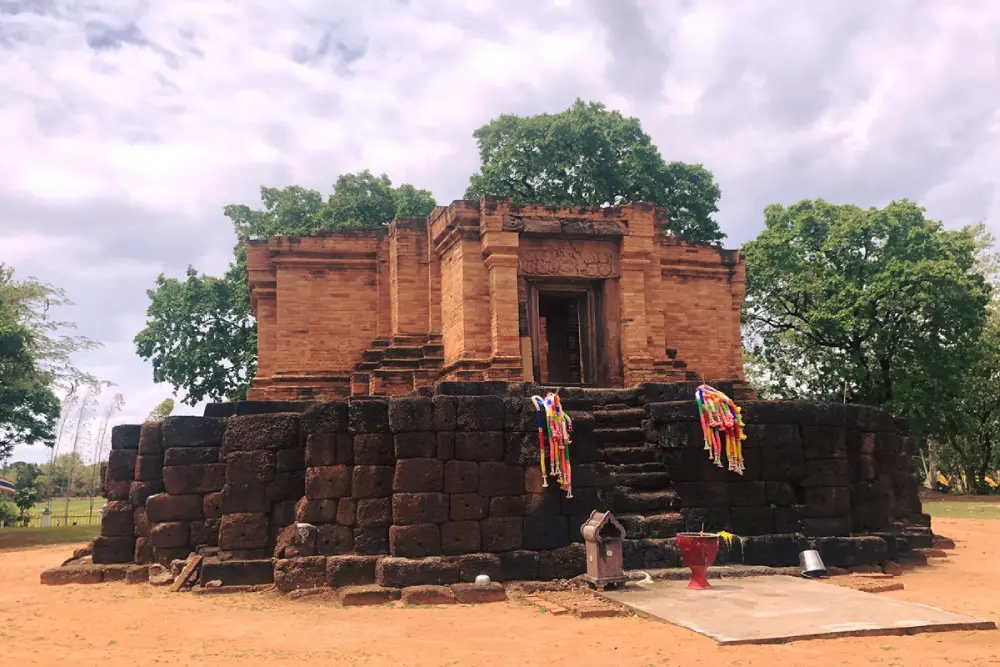
Ku Daeng
Open Days: Daily
Opening Hours: 08.00 – 17.00 (Recommended Visiting Hours For The Archaeological Site Inside The Temple)
Ku Daeng, also known as Ku Ban Kut Yang, is located inside Wat Kut Yang in Ban Kut Yang, Moo 3, Talat Raeng Subdistrict, Ban Khwao District, Chaiyaphum Province. It is an important Khmer-period archaeological site in the upper Chi River cultural landscape. Today, only the square laterite base with indented corners remains. Traces of stairways can still be seen on all four sides. The brick walls have collapsed, but the doorframe pillars remain on four sides. A lintel carved with Krishna wrestling an elephant was also found at the site. Based on the lintel style, Ku Daeng is dated to around the 16th Buddhist century and is associated with the Khmer Baphuon style.
Although Ku Daeng is not a large monument, it carries significant historical and archaeological value. It stands within the living community space of Wat Kut Yang and Ban Kut Yang, where local religious life continues today. Visitors do not encounter only an ancient ruin, but also a cultural landscape where an archaeological site, a Buddhist temple, a rural community, and local traditions exist together. This makes Ku Daeng valuable both as a remnant of ancient Khmer civilization and as a sacred local place still respected by the community.
The location of Ku Daeng inside Wat Kut Yang gives the site a special cultural meaning. Wat Kut Yang is a living Buddhist temple used for merit-making, Dhamma listening, Buddhist ceremonies, and community activities. Ku Daeng, on the other hand, is an earlier religious monument that predates the present temple by many centuries. The coexistence of these two historical layers allows visitors to see how a Khmer religious site gradually became part of a Thai Buddhist community landscape in northeastern Thailand.
In northeastern Thailand, the word “ku” is often used for ancient Khmer-style shrines or small prasat-like structures. The word “daeng,” meaning red, may be related to the color of the bricks, laterite, or the reddish-brown visual impression of the ruin. The name Ku Daeng therefore reflects both the physical character of the monument and the way the local community recognizes it. The name Ku Ban Kut Yang also emphasizes its direct connection with Ban Kut Yang, the village where the monument is located.
The architectural remains of Ku Daeng show a carefully planned structure. Although the upper part of the monument has collapsed, the square indented laterite base still preserves the main form of the original sanctuary. The indented corners create a more refined architectural rhythm than a plain square base. Even with the upper structure missing, the remaining base helps visitors imagine the original mass and spatial arrangement of the shrine.
Laterite is a key construction material at Ku Daeng. It was commonly used in ancient architecture in northeastern Thailand because it is strong and suitable for foundations and load-bearing parts. The brick wall sections of the monument have mostly collapsed, but the laterite base and the remaining doorframe pillars still show that the original structure was substantial and architecturally meaningful. These remains allow archaeologists and visitors to understand the basic construction method of the ancient shrine.
The traces of stairways on all four sides are among the most interesting features of Ku Daeng. They suggest that the monument was designed to be approached from multiple directions. The four-sided stairway arrangement may have been related to ritual movement, sacred orientation, or circumambulation around the shrine. Even though the stairs survive only as traces, they remain important evidence for understanding the original layout and ceremonial use of the structure.
The remaining doorframe pillars on all four sides are also important. In Khmer religious architecture, doorways mark the transition from the outer world into sacred space. Doorframe elements therefore carry both structural and symbolic significance. At Ku Daeng, the survival of these pillars helps identify the possible entrances and the spatial organization of the original sanctuary, even though the brick walls and upper parts no longer survive.
The lintel found at Ku Daeng is one of the most important artistic elements associated with the site. It depicts Krishna wrestling an elephant, a theme connected with the Vaishnava tradition of Hinduism. The presence of Krishna imagery suggests that the original shrine was linked to Hindu belief, or at least to a cultural context where Hindu narratives were meaningful. This lintel turns Ku Daeng from a ruined structure into a site rich in religious imagery, artistic style, and mythological storytelling.
The Baphuon-style Khmer art associated with Ku Daeng belongs to an important period in Khmer art history. The style is known for its ordered composition, refined decoration, and strong connection with religious architecture. Dating the site through the lintel places Ku Daeng around the 16th Buddhist century, a time when Khmer cultural influence was visible in many parts of northeastern Thailand. The monument therefore helps expand the picture of ancient Khmer networks in the Chi River basin.
From a cultural geography perspective, Ku Daeng is part of the upper Chi River cultural corridor. Waterways played an important role in ancient settlement, agriculture, communication, and ritual life. The presence of a Khmer-period monument in this area suggests that Ban Khwao and the surrounding region were not isolated in the past. They were connected to broader cultural and religious networks that extended across the Khorat Plateau and beyond.
The registration of Ku Daeng as an archaeological site with defined protected boundaries by the Fine Arts Department shows its national cultural importance. Registration helps protect the site from improper alteration, damage, or removal of archaeological materials. Visitors should understand that Ku Daeng is not simply an old ruin in a temple compound. It is a protected cultural heritage site that must be respected and preserved for future generations.
The northern side of the monument has been adapted by the temple, with a seated Buddha image and steps built over part of the original structure. This feature reflects the way ancient sacred spaces are often reinterpreted by later Buddhist communities. From an archaeological point of view, such changes must be understood carefully. From a cultural point of view, they show that local people continued to recognize the site as sacred and incorporated it into Buddhist worship.
Ku Daeng is therefore an important example of the coexistence between an ancient Khmer monument and a living Buddhist temple. Visitors can see that an archaeological site is not always separated from local religious life. Instead, it can remain inside a temple compound where monks, villagers, and worshippers continue to use the surrounding area. This relationship gives Ku Daeng meaning both as archaeological heritage and as a living community sacred place.
Wat Kut Yang, where Ku Daeng is located, is a community Buddhist temple in Talat Raeng Subdistrict, Ban Khwao District, Chaiyaphum Province. The temple was established in 1982 and received its consecrated boundary in 1983. It serves as a religious center for Ban Kut Yang and nearby communities. Because Ku Daeng stands inside the temple, Wat Kut Yang has a distinctive identity as both a Buddhist temple and a caretaker of ancient cultural heritage.
The site is cared for through the local structure of Wat Kut Yang, the Ban Kut Yang community, and relevant heritage authorities. The temple and local community help maintain everyday access and respect for the site, while archaeological conservation principles protect the ancient structure. This shared care is essential because a site like Ku Daeng cannot be preserved by physical conservation alone. It also needs local understanding, respect, and continued community involvement.
The annual Song Ku Daeng tradition is one of the most meaningful activities connected with the monument. Held at Ku Daeng in Wat Kut Yang, Ban Kut Yang, Talat Raeng Subdistrict, the event brings together monks, local authorities, villagers, and visitors. The ritual expresses respect for the ancient monument and keeps it active within community culture. Through the ceremony, Ku Daeng remains a living sacred place rather than a forgotten ruin.
Song Ku Daeng has several layers of meaning. First, it is an act of respect toward a sacred ancient site. Second, it brings the community together in a shared annual activity. Third, it helps younger generations learn about local heritage through participation. Traditions like this keep archaeological sites alive in community memory and encourage local people to protect their own cultural landscape.
Visitors interested in archaeology should observe Ku Daeng carefully and systematically. The main points to notice are the indented laterite base, the four stairway traces, the four doorframe remains, the collapsed brick wall sections, the Krishna lintel associated with the site, and the seated Buddha image on the northern side. Looking at these elements one by one helps visitors understand the monument more deeply than simply taking a quick photograph.
For those interested in art history, the lintel showing Krishna wrestling an elephant is especially important. It reflects Hindu narrative tradition and helps date the monument. A lintel is like a stone document that preserves artistic taste, religious belief, and cultural influence from a specific historical period. Knowing the significance of this lintel makes a visit to Ku Daeng far more meaningful.
Visitors should behave respectfully because Ku Daeng is both an archaeological site and a sacred place inside a Buddhist temple. Modest dress is recommended. Visitors should avoid climbing on the structure, writing on laterite or brick surfaces, moving stones, touching fragile parts unnecessarily, or disturbing temple activities. Even small fragments may have archaeological value. Responsible behavior helps protect the site for future study and community use.
Getting There from Chaiyaphum city is straightforward by private car. Take Highway 225 through Ban Khwao District toward Ban Lum Pho, about 30 kilometers from the city area. Then turn right toward Ban Kut Yang for another 8 kilometers. Ku Daeng is located inside Wat Kut Yang in Talat Raeng Subdistrict, Ban Khwao District. When using navigation, search for “Ku Daeng Wat Kut Yang Ban Kut Yang” for the most accurate destination.
The best visiting times are morning and late afternoon, when the weather is more comfortable for walking around the open-air archaeological site. Softer light also makes the laterite surfaces and architectural details easier to see and photograph. During the rainy season, the ground may be moist or slippery, so visitors should wear practical footwear and avoid stepping on the ancient base or loose materials.
Ku Daeng can be combined with other cultural places in Ban Khwao District. A meaningful route may include Ku Daeng, the Chaiyaphum Silk Promotion Center, and Ban Khwao silk-weaving villages. This allows visitors to experience both ancient Khmer heritage and contemporary local craftsmanship in the same trip. Ban Khwao is widely associated with silk weaving, making the district especially suitable for cultural travel.
Nearby temples and cultural places in Talat Raeng and Ban Khwao can also be added to the route, such as Wat Maha Khongkha, Wat Pa Rerai, Wat Khlong Phai Lom, Wat Si Maha Pho, the Chaiyaphum Silk Promotion Center, and local silk-weaving communities. This kind of route is suitable for travelers interested in archaeology, religious history, local temples, textile heritage, and rural community life.
Restaurants near Ku Daeng are mostly located in Ban Khwao District and along nearby local routes. Travelers can plan lunch before or after visiting the site. Options include Suan Ahan Ban Inter, Khrua Rim Thang, Ban Mulan Cafe, VIVA COFFEE, De Nua Ban Khwao, Jungle Cafe Ban Khwao Branch, and other local restaurants. Most visitors will find it convenient to combine the archaeological site with meals in Ban Khwao town.
Accommodation near Ku Daeng is available in Ban Khwao District and Mueang Chaiyaphum. Travelers who want to stay closer to Ban Khwao may choose local resorts such as Ban Suan Bua Resort, Chanikarn Resort, Phumisap Resort, or Ban Khwao Resort. Those who prefer more hotel options can stay in Chaiyaphum city and visit Ku Daeng as a day trip. The route from the city is suitable for a half-day or full-day cultural excursion.
Ku Daeng is suitable for many types of travelers: archaeology enthusiasts, art history learners, cultural travelers, people interested in Khmer heritage, visitors exploring the upper Chi River area, and those who enjoy local temples with historical depth. A visit may not take long, but the site offers a great deal of historical information through its laterite base, doorway remains, stairway traces, Krishna lintel, and continued local traditions.
Overall, Ku Daeng is valuable in terms of architecture, art, history, religion, and community life. Its indented laterite base, four doorways, four stairway traces, Krishna lintel, and later Buddhist adaptation on the northern side all show the long journey of belief in Chaiyaphum from ancient Khmer religious culture to present-day Buddhist community practice. It is one of the important Khmer heritage sites in Chaiyaphum Province.
For travelers who want to understand Chaiyaphum beyond natural attractions, Ku Daeng is a site that should not be overlooked. It confirms that Ban Khwao and the Chi River basin were connected to ancient Khmer cultural networks. Visiting Ku Daeng is therefore not only about seeing an old ruin. It is about learning art history, respecting local sacred space, understanding community heritage, and helping preserve a cultural legacy that still matters today.
| Name | Ku Daeng / Ku Ban Kut Yang |
| Location | Inside Wat Kut Yang, Ban Kut Yang, Moo 3, Talat Raeng Subdistrict, Ban Khwao District, Chaiyaphum Province |
| Address | Wat Kut Yang, Moo 3, Talat Raeng Subdistrict, Ban Khwao District, Chaiyaphum 36170, Thailand |
| Highlights | A Khmer-period archaeological site inside Wat Kut Yang, with an indented laterite base, four stairway traces, four doorway remains, and a lintel showing Krishna wrestling an elephant |
| History | A Khmer-period monument dated by lintel style to around the 16th Buddhist century, associated with Baphuon-style Khmer art and the upper Chi River cultural landscape |
| Archaeological Status | Registered and given protected archaeological boundaries by the Fine Arts Department according to the Royal Gazette, Volume 99, Section 172, dated 18 November 1982 |
| Name Origin | “Ku” refers to an ancient Khmer-style shrine or prasat-like structure, while “Daeng” refers to the reddish visual character of brick and laterite materials |
| Distinctive Features | Square indented laterite base, collapsed brick walls, remaining doorframe pillars on four sides, traces of four stairways, and a seated Buddha image with steps added on the northern side |
| Important Artwork | Lintel carved with Krishna wrestling an elephant, an important element used to understand the site’s date and relation to Baphuon-style Khmer art |
| Original Religious Context | Associated with Khmer-period religious architecture and Hindu belief, especially through the Krishna imagery on the lintel; later incorporated into the Buddhist community setting of Wat Kut Yang |
| Main Areas / Zones | Ku Daeng laterite base zone, four doorway zone, four stairway trace zone, northern Buddha image zone, Wat Kut Yang temple area, temple courtyard, and Song Ku Daeng festival area |
| Facilities | Wat Kut Yang temple area, temple courtyard, parking space inside the temple, resting area or temple hall, and community activity space |
| Traditions / Main Activities | Song Ku Daeng tradition, community merit-making, worship at the archaeological site, Buddhist activities at Wat Kut Yang, and local cultural events |
| Caretaker | Wat Kut Yang, Ban Kut Yang community, Talat Raeng Municipality, and relevant archaeological conservation authorities |
| Abbot Of Wat Kut Yang | Chao Athikan Sayan Phasuko |
| Open Days | Daily |
| Opening Hours | 08.00 – 17.00 (Recommended Visiting Hours For The Archaeological Site Inside The Temple) |
| Entrance Fee | No entrance fee; visitors may make donations inside the temple according to their faith |
| Travel Information | From Chaiyaphum city, take Highway 225 through Ban Khwao District to Ban Lum Pho, about 30 km, then turn right toward Ban Kut Yang for about 8 km. The monument is inside Wat Kut Yang |
| Current Status | A Khmer-period archaeological site with major base and doorway remains preserved inside Wat Kut Yang, still connected with the annual Song Ku Daeng tradition of the local community |
| Local Administrative Contact | Talat Raeng Municipality, Tel. 044-056091 |
| Nearby Tourist Attractions | 1. Wat Kut Yang, about 0.1 km 2. Wat Maha Khongkha, Ban Kut Huling, about 8 km 3. Wat Pa Rerai, Talat Raeng Subdistrict, about 10 km 4. Wat Khlong Phai Lom, Ban Kut Phai, about 12 km 5. Chaiyaphum Silk Promotion Center, Ban Khwao District, about 15 km, Tel. 044-839286 6. Ban Khwao Silk-Weaving Village / Non Daeng Subdistrict, about 15 km, Tel. 044-839286 7. Phraya Phakdi Chumphon Monument, about 38 km 8. Prang Ku Chaiyaphum, about 39 km |
| Nearby Restaurants | 1. Khrua Rim Thang, Non Daeng Subdistrict, about 13 km 2. Suan Ahan Ban Inter, about 14 km, Tel. 092-154-2023 3. Ban Mulan Cafe, Ban Khwao, about 15 km 4. VIVA COFFEE, Ban Khwao, about 15 km 5. De Nua Ban Khwao, about 15 km 6. Jungle Cafe Ban Khwao Branch, about 16 km 7. Shabu Samed Ban Khwao, about 16 km |
| Nearby Accommodations | 1. Ban Suan Bua Resort, about 14 km, Tel. 085-017-0638 2. Chanikarn Resort, about 15 km, Tel. 093-390-2828 3. Phumisap Resort, about 16 km, Tel. 081-790-7747 4. Ban Khwao Resort, about 16 km, Tel. 087-201-4009 5. Co-Op Inn Hotel, Chaiyaphum-Ban Khwao Road, about 25 km, Tel. 044-839113 6. The Palm Village, Chatturat District, about 40 km |
Frequently Asked Questions (FAQ)
Q: Where is Ku Daeng located?
A: Ku Daeng is located inside Wat Kut Yang in Ban Kut Yang, Moo 3, Talat Raeng Subdistrict, Ban Khwao District, Chaiyaphum Province.
Q: What period does Ku Daeng belong to?
A: Ku Daeng is a Khmer-period archaeological site dated by lintel style to around the 16th Buddhist century and associated with Baphuon-style Khmer art.
Q: What are the highlights of Ku Daeng?
A: The main highlights are its indented laterite base, traces of stairways on all four sides, remaining doorframe pillars, and the lintel showing Krishna wrestling an elephant.
Q: Is there an entrance fee at Ku Daeng?
A: There is no entrance fee. Visitors may view the archaeological site inside Wat Kut Yang respectfully and make donations at the temple according to their faith.
Q: How can travelers get to Ku Daeng from Chaiyaphum city?
A: From Chaiyaphum city, take Highway 225 through Ban Khwao District to Ban Lum Pho, about 30 km, then turn right toward Ban Kut Yang for about 8 km. Ku Daeng is inside Wat Kut Yang.
Q: What is the Song Ku Daeng tradition?
A: Song Ku Daeng is a local community tradition held at the Ku Daeng archaeological site in Wat Kut Yang, where monks, local authorities, villagers, and visitors gather to honor and preserve the ancient monument.
Q: What religion was Ku Daeng originally associated with?
A: Ku Daeng was associated with Khmer-period religious architecture and Hindu belief, especially through the Krishna imagery on the lintel, before later being incorporated into the Buddhist setting of Wat Kut Yang.
Q: What nearby attractions can be combined with a visit?
A: Nearby places include Wat Maha Khongkha, Wat Pa Rerai, Wat Khlong Phai Lom, the Chaiyaphum Silk Promotion Center, Ban Khwao silk-weaving village, Phraya Phakdi Chumphon Monument, and Prang Ku Chaiyaphum.
 Category: ●Places of Worship
 Group: ●Other Sacred Sites
Last Update : 4 MonthAgo
 Last Update : 4 MonthAgo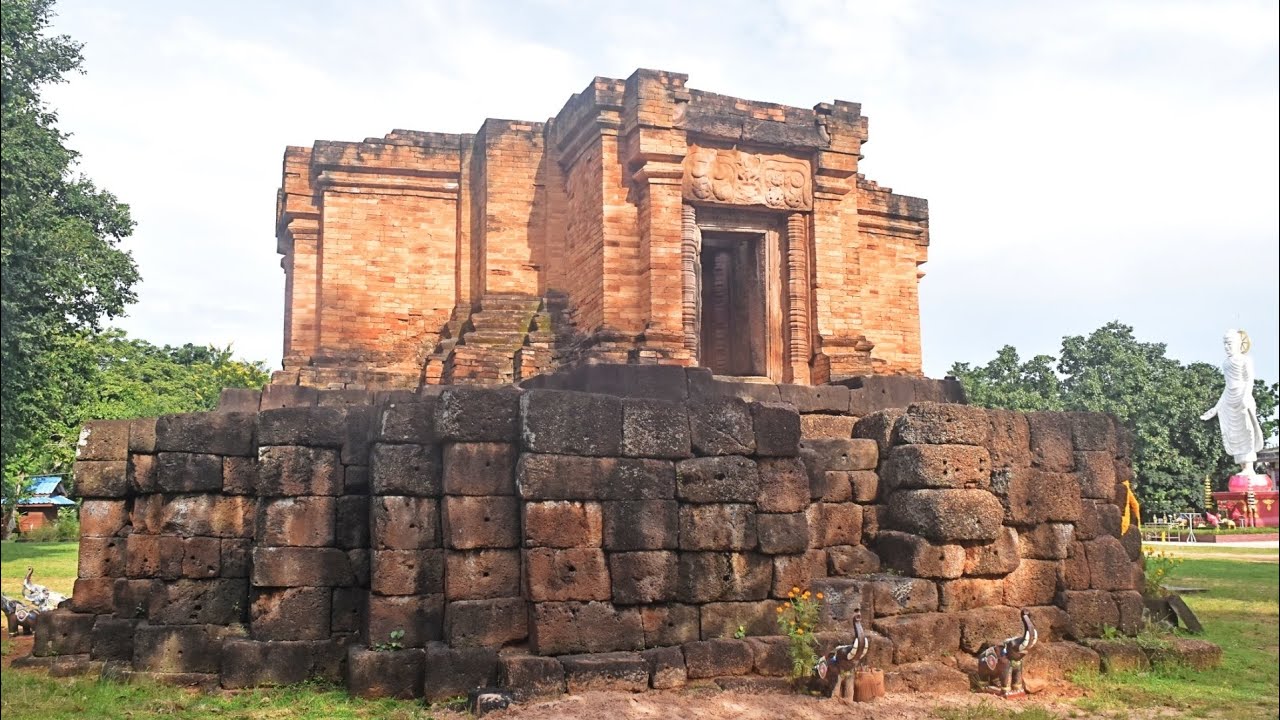
 Click to Access the Navigation Map GPS
 Art, Culture and Heritage
 Historical Sites and Monuments(1)
 Landmarks and Memorials(3)
 Royal Palace(1)
 Art, Craft Centres, Tradition(3)
 Educational Places
 Educational Gardens, Farm(1)
 Temple(141)
Other Sacred Sites(7)
Temple(141)
Other Sacred Sites(7)
 Suburban Living
 Village, Community(4)
 Nature and Wildlife
 National Parks and Marine Reserves(7)
 Mountain (Doi)(5)
 Dam, Reservoir, Lake(10)
 Waterfalls(15)
 Caves(5)
 River, Canal(4)
 Other natural attractions(1)
 Entertainment and Agricultural
 Farms, Parks and Ecotourism(2)
 Travel Articles, Recipes
 Travel Review, Food Review(1)


