
lovethailand home >Northeastern Travel Attractions >Chaiyaphum Travel Attractions >Ban Thaen >Sam Suan > Wat Sawan Khongkha (Sam Suan)
TL;DR: Wat Sawan Khongkha (Sam Suan) is located at Ban Sam Suan Klang, Village No. 14, Sam Suan Subdistrict, Ban Thaen District, Chaiyaphum Province, open Daily, hours 08.00 – 17.00.
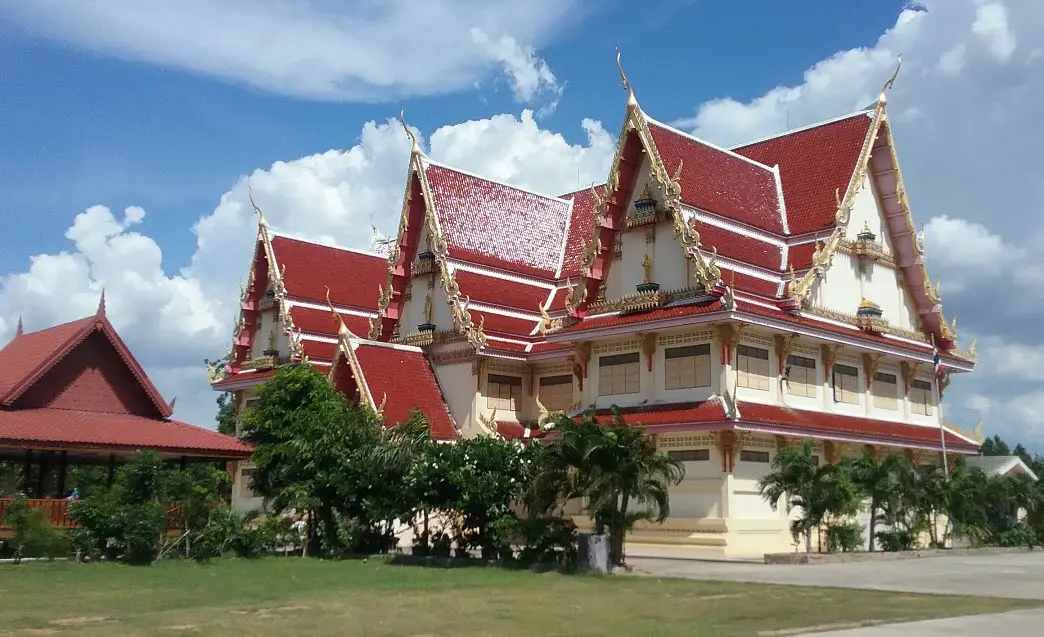
Wat Sawan Khongkha (Sam Suan)
Open Days: Daily
Opening Hours: 08.00 – 17.00
Wat Sawan Khongkha (Sam Suan) is located at Ban Sam Suan Klang, Village No. 14, Sam Suan Subdistrict, Ban Thaen District, Chaiyaphum Province. It is a community Buddhist temple under the Mahanikaya sect and has long been connected with the religious and cultural life of the Sam Suan community. Established in 1942, the temple serves as a place for Buddhist activities, merit-making, Dhamma listening, meditation practice, local traditions, cultural continuity, and community faith. It is a spiritual center for monks, local Buddhists, villagers, and visitors in Ban Thaen District.
For foreign travelers, Wat Sawan Khongkha should be understood as a living community temple rather than a commercial tourist attraction. It is a place where local people continue to practice Buddhism in everyday life. Villagers come to make merit, offer food to monks, observe Buddhist holy days, join Kathin ceremonies, take part in robe-offering events, and support annual temple activities. The importance of the temple lies not only in its establishment date, but also in its continuing role as a sacred and social center of the village.
Sam Suan Subdistrict is a rural area of Ban Thaen District in Chaiyaphum Province. It contains several local temples that serve nearby villages and preserve community-based Buddhist life. Wat Sawan Khongkha stands within this wider network of village temples. It functions as a shared sacred space where villagers gather for religious ceremonies, merit-making, social cooperation, and spiritual reflection throughout the year.
The establishment of Wat Sawan Khongkha in 1942 shows that the Sam Suan community has had a Buddhist center since the first half of the 20th century. In rural Thailand, a temple is not only a ritual place. It is also a place of moral learning, community gathering, cultural transmission, and social support. Having a village temple gives local people a stable place for merit-making, ceremonies, Dhamma practice, and the passing down of traditions from older generations to younger people.
The name “Wat Sawan Khongkha” carries an auspicious meaning. “Sawan” suggests heaven, happiness, brightness, and spiritual aspiration, while “Khongkha” suggests a river, water, coolness, and nourishment. Together, the name gives the image of a temple that nourishes the mind with peace and Dhamma, much like water nourishes life. This meaning fits the role of the temple as a place of calm, faith, and moral support for the community.
One important feature of Wat Sawan Khongkha is the statue of Phra Khru Bunthai Warakon, a respected monk whom the people of Ban Sam Suan hold in high regard. The statue is not only a religious object. It also preserves the memory of a revered monk and reflects the gratitude of the community. Through this statue, the temple becomes a place where faith, remembrance, and local respect are expressed in a visible form.
As a community Buddhist temple, Wat Sawan Khongkha plays an important role in sustaining Buddhism at village level. Monks use the temple as a place for residence, chanting, study, religious practice, and Buddhist ceremonies. Local people come to offer food, make merit, listen to Dhamma, observe precepts, and participate in Buddhist holy day activities. This relationship between monks and laypeople is central to the life of Thai village temples.
Current ecclesiastical records list Phra Athikan Phayom Ariyapanyo as the abbot of Wat Sawan Khongkha, Sam Suan Subdistrict. Having a recognized monastic caretaker helps the temple continue its Buddhist activities throughout the year. Local people can come to make merit, listen to teachings, seek moral support, and participate in community ceremonies, while monks continue to maintain the religious discipline and peaceful atmosphere of the temple.
Throughout the year, Wat Sawan Khongkha is connected with Buddhist holy days and local merit-making activities such as Makha Bucha Day, Visakha Bucha Day, Asalha Bucha Day, Buddhist Lent, the end of Buddhist Lent, Kathin, robe offerings, and other community ceremonies. These activities are more than religious rituals. They bring villagers together to prepare the temple grounds, food, offerings, and ceremony spaces, strengthening social unity through shared religious work.
Meditation practice is another important role of Wat Sawan Khongkha. In a village temple, spiritual practice may take simple forms such as chanting, evening prayers, listening to Dhamma, observing precepts, sitting quietly, or spending time peacefully within the temple grounds. This simplicity makes Buddhist practice accessible to ordinary people and allows the temple to serve as a place of mental rest for both villagers and visitors.
Wat Sawan Khongkha also transmits religious manners and local culture to younger generations. Children who accompany their families to the temple learn how to pay respect to Buddha images, bow to monks, dress modestly, speak politely, and help with merit-making activities. Adults participate in community work, while elderly villagers gain a peaceful place for merit-making, Dhamma listening, and social connection. The temple therefore passes Buddhist values from one generation to the next through real participation.
For elderly villagers, Wat Sawan Khongkha provides emotional and spiritual stability. Many older residents are familiar with temple life, merit-making, Dhamma listening, and joining annual ceremonies. The temple gives them a meaningful place to meet others, practice generosity, and remain connected with the community. This role makes the temple important not only in religious terms, but also in the quality of life of local people.
Socially, Wat Sawan Khongkha is a place of cooperation. During merit-making events, villagers help prepare food, organize the venue, welcome guests, arrange offerings, and clean the temple after ceremonies. These shared efforts create closeness and a sense of common purpose. The temple therefore remains an important institution for maintaining community unity in Sam Suan Subdistrict.
The atmosphere of Wat Sawan Khongkha is simple, peaceful, and local. Visitors should not expect a large tourist complex. Instead, they will encounter a village temple that continues to serve monks and villagers in everyday religious life. This simplicity is part of its value, because it allows visitors to see how Buddhism functions at the level of a real Thai rural community.
The temple grounds can be understood through several important areas: the worship area, religious ceremony area, monks’ residence area, community activity ground, the statue area of Phra Khru Bunthai Warakon, merit-making space, and quiet area for meditation. Each area supports a different aspect of temple life. Worship and ceremony areas support faith, the monks’ residence supports monastic life, while the activity ground and merit-making spaces become important during community events.
Visitors should enter Wat Sawan Khongkha with proper temple etiquette. They should dress modestly, speak quietly, avoid disturbing monks or worshippers, and avoid entering restricted areas. They should show respect to the statue of Phra Khru Bunthai Warakon and other sacred objects inside the temple. If visitors wish to photograph monks or community activities, they should ask permission first. Respectful behavior helps preserve both the sacred atmosphere and the community’s trust.
Sam Suan Subdistrict has several local temples that can be visited together with Wat Sawan Khongkha, including Wat Siladat, Wat Sa Kaeo, Wat Samphan, Wat Sai Thong, Wat Arunrat, Wat Chum Phaeng, and Wat Tha Samakkhi. Visiting several temples in the same area helps travelers understand how village temples support different communities. Each temple has its own story and role, while all of them reflect the close relationship between Buddhism and rural life in Ban Thaen District.
Ban Thaen District also offers community attractions and leisure stops that can be combined with a visit to Wat Sawan Khongkha. De Grandma Park Hill is a restaurant and cafe with a flower garden, lotus pond, and mountain view. Pong Sang Reservoir and nearby natural areas connected with Nam Phong National Park can also be included in a wider route. This allows travelers to combine merit-making, local temples, food, community attractions, and nature in one day.
Wat Sawan Khongkha is suitable for many types of visitors. Buddhist devotees can come to make merit and pay respect. Elderly visitors may appreciate the calm atmosphere. Families can bring children to learn temple manners. Cultural travelers can observe a working village temple. Visitors who want to understand Chaiyaphum beyond major tourist attractions can add the temple to a route through Sam Suan and Ban Thaen.
Getting There is most convenient by private car. Travelers should drive toward Ban Thaen District in Chaiyaphum Province and continue on local roads to Sam Suan Subdistrict and Ban Sam Suan Klang, Village No. 14. The temple is about 10 kilometers from Ban Thaen town. From Chaiyaphum city, visitors can take the main route toward Ban Thaen and then continue to Sam Suan. Travelers coming from Khon Kaen or Chum Phae can also plan a route through the Ban Thaen area.
Visitors using public transportation should first travel to Ban Thaen town and then arrange local transport or a hired vehicle to Sam Suan Subdistrict. Village-level transport may not run frequently throughout the day, so a private car or hired local driver is more practical for those planning to visit several places in one day, such as Wat Sawan Khongkha, other temples in Sam Suan, restaurants in Ban Thaen, and nearby accommodations.
Upon arrival, visitors should park without blocking temple access or community activities. They should enter the temple respectfully, dress modestly, avoid loud behavior, and not enter restricted areas. These practices show respect for the temple and for the local people who use it as a sacred space in everyday life.
A half-day visit can focus on making merit, paying respect at Wat Sawan Khongkha, and visiting nearby temples in Sam Suan Subdistrict. A full-day route can include De Grandma Park Hill, Pong Sang Reservoir, other temples in Ban Thaen District, and local cafes or restaurants. This creates a balanced trip that combines religion, culture, community life, food, and nature.
Historically, Wat Sawan Khongkha reflects the development of the Sam Suan community since its establishment in 1942. The temple shows how village communities in Ban Thaen District created Buddhist centers to support religious and social life. The statue of Phra Khru Bunthai Warakon also preserves the memory of a revered monk and the community’s gratitude toward him.
Culturally, Wat Sawan Khongkha keeps traditions connected with real life. Kathin ceremonies, robe offerings, Buddhist holy day activities, and annual merit-making events are held within the temple grounds and supported by local people. Traditions therefore remain active through real community participation, not merely as stories from the past.
Spiritually, Wat Sawan Khongkha is a place where people can return for calm and inner balance. Whether they come to make merit, listen to Dhamma, join a ceremony, pay respect to sacred objects, or spend time quietly in the temple grounds, the temple offers a stable spiritual space in the rhythm of local life.
Overall, Wat Sawan Khongkha (Sam Suan) is an important community Buddhist temple in Sam Suan Subdistrict, Ban Thaen District, Chaiyaphum Province. Established in 1942, it continues to serve as a place for Buddhist activities, meditation practice, traditions, culture, and community faith. With the respected statue of Phra Khru Bunthai Warakon and its role as a spiritual center for the local people, the temple offers visitors a meaningful view of faith, memory, and village life in rural Chaiyaphum.
| Name | Wat Sawan Khongkha (Sam Suan) |
| Location | Ban Sam Suan Klang, Village No. 14, Sam Suan Subdistrict, Ban Thaen District, Chaiyaphum Province |
| Address | Sam Suan Subdistrict, Ban Thaen District, Chaiyaphum Province 36190, Thailand |
| Coordinates | 16.42739, 102.27385 |
| Place Type | Community Buddhist temple under the Mahanikaya sect |
| Highlights | A community temple in Sam Suan Subdistrict with the respected statue of Phra Khru Bunthai Warakon, serving as a place for merit-making, meditation practice, traditions, and community faith |
| History / Period | Established in 1942 and developed as a local Buddhist center for Ban Sam Suan Klang and Sam Suan Subdistrict |
| Name Origin | The name carries an auspicious meaning associated with heaven, water, coolness, and the nourishment of community faith through Dhamma |
| Sacred Object / Key Point | The statue of Phra Khru Bunthai Warakon and the main worship area inside the temple |
| Distinctive Features | A simple and peaceful village temple suitable for merit-making, worship, Dhamma listening, meditation practice, and learning about local Buddhist life in Ban Thaen |
| Travel Information | Most convenient by private car; travel toward Ban Thaen District in Chaiyaphum Province, then continue on local roads to Sam Suan Subdistrict and Ban Sam Suan Klang, Village No. 14. The temple is about 10 km from Ban Thaen town |
| Current Status | An active community Buddhist temple listed in religious site databases and still serving religious, traditional, and cultural activities for the local community |
| Open Days | Daily |
| Opening Hours | 08.00 – 17.00 |
| Facilities | Worship area, temple grounds, religious activity area, merit-making space, and meditation space |
| Main Areas / Zones | Worship area, ceremony area, monks’ residence area, activity ground, statue area of Phra Khru Bunthai Warakon, and quiet mindfulness space |
| Abbot / Caretaker | Phra Athikan Phayom Ariyapanyo |
| Nearby Tourist Attractions | 1. Statue Of Phra Khru Bunthai Warakon, within Wat Sawan Khongkha 2. Wat Siladat, Sam Suan Subdistrict, about 3 km 3. Wat Sa Kaeo, Sam Suan Subdistrict, about 4 km 4. Wat Samphan, Sam Suan Subdistrict, about 5 km 5. Wat Sai Thong, Sam Suan Subdistrict, about 6 km 6. Wat Chum Phaeng, Sam Suan Subdistrict, about 7 km 7. De Grandma Park Hill Flower Garden, Cafe, Lotus Pond, And Mountain View, Ban Thaen, about 12 km 8. Pong Sang Reservoir, about 18 km |
| Nearby Restaurants | 1. De Grandma Park Hill, about 12 km, Tel. 095-656-3273 2. Anchancha Cafe & Restaurant, about 13 km, Tel. 081-903-5099 3. Yok Sod Nuea Pueai Ban Thaen, about 14 km, Tel. 061-947-1313 4. Jungle Cafe Ban Thaen Chaiyaphum Branch, about 14 km, Tel. 099-470-4114, 062-605-8611 5. Sud Soi Cafe Ban Thaen, about 15 km, Tel. 082-545-5811 6. Café Amazon DD1816 Ban Thaen PTT Branch, about 14 km, Tel. 088-747-3860 |
| Nearby Accommodations | 1. Mochi Resort, Sam Suan Subdistrict, about 4 km, Tel. 098-256-6099 2. Ciri Resort, Sam Suan Subdistrict, about 5 km, Tel. 093-485-2816 3. Pangpond Resort, Ban Thaen, about 12 km, Tel. 080-929-0299, 081-320-3572 4. Rak Na Khok Farmstay, about 13 km, Tel. 095-145-4764 5. Green View Resort Ban Tao, about 18 km, Tel. 087-802-2553 |
Frequently Asked Questions (FAQ)
Q: Where is Wat Sawan Khongkha (Sam Suan) located?
A: Wat Sawan Khongkha (Sam Suan) is located at Ban Sam Suan Klang, Village No. 14, Sam Suan Subdistrict, Ban Thaen District, Chaiyaphum Province.
Q: When was Wat Sawan Khongkha established?
A: Wat Sawan Khongkha was established in 1942 and is a community Buddhist temple under the Mahanikaya sect.
Q: Why is Wat Sawan Khongkha important to the local community?
A: The temple serves as a place for Buddhist activities, meditation practice, local traditions, cultural continuity, and community faith in Sam Suan Subdistrict.
Q: What is an important sacred feature at Wat Sawan Khongkha?
A: The temple has a statue of Phra Khru Bunthai Warakon, whom the people of Ban Sam Suan respect highly.
Q: Who is the abbot or caretaker of Wat Sawan Khongkha?
A: Phra Athikan Phayom Ariyapanyo is listed as the abbot of Wat Sawan Khongkha, Sam Suan Subdistrict.
Q: What are the opening hours of Wat Sawan Khongkha?
A: Wat Sawan Khongkha is open daily from 08.00 to 17.00 for merit-making, worship, and respectful visits.
Q: How should visitors behave at Wat Sawan Khongkha?
A: Visitors should dress modestly, keep quiet, avoid disturbing monks or worshippers, and show respect to sacred objects and important areas within the temple.
Q: What nearby places can be combined with a visit to Wat Sawan Khongkha?
A: Visitors can combine the temple with Wat Siladat, Wat Sa Kaeo, Wat Samphan, Wat Sai Thong, Wat Chum Phaeng, De Grandma Park Hill, and Pong Sang Reservoir.
 Category: ●Places of Worship
 Group: ●Temple
Last Update : 2 DayAgo
 Last Update : 2 DayAgo
 Click to Access the Navigation Map GPS
Wat Sawan Khongkha (Sam Suan) Map
Recommend

 Art, Culture and Heritage
 Historical Sites and Monuments(1)
 Landmarks and Memorials(3)
 Royal Palace(1)
 Art, Craft Centres, Tradition(3)
 Educational Places
 Educational Gardens, Farm(1)
Temple(141)
Educational Gardens, Farm(1)
Temple(141)
 Other Sacred Sites(7)
 Suburban Living
 Village, Community(4)
 Nature and Wildlife
 National Parks and Marine Reserves(7)
 Mountain (Doi)(5)
 Dam, Reservoir, Lake(10)
 Waterfalls(15)
 Caves(5)
 River, Canal(4)
 Other natural attractions(1)
 Entertainment and Agricultural
 Farms, Parks and Ecotourism(2)


