
lovethailand home >Northeastern Travel Attractions >Chaiyaphum Travel Attractions >Ban Klwao >Ban Klwao > Wat March Chimawat
TL;DR: Wat March Chimawat is located at Moo 2, Ban Khwao Subdistrict, Ban Khwao District, Chaiyaphum Province, open Daily For Merit-Making, Meditation Practice, And Community Religious Activities, hours Daytime For General Temple Visits.
Wat March Chimawat
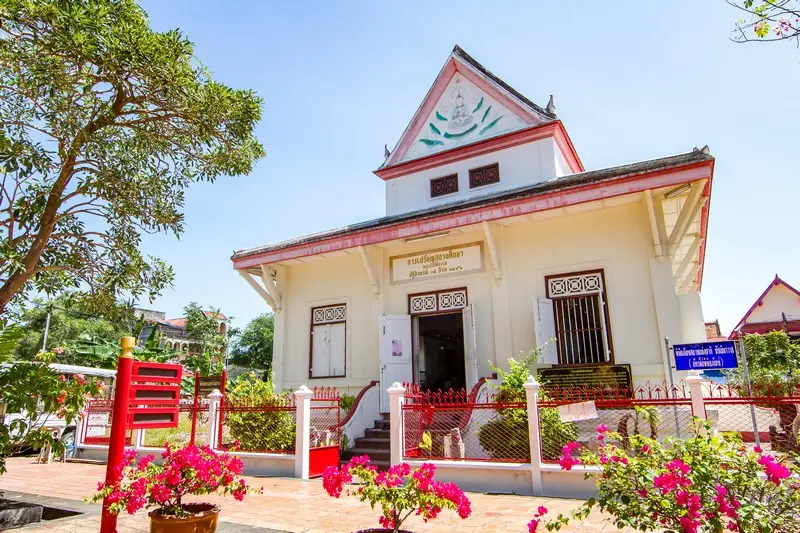
Open Days: Daily For Merit-Making, Meditation Practice, And Community Religious Activities
Opening Hours: Daytime For General Temple Visits
Wat Matchimawat in Moo 2, Ban Khwao Subdistrict, Ban Khwao District, Chaiyaphum Province, is one of the most important community temples in Ban Khwao. Officially established in 1927 and granted Wisungkhamsima on 24 June 1996, the temple continues to serve as a Buddhist religious center, a meditation venue, a cultural gathering place, and a spiritual anchor for local residents. For travelers who want to understand Chaiyaphum beyond major tourist landmarks, this temple offers a quiet and authentic view of how Buddhism, local traditions, and community life remain closely connected in rural northeastern Thailand.
Wat Matchimawat is also known locally as Wat Klang or Wat Yai of Ban Khwao. The word “Matchimawat” can be understood as a dwelling or monastic place associated with the idea of balance and the middle way, while the local name Wat Klang reflects its position as a central temple of the community. This meaning fits the temple’s role very well. It is not merely a place where monks reside; it is a living community space where villagers come to make merit, listen to sermons, practice meditation, hold family ceremonies, and preserve traditional festivals.
The temple stands in Ban Khwao, a district known for its long local history, silk weaving, Isan cultural identity, and seasonal merit-making traditions. Ban Khwao is especially famous for mudmee silk, and its cultural landscape is shaped by Buddhist temples, craft knowledge, agricultural life, and community festivals. Wat Matchimawat grew within this environment and has remained closely linked to the daily rhythm of local people. To visit this temple is therefore to see not only a religious site, but also the social heart of a rural Isan community.
The historical importance of Wat Matchimawat is connected to its official establishment in 1927 and the granting of Wisungkhamsima on 24 June 1996. In Thai Buddhist administration, Wisungkhamsima is an important boundary granted for the proper performance of monastic ceremonies in the ordination hall. This makes the temple significant not only as a local place of worship, but also as a formally recognized Buddhist institution where key monastic rites can be carried out according to Buddhist discipline.
Within the temple grounds, several important areas support different religious and community functions. These include the ordination hall, the vihara, the Buddhist scripture school hall, the early childhood training center, monks’ residences, the abbot’s residence, Sala Phra Khru Chotiwarachan, a multipurpose hall, and open areas used for community ceremonies and festivals. Each area reflects the wide role of a Thai community temple. The ordination hall is used for monastic rites, the halls support merit-making and teaching, while the wider temple grounds become a gathering space for village activities.
One of the strongest characteristics of Wat Matchimawat is its atmosphere. Unlike large tourist temples that attract visitors through grand architecture or heavy sightseeing traffic, this temple is valuable because it remains simple, active, and deeply local. Visitors will see the practical side of temple life: monks living in residence, villagers entering the temple to make merit, halls used for ceremonies, and spaces prepared for community events. This simplicity is part of the temple’s charm, especially for travelers who want to experience a genuine rural Buddhist temple in Thailand.
Wat Matchimawat also has a clear role in meditation and Dhamma practice. It appears in provincial meditation-practice listings with the name of Phra Athikan Daenthai Thitamedho, showing that the temple is not only a place for ceremonial Buddhism but also a space for spiritual training. In the context of a rural community temple, meditation practice is usually simple, accessible, and closely connected with everyday life. Visitors who come with respect may find the temple suitable for quiet reflection and a slower form of cultural travel.
The temple is also associated with respected monks who have contributed to its development over time. One important name remembered locally is Phra Khru Chotiwarachan, a former abbot whose legacy is reflected in the temple’s memorial hall. Such memorial spaces show how local temples preserve gratitude and continuity. They help younger generations and visitors understand that a temple is built through many decades of collective faith, leadership, craftsmanship, and community support.
At present, Phra Athikan Daenthai Thitamedho is listed as the abbot of Wat Matchimawat. The presence of an abbot and resident monks keeps the temple active as a place for daily chanting, merit-making, religious ceremonies, and community guidance. For local people, the temple remains a trusted place to seek spiritual advice, hold Buddhist rites, and maintain family and community traditions. This continuing role is what makes Wat Matchimawat a living temple rather than a historical site that belongs only to the past.
One of the most important traditions linked to Wat Matchimawat is the Bun Duean Hok, or Bun Bang Fai, festival of Ban Khwao Municipality. Bun Bang Fai, also known as the rocket festival, is an important Isan tradition connected with fertility, rainfall, agricultural life, and community unity before the farming season. At Ban Khwao, Wat Matchimawat serves as a key venue for the festival’s religious and community activities, including the opening ceremony, rocket-related events, public gatherings, and traditional performances such as mor lam.
The rocket festival is not only entertainment. It is a cultural expression of the relationship between people, nature, religion, and farming life. Villagers join together to make merit, support community activities, enjoy performances, and continue a tradition passed down through generations. When the festival takes place at Wat Matchimawat, visitors can see how a temple becomes the meeting point of Buddhism, local belief, music, performance, and shared identity. This makes the temple especially meaningful during festival periods.
Beyond the Bun Bang Fai festival, Wat Matchimawat is also used for major Buddhist holy days such as Makha Bucha, Visakha Bucha, Asalha Bucha, Buddhist Lent, the end of Buddhist Lent, and regular lunar holy days. Villagers come to make merit, offer food to monks, listen to sermons, chant, and take part in temple activities. These recurring practices allow children, adults, and elderly residents to learn Buddhist values through real participation rather than through abstract instruction alone.
For cultural travelers, Wat Matchimawat can be included in a meaningful one-day route around Ban Khwao. The temple is close to the Ban Khwao Silk Promotion Center, a local learning site devoted to the district’s famous silk-weaving heritage. A practical itinerary can begin with a visit to Wat Matchimawat for merit-making and a quiet temple walk, followed by a stop at the silk center to learn about mudmee silk, then lunch at a local restaurant, and later a short trip to nearby attractions such as Ku Daeng, Tat Roi Ru Waterfall, or Phu Laen Kha National Park, depending on available time.
Visitors should approach Wat Matchimawat with the same respect expected at any active Buddhist temple in Thailand. Modest clothing is recommended. Shoulders and knees should be covered where possible, and visitors should avoid loud behavior inside religious areas. Photography is usually acceptable in general public areas, but it is polite to ask before photographing monks, villagers, ceremonies, or private areas. The monks’ residences should not be entered unless invited or permitted. Respectful behavior helps preserve the dignity of the temple and makes the visit more meaningful.
Those who want to make merit can begin by paying respect to the Buddha images in the areas open to visitors, offering donations according to personal faith, or sitting quietly in the hall. The best time for a peaceful visit is usually in the morning or late afternoon, when the weather is milder and the temple atmosphere is calmer. During festivals, the temple becomes much livelier, and visitors should prepare for more people, local traffic, and temporary event arrangements.
In terms of local history, Wat Matchimawat reflects the broader development of Ban Khwao. Like many temples in rural Thailand, it has been connected not only with religion but also with education, community organization, and cultural memory. In earlier periods, temple halls often served as places of learning, meeting, and public activity. This role continues in different forms today through merit-making, meditation, local ceremonies, early childhood activities, and community festivals.
The identity of Ban Khwao as a silk-weaving district also gives the temple added cultural context. Ban Khwao silk is not separate from local religious life. Silk garments and woven textiles are often worn during merit-making, ordination ceremonies, weddings, and important festivals. The temple is one of the places where these cultural expressions appear in everyday life. For foreign travelers, this connection between temple, textile, ceremony, and community is one of the most interesting aspects of visiting Ban Khwao.
Wat Matchimawat is suitable for travelers who prefer quiet cultural depth over crowded sightseeing. It is not a place designed mainly for tourism, and that is precisely why it is worth visiting. The temple offers an opportunity to observe a functioning Buddhist community space, understand local Isan traditions, and connect a temple visit with nearby cultural and natural attractions. It is especially suitable for travelers interested in Buddhism, village temples, Thai local identity, silk heritage, and traditional festivals.
Getting There is easiest by private car. From Chaiyaphum city, drive toward Ban Khwao District, a distance of about 20 – 25 km, then continue into Ban Khwao Subdistrict and Moo 2. The temple is located within the local community and can be searched on navigation apps as “Wat Matchimawat Ban Khwao Chaiyaphum” or “วัดมัชฌิมาวาส บ้านเขว้า ชัยภูมิ.” Travelers without a private car can take local transport from Chaiyaphum to Ban Khwao and then use a local vehicle or hired transport to reach the temple.
If time allows, it is worth combining the temple with nearby places such as the Ban Khwao Silk Promotion Center, Wat Sala Loi, Wat Charoen Phon, the silk-weaving village in Non Daeng, Ku Daeng, Tat Roi Ru Waterfall, and Phu Laen Kha National Park. This route gives visitors a fuller view of Ban Khwao, from Buddhism and local history to silk craftsmanship, food, nature, and community festivals. For anyone looking for a quieter cultural side of Chaiyaphum, Wat Matchimawat is a valuable stop.
In summary, Wat Matchimawat is a meaningful Buddhist temple that represents the religious, cultural, and social life of Ban Khwao. Its official establishment in 1927, the granting of Wisungkhamsima in 1996, its status as a meditation-practice venue, its connection with the Bun Bang Fai festival, and its location within a district famous for mudmee silk all make it more than a simple temple visit. It is a place where travelers can understand how Buddhism continues to shape everyday life in northeastern Thailand.
| Name | Wat Matchimawat |
| Location | Moo 2, Ban Khwao Subdistrict, Ban Khwao District, Chaiyaphum Province |
| Address | 439 Moo 2, Ban Khwao Subdistrict, Ban Khwao District, Chaiyaphum 36170, Thailand |
| Local Names | Wat Klang, Wat Yai Ban Khwao |
| Highlights | An important community temple in Ban Khwao, serving as a place for merit-making, meditation practice, Buddhist activities, and the Bun Duean Hok or Bun Bang Fai festival |
| History | Officially established in 1927 and granted Wisungkhamsima on 24 June 1996 |
| Key Evidence | Official establishment record, Wisungkhamsima record, provincial meditation-practice listing, and Ban Khwao local history |
| Name Origin | The name “Matchimawat” relates to a central or balanced monastic dwelling, matching the local name Wat Klang because the temple functions as a central temple of Ban Khwao |
| Distinctive Features | A living Isan community temple closely connected with merit-making, Buddhist teaching, meditation, local traditions, and public community activities |
| Travel Information | From Chaiyaphum city, drive toward Ban Khwao District for about 20 – 25 km, then continue to Moo 2, Ban Khwao Subdistrict. Private car is the most convenient option, but local transport and hired vehicles are also possible. |
| Current Status | An active Buddhist temple used for religious ceremonies, meditation practice, and community traditions of Ban Khwao Municipality |
| Open Days | Daily For Merit-Making, Meditation Practice, And Community Religious Activities |
| Opening Hours | Daytime For General Temple Visits |
| Fees | No Admission Fee For General Temple Visits |
| Facilities | Temple halls, religious activity areas, community event spaces, and parking areas within or near the temple depending on the event period |
| Main Areas / Zones | Ordination Hall, Vihara, Buddhist Scripture School Hall, Early Childhood Training Center, Monks’ Residences, Abbot’s Residence, Sala Phra Khru Chotiwarachan, Multipurpose Hall, And Bun Duean Hok Festival Area |
| Abbot / Caretaker | Phra Athikan Daenthai Thitamedho |
| Main Contact Number | 086-867-1006 |
| Related Tradition | Bun Duean Hok or Bun Bang Fai festival of Ban Khwao Municipality, with key activities held at Wat Matchimawat |
| Nearby Tourist Attractions | 1. Ban Khwao Silk Promotion Center, About 1 km, Tel. 044-891097 2. Wat Sala Loi, About 1 km 3. Wat Charoen Phon, About 2 km 4. Silk-Weaving Village, Non Daeng Subdistrict, About 12 km, Tel. 044-839286 5. Ku Daeng At Wat Kut Yang, About 15 km 6. Tat Roi Ru Waterfall, About 20 km, Tel. 044-056091 7. Phu Laen Kha National Park, About 35 km |
| Nearby Restaurants | 1. Khrua Nat Phop Ban Khwao, About 1 km, Tel. 080-5956789 2. Rim Bueng Restaurant, About 2 km, Tel. 044-891118 3. Pa Ma Cafe, About 2 km, Tel. 095-6219256 4. Jaew Hon Nai Phon Restaurant, About 2 km, Tel. 095-7863988 5. Ban Mulan Cafe, About 2 km, Tel. 090-9245525 6. Steak Chill, About 3 km, Tel. 091-7919697 |
| Nearby Accommodations | 1. Ban Khwao Resort, About 2 km 2. Chonnikan Resort, About 4 km, Tel. 093-3902828 3. Phumisap Resort, About 4 km, Tel. 081-7907747 4. Ban Suan Bua Resort, About 12 km, Tel. 085-0170638 5. Ban Suan Rim Huai Resort, About 15 km, Tel. 044-839499, 081-7895771 |
Frequently Asked Questions (FAQ)
Q: Where Is Wat Matchimawat Located?
A: Wat Matchimawat is located in Moo 2, Ban Khwao Subdistrict, Ban Khwao District, Chaiyaphum Province. It is a central community temple in Ban Khwao and is close to the Ban Khwao Silk Promotion Center.
Q: Why Is Wat Matchimawat Historically Important?
A: The temple was officially established in 1927 and granted Wisungkhamsima on 24 June 1996, making it an important Buddhist institution for the local community.
Q: Who Is The Abbot Of Wat Matchimawat?
A: The abbot is Phra Athikan Daenthai Thitamedho, whose name appears in provincial meditation-practice and local temple information.
Q: Which Local Festival Is Connected With Wat Matchimawat?
A: The temple is closely connected with the Bun Duean Hok or Bun Bang Fai festival of Ban Khwao Municipality, an important Isan tradition linked to merit-making, community unity, and the agricultural season.
Q: Is Wat Matchimawat Suitable For Foreign Travelers?
A: Yes. It is suitable for travelers interested in Buddhism, rural Thai temples, Isan culture, meditation, local festivals, and Ban Khwao’s silk-weaving heritage.
Q: How Can Travelers Get To Wat Matchimawat?
A: The easiest way is by private car from Chaiyaphum city toward Ban Khwao District, about 20 – 25 km away. Travelers without a car can use local transport to Ban Khwao and then hire a local vehicle to the temple.
Q: Is There An Admission Fee At Wat Matchimawat?
A: There is no admission fee for general temple visits. Visitors may make donations according to personal faith.
Q: What Nearby Places Can Be Visited With Wat Matchimawat?
A: Nearby places include the Ban Khwao Silk Promotion Center, Wat Sala Loi, Wat Charoen Phon, the silk-weaving village in Non Daeng, Ku Daeng, Tat Roi Ru Waterfall, and Phu Laen Kha National Park.
 Category: ●Places of Worship
 Group: ●Temple
Last Update : 3 MonthAgo
 Last Update : 3 MonthAgo
 Click to Access the Navigation Map GPS
 Art, Culture and Heritage
 Historical Sites and Monuments(1)
 Landmarks and Memorials(3)
 Royal Palace(1)
 Art, Craft Centres, Tradition(3)
 Educational Places
 Educational Gardens, Farm(1)
Temple(141)
Educational Gardens, Farm(1)
Temple(141)
 Other Sacred Sites(7)
 Suburban Living
 Village, Community(4)
 Nature and Wildlife
 National Parks and Marine Reserves(7)
 Mountain (Doi)(5)
 Dam, Reservoir, Lake(10)
 Waterfalls(15)
 Caves(5)
 River, Canal(4)
 Other natural attractions(1)
 Entertainment and Agricultural
 Farms, Parks and Ecotourism(2)


