
lovethailand home >Northeastern Travel Attractions >Chaiyaphum Travel Attractions >Ban Klwao >Ban Klwao > Wat Prang Prasat
TL;DR: Wat Prang Prasat is located at Moo 8, Ban Khwao Subdistrict, Ban Khwao District, Chaiyaphum Province, open Daily, hours 08.00 - 17.00.
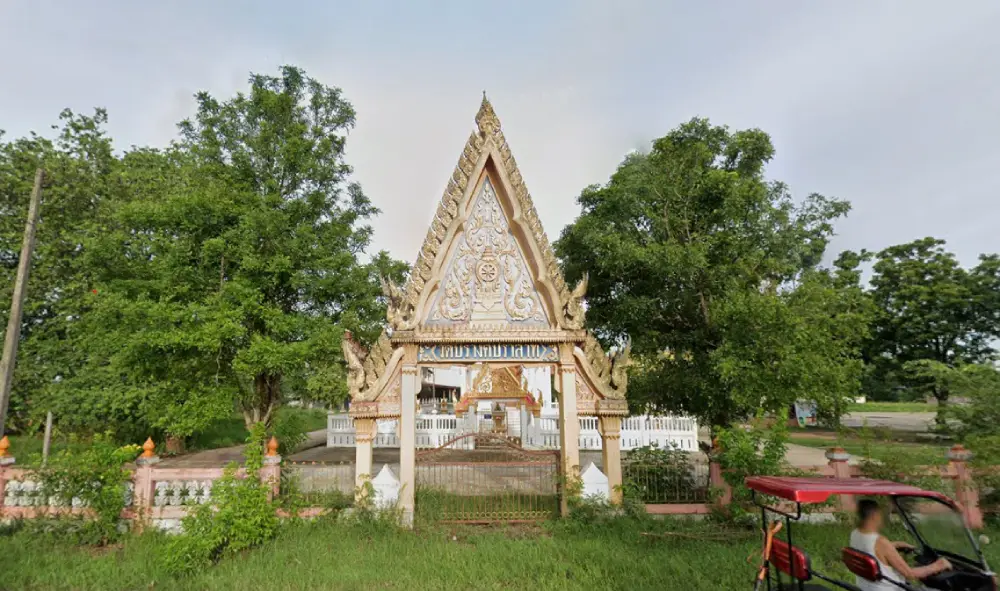
Wat Prang Prasat
Open Days: Daily
Opening Hours: 08.00 - 17.00
Wat Prang Prasat is located in Moo 8, Ban Khwao Subdistrict, Ban Khwao District, Chaiyaphum Province. Founded in 1932 and granted its royal consecrated boundary on 12 January 1979, the temple is an important community Buddhist temple for local monks, villagers, and Buddhist visitors. It serves as a place for religious activities, merit-making, meditation, local traditions, cultural continuity, and community gatherings. For foreign travelers who want to understand everyday Buddhism in rural northeastern Thailand, Wat Prang Prasat offers a calm and meaningful view of temple life in Ban Khwao.
Wat Prang Prasat is valuable not because it is a large tourist landmark, but because it remains a living religious center for the local community. The temple was created through local faith and has continued to exist through the cooperation of monks and villagers. Since its foundation in 1932, the temple has served as a spiritual refuge, a ceremonial venue, a place for community merit-making, and a shared space where people gather during important moments in village life.
The importance of Wat Prang Prasat can be seen in its daily role within the community. Local people come to the temple on Buddhist holy days, offer food to monks, listen to sermons, join Kathin and forest-robe ceremonies, participate in annual merit-making events, and take part in cultural activities connected with Buddhism. The temple is therefore more than a religious building. It is a place where generations meet, where children learn Buddhist manners, where adults preserve traditions, and where elderly residents find peace and spiritual support.
In the context of Ban Khwao District, Wat Prang Prasat forms part of an important religious and cultural landscape. Ban Khwao is known for its Isan community life, local crafts, agricultural roots, Buddhist traditions, and strong connection between temples and villages. Temples in this area are not separate from daily life. They are spaces where memory, faith, social cooperation, and moral values are passed down. Wat Prang Prasat therefore helps visitors understand Ban Khwao more deeply than a brief sightseeing stop would allow.
The name “Prang Prasat” carries a sense of sacredness, stability, and spiritual dignity. In Thai cultural language, the words “prang” and “prasat” often suggest elevated or significant religious structures associated with devotion and reverence. As a temple name, Wat Prang Prasat evokes the image of a sacred place that stands as a spiritual center for the community. The name fits the temple’s role as a place where villagers gather in faith and respect.
The temple’s founding in 1932 gives it a long historical presence in Ban Khwao. Over many decades, Wat Prang Prasat has witnessed changes in local transportation, economy, society, and village life. In earlier times, the community was more rural and travel was less convenient than it is today. As roads improved and the district became more connected, the temple’s essential role remained steady. It continued to be a place of merit, calm, religious practice, and cultural continuity.
The granting of the royal consecrated boundary on 12 January 1979 was a major milestone in the temple’s history. In Buddhist practice, a consecrated boundary allows important monastic ceremonies to be conducted properly, especially ordination and formal acts of the Sangha. This status confirms the temple’s ability to support important religious functions. Wat Prang Prasat is therefore significant both as a community temple and as a formal Buddhist institution within Ban Khwao District.
The monastic figure associated with Wat Prang Prasat is Chao Athikan Naphin Utthano, listed in the ecclesiastical records of Chaiyaphum as a senior monk connected with Wat Prang Prasat and as the ecclesiastical head of Ban Khwao Subdistrict Zone 1. In a community temple, such monastic leadership is important for maintaining temple order, guiding religious activities, coordinating with local Buddhists, and supporting the spiritual life of the community. Continuous monastic care helps the temple remain active and meaningful.
Inside Wat Prang Prasat are areas used for religious practice and community activities. These include worship areas, merit-making spaces, meditation areas, a temple courtyard, and areas used for annual ceremonies. A community temple is not designed only for visitors. It supports the real life of the village, from Buddhist holy day merit-making and sermons to annual festivals and family-related ceremonies. This living function gives the temple its cultural depth.
The worship area is the natural starting point for visitors. Paying respect to the Buddha, making merit, and setting the mind calmly are appropriate ways to begin a visit. Wat Prang Prasat has the quiet atmosphere of a local temple rather than the busy feeling of a major tourist site. It is suitable for travelers who want to slow down, reflect, and understand how Buddhism is practiced in ordinary village life.
The meditation and reflection areas are important for both monks and laypeople. Meditation in a community temple does not always require a long formal retreat. It can begin with paying respect, listening to Dhamma, sitting quietly, observing precepts, or walking mindfully around the temple grounds. This simple approach allows local people to use the temple as a place of calm in daily life and allows visitors to experience Buddhism in a natural and accessible way.
The temple courtyard reveals the relationship between temple and community most clearly. During festivals and merit-making events, villagers gather to prepare food, arrange the venue, welcome guests, and participate in Buddhist ceremonies. The courtyard becomes a shared space where community unity can be seen in action. Elderly residents meet one another, children learn by helping, adults organize activities, and monks provide spiritual guidance.
Wat Prang Prasat also preserves Buddhist traditions in Ban Khwao. Important activities commonly held at Isan community temples include Buddhist holy day merit-making, Makha Bucha, Visakha Bucha, Asalha Bucha, Buddhist Lent, the end of Buddhist Lent, Kathin, forest-robe offerings, Songkran merit-making, ordination ceremonies, memorial ceremonies, and family merit-making rituals. Through these activities, the temple remains part of the religious calendar and the social rhythm of the village.
Kathin is one of the most important annual ceremonies that shows the power of community faith. After the end of Buddhist Lent, Buddhists gather to offer robes to monks who have completed the rainy-season retreat. Kathin is not only a robe-offering ceremony. It is also a time when villagers, relatives, and supporters return to the temple, prepare food, arrange the grounds, welcome guests, and make merit together. Wat Prang Prasat therefore becomes a clear example of the relationship between monks and local people.
Forest-robe offerings are another form of community support that helps maintain and develop the temple. Such offerings arise from the faith of laypeople who wish to support temple buildings, religious activities, and shared community spaces. These ceremonies reflect the Thai Buddhist idea that a temple exists through mutual care. Monks support the spiritual life of the people, while laypeople support the temple and the Sangha.
During Buddhist Lent and the end of Buddhist Lent, Wat Prang Prasat becomes an important place for offerings, sermons, and community merit-making. Buddhist Lent is a period when monks remain in residence and laypeople have a chance to make merit regularly. The end of Lent leads into major ceremonies such as Kathin. This continuity keeps the temple active throughout the year and connects local life with the Buddhist calendar.
Wat Prang Prasat also has cultural value as a place where younger generations learn Buddhist manners and community responsibility. Children and youths learn how to pay respect to the Buddha, show respect to monks, help with temple activities, participate in ceremonies, and listen to elders. These lessons are learned through real experience, not only through formal teaching. The temple therefore acts quietly as a moral and cultural learning space for the community.
For visitors from outside the area, Wat Prang Prasat is a good place to understand the meaning of a local Isan temple. It shows that a temple is not only a ceremonial site, but also a place connected with families, relatives, memory, and mutual help within the village. A local temple may not be famous nationwide, yet it can be deeply meaningful to the people who live around it. Wat Prang Prasat has remained part of community life for many decades.
Ban Khwao District is suitable for slow cultural travel. Visitors can begin at Wat Prang Prasat for merit-making and a quiet temple visit, then continue to nearby places such as Wat Pathumawat, Wat Charoen Phon, Wat Koh Samakkhi, Ban Khwao Silk Road Community Market, Ban Non Ma Wo, and Ku Daeng Ban Kut Yang. This type of route gives travelers a broad view of Ban Khwao through temples, local markets, food, community life, and historical sites.
Wat Pathumawat is a nearby temple known for its Sunday Buddhist Study Center and moral training activities. Wat Charoen Phon and Wat Koh Samakkhi are also community temples that help show the network of faith across Ban Khwao. Visiting these temples together allows travelers to see how each community temple has its own role while still forming part of a larger Buddhist and cultural landscape. Wat Prang Prasat is an important stop within that route.
Ban Khwao Silk Road Community Market is a useful stop for travelers who want to experience local life after visiting the temple. The market adds food, daily life, and community atmosphere to the journey. A morning temple visit followed by a local meal or market walk makes the trip more complete, combining spiritual experience with everyday life in Ban Khwao.
Ban Non Ma Wo and Ku Daeng Ban Kut Yang can also be included in the route. Ban Non Ma Wo offers a view of rural Isan village life, while Ku Daeng Ban Kut Yang adds a historical and archaeological dimension to the journey. By connecting these places with Wat Prang Prasat, visitors can see Ban Khwao as a district shaped by Buddhism, community traditions, local landscapes, and older cultural traces.
Getting There is easiest by private car or rental car. From Chaiyaphum city, drive toward Ban Khwao District, then continue to Moo 8 on the Ban Khwao–Non Chan Road. The route is suitable for a day trip and can be combined with nearby places in Ban Khwao District. Travelers unfamiliar with village roads should check the route on a map before departure, especially when traveling in the evening.
Upon arrival, visitors should park only in appropriate areas and avoid blocking temple entrances or community roads. During merit-making events or special ceremonies, follow the guidance of local residents or temple attendants. Morning is a suitable time for merit-making, paying respect, and experiencing the calm temple atmosphere. Late morning and afternoon are suitable for walking around the temple and continuing to nearby restaurants, markets, or other temples.
Visitors should observe proper temple etiquette. Dress modestly, behave calmly, avoid loud noise in religious areas, remove shoes before entering designated sacred buildings, and avoid disturbing monks or people taking part in religious activities. If taking photographs of people, ask permission first, especially when photographing monks, elderly residents, children, or villagers participating in ceremonies. Respectful conduct helps visitors engage properly with the temple and its community.
Those who wish to make merit or offer items to monks should prepare appropriate offerings, such as dry food, necessary daily-use items, or donations according to personal faith. Offerings should be made respectfully and in accordance with temple customs. Groups planning organized activities should contact the temple in advance using the available public contact numbers, especially during festival periods or important Buddhist days.
Wat Prang Prasat is suitable for travelers looking for a peaceful and meaningful temple visit in Chaiyaphum. It is especially appropriate for those interested in community temples, local history, Isan Buddhist traditions, and simple meditation. The temple may not be a large tourist attraction, but its value lies in its real role for local people. It is a place where monks conduct religious activities, villagers gather for merit-making, and visitors can experience the calm of Buddhism in a local community setting.
Overall, Wat Prang Prasat clearly tells the story of the relationship between Buddhism and the Ban Khwao community. Founded in 1932 and granted its consecrated boundary on 12 January 1979, the temple continues to serve as a place for religious activities, meditation, traditions, cultural continuity, and community unity. Its beauty is not defined by grandeur but by the continuity of faith and the meaning it holds for local people.
Wat Prang Prasat deserves a place in the travel plans of visitors who want to understand Ban Khwao more deeply. A visit can be a personal merit-making stop, a cultural learning experience, a study of local Isan temple life, or the starting point for exploring nearby markets, temples, and historical sites. What visitors gain is not only a view of a temple, but an understanding of how temples remain central to Thai society, especially in Isan communities where Buddhism, family, tradition, and community unity remain closely connected.
| Name | Wat Prang Prasat |
| Location | Moo 8, Ban Khwao Subdistrict, Ban Khwao District, Chaiyaphum Province |
| Address | No. 23, Moo 8, Ban Khwao–Non Chan Road, Ban Khwao Subdistrict, Ban Khwao District, Chaiyaphum 36170, Thailand |
| Highlights | A long-established community temple founded in 1932, serving as a center for Buddhist activities, meditation, local traditions, culture, and community faith in Ban Khwao |
| History | Founded in 1932 and granted its royal consecrated boundary on 12 January 1979; the temple continues to serve as a local Buddhist center in Ban Khwao |
| Name Origin | The name “Prang Prasat” suggests sacredness, stability, and the dignity of a religious place respected by the local community |
| Distinctive Features | A peaceful Isan community temple suitable for merit-making, Buddhist practice, local cultural learning, and understanding village temple life in Ban Khwao |
| Travel Information | Best reached by private car or rental car from Chaiyaphum city toward Ban Khwao District, then onward to Moo 8 on the Ban Khwao–Non Chan Road |
| Current Status | Open as an active community temple used for Buddhist ceremonies, merit-making, meditation, local traditions, and religious activities |
| Open Days | Daily |
| Opening Hours | 08.00 - 17.00 |
| Facilities | Worship areas, merit-making spaces, meditation areas, temple courtyard, and spaces for Buddhist ceremonies and community traditions |
| Main Areas / Zones | Monastic activity area, worship area, meditation area, community courtyard, and areas for annual Buddhist ceremonies and local merit-making events |
| Abbot / Caretaker | Chao Athikan Naphin Utthano |
| Main Contact Number | 044-891-030, 098-190-3465 |
| Nearby Tourist Attractions | 1. Wat Pathumawat, about 4 km 2. Wat Charoen Phon, about 5 km 3. Ban Khwao Silk Road Community Market, about 5 km 4. Wat Koh Samakkhi, about 7 km 5. Ku Daeng Ban Kut Yang, about 14 km |
| Nearby Restaurants | 1. Rim Bueng Restaurant, about 5 km, Tel. 044-891-118, 081-064-7345 2. Pama Cafe, about 5 km, Tel. 095-621-9256, 061-103-9365 3. Phon Jaew Hon, about 7 km, Tel. 086-793-9553, 082-623-2090 4. Krua Mae Bueng, about 8 km, Tel. 093-378-6993 5. Krua Don Phai Restaurant, about 12 km, Tel. 088-594-6935 6. Kru Thum Shabu Restaurant, about 12 km, Tel. 096-612-2190 |
| Nearby Accommodations | 1. Ban Khwao Resort, about 5 km, Tel. 089-464-3138 2. Phumisap Resort, about 6 km, Tel. 081-790-7747, 085-308-8355 3. Ban Suan Rim Huai Resort, about 14 km, Tel. 089-949-6046 4. The Wonders Hotel Chaiyaphum, about 35 km, Tel. 099-453-2669 5. NaCare Hotel Chaiyaphum, about 36 km, Tel. 099-014-7921, 080-723-2200 |
Frequently Asked Questions (FAQ)
Q: Where is Wat Prang Prasat located?
A: Wat Prang Prasat is located in Moo 8, Ban Khwao Subdistrict, Ban Khwao District, Chaiyaphum Province.
Q: When was Wat Prang Prasat founded?
A: Wat Prang Prasat was founded in 1932 and received its royal consecrated boundary on 12 January 1979.
Q: Why is Wat Prang Prasat important?
A: It is a spiritual center for local people, used for Buddhist activities, merit-making, meditation, traditions, cultural events, and community religious life.
Q: Who is the caretaker monk associated with Wat Prang Prasat?
A: The monastic figure listed in ecclesiastical records for Wat Prang Prasat is Chao Athikan Naphin Utthano.
Q: What are the opening hours of Wat Prang Prasat?
A: The temple is open daily from 08.00 to 17.00.
Q: How can travelers get to Wat Prang Prasat?
A: The easiest way is by private car or rental car from Chaiyaphum city toward Ban Khwao District, then onward to Moo 8 on the Ban Khwao–Non Chan Road.
Q: Who should visit Wat Prang Prasat?
A: It is suitable for travelers interested in merit-making, meditation, local Buddhist culture, Isan community temples, and the quiet spiritual side of Chaiyaphum.
Q: Are there nearby attractions around Wat Prang Prasat?
A: Nearby places include Wat Pathumawat, Wat Charoen Phon, Ban Khwao Silk Road Community Market, Wat Koh Samakkhi, and Ku Daeng Ban Kut Yang.
Mobile : 0981903465
 Mobile : 0981903465
 Category: ●Places of Worship
 Group: ●Temple
Last Update : 3 MonthAgo
 Last Update : 3 MonthAgo
 Click to Access the Navigation Map GPS
 Art, Culture and Heritage
 Historical Sites and Monuments(1)
 Landmarks and Memorials(3)
 Royal Palace(1)
 Art, Craft Centres, Tradition(3)
 Educational Places
 Educational Gardens, Farm(1)
Temple(141)
Educational Gardens, Farm(1)
Temple(141)
 Other Sacred Sites(7)
 Suburban Living
 Village, Community(4)
 Nature and Wildlife
 National Parks and Marine Reserves(7)
 Mountain (Doi)(5)
 Dam, Reservoir, Lake(10)
 Waterfalls(15)
 Caves(5)
 River, Canal(4)
 Other natural attractions(1)
 Entertainment and Agricultural
 Farms, Parks and Ecotourism(2)


