
lovethailand home >Northeastern Travel Attractions >Chaiyaphum Travel Attractions >Ban Klwao >Ban Klwao > Wat Pathumawat
TL;DR: Wat Pathumawat is located at Moo 1, Ban Khwao Subdistrict, Ban Khwao District, Chaiyaphum Province, open Daily, hours 08.00 - 17.00.
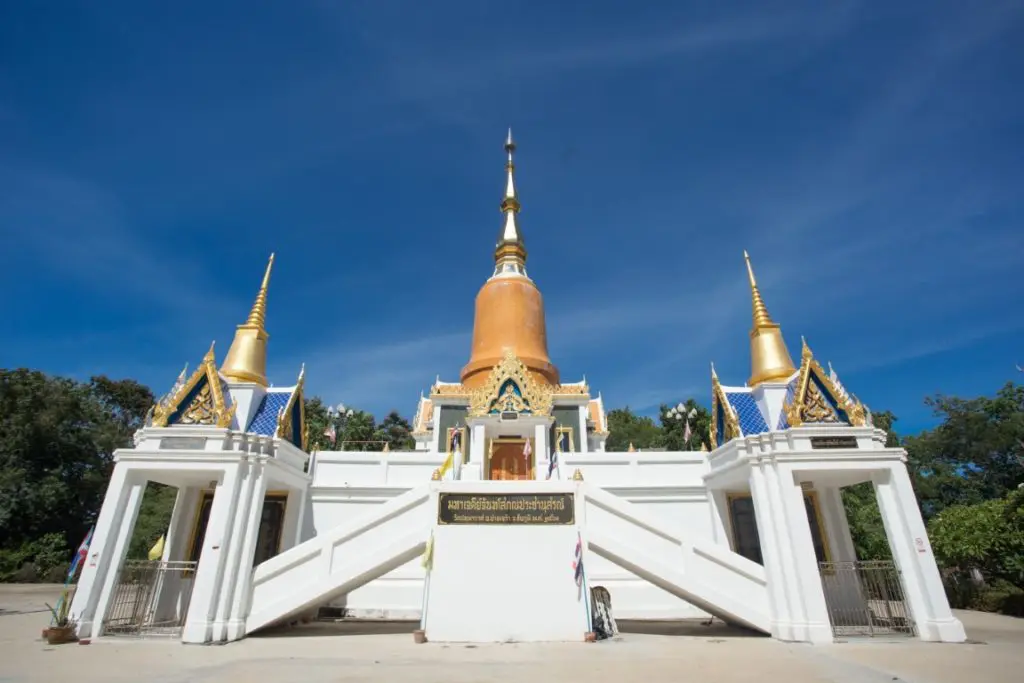
Wat Pathumawat
Open Days: Daily
Opening Hours: 08.00 - 17.00
Wat Pathumawat is located in Moo 1, Ban Khwao Subdistrict, Ban Khwao District, Chaiyaphum Province. It is a local Buddhist temple under the Mahanikaya order and plays an important role in the religious, educational, and moral life of the Ban Khwao community. The temple was built in 1963, officially established on 4 December 1967, and granted its royal consecrated boundary on 28 June 1998. Today, Wat Pathumawat serves as a spiritual center for local people, a place for Buddhist practice, a center for moral and ethical training, and the home of a Sunday Buddhist Study Center. For foreign travelers, it offers a meaningful way to understand community-based Buddhism in rural northeastern Thailand.
Wat Pathumawat is significant because it connects local history, meditation practice, Buddhist education, and community traditions in one place. It is not a temple known primarily for large-scale tourism or monumental architecture. Its value lies in the real role it continues to play in local life. Villagers come here to make merit, listen to sermons, offer food to monks, join annual ceremonies, and participate in community activities. The temple remains a dependable spiritual center where people gather not only for religious ceremonies but also for moral learning, social cooperation, and cultural continuity.
In the wider context of Ban Khwao District, Wat Pathumawat is part of a network of community temples that helps explain how local life has developed over time. Ban Khwao is known for rural traditions, agriculture, local craftsmanship, Buddhist culture, and strong ties between temples and communities. Temples in this district are not separate from everyday life. They are places where memories, family relationships, moral values, and communal cooperation are passed from one generation to the next. Wat Pathumawat therefore helps visitors see Ban Khwao more deeply than a short sightseeing stop would allow.
The history of Wat Pathumawat is closely linked to a quiet forest-like setting and Buddhist practice. In the past, the area was peaceful, surrounded by dense vegetation and located near a pond where lotus flowers grew. Monks from Wat Matchimawat came to reside and built small simple huts suitable for meditation and monastic life. The temple began from simplicity, solitude, and spiritual practice before gradually developing into a community temple with religious buildings and wider social roles. This origin gives Wat Pathumawat a strong association with calmness, meditation, and the natural setting of old Ban Khwao.
The temple was originally known as “Wat Pathumwanaram,” a name that reflected its environment of lotus-filled water and woodland. “Pathum” means lotus, an important symbol in Buddhism. The lotus represents purity, spiritual growth, and awakening because it rises cleanly from muddy water. “Awas” means dwelling place or temple. The name “Pathumawat” can therefore be understood as a lotus monastery, or a sacred place that supports spiritual growth. Its name beautifully connects local landscape with Buddhist meaning.
The official establishment of the temple on 4 December 1967 was an important milestone. It marked the transformation of a quiet place of practice into a recognized temple serving the local community. After that, religious buildings and facilities were developed to support monastic activities, merit-making, lay participation, and moral education. The temple’s growth was not only about construction. It was the result of cooperation among monks, villagers, and supporters who saw the temple as a place for cultivating goodness and strengthening the community.
The granting of the royal consecrated boundary on 28 June 1998 was another important moment in the temple’s development. In Buddhist practice, a consecrated boundary allows important monastic ceremonies to be performed properly, especially ordination and formal acts of the Sangha. This status strengthened Wat Pathumawat as a complete Buddhist institution in Ban Khwao. It confirmed the temple’s ability to serve both monks and lay Buddhists in a formal religious capacity.
Wat Pathumawat is especially notable for its educational role. The temple has a Sunday Buddhist Study Center, which is important for children, youths, and local residents. Such centers help people learn basic Buddhist teachings, religious manners, moral discipline, gratitude, responsibility, and proper conduct in community life. The temple is therefore more than a place for rituals. It is a learning space that helps shape character and supports moral development within the community.
The Sunday Buddhist Study Center gives Wat Pathumawat special importance for younger generations. Children and youths who join temple activities learn through listening, practice, and participation. They learn how to pay respect to the Buddha, chant, listen to teachings, help with temple activities, respect monks and elders, and understand Buddhist festivals. These lessons are practical and lived. They allow young people to understand their own culture through direct experience rather than only through schoolbooks.
The abbot of Wat Pathumawat is Phra Khru Wimon Chanthasophon. He plays an important role in maintaining the temple and guiding Buddhist activities in Ban Khwao. His role is connected not only with temple administration but also with monastic leadership, local Buddhist education, moral training, and community religious life. A temple with continuous leadership can organize ceremonies, support the Sunday Buddhist Study Center, care for monks, and remain a stable spiritual center for local Buddhists.
Within the temple grounds are several areas for religious and community activities. These include the ordination hall, worship areas, sermon and learning spaces, monks’ residences, a temple courtyard, meditation areas, and spaces for moral training. Together, these areas allow the temple to support many groups of people: monks, villagers, students, parents, elderly residents, and visitors from outside the district. Wat Pathumawat is therefore not a static historical site but a living temple used by the community.
The ordination hall is one of the most important sacred areas of the temple. Visitors should treat this space with special respect. It is a place for formal Buddhist practice and important monastic functions. Paying respect to the Buddha image, making merit, sitting quietly, or reflecting on the Triple Gem—the Buddha, the Dhamma, and the Sangha—can help visitors experience the peaceful atmosphere of a Thai community temple. The experience is simple, calm, and deeply connected to Buddhist values.
The sermon and moral training areas represent another important aspect of Wat Pathumawat. The temple does not only host rituals; it also promotes understanding of the Dhamma. Listening to sermons allows local people to reflect on their lives and apply Buddhist principles in daily situations. Moral training for children and youths helps cultivate honesty, patience, gratitude, and responsibility. This makes the temple important not only as a sacred place but also as a center for human development.
The temple courtyard clearly shows the role of the temple as a community center. During festivals and merit-making events, villagers gather to prepare food, welcome guests, offer alms, arrange ceremonies, and help with temple work. Elderly residents meet one another, young people help with community tasks, adults organize activities, and monks provide spiritual guidance. In this way, the courtyard becomes a living space where faith, cooperation, and local identity come together.
One of the most important traditions associated with Wat Pathumawat is the Bun Duean Sam festival and the worship ceremony for the replica Buddha’s Footprint. This community merit-making event reflects local faith and the continuation of Buddhist tradition in Ban Khwao. Buddhists come to make merit, apply gold leaf, pay respect to sacred objects, and take part in temple activities. The festival brings religious, cultural, and social meaning together in a way that shows the temple’s central role in the community.
The worship of the replica Buddha’s Footprint has strong religious meaning. In Buddhism, the Buddha’s Footprint is a symbol of remembrance of the Buddha and the path of Dhamma. Applying gold leaf and paying respect to the footprint are acts of devotion and merit-making. When this ceremony is held at Wat Pathumawat, it becomes more than a ritual. It becomes a moment when villagers gather, preserve tradition, and reaffirm the relationship between the temple and the Ban Khwao community.
Kathin is another important annual tradition connected with Wat Pathumawat. After the end of Buddhist Lent, villagers and supporters gather to offer robes to monks who have completed the rainy-season retreat. Kathin is not only a robe-offering ceremony. It is also a strong expression of community unity. People help prepare food, arrange the temple, welcome visitors, make donations, and support the Sangha. The ceremony shows how faith becomes practical cooperation.
Other Buddhist occasions are also part of the temple’s yearly rhythm. These include Makha Bucha, Visakha Bucha, Asalha Bucha, Buddhist Lent, the end of Buddhist Lent, and regular Buddhist holy days. Local people come to the temple to make merit, listen to sermons, observe precepts, join candlelight processions, and take part in traditional activities. These events keep the temple active throughout the year and connect local life to the Buddhist calendar.
Wat Pathumawat is also suitable for visitors seeking a peaceful place for meditation or quiet reflection. Its origin as a place of monastic practice gives the temple a calm character. Visitors can pay respect to the Buddha, sit quietly, listen to teachings, or walk respectfully around the temple grounds. Meditation at a community temple does not need to begin with a formal retreat. It can begin simply with mindful behavior, quiet speech, and a respectful heart while visiting the temple.
For families in Ban Khwao, Wat Pathumawat is meaningful as a place where children can learn values. Parents can bring their children to make merit, join Sunday Buddhist learning activities, and participate in temple traditions. The Sunday Buddhist Study Center connects religion and education in a practical way. Children do not learn only prayers or ceremonies. They learn respect, responsibility, community service, and how to live together with others in a culturally appropriate way.
Wat Pathumawat is also valuable for understanding local history. Its story is connected with Wat Matchimawat, the older central temple of Ban Khwao, and with the former landscape of woodland and lotus ponds. Learning about Wat Pathumawat helps visitors understand how temples developed in different parts of Ban Khwao as the community expanded. Local temples are connected to neighborhoods, farming areas, roads, and the need for sacred spaces that serve people in each part of the community.
Visitors can easily combine Wat Pathumawat with nearby temples and community places in Ban Khwao District. Nearby places include Wat Charoen Phon, Wat Koh Samakkhi, Wat Matchimawat, Ban Khwao Silk Road Community Market, and Ku Daeng Ban Kut Yang. This type of route gives travelers a wider view of Ban Khwao. Instead of seeing only one temple, visitors can understand the relationship among temples, markets, local food, village life, and historical sites.
Ban Khwao Silk Road Community Market is a suitable stop after visiting Wat Pathumawat. It reflects the everyday life of the district through food, small shops, and local community atmosphere. Combining a temple visit with the market adds a food and lifestyle dimension to the trip. It allows travelers to experience Ban Khwao both as a spiritual community and as a living local town.
Ku Daeng Ban Kut Yang can also be included for travelers interested in local history and archaeology. This ancient site adds a historical layer to the journey. It shows that Ban Khwao and nearby areas are not only connected to modern Buddhist communities but also to older cultural traces in the lower northeastern region. A route from Wat Pathumawat to historical sites helps create a trip that includes religion, culture, and the deeper past of the area.
Getting There is easiest by private car or rental car. From Chaiyaphum city, drive toward Ban Khwao District, then continue into Ban Khwao Subdistrict and Moo 1. The route is suitable for a day trip and can easily be combined with nearby temples, restaurants, markets, and accommodations in Ban Khwao. Travelers unfamiliar with the village roads should check the map before departure, especially when traveling in the evening or during temple festival periods.
Upon arrival, visitors should park in appropriate areas and avoid blocking temple entrances or community roads. During Bun Duean Sam, Kathin, or other major ceremonies, follow the guidance of local residents or temple attendants. Morning is a good time for merit-making and paying respect, while late morning and afternoon are suitable for walking around the temple, joining available activities, or continuing to nearby restaurants and cultural places.
Visitors should observe proper temple etiquette. Dress modestly, behave calmly, avoid loud noise in religious areas, remove shoes before entering designated sacred buildings, and avoid disturbing monks or people practicing religion. If taking photographs of people, ask permission first, especially when photographing monks, children, youths, or villagers participating in ceremonies. Respectful conduct helps visitors experience the temple properly and honors its role as a sacred community space.
For foreign travelers, Wat Pathumawat is a meaningful example of an Isan community temple. It shows that Buddhism in rural Thailand is not limited to large monuments or famous tourist temples. It lives through everyday actions: making merit, listening to teachings, training children, organizing festivals, supporting monks, and maintaining the bond between temple and community. This makes the temple suitable for travelers who want to understand Thai culture in a simple and authentic way.
Overall, Wat Pathumawat has important religious, educational, and community roles. It has a clear history, an official consecrated boundary, an active abbot, a Sunday Buddhist Study Center, annual traditions such as Bun Duean Sam and the worship of the replica Buddha’s Footprint, and a continuing function as a moral training center. Its importance is not limited to buildings. It extends to people, learning, community cooperation, and the preservation of Buddhist values in Ban Khwao District.
Wat Pathumawat deserves a place in the travel plans of visitors seeking a peaceful and culturally meaningful temple in Chaiyaphum. Travelers can pay respect at a community temple rooted in meditation, learn the meaning of a lotus-related temple name, understand the role of a Sunday Buddhist Study Center, and see how one local temple can serve as a sacred place, a moral school, and a community center at the same time. This temple clearly reflects the relationship between Buddhism, local society, and Isan culture.
| Name | Wat Pathumawat |
| Location | Moo 1, Ban Khwao Subdistrict, Ban Khwao District, Chaiyaphum Province |
| Address | No. 794, Moo 1, Ban Khwao Subdistrict, Ban Khwao District, Chaiyaphum 36170, Thailand |
| Highlights | A community temple in Ban Khwao with a Sunday Buddhist Study Center, serving as a spiritual center and a place for moral and ethical training |
| History | Began as a quiet place of Buddhist practice, built in 1963, officially established on 4 December 1967, and granted its royal consecrated boundary on 28 June 1998 |
| Name Origin | Originally known as Wat Pathumwanaram, the temple later became Wat Pathumawat. “Pathum” means lotus, reflecting the former lotus-filled pond nearby and symbolizing purity and spiritual growth |
| Distinctive Features | An Isan community temple with strong roles in Buddhist education, meditation, local ceremonies, moral training, and youth development |
| Travel Information | Best reached by private car or rental car from Chaiyaphum city toward Ban Khwao District, then onward to Ban Khwao Subdistrict and Moo 1 |
| Current Status | Open as an active community temple used for Buddhist ceremonies, merit-making, meditation, moral training, and Sunday Buddhist education |
| Open Days | Daily |
| Opening Hours | 08.00 - 17.00 |
| Facilities | Worship areas, sermon and learning areas, meditation areas, temple courtyard, community activity spaces, and Sunday Buddhist Study Center |
| Main Areas / Zones | Ordination hall area, worship area, Sunday Buddhist Study Center, moral training area, meditation area, community courtyard, and festival activity spaces |
| Abbot / Caretaker | Phra Khru Wimon Chanthasophon |
| Main Contact Number | 044-839-754 |
| Nearby Tourist Attractions | 1. Wat Charoen Phon, about 2 km 2. Ban Khwao Silk Road Community Market, about 2 km 3. Wat Koh Samakkhi, about 4 km 4. Ban Non Ma Wo, about 6 km 5. Ku Daeng Ban Kut Yang, about 13 km |
| Nearby Restaurants | 1. Rim Bueng Restaurant, about 2 km, Tel. 044-891-118, 081-064-7345 2. Pama Cafe, about 2 km, Tel. 095-621-9256, 061-103-9365 3. Jaew Hon Nai Phon, about 2 km, Tel. 095-786-3988 4. Krua Mae Bueng, about 8 km, Tel. 093-378-6993 5. Krua Don Phai Restaurant, about 10 km, Tel. 088-594-6935 6. Kru Thum Shabu Restaurant, about 10 km, Tel. 096-612-2190 |
| Nearby Accommodations | 1. Ban Khwao Resort, about 2 km, Tel. 089-464-3138 2. Phumisap Resort, about 3 km, Tel. 081-790-7747, 085-308-8355 3. Ban Suan Rim Huai Resort, about 12 km, Tel. 089-949-6046 4. The Wonders Hotel Chaiyaphum, about 32 km, Tel. 099-453-2669 5. NaCare Hotel Chaiyaphum, about 33 km, Tel. 099-014-7921, 080-723-2200 |
Frequently Asked Questions (FAQ)
Q: Where is Wat Pathumawat located?
A: Wat Pathumawat is located in Moo 1, Ban Khwao Subdistrict, Ban Khwao District, Chaiyaphum Province.
Q: What is the history of Wat Pathumawat?
A: Wat Pathumawat began as a quiet place of Buddhist practice, was built in 1963, officially established on 4 December 1967, and granted its royal consecrated boundary on 28 June 1998.
Q: Why is Wat Pathumawat important to the local community?
A: It is a spiritual center for local people, a place for Buddhist practice, a venue for religious activities, and a center for moral and ethical training through its Sunday Buddhist Study Center.
Q: Who is the abbot of Wat Pathumawat?
A: The abbot of Wat Pathumawat is Phra Khru Wimon Chanthasophon.
Q: What important tradition is associated with Wat Pathumawat?
A: The temple is associated with Bun Duean Sam and the worship ceremony for the replica Buddha’s Footprint, as well as Kathin and other major Buddhist observances.
Q: What are the opening hours of Wat Pathumawat?
A: The temple is open daily from 08.00 to 17.00.
Q: How can travelers get to Wat Pathumawat?
A: The easiest way is by private car or rental car from Chaiyaphum city toward Ban Khwao District, then onward to Ban Khwao Subdistrict and Moo 1.
Q: Are there nearby attractions around Wat Pathumawat?
A: Nearby places include Wat Charoen Phon, Ban Khwao Silk Road Community Market, Wat Koh Samakkhi, Ban Non Ma Wo, and Ku Daeng Ban Kut Yang.
 Category: ●Places of Worship
 Group: ●Temple
Last Update : 3 DayAgo
 Last Update : 3 DayAgo
 Click to Access the Navigation Map GPS
 Art, Culture and Heritage
 Historical Sites and Monuments(1)
 Landmarks and Memorials(3)
 Royal Palace(1)
 Art, Craft Centres, Tradition(3)
 Educational Places
 Educational Gardens, Farm(1)
Temple(141)
Educational Gardens, Farm(1)
Temple(141)
 Other Sacred Sites(7)
 Suburban Living
 Village, Community(4)
 Nature and Wildlife
 National Parks and Marine Reserves(7)
 Mountain (Doi)(5)
 Dam, Reservoir, Lake(10)
 Waterfalls(15)
 Caves(5)
 River, Canal(4)
 Other natural attractions(1)
 Entertainment and Agricultural
 Farms, Parks and Ecotourism(2)


