
lovethailand home >Northeastern Travel Attractions >Chaiyaphum Travel Attractions >Ban Klwao >Ban Klwao > Wat Charoen Phon
TL;DR: Wat Charoen Phon is located at Moo 2, Ban Khwao Subdistrict, Ban Khwao District, Chaiyaphum Province, open Daily, hours 08.00 - 17.00.
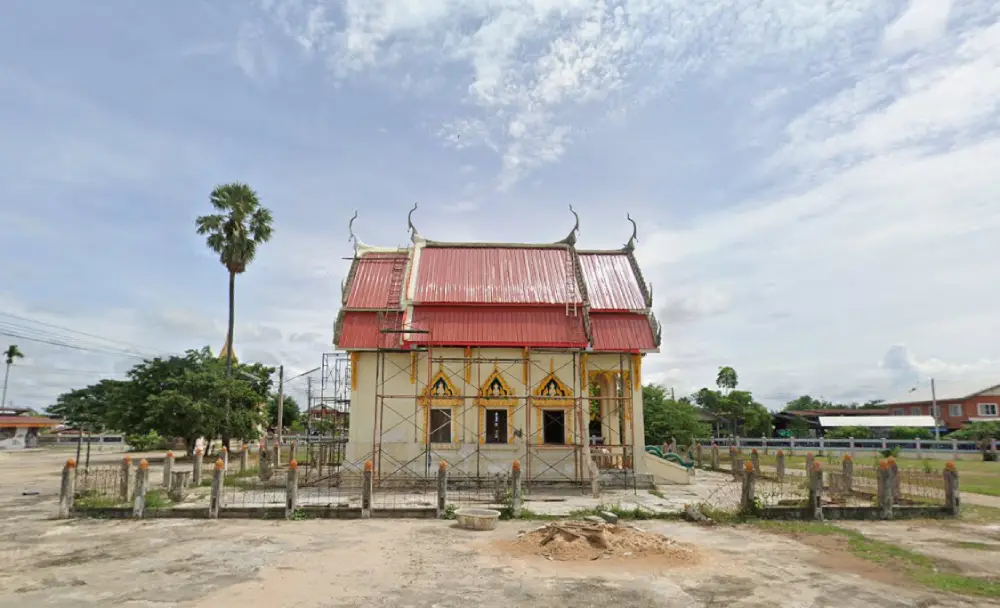
Wat Charoen Phon
Open Days: Daily
Opening Hours: 08.00 - 17.00
Wat Charoen Phon is located in Moo 2, Ban Khwao Subdistrict, Ban Khwao District, Chaiyaphum Province. It is a local Buddhist temple under the Mahanikaya order and plays an important role in the religious and cultural life of the Ban Khwao community. The temple serves as a place for monks, villagers, and Buddhist visitors to hold religious activities, make merit, practice meditation, preserve local traditions, and gather as a community. For foreign travelers who want to understand everyday Buddhism in rural northeastern Thailand, Wat Charoen Phon offers a calm and meaningful view of temple life in Chaiyaphum.
Wat Charoen Phon is important because it is closely connected with the people of Ban Khwao. Unlike major tourist temples that are known mainly for architecture or large visitor numbers, this temple is valuable because it continues to serve the real needs of the local community. Villagers come here to make merit, offer food to monks, listen to sermons, join Kathin and other annual ceremonies, and take part in cultural activities. The temple is therefore not only a place of worship but also a spiritual and social center for the village.
For travelers who want to understand Ban Khwao more deeply, Wat Charoen Phon is an excellent place to begin. Ban Khwao District is known for rural life, local craftsmanship, Buddhist traditions, and strong community ties. Temples in this area are deeply connected to everyday life. They are places where religion, family, local customs, and social cooperation meet. Wat Charoen Phon represents this relationship clearly, showing how Buddhism remains part of the daily rhythm of rural Isan communities.
Temple history records that Wat Charoen Phon was officially established in 1922 and received its consecrated boundary in 1957. Local information also refers to important construction and development of temple buildings in 1991. This means the temple has old community roots and has continued to develop over time through the faith and cooperation of local residents. Rather than viewing the temple through only one date, it is best understood as a religious site that was established early, officially consecrated in the mid-20th century, and later expanded to support community activities.
The granting of the consecrated boundary in 1957 is significant in Buddhist terms. A consecrated boundary allows important monastic ceremonies to be conducted properly, especially ordination and other formal acts of the Sangha. This status strengthened the temple’s role as a complete Buddhist institution in Ban Khwao District. Wat Charoen Phon is therefore not merely a gathering place for villagers but also a temple with formal religious importance.
The name “Charoen Phon” carries an auspicious meaning. “Charoen” suggests growth, prosperity, and flourishing, while “Phon” refers to results or outcomes. Together, the name can be understood as the flourishing result of good deeds and merit. As a temple name, it reflects the community’s wish for the temple to be a place where people cultivate goodness, make merit, develop their minds, and create positive outcomes for themselves and the village.
Wat Charoen Phon has also been known locally by a traditional community name, “Wat Noi Khang Khua.” Such local names are culturally valuable because they preserve the memory of place, speech, and community geography. They show that the temple is not an isolated religious structure but part of a lived landscape made up of neighborhoods, pathways, fields, families, and shared local history. This gives the temple an identity that is deeply rooted in Ban Khwao.
The temple grounds include important religious buildings and community spaces. Historical information mentions an ordination hall, a sermon hall, monks’ residences, a merit-making hall, and several Buddha images. These facilities allow the temple to support many types of activities, including monastic ceremonies, Buddhist sermons, village meetings, merit-making, memorial rites, and quiet visits for prayer. The temple’s value lies in how these spaces are used continuously by monks and laypeople.
The ordination hall is one of the most important sacred areas of the temple. It represents the heart of formal Buddhist practice and monastic discipline. Visitors who enter the temple grounds should treat this area with particular respect. Paying homage to the Buddha image, sitting quietly, or reflecting on the Triple Gem—the Buddha, the Dhamma, and the Sangha—allows travelers to experience the calm spiritual atmosphere of a local Thai temple.
The sermon hall reflects the temple’s role as a community center. On Buddhist holy days and important religious occasions, villagers gather there to offer food to monks, listen to teachings, observe moral precepts, and take part in ceremonies. The hall also supports community meetings, annual merit-making events, Kathin ceremonies, forest-robe offerings, Songkran merit-making, and family-related rituals. In this way, the temple hall connects the monastic community with the everyday lives of local people.
The monks’ residences are also important because they support the daily life of resident monks. A temple with monks in residence remains active as a place of Buddhist practice. Kathin records note that Wat Charoen Phon has five monks in residence, showing that the temple continues to function as a living Buddhist site. This presence also shows that local people still support the temple through offerings, ceremonies, and regular acts of merit.
The merit-making hall is connected to important family and community rituals. Local people use the temple for memorial ceremonies, dedication of merit, and other Buddhist rites connected with life events. This role makes the temple meaningful not only during joyful occasions but also during times of loss and reflection. In Thai community life, the temple often accompanies people through birth, ordination, marriage, household merit-making, and funerary rituals.
The abbot of Wat Charoen Phon is Phra Athikan Samroeng Chutintharo, whose name appears in Kathin records for the temple. In a community temple, the abbot’s role is essential. He oversees temple discipline, supports Buddhist ceremonies, coordinates with local laypeople, maintains the temple grounds, and guides the spiritual life of the community. The abbot is therefore both the caretaker of the religious site and a spiritual leader for local Buddhists.
Wat Charoen Phon is also associated with local annual merit-making traditions, including the community event honoring Luang Pu Pho. This type of ceremony reflects local gratitude and respect toward respected monks or spiritual figures remembered by villagers. It gives local people a chance to gather, make merit, offer respect, join temple activities, and preserve shared memory. Such events show that the temple continues to be a living cultural space rather than only a historical place.
Kathin is another important annual tradition connected with Wat Charoen Phon. After the end of Buddhist Lent, villagers and supporters gather to offer robes to monks who have completed the rainy-season retreat. At a rural community temple, Kathin is not only a religious ceremony. It is also a major expression of community unity. People help prepare food, arrange offerings, welcome guests, clean the temple, and support the Sangha. This makes Kathin one of the clearest examples of cooperation between temple and village.
Other Buddhist occasions are also part of the temple’s yearly rhythm. These include Makha Bucha, Visakha Bucha, Asalha Bucha, Buddhist Lent, the end of Buddhist Lent, and regular Buddhist holy days. Villagers come to the temple to offer food, listen to sermons, join candlelight processions, observe precepts, and make merit. These events keep the temple active throughout the year and connect local life with the Buddhist calendar.
Wat Charoen Phon is also a place for quiet Buddhist practice. Its simple and calm atmosphere makes it suitable for visitors who want to pray, meditate briefly, or spend time in reflection. It may not be a large formal meditation center for tourists, but it has the peaceful environment of a local temple where people can slow down and reconnect with themselves. A respectful visit can begin with paying homage to the Buddha, making merit, sitting quietly, or walking mindfully around the temple grounds.
Culturally, the temple helps pass religious manners and community values from one generation to the next. Children and young people learn how to pay respect to monks, offer food, join merit-making events, help elders during temple activities, and participate in community work. These lessons are learned through real experience rather than classroom instruction. In this sense, Wat Charoen Phon acts as a cultural classroom for Ban Khwao.
Wat Charoen Phon also illustrates the importance of local temples in Thai society. Many community temples are not famous tourist attractions, but they are deeply meaningful to the people who live around them. They are built and maintained through local faith, supported by laypeople, and used for the spiritual and social needs of the village. This relationship between temple and community remains one of the strongest foundations of rural Thai culture.
Visitors to Wat Charoen Phon will experience a quiet local temple that still functions in everyday life. The atmosphere is modest, calm, and respectful. Travelers should dress properly, speak softly, avoid disturbing monks or people practicing religion, and ask permission before photographing individuals, especially monks, elderly residents, and people participating in ceremonies. A visit to this kind of temple should be based on respect for both the sacred place and the community that cares for it.
For travelers interested in local history, Wat Charoen Phon can be connected with the wider history of Ban Khwao. Local accounts mention Wat Charoen Phon as one of the important temples of the Ban Khwao community, alongside Wat Matchimawat, Wat Sala Loi, Wat Pathumawat, and Wat Nong Ta Kai. These temples reflect the development of the village, the growth of different neighborhoods, and the need for religious spaces that served expanding community life. Visiting temples in Ban Khwao is therefore a way to read local history through sacred sites.
Wat Matchimawat, often associated with the older central temple of Ban Khwao, is closely tied to community history. Wat Pathumawat has a peaceful character linked to meditation and a former landscape of woodland and lotus-filled water. These temples show that Ban Khwao has a network of local religious sites, each with its own history and relationship to the community. Wat Charoen Phon is one part of this religious and cultural landscape.
Beyond temple visits, travelers can combine Wat Charoen Phon with Ban Khwao Silk Road Community Market. The market offers local food, small shops, and a lively village atmosphere. Visiting the market after making merit at the temple adds another dimension to the trip. It connects the spiritual side of Ban Khwao with everyday local life, food culture, and community economy.
Ban Non Ma Wo and Ku Daeng Ban Kut Yang can also be included in a cultural route. Ban Non Ma Wo offers a village atmosphere and rural scenery, while Ku Daeng Ban Kut Yang adds a historical and archaeological dimension. Combining these places with Wat Charoen Phon allows travelers to see Ban Khwao from several angles: Buddhism, community life, local food, rural landscape, and historical heritage.
Ban Khwao District is well suited to slow travel. Distances between temples, markets, restaurants, and accommodations are manageable, allowing travelers to plan a half-day or full-day route. A good itinerary can begin with merit-making at Wat Charoen Phon, continue to nearby temples or the community market, stop for local food, and end with accommodation in Ban Khwao or Chaiyaphum city. This style of travel is calm, practical, and culturally rewarding.
Getting There is easiest by private car or rental car. From Chaiyaphum city, drive toward Ban Khwao District, then continue into Ban Khwao Subdistrict and Moo 2. The temple is in a local community area, so travelers should check the route on a map before departure, especially if they are unfamiliar with village roads. The distance from Chaiyaphum city is suitable for a day trip, making it easy to combine the temple with nearby restaurants, markets, and cultural places.
Upon arrival, visitors should park only in appropriate areas and avoid blocking temple entrances, village roads, or local homes. During merit-making events or religious ceremonies, follow the guidance of temple attendants or local residents. Morning is a good time for merit-making and paying respect, while late morning and afternoon are suitable for walking around the temple and continuing to nearby restaurants, markets, or other temples in Ban Khwao.
Travelers who want a richer cultural route can continue from Wat Charoen Phon to Wat Pathumawat, Wat Koh Samakkhi, Wat Suwannaram, or Wat Matchimawat. These temples help visitors compare how different community temples function in the same district. Afterward, travelers can stop at Rim Bueng Restaurant, Pama Cafe, Jaew Hon Nai Phon, or Krua Mae Bueng before staying overnight near Ban Khwao or returning to Chaiyaphum city.
For foreign travelers, Wat Charoen Phon is a good example of an Isan community temple. It shows that Buddhism in rural Thailand is not limited to famous monuments or major tourist temples. It lives in daily actions: offering food, helping with temple events, listening to sermons, observing traditions, and maintaining the relationship between family, community, and monks. The temple is therefore suitable for learning about Thai culture in a simple and authentic way.
Wat Charoen Phon also shows the value of community cooperation. Local people helped establish and develop the temple, continue to support religious activities, and preserve annual traditions. Having a temple at the center gives villagers a shared space in ordinary times and during important life events. This relationship is one of the foundations of Thai society, especially in Isan villages where temples remain deeply connected to emotional and social life.
Overall, Wat Charoen Phon is suitable for travelers seeking a peaceful temple in Ban Khwao District, a place to make merit, a site for learning local history, or a meaningful stop on a cultural route through Chaiyaphum. The temple has a long-established history, a consecrated boundary dating to 1957, religious facilities for community use, resident monks, an active abbot, and a continuing role as a spiritual center for local people.
Wat Charoen Phon is therefore more than a point on a travel map. It tells the story of the relationship between a temple and the Ban Khwao community. Visitors will see the simplicity of a local temple, experience the calm of a sacred space, learn how temples support traditions and culture, and understand why many small community temples remain deeply important even if they are not nationally famous tourist attractions.
| Name | Wat Charoen Phon |
| Location | Moo 2, Ban Khwao Subdistrict, Ban Khwao District, Chaiyaphum Province |
| Address | Ban Khwao Subdistrict, Ban Khwao District, Chaiyaphum 36170, Thailand |
| Highlights | A Mahanikaya community temple in Ban Khwao, serving as a spiritual center for Buddhist activities, traditions, meditation, and local community life |
| History | Officially established in 1922, granted its consecrated boundary in 1957, and later developed with important religious buildings in 1991 |
| Name Origin | The name “Charoen Phon” suggests the flourishing result of good deeds and merit, matching the temple’s role as a place for Buddhist practice and community unity |
| Distinctive Features | A peaceful Isan community temple suitable for merit-making, Buddhist practice, local cultural learning, and understanding village temple life |
| Travel Information | Best reached by private car or rental car from Chaiyaphum city toward Ban Khwao District, then onward to Ban Khwao Subdistrict and Moo 2 |
| Current Status | Open as an active community temple used for Buddhist ceremonies, merit-making, traditions, and local religious activities |
| Open Days | Daily |
| Opening Hours | 08.00 - 17.00 |
| Facilities | Ordination hall, sermon hall, monks’ residences, merit-making hall, worship areas, temple courtyard, and spaces for community Buddhist activities |
| Main Areas / Zones | Ordination hall area, sermon hall area, monks’ residence area, merit-making hall, worship area, meditation area, and community activity courtyard |
| Abbot / Caretaker | Phra Athikan Samroeng Chutintharo |
| Nearby Tourist Attractions | 1. Wat Pathumawat, about 2 km 2. Ban Khwao Silk Road Community Market, about 2 km 3. Wat Koh Samakkhi, about 4 km 4. Ban Non Ma Wo, about 5 km 5. Ku Daeng Ban Kut Yang, about 13 km |
| Nearby Restaurants | 1. Rim Bueng Restaurant, about 2 km, Tel. 044-891-118, 081-064-7345 2. Pama Cafe, about 2 km, Tel. 095-621-9256, 061-103-9365 3. Jaew Hon Nai Phon, about 2 km, Tel. 095-786-3988 4. Krua Mae Bueng, about 8 km, Tel. 093-378-6993 5. Krua Don Phai Restaurant, about 10 km, Tel. 088-594-6935 6. Kru Thum Shabu Restaurant, about 10 km, Tel. 096-612-2190 |
| Nearby Accommodations | 1. Ban Khwao Resort, about 2 km, Tel. 087-201-4009 2. Phumisap Resort, about 3 km, Tel. 081-790-7747, 085-308-8355 3. Ban Suan Rim Huai Resort, about 12 km, Tel. 089-949-6046 4. The Wonders Hotel Chaiyaphum, about 32 km, Tel. 099-453-2669 5. NaCare Hotel Chaiyaphum, about 33 km, Tel. 099-014-7921, 080-723-2200 |
Frequently Asked Questions (FAQ)
Q: Where is Wat Charoen Phon located?
A: Wat Charoen Phon is located in Moo 2, Ban Khwao Subdistrict, Ban Khwao District, Chaiyaphum Province.
Q: What is the history of Wat Charoen Phon?
A: Wat Charoen Phon is a Mahanikaya community temple in Ban Khwao District. It was officially established in 1922, granted its consecrated boundary in 1957, and later developed with important religious buildings in 1991.
Q: Why is Wat Charoen Phon important to the local community?
A: The temple is a spiritual center for villagers, used for merit-making, meditation, Buddhist ceremonies, traditions, and community cultural activities.
Q: Who is the abbot of Wat Charoen Phon?
A: The abbot of Wat Charoen Phon is Phra Athikan Samroeng Chutintharo.
Q: What are the main areas inside Wat Charoen Phon?
A: The temple includes an ordination hall, sermon hall, monks’ residences, merit-making hall, worship areas, meditation areas, and a community activity courtyard.
Q: What are the opening hours of Wat Charoen Phon?
A: The temple is open daily from 08.00 to 17.00.
Q: How can travelers get to Wat Charoen Phon?
A: The easiest way is by private car or rental car from Chaiyaphum city toward Ban Khwao District, then onward to Ban Khwao Subdistrict and Moo 2.
Q: Are there nearby attractions around Wat Charoen Phon?
A: Nearby places include Wat Pathumawat, Ban Khwao Silk Road Community Market, Wat Koh Samakkhi, Ban Non Ma Wo, and Ku Daeng Ban Kut Yang.
 Category: ●Places of Worship
 Group: ●Temple
Last Update : 3 MonthAgo
 Last Update : 3 MonthAgo
 Click to Access the Navigation Map GPS
 Art, Culture and Heritage
 Historical Sites and Monuments(1)
 Landmarks and Memorials(3)
 Royal Palace(1)
 Art, Craft Centres, Tradition(3)
 Educational Places
 Educational Gardens, Farm(1)
Temple(141)
Educational Gardens, Farm(1)
Temple(141)
 Other Sacred Sites(7)
 Suburban Living
 Village, Community(4)
 Nature and Wildlife
 National Parks and Marine Reserves(7)
 Mountain (Doi)(5)
 Dam, Reservoir, Lake(10)
 Waterfalls(15)
 Caves(5)
 River, Canal(4)
 Other natural attractions(1)
 Entertainment and Agricultural
 Farms, Parks and Ecotourism(2)


