
lovethailand home >Northeastern Travel Attractions >Chaiyaphum Travel Attractions >Ban Klwao >Ban Klwao > Wat Koh Samakkhi
TL;DR: Wat Koh Samakkhi is located at Ban Nong Somong, Moo 10, Ban Khwao Subdistrict, Ban Khwao District, Chaiyaphum Province, open Daily, hours 08.00 - 17.00.
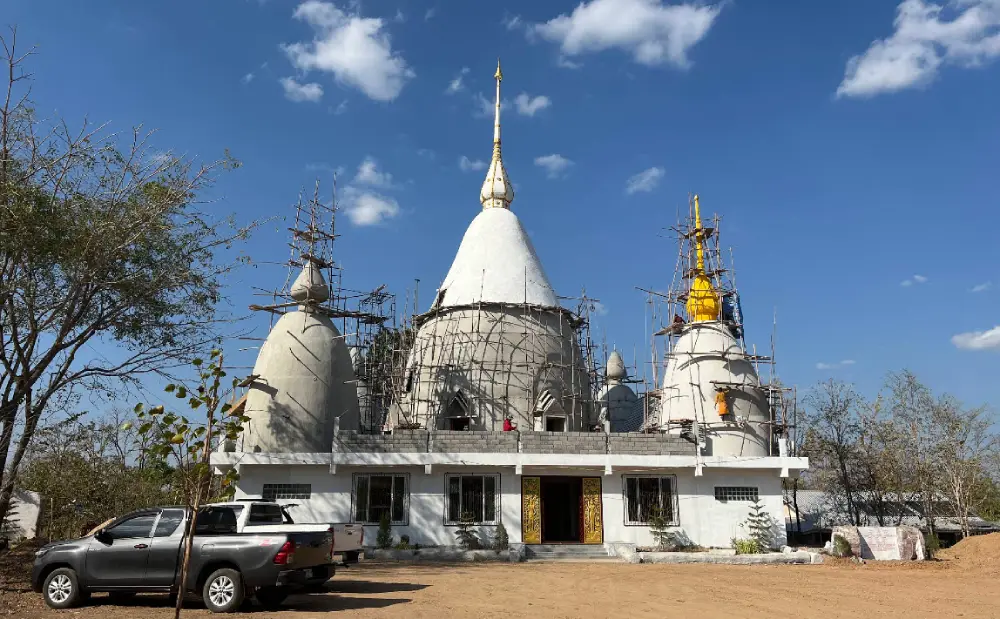
Wat Koh Samakkhi
Open Days: Daily
Opening Hours: 08.00 - 17.00
Wat Koh Samakkhi is located in Ban Nong Somong, Moo 10, Ban Khwao Subdistrict, Ban Khwao District, Chaiyaphum Province. Founded in 1929, this local Buddhist temple is an important religious and cultural center for monks, villagers, and Buddhist visitors in the area. The temple serves as a place for merit-making, meditation, Buddhist ceremonies, cultural traditions, and community gatherings. For foreign travelers who want to understand everyday Buddhism in rural northeastern Thailand, Wat Koh Samakkhi offers a quiet and meaningful glimpse into the spiritual life of Ban Khwao.
Wat Koh Samakkhi is not a large tourist temple designed around crowds, grand architecture, or heavily promoted sightseeing routes. Its value lies in its role as a living community temple. The temple has grown together with the village and continues to serve local people in practical and spiritual ways. Villagers come here to make merit, listen to Buddhist teachings, join annual ceremonies, support the monks, and gather during community events. This makes the temple an important social and religious space rather than simply a place to visit for photographs.
In the context of Ban Khwao District, Wat Koh Samakkhi helps visitors understand how Buddhism is woven into local life in Isan, the northeastern region of Thailand. Ban Khwao is associated with rural communities, agriculture, local craftsmanship, and Buddhist traditions that remain closely connected to village life. Temples in this area are not separate from the community; they are part of its daily rhythm. Wat Koh Samakkhi represents this relationship clearly, functioning as a place of worship, reflection, cultural continuity, and local unity.
The temple was established in 1929, giving it a long history of service to the community. Over nearly a century, Wat Koh Samakkhi has witnessed changes in local society, transportation, economy, and village life. Roads have improved, people travel more easily, and rural communities are increasingly connected to nearby towns and cities. Yet the temple’s basic role remains the same. It continues to be a place where people seek calm, perform religious duties, preserve tradition, and maintain a connection with Buddhist values.
The name “Koh Samakkhi” carries a strong symbolic meaning. “Samakkhi” means unity or harmony, while “Koh” can suggest a distinct place or central point where people gather. Together, the name evokes the image of a temple that brings people together. It reflects the cooperation of villagers who support the temple, organize merit-making events, maintain Buddhist traditions, and work collectively for the benefit of the community. The name suits the temple’s role as a spiritual gathering place for Ban Nong Somong.
The atmosphere of Wat Koh Samakkhi is quiet, modest, and friendly. Visitors should not expect a highly commercialized attraction. Instead, they will find a local temple where religious life continues naturally. The simplicity of the setting is part of its charm. It allows travelers to experience a more authentic side of Thai Buddhist culture, especially the way temples serve as both sacred places and community centers in rural areas. This makes the temple suitable for respectful travelers interested in culture, religion, and local life.
Inside the temple grounds are areas used for worship, merit-making, ceremonies, meditation, and community activities. As with many rural temples in Isan, the temple’s spaces support real community use. There are areas for paying respect to the Buddha, places where monks conduct religious activities, open spaces for villagers during annual events, and quiet zones where visitors can reflect. Wat Koh Samakkhi therefore functions as both a monastic site and a shared village space.
The main worship area is central to the temple’s religious identity. It is where visitors can pay respect, make offerings, and focus their minds on the Triple Gem: the Buddha, the Dhamma, and the Sangha. Visiting a community temple like Wat Koh Samakkhi is not about spectacle; it is about quiet respect. The experience invites travelers to slow down, observe local customs, and appreciate the calm atmosphere that temples provide in village life.
The temple hall and open courtyard are important spaces for community activity. On Buddhist holy days and major religious occasions, villagers gather to offer food to monks, listen to sermons, and take part in ceremonies. The same spaces are also used for annual merit-making events, Kathin robe-offering ceremonies, forest-robe offerings, Songkran merit-making, memorial ceremonies, and other traditions connected to family and village life. These activities show how the temple continues to serve the community throughout the year.
The abbot of Wat Koh Samakkhi is Phra Khru Phisan Thanitson (Niphon). In a local community temple, the abbot’s role is not limited to managing temple property. He also provides spiritual leadership, guides religious activities, coordinates with local Buddhists, maintains temple discipline, and supports the continuation of Buddhist traditions. The presence of an active abbot helps the temple remain stable, organized, and connected to the people who depend on it.
Information from Kathin records notes that Wat Koh Samakkhi has monks in residence, reflecting its ongoing religious function. The presence of resident monks means that the temple remains active as a place of Buddhist practice. It also shows that the local community continues to support the Sangha through offerings, ceremonies, and regular merit-making. For visitors, this confirms that Wat Koh Samakkhi is not merely a historic name on a map but a functioning temple with ongoing spiritual life.
Kathin is one of the most important annual Buddhist ceremonies associated with temples in Thailand. After the end of Buddhist Lent, villagers and supporters gather to offer robes to monks who have completed the rainy-season retreat. At a community temple such as Wat Koh Samakkhi, Kathin is more than a formal religious act. It is a time when families, villagers, relatives, and supporters come together to prepare food, welcome guests, make donations, and strengthen community bonds. This ceremony reflects the meaning of “Samakkhi” very clearly.
Other Buddhist and local traditions are also part of the temple’s annual rhythm. Important occasions include Makha Bucha, Visakha Bucha, Asalha Bucha, Buddhist Lent, the end of Buddhist Lent, Songkran merit-making, and family-related ceremonies. These events keep the temple active and ensure that Buddhist practice remains part of everyday life. Through these traditions, Wat Koh Samakkhi continues to serve as a cultural and spiritual anchor for Ban Nong Somong.
For travelers interested in meditation or quiet reflection, Wat Koh Samakkhi provides a peaceful setting. It is not a formal meditation center with a large program for tourists, but it offers the kind of calm environment that supports mindfulness and respectful contemplation. Visitors can begin simply by paying respect to the Buddha, making merit, sitting quietly, or walking mindfully around the temple grounds. This simple form of practice can be meaningful for those who want a quiet pause during their journey.
The temple also has cultural value for younger generations. Local children and youths learn Buddhist etiquette through activities at the temple, such as paying respect, joining merit-making ceremonies, helping elders during temple events, and observing how the community works together. In this sense, Wat Koh Samakkhi acts as a cultural classroom. It teaches values through participation rather than formal lectures, preserving local customs through everyday practice.
From a cultural travel perspective, Wat Koh Samakkhi is suitable for visitors who want to see Chaiyaphum beyond its major natural attractions. The temple offers insight into ordinary yet meaningful rural life. It shows how temples remain central to village identity, how merit-making connects families, and how religious traditions create continuity across generations. Local temples like this may not always be famous nationally, but they are deeply important to the people who live around them.
Ban Khwao District is suitable for slow, community-based travel. Visitors can begin with a respectful visit to Wat Koh Samakkhi, then continue to local markets, restaurants, or nearby cultural sites. Places that can be combined with the visit include Ban Khwao Silk Road Community Market, Ban Non Ma Wo, nearby temples in Ban Khwao and Non Daeng, and Ku Daeng Ban Kut Yang. This type of route allows travelers to experience religion, food, village life, and local history in one relaxed trip.
Ban Khwao Silk Road Community Market is a useful stop after visiting the temple. It offers a livelier community atmosphere with local food, small shops, and an opportunity to observe everyday life in Ban Khwao. Combining a temple visit with a local market gives travelers a fuller understanding of the district. It connects the spiritual side of the community with its economic and social life.
Ban Non Ma Wo offers another view of rural life around Ban Khwao, with a quiet village setting and agricultural surroundings. Ku Daeng Ban Kut Yang adds a historical dimension to the route, especially for travelers interested in archaeological traces and older cultural layers of the region. By connecting these places with Wat Koh Samakkhi, visitors can understand Ban Khwao not only as a district on the map but as a living cultural landscape.
Getting There is easiest by private car or rental car. From Chaiyaphum city, travel toward Ban Khwao District, then continue into Ban Khwao Subdistrict and Ban Nong Somong, Moo 10. The temple is located in a village area, so checking the route on a map before departure is recommended. Traveling by private vehicle is the most convenient option because it allows visitors to continue to nearby restaurants, markets, temples, and cultural sites in the same trip.
When traveling from Ban Khwao town or nearby communities, the route to Ban Nong Somong is suitable for local driving. Visitors should drive carefully through village areas, reduce speed near homes and schools, and park only in appropriate places that do not block temple or community access. During merit-making events, it is best to follow the guidance of local residents or temple attendants. This helps maintain order and shows respect for the community.
The best time to visit Wat Koh Samakkhi is in the morning or late morning, when the weather is more comfortable and the temple atmosphere is calm. Morning visits are suitable for merit-making, paying respect, and walking quietly around the grounds. Travelers who want to experience local life can plan the visit together with a market day or a community event. Photography should be done respectfully, especially when monks, elderly residents, children, or religious activities are present.
Visitors should observe proper temple etiquette. Dress modestly, avoid revealing clothing, speak softly, and do not disturb monks or local people who are taking part in religious activities. Shoes should be removed before entering designated sacred areas. If offering donations or items to monks, do so respectfully. These practices are important in Thai temples and help foreign travelers engage with the place in a culturally appropriate way.
Wat Koh Samakkhi is ideal for travelers seeking a simple and meaningful temple visit in Ban Khwao District. It is suitable for those interested in Buddhist culture, merit-making, meditation, local traditions, and the quieter side of Chaiyaphum. Although it is not a major tourist landmark, the temple has strong local significance. It remains a place where monks practice, villagers gather, traditions continue, and the community’s spiritual life is preserved.
Overall, Wat Koh Samakkhi helps explain the identity of Ban Khwao through religion and community life. Founded in 1929, the temple continues to function as a center of faith, tradition, Buddhist practice, and social cooperation. Its resident monks, abbot, annual ceremonies, and community activities all reflect a living Buddhist temple. For travelers who value authenticity over spectacle, Wat Koh Samakkhi offers a thoughtful and respectful way to experience rural Chaiyaphum.
A visit to Wat Koh Samakkhi can be a personal merit-making stop, a cultural learning experience, or the starting point for a wider community route around Ban Khwao. What visitors gain is not only a view of a temple, but a deeper understanding of how temples remain central to Thai society, especially in Isan villages where Buddhism, family, tradition, and community life remain closely connected.
| Name | Wat Koh Samakkhi |
| Location | Ban Nong Somong, Moo 10, Ban Khwao Subdistrict, Ban Khwao District, Chaiyaphum Province |
| Address | Nong Somong, Moo 10, Ban Khwao Subdistrict, Ban Khwao District, Chaiyaphum 36170, Thailand |
| Highlights | A long-established community temple founded in 1929, serving as a spiritual center for Ban Nong Somong and Ban Khwao District |
| History | Founded in 1929 and continuing to serve as a place for Buddhist ceremonies, meditation, local traditions, and community activities |
| Name Origin | The name “Koh Samakkhi” suggests a place of unity and harmony, reflecting the villagers’ collective faith and support for the temple |
| Distinctive Features | A peaceful Isan community temple suitable for merit-making, Buddhist practice, cultural learning, and observing local temple life |
| Travel Information | Best reached by private car or rental car from Chaiyaphum city toward Ban Khwao District, then onward to Ban Khwao Subdistrict and Ban Nong Somong, Moo 10 |
| Current Status | Open as an active community temple used for Buddhist ceremonies, merit-making, traditions, and local religious activities |
| Open Days | Daily |
| Opening Hours | 08.00 - 17.00 |
| Facilities | Worship areas, merit-making spaces, temple courtyard, religious activity areas, and community ceremony spaces |
| Main Areas / Zones | Monastic activity area, worship area, meditation area, community courtyard, and spaces for Buddhist ceremonies and local traditions |
| Abbot / Caretaker | Phra Khru Phisan Thanitson (Niphon) |
| Nearby Tourist Attractions | 1. Wat Pathumawat, about 4 km 2. Ban Khwao Silk Road Community Market, about 5 km 3. Ban Non Ma Wo, about 8 km 4. Wat Don Phai / Mondop Luang Pu Kham, about 9 km 5. Ku Daeng Ban Kut Yang, about 15 km |
| Nearby Restaurants | 1. Rim Bueng Restaurant, about 5 km, Tel. 044-891-118 2. Pa Ma Cafe, about 5 km, Tel. 095-621-9256 3. Jaew Hon Nai Phon, about 5 km, Tel. 095-786-3988 4. Krua Mae Bueng, about 8 km, Tel. 093-378-6993 5. Kru Thum Shabu Restaurant, about 10 km, Tel. 096-612-2190 6. Krua Don Phai Restaurant, about 12 km, Tel. 088-594-6935 |
| Nearby Accommodations | 1. Ban Khwao Resort, about 4 km, Tel. 087-201-4009 2. Phumisap Resort, about 5 km, Tel. 081-790-7747, 085-308-8355 3. Ban Suan Rim Huai Resort, about 12 km, Tel. 089-949-6046 4. The Wonders Hotel Chaiyaphum, about 34 km, Tel. 099-453-2669 5. NaCare Hotel Chaiyaphum, about 35 km, Tel. 099-014-7921, 080-723-2200 |
Frequently Asked Questions (FAQ)
Q: Where is Wat Koh Samakkhi located?
A: Wat Koh Samakkhi is located in Ban Nong Somong, Moo 10, Ban Khwao Subdistrict, Ban Khwao District, Chaiyaphum Province.
Q: When was Wat Koh Samakkhi founded?
A: Wat Koh Samakkhi was founded in 1929 and has served as a local community temple in Ban Khwao District.
Q: Why is Wat Koh Samakkhi important?
A: It is a spiritual center for local villagers, used for merit-making, meditation, Buddhist ceremonies, cultural traditions, and community activities.
Q: Who is the abbot of Wat Koh Samakkhi?
A: The abbot is Phra Khru Phisan Thanitson (Niphon).
Q: What are the opening hours of Wat Koh Samakkhi?
A: The temple is open daily from 08.00 to 17.00.
Q: How can travelers get to Wat Koh Samakkhi?
A: The easiest way is by private car or rental car from Chaiyaphum city toward Ban Khwao District, then onward to Ban Khwao Subdistrict and Ban Nong Somong, Moo 10.
Q: Who should visit Wat Koh Samakkhi?
A: It is suitable for travelers interested in merit-making, Buddhist culture, meditation, local traditions, and authentic community temple life in rural Chaiyaphum.
Q: Are there nearby attractions around Wat Koh Samakkhi?
A: Nearby places include Wat Pathumawat, Ban Khwao Silk Road Community Market, Ban Non Ma Wo, Wat Don Phai, and Ku Daeng Ban Kut Yang.
 Category: ●Places of Worship
 Group: ●Temple
Last Update : 3 DayAgo
 Last Update : 3 DayAgo
 Click to Access the Navigation Map GPS
 Art, Culture and Heritage
 Historical Sites and Monuments(1)
 Landmarks and Memorials(3)
 Royal Palace(1)
 Art, Craft Centres, Tradition(3)
 Educational Places
 Educational Gardens, Farm(1)
Temple(141)
Educational Gardens, Farm(1)
Temple(141)
 Other Sacred Sites(7)
 Suburban Living
 Village, Community(4)
 Nature and Wildlife
 National Parks and Marine Reserves(7)
 Mountain (Doi)(5)
 Dam, Reservoir, Lake(10)
 Waterfalls(15)
 Caves(5)
 River, Canal(4)
 Other natural attractions(1)
 Entertainment and Agricultural
 Farms, Parks and Ecotourism(2)


