
lovethailand home >Northeastern Travel Attractions >Chaiyaphum Travel Attractions >Ban Klwao >Non Daeng > Wat Suwannaram (Non Daeng)
TL;DR: Wat Suwannaram (Non Daeng) is located at Ban Khlong Phai Ngam, Moo 4, Non Daeng Subdistrict, Ban Khwao District, Chaiyaphum Province, open Daily, hours 08.00 - 17.00.
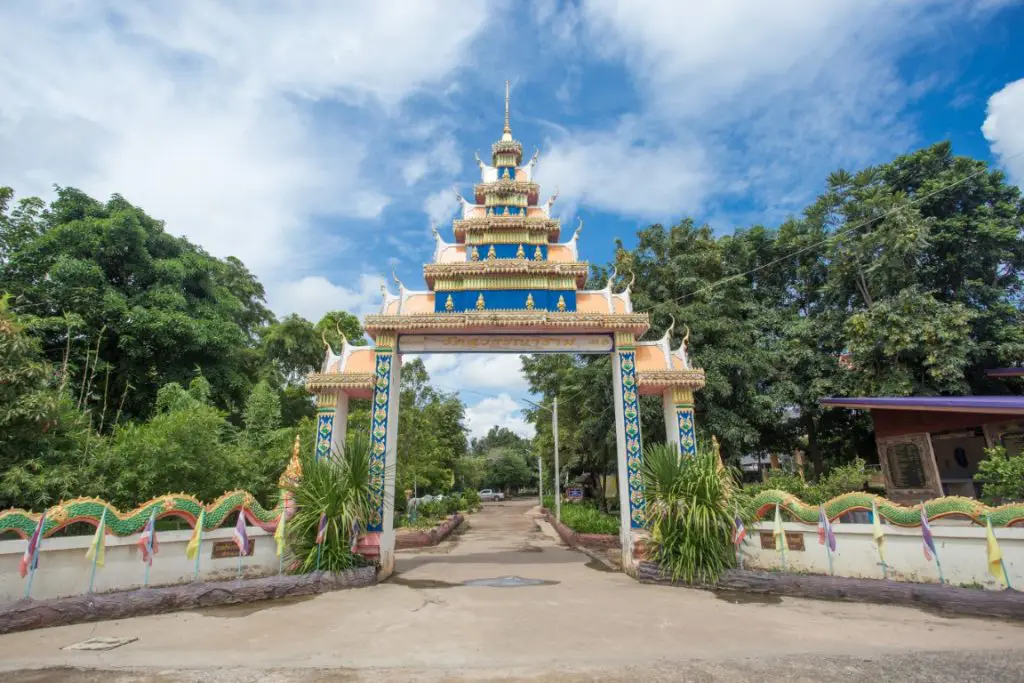
Wat Suwannaram (Non Daeng)
Open Days: Daily
Opening Hours: 08.00 - 17.00
Wat Suwannaram (Non Daeng) is an important community temple in Ban Khlong Phai Ngam, Moo 4, Non Daeng Subdistrict, Ban Khwao District, Chaiyaphum Province. Founded in 1917 and later granted its official consecrated boundary on 15 January 1988, the temple serves as a spiritual center for local villagers, Buddhist monks, and visitors who come for merit-making, meditation, religious traditions, and community activities. It is a meaningful destination for travelers who want to understand a quieter, more local side of Buddhist culture in northeastern Thailand.
Wat Suwannaram (Non Daeng) is not a large tourist temple built around spectacle or crowds. Its value lies in its role as a living community temple that has grown together with Ban Khlong Phai Ngam for more than a century. The temple reflects the close relationship between Buddhism, rural community life, and the local landscape of Ban Khwao District. Within the temple grounds are spaces for monastic activities, merit-making, religious ceremonies, community gatherings, and quiet reflection. For travelers looking beyond mainstream attractions, this temple offers a sincere glimpse into everyday Buddhism in Chaiyaphum.
The importance of Wat Suwannaram (Non Daeng) begins with its role in local life. Villagers come here to make merit on Buddhist holy days, listen to sermons, offer food to monks, join annual ceremonies, and gather for community events. The temple therefore functions not only as a religious site but also as a social and cultural space. Children learn Buddhist manners, adults help preserve local traditions, and elderly residents find a peaceful place for prayer and reflection. This continuity makes the temple an important anchor for the community.
The name “Suwannaram” carries an auspicious meaning. “Suwan” refers to gold or prosperity, while “aram” means temple or monastery. Together, the name suggests a sacred and peaceful place associated with goodness, brightness, and spiritual calm. Local historical accounts connect the temple with a rural setting of streams, bamboo groves, and natural shade around Ban Khlong Phai Ngam. This landscape helps explain the feeling of simplicity and calm that defines the temple today.
Wat Suwannaram (Non Daeng) was established in 1917 through the faith and cooperation of local villagers. Land was donated for the creation of a temple that could serve both the monastic community and the people of the village. In the early period, Ban Khlong Phai Ngam was a small rural settlement, and having a local temple was essential for religious life, education, social gatherings, and major ceremonies. The temple became a place of refuge, a venue for important life-cycle rituals, and a shared center where villagers could work together for the good of the community.
The temple developed gradually according to the resources and faith of the local people. Buildings and facilities were added over time to support monks, novices, and Buddhist visitors. The ordination hall became the most important area for formal monastic ceremonies, the sermon hall served as a place for gatherings and religious instruction, and the monks’ residences supported the monastic life of the temple. This pattern of growth reflects the traditional development of rural temples in northeastern Thailand, where religious structures often begin with communal devotion rather than grand architectural ambition.
The granting of the official consecrated boundary on 15 January 1988 marked a major milestone in the temple’s history. A consecrated boundary allows important monastic ceremonies to be performed properly, especially ordination and other formal sangha acts. This recognition strengthened the temple’s religious status and enabled it to function more fully as a Buddhist institution. For the local community, it also affirmed the temple’s long-standing role as a permanent and respected spiritual center.
The temple has been cared for by many generations of monks. Historical records mention a succession of abbots who contributed to the establishment, development, and preservation of the temple. Each period added something to the temple’s identity, whether through the construction of religious buildings, the organization of ceremonies, the support of education, or the strengthening of community ties. This continuity shows that Wat Suwannaram (Non Daeng) has never been just a historical place; it remains an active temple shaped by ongoing religious service.
The current abbot is Phra Khru Udom Yanasathit Analayo (Pinmani). He has played an important role in maintaining the temple, supporting Buddhist activities, and guiding the local community. Temple records note that he previously served as acting abbot before being appointed abbot of Wat Suwannaram. He later received the ecclesiastical title of Phra Khru Udom Yanasathit. His responsibilities include caring for the monks, overseeing the temple grounds, supporting religious education, organizing ceremonies, and serving as a spiritual leader for local Buddhists.
The ordination hall is the most important religious area within Wat Suwannaram (Non Daeng). It is used for formal monastic rites and represents the sacred heart of the temple. Visitors who enter the temple grounds will find a quiet and functional community temple rather than an elaborate tourist complex. The atmosphere is simple, respectful, and suitable for paying homage, making merit, or spending a few moments in quiet reflection. This understated character is one of the temple’s most meaningful qualities.
The sermon hall is another important space within the temple. It is used for Buddhist sermons, community meetings, merit-making events, and major religious ceremonies. During important Buddhist days such as Makha Bucha, Visakha Bucha, Asalha Bucha, Buddhist Lent, the end of Buddhist Lent, and Kathin season, villagers gather here to offer food, listen to teachings, and support temple activities. The hall reflects how a rural temple serves both spiritual and practical needs within the community.
In addition to the ordination hall and sermon hall, the temple grounds include monks’ residences, an open courtyard, a pond, and shaded areas for community use. These spaces are especially active during annual merit-making events and local ceremonies. The courtyard often becomes a gathering place where villagers prepare food, receive guests, and help organize temple activities. This gives Wat Suwannaram (Non Daeng) a living quality that is rooted in shared responsibility and local participation.
Historical and visual records also mention important areas such as Wihan Maha Satchaphiban, the sides and rear of the ordination hall, and a replica of the Buddha’s footprint. These features add another layer of devotional interest to the temple. Visitors can walk calmly around the grounds, pay respect at sacred points, and observe how a community temple preserves both religious practice and local memory. The temple’s charm comes not from a single landmark but from the whole setting of faith, history, and rural continuity.
Wat Suwannaram (Non Daeng) continues to host Buddhist activities for monks, local residents, and visitors. Common temple traditions in northeastern Thai communities include Buddhist holy day merit-making, Buddhist Lent ceremonies, the end of Lent, Kathin robe-offering, forest-robe offerings, Songkran merit-making, memorial ceremonies, ordination events, and other rituals connected to family and community life. Through these traditions, the temple remains deeply connected to the social rhythm of Ban Khlong Phai Ngam.
Kathin is one of the most important annual ceremonies associated with the temple. It takes place after the end of Buddhist Lent and brings together monks, villagers, relatives, and supporters. The ceremony is not only about offering robes to monks; it is also a moment of community unity. People help prepare food, welcome guests, arrange offerings, and participate in merit-making. For travelers who wish to understand Buddhist culture beyond temple architecture, Kathin season reveals the strong social role of rural temples in Thailand.
The temple has also supported learning and youth development. Historical information mentions an early childhood training center associated with the temple, reflecting the traditional role of Thai temples as spaces for moral and community education. In many rural areas, temples have long helped children learn respect, Buddhist manners, and participation in local ceremonies. This connection between temple, school, and community remains an important part of Thai cultural life.
The atmosphere of Wat Suwannaram (Non Daeng) is calm and suitable for visitors who prefer meaningful cultural travel over crowded sightseeing. The temple is modest, peaceful, and welcoming. Visitors should dress respectfully, avoid loud behavior, and be mindful when taking photographs. It is best to approach the temple as a sacred community space rather than a casual photo stop. This respectful attitude allows travelers to experience the temple in a way that aligns with local Buddhist values.
For travelers interested in local history, Wat Suwannaram (Non Daeng) is a useful starting point for understanding Ban Khwao District. The district is associated with Lao-Isan culture, rural community life, silk weaving traditions, and nearby archaeological sites. One notable nearby site is Ku Daeng Ban Kut Yang, an ancient Khmer cultural site in the upper Chi River area. A visit to Wat Suwannaram can therefore be combined with local cultural exploration, food stops, and community-based travel around Ban Khwao.
Ban Khwao is also known for its silk-related heritage and local craftsmanship. Visitors who come to Wat Suwannaram (Non Daeng) can continue their trip toward Ban Khwao town, community markets, local restaurants, and nearby cultural places. This allows the journey to become more than a single temple visit. It becomes a gentle exploration of rural Chaiyaphum, where Buddhist faith, village life, food culture, and local history are closely connected.
Getting There is easiest by private car or rental car. From Chaiyaphum city, drive toward Ban Khwao District, then continue to Non Daeng Subdistrict and Ban Khlong Phai Ngam. The temple is located in a village area, so travelers should check the route on a map before departing, especially when traveling in the evening or during the rainy season. The local roads are generally suitable for normal vehicles, but driving carefully is recommended.
Upon arrival, visitors should park only in appropriate areas and avoid blocking temple or village access. During merit-making events or religious ceremonies, follow the guidance of local residents or temple attendants. Morning is a good time for merit-making and quiet temple visits, while late morning to afternoon is suitable for walking around the grounds and continuing to nearby places such as Ban Khwao community market, Ban Non Ma Wo, Wat Don Phai, or Ku Daeng Ban Kut Yang.
A half-day trip can begin with paying respect at Wat Suwannaram (Non Daeng), followed by lunch at a local restaurant in Non Daeng or Ban Khwao. Travelers can then continue to a community market or nearby cultural site. Those with more time can extend the route to Chaiyaphum city or other natural attractions in the province. This type of itinerary is especially suitable for travelers who want to experience temples, community life, local food, and regional history in one relaxed journey.
Wat Suwannaram (Non Daeng) is valuable because of its continuity of faith rather than tourist fame. Since 1917, the temple has developed through the dedication of villagers and monks. Its ordination hall, sermon hall, monks’ residences, courtyard, pond, devotional spaces, and annual traditions all tell the story of Ban Khlong Phai Ngam and the Buddhist life of Ban Khwao District. The temple is simple, but its cultural meaning is deep and enduring.
For visitors from outside the area, the temple offers a clear picture of how Buddhism remains part of daily life in northeastern Thailand. It shows how temples connect families, ceremonies, education, community cooperation, and spiritual practice. Many local temples may not be nationally famous, but they are deeply important to the people who live around them. Wat Suwannaram (Non Daeng) is one of those places where travelers can learn from quiet authenticity rather than staged tourism.
Visitors should observe proper temple etiquette. Dress modestly, remove shoes before entering sacred buildings, speak softly, avoid touching sacred objects inappropriately, and ask permission before photographing monks, children, or local residents. Respectful behavior helps preserve the temple’s peaceful atmosphere and allows both visitors and local people to share the space comfortably.
Wat Suwannaram (Non Daeng) is therefore suitable for travelers seeking a temple in Ban Khwao District for merit-making, meditation, cultural learning, and a deeper understanding of local Buddhist life in Chaiyaphum. With its clear history, long-standing community role, active monastic leadership, and connection to nearby cultural places, the temple offers a meaningful stop for those who appreciate sincere, community-rooted travel experiences in Thailand.
| Name | Wat Suwannaram (Non Daeng) |
| Location | Ban Khlong Phai Ngam, Moo 4, Non Daeng Subdistrict, Ban Khwao District, Chaiyaphum Province |
| Address | Moo 4, Prachasan Road, Ban Khlong Phai Ngam, Non Daeng Subdistrict, Ban Khwao District, Chaiyaphum 36170, Thailand |
| Coordinates | 15.755441, 101.878528 |
| Highlights | A long-established community temple founded in 1917, serving as a spiritual and cultural center for Ban Khlong Phai Ngam |
| History | Founded in 1917 and granted its official consecrated boundary on 15 January 1988; the temple has developed through local faith and community support |
| Name Origin | “Suwannaram” suggests an auspicious monastery associated with brightness, prosperity, and spiritual calm, linked to the temple’s traditional rural setting of streams, bamboo, and shade |
| Distinctive Features | A local Isan community temple suitable for merit-making, Buddhist practice, cultural learning, and observing the relationship between temple and village life |
| Travel Information | Best reached by private car or rental car from Chaiyaphum city toward Ban Khwao District, then onward to Non Daeng Subdistrict and Ban Khlong Phai Ngam |
| Current Status | Open as an active community temple used for Buddhist ceremonies, merit-making, traditions, and local religious activities |
| Open Days | Daily |
| Opening Hours | 08.00 - 17.00 |
| Facilities | Ordination hall, sermon hall, monks’ residences, temple courtyard, pond, and spaces for community Buddhist activities |
| Main Areas / Zones | Ordination hall, sermon hall, monks’ residences, Wihan Maha Satchaphiban, replica Buddha’s footprint, courtyard, and shaded community areas |
| Abbot / Caretaker | Phra Khru Udom Yanasathit Analayo (Pinmani) |
| Nearby Tourist Attractions | 1. Wat Klang Non Daeng, about 3 km 2. Wat Don Phai / Mondop Luang Pu Kham, about 4 km 3. Ban Non Ma Wo, about 6 km 4. Ban Khwao Silk Road Community Market, about 8 km 5. Ku Daeng Ban Kut Yang, about 18 km |
| Nearby Restaurants | 1. Krua Mae Bueng, about 4 km, Tel. 093-378-6993 2. Krua Don Phai Restaurant, about 5 km, Tel. 088-594-6935 3. Rim Bueng Restaurant, about 8 km, Tel. 044-891-118 4. Pa Ma Cafe, about 8 km, Tel. 095-621-9256 5. Jaew Hon Nai Phon, about 8 km, Tel. 095-786-3988 6. Kru Thum Shabu Restaurant, about 12 km, Tel. 096-612-2190 |
| Nearby Accommodations | 1. Ban Khwao Resort, about 8 km, Tel. 087-201-4009 2. Ban Suan Rim Huai Resort, about 13 km, Tel. 089-949-6046 3. Phumisap Resort, about 9 km, Tel. 081-790-7747, 085-308-8355 4. The Wonders Hotel Chaiyaphum, about 35 km, Tel. 099-453-2669 5. NaCare Hotel Chaiyaphum, about 36 km, Tel. 099-014-7921, 080-723-2200 |
Frequently Asked Questions (FAQ)
Q: Where is Wat Suwannaram (Non Daeng)?
A: Wat Suwannaram (Non Daeng) is located in Ban Khlong Phai Ngam, Moo 4, Non Daeng Subdistrict, Ban Khwao District, Chaiyaphum Province.
Q: When was Wat Suwannaram (Non Daeng) founded?
A: The temple was founded in 1917 and received its official consecrated boundary on 15 January 1988.
Q: Why is Wat Suwannaram (Non Daeng) important?
A: It is a spiritual center for the local community, used for merit-making, meditation, Buddhist traditions, and village religious activities.
Q: Who is the abbot of Wat Suwannaram (Non Daeng)?
A: The abbot is Phra Khru Udom Yanasathit Analayo (Pinmani).
Q: What are the main areas inside the temple?
A: The temple includes an ordination hall, sermon hall, monks’ residences, Wihan Maha Satchaphiban, a replica Buddha’s footprint, a courtyard, and community activity areas.
Q: How can travelers get to Wat Suwannaram (Non Daeng)?
A: The easiest way is by private car or rental car from Chaiyaphum city toward Ban Khwao District, then onward to Non Daeng Subdistrict and Ban Khlong Phai Ngam.
Q: Who should visit Wat Suwannaram (Non Daeng)?
A: It is suitable for travelers interested in merit-making, meditation, local Buddhist culture, community temples, and the rural heritage of Chaiyaphum.
Q: Are there nearby attractions around Wat Suwannaram (Non Daeng)?
A: Nearby places include Wat Klang Non Daeng, Wat Don Phai, Ban Non Ma Wo, Ban Khwao Silk Road Community Market, and Ku Daeng Ban Kut Yang.
 Category: ●Places of Worship
 Group: ●Temple
Last Update : 3 DayAgo
 Last Update : 3 DayAgo
 Click to Access the Navigation Map GPS
Wat Suwannaram (Non Daeng) Map
Recommend

 Art, Culture and Heritage
 Historical Sites and Monuments(1)
 Landmarks and Memorials(3)
 Royal Palace(1)
 Art, Craft Centres, Tradition(3)
 Educational Places
 Educational Gardens, Farm(1)
Temple(141)
Educational Gardens, Farm(1)
Temple(141)
 Other Sacred Sites(7)
 Suburban Living
 Village, Community(4)
 Nature and Wildlife
 National Parks and Marine Reserves(7)
 Mountain (Doi)(5)
 Dam, Reservoir, Lake(10)
 Waterfalls(15)
 Caves(5)
 River, Canal(4)
 Other natural attractions(1)
 Entertainment and Agricultural
 Farms, Parks and Ecotourism(2)


