
lovethailand home >Northeastern Travel Attractions >Chaiyaphum Travel Attractions >Noen Sanga >Nong Chim > Wat Sutthiwanaram
TL;DR: Wat Sutthiwanaram is located at Ban Nong Chim, Moo 1, Nong Chim Subdistrict, Noen Sa-nga District, Chaiyaphum Province, open Daily, hours 06.00 – 18.00 (recommended visiting hours for merit-making and temple visits).
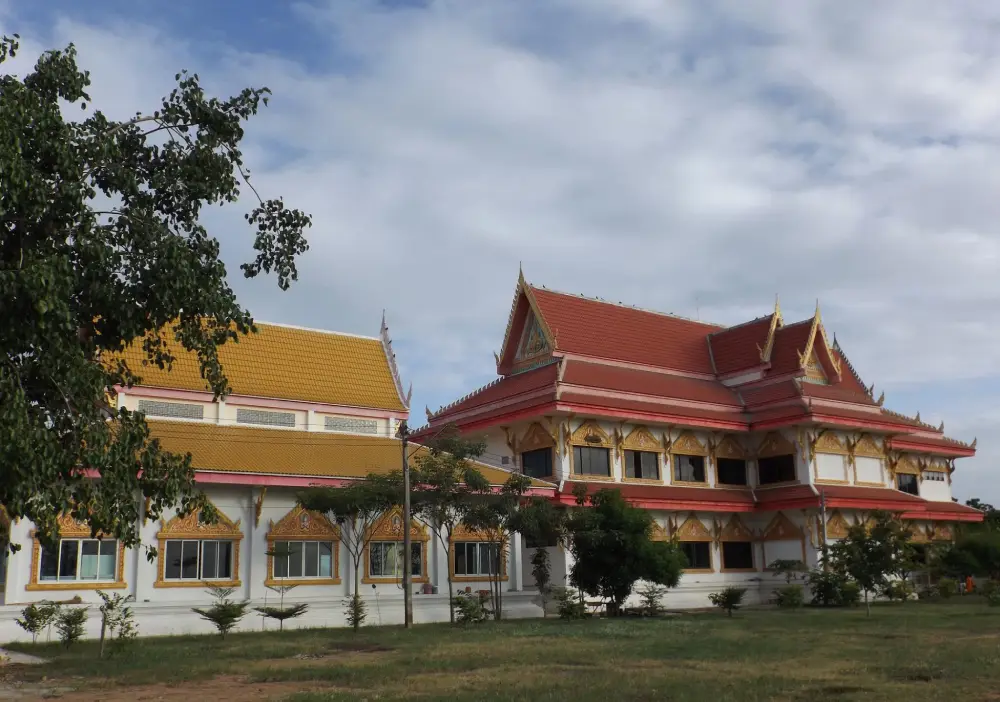
Wat Sutthiwanaram
Open Days: Daily
Opening Hours: 06.00 – 18.00 (recommended visiting hours for merit-making and temple visits)
Wat Sutthi Wanaram in Moo 1, Nong Chim Subdistrict, Noen Sa-nga District, Chaiyaphum Province, is an important community Buddhist temple that continues to serve as a religious, cultural, and spiritual center for Ban Nong Chim. The temple is used for Buddhist ceremonies, merit-making, meditation, local traditions, and community activities. It is also associated with the Thai Cultural Community Network Project of Nong Chim Subdistrict, making it an important place where Buddhism, local identity, and community learning come together.
For foreign travelers seeking a deeper and more meaningful view of Chaiyaphum, Wat Sutthi Wanaram offers an authentic experience of a living rural Thai temple. This is not a temple designed only for tourism; it is a real community temple used by monks, local Buddhist devotees, villagers, and visitors. Its value lies in its history, its role as a spiritual center, its preserved mural paintings inside the ordination hall, and its continuing importance in local traditions of Nong Chim community.
Nong Chim Subdistrict is part of Noen Sa-nga District in Chaiyaphum Province, a rural area where temple, village, school, and local administration remain closely connected. Wat Sutthi Wanaram is located in Ban Nong Chim, Moo 1, Nong Chim Subdistrict, Noen Sa-nga District, Chaiyaphum 36130. The temple stands within a local village setting and remains part of everyday community life. Visitors who come here are entering a temple that still functions as a place of worship, gathering, learning, and cultural continuity.
The history of Wat Sutthi Wanaram appears in more than one local record. Cultural information records the temple as being built in 1934 and receiving its royal boundary for monastic rites in 1927, while another monastic registry records the establishment year as 1904 and the royal boundary year as 1927. When considered together, these records show that Wat Sutthi Wanaram is an old and historically significant temple in Nong Chim. Its royal boundary, granted in the early 20th century, reflects its recognized status as a Buddhist temple capable of supporting formal monastic acts.
In Thai Buddhism, a royal boundary for monastic rites is highly important. It allows an ordination hall to be used for significant monastic ceremonies in accordance with Buddhist discipline. The fact that Wat Sutthi Wanaram received such a boundary in 1927 gives the temple strong religious significance. It means the temple has long been part of the formal Buddhist landscape of Chaiyaphum, while also remaining closely tied to the daily faith of the local community.
The name “Sutthi Wanaram” carries a calm and meaningful Buddhist tone. “Sutthi” suggests purity, cleanliness, and spiritual clarity, while “wanaram” refers to a peaceful monastery or temple associated with a serene, shaded environment. Together, the name evokes the idea of a pure and peaceful temple suitable for merit-making, meditation, moral reflection, and Buddhist practice. This meaning fits the temple’s continuing role as a place where villagers come to calm the mind and take part in religious life.
Wat Sutthi Wanaram is a community-supported temple. In rural northeastern Thailand, such temples often play roles far beyond religious ritual. They are places where villagers gather, learn, cooperate, remember their ancestors, pass on traditions, and support each other through life events. Wat Sutthi Wanaram serves as a spiritual home for Ban Nong Chim, where religious ceremonies, community events, and cultural activities are woven into one shared space.
One of the temple’s main roles is to host Buddhist activities for monks, villagers, and general devotees. People come here to offer food to monks, listen to Dhamma talks, make merit on Buddhist holy days, join ceremonies, and participate in annual traditions. These activities keep the temple alive throughout the year. For the people of Nong Chim, the temple is not simply a place to visit occasionally; it is part of the rhythm of community life.
Wat Sutthi Wanaram also serves as a place for Buddhist practice. In a rural community temple, spiritual practice is not limited to formal meditation retreats. It includes chanting, observing precepts, listening to sermons, making merit, helping with temple work, and practicing generosity. Through these everyday activities, the temple becomes a living school of Buddhist values. Elders find spiritual comfort here, working adults come to ease the mind, and young people learn respect, discipline, and local culture through participation.
A major highlight of Wat Sutthi Wanaram is its ordination hall and the mural paintings inside it. The temple has received conservation attention from the Fine Arts Department through the 10th Regional Office of Fine Arts in Nakhon Ratchasima, in cooperation with conservation specialists, the abbot, the temple committee, and local villagers. This makes the mural paintings an important cultural feature of the temple and gives Wat Sutthi Wanaram a distinctive value beyond that of an ordinary village temple.
Mural paintings in Thai temples are not merely decorative. They serve as visual teachings of Buddhism, often telling stories from the Buddha’s life, Jataka tales, moral lessons, cosmological ideas, and local religious imagination. At Wat Sutthi Wanaram, the murals inside the ordination hall represent the faith and cultural memory of the community. Conservation work helps preserve these paintings and allows visitors to appreciate the temple as both a sacred space and a local art heritage site.
The conservation work at the temple reflects cooperation between monks, villagers, and official heritage agencies. Some parts of the mural paintings, particularly on the eastern side, had been severely affected by previous surface changes, while the northern and southern sides could be repaired according to conservation principles. This kind of work shows that the community values the ordination hall not only as a ritual building, but also as a place where art, faith, and memory are preserved together.
Visitors should treat the ordination hall and the mural area with special respect. This is both a sacred monastic space and a heritage area. Travelers should dress modestly, avoid touching the mural walls, refrain from disruptive photography, and avoid any behavior that may disturb monks or worshippers. Visiting a temple with historic murals requires quiet attention and respect for both Buddhist practice and the cultural heritage of the local community.
Besides the ordination hall, Wat Sutthi Wanaram includes important functional spaces such as a multi-purpose hall, monks’ residences, temple courtyard, merit-making area, and community activity spaces. These areas support Buddhist ceremonies, village meetings, local cultural activities, and annual festivals. The multi-purpose hall is especially important because it allows the temple to serve both religious and social needs. In a rural temple, such spaces often become the heart of community cooperation.
The temple’s association with the Thai Cultural Community Network Project of Nong Chim Subdistrict strengthens its cultural role. This type of project links religion, local wisdom, cultural identity, and community participation. At Wat Sutthi Wanaram, the temple becomes a place where traditions can be preserved, local knowledge can be shared, young people can learn from elders, and villagers can take pride in their cultural roots.
In the context of Nong Chim community, Wat Sutthi Wanaram is active not only on Buddhist holy days. It is also used for local traditions, Songkran activities, annual festivals, community meetings, and activities involving schools or local organizations. The presence of the temple as a shared space helps bring different generations together. Religious faith, cultural practice, and community identity remain connected through the temple.
One important tradition associated with Wat Sutthi Wanaram is the Bun Duean Sam merit-making event and the gold-leaf offering to a replica of the Buddha’s footprint. The Buddha’s footprint is a sacred symbol representing the path of the Buddha and the Dhamma that followers aspire to follow. Applying gold leaf is an act of reverence, gratitude, and blessing. For local people, this tradition brings together personal faith and community participation.
Bun Duean Sam is meaningful because it brings villagers back to the temple. Relatives return home, elders participate in familiar rituals, younger generations observe and help, and the whole community contributes to the event. Through this process, tradition is not preserved only in words; it is passed on through action. Wat Sutthi Wanaram therefore plays an important role in keeping local culture alive from one generation to the next.
The temple and its surrounding community are also associated with the Bun Bang Fai rocket festival, a well-known Isan tradition connected with rainfall, fertility, and communal cooperation. While festival details may vary each year, the connection between the temple and this local tradition shows how Wat Sutthi Wanaram remains a cultural center for Nong Chim. The temple is not only a place of worship, but also a place where local identity is celebrated and renewed.
At present, Phra Khru Sutthi Waranuwat, also known as Phra Keng, serves as the abbot of Wat Sutthi Wanaram. He plays an important role in caring for the temple, coordinating with the temple committee and local community, supporting Buddhist activities, and participating in the preservation of the mural paintings inside the ordination hall. The presence of a respected abbot helps the temple maintain continuity, religious order, and community trust.
The role of an abbot in a rural Thai temple extends beyond managing buildings. He is a spiritual leader, ceremonial guide, Dhamma teacher, and coordinator of community faith. In many village settings, the abbot is present during ordinations, merit-making ceremonies, funerary rites, annual festivals, and youth activities. At Wat Sutthi Wanaram, this role helps connect monks and villagers through shared religious and cultural responsibilities.
The atmosphere of Wat Sutthi Wanaram is calm, modest, and suitable for respectful temple visits. Travelers can begin by paying respect to the principal Buddha image in the ordination hall or other sacred areas open to visitors. They can then walk quietly around the temple compound, observe the architecture, and learn about the murals and community spaces. If ceremonies are taking place, visitors should keep a respectful distance and avoid interrupting religious activities.
Travelers interested in local art should spend time appreciating the ordination hall murals. These paintings are among the temple’s most distinctive cultural features. They should be viewed not only as visual decoration, but as a form of Buddhist storytelling and a record of community devotion. The conservation work by heritage specialists gives the murals added importance as a cultural asset of Chaiyaphum Province.
Visitors should dress modestly when entering Wat Sutthi Wanaram. Shirts should cover the shoulders, and trousers or skirts should be appropriate for a religious site. Shoes should be removed before entering sacred buildings. During festivals or ceremonies, visitors should follow the guidance of monks, temple volunteers, or local organizers. Respectful behavior helps preserve the dignity of the temple and allows travelers to experience local Buddhist life more meaningfully.
Getting There is most convenient by private car. Travelers can drive to Nong Chim Subdistrict in Noen Sa-nga District, Chaiyaphum Province, and navigate to coordinates 15.5641667, 102.0016667 or map code HX83+34H. Roads in the area pass through local communities and rural routes. Visitors traveling from Mueang Chaiyaphum or nearby districts should plan ahead, especially during Bun Duean Sam, Bun Bang Fai, major Buddhist holidays, or temple festivals.
The recommended visiting time is from morning to early evening, around 06.00 to 18.00. This period is suitable for merit-making, paying respect to Buddha images, and walking quietly around the temple. Travelers who wish to join specific events such as Bun Duean Sam, Bun Bang Fai, Kathin, or other annual Buddhist ceremonies should check local schedules before traveling, because many temple traditions follow the lunar calendar and local community arrangements.
A visit to Wat Sutthi Wanaram can be combined with nearby attractions in Noen Sa-nga and neighboring districts. Travelers with half a day may visit the temple, stop at a local restaurant or café in Nong Chim, and continue to Mae Fah Noen Sa-nga Water Park or nearby community temples. Those with more time can extend the route to the Red Lotus Field at Bueng Lahan in Chatturat District, Chao Pho Phraya Lae Monument, and Prang Ku Chaiyaphum, creating a route that combines Buddhism, nature, history, and local culture.
Local restaurants around Nong Chim and Noen Sa-nga include Isan food shops, som tam restaurants, cafés, and community eateries. These places are suitable for a meal or a short break after visiting the temple. Because small local restaurants may adjust opening hours according to the day, it is advisable to check before traveling. Eating locally also supports the community economy and makes the trip more connected with the everyday life of the area.
Accommodation near Wat Sutthi Wanaram is mostly in the form of small resorts and local lodgings in Noen Sa-nga District and nearby areas. These are suitable for travelers who prefer a simple and quiet stay close to the community. Visitors who want more hotel choices may stay in Mueang Chaiyaphum and visit the temple as a day trip. The best choice depends on the traveler’s route, transport plan, and whether they want to explore more attractions around Chaiyaphum.
Wat Sutthi Wanaram is valuable as a local history and cultural learning site. Its story brings together Buddhist faith, royal monastic recognition, mural conservation, the Thai Cultural Community Network Project, and annual traditions. Visitors can learn about how a rural Thai temple functions as a place of worship, art preservation, community education, and social cooperation. This makes the temple meaningful not only for religious visitors, but also for travelers interested in culture and heritage.
As a faith-based travel destination, Wat Sutthi Wanaram is ideal for those who appreciate quiet, community-rooted places. It is not a temple of spectacle, but a temple of continuity. Its value lies in the way villagers continue to use it, care for it, and preserve its traditions. The murals, the ordination hall, the community project, annual merit-making events, and the role of the abbot all make the temple an important cultural and religious landmark of Nong Chim.
Overall, Wat Sutthi Wanaram brings together history, faith, art, tradition, and community life in one place. Its mural paintings, its role in local cultural projects, its annual traditions, and its active relationship with the people of Nong Chim make it a significant temple in Noen Sa-nga District. For travelers who want to see a deeper side of Chaiyaphum beyond famous tourist attractions, this temple offers a quiet but meaningful experience.
For anyone looking for a temple in Chaiyaphum with more than a brief worship stop, Wat Sutthi Wanaram deserves thoughtful attention. It shows how a single temple can be a place for meditation, art conservation, local festivals, community learning, and spiritual refuge at the same time. Visiting Wat Sutthi Wanaram is therefore not only a visit to a temple in Nong Chim, but also an encounter with the cultural heart of Noen Sa-nga community.
| Name | Wat Sutthi Wanaram |
| Location | Ban Nong Chim, Moo 1, Nong Chim Subdistrict, Noen Sa-nga District, Chaiyaphum Province |
| Address | Nong Chim Subdistrict, Noen Sa-nga District, Chaiyaphum 36130, Thailand |
| Coordinates | 15.5641667, 102.0016667 / Map Code HX83+34H |
| Highlights | A historic community Buddhist temple in Nong Chim, serving as a spiritual center, meditation place, and local mural conservation site |
| History | Cultural records state that the temple was built in 1934 and received its royal boundary in 1927, while another monastic registry records the establishment year as 1904 and the royal boundary year as 1927 |
| Name Origin | The name suggests a pure and peaceful monastery, matching the temple’s role as a place for merit-making, meditation, and spiritual rest |
| Distinctive Features | A community temple combining Buddhism, local traditions, meditation, mural conservation, and cultural learning |
| Sacred Objects / Important Features | Ordination hall, principal Buddha image, mural paintings, multi-purpose hall, temple courtyard, and religious activity areas |
| Main Areas / Zones | Ordination hall, mural painting area, multi-purpose hall, monks’ residences, temple courtyard, merit-making area, festival area, and Thai Cultural Community Network Project area |
| Facilities | Multi-purpose hall, temple courtyard, and spaces for religious and cultural community activities |
| Traditions / Main Activities | Bun Duean Sam, gold-leaf offering to the Buddha’s footprint replica, Bun Bang Fai rocket festival, Buddhist holy day merit-making, Kathin, major Buddhist observances, and Thai Cultural Community Network Project activities |
| Abbot / Caretaker | Phra Khru Sutthi Waranuwat, also known as Phra Keng, Abbot of Wat Sutthi Wanaram |
| Open Days | Daily |
| Opening Hours | 06.00 – 18.00 (recommended visiting hours for merit-making and temple visits) |
| Travel Information | Best reached by private car. Navigate to Nong Chim Subdistrict, Noen Sa-nga District, using coordinates 15.5641667, 102.0016667 or map code HX83+34H |
| Current Status | A community Buddhist temple in Nong Chim Subdistrict, Noen Sa-nga District, Chaiyaphum Province, still used for religious ceremonies, meditation, traditions, and community activities |
| Local Administrative Contact | Nong Chim Subdistrict Administrative Organization, Tel. 0-4405-2967, 0-4405-2968 |
| Nearby Tourist Attractions | 1. Wat Bueng Boriboon, about 7 km 2. Mae Fah Noen Sa-nga Water Park, about 8 km, Tel. 091-019-8292 3. Red Lotus Field, Don La Nam, Bueng Lahan, Chatturat District, about 18 km, Tel. 044-812350 4. Wooden Bridge at Red Lotus Field, Bueng Lahan, Ban Makluea, about 22 km 5. Wat Pathum Chat, Chatturat District, about 24 km 6. Chao Pho Phraya Lae Monument, Mueang Chaiyaphum District, about 36 km 7. Prang Ku Chaiyaphum, Mueang Chaiyaphum District, about 37 km |
| Nearby Restaurants | 1. Coffee Cafe, about 2 km, Tel. 088-706-7406 2. Som Tam Nai Soi, about 2 km, Tel. 090-275-0035 3. Im Yaew Yam Yen, about 3 km, Tel. 082-035-002 4. Suan Ahan Ton Makham, about 4 km 5. Pakasit Restaurant and Fishing Pond, about 6 km, Tel. 086-618-3338 6. Khraw Amorn Restaurant, about 15 km |
| Nearby Accommodations | 1. Home Resort Noen Sa-nga, about 3 km, Tel. 084-388-6201 2. Noen Sa-nga Resort, about 8 km, Tel. 090-987-2002, 089-946-1691 3. Tawit Resort, about 8 km, Tel. 081-999-0893 4. Mae Fah Water Park Resort, about 8 km, Tel. 091-019-8292 5. Pawadee Resort, about 14 km, Tel. 080-170-0508, 044-899-299 6. Khotchasan Thong Resort, about 15 km, Tel. 044-800319, 081-876-9314, 081-878-9134 |
Frequently Asked Questions (FAQ)
Q: Where is Wat Sutthi Wanaram located?
A: Wat Sutthi Wanaram is located in Ban Nong Chim, Moo 1, Nong Chim Subdistrict, Noen Sa-nga District, Chaiyaphum Province, northeastern Thailand.
Q: Why is Wat Sutthi Wanaram important?
A: The temple is a spiritual center for the Nong Chim community, used for Buddhist ceremonies, meditation, local traditions, cultural activities, and the Thai Cultural Community Network Project.
Q: When was Wat Sutthi Wanaram established?
A: Cultural records state that the temple was built in 1934 and received its royal boundary in 1927, while another monastic registry records the establishment year as 1904 and the royal boundary year as 1927.
Q: Who is the abbot of Wat Sutthi Wanaram?
A: The abbot is Phra Khru Sutthi Waranuwat, also known as Phra Keng, who plays an important role in temple care, community activities, and mural conservation.
Q: What is special about Wat Sutthi Wanaram?
A: The temple is known for its ordination hall, conserved mural paintings, community cultural role, and its importance as a religious and cultural center of Ban Nong Chim.
Q: What local traditions are associated with Wat Sutthi Wanaram?
A: Important traditions include Bun Duean Sam with gold-leaf offering to a replica of the Buddha’s footprint, Bun Bang Fai rocket festival activities, Buddhist holy day merit-making, and Kathin ceremonies.
Q: How can travelers get to Wat Sutthi Wanaram?
A: The temple is best reached by private car. Travelers can navigate to coordinates 15.5641667, 102.0016667 or use map code HX83+34H.
Q: What nearby attractions can be combined with a visit?
A: Nearby places include Wat Bueng Boriboon, Mae Fah Noen Sa-nga Water Park, the Red Lotus Field at Bueng Lahan, Chao Pho Phraya Lae Monument, and Prang Ku Chaiyaphum.
 Category: ●Places of Worship
 Group: ●Temple
Last Update : 3 MonthAgo
 Last Update : 3 MonthAgo
 Click to Access the Navigation Map GPS
 Art, Culture and Heritage
 Historical Sites and Monuments(1)
 Landmarks and Memorials(3)
 Royal Palace(1)
 Art, Craft Centres, Tradition(3)
 Educational Places
 Educational Gardens, Farm(1)
Temple(141)
Educational Gardens, Farm(1)
Temple(141)
 Other Sacred Sites(7)
 Suburban Living
 Village, Community(4)
 Nature and Wildlife
 National Parks and Marine Reserves(7)
 Mountain (Doi)(5)
 Dam, Reservoir, Lake(10)
 Waterfalls(15)
 Caves(5)
 River, Canal(4)
 Other natural attractions(1)
 Entertainment and Agricultural
 Farms, Parks and Ecotourism(2)


