
lovethailand home >Northeastern Travel Attractions >Chaiyaphum Travel Attractions >Noen Sanga >Ta Noen > Wat Krok Kula
TL;DR: Wat Krok Kula is located at Moo 8, Ta Noen Subdistrict, Noen Sa-nga District, Chaiyaphum Province, open Daily, hours 08.00 – 17.00.
Wat Krok Kula
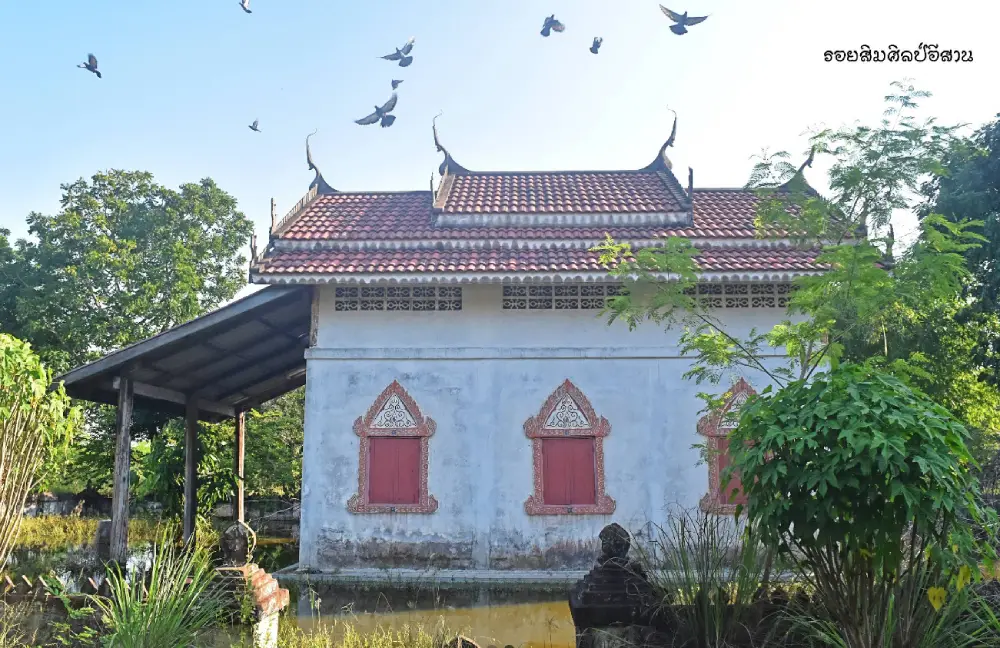
Open Days: Daily
Opening Hours: 08.00 – 17.00
Wat Krok Kula is located in Moo 8, Ta Noen Subdistrict, Noen Sa-nga District, Chaiyaphum Province. Established in 1941 and granted its Wisungkhamsima boundary on 15 November 1979, the temple is a long-standing community Buddhist temple for Ban Krok Kula and nearby villages. It serves as a place for merit-making, meditation, Buddhist ceremonies, local traditions, cultural continuity, and community faith, making it a meaningful stop for travelers who want to understand Noen Sa-nga through local temple life.
Wat Krok Kula is located in Moo 8, Ta Noen Subdistrict, Noen Sa-nga District, Chaiyaphum Province. The temple was established in 1941 and received its Wisungkhamsima, or officially granted monastic boundary, in 1979. It is an important local Buddhist temple for Ban Krok Kula and nearby communities. More than a religious site, the temple functions as a living center of faith where monks, villagers, Buddhist residents, and visitors gather for merit-making, meditation, Buddhist ceremonies, local traditions, and community activities.
Noen Sa-nga District is an area of Chaiyaphum Province shaped by rural communities, temples, local roads, water sources, and agricultural life. Ta Noen Subdistrict, where Wat Krok Kula is located, connects with nearby areas such as Kahad and Nong Chim, forming a local cultural landscape where temples play an important role in everyday life. Wat Krok Kula therefore should not be viewed only as a single landmark, but as part of the wider relationship between village life, Buddhist faith, local identity, and community memory.
The name Wat Krok Kula is closely tied to the local community. Many Thai village temples are named after the village, landscape, plants, or local features around them. Their names become part of the identity of the area itself. In this sense, Wat Krok Kula is not only a temple located in Ban Krok Kula; it is also a cultural marker of the village and a reminder of the faith and cooperation that have shaped the community for generations.
The establishment of Wat Krok Kula in 1941 places the temple among the long-standing community temples of Noen Sa-nga District. At that time, rural communities in northeastern Thailand relied heavily on local faith and cooperation to build and maintain Buddhist spaces. A village temple was never just a building. It was a shared center where people could make merit, listen to teachings, gather for important events, preserve traditions, and strengthen unity within the village.
The granting of Wisungkhamsima in 1979 was an important milestone in the temple’s development. Wisungkhamsima is the formally designated boundary used for important Sangha acts, especially those connected with the ordination hall and monastic discipline. Receiving this boundary strengthened Wat Krok Kula’s role as a proper Buddhist institution and reflected the long-term faith and support of the local community.
Wat Krok Kula is a local Buddhist temple that supports religious activities involving monks, villagers, and the general public. These activities include alms-giving, food offerings to monks, Dharma sermons, chanting, observing precepts, Sangha offerings, candlelight processions on major Buddhist holy days, Kathin ceremonies, Pha Pa robe-offering events, and other merit-making practices connected with village life. Through these activities, Buddhism remains part of the daily rhythm of the community rather than something separate from everyday experience.
On Buddhist holy days, the temple becomes a place where villagers gather to make merit, listen to teachings, and spend time with family and neighbors. Children learn temple manners and Buddhist etiquette. Adults participate in religious and community work. Older residents use the temple as a peaceful space for chanting, meditation, Dharma listening, and social connection. Wat Krok Kula therefore connects different generations within the same shared spiritual space.
The temple is also suitable for meditation and quiet reflection. Meditation in a local community temple does not always need to be formal or complicated. It may begin with paying respect to the Buddha, chanting, sitting quietly, listening to Dharma teachings, and practicing mindfulness in daily life. The simple atmosphere of Wat Krok Kula helps visitors experience Buddhism as a living practice grounded in community life rather than as something distant or purely ceremonial.
Wat Krok Kula plays an important role in preserving the traditions and culture of Ta Noen Subdistrict. Merit-making events held at the temple allow villagers to prepare offerings, arrange the temple grounds, cook food, welcome relatives, and pass down Buddhist customs to younger generations. Through these activities, tradition is not merely remembered as something from the past. It is practiced, renewed, and kept alive within the temple space.
In rural Thai society, temples often support major events throughout life. They are used for ordination ceremonies, family merit-making, memorial rites, funerals, annual festivals, and public community activities. Wat Krok Kula therefore holds joy, calmness, hope, gratitude, remembrance, and cooperation. This is why a local temple can be deeply important even when it is not nationally famous or heavily promoted as a tourist attraction.
The recorded history of Wat Krok Kula includes former abbots such as Phra Rian, Phra Khit, and Phra Hin Pannawuttho. These names reflect the continuity of religious leadership and temple care across different periods of the community’s history. Although a publicly verified current abbot name is not available in the referenced public listings, the recorded former abbots show that the temple has long been guided by monastic leadership and supported by local faith.
The temple grounds include practical areas that support the religious and community needs of monks and villagers. Main zones include a worship area, a merit-making and Dharma listening area, a meditation area, a Buddhist ceremony area, a temple courtyard for community activities, and a reception area for merit-making gatherings. These areas may not be arranged like a large tourist complex, but their value comes from real use in the daily and seasonal life of the community.
The distinctive character of Wat Krok Kula lies in its simplicity and closeness to village life. Visitors will experience the atmosphere of a local temple that is calm and unhurried. This is a place for worship, merit-making, reflection, and learning about how Buddhism continues to be part of everyday life in rural Thailand. The value of the temple lies not in grandeur, but in its relationship with the people who use and care for it.
Ta Noen Subdistrict has several local temples and religious sites, including Wat Bueng Boribun, Wat Nong Kham, Wat Nong Khaem, Wat Noen Thong, and Wat Krok Kula. This reflects the strong presence of Buddhism in the local community structure. Wat Krok Kula is one of the spiritual points that continue to support village life and preserve the relationship between temple, home, and community.
A visit to Wat Krok Kula is suitable for travelers who prefer quiet, meaningful places rather than crowded tourist attractions. The temple is not focused on commercial tourism. It is a place used by local people for real religious practice and community life. Visitors who spend time here quietly can sense the simplicity and meaning of a Buddhist temple rooted in local faith.
Visitors should dress modestly when entering the temple, speak quietly, avoid disturbing monks or meditation practitioners, and avoid entering restricted areas without permission. If a religious ceremony or merit-making event is taking place, visitors should observe local behavior and follow the guidance of temple caretakers or community members. Respectful behavior is essential when visiting a local temple that is actively used by villagers.
The best times to visit are in the morning or late afternoon, when the weather is more comfortable and the temple atmosphere is peaceful. On Buddhist holy days or during merit-making events, the temple becomes livelier as villagers gather for religious activities. These moments show the living relationship between the temple and the community, provided visitors behave respectfully.
For travelers exploring Noen Sa-nga District, Wat Krok Kula can be included in a cultural route together with Wat Bueng Boribun, Mae Fah Noen Sa-nga Water Park, Bueng Kahad, Wat Ban Kahad, and major attractions in Chaiyaphum such as the Phraya Phakdi Chumphon Monument and Tat Ton Waterfall. This type of route combines community life, Buddhist temples, local recreation, provincial history, and nature in one journey.
Wat Bueng Boribun is a nearby religious site in Ta Noen Subdistrict and can be combined naturally with Wat Krok Kula. Mae Fah Noen Sa-nga Water Park is suitable for families and leisure travelers. Bueng Kahad is a large community water source in Kahad Subdistrict with an important role for local residents and farmers. Together, these places help visitors understand the local context around Wat Krok Kula more fully.
Travelers with more time can continue toward Chaiyaphum town to pay respect at the Phraya Phakdi Chumphon Monument, also known as the Chao Pho Phraya Lae Monument, or travel onward to Tat Ton Waterfall, one of the province’s well-known natural attractions. Starting the day with a temple visit and continuing to community and nature destinations creates a balanced travel experience rooted in faith, culture, and landscape.
Wat Krok Kula is suitable for slow travel. A short visit may take around 30 to 60 minutes for paying respect, making merit, and observing the temple atmosphere. Visitors with more time can use the temple as a starting point for learning about Ta Noen Subdistrict and Noen Sa-nga District. The value of visiting a community temple lies in observation, stillness, and understanding the temple’s role in local life.
For families, Wat Krok Kula is a suitable place to introduce children to Buddhist etiquette, merit-making, and the importance of temples in Thai community life. For older visitors, it offers a calm space for worship and reflection. For cultural travelers, it provides a good starting point for understanding Noen Sa-nga District through the lens of local temples, village life, and everyday faith.
Visitors who wish to take photographs should do so carefully. Avoid taking disruptive photos during ceremonies, avoid close photographs of monks or villagers without permission, and do not use sacred areas in an inappropriate way. Good temple etiquette helps preserve the dignity of the place and creates a better experience for both visitors and the local community.
Wat Krok Kula also helps travelers see that Chaiyaphum is not only a province of natural attractions. It is also home to many community temples that preserve local faith, traditions, and cultural memory. These local temples form the foundation of community identity because they are places where older and younger generations meet through religious activities, ceremonies, and shared work for the public good.
When planning a trip to Noen Sa-nga, Wat Krok Kula is best suited to a calm and thoughtful itinerary. Visitors can begin with the temple’s peaceful atmosphere, continue to nearby religious and leisure sites, enjoy local food, and then explore wider attractions in Chaiyaphum. This kind of travel does not focus only on the number of places visited. It gives time to understand faith, culture, everyday life, and landscape together.
Getting There is most convenient by private car. Drive toward Noen Sa-nga District in Chaiyaphum Province, then continue to Ta Noen Subdistrict, Moo 8, Ban Krok Kula. When entering the village area, drive carefully because houses, local roads, and daily community activities may be present along the route. Having a private vehicle makes it easier to continue to Wat Bueng Boribun, Mae Fah Noen Sa-nga Water Park, Bueng Kahad, nearby restaurants, accommodations, and other attractions in Noen Sa-nga District.
Travelers coming from Chaiyaphum town should plan enough time because the route is best enjoyed as a multi-stop trip. A practical plan is to visit Wat Krok Kula in the morning, continue to Wat Bueng Boribun or Mae Fah Noen Sa-nga Water Park, have a meal in Noen Sa-nga District, and, if time allows, continue toward Chaiyaphum town or Tat Ton Waterfall in the afternoon.
Parking should be done neatly without blocking temple entrances, village roads, or local houses. During Buddhist holy days, merit-making events, or festivals, the area may be busier than usual. Visitors should allow extra time and follow local arrangements. Simple acts of consideration, such as parking properly, keeping the temple clean, and speaking quietly, help preserve the peaceful character of the temple.
Wat Krok Kula may not be the most famous attraction in Chaiyaphum, but it has genuine meaning for the local community. The temple tells the story of faith, cooperation, and the continuity of tradition in Ban Krok Kula and Ta Noen Subdistrict. Its simple atmosphere allows visitors to see the role of Buddhism in real community life. For travelers seeking a deeper Noen Sa-nga experience, Wat Krok Kula is a meaningful stop to include in the journey.
A visit to Wat Krok Kula has several layers of meaning. The first is paying respect and making merit. The second is learning about a temple established in 1941 and granted Wisungkhamsima in 1979. The third is understanding Ta Noen Subdistrict as a community where temples remain central to village life. The final layer is recognizing that local temples continue to provide emotional and spiritual grounding for Thai communities. For travelers who want to understand Noen Sa-nga beyond the surface, Wat Krok Kula is a place worth visiting.
| Name | Wat Krok Kula |
| Location | Moo 8, Ta Noen Subdistrict, Noen Sa-nga District, Chaiyaphum Province |
| Address | Moo 8, Ban Krok Kula, Ta Noen Subdistrict, Noen Sa-nga District, Chaiyaphum 36130, Thailand |
| Highlights | A long-standing community temple of Ban Krok Kula, established in 1941 and serving as a place for merit-making, meditation, Buddhist activities, local traditions, cultural continuity, and community faith |
| History | Established in 1941 and granted Wisungkhamsima on 15 November 1979 as a local Buddhist temple in Noen Sa-nga District, Chaiyaphum Province |
| Key Evidence | The temple’s establishment in 1941, Wisungkhamsima record in 1979, and recorded former abbots such as Phra Rian, Phra Khit, and Phra Hin Pannawuttho |
| Name Origin | The name reflects Ban Krok Kula and the local identity of Ta Noen community |
| Distinctive Features | A quiet community temple that preserves Buddhist practice, local traditions, and the spiritual life of Ta Noen residents |
| Travel Information | Best reached by private car. Drive toward Noen Sa-nga District and continue to Ta Noen Subdistrict, Moo 8, Ban Krok Kula. The temple can be combined with Wat Bueng Boribun, Mae Fah Noen Sa-nga Water Park, Bueng Kahad, and attractions in Chaiyaphum. |
| Current Status | Open as a Buddhist temple for merit-making, meditation, religious activities, and community gatherings |
| Open Days | Daily |
| Opening Hours | 08.00 – 17.00 |
| Facilities | Parking Area, Worship Area, Merit-Making Area, Dharma Listening Area, Temple Courtyard, And Community Activity Space |
| Main Areas / Zones | Worship Area Merit-Making And Dharma Listening Area Meditation Area Buddhist Ceremony Area Temple Courtyard For Community Activities Reception Area For Merit-Making Events |
| Nearby Tourist Attractions | 1. Wat Bueng Boribun, About 5 km 2. Mae Fah Noen Sa-nga Water Park, About 8 km 3. Bueng Kahad, About 16 km 4. Wat Ban Kahad, About 17 km 5. Phraya Phakdi Chumphon Monument, About 34 km 6. Tat Ton Waterfall, About 56 km |
| Nearby Restaurants | 1. Je Run Restaurant, About 4 km, Tel. 063-494-6441 2. Mellow Café & Restaurant, About 6 km, Tel. 099-313-1108 3. Jaew Hon Lan Thung, About 6 km, Tel. 062-587-2539 4. Cho Kap Chin Jaew Hon, About 10 km, Tel. 096-019-2560 5. Coffee Cafe, About 11 km, Tel. 088-706-7406 |
| Nearby Accommodations | 1. Tawit Resort, About 5 km, Tel. 081-999-0893 2. Mae Fah Noen Sa-nga Water Park, About 8 km, Tel. 091-019-8292 3. Home Resort Noen Sa-nga, About 11 km, Tel. 084-388-6201 4. Noen Sa-nga Resort, About 14 km, Tel. 090-987-2002, 089-946-1691 5. Pawadee Resort, About 16 km, Tel. 044-899-299, 080-170-0508 |
Frequently Asked Questions (FAQ)
Q: Where is Wat Krok Kula located?
A: Wat Krok Kula is located in Moo 8, Ban Krok Kula, Ta Noen Subdistrict, Noen Sa-nga District, Chaiyaphum Province, Thailand.
Q: When was Wat Krok Kula established?
A: Wat Krok Kula was established in 1941 and was granted Wisungkhamsima on 15 November 1979.
Q: Why is Wat Krok Kula important to the local community?
A: The temple serves as a religious, cultural, and spiritual center for Ban Krok Kula and Ta Noen Subdistrict. It is used for merit-making, meditation, Buddhist ceremonies, local traditions, and community gatherings.
Q: What are the opening hours of Wat Krok Kula?
A: Wat Krok Kula is open daily from 08.00 to 17.00.
Q: What should visitors wear when visiting Wat Krok Kula?
A: Visitors should dress modestly, behave quietly, and show respect for monks, meditation practitioners, and local residents participating in temple activities.
Q: What type of trip is Wat Krok Kula suitable for?
A: The temple is suitable for merit-making, meditation, cultural learning, and as a quiet stop on a half-day or one-day route around Noen Sa-nga District.
Q: What nearby attractions can travelers visit after Wat Krok Kula?
A: Nearby places include Wat Bueng Boribun, Mae Fah Noen Sa-nga Water Park, Bueng Kahad, Wat Ban Kahad, Phraya Phakdi Chumphon Monument, and Tat Ton Waterfall.
Q: How long should visitors spend at Wat Krok Kula?
A: A typical visit for paying respect, making merit, and enjoying the temple atmosphere may take about 30 to 60 minutes. The visit can be combined with nearby temples, local restaurants, and attractions in Noen Sa-nga District.
 Category: ●Places of Worship
 Group: ●Temple
Last Update : 3 MonthAgo
 Last Update : 3 MonthAgo
 Click to Access the Navigation Map GPS
 Art, Culture and Heritage
 Historical Sites and Monuments(1)
 Landmarks and Memorials(3)
 Royal Palace(1)
 Art, Craft Centres, Tradition(3)
 Educational Places
 Educational Gardens, Farm(1)
Temple(141)
Educational Gardens, Farm(1)
Temple(141)
 Other Sacred Sites(7)
 Suburban Living
 Village, Community(4)
 Nature and Wildlife
 National Parks and Marine Reserves(7)
 Mountain (Doi)(5)
 Dam, Reservoir, Lake(10)
 Waterfalls(15)
 Caves(5)
 River, Canal(4)
 Other natural attractions(1)
 Entertainment and Agricultural
 Farms, Parks and Ecotourism(2)


