
lovethailand home >Northeastern Travel Attractions >Chaiyaphum Travel Attractions >Thep Sathit >Wa Tabaek > Wat Thep Sathit Pradittharam
TL;DR: Wat Thep Sathit Pradittharam is located at Ban Mo Sam Chan, Moo 12, Wa Tabaek Subdistrict, Thep Sathit District, Chaiyaphum Province, open Daily, hours 08.00 – 17.00.
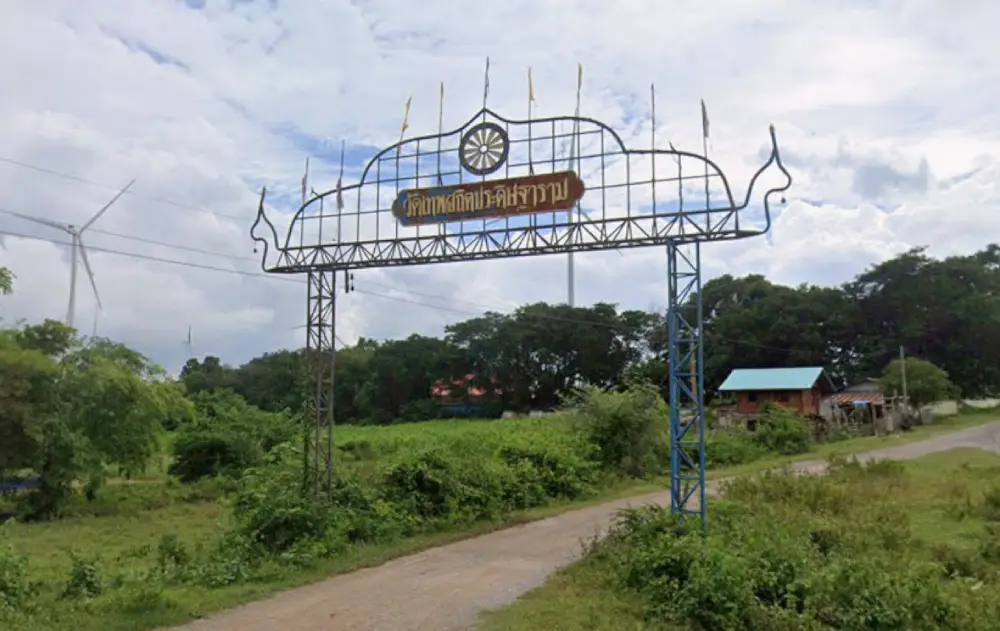
Wat Thep Sathit Pradittharam
Open Days: Daily
Opening Hours: 08.00 – 17.00
Wat Thep Sathit Pradittharam is a local Buddhist temple located in Ban Mo Sam Chan, Moo 12, Wa Tabaek Subdistrict, Thep Sathit District, Chaiyaphum Province. Established in 1939, the temple serves as a spiritual center for monks, local Buddhists, villagers, and visitors. It is a place for religious ceremonies, meditation, Buddhist traditions, community culture, and local gatherings. For travelers, the temple is best visited as part of a wider Thep Sathit route that may include Pa Hin Ngam National Park, the Siam tulip fields, the wind turbine viewpoint, Ban Dong Lan Reservoir, and cultural stops around the district.
Wat Thep Sathit Pradittharam is an important community temple in Ban Mo Sam Chan, Moo 12, Wa Tabaek Subdistrict, Thep Sathit District, Chaiyaphum Province. Founded in 1939, it has long served as a central place for Buddhist practice, merit-making, village ceremonies, and community life. Unlike major tourist temples that are built primarily to receive large numbers of visitors, this temple reflects the quieter and more authentic role of a rural Thai temple: a place where religion, local tradition, and everyday community relationships remain closely connected.
The temple was created at a time when local communities needed a shared spiritual space for monks and laypeople. For villagers in Ban Mo Sam Chan, Wat Thep Sathit Pradittharam became the place where Buddhist ceremonies could be held, where monks could reside and carry out religious duties, and where the community could gather during important occasions. Its history therefore represents not only the founding of a religious site, but also the development of a village identity built around faith, cooperation, and shared cultural values.
In Thai rural society, a temple often functions far beyond its religious boundary. It is a place for making merit, listening to Dhamma teachings, joining annual festivals, organizing communal activities, supporting families during important life events, and passing local traditions from one generation to the next. Wat Thep Sathit Pradittharam plays this role clearly. It is a spiritual anchor for villagers, a place where people return during Buddhist holy days, and a quiet space where visitors can experience the rhythm of a real local temple in Chaiyaphum.
The name of the temple is closely connected with the identity of Thep Sathit District. The phrase “Thep Sathit” reflects the district name, while “Pradittharam” suggests a place established for peace, religious merit, and spiritual cultivation. Together, the name gives the impression of a temple firmly rooted in its community, created as a place of calm and Buddhist devotion. For foreign travelers, understanding the meaning of the name helps reveal how Thai temple names often carry both geographic and spiritual significance.
Wa Tabaek Subdistrict, where the temple is located, is an important area within Thep Sathit District. The surrounding landscape is shaped by rural settlements, agricultural land, forested hills, reservoirs, and access routes leading toward well-known natural attractions. This setting gives the temple a peaceful atmosphere. A visit here is not about rushing through a crowded attraction; it is about slowing down, observing local Buddhist life, and appreciating how temples continue to function as meaningful public spaces in Thai communities.
The temple’s founding year, 1939, gives it more than 80 years of history. Over these decades, the surrounding community has changed, roads have improved, tourism in Thep Sathit has grown, and Chaiyaphum has become better known for seasonal nature destinations such as the Siam tulip fields in Pa Hin Ngam National Park. Yet the core function of the temple has remained consistent: it continues to support Buddhist practice, religious ceremonies, cultural activities, and community gatherings for local residents.
Thep Sathit District is widely recognized by Thai travelers for Pa Hin Ngam National Park, the misty landscape during the rainy season, the pink Siam tulip fields, Lan Hin Ngam rock formations, and Pha Sut Phaen Din viewpoint. Wat Thep Sathit Pradittharam adds another layer to this travel experience. It allows visitors to see the cultural and spiritual side of the district, not only its natural scenery. For travelers who want a deeper understanding of Chaiyaphum, the temple helps connect the landscape with the people who live there.
The first major role of Wat Thep Sathit Pradittharam is its function as a place for Buddhist religious activities. Monks residing at the temple maintain monastic discipline, lead ceremonies, chant Buddhist scriptures, give moral guidance, and support the local community during important occasions. Villagers come to the temple to make merit, offer alms, join Kathin and robe-offering ceremonies, observe Buddhist holy days, and participate in family-related rituals such as ordination ceremonies and memorial merit-making.
The second role is meditation and spiritual practice. A rural temple like this provides a calm environment where people can pray, chant, meditate, or spend quiet time away from daily concerns. Visitors who come with respect can experience the peaceful rhythm of a local temple without the commercial atmosphere sometimes found at major tourist sites. This makes Wat Thep Sathit Pradittharam suitable for travelers who value spiritual stillness, cultural observation, and meaningful travel rather than quick sightseeing alone.
The third role is cultural continuity. Thai temples are often the main venues for annual Buddhist events, village festivals, and local traditions. Activities around Makha Bucha Day, Visakha Bucha Day, Asalha Bucha Day, Buddhist Lent, the end of Buddhist Lent, Kathin ceremonies, and community merit-making events help bring people together. Through these events, younger generations learn Buddhist manners, ceremonial customs, and the value of contributing to the community.
For Ban Mo Sam Chan villagers, the temple is a place of shared ownership. People do not see it merely as a structure, but as a living part of the village. When there is a ceremony, villagers may help prepare food, clean the grounds, arrange offerings, welcome visitors, and support monks. These actions express a strong culture of cooperation. This type of community involvement is one of the reasons why rural Thai temples remain socially important even in the modern era.
Wat Thep Sathit Pradittharam is classified as a private community temple, or “Wat Rat,” under the Mahanikaya order. This type of temple is common across Thailand and is especially significant because it is closely tied to ordinary people. A Wat Rat is usually supported by local faith, local donations, and community participation. This makes it accessible, practical, and deeply connected with village life. For travelers, visiting a Wat Rat offers a more grounded view of Buddhism in daily Thai society.
The temple currently has 5 resident monks, and the abbot is Phra Witthawat Kittiko. The abbot plays a key role in managing temple activities, maintaining religious order, guiding the monastic community, preserving the temple grounds, and coordinating with local residents. In a community temple, the abbot’s role often extends beyond administration. He becomes a moral guide and a central figure in maintaining the continuity of local Buddhist traditions.
The temple area includes several important functional zones. These include the main area for paying respect to Buddha images, the ceremonial area for Buddhist rituals, the meditation and prayer area, the community activity space, and the sacred area associated with Phaya Ninlakan Naga. Visitors should move through these areas quietly and respectfully. Even when there are no formal ceremonies taking place, the temple remains a religious space that local people use for spiritual purposes.
One of the more recent points of faith associated with the wider Wat Thep Sathit area is Phaya Ninlakan Naga, a large black Naga figure that has attracted attention among Thai spiritual travelers. In Thai and northeastern Buddhist-influenced belief, Naga imagery is often linked with protection, water, fertility, and sacred power. For visitors, this adds a contemporary layer of faith to the temple experience. The appropriate way to visit is to pay respect calmly, avoid disruptive behavior, and remember that the site remains a place of worship.
The appeal of Wat Thep Sathit Pradittharam lies in its combination of traditional village temple life and contemporary devotional meaning. It is not only a place from the past, but a living religious site that continues to adapt with the faith of the community. Visitors can observe how Buddhist devotion, local culture, and modern spiritual travel meet in one place. This makes the temple especially suitable for travelers who want more than a scenic stop and are interested in the human and cultural depth of Thep Sathit.
When visiting the temple, travelers should remember that it is an active Buddhist site. Proper dress is recommended. Shoulders and knees should be covered, voices should be kept low, and visitors should avoid climbing on sacred structures or touching religious objects without permission. Photography should be done with sensitivity, especially when monks, worshippers, or ceremonies are present. These basic manners are important in every Thai temple and are especially meaningful in smaller local temples where the space is used directly by villagers.
For those interested in local history, the temple provides a useful example of how Buddhist temples developed alongside rural communities in Chaiyaphum. Its founding in 1939 reflects the need for a permanent spiritual center in the village. In many Thai communities, building a temple was a major step in creating social stability. It gave villagers a place to practice Buddhism, gather for ceremonies, educate younger generations in moral values, and strengthen collective identity.
The temple is also part of the wider cultural landscape of Wa Tabaek Subdistrict. The subdistrict contains many villages and several temples, showing how Buddhism has shaped settlement patterns and local identity. Ban Mo Sam Chan, the temple’s village, is one of the officially recognized villages in Wa Tabaek. Visiting Wat Thep Sathit Pradittharam therefore offers a small but meaningful window into the relationship between temples, villages, and local administration in rural Thailand.
For travelers planning a Chaiyaphum itinerary, the temple works well as part of a Thep Sathit route. Pa Hin Ngam National Park is the district’s best-known destination, especially during the rainy season when Siam tulips bloom across the fields. The park also includes dramatic rock formations and scenic viewpoints. By adding Wat Thep Sathit Pradittharam to the trip, travelers can balance nature, faith, and local culture in a single journey.
Nearby attractions include the Wa Tabaek wind turbine viewpoint, Ban Dong Lan Reservoir, the Nyah Kur community market around Ban Rai, Pa Hin Ngam National Park, the Siam tulip fields, Lan Hin Ngam, and Pha Sut Phaen Din. These sites represent different sides of Thep Sathit: renewable-energy landscapes, local reservoirs, ethnic culture, forest scenery, seasonal flowers, and mountain viewpoints. The temple can serve as a calm cultural stop before or after visiting these destinations.
The Nyah Kur community is another important cultural element of Thep Sathit District. The Nyah Kur are an ethnic group with ancient Mon-related linguistic and cultural roots. Their presence in Ban Rai and nearby areas gives the district a distinctive cultural identity. Travelers who combine a temple visit with cultural learning and nature tourism will gain a richer understanding of Chaiyaphum beyond the familiar images of flowers and viewpoints.
The best time to visit Wat Thep Sathit Pradittharam itself is any time of year, as the temple is open daily during daytime hours. If travelers also want to visit the Siam tulip fields at Pa Hin Ngam National Park, the rainy season from around June to August is the most popular period. Late rainy season and the cool season are also pleasant for visiting reservoirs, cafés, viewpoints, and rural roads around Thep Sathit. Weather should be checked before travel, especially during periods of heavy rain or fog.
The charm of this temple is its simplicity. Visitors should not expect a large commercial attraction with heavy tourist infrastructure. Instead, the value of the temple lies in its authenticity as a working local temple. This is exactly why it is worth visiting. It shows how Buddhism remains woven into everyday life, how villagers continue to support religious spaces, and how a temple can preserve cultural memory without needing to be grand or crowded.
Inside the temple, visitors can begin by paying respect to the Buddha image, offering merit according to personal faith, and spending a few minutes in quiet reflection. Walking through the grounds should be done slowly and respectfully. If monks or villagers are engaged in activities, visitors should give them space. This attitude helps preserve the sacred character of the temple and allows travelers to experience the site in a meaningful way.
Merit-making at the temple may include offerings, donations, candles, flowers, or participation in temple events when appropriate. However, travelers should avoid treating the temple merely as a photo backdrop. A temple visit becomes more meaningful when visitors understand the purpose of the space and behave in a way that supports its religious atmosphere. Respectful travel is particularly important in smaller rural temples where the line between public space and community sacred space is very close.
Wat Thep Sathit Pradittharam is also valuable for travelers who want to study the relationship between temples and communities in Thailand. It shows how a temple supports individuals, families, and the wider village. Individuals come for peace of mind, families use the temple for life-cycle ceremonies, villagers gather for annual events, and travelers can learn about the cultural identity of the area. This multilayered role makes the temple more than a stop on a map; it is a living institution.
Travelers unfamiliar with the district should plan their route in advance. Thep Sathit attractions are spread across different subdistricts and rural roads. If starting from Wat Thep Sathit Pradittharam, travelers can continue toward the wind turbine viewpoint, Ban Dong Lan Reservoir, or Ban Rai Subdistrict for cafés, restaurants, resorts, and Pa Hin Ngam National Park. A private car or rental car is the most convenient option for covering several places in one day.
Getting There is easiest by private car. The main approach to Thep Sathit District is via Highway 205, an important route connecting the Lopburi, Thep Sathit, and Chaiyaphum areas. Travelers from Bangkok can take Phahonyothin Road toward Saraburi, continue via Highway 21 toward Chai Badan, and then connect to Highway 205 toward Thep Sathit. Once in Wa Tabaek Subdistrict, use a map application to reach Ban Mo Sam Chan, Moo 12.
Travelers using public transport can take a Bangkok – Thep Sathit – Chaiyaphum bus route and get off in Thep Sathit District, then continue by local transport or hired vehicle to the temple. Public transport should be planned carefully because rural connections may not be frequent throughout the day. If the plan includes Pa Hin Ngam National Park or several cafés and viewpoints, having private transportation will make the trip much smoother.
During the Siam tulip season and long holiday weekends, Thep Sathit can become busier than usual. Restaurants, cafés, resorts, and roads toward Pa Hin Ngam National Park may receive many visitors. A morning or early afternoon visit to Wat Thep Sathit Pradittharam can be a good way to experience the temple calmly before continuing to nature attractions or returning from the park. Travelers staying overnight should reserve accommodation in advance during the high season.
Food and accommodation options are available around Thep Sathit, especially in Wa Tabaek and Ban Rai areas. Visitors can find cafés, Thai restaurants, grilled fish restaurants, small resorts, farm stays, and local-style accommodations. Some popular options include Jungle Cafe Thep Sathit, Coco Fuku Thep Sathit, Café Amazon DD1491, Baan Suan Cafe & Camp, Suan Rakkhun, Suan Thep Phana Learning Center, Thep Sathit Ville Hotel, Puean Kan Resort, Pa Din Hin Ngam Resort, Zalete Chalet, and Baan Rai Ing Doi.
Although Wat Thep Sathit Pradittharam is not a large landmark, its cultural importance is clear. It represents the long relationship between Buddhism and village life in Chaiyaphum. Its value comes from continuity, not spectacle. Since 1939, the temple has remained a place where monks, villagers, and visitors can gather around faith, merit, and shared tradition. For travelers who want to understand the real character of Thep Sathit, this temple provides an essential cultural stop.
In the context of cultural tourism, the temple is best appreciated with patience and respect. It is a place to observe, learn, and reflect. A visit may take only a short time, but it can add depth to an entire journey through Chaiyaphum. By combining the temple with nearby nature and cultural sites, travelers can experience Thep Sathit as a district of faith, landscapes, ethnic heritage, and local hospitality.
Wat Thep Sathit Pradittharam deserves a place in any thoughtful travel plan for Thep Sathit District. It may not be famous for luxury or size, but it is meaningful because it remains rooted in the local community. It is a temple where Buddhist practice, village tradition, and the quiet dignity of rural Thailand come together. For foreign travelers, visiting this temple offers a respectful and authentic way to understand Chaiyaphum beyond its seasonal flowers and scenic viewpoints.
| Name | Wat Thep Sathit Pradittharam |
| Location | Ban Mo Sam Chan, Moo 12, Wa Tabaek Subdistrict, Thep Sathit District, Chaiyaphum Province |
| Address | Wat Thep Sathit Pradittharam, Moo 12, Wa Tabaek, Thep Sathit, Chaiyaphum 36230, Thailand |
| Highlights | A long-established local Buddhist temple and spiritual center for Ban Mo Sam Chan, used for religious ceremonies, meditation, Buddhist traditions, and community activities |
| History | Established in 1939 as a community temple serving Ban Mo Sam Chan and Wa Tabaek Subdistrict |
| Temple Type / Sect | Community temple, or Wat Rat, under the Mahanikaya order |
| Name Origin | The name connects the temple with Thep Sathit District, while “Pradittharam” suggests a place established for peace, merit-making, and Buddhist devotion |
| Distinctive Features | An active rural temple that continues to serve religious, meditative, cultural, and community functions |
| Travel Information | Best reached by private car via Highway 205 toward Thep Sathit District, then using a map application to Ban Mo Sam Chan, Moo 12. Public transport users can get off in Thep Sathit and continue by local or hired vehicle |
| Current Status | Open as an active Buddhist temple and community religious site |
| Open Days | Daily |
| Opening Hours | 08.00 – 17.00 |
| Facilities | Buddha image worship area, ceremony area, merit-making area, meditation space, and community activity ground |
| Main Areas / Zones | Main Buddha worship area Buddhist ceremony and merit-making area Meditation area Community activity area Phaya Ninlakan Naga worship area |
| Abbot / Caretaker | Phra Witthawat Kittiko |
| Resident Monks | 5 monks |
| Nearby Tourist Attractions | 1. Wa Tabaek Wind Turbine Viewpoint, about 10 km 2. Ban Dong Lan Reservoir, about 12 km 3. Nyah Kur Community Market, Ban Rai, about 25 km 4. Pa Hin Ngam National Park, about 32 km, Tel. 0-4405-6141-2 5. Siam Tulip Fields, Pa Hin Ngam National Park, about 33 km 6. Lan Hin Ngam, Pa Hin Ngam National Park, about 34 km 7. Pha Sut Phaen Din Viewpoint, Pa Hin Ngam National Park, about 35 km |
| Nearby Restaurants | 1. Jungle Cafe Thep Sathit Chaiyaphum, about 9 km, Tel. 089-846-9460 2. Coco Fuku Thep Sathit, about 10 km, Tel. 095-926-4236 3. Café Amazon DD1491, PTT Song Hong Thep Sathit Oil, about 10 km, Tel. 095-723-3837 4. Baan Suan Cafe & Camp Thep Sathit, about 22 km, Tel. 099-303-2989 5. Suan Rakkhun – Siam Tulip Fields Chaiyaphum, about 26 km, Tel. 096-194-3858 6. Suan Thep Phana Learning Center, about 27 km, Tel. 081-989-2584 7. Krua Wang Tabaek Good View, about 30 km, Tel. 089-847-2281 |
| Nearby Accommodations | 1. Thep Sathit Ville Hotel, about 9 km, Tel. 0-4485-5255, 0-4485-5288, 0-4485-5299 2. Puean Kan Resort, about 9 km, Tel. 091-014-3078 3. Suan Rakkhun Resort, about 26 km, Tel. 096-194-3858 4. Pa Din Hin Ngam Resort, about 31 km, Tel. 087-021-7000 5. Zalete Chalet, about 32 km, Tel. 081-815-1543 6. Baan Rai Ing Doi, about 34 km |
Frequently Asked Questions (FAQ)
Q: Where is Wat Thep Sathit Pradittharam located?
A: Wat Thep Sathit Pradittharam is located in Ban Mo Sam Chan, Moo 12, Wa Tabaek Subdistrict, Thep Sathit District, Chaiyaphum Province 36230, Thailand.
Q: When was Wat Thep Sathit Pradittharam established?
A: The temple was established in 1939 and has served as a community Buddhist temple for Ban Mo Sam Chan for more than 80 years.
Q: What are the opening hours of Wat Thep Sathit Pradittharam?
A: The temple is open daily from 08.00 to 17.00. Visitors should dress respectfully and keep the atmosphere calm.
Q: Who is the abbot of Wat Thep Sathit Pradittharam?
A: The abbot of Wat Thep Sathit Pradittharam is Phra Witthawat Kittiko.
Q: What type of travel is this temple suitable for?
A: It is suitable for merit-making, paying respect to Buddha images, meditation, learning about local temple life, and combining with a Thep Sathit travel route that includes Pa Hin Ngam National Park, the Siam tulip fields, and the wind turbine viewpoint.
Q: How can travelers get to Wat Thep Sathit Pradittharam?
A: The easiest way is by private car via Highway 205 toward Thep Sathit District, then using a map application to reach Ban Mo Sam Chan, Moo 12, Wa Tabaek Subdistrict.
Q: What nearby attractions can be visited after the temple?
A: Nearby attractions include the Wa Tabaek wind turbine viewpoint, Ban Dong Lan Reservoir, the Nyah Kur community market, Pa Hin Ngam National Park, the Siam tulip fields, Lan Hin Ngam, and Pha Sut Phaen Din viewpoint.
Q: What should visitors keep in mind when entering the temple?
A: Visitors should dress modestly, speak quietly, avoid disturbing monks or worshippers, refrain from climbing on sacred structures, and respect the temple as an active religious site.
 Category: ●Places of Worship
 Group: ●Temple
Last Update : 1 MonthAgo
 Last Update : 1 MonthAgo
 Click to Access the Navigation Map GPS
Wat Thep Sathit Pradittharam Map
Recommend

 Art, Culture and Heritage
 Historical Sites and Monuments(1)
 Landmarks and Memorials(3)
 Royal Palace(1)
 Art, Craft Centres, Tradition(3)
 Educational Places
 Educational Gardens, Farm(1)
Temple(141)
Educational Gardens, Farm(1)
Temple(141)
 Other Sacred Sites(7)
 Suburban Living
 Village, Community(4)
 Nature and Wildlife
 National Parks and Marine Reserves(7)
 Mountain (Doi)(5)
 Dam, Reservoir, Lake(10)
 Waterfalls(15)
 Caves(5)
 River, Canal(4)
 Other natural attractions(1)
 Entertainment and Agricultural
 Farms, Parks and Ecotourism(2)


