
lovethailand home >Northeastern Travel Attractions >Chaiyaphum Travel Attractions >Thep Sathit >Wa Tabaek > Wat Dong Lan Thep Nimit
TL;DR: Wat Dong Lan Thep Nimit is located at Ban Dong Lan, Moo 11, Watabaek Subdistrict, Thep Sathit District, Chaiyaphum Province, Thailand, open Daily, hours 08.00 – 17.00.

Wat Dong Lan Thep Nimit
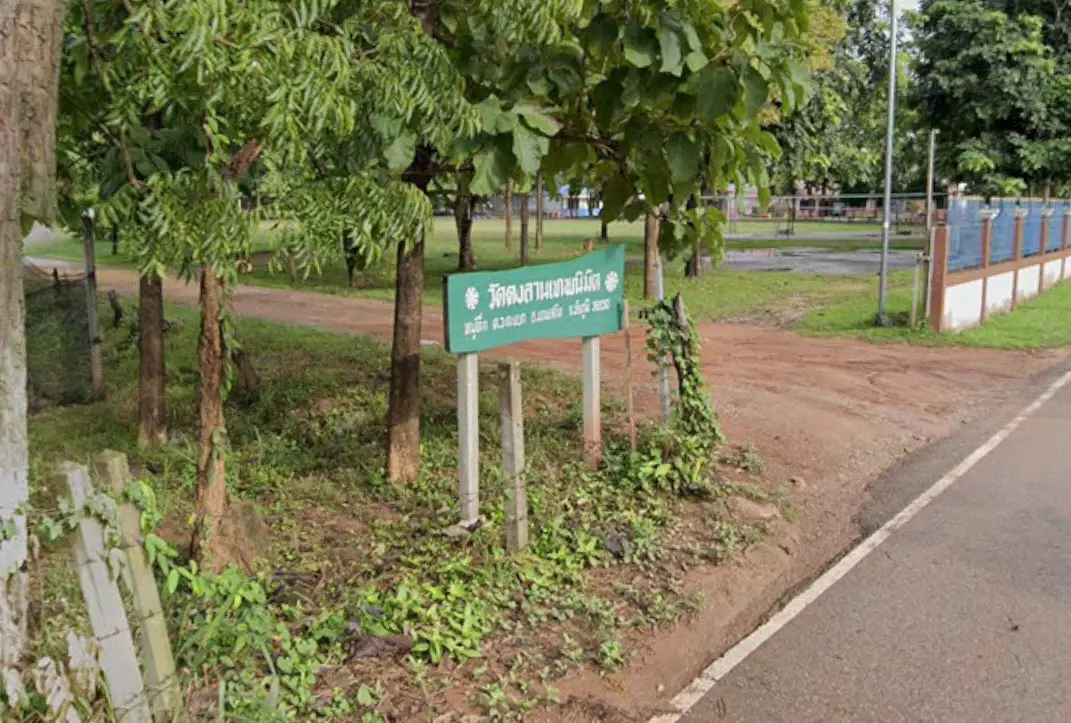
Open Days: Daily
Opening Hours: 08.00 – 17.00
Wat Dong Lan Thep Nimit, located in Ban Dong Lan, Moo 11, Watabaek Subdistrict, Thep Sathit District, Chaiyaphum Province, is a long-established rural community temple founded in 1939. It serves as a place for Buddhist ceremonies, merit-making, meditation practice, local traditions, cultural activities, and community unity. The temple is an important spiritual center for local villagers because it connects monks, Buddhist laypeople, families, school life, agricultural work, village roads, and rural faith into one shared community space. Its value does not come from being a large commercial attraction, but from its living role as a village temple that local people continue to use, support, and respect.
For a clear overview, Wat Dong Lan Thep Nimit is a Mahanikaya Buddhist community temple in Ban Dong Lan, Moo 11, Watabaek Subdistrict, Thep Sathit District, Chaiyaphum Province. The temple was registered in 1939 and remains an active religious site serving the local community. It is suitable for visitors who want to pay respect, make merit, experience a peaceful rural temple atmosphere, and combine the visit with nearby sites such as Wat Chong Samran, Wat Sap Sai Charoen Tham, Wat Sap Mi, Wat Khao Phanom Dom Wanaram, Wat Sap Sombun Sawang Tham, Wat Sap Thawon Phatthana, Wat Watabaek, Pa Hin Ngam National Park, the Siam tulip fields, and Pha Sut Phaen Din Viewpoint.
The name Wat Dong Lan Thep Nimit reflects both local geography and Buddhist imagination. “Dong Lan” suggests a local landscape connected with woodland, open village ground, and the memory of Ban Dong Lan. “Thep Nimit” carries the sense of an auspicious sign or sacred vision. Together, the name evokes a community temple rooted in rural landscape, local faith, and the idea of spiritual blessing. It is not simply a temple name, but a name that belongs to the village and to the people who have preserved the temple as their shared spiritual home.
Ban Dong Lan, Moo 11, is closely connected with the temple. The temple and the village should not be understood as separate spaces. The temple is part of the community’s daily and seasonal life. Villagers come here for merit-making, Buddhist holy day observances, family ceremonies, communal gatherings, school-related religious activities, and annual traditions. Because the temple stands within the village, it preserves local memory and gives people a shared place where faith, family, education, and community identity meet.
The temple’s establishment in 1939 places Wat Dong Lan Thep Nimit among the long-standing community temples in the Thep Sathit area. In rural Thailand, temples have traditionally been more than ritual sites. They have served as moral education centers, community meeting places, ceremonial grounds, places for children to learn temple manners, and spiritual anchors for elderly villagers and families. Wat Dong Lan Thep Nimit developed within this tradition and continues to function as a shared place for merit-making, Dhamma listening, meditation practice, Buddhist observances, and village cooperation.
Watabaek Subdistrict is an important area of Thep Sathit District, with local communities, administrative centers, rural roads, agricultural areas, schools, and routes connecting to major attractions in Chaiyaphum. Wat Dong Lan Thep Nimit stands within this setting, making it part of everyday community life. The temple is not separated from the village environment. It is connected with homes, fields, roads, school activities, monastic life, and the social life of local people. Visitors can understand the temple more deeply when they see it as a living part of the Watabaek community rather than only a sightseeing stop.
As a rural Mahanikaya temple, Wat Dong Lan Thep Nimit is sustained by monks, villagers, and lay supporters. Local temples like this survive through faith, cooperation, generosity, and continued use. Villagers do not only visit the temple on special days; they help keep it alive through offerings, merit-making, temple work, and participation in ceremonies. This close relationship between temple and community gives Wat Dong Lan Thep Nimit its real value. It is not a place maintained for display, but a religious space used and respected by local people.
Phra Khru Nimit Kittithada is the abbot of Wat Dong Lan Thep Nimit and has a clear role in the Dong Lan community. In a rural temple, the role of the abbot extends beyond ceremony. The abbot looks after monastic order, temple property, religious activities, and the relationship between monks and lay supporters. In a community temple like Wat Dong Lan Thep Nimit, this role helps preserve the temple as a stable spiritual center for local people. Monks provide moral guidance, maintain Buddhist practice, teach religious values, and support the community during important moments in life.
The temple is used for Buddhist activities by monks, local Buddhists, villagers, and general visitors. These activities include offering food to monks, making merit, chanting, listening to sermons, meditation, Buddhist holy day observances, Kathin, Pha Pa, and other annual traditions. The temple remains a living religious space because people continue to use it. Faith is not preserved only through written records or old buildings; it is expressed through repeated acts of devotion, service, and communal responsibility.
During major Buddhist occasions such as Makha Bucha, Visakha Bucha, Asalha Bucha, Buddhist Lent, the End of Buddhist Lent, Kathin, and Pha Pa, Wat Dong Lan Thep Nimit becomes a gathering space for the community. Villagers bring offerings, food, flowers, candles, incense, and sincere faith. Children and young people learn proper temple manners, respect for monks, generosity, and community cooperation by joining real activities. In this way, Buddhist values are passed from one generation to another through lived experience rather than instruction alone.
The Buddhist Lent candle procession is a meaningful example of how the temple, school, and village community are connected. When teachers, students, and local people from Ban Dong Lan join religious activities at Wat Dong Lan Thep Nimit, the temple becomes a place of moral education as well as worship. Children learn the meaning of Buddhist Lent, the value of respect, the habit of community service, and the importance of carrying local traditions forward. This makes the temple a living classroom of faith and culture.
Kathin ceremonies are another good example of how temple and community come together. They require cooperation from monks, villagers, schools, local supporters, and people who wish to make merit. When the community gathers for Kathin or merit-making activities at Wat Dong Lan Thep Nimit, the temple becomes more than a religious site. It becomes a shared space of generosity, service, social connection, and Buddhist continuity. Events like this show that the temple remains an active heart of the village.
As a place for meditation and spiritual practice, the temple offers a simple and peaceful environment. Rural temples like this are not crowded or overly commercialized, making them suitable for quiet reflection. Visitors can chant, sit calmly, make merit, or spend time in the temple grounds with a peaceful mind. The calmness of the setting allows Buddhist practice to feel close to everyday life. For foreign travelers, this is a meaningful way to experience Buddhism as part of village culture rather than as a staged attraction.
The main areas inside Wat Dong Lan Thep Nimit include the worship area, merit-making area, Dhamma practice space, temple courtyard, religious activity area, community gathering space, and monks’ residential zone. The temple’s overall character emphasizes real community use rather than luxury. These areas support Buddhist ceremonies, food offerings, chanting, meditation, community gatherings, and annual religious events. This makes the temple a living religious and cultural space throughout the year.
The worship area is a suitable starting point for visitors. Paying respect to the Buddha helps travelers enter the temple atmosphere with calmness and respect. Afterward, visitors may spend time around the practice area, courtyard, or community spaces as appropriate. Although rural temples are often welcoming, visitors should remember that the temple is sacred to local people. Walk quietly, dress modestly, avoid disturbing monks or people practicing Dhamma, and do not enter monks’ residential areas without permission.
The temple courtyard plays an important role during Buddhist events and community activities. On ordinary days, it may be quiet and simple. On Buddhist holy days and merit-making occasions, it becomes a gathering area where villagers arrive with offerings, food, flowers, and faith. This transformation is one of the meaningful qualities of rural temples. It shows how a quiet local space becomes the heart of community cooperation when people gather for religious purposes.
One of the advantages of Wat Dong Lan Thep Nimit is its location in Watabaek Subdistrict, which connects easily to several temples and attractions in Thep Sathit District. Visitors can begin at Wat Dong Lan Thep Nimit, then continue to Wat Chong Samran, Wat Sap Sai Charoen Tham, Wat Sap Mi, Wat Khao Phanom Dom Wanaram, Wat Sap Sombun Sawang Tham, Wat Sap Thawon Phatthana, Wat Sap Charoen, Wat Watabaek, or extend the journey toward Pa Hin Ngam National Park and other natural attractions. This makes the temple suitable for a faith-based and cultural route through Thep Sathit.
Wat Chong Samran and Wat Sap Sai Charoen Tham are nearby temples that can be combined with Wat Dong Lan Thep Nimit. Visiting these temples together helps travelers understand how Buddhist sites are distributed among local villages, each serving its own community while sharing a broader religious identity. This kind of route is suitable for travelers who want to see more than one side of rural Buddhist life in Thep Sathit.
Wat Sap Mi and Wat Khao Phanom Dom Wanaram add more variety to the route. Wat Sap Mi reflects a village temple identity, while Wat Khao Phanom Dom Wanaram is associated with a more elevated natural setting. Combining these temples with Wat Dong Lan Thep Nimit allows visitors to experience both ordinary village temple life and a temple connected with landscape and geography. This gives the trip a broader cultural and spatial dimension.
Wat Sap Sombun Sawang Tham, Wat Sap Thawon Phatthana, and Wat Sap Charoen are nearby temples whose names also reflect local settlement and the idea of growth, development, prosperity, or Dhamma. Visiting these temples together helps travelers see the relationship between Buddhist names, village identities, and the geography of Watabaek. It becomes not only a merit-making route but also a way to understand how local communities name, remember, and organize their sacred places.
Wat Watabaek, also known as Wat Rat Sattha Tham, adds more depth to a faith-based route in Watabaek. If Wat Dong Lan Thep Nimit reflects the spiritual identity of Ban Dong Lan, Wat Watabaek is connected with the broader subdistrict center. Visiting both helps travelers see how temples operate at different levels of local life: village, community, and subdistrict.
Pa Hin Ngam National Park, the Siam tulip fields, and Pha Sut Phaen Din Viewpoint are farther from Wat Dong Lan Thep Nimit but remain major attractions of Thep Sathit District. During the rainy season and early cool season, the natural landscape becomes especially fresh. Visitors can pay respect at Wat Dong Lan Thep Nimit in the morning and continue to the national park later in the day, depending on travel time and road conditions. This route suits travelers who want to understand Thep Sathit through both local faith and natural scenery.
Watabaek Subdistrict also has local restaurants, cafés, and accommodations along the main routes. Travelers can stop at local restaurants, grilled fish restaurants, cafés at fuel stations, or resort restaurants before continuing to temples or natural attractions. Planning food and accommodation in advance is useful, especially for families, elderly travelers, and visitors traveling during the busy Siam tulip season.
The best time to visit Wat Dong Lan Thep Nimit depends on the purpose of the trip. For a quiet visit, mornings and weekdays are ideal because the temple atmosphere is peaceful and the weather is usually more comfortable. For community atmosphere, Buddhist holy days and major religious occasions are more suitable. Travelers who plan to combine the temple with natural attractions should consider the season, check weather conditions, and allow enough travel time between Watabaek and other areas of Thep Sathit District.
Visitors should follow respectful temple manners. Dress modestly, speak quietly, avoid disturbing monks or people practicing Dhamma, and do not enter monks’ residential areas without permission. If a ceremony is taking place, observe respectfully and avoid standing in a position that obstructs the ritual. Responsible temple travel helps preserve the religious dignity and peaceful atmosphere of the place.
Getting There is most convenient by private car because the temple is located in Ban Dong Lan, Moo 11, Watabaek Subdistrict, Thep Sathit District, Chaiyaphum Province. From Thep Sathit town, travel into Watabaek Subdistrict and continue toward Ban Dong Lan. Visitors can navigate with the coordinates 15.394022, 101.392945. From Chaiyaphum city or nearby districts, allow enough travel time and check road conditions in advance because some routes pass through village roads, agricultural areas, and hilly rural landscapes.
Useful items to bring include modest clothing, comfortable walking shoes, drinking water, a hat or umbrella on sunny days, and small cash for merit-making. As a rural community temple, facilities are simple and practical rather than commercial. Elderly visitors and children should be accompanied when walking around uneven temple grounds. Preparing well makes the visit more comfortable and respectful of the local setting.
For travel planning, a simple temple visit may take about 30 minutes to 1 hour. If visiting during a Buddhist event or temple ceremony, allow more time and observe respectfully. After visiting the temple, travelers can continue to Wat Chong Samran, Wat Sap Sai Charoen Tham, Wat Sap Mi, Wat Khao Phanom Dom Wanaram, Wat Sap Sombun Sawang Tham, Wat Sap Thawon Phatthana, Wat Sap Charoen, Wat Watabaek, or Pa Hin Ngam National Park depending on the route, season, and available time.
Photography should be done with respect. Suitable photos include the rural temple atmosphere, temple courtyard, worship area, hall, and community activities when they do not disturb anyone. Avoid taking close-up photos of monks or people practicing Dhamma without permission, and avoid photographing monks’ residential areas. A meaningful cultural photograph should convey peace, simplicity, and spiritual value rather than interrupting the religious atmosphere.
Although Wat Dong Lan Thep Nimit is not a nationally famous landmark, it is highly valuable as a community temple and spiritual center of Ban Dong Lan. Since 1939, the temple has supported Buddhist practice, merit-making, local traditions, community relationships, and school-related Buddhist activities. Its beauty lies in calmness, sincerity, and the long connection between the temple, monks, villagers, students, teachers, and the rural landscape of Watabaek Subdistrict.
For foreign travelers seeking a quieter and more meaningful route in Chaiyaphum, Wat Dong Lan Thep Nimit is worth adding to a Watabaek or Thep Sathit itinerary. Come with respect, move slowly, and see the temple as a living community space rather than only a sightseeing stop. With this perspective, a visit to Wat Dong Lan Thep Nimit becomes a deeper experience of Thai Buddhism, local culture, rural community life, religious education, and faith-based travel in northeastern Thailand.
| Name | Wat Dong Lan Thep Nimit |
| Location | Ban Dong Lan, Moo 11, Watabaek Subdistrict, Thep Sathit District, Chaiyaphum Province, Thailand |
| Address | Dong Lan, Moo 11, Watabaek Subdistrict, Thep Sathit District, Chaiyaphum Province 36230 |
| Coordinates | 15.394022, 101.392945 |
| Highlights | A long-established community temple of Ban Dong Lan, built and registered in 1939, registered as a Mahanikaya Buddhist temple, and serving as a spiritual center of the village. |
| History | Built and registered in 1939, Wat Dong Lan Thep Nimit has a long-standing role in local Buddhist activities, meditation practice, traditions, culture, religious education, and community life in Watabaek Subdistrict. |
| Name Origin | The name is connected with Ban Dong Lan, while “Thep Nimit” suggests an auspicious sacred vision, reflecting local faith and the temple’s spiritual role in the community. |
| Distinctive Features | A peaceful rural community temple used for real Buddhist activities by monks and villagers, suitable for merit-making, meditation, and learning about local temple life in Chaiyaphum. |
| Community Context | Located in Ban Dong Lan, Moo 11, Watabaek Subdistrict, a rural village area with school life, agricultural land, local roads, village traditions, and connections to temples and natural attractions in Thep Sathit. |
| Travel Information | Best reached by private car. Travel into Watabaek Subdistrict and continue to Ban Dong Lan, Moo 11. Use coordinates 15.394022, 101.392945 and check rural road conditions before traveling. |
| Current Status | Open as a Buddhist activity site, meditation place, and faith-based travel destination of Ban Dong Lan, Watabaek Subdistrict. |
| Open Days | Daily |
| Opening Hours | 08.00 – 17.00 |
| Admission Fee | No admission fee. Merit-making donations are voluntary. |
| Facilities | Worship area, merit-making area, meditation space, temple courtyard, religious activity area, monks’ residential area, and parking space according to the rural temple setting |
| Main Areas / Zones | Main worship area Merit-making and food offering area Chanting and meditation area Temple courtyard and community activity space Religious activity hall or area Monks’ residential area |
| Abbot / Caretaker | Phra Khru Nimit Kittithada |
| Community Role | A center for merit-making, Buddhist Lent activities, school-related religious learning, village ceremonies, and Buddhist cultural continuity in Ban Dong Lan. |
| Area Contact Number | Watabaek Subdistrict Administrative Organization, Tel. / Fax 044-056188 |
| Official Website / Official Page | Watabaek Subdistrict Administrative Organization Website |
| Nearby Tourist Attractions | 1. Wat Chong Samran, Watabaek Subdistrict, about 6 km 2. Wat Sap Sai Charoen Tham, Ban Sap Sai, Moo 15, about 7 km 3. Wat Sap Mi, Watabaek Subdistrict, about 10 km 4. Wat Khao Phanom Dom Wanaram, Sap Mi, Moo 6, about 11 km 5. Wat Sap Sombun Sawang Tham, Ban Sap Sombun, Moo 9, about 13 km 6. Wat Sap Thawon Phatthana, Ban Sap Thawon Phatthana, Moo 17, about 15 km 7. Wat Sap Charoen, Watabaek Subdistrict, about 17 km 8. Wat Watabaek or Wat Rat Sattha Tham, about 22 km 9. Pa Hin Ngam National Park, about 55 km 10. Siam Tulip Fields, Pa Hin Ngam National Park, about 57 km 11. Pha Sut Phaen Din Viewpoint, Pa Hin Ngam National Park, about 59 km |
| Nearby Restaurants | 1. Krua Wang Tabaek Good View / Wang Tabaek Pla Phao, about 16 km, Tel. 089-847-2281 2. Café Amazon, PTT Songhong Thep Sathit Oil, Watabaek Subdistrict, about 18 km, Tel. 095-723-3837 3. Thepharak Steak House, Thep Sathit, about 19 km 4. Thepsathit View, Watabaek Subdistrict, about 20 km, Tel. 044-855-255 5. Ban Suan Cafe & Camp, Thep Sathit, about 32 km, Tel. 099-303-2989 |
| Nearby Accommodations | 1. Thepsathit View Hotel / Thepsathit View Resort, Watabaek Subdistrict, about 20 km, Tel. 044-855-255 2. Phuean Kan Resort, Watabaek Subdistrict, about 20 km, Tel. 091-014-3078 3. The Scenic Resort, Thep Sathit, about 24 km, Tel. 083-638-8888 4. Ban Suan Cafe & Camp, Thep Sathit, about 32 km, Tel. 099-303-2989 5. Pa Din Hin Ngam Resort, Ban Rai Subdistrict, about 60 km, Tel. 087-021-7000 |
Frequently Asked Questions (FAQ)
Q: Where is Wat Dong Lan Thep Nimit located?
A: Wat Dong Lan Thep Nimit is located in Ban Dong Lan, Moo 11, Watabaek Subdistrict, Thep Sathit District, Chaiyaphum Province 36230, Thailand.
Q: When was Wat Dong Lan Thep Nimit built?
A: Wat Dong Lan Thep Nimit was built and registered in 1939 as a Mahanikaya Buddhist community temple in Watabaek Subdistrict.
Q: What is special about Wat Dong Lan Thep Nimit?
A: The temple is a long-established rural community temple with a peaceful atmosphere and a continuing role in Buddhist activities, meditation practice, school-related religious learning, local traditions, and village life.
Q: Who is the abbot of Wat Dong Lan Thep Nimit?
A: The abbot of Wat Dong Lan Thep Nimit is Phra Khru Nimit Kittithada.
Q: What are the opening days and hours of Wat Dong Lan Thep Nimit?
A: The temple is open daily from 08.00 to 17.00.
Q: Is there an admission fee for Wat Dong Lan Thep Nimit?
A: There is no admission fee. Visitors may make voluntary merit-making donations.
Q: How can travelers get to Wat Dong Lan Thep Nimit?
A: Private car is the most convenient option. Travelers should drive into Watabaek Subdistrict and continue to Ban Dong Lan, Moo 11, using the coordinates 15.394022, 101.392945.
Q: What nearby attractions can be visited with Wat Dong Lan Thep Nimit?
A: Nearby attractions include Wat Chong Samran, Wat Sap Sai Charoen Tham, Wat Sap Mi, Wat Khao Phanom Dom Wanaram, Wat Sap Sombun Sawang Tham, Wat Sap Thawon Phatthana, Wat Watabaek, Pa Hin Ngam National Park, the Siam tulip fields, and Pha Sut Phaen Din Viewpoint.
 Category: ●Places of Worship
 Group: ●Temple
Last Update : 1 MonthAgo
 Last Update : 1 MonthAgo
 Click to Access the Navigation Map GPS
Wat Dong Lan Thep Nimit Map
Recommend

 Art, Culture and Heritage
 Historical Sites and Monuments(1)
 Landmarks and Memorials(3)
 Royal Palace(1)
 Art, Craft Centres, Tradition(3)
 Educational Places
 Educational Gardens, Farm(1)
Temple(141)
Educational Gardens, Farm(1)
Temple(141)
 Other Sacred Sites(7)
 Suburban Living
 Village, Community(4)
 Nature and Wildlife
 National Parks and Marine Reserves(7)
 Mountain (Doi)(5)
 Dam, Reservoir, Lake(10)
 Waterfalls(15)
 Caves(5)
 River, Canal(4)
 Other natural attractions(1)
 Entertainment and Agricultural
 Farms, Parks and Ecotourism(2)


