
lovethailand home >Northeastern Travel Attractions >Chaiyaphum Travel Attractions >Thep Sathit >Huai Yai Chiw > Wat Khlong Sa Kaeo
TL;DR: Wat Khlong Sa Kaeo is located at Ban Khlong Sa Kaeo, Moo 17, Huai Yai Chio Subdistrict, Thep Sathit District, Chaiyaphum Province, Thailand, open Daily, hours 08.00 – 17.00.
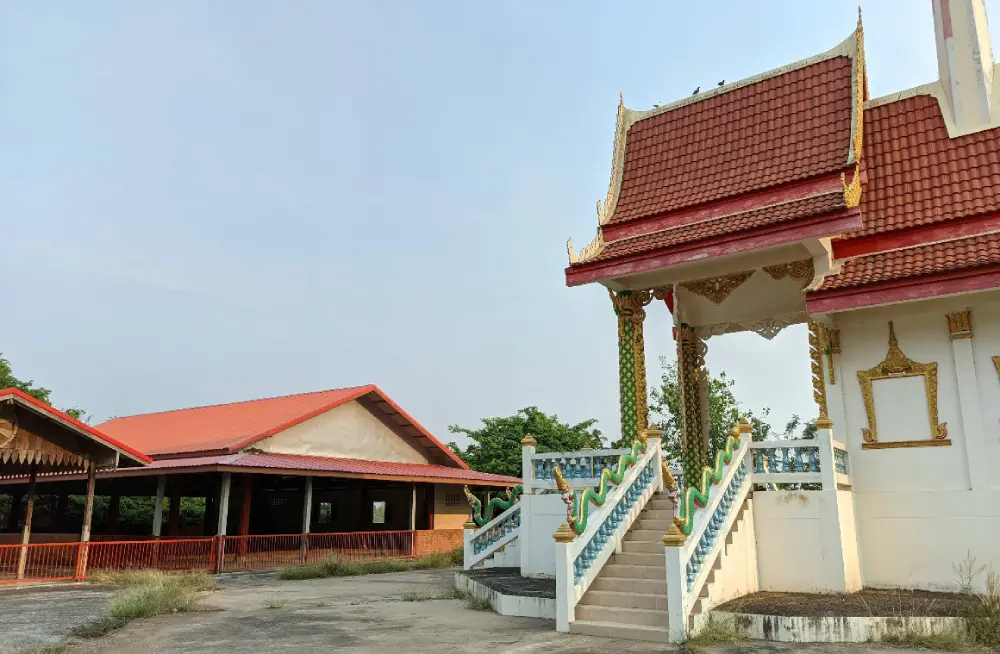
Wat Khlong Sa Kaeo
Open Days: Daily
Opening Hours: 08.00 – 17.00
Wat Khlong Sa Kaeo, located in Ban Khlong Sa Kaeo, Moo 17, Huai Yai Chio Subdistrict, Thep Sathit District, Chaiyaphum Province, is a long-established rural community temple built in 1940. The temple serves as a place for Buddhist activities, merit-making, meditation practice, local traditions, cultural gatherings, and community bonding. Its value does not come from being a large commercial tourist attraction. Rather, it stands out as a living village temple where Buddhism, local culture, and everyday rural life remain closely connected.
For a clear overview, Wat Khlong Sa Kaeo is a Mahanikaya Buddhist temple in Ban Khlong Sa Kaeo, Moo 17, Huai Yai Chio Subdistrict, Thep Sathit District, Chaiyaphum Province. It was built in 1940 and continues to function as a spiritual center for the local community. The temple is suitable for visitors who want to pay respect, make merit, practice meditation, observe a quiet rural temple atmosphere, and combine the visit with nearby cultural and natural attractions such as Pa Hin Ngam National Park, Pha Sut Phaen Din Viewpoint, the Siam tulip fields, Wat Khao Wong Phra Chan, Wat Si Mueang Thong, and other attractions around Thep Sathit.
The name Wat Khlong Sa Kaeo is directly connected with Ban Khlong Sa Kaeo, the village where the temple is located. In Thai, “khlong” refers to a canal or waterway, while “sa kaeo” suggests an auspicious pond or clear water source. The name reflects the local landscape, where waterways, village life, and agricultural surroundings are closely linked. This is not a name created for tourism branding. It is a name rooted in local geography and community memory. Because the temple shares its name with the village, Wat Khlong Sa Kaeo has become an important spiritual landmark for the people of Ban Khlong Sa Kaeo.
The temple’s founding in 1940 places it among the older community temples of Huai Yai Chio and Thep Sathit. At that time, rural temples played a central role in village life. They were not only places for worship, but also gathering places, moral education spaces, venues for community meetings, and cultural grounds for seasonal traditions. Wat Khlong Sa Kaeo was established to serve these needs. Its presence gave local people a shared religious and cultural center where they could make merit, listen to sermons, observe Buddhist holy days, and maintain village customs.
In rural Thai society, a temple often functions as the heart of the village. People gather at the temple on Buddhist holy days, during merit-making ceremonies, and for important community events. Wat Khlong Sa Kaeo plays this role for Ban Khlong Sa Kaeo. Villagers come to the temple for chanting, offerings, sermons, meditation, and ceremonies, but they also come to meet one another, help prepare temple events, and preserve the shared traditions of the community. This makes the temple both a sacred space and a social space.
Wat Khlong Sa Kaeo is used for Buddhist activities by monks, local Buddhists, and general visitors. Activities include offering food to monks, making merit, listening to Dhamma, chanting, meditation, candlelight processions on important Buddhist days, and community merit-making events. These activities keep the temple alive as a real community institution. Faith here is not preserved only through written history. It is expressed through daily and seasonal participation by villagers who continue to support the temple and pass Buddhist values to younger generations.
As a place for meditation and spiritual practice, Wat Khlong Sa Kaeo offers a simple and peaceful atmosphere. Rural temples like this are not crowded or overly formal, making them suitable for quiet reflection. Visitors can sit calmly, chant, make merit, or simply spend time in a respectful temple setting. The peaceful environment allows Buddhist practice to feel natural and accessible. For foreign travelers, this is a meaningful way to experience Buddhism as part of everyday village life rather than as a staged tourist performance.
Huai Yai Chio Subdistrict is part of Thep Sathit District in Chaiyaphum Province. The area includes rural villages, local roads, agricultural landscapes, waterways, and access routes toward major nature attractions. Ban Khlong Sa Kaeo, Moo 17, is associated with water resources such as Huai Si Siat, Huai Wang Rae, Nong Hin Reservoir, and local overflow weirs. This setting helps explain the temple’s relationship with land and water. Wat Khlong Sa Kaeo is not isolated from village life; it belongs to the wider rural landscape of canals, streams, farms, roads, and homes.
The temple’s location in Ban Khlong Sa Kaeo makes it a significant landmark for local people. Villagers use the temple as a place for worship, ceremonies, and community gathering. It also serves as a familiar local reference point in the village landscape. For travelers, understanding this context is important. Wat Khlong Sa Kaeo is not a detached tourist site. It grew out of the community, remains part of the community, and continues to serve the religious and cultural life of the people who live nearby.
Temple registry information identifies Wat Khlong Sa Kaeo as a Mahanikaya temple in Huai Yai Chio Subdistrict, Thep Sathit District, Chaiyaphum Province, located in Moo 17, Ban Khlong Sa Kaeo. This confirms the temple’s identity within Thailand’s Buddhist temple system. A rural Mahanikaya temple like this is usually sustained by the faith of local people, monks, and supporters. Wat Khlong Sa Kaeo therefore represents the type of community temple that has grown through local devotion and long-term participation.
The cultural importance of Wat Khlong Sa Kaeo lies in its role as a place where local traditions are preserved. Temple-based activities include Buddhist holy day observances, Makha Bucha, Visakha Bucha, Asalha Bucha, Buddhist Lent, the End of Buddhist Lent, Kathin, Pha Pa, and other village merit-making events. These activities teach younger generations how to make offerings, listen to monks, help with temple preparations, and respect sacred spaces. Such learning happens through real practice, as children and young people observe parents, grandparents, monks, and neighbors working together at the temple.
Wat Khlong Sa Kaeo also helps maintain relationships within the village. During temple events, villagers help clean the grounds, prepare the hall, cook food, arrange offerings, and organize ceremonies. This shared work strengthens cooperation and responsibility. A temple like this is not simply a ceremonial building. It is a training ground for generosity, unity, and community care. This social role is one of the most important qualities of rural Buddhist temples in Thailand.
For travelers, Wat Khlong Sa Kaeo is best appreciated as an authentic local temple rather than a highly developed tourist attraction. A visit here offers a quieter view of Chaiyaphum beyond the most famous destinations. It helps travelers see that Thep Sathit is not only known for Pa Hin Ngam National Park and Siam tulips, but also for village temples, rural communities, and living cultural traditions. This makes the temple suitable for slow travel and for visitors who want to understand real local life.
The main areas inside Wat Khlong Sa Kaeo include the worship area, sermon hall or multipurpose hall, merit-making area, meditation area, temple courtyard, and monks’ residential area. The overall character of a community temple emphasizes practical use rather than luxury. These spaces can support small family ceremonies as well as larger village events. The temple remains a living place because its areas continue to serve religious, cultural, and social needs throughout the year.
The worship area is a suitable starting point for visitors. Paying respect to the main Buddha image allows travelers to enter the temple atmosphere with calmness and respect. Afterward, visitors may walk around the temple courtyard and community areas as appropriate. Although rural temples are often relaxed and welcoming, visitors should remember that the temple is sacred to local people. Walk respectfully, speak quietly, avoid disturbing monks or people practicing Dhamma, and do not enter monks’ residential areas without permission.
The sermon hall or multipurpose hall is one of the most important community spaces in the temple. It is used for listening to Dhamma, preparing merit-making events, community meetings, food offerings, and ceremonies. In many rural Thai temples, this hall is where generations of villagers have gathered for Buddhist practice and shared traditions. It is not only a building. It is a social and spiritual space that stores community memory through repeated use over many years.
The temple courtyard reflects everyday temple life. On ordinary days, it may be quiet and simple. On Buddhist holy days and village events, it becomes a lively space where people gather with offerings, food, flowers, and faith. This transformation is one of the most charming aspects of rural temples. It shows how a quiet local space can become a center of devotion and cooperation when the community comes together.
Wat Khlong Sa Kaeo is valuable for learning about local culture in Thep Sathit. It is a good example of a village temple that functions for real community life rather than for tourism alone. Visitors can observe the simplicity of rural temple architecture, the calm atmosphere of a village setting, and the practical role of Buddhism in local society. This adds another layer to a Chaiyaphum trip, complementing the province’s better-known natural attractions.
Traveling to Wat Khlong Sa Kaeo requires some planning because the temple is located in a rural part of Huai Yai Chio. Some roads are local routes connecting villages and agricultural areas. Private car is the most convenient option. Visitors should check maps, coordinates, and road conditions before departure, especially during the rainy season when rural roads may be wet or under maintenance. Good preparation makes the visit smoother and safer.
Getting There is easiest by private car. From Thep Sathit town, travel toward Huai Yai Chio Subdistrict and continue to Ban Khlong Sa Kaeo, Moo 17. From Chaiyaphum city, travelers can use routes through Chatturat or other roads connecting to Thep Sathit, then continue into Huai Yai Chio. From the Pa Hin Ngam National Park or Ban Rai area, allow enough time because the route involves local rural roads. Visitors without a private vehicle should arrange local transport in advance.
Huai Yai Chio Subdistrict is about 12 kilometers from Thep Sathit town, while Ban Khlong Sa Kaeo, Moo 17, is about 15 kilometers from the district center. This makes Wat Khlong Sa Kaeo suitable as a stop on a local Thep Sathit route. A short visit can focus on paying respect and observing the village temple atmosphere. A full-day route can include nearby cafés, restaurants, local temples, and nature attractions around Pa Hin Ngam National Park.
One of the best-known attractions that can be combined with Wat Khlong Sa Kaeo is Pa Hin Ngam National Park, famous for its rock formations, Siam tulip fields, and Pha Sut Phaen Din viewpoint. During the rainy season and early cool season, the landscape becomes especially green and fresh. During the Siam tulip blooming season, travelers should plan accommodation and transportation in advance because the area receives more visitors than usual. Combining the temple with Pa Hin Ngam creates a route that includes both faith and nature.
Travelers can also combine the temple with other local temples in Huai Yai Chio, such as Wat Khao Wong Phra Chan and Wat Si Mueang Thong. The subdistrict has several village temples, each connected with its own community. A temple route through Huai Yai Chio is suitable for visitors interested in rural Buddhist culture, local architecture, and the network of religious sites that support village life across the area.
The best time to visit depends on the purpose of the trip. For a quiet visit, mornings and weekdays are ideal because the temple is peaceful and the weather is usually more comfortable. For community atmosphere, visit during Buddhist holy days or major religious occasions. Those who plan to continue to Pa Hin Ngam National Park and the Siam tulip fields should consider the rainy season and early cool season, especially the mid-year blooming period.
Visitors should dress modestly when entering Wat Khlong Sa Kaeo. Clothing should be appropriate for a Buddhist temple. Speak quietly, avoid disturbing monks or people practicing Dhamma, and ask permission before photographing people or religious activities. If a ceremony is taking place, observe respectfully and avoid standing in positions that obstruct the ritual. These manners help preserve the dignity of the temple and allow visitors to experience it in the right way.
Useful items to bring include comfortable walking shoes, drinking water, a hat or umbrella on sunny days, and small cash for merit-making. As a rural community temple, facilities are simple and practical. Elderly visitors and children should be accompanied carefully if walking on uneven ground or around the temple courtyard. Preparing well helps make the visit more comfortable and respectful of the local setting.
Photography should be done with care. Suitable photos include the temple courtyard, hall, worship area, and community atmosphere when it does not disturb anyone. Avoid taking close-up photos of monks, worshippers, or private areas without permission. A meaningful cultural photograph should convey the temple’s calmness, simplicity, and value without interrupting its religious atmosphere.
For travel planning, Wat Khlong Sa Kaeo can be visited in about 30 minutes to 1 hour for a simple merit-making stop. During religious events or Buddhist holy days, visitors should allow more time. After visiting the temple, travelers can continue to restaurants and cafés in Huai Yai Chio and Ban Rai, such as Rong Na Cafe, Ban Suan Cafe & Camp, Avoka Cafe’, Baan Rai Baramee, or Suan Thep Phana Learning Center, before staying in accommodations around Huai Yai Chio, Ban Rai, or Pa Hin Ngam.
Although Wat Khlong Sa Kaeo is not a large national landmark, its value lies in its continuing role as a community temple since 1940. It remains a place where monks perform religious duties, villagers make merit, traditions are preserved, and community ties are maintained. Its beauty is found in simplicity and sincerity. For travelers who want to understand rural Chaiyaphum more deeply, Wat Khlong Sa Kaeo offers a meaningful perspective on Buddhism, culture, and village life.
For foreign travelers seeking a quieter and more authentic route in Chaiyaphum, Wat Khlong Sa Kaeo is worth adding to a Huai Yai Chio, Thep Sathit, or Pa Hin Ngam itinerary. Come with respect, move slowly, and see the temple as a living community space rather than only a sightseeing stop. With this perspective, a visit to Wat Khlong Sa Kaeo becomes a deeper experience of faith, culture, and rural life in northeastern Thailand.
| Name | Wat Khlong Sa Kaeo |
| Location | Ban Khlong Sa Kaeo, Moo 17, Huai Yai Chio Subdistrict, Thep Sathit District, Chaiyaphum Province, Thailand |
| Address | Khlong Sa Kaeo, Moo 17, Huai Yai Chio Subdistrict, Thep Sathit District, Chaiyaphum Province 36230 |
| Coordinates | 15.4189548, 101.5393565 |
| Highlights | A long-established community temple built in 1940, serving as a place for merit-making, meditation, religious activities, local traditions, cultural preservation, and village unity. |
| History | Built in 1940, Wat Khlong Sa Kaeo is a Mahanikaya Buddhist temple with a long-standing role in local Buddhist, cultural, and community life. |
| Name Origin | The name comes from Ban Khlong Sa Kaeo, Moo 17, reflecting the village’s connection with canals, water resources, and the rural landscape of Huai Yai Chio. |
| Distinctive Features | A peaceful rural temple with a simple atmosphere, used for real community Buddhist activities, suitable for merit-making, meditation, and learning about village temple life in Chaiyaphum. |
| Travel Information | Best reached by private car. Use local roads into Huai Yai Chio and continue to Ban Khlong Sa Kaeo, Moo 17. Check rural road conditions before traveling, especially during the rainy season. |
| Current Status | Open as a Buddhist activity site, meditation place, and local cultural temple of Ban Khlong Sa Kaeo, Huai Yai Chio. |
| Open Days | Daily |
| Opening Hours | 08.00 – 17.00 |
| Facilities | Worship area, merit-making area, community hall, temple courtyard, meditation area, and parking space according to the rural temple setting |
| Main Areas / Zones | Main worship area Sermon hall / multipurpose hall Meditation and merit-making area Temple courtyard and community activity space Monks’ residential area |
| Area Contact Number | Huai Yai Chio Subdistrict Administrative Organization, Tel. 044-056930 |
| Official Website / Official Page | Huai Yai Chio Subdistrict Administrative Organization Website |
| Nearby Tourist Attractions | 1. Wat Khao Wong Phra Chan, Huai Yai Chio, about 18 km 2. Wat Si Mueang Thong, Huai Yai Chio, about 20 km 3. Pa Hin Ngam National Park, about 38 km 4. Siam Tulip Fields, Pa Hin Ngam National Park, about 39 km 5. Pha Sut Phaen Din Viewpoint, Pa Hin Ngam National Park, about 41 km 6. Baan Rai Baramee, Ban Rai Subdistrict, about 38 km |
| Nearby Restaurants | 1. Rong Na Cafe Thep Sathit, about 5 km, Tel. 063-343-4291 2. Ban Suan Cafe & Camp, Thep Sathit, about 22 km, Tel. 099-303-2989 3. Avoka Cafe’, Ban Rai Subdistrict, about 36 km, Tel. 097-535-9956 4. Baan Rai Baramee, Ban Rai Subdistrict, about 38 km, Tel. 081-708-2050 5. Suan Thep Phana Learning Center, about 40 km, Tel. 081-989-2584 |
| Nearby Accommodations | 1. Ban Rao Home & Garden, Huai Yai Chio, about 16 km, Tel. 089-934-49976, 061-042-9641 2. Rai Aeifoon Resort, about 37 km, Tel. 081-936-4279 3. Phu Prom Dao Farmstay, about 38 km, Tel. 086-888-3636 4. Pa Din Hin Ngam Resort, about 39 km, Tel. 087-021-7000 5. Baan Rai Boonmee, about 42 km, Tel. 064-581-7489 |
Frequently Asked Questions (FAQ)
Q: Where is Wat Khlong Sa Kaeo located?
A: Wat Khlong Sa Kaeo is located in Ban Khlong Sa Kaeo, Moo 17, Huai Yai Chio Subdistrict, Thep Sathit District, Chaiyaphum Province 36230, Thailand.
Q: When was Wat Khlong Sa Kaeo built?
A: Wat Khlong Sa Kaeo was built in 1940 and has served as a community temple for Buddhist activities, local traditions, cultural events, and meditation practice.
Q: What is special about Wat Khlong Sa Kaeo?
A: The temple is a long-established rural community temple with a peaceful atmosphere and a strong role as the spiritual center of Ban Khlong Sa Kaeo.
Q: What are the opening days and hours of Wat Khlong Sa Kaeo?
A: The temple is open daily from 08.00 to 17.00.
Q: How can travelers get to Wat Khlong Sa Kaeo?
A: Private car is the most convenient option. Travelers should use local roads into Huai Yai Chio and continue to Ban Khlong Sa Kaeo, Moo 17, checking road conditions before traveling.
Q: Is Wat Khlong Sa Kaeo suitable for foreign travelers?
A: Yes. It is suitable for travelers interested in rural Buddhist temples, local culture, meditation, and authentic community-based experiences in Chaiyaphum.
Q: What nearby attractions can be visited with Wat Khlong Sa Kaeo?
A: Nearby attractions include Wat Khao Wong Phra Chan, Wat Si Mueang Thong, Pa Hin Ngam National Park, the Siam tulip fields, Pha Sut Phaen Din Viewpoint, and Baan Rai Baramee.
Q: What should visitors prepare before visiting Wat Khlong Sa Kaeo?
A: Visitors should dress modestly, bring drinking water, wear comfortable shoes, speak quietly, check the route in advance, and prepare small cash for merit-making.
 Category: ●Places of Worship
 Group: ●Temple
Last Update : 3 MonthAgo
 Last Update : 3 MonthAgo
 Click to Access the Navigation Map GPS
 Art, Culture and Heritage
 Historical Sites and Monuments(1)
 Landmarks and Memorials(3)
 Royal Palace(1)
 Art, Craft Centres, Tradition(3)
 Educational Places
 Educational Gardens, Farm(1)
Temple(141)
Educational Gardens, Farm(1)
Temple(141)
 Other Sacred Sites(7)
 Suburban Living
 Village, Community(4)
 Nature and Wildlife
 National Parks and Marine Reserves(7)
 Mountain (Doi)(5)
 Dam, Reservoir, Lake(10)
 Waterfalls(15)
 Caves(5)
 River, Canal(4)
 Other natural attractions(1)
 Entertainment and Agricultural
 Farms, Parks and Ecotourism(2)


