
lovethailand home >Northeastern Travel Attractions >Chaiyaphum Travel Attractions >Thep Sathit >Na Yang Klak > Wat Huai Noi
TL;DR: Wat Huai Noi is located at Ban Huai Noi, Moo 8, Na Yang Klak Subdistrict, Thep Sathit District, Chaiyaphum Province, Thailand, open Daily, hours 08.00 – 17.00.
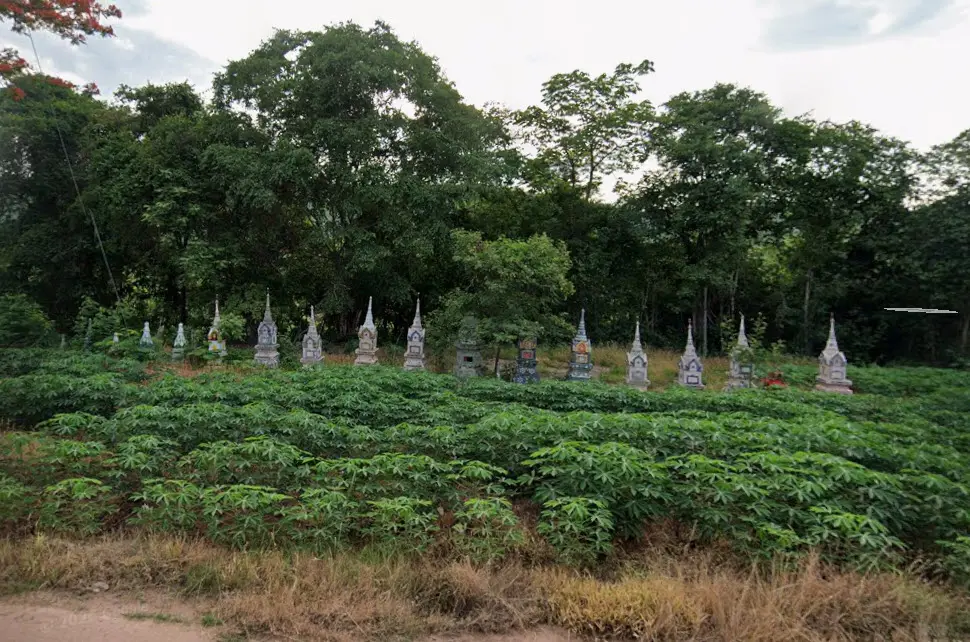
Wat Huai Noi
Open Days: Daily
Opening Hours: 08.00 – 17.00
Wat Huai Noi, located in Moo 8, Na Yang Klak Subdistrict, Thep Sathit District, Chaiyaphum Province, is a long-established rural community temple built in 1940. It serves as a place for Buddhist activities, merit-making, meditation practice, local traditions, cultural events, and community gatherings. The temple is meaningful not because it is a large commercial tourist attraction, but because it reflects the living relationship between Buddhism, village life, and local identity in Na Yang Klak. For visitors who want to understand how temples support everyday community life in rural Thailand, Wat Huai Noi offers a quiet and authentic perspective.
For a quick overview, Wat Huai Noi is a Mahanikaya Buddhist temple located at Ban Huai Noi, Moo 8, Na Yang Klak Subdistrict, Thep Sathit District, Chaiyaphum Province. It was built in 1940 and occupies about 15 rai of temple land. Important temple structures include a traditional wooden Thai-style sermon hall, monks’ residences, and a multipurpose hall. The temple is suitable for travelers who wish to pay respect, make merit, practice meditation, experience a quiet village temple, and combine the visit with nearby nature and cultural attractions such as Nam Tok Ban Nam Lat, Nam Tok Chom Nang, Ban Nam Lat Community, Wat Phra Phutthabat Khao Yai Hom, Pa Hin Ngam National Park, and Pha Sut Phaen Din Viewpoint.
The name Wat Huai Noi is directly connected with Ban Huai Noi, the local village where the temple is located. In Thai, “huai” commonly refers to a small stream or natural watercourse, while “noi” means small. The name therefore carries a gentle local meaning and reflects the temple’s relationship with the surrounding landscape. It is not a name created for tourism branding. Rather, it is a name that preserves the memory of place, water, land, and settlement. Because the temple and the village share the same name, Wat Huai Noi has become a spiritual landmark closely tied to the identity of the local community.
The founding of the temple in 1940 places Wat Huai Noi among the older community temples of Na Yang Klak. Over the decades, the temple has witnessed many changes in rural life: from the period when travel in the countryside was difficult, to the era when local roads gradually improved, to the present time when cultural and faith-based tourism has become more visible. Throughout these changes, the temple has remained a shared place for merit-making, Buddhist ceremonies, and community activities. Its long continuity shows how deeply village temples are woven into the social life of rural Thailand.
In Thai rural society, a temple is often much more than a place for religious rituals. It is a community center, a gathering place on Buddhist holy days, a venue for village ceremonies, a space for moral education, and a spiritual refuge for people of all ages. Wat Huai Noi plays this role for Ban Huai Noi and nearby communities. Villagers come to the temple for religious practice, but they also come to meet one another, help with temple events, preserve traditions, and maintain a shared sense of belonging.
Wat Huai Noi is used for Buddhist activities by monks, local Buddhists, and general visitors. Activities include offering food to monks, making merit, listening to sermons, chanting, meditation, observing Buddhist holy days, and joining seasonal temple events. These activities keep the temple alive as a real community space. Faith here is not something preserved only in written history; it is expressed through everyday actions, through people coming to the temple, helping with ceremonies, and passing traditions from one generation to the next.
As a place for meditation and spiritual practice, Wat Huai Noi offers a simple and peaceful atmosphere. Rural temples like this are not overly formal or crowded, which makes them suitable for quiet reflection. Visitors can spend time in the temple grounds, sit calmly in the worship area, chant, or make merit with a peaceful mind. The stillness of the surroundings allows Buddhist practice to feel natural and accessible. For foreign travelers, this is a valuable way to experience Buddhism not as a staged attraction, but as a living part of village life.
Temple records state that Wat Huai Noi is located at No. 15, Ban Huai Noi, Moo 8, Na Yang Klak Subdistrict, Thep Sathit District, Chaiyaphum Province. The temple land covers about 15 rai. Its boundaries are connected with public roads, public canals, and neighboring local land. These details show that the temple sits within the real geography of the village. It is connected to roads, canals, farmland, and homes. Wat Huai Noi is therefore not separated from community life; it is part of the village landscape itself.
The temple buildings also reflect the practical character of a rural community temple. The sermon hall measures about 20 meters wide and 40 meters long and was built in 1940 as a traditional Thai wooden structure. There are 4 monks’ residences, including 3 wooden buildings and 1 half-concrete, half-wooden building. The multipurpose hall measures about 20 meters wide and 30 meters long. These structures support both religious and social functions, including ceremonies, monks’ residence, community gatherings, and village merit-making events.
The sermon hall is one of the temple’s most important areas. In many rural Thai temples, the sermon hall is where people gather for ceremonies, listen to Dhamma talks, prepare offerings, and join important community events. A traditional wooden sermon hall built in 1940 carries cultural value because it reflects the early period of the temple and the devotion of the community. It is not merely an architectural feature, but a space where generations of villagers have come together for Buddhist practice and shared ceremonies.
The monks’ residences show the temple’s continuing religious life. A temple with resident monks serves the community through rituals, teaching, chanting, moral guidance, and spiritual support. The combination of wooden and half-concrete buildings suggests gradual development over time, shaped by the needs of the temple and the support of villagers. Such structures are common in rural temples, where buildings often evolve through donations, community labor, and long-term faith rather than large-scale development projects.
The multipurpose hall is also important because it allows the temple to support many types of events. It can be used for merit-making ceremonies, community meetings, food preparation during festivals, and cultural activities. For a village temple, this kind of hall is essential. It allows the temple to remain useful to the community throughout the year, not only on major Buddhist holy days. The hall helps make Wat Huai Noi a true center of village life.
Na Yang Klak is a rural subdistrict of Thep Sathit District, known for agricultural communities, hills, local roads, forested areas, and natural attractions. Wat Huai Noi is located within this context, giving it a calm and grounded atmosphere. The experience here is very different from visiting a large urban temple. Travelers will find a slower pace, a simpler temple environment, and a stronger sense of connection between the temple and the people who use it. This makes Wat Huai Noi appropriate for slow travel and cultural observation.
Ban Huai Noi, Moo 8, appears in official local and government records, including references to the village by government agencies and road improvement projects in the area. This confirms Ban Huai Noi as a real community within Na Yang Klak, and it reinforces the temple’s role as a local landmark. For travelers, this also means that reaching the temple involves rural roads and local routes rather than a heavily developed tourist corridor. Planning the journey carefully is therefore important.
Wat Huai Noi is important for preserving local traditions and culture. Temple-based activities teach younger generations how to make offerings, prepare for merit-making ceremonies, listen to monks, observe proper temple manners, and participate in community events. These forms of learning happen through real practice. Children and young people learn not only from books, but also from watching parents, grandparents, monks, and neighbors take part in Buddhist and cultural activities at the temple.
During important Buddhist days such as Makha Bucha, Visakha Bucha, Asalha Bucha, Buddhist Lent, and the End of Buddhist Lent, Wat Huai Noi becomes a place where local people can gather for religious observance. These annual rhythms make the temple part of the community’s spiritual calendar. People remember key moments of the year through merit-making, sermons, offerings, and ceremonies. This continuity helps keep Buddhist traditions alive even as modern life changes around the village.
The temple’s role as the spiritual center of Ban Huai Noi comes from decades of shared memory. Many villagers have personal experiences connected with the temple. Some came here as children with their parents. Some helped prepare food during temple events. Some attended sermons with grandparents. Some return to the temple when they come back home during festivals. These memories make Wat Huai Noi meaningful beyond its physical buildings. It is a place where community identity and family memory are stored.
For travelers interested in local culture, Wat Huai Noi is a useful example of a rural temple in lower northeastern Thailand. Visitors can observe how temples connect people with Buddhism, how the community uses the temple as a shared space, and how faith is expressed through everyday acts rather than grand ceremonies alone. The temple is valuable because it shows Buddhism in its local, practical, community-based form.
Visitors should follow respectful temple manners. Dress modestly, speak quietly, avoid disturbing monks or people practicing Dhamma, and do not enter monks’ residential areas without permission. Photography should be done with care, especially around ceremonies or local people. These simple practices help preserve the peaceful atmosphere of the temple and allow visitors to experience it respectfully.
Wat Huai Noi can be included in a slow travel route through Na Yang Klak. After visiting the temple, travelers may continue to Ban Nam Lat Community, Nam Tok Ban Nam Lat, or Nam Tok Chom Nang, especially during the rainy season and early cool season when waterfalls are more attractive. This route combines a local temple, village culture, and natural scenery in the same area, making it suitable for travelers who want a quiet and meaningful Chaiyaphum itinerary.
With more time, visitors can continue from Wat Huai Noi to Wat Phra Phutthabat Khao Yai Hom, another important sacred site in Na Yang Klak, known for its Buddha footprint and the Shrine of Yai Hom. The route can also extend to Pa Hin Ngam National Park, one of Thep Sathit’s best-known attractions, famous for its rock formations, Siam tulip fields, and Pha Sut Phaen Din viewpoint. Combining these places creates a well-rounded route of faith, local history, and nature.
The cultural context around Na Yang Klak also includes communities with interesting local identities, including Nyah Kur-related cultural networks in nearby areas such as Ban Nam Lat. The Nyah Kur people have distinctive language, traditions, and cultural heritage. A visit to Wat Huai Noi can therefore be part of a wider exploration of Chaiyaphum’s rural communities, agricultural life, ethnic diversity, and Buddhist culture. This is especially valuable for foreign travelers who want to go beyond mainstream tourist attractions.
The best time to visit Wat Huai Noi depends on the type of trip. For a quiet visit, mornings and weekdays are ideal because the temple is peaceful and the weather is usually more comfortable. For those who want to see community activity, Buddhist holy days and major religious occasions are more suitable. Travelers who plan to combine the temple with waterfalls should consider the rainy season and early cool season, while those going to Pa Hin Ngam National Park for Siam tulips should plan around the mid-year blooming season.
Visitors should prepare modest clothing, comfortable walking shoes, drinking water, and small cash for merit-making. As a rural community temple, facilities are simple and practical rather than commercial. Elderly visitors and children should be accompanied carefully, especially when walking around temple grounds or uneven surfaces. Preparing well will make the visit more comfortable and appropriate for the local setting.
Getting There is most convenient by private car. Travelers can use the coordinates 15.702011, 101.515215 to navigate to Ban Huai Noi, Moo 8. From Chaiyaphum city, visitors can travel toward Chatturat, Sap Yai, or Thep Sathit before continuing into Na Yang Klak. From the Pa Hin Ngam National Park or Ban Rai area, allow enough time because the route involves local rural roads. Visitors without a private vehicle should arrange local transport in advance.
Checking road conditions before traveling is recommended. Ban Huai Noi and Na Yang Klak have several local roads, and some rural routes may be improved or repaired from time to time. Local administrative information mentions road improvement projects in Moo 8, Ban Huai Noi, showing that the area remains rural and road conditions may vary. This is especially important during the rainy season, when some roads may become wet or slippery.
In terms of travel experience, Wat Huai Noi is best visited slowly and respectfully. A simple visit for paying respect may take about 30 minutes to 1 hour. Those who visit during a religious event or want to observe community activities should allow more time. Spending unhurried time at the temple helps visitors understand its role in local life better than a short photo stop.
Photography should be respectful. Suitable photos include the temple courtyard, sermon hall, multipurpose hall, worship area, and community atmosphere when it does not disturb anyone. Avoid taking close-up photos of monks, worshippers, or private areas without permission. A culturally sensitive visit should preserve the peace of the temple while recording its value as a community space.
Although Wat Huai Noi is not a large tourist landmark with extensive visitor facilities, its value lies in its continued role as a functioning community temple. It remains a place for monks to perform religious duties, for villagers to make merit and practice Buddhism, for traditions to be preserved, and for the community to gather. Its beauty is found in simplicity, calmness, and the long relationship between temple and village.
For foreign travelers seeking a quieter and more meaningful route in Chaiyaphum, Wat Huai Noi is worth adding to a Na Yang Klak, Thep Sathit, Sap Yai, or Pa Hin Ngam itinerary. Come with respect, take time to understand the context, and see the temple as a living community space rather than only a sightseeing stop. With this perspective, Wat Huai Noi offers a deeper experience of faith, culture, and rural life in northeastern Thailand.
| Name | Wat Huai Noi |
| Location | Ban Huai Noi, Moo 8, Na Yang Klak Subdistrict, Thep Sathit District, Chaiyaphum Province, Thailand |
| Address | No. 15, Ban Huai Noi, Moo 8, Na Yang Klak Subdistrict, Thep Sathit District, Chaiyaphum Province 36230 |
| Coordinates | 15.702011, 101.515215 |
| Highlights | A long-established community temple built in 1940, serving as a place for merit-making, meditation, religious activities, local traditions, cultural preservation, and village unity. |
| History | Built in 1940, Wat Huai Noi is a Mahanikaya Buddhist temple with about 15 rai of temple land and a long-standing role in local Buddhist and cultural life. |
| Name Origin | The name comes from Ban Huai Noi, Moo 8, reflecting the local village identity and its connection with small waterways and the rural landscape of Na Yang Klak. |
| Distinctive Features | A peaceful rural temple with a traditional wooden Thai-style sermon hall, monks’ residences, a multipurpose hall, and a calm setting suitable for merit-making and meditation. |
| Travel Information | Best reached by private car. Use local roads into Na Yang Klak and navigate with coordinates 15.702011, 101.515215. Check rural road conditions before traveling, especially during the rainy season. |
| Current Status | Open as a Buddhist activity site, meditation place, and local cultural temple of Ban Huai Noi, Na Yang Klak. |
| Open Days | Daily |
| Opening Hours | 08.00 – 17.00 |
| Facilities | Worship area, merit-making area, sermon hall, multipurpose hall, monks’ residences, temple courtyard, and parking space according to the rural temple setting |
| Main Areas / Zones | Main worship area Traditional wooden Thai-style sermon hall Multipurpose hall Meditation and merit-making area Temple courtyard and community activity space Monks’ residential area |
| Area Contact Number | Na Yang Klak Subdistrict Administrative Organization, Tel. 044-056033 |
| Official Website / Official Page | Na Yang Klak Subdistrict Administrative Organization Website |
| Nearby Tourist Attractions | 1. Nam Tok Ban Nam Lat, about 15 km 2. Ban Nam Lat Community, about 15 km 3. Nam Tok Chom Nang, Ban Saliang Thong, about 18 km 4. Wat Phra Phutthabat Khao Yai Hom, about 27 km 5. Pa Hin Ngam National Park, about 43 km 6. Pha Sut Phaen Din Viewpoint, Pa Hin Ngam National Park, about 46 km |
| Nearby Restaurants | 1. Jungle Cafe Na Yang Klak Branch, about 9 km, Tel. 095-601-3499 2. Krua Pa Wan, Ban Hua Saphan, about 13 km 3. Mong Aroi Noodle Restaurant, about 12 km, Tel. 095-901-4667 4. Touch The Wind Restaurant & Apartments, about 32 km, Tel. 092-889-1004 5. Suan Thep Phana Learning Center, about 41 km, Tel. 081-989-2584 |
| Nearby Accommodations | 1. Fresh & Frame Rooms / Sap Yai Accommodation, about 22 km, Tel. 080-591-8695, 087-257-6552 2. Touch The Wind Restaurant & Apartments, about 32 km, Tel. 092-889-1004 3. Rai Aeifoon Resort, about 42 km, Tel. 081-936-4279 4. Pa Din Hin Ngam Resort, about 44 km, Tel. 087-021-7000, 087-107-2000 5. Baan Rai Ing Doi Resort, about 44 km |
Frequently Asked Questions (FAQ)
Q: Where is Wat Huai Noi located?
A: Wat Huai Noi is located at No. 15, Ban Huai Noi, Moo 8, Na Yang Klak Subdistrict, Thep Sathit District, Chaiyaphum Province 36230, Thailand.
Q: When was Wat Huai Noi built?
A: Wat Huai Noi was built in 1940 and has served as a community temple for Buddhist activities, local traditions, and cultural gatherings for generations.
Q: What is special about Wat Huai Noi?
A: The temple is a long-established rural community temple with a traditional wooden Thai-style sermon hall, monks’ residences, a multipurpose hall, and a strong role as the spiritual center of Ban Huai Noi.
Q: What are the opening days and hours of Wat Huai Noi?
A: The temple is open daily from 08.00 to 17.00.
Q: How can travelers get to Wat Huai Noi?
A: Private car is the most convenient option. Travelers can use the coordinates 15.702011, 101.515215 and should check rural road conditions before traveling, especially during the rainy season.
Q: Is Wat Huai Noi suitable for foreign travelers?
A: Yes. It is suitable for travelers interested in rural Buddhist temples, local culture, meditation, and authentic community-based experiences in Chaiyaphum.
Q: What nearby attractions can be visited with Wat Huai Noi?
A: Nearby attractions include Nam Tok Ban Nam Lat, Ban Nam Lat Community, Nam Tok Chom Nang, Wat Phra Phutthabat Khao Yai Hom, Pa Hin Ngam National Park, and Pha Sut Phaen Din Viewpoint.
Q: What should visitors prepare before visiting Wat Huai Noi?
A: Visitors should dress modestly, bring drinking water, wear comfortable shoes, speak quietly, and check the route in advance because the temple is in a rural area of Na Yang Klak.
 Category: ●Places of Worship
 Group: ●Temple
Last Update : 3 MonthAgo
 Last Update : 3 MonthAgo
 Click to Access the Navigation Map GPS
 Art, Culture and Heritage
 Historical Sites and Monuments(1)
 Landmarks and Memorials(3)
 Royal Palace(1)
 Art, Craft Centres, Tradition(3)
 Educational Places
 Educational Gardens, Farm(1)
Temple(141)
Educational Gardens, Farm(1)
Temple(141)
 Other Sacred Sites(7)
 Suburban Living
 Village, Community(4)
 Nature and Wildlife
 National Parks and Marine Reserves(7)
 Mountain (Doi)(5)
 Dam, Reservoir, Lake(10)
 Waterfalls(15)
 Caves(5)
 River, Canal(4)
 Other natural attractions(1)
 Entertainment and Agricultural
 Farms, Parks and Ecotourism(2)


