
lovethailand home >Northeastern Travel Attractions >Chaiyaphum Travel Attractions >Thep Sathit >Na Yang Klak > Wat Phutthakitjaram
TL;DR: Wat Phutthakitjaram is located at Hin Dat Chan 3, Na Yang Klak Subdistrict, Thep Sathit District, Chaiyaphum Province, Thailand, open Daily, hours 08.00 – 17.00.
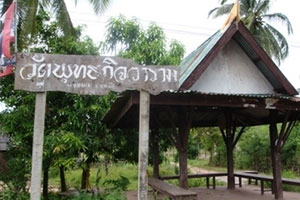
Wat Phutthakitjaram
Open Days: Daily
Opening Hours: 08.00 – 17.00
Wat Phutthakitjaram, located at Hin Dat Chan 3 in Na Yang Klak Subdistrict, Thep Sathit District, Chaiyaphum Province, is a long-established community temple built in 1941. It serves as a place for Buddhist activities, religious ceremonies, meditation practice, local traditions, cultural gatherings, and community bonding. Unlike large tourist temples designed for mass visitation, Wat Phutthakitjaram stands out as a living rural temple that reflects the everyday faith of people in Na Yang Klak. Its value lies in its role as a spiritual center where monks, villagers, and visitors come together through merit-making and Buddhist practice.
For travelers who need a clear overview, Wat Phutthakitjaram is a local Buddhist temple in Thep Sathit District with roots dating back to 1941. It is associated with Hin Dat Chan 3 and the rural communities of Na Yang Klak. The temple is suitable for visitors who want to pay respect, make merit, experience a quiet rural temple atmosphere, and understand how Buddhist temples continue to function as centers of community life in Thailand. A visit can also be combined with nearby natural and cultural attractions such as Nam Tok Ban Nam Lat, Nam Tok Chom Nang, Ban Nam Lat Community, Pa Hin Ngam National Park, and Pha Sut Phaen Din Viewpoint.
The name Wat Phutthakitjaram is closely connected with the temple’s function. In Thai, “Phutthakit” can be understood as Buddhist duties or Buddhist activities, while “aram” means a peaceful monastery or temple. Together, the name reflects a place dedicated to Buddhist work, merit-making, Dhamma practice, and community religious activities. This meaning fits the temple well because it has long been used by monks and laypeople for ceremonies, meditation, cultural events, and village gatherings.
The temple’s founding in 1941 places it within the historical development of rural communities in Na Yang Klak. In that period, village temples were essential to everyday life. They were not only places for worship but also meeting points, moral education spaces, community centers, and cultural grounds. Wat Phutthakitjaram emerged from this social and religious need. It gave local people a shared place to perform Buddhist ceremonies, listen to sermons, observe holy days, and maintain village traditions through collective participation.
Na Yang Klak Subdistrict is a rural area of Thep Sathit District, surrounded by hills, forests, agricultural communities, and several natural attractions. Wat Phutthakitjaram therefore has a very different atmosphere from urban temples. The surroundings are simple, calm, and closely connected to local life. Visitors can sense the slower rhythm of the countryside, the quietness of a village temple, and the practical relationship between the temple and the people who support it. This makes the temple a good destination for travelers who prefer authentic local experiences rather than commercialized sightseeing.
As a place for meditation and Buddhist practice, Wat Phutthakitjaram is meaningful for both local residents and visitors from nearby areas. People can come to calm the mind, observe moral precepts, listen to Dhamma, and take part in acts of merit. The simple temple environment supports quiet reflection. Visitors do not come only for ritual purposes; many come for peace, self-reflection, and a closer connection with Buddhist values in daily life. The fact that the temple has served this role since 1941 shows the continuity of local faith over several generations.
The temple also plays an important role during major Buddhist days such as Makha Bucha, Visakha Bucha, Asalha Bucha, Buddhist Lent, the End of Buddhist Lent, and other local merit-making events. During these occasions, villagers gather at the temple to offer food to monks, listen to sermons, prepare communal meals, and take part in religious ceremonies. These activities are not only religious rituals but also social events that keep the community connected. Young people learn temple manners, respect for monks, generosity, and the importance of shared responsibility through these temple-based traditions.
In terms of local culture, Wat Phutthakitjaram functions as a shared space for preserving community traditions. The temple is where villagers prepare ceremonies, organize merit-making events, gather for important occasions, and strengthen relationships between families. This is the living character of many rural Thai temples: the temple is not separated from the village; it is part of the village’s social and cultural structure. Preserving such a temple also means preserving the memory and continuity of the local community.
The location name Hin Dat Chan 3 gives the temple a distinct local identity. The term “Hin Dat” suggests a stone surface or natural stone platform, while “Chan” creates the image of a broad, flat surface. Even though the temple is not promoted as a major geological attraction, the place name reflects the way local people relate to their landscape. It gives Wat Phutthakitjaram a stronger sense of place and helps distinguish it from other temples in Na Yang Klak and Thep Sathit.
Temple registry information lists Wat Phutthakitjaram as a Mahanikaya temple in Na Yang Klak Subdistrict, Thep Sathit District, Chaiyaphum Province, with Hin Dat Chan 3 noted as its location. This confirms the temple’s identity within the broader system of Buddhist temples in Thailand. It is therefore not only a place remembered by villagers but also a recognized Buddhist temple within the ecclesiastical landscape of Chaiyaphum.
Information on Chaiyaphum ecclesiastical officers also refers to Chao Athikan Sayan Akkathipo of Wat Phutthakitjaram as the ecclesiastical chief of Na Yang Klak Subdistrict Area 3. This gives the temple an additional religious dimension, showing that it is connected not only to local village life but also to the Sangha administrative structure in the area. For visitors interested in Thai Buddhism, this connection helps explain why rural temples remain important beyond their immediate village boundaries.
The role of monks at Wat Phutthakitjaram is central to the community. Monks do not simply conduct ceremonies; they also provide moral guidance, teach Buddhist principles, encourage ethical living, and support local unity. When there are religious or community events, villagers help prepare the temple, clean the grounds, cook food, and join the activities. These acts of cooperation show the strength of the relationship between the temple and the community. This relationship is one of the most important qualities of rural Thai temple life.
The main areas inside Wat Phutthakitjaram include the worship area, the multi-purpose hall or community hall, the merit-making area, the meditation area, the temple courtyard, and the monks’ residential zone. The temple layout is practical and community-oriented rather than grand or decorative. It is designed to support real religious and social use. These spaces allow the temple to host small family merit-making ceremonies as well as larger community events during Buddhist festivals.
What makes Wat Phutthakitjaram valuable for travelers is its authenticity. It was not created as a tourist attraction but grew from the spiritual and social needs of the community. Visiting this temple gives travelers a different experience from visiting a large famous temple. Here, visitors can see a temple that still works closely with the village, a courtyard used for real activities, a hall where people gather, and a religious space that continues to shape community life.
For those interested in the culture of lower northeastern Thailand, Wat Phutthakitjaram offers a clear example of how temples remain central to village life. Many communities in Chaiyaphum continue to preserve merit-making customs, temple festivals, respect for monks, and temple-based gatherings. The temple is both a religious institution and a social space. Visitors should therefore look beyond buildings and architecture. The deeper value of the temple lies in how it supports local relationships, Buddhist practice, and cultural continuity.
On Buddhist holy days and major religious occasions, the temple becomes more active than usual. Local people come to make merit, offer food, listen to sermons, and participate in ceremonies. Travelers who want to see the temple at its liveliest may visit during important Buddhist days. Those who prefer a quieter atmosphere should visit on a weekday morning, when the temple is peaceful and suitable for respectful sightseeing or personal reflection.
Visitors should dress modestly when entering Wat Phutthakitjaram. Clothing should be respectful and appropriate for a Buddhist temple. Speak quietly, avoid disturbing monks or people practicing Dhamma, and do not photograph restricted or sensitive areas such as monks’ living quarters or ceremonies without permission. These simple manners help preserve the dignity of the temple and allow travelers to take part in religious tourism respectfully.
Wat Phutthakitjaram can be included in a slow travel route through Na Yang Klak and Thep Sathit. Travelers may start with a temple visit, then continue to Ban Nam Lat Community, Nam Tok Ban Nam Lat, or Nam Tok Chom Nang during the rainy season. With more time, the route can extend to Pa Hin Ngam National Park, where travelers can see the Siam tulip fields, Lan Hin Ngam, and Pha Sut Phaen Din Viewpoint. This route combines Buddhist faith, local culture, and natural scenery in one trip.
The surrounding area also connects to interesting cultural communities, including the Nyah Kur people in nearby villages such as Ban Nam Lat. The Nyah Kur are known for their distinctive language, way of life, and cultural identity. A visit to Wat Phutthakitjaram can therefore be combined with a broader exploration of Chaiyaphum’s local culture, agricultural communities, and ethnic diversity. This is especially meaningful for travelers who want to understand Thailand beyond major tourist cities.
In terms of transportation, Wat Phutthakitjaram is best reached by private car. The temple is located in a rural part of Na Yang Klak, and roads around the area connect through villages and local routes. Visitors should check the map in advance and allow enough travel time. GPS coordinates are useful, but local signs and guidance from villagers may also be helpful. During the rainy season, some rural roads may be wet or under maintenance, so careful driving is recommended.
Getting There is most convenient by private car. From Chaiyaphum city, travelers can head toward Chatturat, Sap Yai, or Thep Sathit, then continue to Na Yang Klak and use the temple coordinates for navigation. From Pa Hin Ngam National Park or Ban Rai, visitors should plan enough time because several local roads may be involved. Those without private transport should arrange local transport in advance. The temple is best visited as part of a half-day or full-day route with nearby attractions.
The temple remains connected to local road development. Public notices from Na Yang Klak Subdistrict Administrative Organization mention road improvement projects leading to Wat Phutthakitjaram, including routes from Ban Nong Rang, Ban Nai Pong Kaeo Phrom, and Non Samran toward the temple. This shows that the temple remains an important landmark in the local road network. Travelers should still check current road conditions before visiting, especially during periods of rain or construction.
Facilities at Wat Phutthakitjaram are typical of a rural community temple. Visitors can expect worship areas, a merit-making area, a community hall, a temple courtyard, and parking space according to the local setting. Bringing drinking water, sun protection, and some cash for merit-making is recommended. Elderly visitors and children should be accompanied when walking on uneven ground or around the temple courtyard.
Photography is possible, especially around the temple grounds, halls, courtyard, and community activities during temple events. However, photographs should be taken respectfully. Avoid photographing monks or people practicing Dhamma in a disturbing way, and ask permission before taking close-up photos of local residents. The purpose of photographing a temple like this should be to record its peaceful atmosphere and cultural value, not to interrupt its religious function.
For travel planning, Wat Phutthakitjaram is a good choice for visitors who want to explore Chaiyaphum in greater depth. A short visit may take about 30 minutes to 1 hour, while those who want to make merit, speak with local people, or visit during a temple event should allow more time. The best season depends on the rest of the itinerary. Waterfalls nearby are best during the rainy season and early cool season, while Pa Hin Ngam National Park is especially famous from around June to August, when Siam tulips bloom.
Wat Phutthakitjaram is valuable as a religious, historical, and cultural community site. It may not be a large national landmark, but it tells an important story about Na Yang Klak and the role of temples in rural Thailand. Visitors can see how a temple built in 1941 continues to serve as a spiritual center, a cultural ground, and a place where people maintain traditions together. The beauty of this temple lies not only in its buildings but also in the relationship between monks, villagers, and Buddhist faith.
For foreign travelers seeking a quieter and more meaningful route in Chaiyaphum, Wat Phutthakitjaram is worth adding to a Na Yang Klak, Thep Sathit, or Sap Yai itinerary. Come with respect, take time to understand the setting, and see the temple as a living community space rather than simply a tourist stop. With this perspective, a visit to Wat Phutthakitjaram becomes a deeper experience of faith, culture, and rural life in northeastern Thailand.
| Name | Wat Phutthakitjaram |
| Location | Hin Dat Chan 3, Na Yang Klak Subdistrict, Thep Sathit District, Chaiyaphum Province, Thailand |
| Address | Hin Dat Chan 3, Na Yang Klak Subdistrict, Thep Sathit District, Chaiyaphum Province 36230 |
| Coordinates | 15.659322, 101.510667 |
| Highlights | A long-established rural community temple built in 1941, serving as a place for merit-making, meditation, religious activities, local traditions, and community unity in Na Yang Klak. |
| History | Built in 1941, Wat Phutthakitjaram is a Mahanikaya Buddhist temple with a long-standing role in local religious and cultural life. |
| Name Origin | The name refers to a place dedicated to Buddhist activities and a peaceful monastery for merit-making, Dhamma practice, and community ceremonies. |
| Distinctive Features | An authentic rural temple with a peaceful atmosphere, closely connected to Buddhist practice, local traditions, and everyday community life. |
| Travel Information | Best reached by private car. Use local roads into Na Yang Klak and navigate with the temple coordinates. Check rural road conditions before traveling, especially during the rainy season. |
| Current Status | Open as a Buddhist activity site, meditation place, and local cultural temple in Na Yang Klak. |
| Open Days | Daily |
| Opening Hours | 08.00 – 17.00 |
| Facilities | Worship area, merit-making area, community hall, temple courtyard, and parking space according to the rural temple setting |
| Main Areas / Zones | Main worship area Multi-purpose hall / community hall Meditation area Temple courtyard and community activity space Monks’ residential area |
| Abbot / Caretaker | Chao Athikan Sayan Akkathipo, Ecclesiastical Chief of Na Yang Klak Subdistrict Area 3, Wat Phutthakitjaram |
| Area Contact Number | Na Yang Klak Subdistrict Administrative Organization, Tel. 044-056033 |
| Official Website / Official Page | Na Yang Klak Subdistrict Administrative Organization Website |
| Nearby Tourist Attractions | 1. Nam Tok Ban Nam Lat, about 18 km 2. Nam Tok Chom Nang, Ban Saliang Thong, about 20 km 3. Ban Nam Lat Community, about 18 km 4. Wat Phra Phutthabat Khao Yai Hom, about 22 km 5. Pa Hin Ngam National Park, about 45 km 6. Pha Sut Phaen Din Viewpoint, Pa Hin Ngam National Park, about 48 km |
| Nearby Restaurants | 1. Jungle Cafe Na Yang Klak Branch, about 10 km, Tel. 095-601-3499 2. Krua Pa Wan, Ban Hua Saphan, about 15 km, Tel. 089-865-1448 3. Krua Ban Na, about 13 km, Tel. 085-775-5173 4. Mong Aroi Restaurant, about 12 km, Tel. 095-901-4667 5. Suan Thep Phana Learning Center, about 43 km, Tel. 081-989-2584 |
| Nearby Accommodations | 1. Fresh & Frame Rooms / Sap Yai Accommodation, about 20 km, Tel. 080-591-8695, 087-257-6552 2. Touch The Wind Restaurant & Apartments, about 33 km, Tel. 092-889-1004 3. Rai Aeifoon Resort, about 43 km 4. Pa Din Hin Ngam Resort, about 45 km, Tel. 087-021-7000, 087-107-2000 5. Baan Rai Ing Doi Resort, about 45 km |
Frequently Asked Questions (FAQ)
Q: Where is Wat Phutthakitjaram located?
A: Wat Phutthakitjaram is located at Hin Dat Chan 3, Na Yang Klak Subdistrict, Thep Sathit District, Chaiyaphum Province, Thailand.
Q: Why is Wat Phutthakitjaram important?
A: It is an old community temple built in 1941 and serves as a place for Buddhist activities, meditation, local traditions, cultural gatherings, and community unity.
Q: What are the opening days and hours of Wat Phutthakitjaram?
A: The temple is open daily from 08.00 to 17.00.
Q: Who is the ecclesiastical officer associated with Wat Phutthakitjaram?
A: Chao Athikan Sayan Akkathipo is listed as the ecclesiastical chief of Na Yang Klak Subdistrict Area 3, associated with Wat Phutthakitjaram.
Q: How should travelers get to Wat Phutthakitjaram?
A: Private car is the most convenient option. Travelers can use the coordinates 15.659322, 101.510667 and should check rural road conditions before traveling.
Q: Is Wat Phutthakitjaram suitable for foreign travelers?
A: Yes. It is suitable for travelers interested in rural Buddhist temples, local culture, meditation, and authentic community-based experiences in Chaiyaphum.
Q: What nearby attractions can be visited with Wat Phutthakitjaram?
A: Nearby attractions include Nam Tok Ban Nam Lat, Nam Tok Chom Nang, Ban Nam Lat Community, Wat Phra Phutthabat Khao Yai Hom, Pa Hin Ngam National Park, and Pha Sut Phaen Din Viewpoint.
Q: What should visitors prepare before visiting?
A: Visitors should dress modestly, bring drinking water, speak quietly, check the route in advance, and allow enough travel time because the temple is in a rural area of Na Yang Klak.
 Category: ●Places of Worship
 Group: ●Temple
Last Update : 3 MonthAgo
 Last Update : 3 MonthAgo
 Click to Access the Navigation Map GPS
Wat Phutthakitjaram Map
Recommend

 Art, Culture and Heritage
 Historical Sites and Monuments(1)
 Landmarks and Memorials(3)
 Royal Palace(1)
 Art, Craft Centres, Tradition(3)
 Educational Places
 Educational Gardens, Farm(1)
Temple(141)
Educational Gardens, Farm(1)
Temple(141)
 Other Sacred Sites(7)
 Suburban Living
 Village, Community(4)
 Nature and Wildlife
 National Parks and Marine Reserves(7)
 Mountain (Doi)(5)
 Dam, Reservoir, Lake(10)
 Waterfalls(15)
 Caves(5)
 River, Canal(4)
 Other natural attractions(1)
 Entertainment and Agricultural
 Farms, Parks and Ecotourism(2)


