
lovethailand home >Northeastern Travel Attractions >Chaiyaphum Travel Attractions >Thep Sathit >Na Yang Klak > Wat Phra Phutthabat Khao Yai Hom
TL;DR: Wat Phra Phutthabat Khao Yai Hom is located at Na Yang Klak Subdistrict, Thep Sathit District, Chaiyaphum Province, Thailand, open Daily, hours 08.00 – 17.00.

Wat Phra Phutthabat Khao Yai Hom
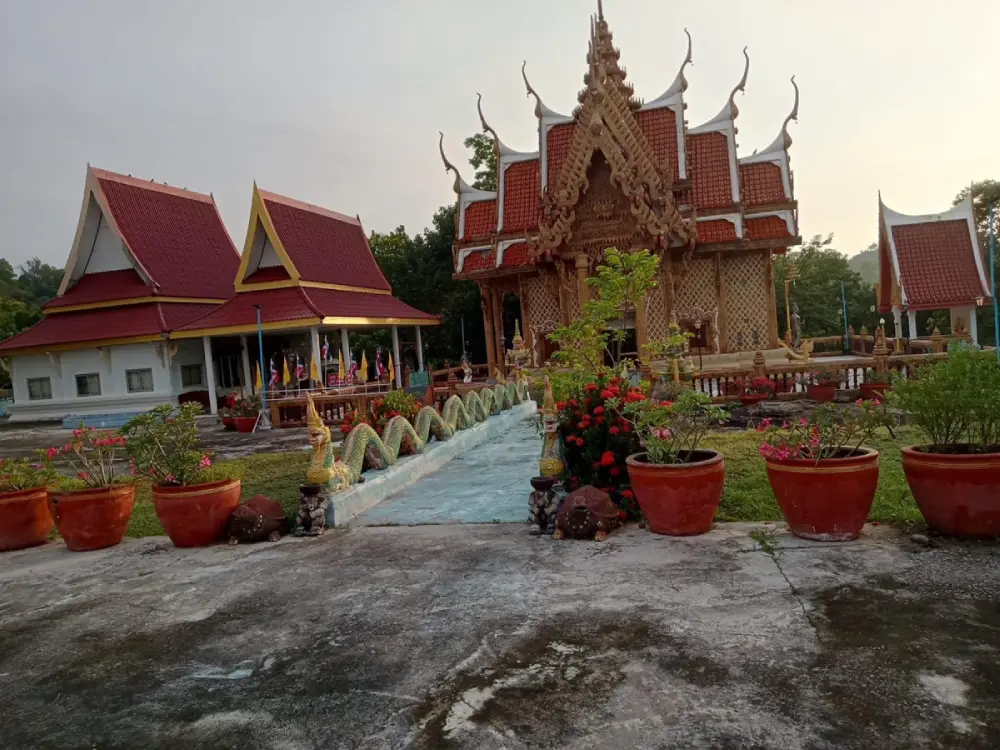
Open Days: Daily
Opening Hours: 08.00 – 17.00
Wat Phra Phutthabat Khao Yai Hom in Na Yang Klak Subdistrict, Thep Sathit District, Chaiyaphum Province, is a mountain temple known for its sacred Buddha footprint carved into a reddish stone surface. The temple is meaningful not only as a place of worship but also as a cultural site shaped by local oral history, Buddhist devotion, forest-monk journeys, and an annual pilgrimage festival held during the full-moon period of the third lunar month, which coincides with Makha Bucha Day.
For travelers who need a clear overview, Wat Phra Phutthabat Khao Yai Hom is a Buddhist temple on a hill in rural Chaiyaphum. Its main highlight is the large Buddha footprint, measuring about 180 centimeters long, 75 centimeters wide, and 45 centimeters deep. The site became widely known after its discovery story in 1949 and the later survey in 1950. Every year, local people and Buddhist devotees come to pay respect to the footprint from the 11th waxing moon to the 15th waxing moon of the third lunar month. The temple is suitable for travelers interested in Buddhist heritage, local legends, sacred sites, rural mountain landscapes, and cultural routes around Thep Sathit and Sap Yai.
The name of this sacred site has an interesting history. It was originally known in Thai as “Khao Yai Men,” before being changed to “Khao Yai Hom” in 1957. The older name belonged to local landscape memory, while the newer name carries a more auspicious and refined meaning. This change reflects how the area gradually developed from a mountain known through village stories into a place of formal religious devotion. For foreign visitors, this detail is useful because it shows how place names in Thailand often preserve layers of local belief, oral history, and cultural reinterpretation.
The story of Wat Phra Phutthabat Khao Yai Hom became prominent in 1949, when Phra Khru Manoon Chayakit led monks and novices on a forest pilgrimage through Na Yang Klak. During the journey, two villagers from Ban Wang Ta Thao, Ta Kham, aged 70, and Nai Mee, aged 35, came to pay respect to him and told him about a very large human-like footprint on the top of Khao Yai Men. Ta Kham said that the footprint appeared on the mountain, while Nai Mee confirmed that his mother had heard the same story from older family members. According to that account, when Nai Mee’s grandmother was young, she followed adults up the mountain and saw a huge footprint on a stone platform near Bo Ta Thong.
Local stories also mention villagers who regularly went up and down the mountain for livelihood purposes. They often saw elephants carrying flowers and placing them in the area. Such a scene created the impression that the place was unusual and spiritually significant. When the villagers finally found the large footprint, they became afraid that if officials discovered it, they might lose access to the land where they had been making a living. Out of fear, they damaged parts of the footprint, burned the surface, and planted salak-dai trees to conceal it. Although this damaged some parts of the footprint, the story became an important part of the temple’s memory and reveals how faith, fear, land use, and local belief were intertwined in the early history of the site.
In 1950, after Phra Khru Manoon Chayakit learned more about the Buddha footprint on Khao Yai Men, he informed Phra Khru Phinit Samanawat, also known as Khong Chaliwan, who was the ecclesiastical chief of Bamnet Narong Minor District at Wat Phet Phum Suwan at that time. A meeting was then held with lay supporters from Ban Chuan, Ban Wang Sema, and Chatturat District. Together, monks and villagers searched the mountain until they found the footprint. This moment transformed oral memory into a recognized sacred site and laid the foundation for the later development of the temple.
The Buddha footprint has distinctive physical features. The toes of the left footprint are aligned, and the tip of the foot faces southeast. Phra Khru Phinit Samanawat measured it at about 180 centimeters in length, 75 centimeters in width, and 45 centimeters in depth. The stone surface is reddish, and the left side shows cracks around the toe divisions. Unlike a modern replica placed inside a shrine, this footprint is associated with a natural stone platform and a specific discovery history, which gives the site a strong sense of place and local identity.
The mountain setting adds depth to the experience. Visitors travel through rural roads, agricultural communities, and hilly landscapes before reaching the temple. The journey itself feels like a small pilgrimage. The quiet surroundings and stone surface create an atmosphere of humility and reflection. For many Thai Buddhist visitors, reaching the footprint is not merely a sightseeing activity but a devotional act. For international travelers, the site offers a chance to understand how Buddhist faith in rural Thailand is connected to mountains, natural features, community memory, and seasonal temple festivals.
After the discovery, Phra Khru Phinit Samanawat and Buddhist supporters from Chatturat and Bamnet Narong worked together to create a basic access route to the mountain. The area was first developed as Wat Phra Phutthabat Khao Yai Men, with a reserved area recorded as 100 sen wide and 100 sen long, or about 10,000 rai. The road was important because it allowed villagers and worshippers to reach the sacred site more easily. Once the access route was completed, lay supporters helped organize the annual worship festival for the Buddha footprint.
The annual worship festival is held from the 11th waxing moon to the 15th waxing moon of the third lunar month, ending on the full moon day of Makha Bucha. This timing is important in Thai Buddhism. Makha Bucha commemorates a major event in the life of the Buddha and is observed with merit-making, candlelight processions, and acts of devotion throughout Thailand. At Wat Phra Phutthabat Khao Yai Hom, the festival brings together local people and devotees who come to pay respect, make offerings, and participate in religious activities according to their faith.
For local people in Chaiyaphum, the temple is more than a mountain shrine. It preserves the memory of villagers, monks, and communities whose stories shaped the identity of the place. The names of Ta Kham, Nai Mee, Ban Wang Ta Thao, Phra Khru Manoon Chayakit, and Phra Khru Phinit Samanawat remain part of the temple’s historical narrative. These names connect the sacred footprint to real people and real villages, making the temple a living cultural landmark rather than an isolated religious monument.
In its current ecclesiastical status, Wat Phra Phutthabat Khao Yai Hom is a private Buddhist temple under the Mahanikaya order, located at Moo 10, Na Yang Klak Subdistrict, Thep Sathit District, Chaiyaphum Province. Its official establishment as a temple is recorded in 1989. This does not erase the older discovery history; rather, it shows two layers of development. The first layer is the local sacred history beginning in the late 1940s, and the second layer is the formal temple status within the Thai Sangha system.
The abbot associated with the temple is Phra Khru Wisut Witthayakhom, also known as Luang Por Thong Suddhasilo. His name is connected with the temple’s religious life and development. For visitors, knowing the temple’s abbot helps clarify that this is an active Buddhist temple with monastic care, not simply a viewpoint or an abandoned historical site. Travelers should therefore approach the place with the same respect expected at other Thai temples.
The key sacred areas of the temple are the Buddha footprint and the Shrine of Yai Hom. Many visitors pay respect to both. The Buddha footprint is the central devotional focus, while the Yai Hom shrine connects the temple to the mountain’s place name and local beliefs. Visitors should dress modestly, speak quietly, and avoid any disrespectful behavior near the footprint or shrine. This is especially important because the site remains meaningful to local devotees and is not merely a photo spot.
The surrounding landscape makes the temple a good addition to a wider cultural and nature route in Chaiyaphum. Na Yang Klak and Thep Sathit are known for mountains, forests, rural communities, waterfalls, and links to Pa Hin Ngam National Park. Ban Nam Lat, another community in Na Yang Klak, is notable for the coexistence of different ethnic and cultural groups, including Nyah Kur, Thai Lao, and Thai Korat people. These local contexts allow travelers to combine a temple visit with community-based and nature-oriented experiences.
Travelers interested in local history will find several layers of meaning here. The first layer is the oral history of the footprint. The second is the role of forest pilgrimage monks in investigating and preserving the site. The third is the renaming from Khao Yai Men to Khao Yai Hom, which shows how sacred geography can be reinterpreted over time. The fourth is the temple’s present role in Chaiyaphum tourism, linking Sap Yai, Na Yang Klak, Thep Sathit, Pa Hin Ngam National Park, and nearby waterfalls into one meaningful travel corridor.
The best time to visit depends on the purpose of the trip. Those who want to experience local devotion should visit during the annual worship festival in the third lunar month. Those who prefer a quieter visit should come on a weekday morning, when the weather is cooler and the temple is less crowded. The rainy season and early cool season are good for combining the temple with waterfalls and green mountain scenery, while June to August is the famous blooming period of Siam tulips at Pa Hin Ngam National Park.
The journey to the temple is part of the experience. Because the temple is located in a rural mountain area, visitors should plan carefully, check the road route, fuel the vehicle in advance, and allow enough travel time. Some sections pass through small communities and remote landscapes, so private cars are the most convenient option. During the rainy season, extra caution is recommended because some rural roads may be wet or slippery.
Getting There is easiest by private car. From Chaiyaphum city, travelers can head toward Chatturat or Sap Yai and continue to Na Yang Klak. From Thep Sathit or the Pa Hin Ngam area, the route requires additional travel time because the temple is located quite far from central Thep Sathit. Visitors without a private vehicle should arrange local transport from Sap Yai, Thep Sathit, or nearby accommodations in advance. This helps ensure a safer and smoother trip to and from the mountain temple.
In terms of travel planning, the temple is about 63 kilometers from Chaiyaphum city, about 65 kilometers from central Thep Sathit, and about 8 kilometers from Sap Yai. These distances make Sap Yai the most convenient base for visitors who want quick access to the temple. Those who plan to combine the temple with Pa Hin Ngam National Park should consider staying overnight in the Ban Rai, Thep Sathit, or Sap Yai area.
Nearby attractions include Nam Tok Ban Nam Lat, Nam Tok Chom Nang, Ban Nam Lat community, Pa Hin Ngam National Park, and Pha Sut Phaen Din viewpoint. Waterfalls are most attractive during the rainy season and early cool season, while Pa Hin Ngam is best known for the Siam tulip fields from around June to August. For a one-day trip, visitors should select only two or three places to avoid spending too much time on the road. For a two-day trip, staying overnight near Sap Yai or Pa Hin Ngam allows for a more relaxed itinerary.
Facilities at the temple are simple, as expected at a rural mountain temple. Visitors should prepare drinking water, sun protection, and comfortable walking shoes. Some areas include stone surfaces and sloping ground, so elderly visitors and children should be accompanied carefully. The visit should be approached as a respectful temple experience rather than a casual outdoor stop.
Photography is possible, especially around the temple grounds, the mountain atmosphere, stone surfaces, and festival scenes. However, visitors should photograph respectfully. Avoid standing or climbing on inappropriate areas near the footprint, and do not disturb monks, worshippers, or local rituals. Drone use should not be attempted without permission. A good visit to this temple is one that preserves both the dignity of the sacred site and the peace of the local community.
Wat Phra Phutthabat Khao Yai Hom is recommended for travelers looking for a less commercialized sacred destination in Chaiyaphum. It combines a Buddha footprint, mountain scenery, local legend, Thai Buddhist practice, and community history in one place. For foreign travelers who want to go beyond well-known tourist routes, this temple offers a meaningful view of rural Buddhist devotion and the way sacred landscapes are remembered and maintained by local communities over generations.
| Name | Wat Phra Phutthabat Khao Yai Hom |
| Location | Na Yang Klak Subdistrict, Thep Sathit District, Chaiyaphum Province, Thailand |
| Address | Moo 10, Na Yang Klak Subdistrict, Thep Sathit District, Chaiyaphum Province |
| Coordinates | Approximately 15.683438, 101.603187 |
| Highlights | Sacred Buddha footprint on reddish stone, Yai Hom Shrine, mountain temple atmosphere, and the annual worship festival from the 11th to the 15th waxing moon of the third lunar month |
| History | The discovery story became prominent in 1949, followed by a formal search and survey in 1950. The temple is recorded as officially established in 1989. |
| Name Origin | Originally known as Khao Yai Men, the name was changed to Khao Yai Hom in 1957 to give the sacred place a more auspicious name. |
| Distinctive Features | The footprint is about 180 cm long, 75 cm wide, and 45 cm deep. The toes face southeast, and the stone surface is reddish. |
| Travel Information | Best reached by private car. About 63 km from Chaiyaphum city, 65 km from central Thep Sathit, and 8 km from Sap Yai. Check the route and vehicle condition before traveling. |
| Current Status | Open as a Buddhist worship site and faith-based attraction in Na Yang Klak. |
| Open Days | Daily |
| Opening Hours | 08.00 – 17.00 |
| Facilities | Worship area, merit-making area, temple courtyard, viewpoint areas, and parking space according to the temple’s rural mountain setting |
| Main Areas / Zones | Buddha Footprint of Khao Yai Hom Yai Hom Shrine Stone platform on the hilltop Worship and merit-making area Scenic areas around the temple |
| Abbot / Caretaker | Phra Khru Wisut Witthayakhom (Thong) |
| Area Contact Number | Na Yang Klak Subdistrict Administrative Organization, Tel. 044-056033 |
| Official Website / Official Page | Na Yang Klak Subdistrict Administrative Organization Website |
| Nearby Tourist Attractions | 1. Nam Tok Ban Nam Lat, about 22 km 2. Nam Tok Chom Nang, Ban Saliang Thong, about 26 km 3. Ban Nam Lat Community, about 22 km 4. Pa Hin Ngam National Park, about 52 km 5. Pha Sut Phaen Din Viewpoint, Pa Hin Ngam National Park, about 55 km |
| Nearby Restaurants | 1. Jungle Cafe Na Yang Klak Branch, about 12 km, Tel. 095-601-3499 2. Krua Pa Wan, Ban Hua Saphan, about 18 km 3. Touch The Wind Restaurant & Apartments, about 35 km, Tel. 092-889-1004 4. Avoka Cafe’, about 50 km, Tel. 097-535-9956 5. Baan Rai Baramee, about 52 km, Tel. 081-708-2050 |
| Nearby Accommodations | 1. Sap Yai Resort, about 15 km, Tel. 081-966-5717, 088-474-7911 2. Touch The Wind Restaurant & Apartments, about 35 km, Tel. 092-889-1004 3. Rai Aeifoon Resort, about 50 km, Tel. 081-936-4279 4. Pa Din Hin Ngam Resort, about 52 km, Tel. 087-021-7000 5. Phu Phrom Dao Farmstay, about 53 km, Tel. 086-888-3636 |
Frequently Asked Questions (FAQ)
Q: Where is Wat Phra Phutthabat Khao Yai Hom located?
A: The temple is located at Moo 10, Na Yang Klak Subdistrict, Thep Sathit District, Chaiyaphum Province, Thailand.
Q: What is the main highlight of Wat Phra Phutthabat Khao Yai Hom?
A: The main highlight is the sacred Buddha footprint on a reddish stone surface, measuring about 180 cm long, 75 cm wide, and 45 cm deep.
Q: Why was the name changed from Khao Yai Men to Khao Yai Hom?
A: The site was originally called Khao Yai Men, but the name was changed to Khao Yai Hom in 1957 to give the sacred place a more auspicious and refined name.
Q: When is the annual worship festival held?
A: The annual festival is held from the 11th waxing moon to the 15th waxing moon of the third lunar month, coinciding with Makha Bucha Day.
Q: How can travelers get to Wat Phra Phutthabat Khao Yai Hom?
A: Private car is the most convenient option. The temple is about 63 km from Chaiyaphum city, 65 km from central Thep Sathit, and 8 km from Sap Yai.
Q: Is the temple suitable for foreign travelers?
A: Yes. It is suitable for foreign travelers interested in Buddhist culture, rural sacred sites, local legends, and less commercialized travel routes in Chaiyaphum.
Q: What should visitors prepare before going?
A: Visitors should dress modestly, wear comfortable shoes, bring drinking water, check the vehicle and route in advance, and allow enough time for rural mountain travel.
Q: What nearby attractions can be combined with this temple?
A: Nearby attractions include Nam Tok Ban Nam Lat, Nam Tok Chom Nang, Ban Nam Lat Community, Pa Hin Ngam National Park, and Pha Sut Phaen Din Viewpoint.
 Category: ●Places of Worship
 Group: ●Temple
Last Update : 3 MonthAgo
 Last Update : 3 MonthAgo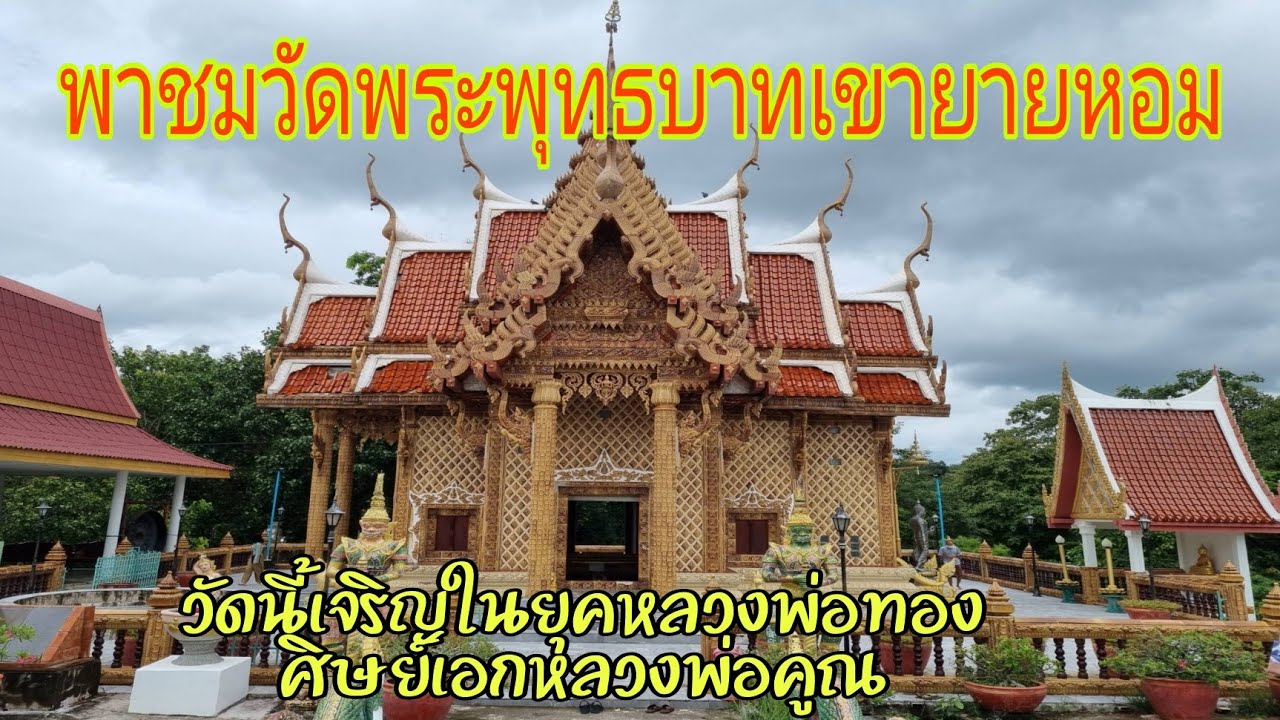
 Click to Access the Navigation Map GPS
Wat Phra Phutthabat Khao Yai Hom Map
Recommend

 Art, Culture and Heritage
 Historical Sites and Monuments(1)
 Landmarks and Memorials(3)
 Royal Palace(1)
 Art, Craft Centres, Tradition(3)
 Educational Places
 Educational Gardens, Farm(1)
Temple(141)
Educational Gardens, Farm(1)
Temple(141)
 Other Sacred Sites(7)
 Suburban Living
 Village, Community(4)
 Nature and Wildlife
 National Parks and Marine Reserves(7)
 Mountain (Doi)(5)
 Dam, Reservoir, Lake(10)
 Waterfalls(15)
 Caves(5)
 River, Canal(4)
 Other natural attractions(1)
 Entertainment and Agricultural
 Farms, Parks and Ecotourism(2)


