
lovethailand home >Northeastern Travel Attractions >Chaiyaphum Travel Attractions >Chatturat >Som Poi > Wat Non Muang Thammaram
TL;DR: Wat Non Muang Thammaram is located at Ban Non Muang, Moo 2, Som Poi Subdistrict, Chatturat District, Chaiyaphum Province, open Daily, hours 08.00 – 17.00.
Wat Non Muang Thammaram
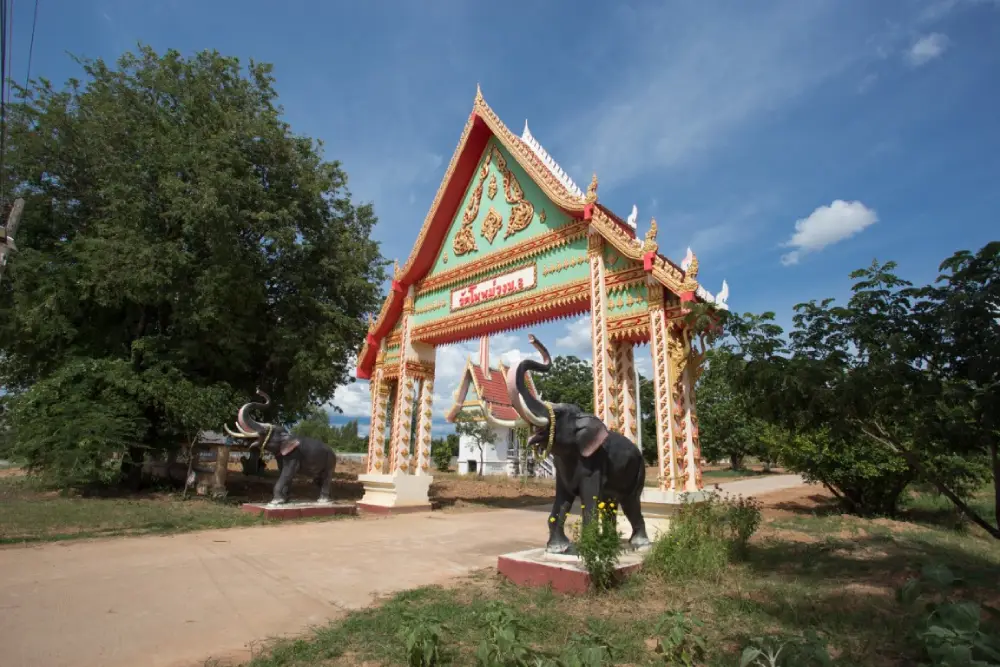
Open Days: Daily
Opening Hours: 08.00 – 17.00
Wat Non Muang Thammaram in Ban Non Muang, Moo 2, Som Poi Subdistrict, Chatturat District, Chaiyaphum Province, is a local Buddhist temple under the Mahanikaya monastic tradition. Established on September 25, 2000, the temple serves monks, local Buddhists, villagers, and general visitors as a place for Buddhist ceremonies, merit-making, meditation, local traditions, cultural activities, and community gatherings. It remains an important spiritual center for Ban Non Muang and the wider Som Poi community.
Wat Non Muang Thammaram is located in Ban Non Muang, Moo 2, Som Poi Subdistrict, Chatturat District, Chaiyaphum Province. As a village temple, it is closely connected with daily community life. Local people use the temple for Buddhist holy days, merit-making, Kathin, robe-offering ceremonies, Songkran, family rituals, and cultural activities. The temple is therefore not only a sacred place, but also a familiar community space where faith and village relationships continue to meet.
The establishment of the temple on September 25, 2000 reflects the community’s need for a Buddhist center within Ban Non Muang. A village temple provides a place for worship, moral reflection, ceremonies, and cultural continuity. For rural communities in northeastern Thailand, a temple is not simply a religious compound. It also functions as a social center, a place of learning, a moral refuge, and a shared public space for different generations.
The name Wat Non Muang Thammaram is connected with Ban Non Muang, the village where the temple stands. The word Thammaram gives the name a Buddhist meaning, suggesting a peaceful place of Dhamma. For villagers, the name represents more than a location. It is a symbol of a shared spiritual center where local people make merit, gather during festivals, preserve traditions, and pass Buddhist values to younger generations.
Som Poi Subdistrict has several local temples serving different village communities. Wat Non Muang Thammaram is part of this wider Buddhist network together with Wat Som Poi, Wat Sala Loi, Wat Nong Muang, Wat Nong Kae Phanang Suea, and Wat Non Chueak. These temples show how Buddhism remains active at the village level in Chatturat District. Each temple supports its own community through merit-making, Dhamma listening, annual traditions, and community cooperation.
As a community temple, Wat Non Muang Thammaram supports religious activities throughout the year. Local Buddhists come to offer food to monks, listen to Dhamma teachings, observe precepts, and take part in important Buddhist ceremonies. These activities help people connect Buddhist teachings with daily life through generosity, restraint, mindfulness, and community support.
Buddhist holy days are an important part of the temple’s regular rhythm. Villagers may visit the temple to make merit, offer food, listen to sermons, and reflect on their own lives. These days create a recurring rhythm of faith, allowing people to step away from daily work and return to moral reflection. Wat Non Muang Thammaram supports this quiet but important rhythm within Ban Non Muang.
Major Buddhist days such as Makha Bucha Day, Visakha Bucha Day, Asalha Bucha Day, Buddhist Lent, and the End of Buddhist Lent are especially meaningful. During these occasions, the temple becomes a gathering point for merit-making, sermons, prayer, and Buddhist reflection. In a village setting, these activities make Buddhist teachings part of daily life rather than abstract doctrine.
Buddhist Lent is a significant period at Wat Non Muang Thammaram. During the rainy-season retreat, monks remain in residence at the temple while laypeople offer candles, bathing cloths, food, and necessary items. Many villagers also use this period to observe precepts, reduce harmful habits, listen to teachings, and practice mindfulness. The temple supports both community merit-making and personal spiritual development during this important season.
After the End of Buddhist Lent, Kathin becomes one of the most important annual events for a village temple. Kathin is a robe-offering ceremony, but it is also a major community reunion. Villagers, relatives, former residents, donors, and supporters return to the temple to offer robes, donations, food, and assistance for temple maintenance. Through this shared effort, the temple remains active and well supported.
Robe-offering ceremonies and other merit-making events show the strength of local cooperation. People help clean and decorate the temple, prepare food, coordinate offerings, welcome guests, and support monks. The event is not only a ritual but also a practical expression of unity. It helps maintain temple facilities and keeps Buddhist traditions active within the village.
Songkran is another meaningful period for Wat Non Muang Thammaram and the local community. Villagers may come to make merit, bathe Buddha images, pay respect to elders, and reunite with relatives returning home for the Thai New Year. In a temple setting, Songkran is not only a festive holiday. It is a time of gratitude, blessings, forgiveness, family reunion, and moral renewal.
Family ceremonies are also closely connected with Wat Non Muang Thammaram. Ordinations, memorial merit-making, funeral rites, and important family rituals often use the temple as a sacred and communal setting. When there is an ordination, the temple becomes a place of joy and Buddhist continuity. When there is a funeral or memorial ceremony, the temple becomes a place of Dhamma reflection, consolation, and community support.
Wat Non Muang Thammaram connects people of different generations. Children and young people learn respect and Buddhist manners. Adults take part in merit-making and help organize temple activities. Elderly villagers use the temple as a place of peace, Dhamma listening, and spiritual support. Monks provide religious guidance and help preserve the moral atmosphere of the village. This relationship makes the temple an important part of local life.
The main areas of the temple support several functions, including worship, merit-making, Dhamma listening, monastic residence, community activities, and festival gatherings. Visitors should use these spaces respectfully, especially around monks’ residential areas and religious activity zones. Wat Non Muang Thammaram is an active Buddhist site, so respectful conduct is essential.
The distinctive character of Wat Non Muang Thammaram lies in its role as a living Isan village temple. It is not defined by grandeur or commercial tourism, but by quiet continuity. Local people use the temple for real religious and community purposes. They make merit, listen to sermons, support monks, preserve traditions, and pass faith to younger generations. This gives the temple a sincere and meaningful identity.
Visitors should dress modestly and behave respectfully when entering the temple grounds. Loud noise should be avoided, and monks’ residential areas should not be disturbed. During ceremonies or merit-making events, visitors should follow the guidance of monks, temple committee members, or local residents. Respectful behavior is especially important in small village temples where sacred space and everyday community life are closely connected.
The best time to visit Wat Non Muang Thammaram is in the morning or late morning, when the weather is more comfortable and the temple atmosphere is suitable for merit-making, worship, and quiet observation. Travelers who want to join Kathin, Buddhist holy day activities, or community ceremonies should check schedules in advance with the temple or local residents.
Getting There is most convenient by private car. From Chatturat District, travel toward Som Poi Subdistrict and Ban Non Muang, Moo 2, using local roads. Set the destination as Wat Non Muang Thammaram, Som Poi Subdistrict, Chatturat District, Chaiyaphum Province. Travelers unfamiliar with rural roads should check the route before departure and allow extra time if combining the visit with nearby temples, restaurants, or accommodations in Chatturat.
Som Poi Subdistrict can be explored through a faith-based village temple route. Travelers can begin with merit-making at Wat Non Muang Thammaram, then continue to Wat Som Poi, Wat Sala Loi, Wat Nong Muang, Wat Nong Kae Phanang Suea, or Wat Non Chueak. These temples reflect the wider network of village Buddhism in the same subdistrict.
Wat Som Poi and Wat Sala Loi are nearby local temples that can be visited together with Wat Non Muang Thammaram. Wat Nong Muang, Wat Nong Kae Phanang Suea, and Wat Non Chueak also serve their own communities in Som Poi Subdistrict. Visiting several temples in one route helps travelers understand how Buddhism remains active at the village level in Chatturat District.
Travelers who want to extend the trip beyond Som Poi can continue to Bueng Lahan and the Red Lotus Field at Don Lahanam in Chatturat District. These natural attractions are known for wetland scenery, rural waterside atmosphere, and lotus views during the right season. A full-day route can combine local temples, countryside scenery, and restaurants in the district.
Wat Khao Ta Ngo Udomphon is another important destination for faith-based travel in Chaiyaphum Province. It is associated with Luang Pu Chue Phanthamutto, a respected forest meditation monk. Although farther from Som Poi than nearby village temples, it can be included in a Buddhist route for travelers interested in meditation temples, forest traditions, and spiritual travel.
Restaurants near Wat Non Muang Thammaram are mostly found along routes toward Chatturat town and the Lahan area. Travelers can stop at local restaurants, countryside-style restaurants, cafés, bakeries, or convenient family dining places before or after visiting the temple. The restaurants listed in the summary table include only places with publicly available phone numbers where verified.
Accommodations near the temple include resorts and daily rooms in Chatturat District and nearby communities. They are suitable for travelers who want to stay overnight before visiting temples in Som Poi, Bueng Lahan, Don Lahanam, or Chaiyaphum city. Calling ahead is recommended, especially during long weekends, temple event periods, or the red lotus tourism season.
Wat Non Muang Thammaram is meaningful because it combines a clear local history, community religious life, Buddhist ceremonies, merit-making, local traditions, and its continued role as the spiritual center of Ban Non Muang. The temple may not be large or highly commercialized, but it is important because local people continue to use it as a place of worship, practice, tradition, and community unity.
A visit to Wat Non Muang Thammaram gives travelers a sincere view of Isan village Buddhism. The temple shows that Buddhism at the community level is lived through merit-making, Dhamma listening, ceremonies, temple care, and shared responsibility. Visiting Wat Non Muang Thammaram is therefore not only an act of worship, but also a way to understand the roots of Ban Non Muang, Som Poi Subdistrict, and Chatturat District through a temple that remains quietly central to local life.
| Name | Wat Non Muang Thammaram |
| Location | Ban Non Muang, Moo 2, Som Poi Subdistrict, Chatturat District, Chaiyaphum Province |
| Address | Moo 2, Ban Non Muang, Som Poi Subdistrict, Chatturat District, Chaiyaphum Province 36130, Thailand |
| Highlights | A local Buddhist temple in Ban Non Muang, established on September 25, 2000, serving as a place for merit-making, meditation, Buddhist ceremonies, local traditions, cultural activities, and community spiritual life |
| History | Established on September 25, 2000 as a village temple in Som Poi Subdistrict, Chatturat District, Chaiyaphum Province |
| Name Origin | Named after Ban Non Muang, the village where the temple is located, with Thammaram suggesting a peaceful place of Dhamma |
| Distinctive Features | An Isan village temple used for Buddhist activities, merit-making, Dhamma listening, meditation, local traditions, and community gatherings |
| Travel Information | Best reached by private car from Chatturat District toward Som Poi Subdistrict and Ban Non Muang, Moo 2; use Wat Non Muang Thammaram, Som Poi Subdistrict, Chatturat District, Chaiyaphum Province, as the destination |
| Current Status | An active local temple under the Mahanikaya tradition, used for Buddhist ceremonies, merit-making, traditions, and community activities |
| Open Days | Daily |
| Opening Hours | 08.00 – 17.00 |
| Facilities | Worship area, merit-making area, Dhamma listening area, monks’ residential zone, religious activity area, and community activity ground |
| Main Areas / Zones | Religious activity area, worship area, Dhamma listening area, meditation area, monks’ residential zone, merit-making area, and community activity ground |
| Main Contact Number | 044-803-354 |
| Key Activities | Buddhist holy day merit-making, Buddhist Lent, End of Buddhist Lent, Kathin, robe-offering ceremonies, Songkran merit-making, Dhamma listening, meditation practice, and community ceremonies |
| Nearby Tourist Attractions | 1. Wat Som Poi, Som Poi Subdistrict, about 4 km 2. Wat Sala Loi, Som Poi Subdistrict, about 5 km 3. Wat Nong Muang, Som Poi Subdistrict, about 6 km 4. Wat Non Chueak, Som Poi Subdistrict, about 8 km 5. Wat Khao Ta Ngo Udomphon, about 42 km |
| Nearby Restaurants | 1. Ma Der Mana Cafe, about 20 km, Tel. 061-563-6291 2. Rabiang Rai Rabiang Na, about 22 km, Tel. 044-851-268 3. Chatturat Bakery, about 24 km 4. KFC Lotus Chatturat, about 24 km, Tel. 1150 5. Rai Chao Aey Cafe, about 26 km, Tel. 086-334-1581 |
| Nearby Accommodations | 1. Marina Palms Resort, about 17 km, Tel. 064-470-1807 2. Sudkhet Resort, about 18 km, Tel. 044-056-287 3. The Palm Village, about 20 km 4. Ratchanee Place, about 24 km, Tel. 098-287-1636 5. N.B. Resort, about 27 km, Tel. 080-157-7808 |
Frequently Asked Questions (FAQ)
Q: Where is Wat Non Muang Thammaram located?
A: Wat Non Muang Thammaram is located in Ban Non Muang, Moo 2, Som Poi Subdistrict, Chatturat District, Chaiyaphum Province 36130, Thailand.
Q: When was Wat Non Muang Thammaram established?
A: Wat Non Muang Thammaram was established on September 25, 2000 as a local village temple in Som Poi Subdistrict.
Q: Why is Wat Non Muang Thammaram important to the local community?
A: It serves as a place for Buddhist ceremonies, merit-making, meditation, local traditions, cultural activities, and community spiritual life in Ban Non Muang.
Q: What are the opening hours of Wat Non Muang Thammaram?
A: The temple is open daily from 08.00 to 17.00. Visitors should dress modestly and behave respectfully inside the temple grounds.
Q: Does Wat Non Muang Thammaram have a contact number?
A: The main contact number of Wat Non Muang Thammaram is 044-803-354.
Q: What important activities are associated with Wat Non Muang Thammaram?
A: Important activities include Buddhist holy day merit-making, Buddhist Lent, End of Buddhist Lent, Kathin, robe-offering ceremonies, Songkran merit-making, Dhamma listening, meditation practice, and community ceremonies.
Q: Are there attractions near Wat Non Muang Thammaram?
A: Nearby places include Wat Som Poi, Wat Sala Loi, Wat Nong Muang, Wat Non Chueak, and Wat Khao Ta Ngo Udomphon.
Q: How can travelers get to Wat Non Muang Thammaram?
A: The most convenient way is by private car from Chatturat District toward Som Poi Subdistrict and Ban Non Muang, Moo 2. Use Wat Non Muang Thammaram, Som Poi Subdistrict, Chatturat District, Chaiyaphum Province, as the map destination.
 Category: ●Places of Worship
 Group: ●Temple
Last Update : 3 MonthAgo
 Last Update : 3 MonthAgo
 Click to Access the Navigation Map GPS
Wat Non Muang Thammaram Map
Recommend

 Art, Culture and Heritage
 Historical Sites and Monuments(1)
 Landmarks and Memorials(3)
 Royal Palace(1)
 Art, Craft Centres, Tradition(3)
 Educational Places
 Educational Gardens, Farm(1)
Temple(141)
Educational Gardens, Farm(1)
Temple(141)
 Other Sacred Sites(7)
 Suburban Living
 Village, Community(4)
 Nature and Wildlife
 National Parks and Marine Reserves(7)
 Mountain (Doi)(5)
 Dam, Reservoir, Lake(10)
 Waterfalls(15)
 Caves(5)
 River, Canal(4)
 Other natural attractions(1)
 Entertainment and Agricultural
 Farms, Parks and Ecotourism(2)


