
lovethailand home >Northeastern Travel Attractions >Chaiyaphum Travel Attractions >Chatturat >Ban Kok > Wat Hong Thong
TL;DR: Wat Hong Thong is located at Ban Kok, Moo 2, Ban Kok Subdistrict, Chatturat District, Chaiyaphum Province, open Daily, hours 08.00 – 17.00.
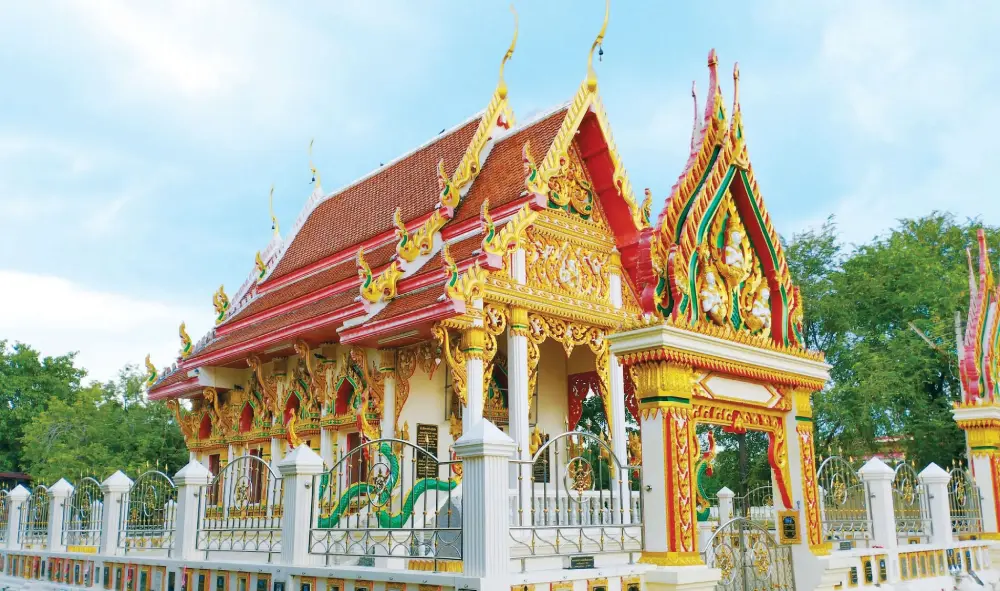
Wat Hong Thong
Open Days: Daily
Opening Hours: 08.00 – 17.00
Wat Hong Thong in Ban Kok Subdistrict, Chatturat District, Chaiyaphum Province, is a long-established local Buddhist temple with more than a century of history. Founded in 1892 and granted Wisungkhamsima in 1972, the temple is an important religious, educational, and cultural center for the local community. It serves monks, Buddhist residents, villagers, and general visitors as a place for worship, merit-making, meditation, local traditions, and community gatherings. The temple is also known for having a Phra Pariyattidhamma school, showing its continued role in Buddhist education.
For foreign travelers who want to explore Chaiyaphum beyond well-known natural attractions, Wat Hong Thong offers a quieter and more authentic perspective on rural Buddhist life in northeastern Thailand. It is not a heavily commercialized tourist temple, but a living village temple where Buddhism remains closely connected with daily life. Visitors can observe how a temple functions as a place of faith, learning, ceremony, and social connection for a local Isan community.
Wat Hong Thong is located in Ban Kok, Moo 2, Ban Kok Subdistrict, Chatturat District, Chaiyaphum Province. The temple is part of a community where religion, local memory, and seasonal traditions remain strongly connected. For local people, the temple is not only a sacred site but also a familiar place where families gather, villagers cooperate, and annual traditions are passed down from one generation to the next.
The temple’s establishment in 1892 makes Wat Hong Thong one of the older temples in Chatturat District. In the context of rural Isan, founding a temple was a major milestone for a community. A temple provided a permanent center for Buddhist practice, moral teaching, education, merit-making, funerals, seasonal festivals, and village cooperation. Wat Hong Thong therefore represents both religious devotion and the historical development of Ban Kok community.
The granting of Wisungkhamsima in 1972 was another important step in the temple’s development. In Thai Buddhism, Wisungkhamsima refers to the consecrated boundary used for formal monastic acts, especially ordination and other Sangha ceremonies. Receiving this boundary confirmed the temple’s readiness to function as a complete Buddhist institution. It also marked the temple’s stronger role within the local monastic and lay Buddhist community.
One of the temple’s distinctive features is the presence of a Phra Pariyattidhamma school, general education division. This gives Wat Hong Thong an educational role in addition to its religious function. Phra Pariyattidhamma education helps monks and novices study both Buddhist teachings and general academic subjects. The school reflects the temple’s contribution to the continuation of Buddhism through education, discipline, and the training of future religious personnel.
The presence of the school makes Wat Hong Thong more than a place for occasional ceremonies. It is also a learning environment where Buddhist knowledge and general education support each other. Monks and novices who study in this system gain knowledge that can be used for self-development, religious service, and the wider community. For this reason, Wat Hong Thong holds value not only as a temple but also as an educational center rooted in Buddhist tradition.
Wat Hong Thong continues to play a central role in the religious life of Ban Kok. Local Buddhists come to the temple for merit-making, almsgiving, Dhamma listening, meditation, and important Buddhist observances. On Buddhist holy days and major religious occasions, villagers gather to offer food to monks, listen to sermons, take part in candlelight processions, and support temple activities. These events help maintain both religious practice and community unity.
Important Buddhist days associated with temple life include Makha Bucha Day, Visakha Bucha Day, Asalha Bucha Day, Buddhist Lent, the End of Buddhist Lent, and regular Buddhist holy days. During these occasions, the temple becomes an active spiritual center. People arrive with offerings, join prayers, listen to teachings, and participate in rituals that strengthen their connection to Buddhism and to each other.
Wat Hong Thong is also connected with local annual merit-making traditions, especially Bun Duean 4, a traditional fourth-month merit-making event recorded in local development information as a cultural and religious project. This type of event is important for maintaining local customs and supporting the temple. It brings villagers together to make merit, help organize the temple grounds, and contribute to the preservation of Buddhist and community traditions.
Bun Duean 4 at Wat Hong Thong is meaningful because it combines religious practice with social cooperation. Villagers help prepare the event, clean the temple, arrange ceremonies, support monastic activities, and take part in merit-making. For younger generations, such an event provides an opportunity to learn how temple traditions are organized and why the temple remains important to the community.
Other annual activities connected with the temple include New Year merit-making, Songkran merit-making, Buddhist Lent activities, End of Buddhist Lent activities, Kathin, and community ceremonies held throughout the year. These events allow villagers, relatives, former residents, and supporters to return to the temple and renew their relationship with the community. The temple therefore functions as a place of reunion as well as a place of worship.
Songkran at Wat Hong Thong is especially meaningful for families and elders. Local people visit the temple to make merit, bathe Buddha images, pay respect to senior members of the community, and begin the Thai New Year with gratitude and goodwill. In a temple context, Songkran is not only a festive holiday but also a period of moral renewal, family reunion, and respect for ancestors and elders.
Buddhist Lent is one of the most important periods of the year for any temple. During the rainy-season retreat, monks remain in residence, and laypeople offer candles, bathing cloths, food, and necessary items. Many Buddhists also use this period to observe precepts more carefully, reduce harmful habits, listen to Dhamma, and practice mindfulness. Wat Hong Thong therefore supports both communal merit-making and personal spiritual development.
The End of Buddhist Lent and the Kathin season bring renewed activity to the temple. Kathin is a major Buddhist ceremony in which laypeople offer robes and donations to support the temple and monastic life. Recent Kathin information for Wat Hong Thong lists 11 resident monks and identifies Phra Khru Prachot Panyaphiwat as the abbot. This confirms that the temple remains active and continues to receive support from lay Buddhists.
The current abbot identified in public records is Phra Khru Prachot Panyaphiwat, also listed as Phra Khru Prachot Panyaphiwat (Lamom Chutipunyo). He is also listed as the ecclesiastical head of Ban Kok Subdistrict and abbot of Wat Hong Thong. In a village temple, the abbot plays a major role as a religious leader, caretaker of temple facilities, coordinator of ceremonies, and spiritual guide for villagers.
Wat Hong Thong is also associated with respected former abbots, especially Phra Khru Suwan Chaiyathat, known locally as Luang Pu Mok. A community merit-making event has been held to gild the statue of the former abbot and raise support for temple improvements. This type of event shows the deep relationship between the temple, monks, disciples, and local people. It also preserves the memory of those who helped shape the temple in the past.
The gilding ceremony for a former abbot’s statue is both an act of faith and a form of local remembrance. Villagers and disciples come together to make merit, express gratitude, and honor the spiritual leadership of the past. Through such events, Wat Hong Thong continues to preserve community history, even when written historical records may be limited. Local memory remains an important part of the temple’s identity.
The temple grounds include areas for Buddhist ceremonies, an ordination hall, monastic facilities, pavilions, community activity areas, and spaces connected with the Phra Pariyattidhamma school. Visitors should respect these areas, especially monks’ residential zones and educational spaces used by monks and novices. The temple is an active religious and learning environment, so a quiet and respectful manner is expected.
Wat Hong Thong is best understood as a working village temple rather than a designed tourist attraction. Its appeal lies in its history, educational role, monastic life, community ceremonies, and the relationship between Buddhism and local society. Travelers interested in cultural tourism will find the temple valuable because it shows how Buddhism continues to function in real village life rather than as a display for visitors.
Visitors should dress modestly and behave respectfully while inside the temple. Clothing should be appropriate for a religious site, and visitors should avoid loud noise or unnecessary disturbance. During ceremonies, merit-making events, or school activities, it is best to follow the guidance of monks or local residents. Respectful behavior is especially important in small community temples where sacred space and daily life are closely connected.
The best time to visit Wat Hong Thong is in the morning or late morning, when the weather is more comfortable and the temple atmosphere is suitable for merit-making, quiet observation, and photography. Travelers who wish to join an annual merit-making event, Kathin, or a ceremony honoring a former abbot should check the schedule in advance, as the temple may be busier during community events.
Getting to Wat Hong Thong is most convenient by private car. From Chatturat District, travel toward Ban Kok Subdistrict and Ban Kok Moo 2 using local roads. The destination can be searched as Wat Hong Thong or by Plus Code HR6Q+JQP. Travelers should drive carefully on community roads and allow extra time if they plan to continue to nearby attractions within Chatturat District.
Nearby attractions that can be combined with a visit to Wat Hong Thong include the Wooden Bridge Thung Bua Daeng at Bueng Lahan in Ban Maklua. This natural attraction is known for its open wetland scenery, wooden walkway, and red lotus atmosphere during the right season. A good itinerary is to begin with merit-making at Wat Hong Thong and continue to Bueng Lahan for nature, photography, and waterside community views.
Bueng Lahan is an important freshwater wetland in Chaiyaphum Province. It supports local fishing, agriculture, leisure, and nature-based tourism. The wooden bridge and lotus area add scenic value to Chatturat travel routes, especially in the morning when the light is soft and the weather is more pleasant. Visitors who enjoy quiet rural scenery will find this route suitable for a relaxed half-day or full-day trip.
Other temples and religious sites near Wat Hong Thong can also be included in a Buddhist cultural route, such as Wat Pa Chapphan Rangsi, Wat Pathum Chat, and Wat Khao Ta Ngo Udomphon. Each temple reflects a different aspect of Buddhist life in Chaiyaphum, from local village temples to more widely known spiritual destinations. This route is suitable for travelers who prefer calm, meaningful cultural travel.
Restaurants near Wat Hong Thong are mostly located around Chatturat town and along the main local routes. Travelers can find cafés, Thai restaurants, bakeries, chain restaurants, and countryside-style dining spots. The restaurants listed in the summary table include only places with publicly available phone numbers, making it easier for travelers to call ahead and check opening hours or availability.
Accommodations near Wat Hong Thong include small hotels, resorts, and daily rooms in Chatturat District and nearby communities. These are convenient for travelers who want to stay overnight before visiting Bueng Lahan, Chaiyaphum city, or other attractions in the province. Calling in advance is recommended, especially during long weekends, local festivals, or the red lotus tourism season.
Wat Hong Thong is meaningful because it combines history, religion, education, and community culture. Its Wisungkhamsima reflects its formal Buddhist role, its Phra Pariyattidhamma school reflects its educational value, and its annual merit-making traditions show its continuing importance to local people. A visit to the temple is therefore not only a stop for worship but also an opportunity to understand how faith has been sustained in Ban Kok for generations.
For travelers who want to see Chaiyaphum through the life of its communities, Wat Hong Thong is a suitable destination. It offers a calm and authentic experience of Isan Buddhism, local traditions, Buddhist education, and village cooperation. Combined with Bueng Lahan, nearby temples, local restaurants, and small accommodations, the temple can form part of a meaningful cultural route in Chatturat District.
| Name | Wat Hong Thong |
| Location | Ban Kok, Moo 2, Ban Kok Subdistrict, Chatturat District, Chaiyaphum Province |
| Address | Moo 2, Ban Kok Subdistrict, Chatturat District, Chaiyaphum Province 36130, Thailand |
| Coordinates | Plus Code: HR6Q+JQP, Ban Kok Subdistrict, Chatturat District, Chaiyaphum 36130 |
| Highlights | A historic local Buddhist temple founded in 1892, granted Wisungkhamsima, and home to a Phra Pariyattidhamma school |
| History | Established in 1892 and granted Wisungkhamsima in 1972; a local temple under the Mahanikaya tradition |
| Name Origin | The name Wat Hong Thong has been used within Ban Kok community and is connected with the local memory of the village |
| Distinctive Features | A long-established village temple with roles in Buddhist practice, community traditions, local culture, and Buddhist education |
| Travel Information | Best reached by private car from Chatturat District toward Ban Kok Subdistrict and Ban Kok Moo 2; use Wat Hong Thong or Plus Code HR6Q+JQP for navigation |
| Current Status | An active local temple with ongoing Buddhist ceremonies, community merit-making, Kathin activities, and local religious events |
| Open Days | Daily |
| Opening Hours | 08.00 – 17.00 |
| Facilities | Ordination hall, religious activity areas, pavilions, merit-making grounds, monks’ residential zone, and Phra Pariyattidhamma school area |
| Main Areas / Zones | Ordination hall, Wisungkhamsima boundary, pavilions, community activity ground, monks’ residential zone, and Phra Pariyattidhamma school area |
| Abbot / Caretaker | Phra Khru Prachot Panyaphiwat, also listed as Phra Khru Prachot Panyaphiwat (Lamom Chutipunyo) |
| Main Contact Number | 087-239-4349 |
| Nearby Tourist Attractions | 1. Wooden Bridge Thung Bua Daeng, Bueng Lahan, Ban Maklua, about 10 km 2. Bueng Lahan, about 11 km 3. Wat Pa Chapphan Rangsi, about 12 km 4. Wat Pathum Chat, about 13 km 5. Wat Khao Ta Ngo Udomphon, about 43 km |
| Nearby Restaurants | 1. KFC Lotus Chatturat, about 7 km, Tel. 1150 2. Chatturat Bakery, about 8 km, Tel. 096-030-9442, 064-446-5279 3. Ma Der Mana Cafe, about 14 km, Tel. 061-563-6291 4. Rabiang Rai Rabiang Na, about 16 km, Tel. 044-851-268 5. Krua Khiang Din, about 17 km, Tel. 084-477-6583, 098-796-6081 |
| Nearby Accommodations | 1. Ratchanee Place, about 6 km, Tel. 098-287-1636 2. N.B. Resort, about 9 km, Tel. 080-157-7808, 085-201-1119 3. Fasuay Resort Chaiyaphum, about 17 km, Tel. 083-682-2828 4. Martini Hotel & Pool Villa Chatturat Chaiyaphum, about 17 km, Tel. 094-295-7140, 083-682-2828 5. The Palm Village, about 19 km, Tel. 083-386-8998 |
Frequently Asked Questions (FAQ)
Q: Where is Wat Hong Thong located?
A: Wat Hong Thong is located in Ban Kok, Moo 2, Ban Kok Subdistrict, Chatturat District, Chaiyaphum Province 36130, Thailand.
Q: When was Wat Hong Thong established?
A: Wat Hong Thong was established in 1892 and received Wisungkhamsima in 1972.
Q: Why is Wat Hong Thong important?
A: It is a historic village temple that serves as a center for Buddhist ceremonies, merit-making, meditation, local traditions, and community life.
Q: Does Wat Hong Thong have a Phra Pariyattidhamma school?
A: Yes. Wat Hong Thong has a Phra Pariyattidhamma school, general education division, supporting Buddhist education for monks and novices.
Q: Who is the abbot of Wat Hong Thong?
A: The current abbot identified in public records is Phra Khru Prachot Panyaphiwat, also listed as Phra Khru Prachot Panyaphiwat (Lamom Chutipunyo).
Q: What are the opening hours of Wat Hong Thong?
A: The temple is open daily from 08.00 to 17.00. Visitors should dress modestly and behave respectfully inside the temple grounds.
Q: What important traditions are associated with Wat Hong Thong?
A: Important activities include Bun Duean 4, annual merit-making, Kathin, Songkran, Buddhist Lent, End of Buddhist Lent, and ceremonies honoring respected former abbots.
Q: Are there attractions near Wat Hong Thong?
A: Nearby attractions include the Wooden Bridge Thung Bua Daeng at Bueng Lahan, Bueng Lahan, Wat Pa Chapphan Rangsi, Wat Pathum Chat, and Wat Khao Ta Ngo Udomphon.
 Category: ●Places of Worship
 Group: ●Temple
Last Update : 2 MonthAgo
 Last Update : 2 MonthAgo
 Click to Access the Navigation Map GPS
 Art, Culture and Heritage
 Historical Sites and Monuments(1)
 Landmarks and Memorials(3)
 Royal Palace(1)
 Art, Craft Centres, Tradition(3)
 Educational Places
 Educational Gardens, Farm(1)
Temple(141)
Educational Gardens, Farm(1)
Temple(141)
 Other Sacred Sites(7)
 Suburban Living
 Village, Community(4)
 Nature and Wildlife
 National Parks and Marine Reserves(7)
 Mountain (Doi)(5)
 Dam, Reservoir, Lake(10)
 Waterfalls(15)
 Caves(5)
 River, Canal(4)
 Other natural attractions(1)
 Entertainment and Agricultural
 Farms, Parks and Ecotourism(2)


