
lovethailand home >Northeastern Travel Attractions >Chaiyaphum Travel Attractions >Khon San >Non Khun > Wat Na Phak Sian
TL;DR: Wat Na Phak Sian is located at Dong Klang, Moo 7, Non Khun Subdistrict, Khon San District, Chaiyaphum Province, open Daily, hours 08.00 – 17.00.

Wat Na Phak Sian
Open Days: Daily
Opening Hours: 08.00 – 17.00
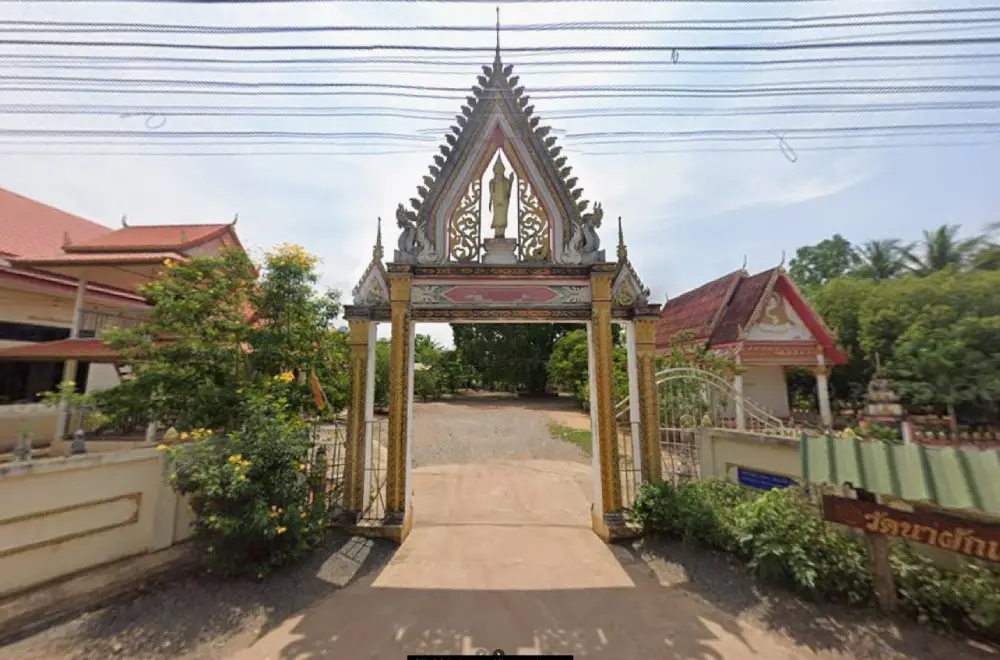
Wat Na Phak Sian, also known as Wat Ban Na Phak Sian, is located in Dong Klang, Moo 7, Non Khun Subdistrict, Khon San District, Chaiyaphum Province. Established in 1936, it is a local Buddhist temple and a spiritual center for villagers and Buddhist visitors. The temple serves as a place for merit-making, meditation, religious ceremonies, local traditions, and community culture, making it a meaningful stop for travelers who want to understand the local life of Khon San beyond natural attractions.
Wat Na Phak Sian, also known in some sources as Wat Ban Na Phak Sian, is located in Dong Klang, Moo 7, Non Khun Subdistrict, Khon San District, Chaiyaphum Province. The temple was established in 1936 and has long served as a community Buddhist temple for local villagers, monks, and visitors. Its importance is not limited to its age or religious status. The temple continues to function as a place where Buddhist faith, merit-making, meditation, local traditions, and community relationships remain closely connected.
Wat Na Phak Sian reflects the close relationship between home, temple, and community in Thai society. Monks use the temple as a place for residence, Buddhist practice, and religious duties, while local Buddhist residents and visitors come here to make merit, listen to Dharma teachings, chant, observe precepts, and join religious activities on important Buddhist occasions. The temple therefore keeps Buddhism present in everyday life, not merely as a doctrine, but as a living practice shared by the community.
The temple was established in 1936, making it one of the long-standing community temples in Non Khun Subdistrict and Khon San District. At that time, rural communities in northeastern Thailand were deeply connected with agriculture, natural surroundings, kinship networks, and mutual support. Building a temple in a village was more than creating a religious building. It meant creating a shared center where people could gather, make merit, preserve traditions, and strengthen community unity.
The name Wat Na Phak Sian is culturally meaningful. The word “na” refers to rice fields and agricultural landscapes, while “phak sian” refers to a local plant known in Thai rural life. The name therefore evokes a community connected with fields, local plants, and village ecology. It reflects a rural world where Buddhist faith, farming life, and local geography are naturally linked.
Non Khun Subdistrict is part of Khon San District, Chaiyaphum Province, and includes several village communities shaped by agriculture, local roads, houses, and the broader natural landscape of Khon San. Wat Na Phak Sian, located in Dong Klang, Moo 7, forms part of this cultural landscape. Visiting the temple allows travelers to see Khon San from a local perspective, beyond scenic nature destinations alone.
Wat Na Phak Sian serves as a place for religious activities involving monks, villagers, and the general public. Activities held at the temple may include alms-giving, food offerings to monks, Dharma sermons, chanting, observing precepts, Sangha offerings, candlelight processions on major Buddhist days, and annual merit-making events organized through community participation. These activities make the temple a shared place where local people come together through faith and cooperation.
On Buddhist holy days, Wat Na Phak Sian becomes a place where villagers can gather to make merit, listen to teachings, and spend time with family and neighbors. This atmosphere is important for maintaining local social relationships. Children learn temple manners, adults take part in religious and community work, and older residents use the temple as a peaceful space for prayer, meditation, Dharma listening, and social connection.
The temple is also suitable for meditation and quiet reflection. Meditation in a community temple does not always need to be formal or complicated. It can begin with paying respect to the Buddha, chanting, sitting quietly, contemplating Buddhist teachings, and practicing mindfulness in daily life. Visitors can use time at the temple to step away from everyday pressure and return to a calmer state of mind.
Wat Na Phak Sian is important to the local community because it serves as a spiritual center. The temple supports many important moments in village life, including ordination ceremonies, family merit-making, memorial rites, funerals, annual religious events, and public community activities. The temple holds joy, grief, gratitude, hope, and cooperation. Its meaning comes from its continuing role in real community life.
Wat Na Phak Sian also helps preserve local traditions and northeastern Thai Buddhist culture. Merit-making events held at the temple allow people of different generations to meet, prepare offerings, cook food, arrange the temple grounds, welcome relatives, and pass down religious practices to younger members of the community. Tradition is therefore not merely remembered; it is actively practiced within the temple space.
Phra Khongchak Chakkawaro serves as the abbot of Wat Ban Na Phak Sian and is the main religious caretaker of the temple. In a community temple, the abbot’s role extends beyond managing temple buildings or monastic life. He also acts as a spiritual guide, a supporter of Buddhist activities, a caretaker of temple order, and an important link between the temple and surrounding villagers. Clear religious leadership helps the temple continue its role as a stable center of faith.
The temple grounds include areas that support the religious and community activities of monks and villagers. Main zones include a worship area, a merit-making and Dharma listening area, a meditation area, a temple courtyard for community events, a Buddhist ceremony area, and a reception area for merit-making gatherings. These areas may not be arranged like a major tourist site, but they are meaningful because they support real community use.
The distinctive character of Wat Na Phak Sian lies in its simplicity and closeness to village life. Visitors will experience the atmosphere of a local temple that is calm and unhurried. This is a place for worship, merit-making, reflection, and learning about how Buddhism continues to be part of everyday life in rural Thailand. The value of the temple lies not in grandeur, but in its relationship with the people who use and care for it.
Visitors should approach Wat Na Phak Sian respectfully. Modest clothing is recommended when entering any Buddhist temple in Thailand. Visitors should speak quietly, avoid disturbing monks or meditation practitioners, and avoid entering restricted areas without permission. If a ceremony or local merit-making event is taking place, visitors should observe local behavior and follow the guidance of temple caretakers or community members.
The best times to visit are in the morning or late afternoon, when the weather is more comfortable and the temple atmosphere is calm. On Buddhist holy days or during important festivals, the temple may become livelier as villagers gather for religious activities. These moments allow visitors to see the living relationship between the temple and the community, provided they behave respectfully.
Wat Na Phak Sian can be included in a half-day or full-day cultural route around Khon San District. Travelers may begin with a quiet visit to the temple, then continue to Wat Phra That Kaeng Koi, Muen Aram Khamhaeng Monument, Thap Lao Spring Arboretum, Wat Tham Phaya Chang Phueak, or Chulabhorn Dam. This type of route allows visitors to experience faith, local history, village life, and nature in one journey.
Wat Phra That Kaeng Koi is a nearby sacred site in the area and can be combined naturally with Wat Na Phak Sian. Muen Aram Khamhaeng Monument adds a local historical dimension to the trip. Thap Lao Spring Arboretum offers a refreshing natural stop with clear water and shaded surroundings, while Wat Tham Phaya Chang Phueak and Chulabhorn Dam provide additional faith-related and scenic experiences for travelers with more time.
A visit to Wat Na Phak Sian is suitable for travelers who prefer quiet, meaningful places rather than crowded tourist attractions. The temple is not focused on commercial tourism. It is a place used by local people for real religious practice and community life. Visitors who spend time here quietly can sense the simplicity and meaning of a Buddhist temple rooted in local faith.
For families, the temple is a suitable place to introduce children to Buddhist etiquette, merit-making, and the role of temples in Thai culture. For older visitors, it offers a peaceful place for worship and reflection. For cultural travelers, it provides a good starting point for understanding Non Khun Subdistrict and Khon San District in greater depth.
Photography should be done with care. Visitors should avoid taking photos during ceremonies in a disruptive way, avoid close photos of monks or villagers without permission, and avoid using sacred areas inappropriately. Good temple etiquette helps preserve the dignity of the space and creates a better experience for both visitors and the local community.
Wat Na Phak Sian clearly illustrates the phrase “the temple as the heart of the community.” A spiritual center does not always need to be large or widely famous. It can be a quiet place where people feel connected, respectful, and emotionally anchored. This temple has that quiet but steady value, making it a meaningful stop for those who want to understand the real life of Chaiyaphum’s local communities.
In the context of northeastern Thai culture, Wat Na Phak Sian plays a role in preserving local merit-making traditions. Temple events allow villagers to work together, share food, prepare offerings, and renew community ties. Even as society changes and younger generations move for education or work, the temple remains a place people return to during important religious and family occasions.
When planning a Khon San trip, Wat Na Phak Sian is best suited to a slow and thoughtful itinerary. Visitors can begin with the calm atmosphere of the temple, continue to local food in Khon San, and then explore nature in the afternoon. This type of travel does not focus only on the number of attractions visited. It gives time to understand faith, culture, everyday life, and landscape together.
A short visit may take around 30 to 60 minutes for worship, merit-making, and a quiet walk around the temple. Visitors with more time can use the temple as a starting point for learning about Non Khun Subdistrict and nearby areas of Khon San. The value of visiting a community temple lies in observation, stillness, and respect for the role the temple plays in local life.
Getting There is best by private car. Drive into Khon San District, Chaiyaphum Province, then continue toward Non Khun Subdistrict and Dong Klang, Moo 7. Travelers should check the route before departure and allow time for local roads. Having a private vehicle also makes it easier to continue to Wat Phra That Kaeng Koi, Thap Lao Spring Arboretum, Wat Tham Phaya Chang Phueak, restaurants in Khon San town, and nearby accommodations.
Travelers coming from Chaiyaphum town should plan enough time because Khon San is in the northern part of the province and is best explored as a multi-stop route. A practical plan is to visit Wat Na Phak Sian in the morning, continue to other local temples or community areas, have lunch in Khon San town, and then visit natural attractions such as Thap Lao Spring Arboretum or Chulabhorn Dam in the afternoon.
Parking should be done neatly without blocking temple entrances, village roads, or local houses. During Buddhist holy days, merit-making events, or festivals, the area may be busier than usual. Visitors should allow extra time and follow local arrangements. Simple acts of consideration, such as keeping the temple clean, parking properly, and speaking quietly, help preserve the peaceful character of the temple.
Wat Na Phak Sian is a meaningful stop for those who want to experience Chaiyaphum through local temples and community life. It tells the story of faith, cooperation, and tradition in Non Khun Subdistrict. Although simple in appearance, it reveals the continuing role of Buddhism in the daily life of local people. For travelers seeking a deeper Khon San experience, Wat Na Phak Sian is a place worth including in the journey.
| Name | Wat Na Phak Sian |
| Alternative Name | Wat Ban Na Phak Sian |
| Location | Dong Klang, Moo 7, Non Khun Subdistrict, Khon San District, Chaiyaphum Province |
| Address | Dong Klang, Moo 7, Non Khun Subdistrict, Khon San District, Chaiyaphum 36180, Thailand |
| Highlights | A long-established community temple in Non Khun Subdistrict, built in 1936 and serving as a place for merit-making, meditation, Buddhist activities, local traditions, cultural continuity, and community faith |
| History | Established in 1936 as a local Buddhist temple in Khon San District, Chaiyaphum Province |
| Name Origin | The name reflects rural life connected with rice fields, local plants, and the agricultural landscape of Non Khun community |
| Distinctive Features | A quiet community temple that preserves Buddhist practice, local traditions, and the spiritual life of Non Khun residents |
| Travel Information | Best reached by private car. Drive toward Khon San District and continue to Non Khun Subdistrict, Dong Klang, Moo 7. The temple can be combined with nearby temples and natural attractions in Khon San. |
| Current Status | Open as a Buddhist temple for merit-making, meditation, religious activities, and community gatherings |
| Open Days | Daily |
| Opening Hours | 08.00 – 17.00 |
| Facilities | Parking Area, Worship Area, Merit-Making Area, Dharma Listening Area, Temple Courtyard, And Community Activity Space |
| Main Areas / Zones | Worship Area Merit-Making And Dharma Listening Area Meditation Area Buddhist Ceremony Area Temple Courtyard For Community Activities Reception Area For Merit-Making Events |
| Abbot / Caretaker | Phra Khongchak Chakkawaro |
| Nearby Tourist Attractions | 1. Wat Phra That Kaeng Koi, About 7 km 2. Muen Aram Khamhaeng Monument, About 14 km 3. Thap Lao Spring Arboretum, About 25 km 4. Wat Tham Phaya Chang Phueak, About 27 km 5. Chulabhorn Dam, About 50 km |
| Nearby Restaurants | 1. Krua Orathai, About 14 km, Tel. 086-457-9376 2. The Kook, About 15 km, Tel. 084-521-5726 3. Hod Laew Der Cafe, About 16 km, Tel. 044-876-604 4. Rim Suan @ Coffee, About 17 km, Tel. 091-862-7545 5. Lucky Buddy Restaurant And Bar, About 21 km, Tel. 094-263-2294 |
| Nearby Accommodations | 1. Modern Home Resort, About 12 km, Tel. 094-984-4255, 085-636-1412 2. Montra House, About 15 km, Tel. 082-854-1830 3. Nut Resort, About 16 km, Tel. 088-184-9590 4. Wanida Resort, About 17 km, Tel. 086-899-1818, 087-770-1144 5. Pha Ka San Garden Home, About 19 km, Tel. 086-254-7502 |
Frequently Asked Questions (FAQ)
Q: Where is Wat Na Phak Sian located?
A: Wat Na Phak Sian is located in Dong Klang, Moo 7, Non Khun Subdistrict, Khon San District, Chaiyaphum Province, Thailand.
Q: When was Wat Na Phak Sian established?
A: Wat Na Phak Sian was established in 1936 as a local Buddhist temple in Khon San District.
Q: Who is the abbot of Wat Na Phak Sian?
A: The abbot of Wat Ban Na Phak Sian is Phra Khongchak Chakkawaro.
Q: Why is Wat Na Phak Sian important to the local community?
A: The temple serves as a religious, cultural, and spiritual center for local villagers. It is used for merit-making, meditation, Buddhist ceremonies, local traditions, and community gatherings.
Q: What are the opening hours of Wat Na Phak Sian?
A: Wat Na Phak Sian is open daily from 08.00 to 17.00.
Q: What should visitors wear when visiting Wat Na Phak Sian?
A: Visitors should dress modestly, behave quietly, and show respect for monks, meditation practitioners, and local residents participating in temple activities.
Q: What type of trip is Wat Na Phak Sian suitable for?
A: The temple is suitable for merit-making, meditation, cultural learning, and as a quiet stop on a half-day or one-day route around Khon San District.
Q: What nearby attractions can travelers visit after Wat Na Phak Sian?
A: Nearby places include Wat Phra That Kaeng Koi, Muen Aram Khamhaeng Monument, Thap Lao Spring Arboretum, Wat Tham Phaya Chang Phueak, and Chulabhorn Dam.
 Category: ●Places of Worship
 Group: ●Temple
Last Update : 3 MonthAgo
 Last Update : 3 MonthAgo
 Click to Access the Navigation Map GPS
 Art, Culture and Heritage
 Historical Sites and Monuments(1)
 Landmarks and Memorials(3)
 Royal Palace(1)
 Art, Craft Centres, Tradition(3)
 Educational Places
 Educational Gardens, Farm(1)
Temple(141)
Educational Gardens, Farm(1)
Temple(141)
 Other Sacred Sites(7)
 Suburban Living
 Village, Community(4)
 Nature and Wildlife
 National Parks and Marine Reserves(7)
 Mountain (Doi)(5)
 Dam, Reservoir, Lake(10)
 Waterfalls(15)
 Caves(5)
 River, Canal(4)
 Other natural attractions(1)
 Entertainment and Agricultural
 Farms, Parks and Ecotourism(2)


