lovethailand home >Northeastern Travel Attractions >Chaiyaphum Travel Attractions >Khon San >Dong Bang > Wat Sa-Nga Tha Pho Si
TL;DR: Wat Sa-Nga Tha Pho Si is located at Moo 5, Dong Bang Subdistrict, Khon San District, Chaiyaphum Province, open Daily, hours 08.00 – 17.00.

Chaiyaphum

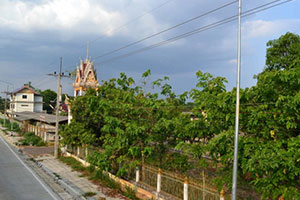
Wat Sa-Nga Tha Pho Si

Wat Sa-Nga Tha Pho Si

Open Days: Daily
Opening Hours: 08.00 – 17.00
 
Wat Sanga Tha Pho Si is located in Moo 5, Dong Bang Subdistrict, Khon San District, Chaiyaphum Province. Established in 2005, it is a local Buddhist temple of the Mahanikaya tradition and serves as a religious, cultural, and spiritual center for monks, villagers, Buddhist residents, and visitors. The temple is suitable for merit-making, meditation, learning about local traditions, and experiencing the quiet atmosphere of a genuine community temple in Khon San.
 
Wat Sanga Tha Pho Si is located in Moo 5, Dong Bang Subdistrict, Khon San District, Chaiyaphum Province. Although the temple was established in 2005 and is relatively young compared with many historic temples in Thailand, it holds strong meaning for the local community. Its importance does not come from age alone, but from its role as a place of faith, merit-making, meditation, local ceremonies, cultural continuity, and emotional belonging for people in the surrounding villages.
 
Wat Sanga Tha Pho Si is a local Buddhist temple of the Mahanikaya tradition. Monks use the temple as a place for residence, Buddhist practice, and religious duties, while villagers and Buddhist visitors come here for merit-making, Dharma listening, chanting, observing precepts, and joining Buddhist ceremonies. The temple therefore acts as a living bridge between Buddhism and everyday community life in Dong Bang Subdistrict.
 
The main value of Wat Sanga Tha Pho Si lies in its identity as a community temple. Temples of this type are not always known for grand architecture or large tourist facilities. Instead, they are meaningful because they are closely connected with the people who live around them. Villagers return to the temple on Buddhist holy days, during annual merit-making events, at important moments in family life, and whenever they need a quiet place for reflection. This relationship makes the temple much more than a sightseeing stop; it is a living place of local faith.
 
Dong Bang Subdistrict is part of Khon San District, an area shaped by rural communities, agriculture, local roads, orchards, houses, and natural surroundings. Nearby Ban Fai Din So is an old community known for its distinctive local culture, agricultural life, orchards, and rural atmosphere. Within this wider context, Wat Sanga Tha Pho Si forms part of the cultural landscape. It is not separate from the village; it is connected to people, traditions, local memory, and the quiet rhythm of daily life.
 
The establishment of Wat Sanga Tha Pho Si in 2005 reflects the community’s need for a Buddhist space that could support village religious activities. A temple created through community faith often carries strong emotional value. Villagers do not see it only as a physical place, but as the result of shared devotion, cooperation, and the collective desire to have a spiritual center close to home. The temple’s name evokes dignity, calmness, and auspiciousness, all of which suit its role as a sacred community space.
 
The word “Sanga” suggests dignity, grace, and respectability, while “Tha Pho Si” evokes a place associated with the Bodhi tree and Buddhist symbolism. In Buddhist culture, the Bodhi tree is deeply connected with the enlightenment of the Buddha and is often seen as a symbol of peace, wisdom, and spiritual shade. The temple name therefore carries a graceful cultural meaning, suggesting a place of calm faith and spiritual refuge.
 
The temple’s primary role is to support Buddhist activities involving monks and laypeople. These activities include daily religious duties, weekly observances on Buddhist holy days, and annual events during important Buddhist festivals. Villagers may gather for alms-giving, food offerings, Dharma sermons, chanting, observing precepts, offering Sangha donations, candlelight processions on Makha Bucha, Visakha Bucha, and Asalha Bucha, as well as Kathin, Pha Pa, and other merit-making events connected with local community life.
 
Wat Sanga Tha Pho Si also serves as a place for meditation and inner reflection. The practice of meditation in a community temple is usually simple and grounded. It may involve chanting, quiet sitting, listening to Buddhist teachings, maintaining mindfulness, and cultivating moral discipline. Visitors can use their time here to pause from daily pressure, pay respect to the Buddha, set a peaceful intention, and experience the calm atmosphere of a temple used by real local people.
 
Beyond religious practice, the temple plays an important part in preserving local traditions and culture. Merit-making events and community activities held at the temple bring people of different generations together. Villagers help prepare the venue, cook food, arrange offerings, welcome guests, and support ceremonies. Through these actions, tradition is not merely remembered as something from the past; it is practiced, renewed, and passed on through everyday participation.
 
In rural Thai society, temples often support important moments throughout life. They may be used for ordination ceremonies, family merit-making, house blessing-related activities, memorial rites, funerals, and annual festivals. Wat Sanga Tha Pho Si therefore functions as a place that holds joy, calmness, hope, gratitude, remembrance, and community cooperation. This makes the temple one of the spiritual pillars of Dong Bang Subdistrict.
 
Visitors to Wat Sanga Tha Pho Si will experience the atmosphere of a quiet local temple. The grounds include areas for worship, merit-making, religious ceremonies, Dharma listening, community events, and quiet reflection. These areas may not be arranged like a large tourist attraction, but they are meaningful because they support the real needs of monks and villagers. The temple is valued through use, care, respect, and continuity.
 
The temple’s charm is its simplicity and closeness to the community. Travelers interested in local culture can see how a Thai temple remains part of daily life. This is not a place built only for visitors. It is a temple where religious activities and local relationships continue naturally. Visitors should therefore approach the place respectfully, noticing the quiet atmosphere, the practical layout, and the sense of care given by local people.
 
For travelers exploring Khon San District, Wat Sanga Tha Pho Si can be included in a cultural route together with Ban Fai Din So Community, Muen Aram Khamhaeng Monument, Thap Lao Spring Arboretum, Wat Tham Phaya Chang Phueak, and Chulabhorn Dam. This type of route shows different sides of Khon San: Buddhist faith, village culture, local history, natural springs, forested scenery, and reservoir landscapes.
 
Ban Fai Din So Community is one of the nearby places worth visiting. It is an old community with distinctive local culture, agricultural life, orchards, and a rural character. Visiting Wat Sanga Tha Pho Si together with nearby community areas helps travelers understand Dong Bang Subdistrict more fully. The temple reflects faith, while the community reflects the way of life that has helped sustain that faith over time.
 
Muen Aram Khamhaeng Monument, associated with local historical memory in Khon San, can also be included in the route. Starting with a temple visit and continuing to a local historical landmark gives travelers a wider understanding of the district. Khon San is not only a place of scenic landscapes; it also has stories of local leaders, community identity, and cultural continuity.
 
Thap Lao Spring Arboretum is a popular natural attraction in Khon San, known for clear water and a shady atmosphere. It makes a pleasant stop after visiting a temple or local community. Wat Tham Phaya Chang Phueak offers another faith-related destination in a natural setting, while Chulabhorn Dam provides a larger scenic landscape for travelers who have more time. Combining these places creates a deeper and more varied Khon San itinerary.
 
Wat Sanga Tha Pho Si is suitable for visitors who prefer peaceful, meaningful places rather than crowded tourist attractions. Visitors should dress modestly, keep their voices low, avoid disturbing monks or meditation practitioners, and respect the sacred nature of the space. If a local ceremony or merit-making event is taking place, it is best to observe carefully and follow the behavior of local residents.
 
The best times to visit are in the morning or late afternoon, when the weather is more comfortable and the temple atmosphere is especially calm. On Buddhist holy days, more residents may come to participate in religious activities, allowing visitors to see how the temple functions in community life. During Buddhist festivals, the temple may become livelier, giving travelers a chance to observe local traditions respectfully.
 
Wat Sanga Tha Pho Si is suitable for families, older travelers, cultural visitors, and those seeking a quiet stop during a Khon San trip. Families can introduce children to Buddhist etiquette and temple manners. Older visitors can make merit in a calm setting. Cultural travelers can use the visit to understand the relationship between home, temple, and community in rural Thailand. Each group can find meaning here when visiting with respect and patience.
 
A half-day route can begin at Wat Sanga Tha Pho Si in the morning. Visitors can pay respect, make merit, and spend time quietly around the temple before continuing to Ban Fai Din So Community and then to a local restaurant in Khon San. This route is suitable for travelers who prefer a relaxed pace and want to combine temple culture, community life, and local food without traveling too far.
 
For a full-day route, travelers can continue to Thap Lao Spring Arboretum or Chulabhorn Dam after the temple visit. Beginning the day at Wat Sanga Tha Pho Si gives the trip a peaceful and meaningful tone before moving into nature. This route shows that Khon San District is not only known for natural scenery, but also for temples and communities that form the cultural foundation of the area.
 
What makes Wat Sanga Tha Pho Si memorable is the sincerity of the place. It does not try to present itself as a large-scale tourist attraction. Instead, it remains a steady community temple where local faith, religious practice, and everyday village life continue. Visitors should take time to observe the atmosphere rather than rushing through the site. The value of the temple is found in its calmness, its function, and its connection with people.
 
From a cultural perspective, Wat Sanga Tha Pho Si clearly shows the structure of a Thai community temple. It serves as a center of belief, a place for public activities, a setting for village unity, and a point where people of different generations meet through merit-making and traditions. These roles form the heart of many local temples across Thailand.
 
Making merit at Wat Sanga Tha Pho Si can be simple. Visitors may bring flowers, candles, incense, or appropriate offerings, calm their mind before worship, and spend time quietly in the temple grounds. Even without a major ceremony, paying respect and sitting peacefully can make the visit meaningful. A temple does not need a large event to be a sacred place.
 
Visitors who wish to take photographs should do so with care. Avoid interrupting ceremonies, avoid taking close photos of monks or villagers without permission, and do not use sacred areas in an inappropriate way. Good temple etiquette helps preserve the dignity of the space and creates a better experience for both visitors and the local community.
 
Wat Sanga Tha Pho Si also helps travelers see Chaiyaphum in greater depth. Many people know the province for seasonal flowers, mountains, stone fields, dams, and natural attractions, but Chaiyaphum also has many local temples that preserve the faith and memory of communities. This temple adds a quieter, more personal layer to the travel experience, especially for those exploring Khon San District.
 
Getting There is most convenient by private car. Travelers can drive toward Khon San District in Chaiyaphum Province and continue to Dong Bang Subdistrict, Moo 5. Navigation can be set to Wat Sanga Tha Pho Si or to Dong Bang Subdistrict as a local reference point. When entering community roads, drive carefully because houses, local activities, and small roads are part of the rural setting. Having a private car also makes it easier to continue to Ban Fai Din So Community, nearby restaurants, accommodations, and natural attractions around Khon San.
 
Travelers coming from Chaiyaphum town should plan enough time because Khon San District is in the northern part of the province and is best explored as a multi-stop trip. A practical route is to start at Wat Sanga Tha Pho Si in the morning, continue to Ban Fai Din So Community or a local restaurant in Khon San, and then visit Thap Lao Spring Arboretum or Chulabhorn Dam depending on available time.
 
Parking should be done neatly and without blocking temple entrances, village roads, or local houses. If a merit-making event or religious ceremony is taking place, visitors should allow extra time and follow the community’s arrangement. Small acts of consideration, such as parking properly, keeping the temple clean, and speaking quietly, help preserve the peaceful atmosphere of the temple.
 
Wat Sanga Tha Pho Si may not be the most famous attraction in Chaiyaphum, but it has genuine meaning for the local community. The temple shows that faith does not need to be measured by the size of buildings. It can be seen through cooperation, calmness, continuity, and the role of the temple as a spiritual home for villagers. Visitors who stop here will gain a deeper understanding of Khon San and the continuing importance of community temples in Thai life.
 
A visit to Wat Sanga Tha Pho Si carries several layers of meaning. The first is paying respect and making merit. The second is learning about a local Mahanikaya temple established in 2005. The third is seeing the relationship between Dong Bang Subdistrict and rural community life. The final layer is understanding how local temples in Thailand continue to give people emotional grounding even as the world around them changes. For travelers seeking a deeper experience in Khon San, Wat Sanga Tha Pho Si is a meaningful stop to include in the journey.
 
NameWat Sanga Tha Pho Si
LocationMoo 5, Dong Bang Subdistrict, Khon San District, Chaiyaphum Province
AddressMoo 5, Dong Bang Subdistrict, Khon San District, Chaiyaphum 36180, Thailand
HighlightsA local Mahanikaya Buddhist temple in Dong Bang Subdistrict, serving as a place for merit-making, meditation, Buddhist activities, local traditions, cultural continuity, and community faith
HistoryEstablished in 2005 as a community temple in Khon San District, Chaiyaphum Province
Name OriginThe name suggests dignity, calmness, auspiciousness, and Buddhist symbolism connected with local faith and the image of spiritual shade
Distinctive FeaturesA quiet community temple used for Buddhist activities, merit-making, meditation, and local village gatherings in Dong Bang Subdistrict
Travel InformationBest reached by private car. Drive toward Khon San District and continue to Dong Bang Subdistrict, Moo 5. The temple can be combined with Ban Fai Din So Community and nearby natural attractions in Khon San.
Current StatusOpen as a Buddhist temple for merit-making, meditation, religious activities, and community gatherings
Open DaysDaily
Opening Hours08.00 – 17.00
FacilitiesParking Area, Worship Area, Merit-Making Area, Dharma Listening Area, Temple Courtyard, And Community Activity Space
Main Areas / ZonesWorship Area
Merit-Making And Dharma Listening Area
Meditation Area
Buddhist Ceremony Area
Temple Courtyard For Community Activities
Reception Area For Merit-Making Events
Nearby Tourist Attractions1. Ban Fai Din So Community, About 3 km
2. Muen Aram Khamhaeng Monument, About 7 km
3. Thap Lao Spring Arboretum, About 18 km
4. Wat Tham Phaya Chang Phueak, About 20 km
5. Chulabhorn Dam, About 43 km
Nearby Restaurants1. Montra House Bar & Restaurant, About 4 km, Tel. 095-650-5893
2. Krua Orathai, About 5 km, Tel. 086-457-9376
3. On Son Jaew Shabu Khon San, About 6 km, Tel. 095-179-7875
4. The Kook, About 6 km, Tel. 084-521-5726
5. Hod Laew Der Cafe, About 7 km, Tel. 044-876-604
Nearby Accommodations1. Modern Home Resort, About 3 km, Tel. 094-984-4255, 085-636-1412
2. Montra House, About 4 km, Tel. 082-854-1830
3. Nut Resort, About 6 km, Tel. 088-184-9590
4. Wanida Resort, About 7 km, Tel. 086-899-1818, 087-770-1144
5. Pha Ka San Garden Home, About 10 km, Tel. 086-254-7502
 
Frequently Asked Questions (FAQ)
Q: Where is Wat Sanga Tha Pho Si located?
A: Wat Sanga Tha Pho Si is located in Moo 5, Dong Bang Subdistrict, Khon San District, Chaiyaphum Province, Thailand.
 
Q: When was Wat Sanga Tha Pho Si established?
A: Wat Sanga Tha Pho Si was established in 2005 as a local Buddhist temple in Khon San District.
 
Q: Why is Wat Sanga Tha Pho Si important to the local community?
A: The temple serves as a religious, cultural, and spiritual center for local villagers. It is used for merit-making, meditation, Buddhist ceremonies, local traditions, and community gatherings.
 
Q: What are the opening hours of Wat Sanga Tha Pho Si?
A: Wat Sanga Tha Pho Si is open daily from 08.00 to 17.00.
 
Q: What should visitors wear when visiting Wat Sanga Tha Pho Si?
A: Visitors should dress modestly, behave quietly, and show respect for monks, meditation practitioners, and local residents participating in temple activities.
 
Q: What type of trip is Wat Sanga Tha Pho Si suitable for?
A: The temple is suitable for merit-making, meditation, cultural learning, and as a quiet stop on a half-day or one-day route around Khon San District.
 
Q: What nearby attractions can travelers visit after Wat Sanga Tha Pho Si?
A: Nearby places include Ban Fai Din So Community, Muen Aram Khamhaeng Monument, Thap Lao Spring Arboretum, Wat Tham Phaya Chang Phueak, and Chulabhorn Dam.
 
Q: How long should visitors spend at Wat Sanga Tha Pho Si?
A: A typical visit for paying respect and enjoying the temple atmosphere may take about 30 to 60 minutes, and it can be combined with nearby community and nature attractions.

Places of WorshipCategory: ●Places of Worship

TempleGroup: ●Temple

Last Update : 4 WeekAgo

Vote for us - Review and rate Love Thailand
Historical Sites and Monuments Historical Sites and Monuments(1)
Landmarks and Memorials Landmarks and Memorials(3)
Royal Palace Royal Palace(1)
Art, Craft Centres, Tradition Art, Craft Centres, Tradition(3)
Educational Gardens, Farm Educational Gardens, Farm(1)
Temple Temple(141)
Other Sacred Sites Other Sacred Sites(7)
Village, Community Village, Community(4)
National Parks and Marine Reserves National Parks and Marine Reserves(7)
Mountain (Doi) Mountain (Doi)(5)
Dam, Reservoir, Lake Dam, Reservoir, Lake(10)
Waterfalls Waterfalls(15)
Caves Caves(5)
River, Canal River, Canal(4)
Other natural attractions Other natural attractions(1)
Farms, Parks and Ecotourism Farms, Parks and Ecotourism(2)