lovethailand home >Northeastern Travel Attractions >Chaiyaphum Travel Attractions >Khon San >Dong Bang > Wat Rat Samakkhi
TL;DR: Wat Rat Samakkhi is located at Moo 3, Dong Bang Subdistrict, Khon San District, Chaiyaphum Province, open Daily, hours 08.00 – 17.00.
Wat Rat Samakkhi

Open Days: Daily
Opening Hours: 08.00 – 17.00
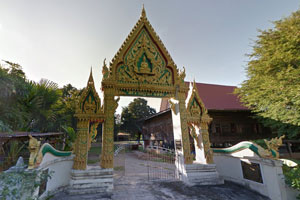
Wat Rat Samakkhi (Khon San) is located in Moo 3, Dong Bang Subdistrict, Khon San District, Chaiyaphum Province. Established in 1914 and granted its Wisungkhamsima boundary in 1965, the temple is an important Buddhist and community center for Ban Fai Din So and surrounding villages. It is a meaningful place for merit-making, meditation, religious ceremonies, local traditions, and cultural learning, making it a worthwhile stop for travelers who want to understand Khon San beyond its natural attractions.
Wat Rat Samakkhi (Khon San) is an important local Buddhist temple in Ban Fai Din So, Moo 3, Dong Bang Subdistrict, Khon San District, Chaiyaphum Province. The temple was established in 1914 and received its Wisungkhamsima, or officially granted monastic boundary, in 1965. These details make the temple historically significant, but its deeper value lies in its continuing role as a living spiritual center for monks, Buddhist residents, villagers, and visitors. It remains a place where Buddhist practice, local customs, community life, and cultural identity are closely connected.
Khon San District is known for its blend of natural landscapes, rural communities, local culture, and Buddhist sites. Wat Rat Samakkhi reflects this identity clearly. The temple stands within Dong Bang Subdistrict, an area closely associated with Ban Fai Din So, an old community known for its distinctive local culture, agricultural way of life, gardens, orchards, and community-based traditions. For travelers, visiting Wat Rat Samakkhi offers a chance to see how a Thai village temple continues to function not only as a place of worship, but also as a social and cultural center.
As a community temple, Wat Rat Samakkhi carries a meaning that goes far beyond tourism. It is a sacred space for merit-making, a place for meditation, a setting for Dharma listening, a venue for annual religious activities, and a gathering point for people of different generations. Children learn Buddhist manners and local etiquette here. Adults participate in religious ceremonies and community work. Older residents use the temple as a peaceful place for prayer, meditation, and maintaining ties with neighbors and relatives.
The name “Wat Rat Samakkhi” itself reflects the temple’s role. In Thai, “rat” refers to the people or local citizens, while “samakkhi” means unity or harmony. The name therefore expresses the spirit of collective effort and community cooperation. This meaning fits the temple well, as local temples of this kind are often built, supported, maintained, and used through the shared faith and participation of villagers.
The temple’s history began in 1914, when rural communities in northeastern Thailand were deeply connected with agriculture, Buddhism, and mutual support. Building a temple in a village was not only about constructing a religious site. It meant creating a shared place where people could make merit, listen to teachings, gather for important events, and pass on moral and cultural knowledge to younger generations. Wat Rat Samakkhi has continued this role for more than a century.
The granting of Wisungkhamsima in 1965 marked an important stage in the temple’s development. Wisungkhamsima is the formally designated monastic boundary used for key Buddhist Sangha acts. Receiving this boundary indicates the temple’s recognized status as a functioning Buddhist institution. For the local community, it also reflects the long-standing effort to establish and maintain the temple as a proper religious center.
Wat Rat Samakkhi serves as a place for religious activities involving monks, Buddhist villagers, and the general public. On Buddhist holy days and major religious occasions, the temple becomes a center for alms-giving, observing precepts, listening to sermons, offering food and robes to monks, candlelight processions, Kathin ceremonies, ordination-related activities, memorial rites, and other forms of merit-making. Through these activities, the temple helps maintain the rhythm of Buddhist life in the community.
The temple is also a place for meditation and inner reflection. Its calm and simple environment makes it suitable for prayer, chanting, sitting quietly, and practicing mindfulness. Unlike heavily commercialized tourist attractions, a village temple such as Wat Rat Samakkhi allows visitors to experience Buddhism in a more grounded way. The value of the visit comes not only from seeing the place, but from sensing how Buddhism continues to shape local life.
In terms of culture and tradition, Wat Rat Samakkhi plays an important role in preserving northeastern Thai community life. Local merit-making events held at the temple bring villagers together, strengthen relationships, and allow younger generations to observe and learn traditional practices. Even though the details of each event may vary from year to year, the central purpose remains the same: to make merit, build unity, honor Buddhist values, and preserve the cultural memory of the community.
Phra Khru Kowit Chayaphon (Samart) serves as the abbot of Wat Rat Samakkhi. In a community temple, the abbot’s role extends beyond managing the temple grounds. He is also a spiritual guide, a leader in Buddhist practice, a caretaker of religious activities, and an important link between the temple and local residents. Clear religious leadership helps the temple continue its role as a stable center of faith and community life.
The temple grounds include several practical areas that support both religious and community activities. There is a worship area where visitors can pay respect and set their intentions, an area for merit-making and Dharma listening, a meditation area for quiet practice, a ceremony space for Buddhist rituals, and a temple courtyard for community gatherings. These areas reflect the practical nature of a local Thai temple: it is a place that serves real needs in daily and seasonal community life.
The distinctive character of Wat Rat Samakkhi lies in its authenticity as a living community temple. Visitors should not expect a large tourist complex or highly commercialized facilities. Instead, they will find a temple that is meaningful because people still use it. Merit-making, Buddhist teachings, community events, and religious ceremonies continue to happen here as part of normal village life. This is precisely what makes the temple valuable for cultural travelers.
For travelers interested in local culture, Wat Rat Samakkhi is a good starting point for understanding Ban Fai Din So and Dong Bang Subdistrict. Ban Fai Din So is described as an old community with distinctive local traditions, agricultural life, orchards, and a rural atmosphere. Visiting the temple helps connect the physical landscape of the village with its spiritual and cultural roots. The journey becomes more meaningful when the temple is viewed not as an isolated landmark, but as part of a living community.
A visit to Wat Rat Samakkhi can be arranged as part of a half-day or full-day route in Khon San District. Travelers may begin by paying respect and making merit at the temple, then continue to explore Ban Fai Din So community, enjoy nearby restaurants and cafés, and proceed to natural attractions such as Thap Lao Spring Arboretum, Wat Tham Phaya Chang Phueak, or Chulabhorn Dam. This type of route gives travelers a balanced view of Khon San: faith, village life, food, and nature in one trip.
Wat Rat Samakkhi is suitable for travelers who prefer quiet, meaningful places over crowded tourist sites. The temple offers a peaceful atmosphere and a strong sense of local faith. Visitors should approach the place respectfully, dress modestly, keep their voices low, and avoid disturbing monks, villagers, or meditation practitioners. When ceremonies are taking place, visitors should observe local behavior and follow the guidance of temple caretakers or community members.
Morning is a good time to visit because the atmosphere is calm and suitable for merit-making. Late afternoon is also pleasant, especially for travelers who want a quiet pause after visiting other places in Khon San. On Buddhist holy days or during local merit-making events, the temple becomes livelier as villagers gather for religious activities. These occasions allow visitors to see the relationship between temple and community more clearly, provided they behave respectfully.
Wat Rat Samakkhi is also valuable for those who want to understand the role of local temples in Thai society. Many community temples are not nationally famous, yet they are essential to the people who live around them. They host ordination ceremonies, family merit-making events, memorial rites, annual festivals, community meetings, and spiritual practices. Such temples carry the joys, griefs, hopes, and faith of the people across generations.
The relationship between Wat Rat Samakkhi and Ban Fai Din So is one of mutual support. The temple receives care and support from local faith, while villagers receive a spiritual and social center in return. Merit-making, temple work, festival preparation, and annual ceremonies all help preserve a sense of belonging. Through the temple, community identity remains strong even as the outside world changes.
Within the wider context of Dong Bang Subdistrict, Wat Rat Samakkhi is a meaningful cultural landmark. Ban Fai Din So is associated with an old community, local language, agricultural life, gardens, and rural scenery. The presence of the temple helps turn these elements into a complete cultural landscape. For visitors, the temple acts as an entry point into the deeper identity of Khon San, where religion, community, and daily life remain closely connected.
Planning a visit to Wat Rat Samakkhi together with nearby attractions helps travelers make the most of their time. Ban Fai Din So community is very close to the temple and is suitable for learning about local life. Nearby restaurants and cafés provide convenient stops for meals and rest. Natural attractions such as Thap Lao Spring Arboretum and Chulabhorn Dam can be added afterward. This creates a travel route that covers culture, food, nature, and local history in a single journey.
For visitors from outside the area, Wat Rat Samakkhi clearly illustrates the phrase “the temple as the heart of the community.” A spiritual center does not always need to be grand or famous. It can be a quiet place that people trust, respect, and return to at important moments in life. Wat Rat Samakkhi has this kind of value: modest, steady, and deeply rooted in local faith.
Although Wat Rat Samakkhi is not a large commercial tourist attraction, it is meaningful for travelers who appreciate detail, context, and local authenticity. Chaiyaphum is often known for mountains, reservoirs, waterfalls, and seasonal flowers, but the province also has community temples that preserve the memory and spirit of local people. Wat Rat Samakkhi adds this cultural depth to the Khon San travel experience.
For families, the temple is a suitable place to introduce children to Buddhist culture and temple etiquette. For older visitors, it offers a peaceful place for merit-making and reflection. For cultural travelers, it provides a direct way to understand Dong Bang Subdistrict and Ban Fai Din So. Each visitor group can find value here when approaching the temple with respect and a willingness to learn.
Getting There is most convenient by private car. Travelers can navigate to Wat Rat Samakkhi, Ban Fai Din So, Moo 3, Dong Bang Subdistrict, Khon San District, Chaiyaphum Province. From Chaiyaphum town, drive toward Khon San District, then continue into Dong Bang Subdistrict and Ban Fai Din So. As this is a local community area, drive carefully and be mindful of houses, residents, and local traffic along the route.
Travelers coming from Chaiyaphum town should plan enough time because Khon San is in the northern part of the province and is best explored as a multi-stop route. A practical itinerary is to visit Wat Rat Samakkhi and Ban Fai Din So in the morning, have lunch at a nearby restaurant in Khon San, and continue to Thap Lao Spring or Chulabhorn Dam in the afternoon. This makes the trip both peaceful and varied.
Parking should be done neatly without blocking temple entrances, local roads, or village access points. During merit-making events or Buddhist holidays, the area may be busier than usual. Visitors should allow extra time and respect the flow of local activities. Visiting during a community event can be a meaningful experience because it shows how the temple still functions as a center of living faith.
What makes Wat Rat Samakkhi memorable is its sincerity. The temple does not rely on grandeur. Its importance comes from more than a century of faith, community cooperation, Buddhist practice, and local continuity. Travelers who want to see Chaiyaphum beyond famous natural attractions will find that Wat Rat Samakkhi offers a quiet but powerful insight into the cultural foundation of Khon San.
A visit to Wat Rat Samakkhi has several layers of meaning. The first is paying respect and making merit. The second is learning about a temple established in 1914 and granted Wisungkhamsima in 1965. The third is understanding Ban Fai Din So and Dong Bang Subdistrict as communities with their own cultural identity. The final layer is seeing how a local temple continues to serve as one of the most important social and spiritual foundations of Thai life.
Including Wat Rat Samakkhi in a Khon San travel plan creates a balanced experience of faith, village life, local food, and nature. Starting the journey at the temple gives the day a calm and meaningful tone before continuing to Ban Fai Din So community, nearby restaurants, local accommodations, and natural attractions in the district. This kind of travel suits visitors who prefer depth, context, and authentic local experiences over rushed sightseeing.
| Name | Wat Rat Samakkhi (Khon San) |
| Location | Moo 3, Dong Bang Subdistrict, Khon San District, Chaiyaphum Province |
| Address | Moo 3, Ban Fai Din So, Dong Bang Subdistrict, Khon San District, Chaiyaphum 36180, Thailand |
| Highlights | A historic community temple of Ban Fai Din So, established in 1914 and serving as a center for merit-making, meditation, religious ceremonies, traditions, and local culture |
| History | Established in 1914 and granted Wisungkhamsima in 1965; a local Buddhist temple of the Mahanikaya tradition in Khon San District, Chaiyaphum Province |
| Key Evidence | Historical establishment in 1914 and the granting of Wisungkhamsima in 1965 |
| Name Origin | The name reflects the unity and cooperation of local people, matching the temple’s role as a shared spiritual center of Ban Fai Din So and Dong Bang community |
| Distinctive Features | A living community temple used for Buddhist activities, meditation, merit-making, local traditions, cultural activities, and village gatherings |
| Travel Information | Best reached by private car. Drive toward Khon San District and continue to Dong Bang Subdistrict, Ban Fai Din So. The temple can be combined with Ban Fai Din So community and nearby natural attractions in Khon San. |
| Current Status | Open as a Buddhist temple for merit-making, meditation, religious activities, and community gatherings |
| Open Days | Daily |
| Opening Hours | 08.00 – 17.00 |
| Facilities | Parking Area, Worship Area, Merit-Making Area, Dharma Listening Area, Temple Courtyard, And Community Activity Space |
| Main Areas / Zones | Worship Area Merit-Making And Dharma Listening Area Meditation Area Buddhist Ceremony Area Temple Courtyard For Community Activities Reception Area For Merit-Making Events |
| Abbot / Caretaker | Phra Khru Kowit Chayaphon (Samart), Abbot Of Wat Rat Samakkhi |
| Nearby Tourist Attractions | 1. Ban Fai Din So Community, About 1 km 2. Muen Aram Khamhaeng Monument, About 6 km 3. Thap Lao Spring Arboretum, About 16 km 4. Wat Tham Phaya Chang Phueak, About 18 km 5. Chulabhorn Dam, About 41 km |
| Nearby Restaurants | 1. Montra House Bar & Restaurant, About 1 km, Tel. 095-650-5893 2. Krua Orathai, About 2 km, Tel. 086-457-9376 3. On Son Jaew Shabu Khon San, About 3 km, Tel. 095-179-7875 4. The Cook, About 3 km, Tel. 084-521-5726 5. Hod Laew Der Cafe, About 4 km, Tel. 044-876-604 |
| Nearby Accommodations | 1. Montra House, About 1 km, Tel. 082-854-1830 2. Modern Home Resort, About 2 km, Tel. 094-984-4255, 085-636-1412 3. Nut Resort, About 4 km, Tel. 088-184-9590 4. Wanida Resort, About 5 km, Tel. 086-899-1818, 087-770-1144 5. Pha Ka San Garden Home, About 8 km, Tel. 086-254-7502 |
Frequently Asked Questions (FAQ)
Q: Where is Wat Rat Samakkhi (Khon San) located?
A: Wat Rat Samakkhi is located in Moo 3, Ban Fai Din So, Dong Bang Subdistrict, Khon San District, Chaiyaphum Province, Thailand.
Q: When was Wat Rat Samakkhi established?
A: Wat Rat Samakkhi was established in 1914 and received its Wisungkhamsima in 1965.
Q: Who is the abbot of Wat Rat Samakkhi?
A: The abbot of Wat Rat Samakkhi is Phra Khru Kowit Chayaphon (Samart).
Q: Why is Wat Rat Samakkhi important to the community?
A: The temple serves as a religious, cultural, and spiritual center for Ban Fai Din So and nearby communities. It is used for merit-making, meditation, Buddhist ceremonies, local traditions, and community gatherings.
Q: What are the opening hours of Wat Rat Samakkhi?
A: Wat Rat Samakkhi is open daily from 08.00 to 17.00.
Q: What should visitors wear when visiting Wat Rat Samakkhi?
A: Visitors should dress modestly, behave quietly, and show respect for monks, meditation practitioners, and local residents participating in temple activities.
Q: What type of trip is Wat Rat Samakkhi suitable for?
A: The temple is suitable for merit-making, meditation, learning about Ban Fai Din So community, and as a cultural stop on a half-day or one-day route in Khon San District.
Q: What nearby attractions can travelers visit after Wat Rat Samakkhi?
A: Nearby places include Ban Fai Din So Community, Muen Aram Khamhaeng Monument, Thap Lao Spring Arboretum, Wat Tham Phaya Chang Phueak, and Chulabhorn Dam.
Category: ●Places of Worship
Group: ●Temple
Last Update : 4 WeekAgo