
lovethailand home >Northeastern Travel Attractions >Chaiyaphum Travel Attractions >Khon Sawan >Non Saat > Wat Don Han
TL;DR: Wat Don Han is located at Ban Don Han, Village No. 2, Non Sa-at Subdistrict, Khon Sawan District, Chaiyaphum Province, open Daily, hours 08.00 – 17.00.
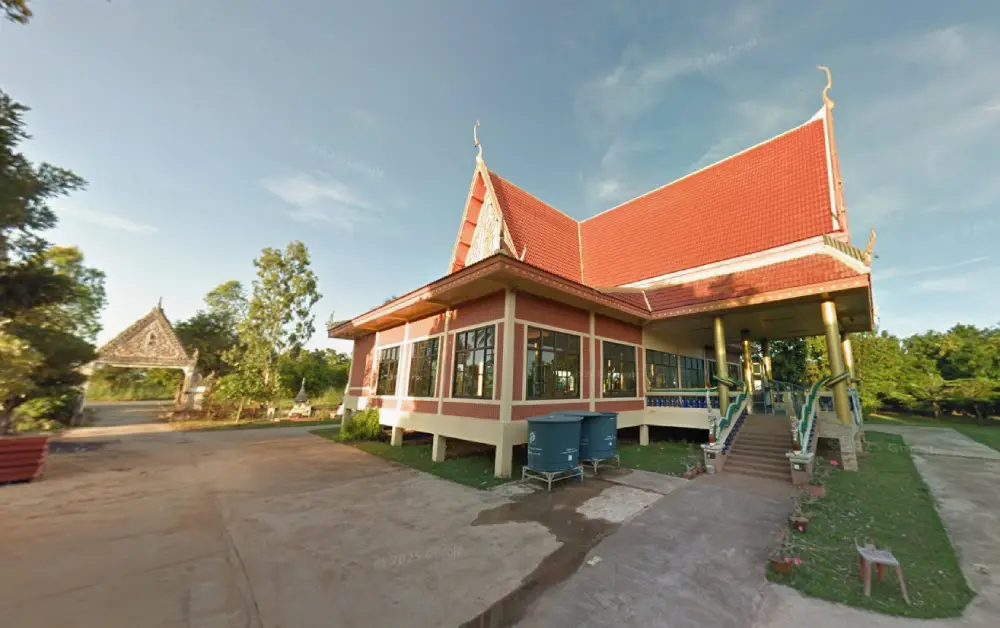
Wat Don Han
Open Days: Daily
Opening Hours: 08.00 – 17.00
Wat Don Han is located in Ban Don Han, Village No. 2, Non Sa-at Subdistrict, Khon Sawan District, Chaiyaphum Province. It is a local Buddhist temple under the Mahanikaya order and serves as an important religious and cultural center for monks, Buddhist devotees, villagers, and general visitors. The temple is used for Buddhist ceremonies, meditation, Dhamma practice, local traditions, cultural activities, and community gatherings. For travelers who want to understand the quiet and authentic side of northeastern Thailand, Wat Don Han offers a meaningful view of how Buddhism continues to support village life in rural Chaiyaphum.
The temple occupies 14 rai, 1 ngan, and 60 square wah of land. Its setting in Ban Don Han places it close to village roads, local homes, agricultural areas, and the everyday life of the community. Wat Don Han is therefore not an isolated religious monument; it is part of the social and spiritual landscape of the village. Villagers come here to make merit, listen to Dhamma teachings, observe Buddhist holy days, support monks, and gather for annual traditions.
Wat Don Han was established in B.E. 2451 through the faith and effort of local villagers. The early development of the temple was difficult because the original landscape was filled with thorny vegetation and the temple area experienced several fires. Villagers had to work together for many years to restore and maintain the temple. The temple land was donated by Nai Rin Chaichamrat. This history shows that Wat Don Han grew from community devotion, shared labor, and a strong desire to create a spiritual center for the village.
The name “Don Han” reflects local geography and village identity. In the Isan context, “Don” often refers to a raised or higher piece of land, while “Han” is connected with the village name and local memory. When used as a temple name, it ties Buddhist faith directly to the landscape and people of the area. The name is therefore more than a label; it preserves the relationship between the temple and the community that built it.
The main sermon hall of Wat Don Han measures 20 meters wide and 24 meters long. It was built in B.E. 2520 as a wooden building and remains one of the most important areas within the temple. In a rural Thai temple, the sermon hall is used for Dhamma listening, Buddhist holy day activities, merit-making, Kathin ceremonies, robe offerings, village meetings, and annual community events. At Wat Don Han, this hall functions as both a religious venue and a social gathering space.
The temple also has one wooden monk residence, a vihara measuring 12 meters wide and 15 meters long, a multi-purpose pavilion measuring 12 meters wide and 16 meters long, and a funeral merit pavilion. These buildings support the temple’s practical role in community life. The monk residence supports monastic living and Buddhist discipline, the vihara provides a place for worship, the multi-purpose pavilion supports ceremonies and gatherings, and the funeral merit pavilion serves families during important rites of remembrance.
One important sacred object at Wat Don Han is a brass Buddha image measuring 4 feet across the lap and 6 feet high. For local devotees, this Buddha image is a focus of faith, respect, and merit-making. Visitors may pay respect to the Buddha image, make offerings, and spend a quiet moment in reflection. The image represents not only Buddhist devotion but also the shared faith of villagers who have cared for the temple over generations.
The temple’s history preserves a long line of abbots, including Phra Taem Kunawatthano, Phra Saithong Chutinutharo, Phra Hing Thanisussaro, Phra Achan Khosito, Phra Phrommi Khemako, Phra Siang Katasilo, Phra Khammun Kanutsilo, Phra Khamma Silajaro, Phra Som, Phra Chan, Phra Lon Puriso, Phra Somdi Sumongkhallo, Phra Sawaeng Panyawutho, Phra Bunluea, Phra Bunkhwang, Phra Thongdaeng Chutinutharo, Phra Somnuek Kunawatthano, Phra Samrit, Phra Khen Tannutipalo, Phra Sombat, and Phra Manat Katasaro. This continuity of monastic leadership shows how the temple has been maintained across many generations.
Phra Manat Katasaro is recorded in the temple history as the abbot of Wat Don Han. The role of an abbot in a community temple is central. He oversees religious practice, resident monks, temple maintenance, ceremonies, monastic discipline, and relationships with villagers. An abbot also serves as a spiritual guide for the community during ordinary days and important life events, including ordinations, funerals, family ceremonies, merit-making, and Buddhist holy days.
Wat Don Han also has a connection with Buddhist education. The temple opened a Dhamma study section in B.E. 2503, supporting the learning of Buddhist teachings and monastic discipline. This educational role gives the temple added significance. It shows that Wat Don Han is not only a place for ceremonies, but also a space for moral learning, religious understanding, and the transmission of Buddhist values within the community.
The temple is associated with many Buddhist and Isan traditions throughout the year. These include Buddhist holy day merit-making, offering food to monks, listening to Dhamma teachings, observing precepts, meditation, Buddhist Lent, the end of Buddhist Lent, Kathin, robe-offering ceremonies, Songkran, Bun Khao Chi, Bun Phra Wet, and other local merit-making traditions. Through these activities, Wat Don Han remains active throughout the year and continues to support the cultural rhythm of village life.
During Buddhist Lent, villagers often come to the temple to offer candles, robes, food, and daily necessities to monks. Many people also focus more on moral discipline, Dhamma listening, and merit-making during this period. At the end of Buddhist Lent and during Kathin season, the community gathers again to support the temple. These annual cycles strengthen the relationship between monks and laypeople and keep the temple at the center of village life.
Bun Phra Wet, or the Mahachat sermon tradition, is one of the important merit-making traditions in Isan. It involves listening to the Vessantara Jataka and reflecting on generosity, patience, sacrifice, and compassion. When such an event is held in a community temple, it becomes both a religious ceremony and a village effort. People help prepare food, offerings, decorations, and ceremonial arrangements. Wat Don Han therefore becomes a place where Buddhist teachings are practiced through cooperation as much as through listening.
Bun Khao Chi is another tradition closely connected with Isan temples. Villagers prepare grilled sticky rice, often coated with egg, and offer it to monks as a simple act of merit. This tradition links local food, generosity, gratitude, and Buddhist devotion. At Wat Don Han, such traditions remain part of real village life. They are not merely cultural memories, but living practices shared by people in the community.
Songkran is also meaningful in a community temple setting. Villagers often make merit, bathe Buddha images, ask blessings from elders, and take part in temple-based ceremonies. At Wat Don Han, Songkran can be understood as a time when family, faith, respect, and community identity come together. The temple provides a proper setting for gratitude, renewal, and collective blessing during the Thai New Year period.
Wat Don Han is also suitable for meditation and quiet reflection. Practice in a community temple does not always require a formal retreat. It may include chanting, listening to Dhamma, keeping precepts, helping with temple work, reducing selfishness, and living with greater mindfulness. These ordinary forms of practice help Buddhism remain close to daily life. Children learn temple manners, adults return for merit-making, elders gather for religious observances, and monks provide moral guidance.
For travelers interested in cultural tourism, Wat Don Han is valuable because it shows a living village temple rather than a staged attraction. The temple is modest, peaceful, and closely tied to local people. Its appeal lies in its history, its community role, its monastic buildings, its sacred Buddha image, and the faith of villagers who continue to use it. Visitors who approach the temple slowly and respectfully will see how Buddhism remains woven into daily life in rural Chaiyaphum.
Non Sa-at Subdistrict also has local community attractions that can be included in the same route. These include Wat Khok Kong, Wat Non Sa-at, Wat Non Phan Chat, the bridge across the Chi River at Ban Lam Chi, and the bridge across Lam Nam Kam at Ban Non Phan Chat. These places show the relationship between local communities, waterways, temples, and village movement. Visiting Wat Don Han together with these local stops gives travelers a broader understanding of the subdistrict’s landscape and sense of place.
The bridge across the Chi River at Ban Lam Chi is a local viewpoint connected with one of the most important rivers of northeastern Thailand. The Chi River has shaped settlement, agriculture, travel, and community life in many parts of Isan. A visit to this riverside point after Wat Don Han allows travelers to see how Buddhist temples and natural landscapes belong to the same local environment.
The bridge across Lam Nam Kam at Ban Non Phan Chat is another local point of interest in Non Sa-at Subdistrict. A bridge in a rural community is not only a travel route; it is also part of the everyday landscape that connects villages, fields, homes, and waterways. Combining this local stop with Wat Don Han provides a more complete view of the area beyond the temple grounds.
Travelers can also combine Wat Don Han with nearby attractions in Khon Sawan District. Nearby places include Bueng Waeng or Nong Waeng, Wat Khon Sawan, the Dvaravati Buddha image at Wat Khon Sawan, Wat Thep Thammakhun, and Wat Chom That. This route is suitable for visitors who want to experience local temples, community life, nature, and older Buddhist heritage within the same district.
Bueng Waeng, also known as Nong Waeng, is one of Khon Sawan District’s important natural attractions. It is a natural lake known as a habitat for ducks and waterbirds, especially during the cool season from November to April. A road around the lake allows visitors to drive and enjoy the scenery, making it suitable for relaxation, birdwatching, photography, and evening visits. Combining Wat Don Han with Bueng Waeng creates a route that balances Buddhist culture and local nature.
Wat Khon Sawan is another meaningful nearby destination. It is associated with a large Dvaravati-period Buddha image and provides a deeper historical dimension to the area. A route from Wat Don Han to Wat Khon Sawan allows travelers to experience both a living community temple and an important site connected with older Buddhist culture. This makes the area suitable for travelers interested in religion, local history, and rural Thai culture.
The atmosphere of Wat Don Han is peaceful, modest, and suitable for slow cultural travel. The temple does not depend on grand architecture or heavy tourism development. Its value comes from its history, its role in the community, its monastic buildings, its annual traditions, and the faith of local people. Visitors can make merit, observe the temple grounds, and spend quiet time reflecting in a calm village setting.
Temple etiquette is important when visiting Wat Don Han. Visitors should dress modestly, covering shoulders and knees. Shoes should be removed before entering sacred buildings or designated areas. Voices should be kept low, and visitors should avoid disturbing monks, villagers, or ceremonies. Photography should be done respectfully, especially when people or religious activities are present. If a ceremony is taking place, visitors should give priority to local participants.
For foreign travelers, Wat Don Han provides a useful example of Buddhism at the village level. Famous temples in major cities often show Thailand’s grand religious art, but community temples reveal how Buddhism supports everyday life. Wat Don Han is where people make merit, learn manners, gather for annual festivals, support monks, and preserve shared memory. Visiting this kind of temple helps travelers understand Thai culture in a more grounded and respectful way.
Wat Don Han is also a place of community memory. Many villagers have grown up with the temple through annual festivals, sermons, food offerings, family ceremonies, and shared volunteer work. The temple holds memory not only through written history but also through repeated practices, familiar buildings, and the presence of people returning year after year. This is why a community temple can be deeply meaningful even when it is not widely known as a national tourist attraction.
When considering its history, land area, buildings, sacred objects, abbots, and community role, Wat Don Han is clearly an important local temple in Non Sa-at Subdistrict. It was established in B.E. 2451 through the faith of villagers, has a sermon hall, monk residence, vihara, multi-purpose pavilion, funeral merit pavilion, and a brass Buddha image. Its value lies in continuity rather than spectacle.
Getting There is most convenient by private car or rental car. Set your destination to Wat Don Han, Ban Don Han, Non Sa-at Subdistrict, Khon Sawan District, Chaiyaphum Province, or use the coordinates 15.864934, 102.294406 in your navigation system. From Chaiyaphum town, follow the route toward Khon Sawan District and continue to Non Sa-at Subdistrict according to your navigation system. The temple is suitable for a day trip and can be combined with Wat Khok Kong, Ban Lam Chi, Wat Khon Sawan, Bueng Waeng, and other local temples in the area.
Public transport users should first travel to Chaiyaphum town or Khon Sawan District, then arrange a local vehicle to the temple because village-level transport may not operate frequently throughout the day. Daytime travel is recommended for easier navigation and a more appropriate temple visit. During the rainy season, travelers should check road and weather conditions before combining the temple with nearby riverside or natural sites.
Overall, Wat Don Han is a meaningful community temple in Chaiyaphum Province. It has 14 rai, 1 ngan, and 60 square wah of temple land, a 20-meter by 24-meter sermon hall, a monk residence, a vihara, a multi-purpose pavilion, a funeral merit pavilion, a brass Buddha image, and a history dating back to B.E. 2451. Under the care of Phra Manat Katasaro as recorded in temple history, the temple continues to serve as a place for Buddhist activities, meditation, local traditions, and village gatherings. For travelers seeking an authentic and respectful Buddhist temple experience in northeastern Thailand, Wat Don Han is a worthwhile stop in Khon Sawan District.
| Name | Wat Don Han |
| Location | Ban Don Han, Village No. 2, Non Sa-at Subdistrict, Khon Sawan District, Chaiyaphum Province |
| Address | Village No. 2, Ban Don Han, Non Sa-at Subdistrict, Khon Sawan District, Chaiyaphum 36140, Thailand |
| Coordinates | 15.864934, 102.294406 |
| Place Type | Local Buddhist Temple, Mahanikaya Order |
| Land Area | 14 Rai, 1 Ngan, 60 Square Wah |
| Highlights | A long-standing community temple of Ban Don Han used for Buddhist activities, meditation, local traditions, cultural events, and village gatherings |
| History | Established in B.E. 2451 through local faith and community restoration; the temple land was donated by Nai Rin Chaichamrat |
| Name Origin | The name is connected with Ban Don Han, with “Don” referring to raised land in the Isan landscape |
| Distinctive Features | A rural Isan community temple closely connected with religious practice, merit-making traditions, Dhamma listening, and village life |
| Temple Buildings / Sacred Objects | Sermon Hall 20 m x 24 m, built in B.E. 2520; 1 wooden monk residence; vihara 12 m x 15 m; multi-purpose pavilion 12 m x 16 m, built in B.E. 2536; funeral merit pavilion; and brass Buddha image 4 feet across the lap and 6 feet high |
| Travel Information | Best reached by private car or rental car. Use Wat Don Han, Non Sa-at Subdistrict, or coordinates 15.864934, 102.294406 for navigation. Public transport users should connect from Khon Sawan District or Chaiyaphum town. |
| Current Status | Active as a local Buddhist temple used for religious and community activities |
| Open Days | Daily |
| Opening Hours | 08.00 – 17.00 |
| Main Areas / Zones | Sermon Hall, Monk Residence, Vihara, Multi-Purpose Pavilion, Funeral Merit Pavilion, Religious Activity Area, Meditation Area, Community Activity Area, and Peaceful Temple Grounds |
| Abbot / Caretaker | Phra Manat Katasaro |
| Nearby Tourist Attractions | 1. Wat Khok Kong (Non Sa-at), about 5 km 2. Wat Non Sa-at, about 6 km 3. Wat Non Phan Chat, about 7 km 4. Bridge Across The Chi River At Ban Lam Chi, Village No. 6, about 9 km 5. Bridge Across Lam Nam Kam At Ban Non Phan Chat, about 9 km 6. Wat Thep Thammakhun, about 13 km 7. Bueng Waeng / Nong Waeng, about 14 km 8. Wat Khon Sawan And The Dvaravati Buddha Image, about 14 km |
| Nearby Restaurants | 1. Jungle Cafe Khon Sawan Chaiyaphum Branch, about 14 km, Tel. 095-660-9498 2. 13 Cafe, about 14 km, Tel. 062-662-9563 3. Rim Bueng Korean BBQ, about 15 km, Tel. 084-826-3438 4. Khun Ngoen Restaurant, about 18 km, Tel. 091-017-2256 5. Bowwy Mookata, about 19 km, Tel. 098-935-9618 6. Im Aroi By Je Kai Restaurant, about 25 km, Tel. 093-327-6866 |
| Nearby Accommodations | 1. Wassanadee Resort Khon Sawan, about 13 km, Tel. 064-454-3945, 081-852-9956 2. Ban Poo Nim Resort Khon Sawan, about 15 km, Tel. 061-939-465 3. Khun Ngoen Restaurant Rooms, about 18 km, Tel. 091-017-2256 4. Phrutsakan Resort, about 22 km, Tel. 096-469-8645, 044-100-096, 099-359-3597 5. Nithinat Resort, about 25 km, Tel. 081-790-5186 6. Hongsawan Resort, about 27 km, Tel. 098-157-6599 |
Frequently Asked Questions (FAQ)
Q: Where is Wat Don Han located?
A: Wat Don Han is located in Ban Don Han, Village No. 2, Non Sa-at Subdistrict, Khon Sawan District, Chaiyaphum Province 36140, Thailand.
Q: What are the opening days and hours of Wat Don Han?
A: Wat Don Han is open daily from 08.00 to 17.00, making daytime visits the most convenient for merit-making and temple visits.
Q: Why is Wat Don Han important to the local community?
A: It is a community temple used for Buddhist ceremonies, meditation, local traditions, cultural activities, and as a spiritual center for villagers in Non Sa-at Subdistrict.
Q: When was Wat Don Han established?
A: Wat Don Han was established in B.E. 2451 through the faith and cooperation of local villagers.
Q: Who is the abbot of Wat Don Han?
A: The abbot recorded in the temple history is Phra Manat Katasaro.
Q: What important buildings are found inside Wat Don Han?
A: The temple has a 20-meter by 24-meter sermon hall, one wooden monk residence, a vihara, a multi-purpose pavilion, a funeral merit pavilion, and a brass Buddha image.
Q: What is the best way to get to Wat Don Han?
A: The most convenient way is by private car or rental car. Visitors can use the coordinates 15.864934, 102.294406 or search for Wat Don Han, Non Sa-at Subdistrict, Khon Sawan District, Chaiyaphum Province.
Q: What nearby attractions can travelers visit after Wat Don Han?
A: Nearby attractions include Wat Khok Kong, Wat Non Sa-at, Wat Non Phan Chat, the bridge across the Chi River at Ban Lam Chi, the bridge across Lam Nam Kam at Ban Non Phan Chat, Bueng Waeng, and Wat Khon Sawan.
 Category: ●Places of Worship
 Group: ●Temple
Last Update : 3 MonthAgo
 Last Update : 3 MonthAgo
 Click to Access the Navigation Map GPS
 Art, Culture and Heritage
 Historical Sites and Monuments(1)
 Landmarks and Memorials(3)
 Royal Palace(1)
 Art, Craft Centres, Tradition(3)
 Educational Places
 Educational Gardens, Farm(1)
Temple(141)
Educational Gardens, Farm(1)
Temple(141)
 Other Sacred Sites(7)
 Suburban Living
 Village, Community(4)
 Nature and Wildlife
 National Parks and Marine Reserves(7)
 Mountain (Doi)(5)
 Dam, Reservoir, Lake(10)
 Waterfalls(15)
 Caves(5)
 River, Canal(4)
 Other natural attractions(1)
 Entertainment and Agricultural
 Farms, Parks and Ecotourism(2)


