
lovethailand home >Northeastern Travel Attractions >Chaiyaphum Travel Attractions >Khon Sawan >Khok Mang Ngoi > Wat Nong Bua Loi
TL;DR: Wat Nong Bua Loi is located at Khok Mang Ngoi Subdistrict, Khon Sawan District, Chaiyaphum Province, open Daily, hours 08.00 – 17.00.
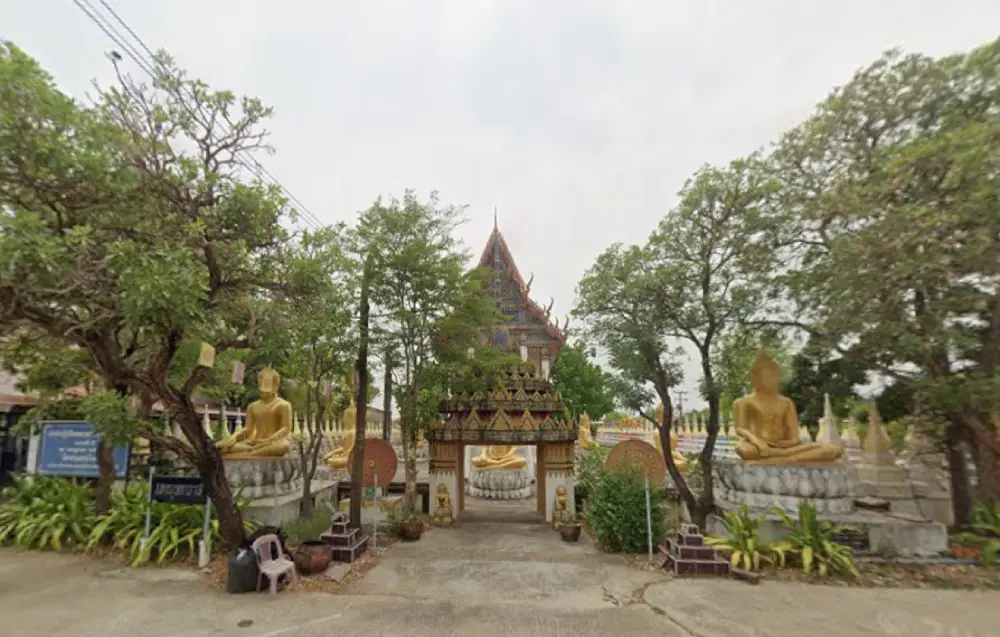
Wat Nong Bua Loi
Open Days: Daily
Opening Hours: 08.00 – 17.00
Wat Nong Bua Loi is located in Khok Mang Ngoi Subdistrict, Khon Sawan District, Chaiyaphum Province. It is a local Buddhist temple under the Mahanikaya order and serves as an important religious and cultural center for monks, Buddhist devotees, villagers, and general visitors. The temple is used for Buddhist ceremonies, meditation, Dhamma practice, local traditions, and community activities. For travelers who want to experience a quieter and more authentic side of northeastern Thailand, Wat Nong Bua Loi offers a meaningful view of how Buddhism continues to shape village life in Chaiyaphum.
Wat Nong Bua Loi is not a large commercial tourist attraction, and that is part of its cultural value. It is a living community temple where villagers continue to make merit, listen to Dhamma teachings, observe Buddhist holy days, and gather for annual traditions. In rural Isan communities, temples often function as more than religious buildings. They are shared spaces where people learn manners, support monks, preserve local customs, and strengthen social bonds. Wat Nong Bua Loi reflects this role clearly.
The temple occupies 8 rai, 3 ngan, and 53 square wah of land. Its important monastic structures include an ordination hall measuring 6 meters wide and 34 meters long, and a sermon hall measuring 19 meters wide and 34 meters long. These buildings represent the essential functions of a Thai Buddhist community temple. The ordination hall is a sacred space for formal monastic rites, while the sermon hall is used for Dhamma listening, merit-making ceremonies, village gatherings, and religious events throughout the year.
Thai temple records identify Wat Nong Bua Loi as a local Buddhist temple under the Mahanikaya order. The temple was established in B.E. 2480 and received its royal consecrated boundary, known in Thai as Wisungkhamsima, in B.E. 2511. In Thai Buddhist tradition, receiving Wisungkhamsima is an important milestone because it allows a temple to conduct formal Sangha rites within a designated sacred boundary. This confirms the temple’s religious function and its importance to the local Buddhist community.
The name “Nong Bua Loi” carries a strong sense of place and Buddhist symbolism. “Nong” refers to a pond or wetland, while “Bua” means lotus, one of the most important symbols in Buddhism. The lotus represents purity, wisdom, and spiritual growth. The word “Loi” suggests floating, giving the name a peaceful image of lotus blossoms floating on water. For a Buddhist temple, this name is especially fitting because it evokes calmness, purity, and inner peace.
The ordination hall at Wat Nong Bua Loi is one of the most sacred areas within the temple. Even though this is a community temple rather than a large royal temple, the ordination hall carries deep religious meaning. It is associated with formal Buddhist rites and the continuity of monastic discipline. Visitors should approach this area respectfully by dressing modestly, speaking quietly, removing shoes where required, and avoiding behavior that may disturb monks or local devotees.
The sermon hall is another important space within Wat Nong Bua Loi. In many rural temples, the sermon hall functions as the main gathering place for villagers. It is used for Buddhist holy day observances, Dhamma talks, Kathin ceremonies, robe offerings, food preparation, and community merit-making. At Wat Nong Bua Loi, the sermon hall helps keep the relationship between monks and villagers active throughout the year. It is both a religious space and a social space.
Phra Khru Sunthon Thammawut appears in temple records and provincial meditation-center information as an important former abbot of Wat Nong Bua Loi. More recent public information in 2026 refers to him as the former abbot and records funeral and royal cremation ceremonies held at Wat Nong Bua Loi. Current public information identifies Phra Chatkla Yananthammo as the acting abbot of Wat Nong Bua Loi. This distinction is important for presenting the temple accurately: Phra Khru Sunthon Thammawut remains an important figure in the temple’s memory, while the current caretaker role is associated with the acting abbot.
The role of an abbot or acting abbot is central to a community temple. The temple leader oversees religious activities, resident monks, temple administration, ceremonies, building maintenance, and relations with villagers. Wat Nong Bua Loi continues to have resident monks and religious activity, which shows that the temple remains active as a Buddhist and community center. It is not merely a historical location; it is still used by the local community.
Wat Nong Bua Loi is also a place for meditation and Dhamma practice. In a local temple, practice may include chanting, meditation, keeping precepts, listening to teachings, helping with temple activities, and making merit. These everyday practices allow Buddhism to remain part of daily life. Children, adults, and elders all learn from the temple through direct participation in ceremonies, offerings, and community service.
The temple is closely connected with annual Buddhist and Isan traditions. These include Buddhist holy day merit-making, Buddhist Lent, the end of Buddhist Lent, Kathin, robe-offering ceremonies, Bun Khao Chi, Bun Phra Wet, Songkran, and other community events. Such traditions bring villagers together through offerings, food preparation, Dhamma listening, chanting, and shared service. Wat Nong Bua Loi helps preserve both Buddhist faith and local identity through these recurring activities.
Bun Phra Wet, or the Mahachat sermon tradition, is one of the important merit-making events in many Isan communities. It involves listening to the Vessantara Jataka and gathering as a community to cultivate generosity, patience, and moral understanding. When held in a temple, the tradition is not only a religious ceremony but also a community effort. Villagers prepare the venue, food, offerings, and ceremonial items together, making the temple a space of both faith and cooperation.
Bun Khao Chi is another tradition that reflects the warmth and simplicity of Isan Buddhist culture. Villagers prepare grilled sticky rice, often coated with egg, and offer it to monks as an act of merit. This tradition links food, generosity, gratitude, and Buddhist devotion. A temple like Wat Nong Bua Loi allows such traditions to remain active in real community life rather than becoming only cultural memory.
The Buddhist Lent period is especially important for Wat Nong Bua Loi. At the beginning of Lent, villagers offer candles, robes, and daily necessities to monks. Many people also focus more on moral practice and Dhamma listening during this period. At the end of Lent and during Kathin season, the community gathers again to support the temple. These annual cycles strengthen the bond between monks and laypeople and keep the temple active throughout the year.
For foreign travelers, Wat Nong Bua Loi offers a valuable opportunity to understand Buddhism at the village level. Many visitors are familiar with famous temples in Bangkok, Chiang Mai, or Ayutthaya, but community temples like Wat Nong Bua Loi reveal another important side of Thailand. They show how Buddhism supports local identity, moral education, family rituals, annual festivals, and everyday relationships among villagers.
The atmosphere of Wat Nong Bua Loi is peaceful, modest, and suitable for slow cultural travel. The temple does not rely on grand architecture or heavy tourism development. Its value comes from its role in the community, its sacred spaces, its annual traditions, and the faith of local people. Visitors can make merit, pay respect, observe the temple grounds, and spend quiet time reflecting in a calm rural setting.
Wat Nong Bua Loi can also be combined with nearby attractions in Khok Mang Ngoi and Khon Sawan District. Nearby places include Wat Chom That, Wat Ko Kaew Nong No, Wat Thep Thammakhun, Bueng Waeng or Nong Waeng, Wat Khon Sawan, and the Dvaravati Buddha image at Wat Khon Sawan. This route is suitable for travelers who want to experience local Buddhist temples, community life, nature, and older Buddhist heritage within the same district.
Bueng Waeng, also known as Nong Waeng, is one of the important natural attractions in Khon Sawan District. It is a lake near the district office and is known as a habitat for waterbirds, especially during the cool season from November to April. Visitors can drive around the lake, enjoy the scenery, watch birds, and take photographs in the evening. Combining Wat Nong Bua Loi with Bueng Waeng creates a route that balances Buddhist culture and local nature.
Wat Khon Sawan is another meaningful nearby destination. It is associated with a large Dvaravati-period Buddha image and provides a deeper historical dimension to the area. A route from Wat Nong Bua Loi to Wat Khon Sawan allows travelers to see both a living community temple and an important site connected with older Buddhist culture. This makes the area suitable for travelers interested in religion, history, and local Thai culture.
Wat Chom That and Wat Thep Thammakhun are also nearby community temples in Khok Mang Ngoi Subdistrict. Wat Chom That is connected with the religious life of Ban Khok Mang Oi, while Wat Thep Thammakhun was formerly known as Wat Nong Daeng Noi and is known for a large respected Buddha image. Visiting these temples together helps travelers understand the network of village temples that shapes the religious landscape of Khok Mang Ngoi.
Temple etiquette is important when visiting Wat Nong Bua Loi. Visitors should dress modestly, covering shoulders and knees. Shoes should be removed before entering sacred buildings or designated areas. Voices should be kept low, and visitors should avoid disturbing monks, villagers, or ceremonies. Photography should be done respectfully, especially when people or religious activities are present. If a ceremony is taking place, visitors should give priority to local participants.
Wat Nong Bua Loi is also a place of community memory. Many villagers have grown up with the temple through annual festivals, Buddhist chants, merit-making events, family ceremonies, and shared volunteer work. The temple holds memory not only through written history but also through repeated practices, familiar spaces, and the presence of people returning year after year. This is why a community temple can be deeply meaningful even when it is not widely known as a national tourist attraction.
For travelers who want to understand Thai culture more deeply, a visit to Wat Nong Bua Loi should be approached slowly. Instead of seeing the temple only as a place for photography, visitors should pay attention to how the temple functions: where villagers gather, where monks live and teach, where ceremonies take place, and how the temple grounds support religious and social life. This perspective makes the visit more respectful and more meaningful.
Getting There is most convenient by private car or rental car. Set your destination to Wat Nong Bua Loi, Khok Mang Ngoi Subdistrict, Khon Sawan District, Chaiyaphum Province, or use the coordinates 15.965615, 102.286289 in your navigation system. From Chaiyaphum town, follow the route toward Khon Sawan District and continue to Khok Mang Ngoi Subdistrict according to your navigation system. The temple is suitable for a day trip and can be combined with Wat Chom That, Wat Thep Thammakhun, Bueng Waeng, and Wat Khon Sawan.
Public transport users should first travel to Chaiyaphum town or Khon Sawan District, then arrange a local vehicle to the temple because village-level transport may not operate frequently throughout the day. Daytime travel is recommended for easier navigation and a more appropriate temple visit. During the rainy season, travelers should check road and weather conditions before combining the temple with nearby natural sites.
Overall, Wat Nong Bua Loi is a meaningful community temple in Chaiyaphum Province. It has 8 rai, 3 ngan, and 53 square wah of temple land, an ordination hall, a sermon hall, resident monks, and an ongoing role in Buddhist and community activities. Its value lies in its quiet atmosphere, local faith, annual traditions, and continued function as a spiritual center for the people of Khok Mang Ngoi. For travelers seeking an authentic and respectful Buddhist temple experience in northeastern Thailand, Wat Nong Bua Loi is a worthwhile stop in Khon Sawan District.
| Name | Wat Nong Bua Loi |
| Location | Khok Mang Ngoi Subdistrict, Khon Sawan District, Chaiyaphum Province |
| Address | Ban Nong Mueat Ae, Village No. 9, Khok Mang Ngoi Subdistrict, Khon Sawan District, Chaiyaphum 36140, Thailand |
| Coordinates | 15.965615, 102.286289 |
| Place Type | Local Buddhist Temple, Mahanikaya Order |
| Land Area | 8 Rai, 3 Ngan, 53 Square Wah |
| Highlights | A community temple in Khok Mang Ngoi used for Buddhist activities, meditation, local traditions, cultural events, and village gatherings |
| History | Established in B.E. 2480 and granted Wisungkhamsima in B.E. 2511 |
| Name Origin | The name refers to a pond, lotus, and floating imagery, connecting the temple with local nature and Buddhist symbolism |
| Distinctive Features | A rural Isan community temple closely connected with religious practice, merit-making traditions, Dhamma listening, and village life |
| Temple Buildings | Ordination Hall 6 m x 34 m and Sermon Hall 19 m x 34 m |
| Travel Information | Best reached by private car or rental car. Use Wat Nong Bua Loi, Khok Mang Ngoi Subdistrict, or coordinates 15.965615, 102.286289 for navigation. Public transport users should connect from Khon Sawan District or Chaiyaphum town. |
| Current Status | Active as a local Buddhist temple with resident monks and ongoing religious and community activities |
| Open Days | Daily |
| Opening Hours | 08.00 – 17.00 |
| Main Areas / Zones | Ordination Hall, Sermon Hall, Religious Activity Area, Meditation Area, and Community Activity Area |
| Abbot / Caretaker | Phra Chatkla Yananthammo, Acting Abbot of Wat Nong Bua Loi |
| Important Former Abbot | Phra Khru Sunthon Thammawut, Former Abbot of Wat Nong Bua Loi |
| Main Contact Number | 090-965-7693 |
| Nearby Tourist Attractions | 1. Wat Chom That, Ban Khok Mang Oi, about 7 km 2. Wat Ko Kaew Nong No, about 7 km 3. Wat Thep Thammakhun, about 12 km 4. Bueng Waeng / Nong Waeng, about 13 km 5. Wat Khon Sawan, about 13 km 6. Dvaravati Buddha Image at Wat Khon Sawan, about 13 km 7. Wat Phra Phutthabat Phu Faet, about 35 km |
| Nearby Restaurants | 1. Khun Ngoen Restaurant, about 7 km, Tel. 091-017-2256 2. Bowwy Mookata, about 8 km, Tel. 098-935-9618 3. Jungle Cafe Khon Sawan Chaiyaphum Branch, about 13 km, Tel. 095-660-9498 4. 13 Cafe, about 13 km, Tel. 062-662-9563 5. Rim Bueng Korean BBQ, about 14 km, Tel. 084-826-3438 6. Im Aroi by Je Kai Restaurant, about 19 km, Tel. 093-327-6866 |
| Nearby Accommodations | 1. Nonna Resort, about 6 km, Tel. 062-905-0145 2. Wassanadee Resort, about 8 km, Tel. 064-454-3945 3. Phrutsakan Resort, about 11 km, Tel. 096-469-8645, 044-100-096, 099-359-3597 4. Ban Poo Nim Resort, about 13 km, Tel. 061-939-465 5. Nithinat Resort, about 20 km, Tel. 081-790-5186 6. Hongsawan Resort, about 22 km, Tel. 098-157-6599 |
Frequently Asked Questions (FAQ)
Q: Where is Wat Nong Bua Loi located?
A: Wat Nong Bua Loi is located in Khok Mang Ngoi Subdistrict, Khon Sawan District, Chaiyaphum Province 36140, Thailand.
Q: What are the opening days and hours of Wat Nong Bua Loi?
A: Wat Nong Bua Loi is open daily from 08.00 to 17.00, making daytime visits the most convenient for merit-making and temple visits.
Q: Why is Wat Nong Bua Loi important to the local community?
A: It is a community temple used for Buddhist ceremonies, meditation, local traditions, cultural activities, and as a spiritual center for villagers in Khok Mang Ngoi.
Q: What are the main temple buildings at Wat Nong Bua Loi?
A: The temple has an ordination hall measuring 6 meters by 34 meters and a sermon hall measuring 19 meters by 34 meters.
Q: Who is the current caretaker of Wat Nong Bua Loi?
A: Current public information identifies Phra Chatkla Yananthammo as the acting abbot of Wat Nong Bua Loi, while Phra Khru Sunthon Thammawut is an important former abbot of the temple.
Q: What is the best way to get to Wat Nong Bua Loi?
A: The most convenient way is by private car or rental car. Visitors can use the coordinates 15.965615, 102.286289 or search for Wat Nong Bua Loi, Khok Mang Ngoi Subdistrict, Khon Sawan District, Chaiyaphum Province.
Q: What nearby attractions can travelers visit after Wat Nong Bua Loi?
A: Nearby attractions include Wat Chom That, Wat Ko Kaew Nong No, Wat Thep Thammakhun, Bueng Waeng, Wat Khon Sawan, and Wat Phra Phutthabat Phu Faet.
Q: Is Wat Nong Bua Loi suitable for foreign travelers?
A: Yes. It is suitable for travelers interested in local Buddhist temples, rural Isan culture, community traditions, and quiet cultural travel in Chaiyaphum Province.
 Category: ●Places of Worship
 Group: ●Temple
Last Update : 3 MonthAgo
 Last Update : 3 MonthAgo
 Click to Access the Navigation Map GPS
 Art, Culture and Heritage
 Historical Sites and Monuments(1)
 Landmarks and Memorials(3)
 Royal Palace(1)
 Art, Craft Centres, Tradition(3)
 Educational Places
 Educational Gardens, Farm(1)
Temple(141)
Educational Gardens, Farm(1)
Temple(141)
 Other Sacred Sites(7)
 Suburban Living
 Village, Community(4)
 Nature and Wildlife
 National Parks and Marine Reserves(7)
 Mountain (Doi)(5)
 Dam, Reservoir, Lake(10)
 Waterfalls(15)
 Caves(5)
 River, Canal(4)
 Other natural attractions(1)
 Entertainment and Agricultural
 Farms, Parks and Ecotourism(2)


